





Top 10 Effective Applications of AI in Fintech

AI in fintech has leveraged more value for customers in the financial services industry than anything else. It made transactions safer and more accessible. At the same time, it plays a crucial role in improving the speed, efficiency, and stability of any transactions.
Financial technology, or FinTech, is an innovation in financial services. It aims to develop new ways of providing financial services. Moreover, it improves the channels of service delivery.
Importance of AI in FinTech

We see AI growing prominently across all industries. Above all, the AI market was valued at USD 2,575.16 Billion in 2023. AI encompasses 36.84% of the technology market’s share in Northern America.
Such exponential growth has impacted the FinTech industry in a big way. AI can impact the FinTech industry in aplenty ways.
To speak of some, fraud detection, credit risk protection, and accurate revenue forecasting are the ones to begin with.
Overview of AI Applications in the Financial Industry
In this article, we will explore some critical AI features. Features like data analytics, predictions, forecasting, data retrieval, performance measurement, and real-time calculations are most effective in FinTech.
Role of AI in the FinTech Industry

There are many aspects of the Fintech industry, heavily influenced by AI and its many applications. AI in fintech is the driving force shaping the future of our transactions.
Enhancing Analytics and Predictions
Data process is a leading role of AI in fintech.
AI can process 10 billion transaction messages and instructions every day. It is enough to show the data processing abilities of AI.
What’s better than data processing?
Real-time data analytics. It is one of the other efficient features of AI in fintech.
Data analytics helps financial companies identify potential risks, guide better investments, and personalize their financial services.
RBC, Deutsche Bank, JP Morgan, and others actively use AI-based data mining services to improve customer response feed and service delivery.
Improving Customer Support Through Virtual Assistants and Chatbots
Chatbots and virtual assistants can give customers round-the-clock services without manual interference.
Chatbots can resolve multiple customers’ queries. They can also resolve customers’ issues as well.
Providing Personalized Recommendations Based on Customer Preferences
Most AI can track data sets from feasible sources. For instance, AI studies the unique needs and aspirations of a customer. After that, it can send tailored recommendations to the customer. Experts say that personalized marketing is paramount for customer loyalty.
In the US, Wells Fargo’s predictive banking is quite popular. The bank uses AI for the same benefits discussed above. At the same time, Bank of America uses its AI-powered virtual assistant, Erica, to do the same.
Handling High Volumes of Customer Inquiries Simultaneously
Chatbots have simplified banking in the US. As new financial services are added to the FinTech sector, AI in fintech is becoming more meaningful.
Chatbots can efficiently work 24×7 to process customer inquiries through AI’s natural language processing feature.
No human intervention is required. It is only an algorithm. So it can run simultaneously on all devices.
Evolution of FinTech

FinTech has evolved to teach more new services in its repertoire.
Its evolution is also linked with the faster movement of money.
Growth of FinTech services
As we see, most banks and NBFCs use AI in FinTech. As a result, FinTech can provide many unique and much-needed services.
For instance, retail credit card services peaked after the inclusion of AI in the US FinTech sector. At the same time, services like online portfolio management, online budgeting, peer-to-peer lending, and other services are also new.
Disruption of Traditional Banking by FinTech
The incumbent traditional banks are challenged by the disruptive growth of AI in FinTech. Neobanks challenge traditional banks by combining AI and fintech.
The neobanks can overcome territorial limitations and provide services 24×7 using AI’s NLP and blockchain protection methods.
Impact of AI on Job Roles in the Financial Industry
Yael Malek from Bluevine said that AI can account for several job losses. However, experts also feel that AI can leverage the working potential of humans in the FinTech sector.
On the one hand, AI can perform more methodized and recurring or repeated tasks like answering customer queries.
A data set of customer queries over a given timeframe from the same customer demographics, receiving similar services will include almost the same and repeating queries.
AI can easily track the pattern in their queries and use modeled replies to satisfy them.
So, the human workforce can focus on analytical and strategic roles. For instance, data analytics experts can scan the customer query database to find unique questions. If AI cannot answer those convincingly, new algorithm changes will be needed.
So, AI will also lead to the creation of many new jobs. The job dynamics will change, though.
Blockchain Technology
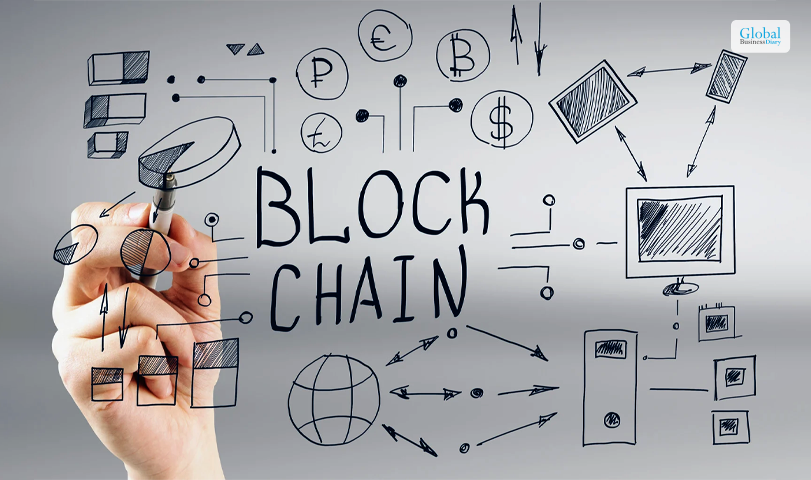
Bettina Warburg feels that blockchain is a “decentralized database that stores a registry of assets and transactions across a peer-to-peer network.”
Potential of Blockchain in Transforming Financial Transactions
A blockchain creates an open field within an encrypted pathway for financial transactions. You can think of it as a free-flowing pipeline with 0 or minimal obstructions. However, the pipeline is leak-proof.
That’s how blockchain funnels all financial transactions that use it.
So, what happens?
The transactions are safer than before. No hackers can infiltrate the firewall of the blockchain. At the same time, the transactions are faster as they occur peer to peer, directly.
Role of AI in Optimizing Blockchain Systems
AI performs an essential role in blockchain. It analyzes the programming and functioning of the blockchain’s network. After that, it can recommend improvements and identify its inefficiencies.
Ways AI is Transforming FinTech Companies

AI plays a crucial role in the new and innovative FinTech services offered.
1. Instantaneous Financial Services
One of the phenomenal examples of instantaneous services is the chatbot-based customer replies. Most of them use AI algorithms.
AIs like ChatGPT can extract information from the internet and use neural learning to create human-like responses.
So, it can process and answer all your financial queries in seconds.
2. Online Retail Banking
Experts say that AI fintech is the basis of online retail banking services. AI can automate most retail banking services through chatbots. It can also detect fraud easily. At the same time, customers can get personalized investment suggestions using AI for fintech.
3. Investments and Trading
Traders can use AI tools like stock screening to manage and improve portfolios. AI and fintech can work together to perform better asset allocation, analysis of individual stock performance and diversify trading portfolios.
4. Peer-to-peer Lending
AI can derive data from the bank’s databases to create secure and direct transaction channels. Hence, peer-to-peer lending has become faster and safer.
5. Financial Advisory Services
AI can customize your risk tolerance and financial habits to recommend the best investment, savings, and general banking suggestions.
6. Portfolio Management
AI can screen top-performing stocks across multiple sectors to diversify your portfolio. It may also assess the asset value of individual stocks to find the best growth stocks.
7. Budgeting Tools
AI can detect contingent and recurring costs of a fintech company. Eventually, it can also automate most services to cut down costs.
In the same way, your bank’s AI can analyze your spending and banking habits to create tailored budgets.
Challenges and Limitations of AI in FinTech

AI is a disruptive yet emerging technology. So, it is bound to have flaws.
Need for Skilled AI Developers
The US has only 150000 ML engineers. However, there is a gap of 27 million AI engineers, programmers, and developers in the US. It’s undoubtedly a big challenge that the American fintech sector also faces.
Integration of AI Technologies in Compliance with Legal Standards
There is no comprehensive regulation to directly track and monitor the use and applications of AI in the US. At the same time, case law suggests that AI-generated outputs cannot be the sole basis of operations in any sector.
The same applies to the fintech sector. There may be bugs in the AI algorithms.
Potential Shifts in the Financial Industry Due to AI Advancements
AI has incorporated a new genre of financial services. For instance, AI introduced algorithmic trading in the US. However, bugs in algorithms can disrupt financial decisions.
Conclusion
There are many cases of AI being used in fintech. On one hand, it has become the guardian of financial fraud detection. On the other hand, it created new avenues of data processing. So, you may see more automation due to AI in the following time.
AI also plays a crucial role in managing personal finances. The online banking services of emerging fintech includes AI. So, most of us use AI suggestions in our banking decisions. AI will also play a more strategic role in making key business decisions. However, the US needs more capable AI developers and programmers to make AI inclusion more competent and risk-free.
For More Informative Business Articles Click Below!!

Recent
Memory Chips Are Becoming More Important in the AI Era
Aug 06, 2026

Why Enterprise Web Applications Still Choose Angular for Long-Term Growth
Aug 04, 2026

Due Diligence Decoded: Why Careful Evaluation Still Wins in Business
Jul 11, 2026

How Hydraulic System Design Impacts Equipment Performance
Jul 01, 2026

Related Articles
Capex Vs Opex: Essential Points Of Difference
A company has to pay off different kinds of expenses to run its business smoothly. Capex vs Opex is one of the popular expense differentiation you must know. Among them, two kinds of expenditures are quite prominent in this regard. First is the Capex, and second is the operating expenses. Most of the time, these costs can be one, and sometimes they can take the shape of recurring expenses. You must follow the correct process that can assist you in getting things done in perfect order. Micromarketing techniques can work well here. The capital expenditure of a company will occur once, while the operating expenses will keep on occurring all the time. If you are a business owner, you must know the core points of differences between the two concepts. Essential Points Of Difference Between Capex vs Opex There are several points of difference between Capex vs Opex. It will offer you the complete insight once you go through the complete article. You need to know the reality while making the differentiation between the two concepts of business./ 1. Nature Of Expenses Capex vs Opex has some core differences in the nature of their expense model. Capital expenditures or Capex are investments in assets that provide long-term benefits to a company. These expenses are typically for acquiring, improving, or maintaining assets such as property, equipment, machinery, or infrastructure. Operating expenditures are day-to-day expenses incurred in running a business. These include costs for salaries, utilities, rent, marketing, repairs, and other ongoing operational expenses. You must consider these facts from your end while making the differences between the two concepts. 2. Duration Of Benefit Capital expenditures provide benefits over an extended period, usually beyond one fiscal year. They contribute to the company's future productivity, efficiency, or revenue generation. Capex vs Opex has some significant points of differences that you must know while you make the comparison. Operating expenditures are incurred for immediate use and provide short-term benefits. They are essential for maintaining regular business operations and generating immediate revenue. It will give short-term and regular benefits to your company. 3. Treatment In Financial Statements Capital expenditures are recorded as assets on the balance sheet and depreciated or amortized over their useful life. Depreciation or amortization expense is then reported on the income statement over time. Operating expenditures are immediately shown on the income statement in the period they are incurred. They directly impact the company's net income for that period. You need to identify the perfect solution that can make things easier for you to reach your goals with ease. 4. Tax Treatment Capital expenditures might be eligible for tax benefits such as depreciation or amortization deductions over time, reducing taxable income. Capex vs Opex, you must consider things at your end while reaching your objectives. Operating expenditures are fully deductible in the year they are incurred, providing immediate tax benefits. You should get through this difference to have a better idea of it. Ensure that the scope of errors is as low as possible. 5. Impact On Profitability & Cash Flow While CapEx affects profitability indirectly through depreciation expenses. It has a significant impact on cash flow at the time of purchase or investment. You cannot afford to make things work in the wrong direction from your counterpart. On the other hand, Operating expenditures directly affect profitability by reducing net income and also impact cash flow in the period they occur. Effective planning can boost the chances of reducing the expenses of your business. 6. Decision Making & Budgeting Capital expenditures involve strategic decisions as they impact the company's long-term growth and productivity. Budgeting for CapEx requires careful planning and consideration of future benefits. You should know the core points of differences between Capex vs Opex. It will assist you in attaining your goals with complete ease. Operating expenditures are part of routine budgeting and are necessary for maintaining day-to-day operations. They are generally more predictable and recurring. Without proper application of the strategies, things can turn worse for you. Examples Of Capex Expenditure There are several examples of Capex expenditure that you should know at your end. It will help you to get a better insight into it. Let’s find out some of the core examples of the Capex Expenditure that can make things easier for you. Machinery, manufacturing plants, and equipment. Computers. Building Improvements. Trucks and vehicles. The contribution margin of the company plays a vital role here. You should pay it from your end to meet all the expenditure. Examples Of Opex Expenditure There are several examples present for Opex expenditure that you must know at your end. Some of the core examples of it are as follows:- Salaries and wages. Rent and Utilities Legal and accounting fees. Overhead costs. Business travel. Property expenses. Interest on debt. Research and development expenses. You can easily make the market segmentation with the help of the differences between capex vs opex to meet the requirements. How To Reduce Capital Expenditure? There are several techniques you can employ to reduce the capital expenditure of your company to a great extent. You must follow the correct process in this regard to have a better idea of it. 1. Evaluate The Asset Needs Conduct a thorough assessment of current assets to determine if there are underutilized or redundant assets. Selling or repurposing such assets can free up capital and reduce the need for new investments. 2. Leasing Vs Buying Consider leasing equipment or assets instead of purchasing them outright. Leasing can lower initial costs and shift maintenance and upgrade responsibilities to the lessor. 3. Prioritize Essential Investment Focus on essential investments that directly contribute to core business operations or strategic growth. Prioritize projects that offer the highest return on investment (ROI) and align with long-term business goals. 4. Implement Of Efficient Technology Invest in technology that streamlines processes, reduces manual work, and improves efficiency without significant capital outlay. Cloud-based solutions or software-as-a-service (SaaS) models often have lower upfront costs. 5. Outsource Non-Core Functions Consider purchasing refurbished or used equipment instead of new. Often, these options come at a lower cost while still providing adequate performance and reliability. Final Take Away Hence, if you are making the differences between the two concepts of capex vs opex, then the mentioned points can prove to be useful for you. Try to reduce your expenses as much as possible. It will reduce your debts to a great extent. You can share your views and opinions in our comment box. It will help us to know your take on this matter. Once you follow the correct process, things are going to be easier for you. The application of the correct strategy can make things work for you. Continue Reading For More Business-Related News!! How To Buy An LLC? – Steps To Follow How To Become A Strategy Consultant? Roles & Responsibilities What Is A Sales And Purchase Agreement For Business? – Let’s Find Out
Nov 26, 2023

Biggest Stock Market Crashes In The World History
The stock market is a triangle industry where a crash takes place when the market value drops in a series. It will be tough to provide a generalized definition of the stock market crash, but it may occur when the price drops more than natural. When the market price decreases and losses 10% from the current value, then people can consider this event as the “great depression.” In 1929, the marketing industry got 34%. A market crash takes place suddenly. But when it starts falling down, you may know that this is going to be cashed soon. Approximately 25% of workers lost their jobs due to this destruction in the market. If you are a stock market investor, the market crashing history can provide you with a primary imagination about the stock market. We will tell you how the whole industry flows to the veils in a short period of time. You will learn the history as well as the economy of the stock market world. It took 5 to 10 years naturally to get back to the previous stage. What Is The Stock Market Crash? As I have mentioned earlier, it is challenging to offer a generic definition of the stock market crash, but we can tell it is the rapid change of the price in the market. Before crashing a market, the stock market industry always reaches its peak, and from that point, it suddenly drops to the ground. Generally, stock market crashes happen in a short time period. For example, the price is normal today, and after nightfall, you may see the price drop down to 12%. This is how the market crashed. If you consider the whole system as a pyramid, you will see in a long time, the price is rising to the top and after reaching its catastrophic position, it suddenly drops. You, as an investor, can predict the market crash beforehand. When the price is increasing, you have to keep it in mind. However, it will go down all of a sudden. From the steady rising, it comes to the ultimate drop. This is a stock market crash. Also Read: Angel investors - Overview, pros and cons in 2021 Indications Of Stock Market Crash When you are a long-term investor, you have knowledge of the stock market. If you have ever followed, will see in a specific time, the market growth is going as a bounce. At this time, you can make an assumption about the market crash. There are more things about the market that you can follow. When you are in the stock market business, always stay alert and invest money after looking at all aspects. Therefore, let’s get started with the major indications. Drastic Speculations. Stagnant Market Value. Low-Interest Rates. Catastrophic Illusion. Slow Growth Rates. Exceptional Market value. These are all the things that you can follow through so that you can make an assumption. However, keep all these things in your mind and then step towards your goal. The Biggest Market Crashes In World History In world history, many times the market fails and for that thousands of people lose their jobs. You will be surprised to know that after the market crash in 1929, a total of 10% of people lost their jobs. Generally, there is always a balance between the economy and the stock market industry. When the stock market industry gets injured, it affects the economy on a large scale. Many times, many incidental cases happen in the stock market industry. For the time being, let’s get up to date with the large world history of stock market crashes. Black Tuesday Of 1929 One of the major stock market crashes began on 24th October 1929. Although there are some confusions about this theory. Some authorities have opined that the fall began on 18th October. The same condition went on till 29th October. Mass hysteria was created when a total of 12,894,650 shares were traded. When the price started falling, people tried to get their money out, and for this reason, chaos was also created. The market first opened with 11% lower than the average. At this time also, people never think that the market will crash. This happened in the next few days when it got more decreased. Before starting the black day, the market reached its last peak position on 3 September. The situation was not like the previous devastation. Though later it became like that, and mass curiosity was also one of the main reasons. Black Monday Of 1987 In the year 1987, the market started decreasing. After then, this became devastating for the stock market investors. At that point in time, Dow jones’s market value got decreased up to 22%. Still, now this situation is remarked as one of the major incidents in the world history of the stock market. From 19th October, the market value started decreasing, and it reached the lowest stage in November. The market lost its stock, and the market value also decreased 20% from the average value. It is said that there were many investors that could manage themselves to get out their stocks. Whenever this type of incident takes place, you may see the mass hysteria that makes the incident more ridiculous. The same thing happened in the 1987 market loss. This grand loss took years to get the scenario back. The professional marketers have said later that this incident took place because of the computing trading and as well as for the middle investors. Many of the investors do not even accept these things as the prime reasons, though. It never drops off, only for computing trading and for the trade deficit. Dot-Com Bubble Of 1999-2000 This dot-com bubble incident took place almost thirty years ago. This is why it is far away from the other types of incidents. You may know this incident from the NASDAQ composite index. Many of the investors inculpated the online market agencies that created chaos among people. The technology-dominated services created mishaps, and that probably deals the case to the deeper loss. The surge was in 1995 approximately 100 that had increased upto 500 in 2000. From this point in time, the bubble started bursting. Behind the screen, there was a large lake that later came in front. The overvalued stock was also one of the main reasons for this dot-com bubble case—this time. People just hold their stocks. And when the market value decreased, they all started selling, and the mishap took place. If they sell the stock at the peak point, then may this incident never happen. This market value remained like that for a long time. It took years to get back to the previous stage of the stock market. The Stock market is sensitive, and that is why people need to manipulate the channel properly. When any mishap happens, the whole chain breaks off. Stock Market Crash Due To Covid-19 It is the most current stock market crash that happened, and even its effect is still going on the economy. From the country-based loss, it spread to the international loss. All countries got economic harm from this current market crash. At the present time, there has been an increase in the number of digital investors that are paying in this market chain through online facilities. From February onwards, the market started crashing, and that decreased upto 11% to 13% on average. You will be surprised to know from 1987 to the current time; it is the major drop in the history of the stock market. Before this, the situation never happened like this. The market plunged deeper day by day. Even in the present situation in 2021, the same thing is going on. The prior amounts and the investment were taken away, but the middle watts remained locked. In the stock market, people spend millions of dollars that the authority has driven out. But still, the mediocre investor's money got stuck. Due to the pandemic, this marketing scenario is a bit different from other creases. The prior reason behind this market falls in the unknowingness of people. The business investors and the dealers had no idea about the future going situation, and that is why they took back their stocks. This time, the market goes to the grand fall in a different manner than has a prior reason to fall back. The Dow declined 9.99% in March. Trillions of dollars are still stuck in the market. But it has no straightforward declaration of the market. We hope this situation will also be overcome at the end of the pandemic situation. Effects Of Stock Market Crashes When the stock market is running well, you will see the economy is also growing. In major cases, when the stock market gets stuck, the economy of the country also gets hampered. On the other hand, the stock market is a large industry where millions of people are investing; some are working on the online trading market. Those who are working on the stock market can lose their jobs when the whole industry breaks down. When you invest in the stock market, you have to keep in mind you are going to get a profit from the investment. If the market crashes, then you will never get your profit. The price drop means, in the literary sense the less revenue. And when the revenue is decreased, the investor will receive a bad impact. Through this, people get great depression. The depression situation took place in the previous years. You may take a look at these times. Also Read: How To Make Money Fast - 5 Strategy To Follow In 2021 Frequently Asked Questions (FAQs) You may have questions regarding stock market investment. So, let's get you covered with all aspects as well. Firstly, let’s tell you, when you are thinking of the stock market investment, you have to remove the negative thoughts. Now, take a look. Q1. Is It Worth Investing In The Stock market? Ans. Investment in the stock market is a good decision. If you are new in the industry, you may face difficulties. The stock market has an option of earning double the amount from the investment. Experienced investors generally get more profit from their investment. Don’t worry; you will get the same opportunity after learning more things about the stock market. Q2. Which App Is Best For The Stock Market? Ans. You can use NSE mobile software for trading. Except that you can go through the NDTV profit, IIFL markets, etc. You can also buy stocks online with trusted brands like eToro. It's easy to learn how to buy stocks on eToro by simply following their guides. Also Read: 10 Best Investment Apps For 2021 Q3. Is The Stock Market Safe To Invest In? Ans. It is difficult to answer properly. We can tell you that you have to be aware of the market when you will pay. So, start investing today and wait for the profit. If you find difficulties, you can go through the solutions as well. But never ever stop dreaming about getting the best profits. Q4. What Is The Best Stock Market To Invest In For Beginners? Ans. There are many investment options. Worldwide, there are many companies finding investors. You append your money there. You can spend money on Amazon, Alphabet, Apple, Facebook, Mastercard, etc. however, you have to start investing from today. The Bottom Lines These are all the relevant factors that you need to know before starting an investment in the stock market. Whenever you start investing, make sure that you will be serious about the market factors. The price can increase as well as decrease, so stay aware of the fact. In addition, we will tell you, try to think of the best things not following the backlogs. When you are doing a business, there is always a chance of loss, but you have to focus on the positive things. Only then will you be able to get the best fruit from trading. Read More: How to start a business in 2021 - Best Business Strategies Top 10 Successful Serial Entrepreneur Of All Time - 2021 Updates Top 10 Best B2B Marketing Strategies For The Entrepreneurs In 2021
Sep 13, 2021

The Benefits Of Using A Mortgage Broker: Why You Should Consider One
Are you looking to buy a new home, but feeling overwhelmed by the mortgage process? Using a professional mortgage broker can make all the difference in your journey to finding and securing the right loan for you. Mortgage brokers have valuable expertise and connections that can save you time, money, and headaches during this pivotal stage of your life. Ready to learn why it pays off to use one? Keep reading as we dive into the benefits of using a mortgage broker! What A Mortgage Broker Does And How They Can Help You A mortgage broker is a financial professional who helps homebuyers navigate the complex world of mortgages. They work with various lenders to find the best possible mortgage rates and terms for their clients. By having access to a wide range of mortgage products, they can also help you find a loan that fits your unique financial circumstances. This can potentially save you a significant amount of money over the life of your mortgage. Not only do they help you find the right loan, but they also assist with the application process and can even negotiate with lenders on your behalf. Overall, utilizing the services of a Mortgage Broker can be a smart financial decision for anyone looking to purchase a home. Benefits Of Using A Mortgage Broker When it comes to buying a home, finding the right mortgage can be a daunting task. You want to make sure you're getting the best deal possible, but with so many loan options and varying fees, it can be overwhelming. That's where a mortgage broker comes in. By working with a broker, you have access to a wider range of loan options and lenders, which means you may be able to find a better deal than you would on your own. Plus, many brokers charge smaller fees than traditional lenders, which can save you money in the long run. Overall, using a mortgage broker can help ease the stress of buying a home and help you secure the best loan for your needs. How To Find The Right Mortgage Broker For Your Situation Buying a home can be an exciting yet daunting task, especially when it comes to finding the right mortgage. This is where a mortgage broker comes in handy. But how do you find the right one for your specific situation? It's important to do your research and ask questions to ensure you're working with someone who truly understands your needs and can find you the best possible options. A good mortgage broker will listen to your unique situation, offer advice on the best products available, and help you navigate the often-complex world of mortgages. With the right broker by your side, you can feel confident that you'll secure the best deal possible and be on your way to owning your dream home in no time. The Importance Of Shopping Around For The Best Deal In today's fast-paced world, it's becoming increasingly important to be savvy about our spending. Shopping around for the best deal can save you a significant amount of money, whether you're looking to buy a new car or simply groceries. With the rise of online shopping, it's easier than ever to compare prices and find the best bargains. Of course, it's not just price that matters – quality and reliability are also important factors to consider. By taking a little extra time to research your options and compare prices, you'll be sure to get the most bang for your buck. So why not make your money go further by shopping around for the best deal? Tips For Negotiating With A Mortgage Broker To Get The Best Rate Possible Negotiating with a mortgage broker can be a daunting task, but it's important to remember that you are in control of the final outcome. With a little bit of preparation and some negotiation skills, you can secure the best possible rate for your mortgage. One important tip is to do your research beforehand so that you have a good understanding of what rates are available in the market. This will help you identify any discrepancies between the broker's offer and what else is available. Additionally, be sure to ask questions and clarify anything that you don't understand - this will help you make informed decisions and ensure that you're getting the best possible deal. Conclusion In conclusion, the decision to go through a mortgage broker is an important one. While it can provide access to better loan options and save you money on fees, it’s essential to consider the other factors when choosing a mortgage broker and making sure they are the best fit for your situation. With all these pointers in mind, you now have the tools necessary to start your journey toward owning your dream home and finding a mortgage broker who will help make that process as smooth as possible. Read Also: How To Start A Dropshipping Business In 2021 – A Beginners Guide Boxed Packaged Goods: The Right Guide To Uplift Your Business How To Start A Concession Stand Business? – A Complete Guide
Apr 01, 2023

Cumrocket Crypto Price: Where To Buy Cummies (Cumrocket) Cryptocurrency?
Before you know where to buy Cummies (Cumrocket) cryptocurrency, let me say a few words about the Cumrocket. If you stay updated with the cryptocurrency trends, you will know some cryptocurrencies run following certain trends or memes. Dogecoin and Shiba Inu are these memes coins with a specific follower base. Cumrocket is no exception; this is an 18+ Cryptocurrency. Professed and marketed by the likes of Johnny Sins and with a female CEO, Cumrokcet has a huge 18+ fanbase to back them through hail and high waters. Cumrocket is a deflationary platform with its token named CUMMIES. This crypto platform also introduces the adult industry to web3. People, especially adult content creators, can use this platform to monetize and secure their content using NFTs, tips, subscription services, and referrals. As of early October 2025, CumRocket (CUMMIES) is ranked approximately between #1,500 and #2,800 by market capitalization across major crypto data aggregators. The exact ranking varies depending on the platform and its precise calculation of market capitalization, which changes with the price and volume of trading. Latest market rank according to different sources: CoinMarketCap: #1645 Binance (Popularity Ranking): #1610 CoinGecko: #2754 Bitdegree: #834 (Note: This is a less current ranking compared to the others) Blockworks: #1733 Latest key market statistics: The rank of CumRocket is a relative metric that depends on its market capitalization compared to other cryptocurrencies. Market Cap: Approx - $3.45 Million USD. Circulating Supply: 1.32 Billion CUMMIES. 24-hour (03/10/2025) Trading Volume: Around $150,000 to $200,000 USD. What Is Cummies (Cumrocket) Cryptocurrency? Cumrocket is a deflationary platform with its token named CUMMIES. This Crypto introduces the adult industry officially to the web 3.0. The CEO of this crypto introduced this coin to ensure that the adult content creators don't have to deal with blocked payments, payment processing issues, chargebacks, and discrimination. Creators on Cumrocket can use the NFT, subscription services, referrals, tips, and custom content creation to secure and ensure their payment. This cryptocurrency has 1,320,428,309 CUMMIES in circulation with more than 10,000,000,000 CUMMIES in supply. Where To Buy Cummies (Cumrocket) Cryptocurrency? If you want to buy CUMMIES or cum rocket cryptocurrency, you need to look for exchange platforms that allow the trade of this cryptocurrency. Here are some exchange platforms that sell the cum rocket cryptocurrency– Gate.io PancakeSwap PancakeSwap (V2) Cummies Price Prediction At the time of writing, Cum Rocket was down by 46%. The Cumrocket coin has a huge supply and it has some benefits for the adult industry-related transaction. However, if you want to make money through Cryptocurrency investment, Cumrocket prices are not that high or show no prospect to help you earn enough. According to Walletinvestor, Cumrocket does not have any future prospects for profit. Here is an overview of the upcoming growth prediction of the Cumrocket coin. Source: https://walletinvestor.com/forecast/cumrocket-crypto-prediction The market of Cumrocket has remained bearish for the past twelve months. If you want to invest in this coin and earn money, it might not be the best decision. On the other hand, this coin can serve the best adult content creators and their audiences. Apart from that, there is no real benefit for investing in Cummies. During writing this article, CUMMIES was priced at $0.0020. There is no sign of cum rocket going up against any big cryptocurrencies. The price for this crypto is running so low that many experts are predicting that its price may fall. It can also reach $1 anytime soon. How Does CUMMIES Work? There is a process behind every cryptocurrency and how they work. Here is how Cummies work- From your every Cummie transaction, you will pay a 5% fee, 2.5% of which is burnt, and the rest is shared proportionally to all the holders of the CUMMIES. The burn decreases the total supply. Benefits and Features of Cumrocket Cum rocket is mainly for adult content creators, and they are the ones who will benefit from this. Here are the benefits of Cumrocket – There are no chargebacks on Cumrocket. Instant payment options are available on Cumrocket. You pay a very minimum transaction fee. Buyers and creators can keep their privacy intact. Creators won't have to get blacklisted for having their bank accounts linked to adult sites. Creators can keep their content safe and prevent piracy. Frequently Asked Questions (FAQs) After reading the above paragraphs, you may probably have a clear understanding of CUMMIES and the benefits of using them. Although they might not be a good investment, many investors buy CIUMMIES as a trendy or meme coin. So, here are some questions and answers related to CUMMIES. 1. Are Gummies Safe? Ans: The CUMMIES tokens by Cum rocket crypto have been passed by solidity finance, and they are quite safe. These coins fluctuate in price because they are tradable assets. SInce cummies are deflationary coins, they will decrease in number, therefore, increasing the value. It is safe for trading on the Cum rocket blockchain. 2. Is Cumrocket A Real Crypto? Ans: Cum rocket is based on a Blockchain, and their token CUMMIES is a Cryptocurrency. However, they may not be listed on coin base now, but soon they will be listed. By the end of 2022, Cumrocket expects to be on different exchanges. 3. How Do I Invest In Cummies? Ans: If you want to invest in CUMMIES, you can follow the steps mentioned here–i. You can buy it from the exchange named PancakeSwap or CumSwap.ii. Here you can also exchange your Binance coins as CUMMIES.However, these are trendy cryptocurrencies, so you cannot expect much profit from cummies. 4. Will Cumrocket Go To Coinbase? Ans: Cummies wants to get listed in Coinbase, but there is no confirmation of such listing as of 2022. 5. How To Buy Cummies Crypto? Ans: If you want to buy cummies crypto, you need to register yourself into a crypto exchange platform first. You can get registered on–i. Gate.ioii. PancakeSwapiii. PancakeSwap (V2)iv. These exchanges let you buy and sell this crypto. Should You Buy CUMMIES! There are far more capable and profitable cryptocurrencies than cummies. For example, Ethereum, Cardano, Polkadot, Solana, and even Dogecoin are more valuable and profitable for a long-term investment. But, if you want a specific payment method to carry out all of your adult site-related transactions, you can use CUMMIES. This cryptocurrency is good, especially when you are an adult content creator. Otherwise, there is no other application or value to the Cumrocket blockchain. #Disclaimer: The information provided on this blog is for educational and informational purposes only and should not be construed as financial advice. I am not a licensed financial advisor. Any investment decision you make is at your own risk, and you should consult with a qualified financial advisor before making any investment decisions. This site may contain affiliate links, and I may earn a commission at no additional cost to you. Read Also: What Are BA Stocktwits? Is BA Stocktwits A Good Buy? Why Should You Buy GS2C Stock? Everything You Should Know. Ambani Gets His Spot Back: Where Is Adani In The World’s Richest List?
Jun 29, 2022