





Ant Group: A Leading Fintech Organization

Ant Group is today formally known as Ant Financial. This is basically an affiliate company of the Chinese Conglomerate Alibaba Group. Additionally, it comprises the world’s biggest mobile payment platform, Alipay.
With almost 1.3 billion consumers and 80 million merchants, Ant group reaches almost $118 trillion networth today. You need to understand these realities whenever you are talking about the Ant Group. It is one of the leading Fintech companies in the world today.
On 23rd October 2014, Alipay was renamed as Ant Group. Along with it, the company changed its name to Ant Group Co. Its headquarters is present in the Xihu district in Hangzhou, China. You need to know this fact from your end while attaining your requirements.
Brief History About Ant Group

Ant Group, formerly known as Ant Financial Services Group, is an affiliate company of the Chinese Alibaba Group. Founded in 2004 as Alipay, a payment service for Alibaba’s e-commerce platform, Ant Group has since grown into a financial technology (fintech) giant.
Alipay was initially created to provide a secure online payment system for Alibaba’s customers. It quickly expanded its services to include online banking, credit services, wealth management, and insurance products. In 2011, Alipay was restructured into Ant Financial Services Group, with a focus on providing a wide range of financial services.
Ant Group’s growth was fueled by the rapid adoption of mobile payments in China, driven by the widespread use of smartphones and the increasing popularity of online shopping. Alipay became the leading mobile payment platform in China, processing billions of transactions annually.
What Are The Core Services Of Ant Group?
There are several core services of Ant Group that you need to know about if you want to grow your career here. You need to get through the complete service pattern that can boost the scope of your earnings. There are certain key factors that you must know about it here are as follows:-
1. Making Digital Payments
Ant Group’s flagship service is Alipay, a digital payment platform that allows users to make online and offline transactions. Alipay supports various payment methods, including QR codes, barcodes, and contactless payments.
You must make a digital payment solution that can help you in reaching your goals with complete ease. Without knowing the facts, things can become more complex for you. Over the years, they have advanced their technology further to meet their goals.
2. Offers Digital Banking Solutions
Ant Group provides digital banking services through MYbank. It is an online bank that offers savings accounts, loans, and other financial products to individuals and small businesses. MYbank uses technology to streamline its operations and provide services to underserved populations in China.
The best part is it offers complete digital banking solutions that can offer you complete solutions to meet your requirements. It is a leading Fintech solution provider that can boost your chances of earning and ensure long-term solutions.
3. Ensures Wealth Management
Ant Group offers wealth management services through Ant Wealth. It is a platform that allows users to invest in a wide range of financial products. This includes mutual funds, stocks, and bonds. Ant Wealth provides personalized investment recommendations based on user preferences and risk tolerance.
Proper wealth management is possible with the Ant Group. You need to be well aware of it while you make use of this leading Fintech Organization. With proper planning, things can become easier for you in the long run. This is among the global Fintech companies that can meet your needs with ease.
4. Offers The Insurance Services
Ant Group provides insurance services through Ant Insurance, offering a variety of insurance products, including health, life, and property insurance. This company uses technology to simplify the insurance process and provide affordable coverage to customers.
They can offer you some customized insurance services that can pull you out at the time of emergencies. Without knowing the facts, things can become more complex for you in reaching your objectives with ease. The evolution of Fintech is making the way for companies like Ant Group.
5. Delivers Credit Services
This company offers credit services through Ant CreditPay, a platform that provides small loans to consumers and businesses. Ant CreditPay uses big data and AI technology to assess creditworthiness and offer loans quickly and efficiently.
You will receive Credit services that can boost your brand value to a higher level. It can make things work in perfect order while attaining your requirements. If you have a good credit score, then you will get the loans from Ant Pay.
6. Offers Blockchain Solutions
This company involves Blockchain technology, offering solutions for supply chain finance, cross-border payments, and other applications. Ant Group’s blockchain solutions aim to improve transparency, security, and efficiency in financial transactions.
Cryptocurrency transaction is also possible with the help of Ant Group. You can make use of their App to make the Cryptopayments. This can boost the chances of your brand value to the next level. Once you make your selection and choices in the correct order, things can become easier for you.
What Are The Benefits Of Ant Group Services?
There are several benefits of Ant Group Services that you must know at your end while attaining your requirements with ease. Some of the key factors that you should know at your end are as follows:-
1. Convenience
Ant Group’s services, such as Alipay and MYbank, are accessible through mobile devices, allowing users to manage their finances anytime, anywhere. You will get things done in perfect order. For that reason, convenience plays a vital role here. Try to make things happen as per your requirements. However, the digital payments of Ant Group will offer you ample scope of digital payment convenience.
2. Accessibility
Ant Group’s services are designed to be inclusive. Thus reaching underserved populations in China and providing them with access to financial services. You need to know the facts that can assist you in reaching your requirements with ease. Accessing the payment process in remote areas of China can make things easier for you in the long run. Therefore, you can transfer money whenever you need.
3. Ensuring Higher Efficiency
Ant Group’s use of technology, such as AI and blockchain. It enables it to provide fast and efficient services, such as quick loan approvals and instant payments. A higher level of efficiency will boost your brand value. Thus, it can lead to long-term problems if you are not aware of it. Try to follow the best process that can make situations work for you in all possible ways.
4. Offers Cost Effectiveness
Ant Group’s services often have lower fees and costs compared to traditional financial institutions, making them more affordable for users. It is one of the leading Fintech business units that can boost the chances of your brand value to a greater level. Once you follow the correct process, things can become easier for you to reach your objectives with ease.
5. Provides Proper Innovation
Ant Group is known for its innovative approach to financial services, constantly introducing new products and features to meet the evolving needs of users. Innovating things can become easier for you when you make use of Ant Group services. The best part is you can customize their services as and when you need them.
6. Financial Inclusion
Ant Group’s services have played a significant role in promoting financial inclusion in China. Thus providing access to financial services for millions of people who were previously unbanked or underbanked. People who do not have a bank account will seek the services of Ant Group to a great extent. Try to follow the right services that can boost the scope of your earnings to a higher extent.
7. Offers Security
Ant Group’s services are designed with security in mind. Thus, it incorporates features such as encryption and authentication to protect users’ financial information. Cyber security issues can be resolved with the updated technology of Ant Group in the process of financial transactions. Thus, it can boost the chances of your brand value to a great extent.
What Are The Career Opportunity Present In Ant Group In 2024
There are several career opportunities present in Ant Group. You must be well aware of it while attaining your requirements with ease. Some of the core career opportunities of the Ant Group are as follows:-
- E2E product manager.
- Compliance Senior Manager Or Manager.
- Business Partnership Manager.
- Key Account Marketing Manager
- Limited Investment Operation Manager.
- AML Advisor.
These are some of the career opportunities that you can seek from Ant Group. You must be well aware of the facts while meeting your needs with complete ease. Although, things can become easier for you to reach your goals with ease.
What Are The Visions & Missions Of Ant Group In The Future?
Ant Group’s mission is to “bring the world equal opportunities” through technology. The company aims to use technology to make financial services more inclusive, efficient, and sustainable. Thus benefiting individuals, small businesses, and society as a whole.
Ant Group’s vision is to “empower the world to advance a future of digital trust and inclusiveness.” The company envisions a future where everyone has access to financial services. They can participate in the digital economy with trust and confidence.
Overall, Ant Group’s mission and vision reflect its commitment to using technology to drive positive change in the financial industry and promote financial inclusion and sustainability globally.
What Are Some Controversies With Ant Group?
Every rose has its thorns, and the same is the case with Ant Group. They have also suffered some of the controversies in their journey of success. Some of the eminent controversies that encircled them are as follows:-
1. Regulatory Scrutiny
Ant Group faces regulatory scrutiny in China over its rapid growth and market dominance. In 2020, Chinese regulators halted Ant Group’s highly anticipated initial public offering (IPO). Additionally, they are citing concerns about the company’s corporate governance and regulatory compliance. Along with this, they have undergone many challenges in the future. Employee retention strategies become a prime concern due to this controversy.
2. Market Dominance
This company’s dominant position in China’s digital payments market has raised concerns about market competition and potential anti-competitive behavior. Regulators have taken steps to increase oversight of the company and the broader fintech industry. If you want to encounter market dominance, then Ant Group can offer you the opportunity to do so.
3. Data Privacy Controversy
Like many technology companies, Ant Group has faced criticism over its handling of user data and privacy. There have been concerns about the collection, use, and sharing of personal data by Ant Group and its affiliates. You can protect the data with complete ease while attaining your requirements with absolute clarity. Additionally, this concern got the ant group in big trouble.
4. Consumer Protection
Expansion into financial services has raised concerns about consumer protection. There have been cases of fraudulent activities and disputes involving Ant Group’s products and services. Leading to questions about the company’s responsibility to protect consumers. This was another bad phase of the Ant group that they have undergone over a certain point in time.
5. Political Sensitiveness
Its ties to Alibaba Group and its founder, Jack Ma, have made it a target of political scrutiny in China. Jack Ma’s public criticism of Chinese regulators in 2020 is widely seen as a contributing factor to the suspension of Ant Group’s IPO.
Final Take Away
Hence, if you want to grow your business on the right track, then the application of Ant Group will help you reach your goals. You need to identify the best options that can assist you in reaching your requirements with ease.
You can share your views and comments in our comment box. This can boost the chances of your brand value to the next higher levels. Without knowing the facts, you cannot make the correct decisions.
Ant Group’s services offer a range of benefits that make financial management more accessible, efficient, and secure for users. If you want to use a smooth financial system, then Ant Group can offer you the scope to make things easier for you to reach your goals.
Continue Reading:
Tags:

Recent
Dinmukhamet Idrisov and a Gold-Mine Dispute From Kazakhstan’s Oligarchic Past
Oct 16, 2026

Memory Chips Are Becoming More Important in the AI Era
Aug 06, 2026

Why Enterprise Web Applications Still Choose Angular for Long-Term Growth
Aug 04, 2026

Due Diligence Decoded: Why Careful Evaluation Still Wins in Business
Jul 11, 2026

Related Articles
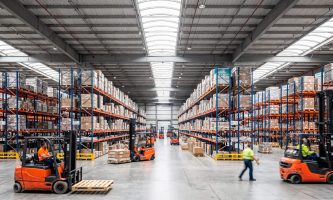
Building Better Warehouse Traffic Flow Through Operational Design
When its come to warehouse traffic flow, safety is the greatest concern. Why? Who wants collisions between forklifts and pedestrians? Every business owner tries their best to keep their production house accident-free and out of unnecessary risks. But here's the thing. Traffic flow impacts far more than safety. It directly and indirectly impacts the productivity, the efficiency, the space utilization, and most importantly, the profitability. Warehouse management comes with a huge cost of time and resources. The entire process may seem sustainable. Yet when movement becomes inefficient, the effects spread across the entire operation. That's why leading facilities don't treat traffic management as a standalone safety initiative. They treat it as part of operational design. Because when movement is planned properly, everything tends to work better. Why Warehouse Traffic Flow Matters More Than You Think Walk through any busy warehouse, and you'll see constant movement. Forklifts transporting pallets. Employees picking orders. Inventory moving from receiving docks to storage locations. Maintenance teams accessing equipment. Shipments heading toward loading areas. It's a nonstop cycle. Now imagine what happens when those movements aren't coordinated. Equipment starts waiting for access, then employees take longer routes. Even congestion develops around key areas and orders take longer to process. And suddenly, small delays start creating larger operational challenges. That's why warehouse traffic flow isn't just about avoiding accidents. It's about keeping work moving smoothly. The easier it is for people, vehicles, and materials to move throughout a facility, the more productive that facility becomes. Simple idea but very big impact. Understanding How Warehouses Change Over Time One common mistake many facilities make is assuming the original layout will continue working forever. It won't be warehouses that evolve, the order volumes increase and the inventory profiles change. New equipment gets introduced. Customer expectations shift. And before long, a layout that once felt efficient begins showing signs of strain. This happens more often than people realize. A receiving area that worked perfectly three years ago may now struggle during peak periods. A staging zone designed for smaller volumes may become overcrowded. Aisles that once handled traffic comfortably may now experience frequent congestion. The warehouse hasn't failed. The operation has simply outgrown parts of the original design. That's why traffic flow should never be viewed as a one-time project. It's an ongoing process. Identifying Warehouse Bottlenecks Not every traffic jam screams for attention. Some of the worst inefficiencies in the process? They hide right there in plain sight. You know those spots where your team keeps stopping and waiting around? Or where forklifts line up like cars in rush hour during peak times? Maybe certain aisles turn into a nightmare to move through once inventory piles up. Those little things are actually screaming "bottleneck." And bottlenecks suck because they drag everything else down with them. One jammed-up area sends ripples across the whole warehouse. That's why smart operational leaders get out there and watch the flow during the crazy busy hours, not the quiet ones. You catch the real weaknesses when things are moving at full speed. And that's exactly when the best fixes start showing up. Reducing Unnecessary Movement One of the fastest ways to fix warehouse traffic flow is surprisingly simple. Just reduce movement. Sounds obvious, right? Yet so many warehouses still make their people and equipment travel way farther than they need to. You often find hot-selling products stored too far from the picking zones. Workstations that force employees to cross active paths again and again. Or staging areas sitting way out of the way from receiving and shipping. All that extra back-and-forth quietly eats up time and energy. You start cutting this waste, and the whole floor starts moving more smoothly. Every extra step adds time. Every unnecessary trip adds cost. Over the course of a year, those small inefficiencies can become significant. That's why product placement matters. Fast-moving inventory should be easy to access. Workstations should support natural workflows. And staging areas should be positioned to minimize travel requirements. Less movement often means greater efficiency. Designing Layouts Around Real Workflows A warehouse diagram can look perfect on paper. Reality is usually messier; people adapt, and the processes evolve. Ultimately, the unexpected challenges emerge. That's why effective traffic flow design focuses on how work is actually performed. Not how it's assumed to be performed. For example, employees often create informal shortcuts when official routes aren't practical. Forklift operators may develop preferred travel paths that differ from planned routes. Inventory may temporarily overflow into nearby spaces during busy periods. These behaviors reveal valuable information. They're telling you how the facility naturally wants to function. Instead of ignoring these patterns, successful facilities use them to improve future layout decisions. Because the best traffic flow systems support real-world behavior. Not theoretical behavior. Creating Structure in High-Traffic Areas As warehouse activity grows, structure becomes increasingly important. Without clear expectations, movement becomes unpredictable. And unpredictability creates problems. That's where physical controls come into play. Pedestrian walkways help separate foot traffic from equipment routes. Protective barriers create safer operating zones. Designated forklift lanes reduce confusion. Restricted-access areas prevent unnecessary traffic. These measures don't just improve safety. They improve efficiency, too. People spend less time guessing where to go. Equipment operators encounter fewer unexpected obstacles. And operations become more consistent overall. The goal isn't to restrict movement. It's to guide it. How Technology Supports Better Traffic Flow Technology is changing warehouse operations at a rapid pace. And traffic management is changing along with it. Conveyor systems help reduce repetitive transportation tasks. Warehouse management systems improve inventory placement decisions. Equipment tracking solutions provide visibility into movement patterns. And increasingly, automation is becoming part of the equation. Autonomous mobile robots. Automated guided vehicles. Smart material handling systems. These technologies can significantly improve efficiency. But they also introduce new movement considerations. Because now humans and automated systems must share the same environment. That's why route planning becomes even more important. Clear operational boundaries help reduce interference and support smoother workflows. The technology itself matters. But the way it integrates into facility movement matters just as much. The Link Between Traffic Flow and Productivity Here's something many businesses overlook. Poor traffic flow doesn't just create delays. It creates lost productivity. Every minute spent waiting for access. Every unnecessary trip across the warehouse. Every congestion-related slowdown. It all adds up. Individually, these delays seem minor. Collectively, they can consume hundreds of labor hours over time. That's why improving traffic flow often delivers benefits beyond safety improvements. Faster order fulfillment. Better equipment utilization. Improved employee efficiency. And in many cases, lower operational costs. The gains can be surprisingly significant. Continuous Improvement Creates Long-Term Results The most effective warehouses don't assume they've solved traffic flow forever. They review, adjust, improve, and then repeat to keep up with the pace. Traffic patterns should be evaluated regularly. Especially after major operational changes like new equipment or automation projects. All of these can influence movement throughout the facility. What worked well five years ago may not support today's demands. And that's okay. The key is staying proactive. Because small improvements made consistently often produce the strongest long-term results. Final Thoughts Warehouse traffic flow is about much more than painted lines on a floor. It's about understanding how people, equipment, and materials interact throughout the day. It's about reducing unnecessary movement. Eliminating bottlenecks. Creating structure. And designing facilities around real operational needs. When movement is planned strategically, warehouses become safer. But they also become faster. More efficient. And more productive. That's why the most successful facilities view traffic flow as part of a larger operational strategy, not just a safety initiative. Because when work moves better, business usually does too. For additional guidance on improving warehouse traffic flow, view the companion resource from Bradford Systems, a provider of storage system lockers. Read Also: The Overlooked Bottleneck: Why the First 100 Feet Deserve More Attention Managing Factory Relocation: Strategies to Prevent Costly Delays
Jun 20, 2026

Business Venture Definition, Types, And How To Start?
A business venture generally starts when there is a product or something that is lacking in the market, but there is an inherent need for it. It is basically the formation of a new business with a business plan, where the expectation is to offer products and services in return for financial gains. The venture starts once the owners identify the needs in the market and start investing. Join us in deciphering the definition of a business venture with this article. This article consists of a general explanation of what a business venture is and how it operates in the market. Apart from that, you will also learn about the major types of business ventures. Next up, we will give you tips on the best ways to start a business venture. Hence, to learn more about business ventures and the ways to operate, read on through to the end of the article. Business Venture Definition - What Is It? A business venture, according to Indeed.com, is “a new business or business activity that entrepreneurs or institutions launch that involves the potential for a return and risk. The entrepreneur, owner or founder assumes the risk to satisfy specific clients for a return on investment.” An individual or an organization can start a new business activity to deliver to the needs and demands of the market so as to solve an existing need or problem. To deal with such needs and problems, these individuals can start a business venture and develop an organization whose objective is to cater to those needs and thereby generate profits. A business venture can be of various levels. Some might have no structure, and some might depend upon operations based on a formal business structure. A structure is a necessary part of a business venture if the operations are complex and the business needs to expand through markets or wants to make additional investments to increase profits. An entrepreneur is mostly the person behind the start of a new business or producing something new in the market and making profits. However, successful business entrepreneurship requires an entrepreneur to possess strong communication skills, risk-taking ability, organization skills, sales skills, and problem-solving. Read More: Risk In Entrepreneurship : What Risks Do An Entrepreneur Face? What Are The Characteristics Of A Business Venture? A business venture basically tries to cater to the need for something that is lacking in the market. According to Smart Capital Mind, “This need can be a service or product that consumers are asking for or need to serve a particular purpose. Once the need is identified, the venture can be started by a smart investor or small business person that has the resources and time to develop and market the new commodity on the open market.” The following are some of the major characteristics of a business venture: 1. Needs Entrepreneurial Control Since there is an element of risk and reward with a business venture, there is a need for entrepreneurial control. The entrepreneur can expose the resources of the business to the associated risks to pursue the rewards of the market. 2. Needs A Great Plan For Business Execution And An Idea If an entrepreneur starts a business venture along with a proper business plan, they can avoid uncertainty and risk. Entrepreneurs can identify a market gap and know how to fill the gap with the help of a solution. 3. Satisfies The Market Needs A business venture starts by resolving a particular need or demand in the market and turns the solution into a profit-making exercise. Based on the price of inputs plus the demand for the product or service, an entrepreneur can determine its price to be sold in the market. 4. Works In A Particular Sector Although a business venture can exist in more than one industry or sector, they still need to focus on creating a particular product or service of specialization, at least for a start. Hence, entrepreneurs must start a business venture in an area that they understand. How To Start A Business Venture? - Steps To Take According to FounderJar.com, “Any new business venture often starts from an existing gap in the market. It could be a demand for a product that consumers require or simply because of the lack of services available to them. No matter what business you are launching, you must have an idea to provide customers with a specific value.” Here are the steps to take if you want to start a business venture as an entrepreneur: 1. You will first need to make a decision on the type of business venture that you want to start. Choosing one will help you focus on a single idea and make it grow. 2. By researching the market gaps, you will be able to get an idea and find the types of opportunities so that you can cash in on that part. 3. You will need to plan long-term based on the idea. You will need to decide how to take steps with your business based on the market forces. Here, you will also need to consider all your major resources at hand and create backups for yourself as well. 4. Every business needs to be of a legal structure. The business’ legal structure is important as you will not be able to change it after you invest your resources. 5. Once you are done with the legal structure, you will need to register your business with your state, and this will help you ease your tax returns. 6. After discussing with your financial advisor, you will need to get an idea of the amount of investments you need for the business venture. Only then you shall be able to launch your business. Read More: Difference Between Entrepreneur And Entrepreneurship With Examples Final Thoughts If you want to start a business venture, you will need to ensure that you properly research the market demands and plan your services accordingly. Sticking to your plan will allow you to take the right steps at the right time and keep focus on your business, despite ups and downs. Although starting a new business venture might be intimidating, it can be extremely rewarding if you use the right strategy and implement it at the right time. Do you have any more recommendations on how to start a business venture? Share your ideas with us in the comments section below. Read Also: Entrepreneurship In Economics: What Role Do Entrepreneurs Play In Economics? What Are The Different Types Of Entrepreneurship? – Take A Look How To Become An Entrepreneur? – Steps To Follow
Aug 29, 2023

What Are Distribution Channels In The Context Of Business?
Distribution channels are extremely important for businesses when it comes to processes related to marketing. When a business chooses a distribution channel, it is basically working for the route of the product from the manufacturer to the consumer. There are various ways through which a business can choose to distribute its product depending on the market. The business does it with the help of the distribution channel it chooses. In this article, you will learn about distribution channels in general and how they work for businesses. Furthermore, we will also learn the major components of distribution channels. Then, we will take a look at various types of distribution channels that are available for business. Finally, you will learn how to choose a distribution channel for your marketing processes. Hence, to learn more, read on through to the end of the article. What Are Distribution Channels? According to the Corporate Finance Institute, “A distribution channel, in simple terms, is the flow that a good or service follows from production or manufacturing to the final consumer/buyer. Distribution channels vary but typically include a producer, a wholesaler, a retailer, and the end buyer/consumer. A distribution channel can also provide a sense of how money flows back from the buyers to the producer or original point of sale.” Hence, when it comes to manufacturing businesses, they need to create a good mix of distribution channels so that there is easy availability for consumers. Basically, they must ensure that the consumers get the products easily. The goal is to create a good marketing mix for the business. The business needs to settle on a distribution channel or more that suits its business processes. However, it needs to consider the diversity and scope of its business, as well as its own distributions. The business must choose those channels that are good for generating sales and providing ease of access to consumers. The business, basically, passes its goods and services through distribution channels. A distribution channel consists of a network for businesses and/or intermediaries until it reaches a final buyer or the target consumer. In many cases, wholesalers, distributors, retailers, and even the Internet come under the purview of distribution channels. Read More: What Is A Holding Company? – Importance, Operation, And Pros & Cons How Do Distribution Channels Work? - Major Components According to Investopedia, “A distribution channel is a path by which all goods and services travel to arrive at the intended consumer. Distribution channels can be short or long, and depend on the number of intermediaries required to deliver a product or service. Increasing the number of ways a consumer can find a good can increase sales but it can also create a complex system that sometimes makes distribution management difficult.” As a distribution channel gets longer, the profits of each intermediary along the way get lesser. On the other hand, in a shorter distribution channel, the profits of each intermediary along the way are higher. What Are The Types Of Distribution Channels? The following are the three major types of distribution channels for business: 1. Direct Here, the consumers of the company make purchases directly from the manufacturer. Hence, there is lower spending on channels and more profits for the business. 2. Indirect In this case, the consumer buys the goods from a wholesaler or a retailer. These hold true for goods that are sold in any physical store. Hence, there is less profit but further reach for the business. 3. Hybrid Here, the business uses both direct and indirect channels. The product or service that the business creates sells through its own retailers as well as through other retailers. How To Choose The Right Distribution Channel For Yourself? The distribution channel you choose determines the prices of your goods and products or the profits you can keep. It also determines how your product is marketed. According to Indeed.com, “Distribution channels can include a variety of intermediaries, which are third-party firms that can help a company promote and sell its products to buyers, depending on the channel used. The more intermediaries in a distribution channel, the more fees the manufacturer has to pay. Short distribution channels are easier to navigate but have less potential for increasing a company's customer base.” The following are the ways through which you can choose your distribution channel: 1. Make sure the distribution channel aligns with the goals of your company. It also depends on your priority. If your business is customer-centric, then you will need to ensure that your customers get more choices. On the other hand, if your focus is affordability, choosing a simple distribution channel will work wonders for you. 2. Stick to the options that are expert in the field that you are in. You will need to choose a distribution channel that works more at par with your pace. If you manufacture goods that perish fast, you will need to choose a distribution channel that delivers quickly and knows how to deal with the product. 3. Choose those distribution channels that are already operating with companies similar to yours. These channels have good relationships with your target customers and know what the latter want. Then these channels will become your natural partner. 4. You must always choose a distribution channel, ensuring there are no internal conflicts. If you sell the same product through a physical retailer as well as an online wholesaler, there might be unnecessary competition among the channels. You can do that once your company is big enough. Read More: What Are Articles Of Incorporation? – Importance, Working, And More Wrapping Up Hope this article was helpful for you in getting a better idea of what a distribution channel is. Distribution channels consist of chains of businesses or intermediaries with the help of which the main business ensures that the final buyer purchases goods or services. Such channels also include retailers, wholesalers, distributors, and even the Internet. Distribution channels can be of two types - direct and indirect. In the former, the manufacturing business sells directly to the consumer. On the latter, the product or services go through multiple intermediaries before ending up with consumers. Do you have more info to add regarding how a distribution channel works? Share your ideas in the comments below. Make Better Business Decisions By Reading More Below! Sabbatical Leave: What Is It, And How Does It Work? What Is Safe Harbor 401K? Benefits And Types Top 7 Best Business Ideas For Teens
Oct 25, 2023

Tips to Update Your Manufacturing Business through CNC Machines
How does providing your clients with more products at shorter lead times sound? How about improved manufacturing productivity, repetitive accuracy, manufacturing various complex parts in different markets, and reduced scraps? Your manufacturing business using manual methods can reap these benefits when you update with CNC (computer numerical control) machines. Technology keeps moving forward, so don’t get left behind. Set your goals right now, plan out strategies, and consider these tips to update your manufacturing business through CNC machines. Take the First and Small Steps Calculate Fixed and Variable Costs Maximize Factory Space Evaluate Your Current Setup for the Appropriate Equipment Assess Your Manpower’s Capabilities Consider the Raw Materials for Machining Search for the Best CNC Systems Research and Talk with CNC Machine Companies or Suppliers Here are the tip details. 1. Take the First and Small Steps Starting is always challenging. You just have to take the first step and continue with a small step at a time when updating your manufacturing business through CNC machines. P&T Precision Engineering started with a vertical milling machine and updated to another CNC machine every two years. Over the years, they were able to update to the most sophisticated CNC machines doing the most complex processes. According to USC, you should replace the most heavily manual machine first for the highest cost and time savings and faster return on investment (ROI). 2. Calculate Fixed and Variable Costs Don’t get overwhelmed by the dreadful costs or flattering results. Costs can be manageable when you consider the fixed and variable costs for updating your manufacturing business with CNC machines. Fixed Costs Take into account the capital expenditure you would incur in purchasing the machine. Include in your computation the machine’s depreciation value and the interest in case you opt for a loan. Variable Costs Consider also the following variable costs in updating through CNC machines. materials you use operators, personnel training, and other manpower expenditures maintenance and servicing machine spare parts tooling Calculate well because cheaper CNC machines do not secure the effective production and profitability of your manufacturing business. To obtain promising results, devise short-term and long-term plans and properly implement your strategies. 3. Maximize Factory Space Does your factory have room for new machines? Does your factory space facilitate the productivity and safety of workers? A negative answer to these questions entails an effort to maximize your factory space, including room for expansion. A maximized factory space ensures efficient worker movements from one machine or process to another. The efficient flow and movement of raw materials and end products from one place to another, as well as collection and disposal, must be ensured. You must also provide power sources to strategic locations in your factory. And most importantly, provisions for workers’ safety must be in place. 4. Evaluate Your Current Setup for the Appropriate Equipment Your existing machine needs updating to a CNC machine when it no longer functions according to its intended purpose. Evaluate if the CNC machine replacement is cost-effective, including the machine’s current gaps and life span. Your evaluation will enable you to select the appropriate equipment to purchase. Update to CNC machines based on your existing manufacturing services and clientele. As mentioned above, you can gradually upscale to more advanced machines depending on your manufacturing business’s growth. CNC machines process parts with complexity and precision. If you invest in more advanced machines, you will be able to manufacture other types of parts and use different kinds of raw materials, thus entering new markets and creating new income streams. If your goal is to manufacture parts for aerospace, automotive, defense, or medical industries, you may consider machining centers with 3 to 5 axes or turning centers with 2 to 8 axes. For the standard to highly complex processes or batch production, choose 2 to 5-axis horizontal or vertical CNC lathes or 3 to 5-axis milling machines. If your manufacturing business is geared toward heavy industry and machinery, horizontal boring mills are for you. 5. Assess Your Manpower’s Capabilities CNC machines need different skills and expertise compared to manual machines. Assessing the prior knowledge and capabilities of your machine operators and personnel lets you identify if they need training for the new machine. You can consult with your CNC machine supplier if they provide the appropriate training. Automated manufacturing machines require lesser human intervention, but you need not lay off workers. You can assign your personnel to other income-generating roles and tasks in your manufacturing business. 6. Consider the Raw Materials for Machining Whether you machine aluminum, copper steel, titanium, or even plastic, note that the type of raw materials affects factors like machine design, spindle to be utilized, durability, performance, and precision. The maximum spindle speed and the needed spindle motor power and torque also depend on the physical characteristics and optimal cutting conditions of the raw material. 7. Search for the Best CNC Systems You may say that all CNC systems are the same. The processes are different from one manufacturing business to another. Match your machine to the appropriate and most practical CNCs. The best CNC systems have effective, reliable, and user-friendly controls and stable software. 8. Research and Talk with CNC Machine Companies or Suppliers Be aware that you have to do prior research before talking with a representative of a CNC company. Doing your research first allows you to formulate questions and ask any concerns you will have to ask. Reach out to multiple suppliers and discuss with them the details about your business and your manufacturing business goals. The decision will be up to you after comparing the products and services they offer. Carry the Day with CNC Machines Don’t be left far behind your competitors. Don’t let the opportunity for your manufacturing business’s productivity, accuracy, repetitiveness, and new income streams fly. Embrace technology. Update through CNC machines by following these tips, and carry the day! Additionals Is Southeast Steel Detailing Inc A Good Company To Invest? What Is Nano Dimension? Is Nano Dimension A Good Investment? Impact Of Covid-19 On The World Market Economics And Its Future Which Entrepreneur Made Tractors Before Entering The Sports Car Business?
Nov 05, 2022