





CFR Vs CIF: What Are The Differences Between These Shipping Terms?
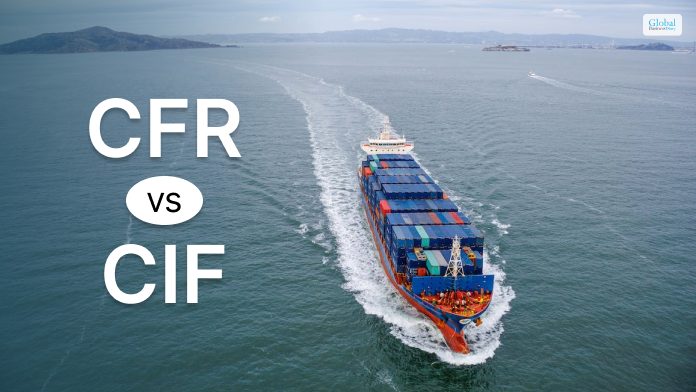
CFR vs CIF: What is the difference between the terms? – You will find both terms standard in shipping and transport, and both are part of international trade rules. CFR is a trade term that means the seller will transport goods by sea to the destination port. On the other hand, CIF means that the seller pays to cover the cost of shipping and insurance to ensure there is no potential damage or loss for the buyer.
In this article, you will learn about two popular terms in shipping: CIF and CFR. First, we will get a general overview of both the terms. Then, we will discuss the function of the seller in both cases. Finally, we will examine the differences between the two terms. Hence, to learn more about the two terms, read on to the end of the article.
CFR Vs CIF: An Overview Of The Terms
One of the interesting things about both terms is that they are known as incoterms.
According to Indeed.com,
“Incoterms are common trade rules developed by the International Chamber of Commerce (ICC). They define the responsibilities of sellers and buyers while participating in international trade. CIF is an Incoterm specifically meant for shipping across oceans or international waters. There are other internationally recognized Incoterm that buyers and sellers can use when delivering products.”
Furthermore, both are part of the larger group of international trade rules. The International Chamber of Commerce (ICC) devised the rules. The first version of the rules came out in 1936. both terms consist of guidelines for traders.
Basically, CFR and CIF are similar terms. However, in CIF, the seller will also need to pay for the marine insurance to offer protection against loss, destruction, and damage to the order.
What Is Cost And Freight (CFR)?
As per Investopedia’s definition,
“Cost and freight (CFR) is a legal term used in foreign trade contracts. In a contract specifying that a sale is cost and freight, the seller is required to arrange for the carriage of goods by sea to a port of destination and provide the buyer with the documents necessary to obtain them from the carrier.”
This term strictly finds its use in cases of cargo transport through sea or inland waterways. However, in this case, the seller does not have the responsibility of procuring marine insurance, as is the case with CIF. The insurance is to provide protection against the risk of loss or damage to the product during transit.
What Is Cost, Insurance, And Freight (CIF)?
On the other hand, CIF (cost, insurance, and freight) gives responsibilities to both buyers and sellers. This is also the case in the case of deliveries through transport through seas or inland waterways. The term gives information about who will merchandise the shipment and when.
If you follow the rules of a CIF agreement, you will be able to divide your shipping costs. Apart from that, you will also have a basic understanding of when you have responsibility for the shipment in the shipping process.
With the CIF agreement, you are transferring both your costs and your risks, but at different times. Here, as a seller, you are transferring the cost when the financial responsibility of the product shifts from the seller to the buyer. Generally, the cost transfer occurs when the product reaches the destination port. Here, you will have to take responsibility for any merchandise cost before that.
The risk transfer happens when the responsibility for the lost or damaged item shifts from the seller to the buyer. In this agreement, this risk transfer happens after the goods are loaded onto the ship. Hence, while the goods are traveling, the seller is responsible for handling shipping costs. However, the buyer will be responsible for the damages to the merchandise or in case of loss.
CFR Vs CIF: What Are The Differences?
According to Investopedia,
“Each term refers to an agreement governing the responsibilities of shipping that fall respectively to buyers and sellers in an international trade transaction. This system of agreements aids in an orderly process of international trade by making contract models available that are easy to identify and understand in all languages.”
However, there are some primary differences between the two agreements. The major difference lies in one additional responsibility for the seller (shipper). In the case of CIF, the seller must also provide a minimum amount of marine insurance on the shipped goods.
Here, the buyer and seller agree on the insurance amount beforehand. Apart from that, the seller of the product takes up the responsibility for additional costs related to the transportation of the product. In addition to that, the seller also pays for paperworks, custom inspections, rerouting, etc., that might occur during the transport of the product. However, the buyer here has to take responsibility for any damage to goods or even loss during transit.
CFR Vs CIF: Understanding The Difference With Example
You can understand the difference between CFR and CIF easily with the help of this example.
Let’s say Seller X sells a particular good from Spain to Buyer Y in the United States. Here, Seller X pays for the shipping from Spain to the US. Also, the seller is responsible for the shipment until the goods are loaded on the shipping vessel. After the loading of the vessel, Buyer Y takes over the responsibility for the goods. This agreement is the same for both CFR and CIF.
However, under CIF, there are additional responsibilities for Seller X. Here, Seller X needs to buy insurance for the transfer of goods. With the insurance, the seller will need to cover the loss or damage to the goods at the time of shipment. Eventually, after the goods reach the destination port, the seller does not have any responsibility.
Wrapping Up
CFR vs CIF – Hope you have found an understanding of both the terms and the differences between them. You can see from the article that both are quite similar agreements. However, in the case of CIF, the seller bears an additional responsibility.
Do you have more information to add? Consider sharing them with us in the comments section below.
Find More About Business By Clicking Below!!

Recent
Dinmukhamet Idrisov and a Gold-Mine Dispute From Kazakhstan’s Oligarchic Past
Oct 16, 2026

Memory Chips Are Becoming More Important in the AI Era
Aug 06, 2026

Why Enterprise Web Applications Still Choose Angular for Long-Term Growth
Aug 04, 2026

Due Diligence Decoded: Why Careful Evaluation Still Wins in Business
Jul 11, 2026

Related Articles

Resilience And Growth: The Story Of The Philippine BPO Industry
The Business Process Outsourcing (BPO) industry has made tremendous strides over the past two decades. From a small sector, it has grown into a global powerhouse, making significant contributions to the country's economy and employment. Call centers in the Philippines have been at the heart of this remarkable journey. The industry's success can be attributed to the country's talented workforce. Filipino professionals are highly skilled, proficient in English, and have a strong customer-centric approach. Their cultural compatibility with Western societies and their understanding of global business practices make them valuable assets to businesses worldwide. An Overview Of The Philippine Outsourcing Industry The Philipine outsourcing industry offers a broad range of services, from customer service and technical support to specialized areas such as finance and accounting, healthcare, and legal services. This breadth of services allows businesses to consolidate their operations, reduce costs, and maintain high service standards. The country's lower cost of living and competitive service rates make it a cost-effective outsourcing destination. This, coupled with the country's commitment to quality and technological advancement, ensures businesses get value for their money. Role Of Government Institutions The role of the government in promoting the outsourcing industry cannot be overstated. Through initiatives like tax incentives, the development of IT parks, and protective laws for BPO employees, the government has made contact center outsourcing to the Philippines an attractive proposition for businesses. Its country’s resilience in the face of global market shifts and its adaptability to changing business needs make it a reliable partner for businesses. As the sector continues to evolve, it strengthens the country's status as a top-tier outsourcing hub. The outsourcing industry is a testament to the nation's resilience and dedication to excellence. It showcases the immense potential of the Filipino workforce and the country's dedication to fostering growth and innovation. As the sector continues to grow and adapt to changing market dynamics, it only further cements the Philippines' position as a leading outsourcing destination. The Success Story Of Philippine’s BPO As the world becomes more interconnected, the role of outsourcing in global business operations is becoming even more significant. In this changing landscape, the BPO industry has not just survived; it has thrived. The sector's success serves as a testament to the country's ability to adapt and grow in the face of new challenges and opportunities. Robust IT Infrastructure One critical area of growth lies in the digital transformation of businesses. The Asian nation, with its robust IT infrastructure and tech-savvy workforce, is well-positioned to support businesses in their digital journey. The industry is increasingly moving beyond traditional call center services to offering more advanced digital services, including AI-powered customer support, data analytics, and cybersecurity. This shift towards higher-value services is a promising development that can potentially attract more investments into the country. Major Socio-Economic Growth Driver The sector is also playing a pivotal role in driving socio-economic growth within the country. The jobs created by the industry are not only helping to reduce unemployment but also contributing to the development of other sectors such as real estate, retail, and hospitality. A Resilient Industry The resilience and growth of the industry have been nothing short of remarkable. As it continues to adapt to the changing needs of the global market, the industry is poised to achieve even greater heights. The story of the outsourcing industry in the Philippines is a compelling narrative of a nation's commitment to excellence, innovation, and growth. As the sector continues to evolve, it is set to redefine the landscape of global outsourcing in the years to come. Key Factors Contributing To The Growth Of Philippines’ BPO Industries There are various reasons why the BPO sector of the Philippines is witnessing major growth. Here are some of the most common ones: When the industry was in its initial years, Bill Gates, the CEO of Microsoft, donated Microsoft Apps Licenses for free to the PCPS programs. This ensured that the government could avoid enormous capital expenditures. Secondly, the Philippine BPO investors are provided a sizeable quantity of incentives. This includes tax holidays, simplified procedures of import, tax exemptions, etc. The workers might are not very fluent in the Western English accent in comparison to their Indian counterparts. However, the close affinity to the culture of the West has set them apart from other workforce in the industries. The Philippines government remains a quick player when it comes to passing key legislative transformations. It further favors the global industries that are willing to outsource their business to the country. Finally, the country focuses more on growing its vicinity in both non-voice and voice sectors. For example, global in-house centers, animation, healthcare information management, etc. Future Prospects For The Industry The BPO companies in the Philippines continue to face new opportunities as well as challenges. The adaptability, along with the resilience of the industry, is depicted through its steady development. However, there are various concerns, like global shifts and unpredicted threats to the sector. The goal is to offer a robust foundation that leads to continued expansion. Exposure to the latest technologies and shifting business trends have paved the way for specialized services. Moreover, it promises a dynamic and vibrant future for this industry. In the constantly changing business landscape, the nation is well-positioned to capitalize on the chances it gets hold of. The commitment to harnessing emerging technologies has made the nation’s BPO sector all set to provide more advanced solutions. The steady focus of the BPO brands on delivering cost-effective yet high-quality solutions ensures that the nation continues to be a focal business point. Consistent support from the government creates a conducive business atmosphere which ultimately promotes foreign investment. What’s better than getting an underscore of the country’s readiness to other outsourcing industries? Wrapping It Up This was a brief introduction to the BPO sectors of the Philippines and how the nation has emerged in times of crisis. With its state-of-the-art technology and on-time delivery of client needs, the industry has surely set a successful footprint. Read More: StashFin Personal Loan Review – Interest Rates, Loan Amount, Eligibility, And More SmartCoin: Information, Eligibility Criteria, Interest Rates, Review & More LoanTap: Information, Eligibility Criteria, Interest Rates, Review & More
Jun 13, 2023

Strategic M&A: Turning Opportunity Into Lasting Value
In fast-moving industries, standing still is not an option. Markets shift. Competitors scale. Technology evolves almost overnight. So when growth feels slow or capabilities feel limited, many leaders look toward Strategic M&A (Merger and Acquisition). It seems like the fastest route to transformation. But here’s the truth, signing the deal is the easy part. Making it work? That’s where everything gets real. Purpose Before Process Every successful Strategic M&A move starts with a few simple questions. Like, why are you doing this? Then the market expansion? What about new capabilities? And the cost efficiencies? Also, access to innovation? If you cannot define the purpose clearly, the deal drifts. And drift is expensive. When leadership aligns early on the strategic rationale, decisions become sharper. Due diligence stays focused, and negotiations shift more towards long-term value than short-term excitement. Because let’s be honest, deal momentum can create tunnel vision. However, when you anchor every step to your broader objectives, you reduce unnecessary risk. And yes, things will change. Market conditions shift. Regulatory reviews add pressure. Financial findings reveal surprises. So flexibility matters. You need governance structures that allow adjustment without losing control over your discipline, plus adaptability. That balance keeps Strategic M&A on track. Execution Beyond Closing The press release announces the closing. Headlines circulate, and the leadership celebrates. But the real work? It starts the next morning. Integration determines whether projected synergies actually show up in performance metrics. You cannot just combine logos and expect alignment. You must make sure the systems connect. Make sure the processes sync and cultures align from the core. And culture is the trickiest one. If employees feel uncertain, productivity dips. If communication lacks clarity, rumours fill the gaps. So you need structured integration planning before the deal even closes. When you prepare early, operational stability improves. Employee confidence holds steady. And customers barely notice the transition. That’s the goal, right? Control Through Technology and Structure Modern Strategic M&A transactions generate complexity along with massive documentation and Sensitive financial data. Cross-functional collaboration across locations. Without structure, chaos creeps in. Centralized digital platforms provide visibility. They track approvals and also secure the information and seamlessly organizes the workflow. And most importantly, they create transparency that builds trust. When the stakeholders find capabilities of progress, decision-making becomes faster. Technology will never dominate human leadership, but it will strengthen oversight and reduce inefficiencies. Unified Leadership as the Differentiator Legal teams analyze risk. Finance models projections. Operations assess integration pathways. Executives define direction. If these groups operate in silos, friction builds. However, when leadership aligns metrics, accountability standards, and communication channels, execution sharpens. Strategic M&A becomes coordinated instead of fragmented. You cannot afford misalignment during a transaction. Too many moving parts. Too many stakeholders are watching. Unified leadership turns complexity into clarity. Measuring Success After the Deal One area many leaders underestimate in Strategic M&A is post-deal measurement. You cannot assume value creation; you have to track it. That means defining clear KPIs before closing. Revenue synergies. Cost savings. Customer retention. Employee turnover. Integration timelines. If you don’t measure these consistently, small performance gaps grow unnoticed. However, when you monitor progress quarterly, you can course-correct early. Set realistic milestones. Compare projected synergies against actual results. Adjust the integration strategy where needed. Strategic M&A creates opportunity. Measurement turns that opportunity into accountable, sustainable performance. Without metrics, growth becomes an assumption. With metrics, it becomes controlled execution. A Framework for Sustainable Growth Timelines help organize tasks. But timelines alone do not create value. Strategic M&A succeeds when preparation, adaptability, and collaboration move together. When oversight remains strong. When objectives remain visible. When execution stays deliberate. Deals do not fail because they move slowly. They fail because they move without alignment. If you approach Strategic M&A with purpose, disciplined planning, and integrated leadership, opportunity does not fade after closing. It compounds and that’s how transformation turns into lasting value. In Conclusion Strategic M&A sounds exciting. You deal with big announcements, big numbers, and that comes with big expectations. But here’s what actually decides the outcome, which is the alignment. If you chase growth without clarity, you create noise. If you close fast without integration planning, you create friction. And if leadership drifts after signing, value leaks quietly. You need purpose before process, a structure before speed and then integration before celebration. Because deals don’t fail overnight, but they erode slowly. However, when you anchor every strategy decision and keep teams aligned from diligence to integration, something different happens. That’s the difference. Strategic M&A is not about doing more deals. It’s about doing the right deal, the right way, and staying disciplined long after the headlines fade. For a visual breakdown of the M&A process from strategy through integration, explore the companion resource from Donnelly Financial Solutions, a provider of SEC reporting services. Read Also: Why Strategic Partnerships Matter More Than Ever
Jan 24, 2026

Major 5 Differences Between Mass-Market Paperback Vs. Trade Paperback
Mostly, if you search for mass-market paperback on Amazon, there is a chance that you know these two terms: mass-market paperback and paperback alone. However, on Amazon, both these types of books are also enlisted separately. So, you must know that these two are different. Let's find out the difference between Mass-Market Paperback vs. Paperback. Usually, these books look different, and sometimes they also have other covers. You can buy either of them as you deem fit for your budget. But, there is less of a guarantee for one of them. So, let’s find out which one is in the mass-market paperback vs. paperback battle. What is Mass Market Paperback on Amazon? If you want to know the winner of mass-market paperback vs. paperback, it’s essential to know about each of them first. Mass-market paperbacks are cheap in quality, and they are a smaller edition of the actual book. They don’t have any illustrations, they use cheap binding, and they can become discolored over a specific period. Sometimes, they even come in pocket editions so that you can fit them in your pocket as you travel. Mass-market paperbacks are primarily available in shops that do not mainly book shops. For example, you can get them at a pharmacy store, airport, gift shop, supermarket, etc. They are priced far less than the original book, which is why people are often attracted to purchase them. But, the poor quality of paper and binding makes readers donate the book to a charity or discard it as soon as they are done reading it. There is a particular fixation on the genre of the mass-market paperback books. You will mostly find books in the History, romance, thriller, and mystery genres. Once you return these books, they cannot be resold. So, the distributors simply strip the cover and recycle the rest of the book. Important Characteristics of Mass Market Paperbacks on Amazon You now know what is mass market paperback on amazon. But you must know why they are distinct from the trade paperbacks and hardcover books. Difference in Barcode If you search for what a mass-market paperback on Amazon is, it will suggest some of the highest-selling mass-market paperbacks. Other than the look and feel, how else are mass-market paperbacks different? Well, all mass market paperbacks on Amazon have the UPC barcode. It is a universal product code. This code is the same for all the units published. However, it is not the same for trade paperbacks. The barcodes of trade paperbacks and the hardcovers are Bookland EAN. EAN stands for European Article Numbers. Difference in Genre There are no static guidelines for a specific genre of books that must be published in the mass market format. However, if you search for a mass-market paperback on Amazon, it will suggest books of some common genre. The reason behind it is simple. Mass-market paperback books of some common genres are published more. These genres are: Young adult fiction stories Mysteries Popular history Thrillers Crime Authors with the most bestselling books, like James Patterson, also have the highest mass-market paperbacks. Books with Strippable Covers The sellers can strip off the covers of the unsold mass paperbacks. The publishers take back these covers against a statutory resell value. Then, the sellers can recycle the rest of the book. Additional Content In most cases, the preface and epilogues are changed in mass-market paperbacks. The original preface and epilogues are changed for a reason. It helps to maintain the originality of the trade paperbacks. Other than illustrations and covers, there must be something else for which I will buy its trade version. What Is A Trade Paper Back? It is an eternal debate of which one is better in the mass-market paperback vs. paperback fight. We have already found out what a mass-market paperback is, so let’s find out what a paperback is. Paperbacks are the softcover edition of the previous hardcover edition of the original book. They indeed cost more than the mass-market paperbacks, but they also cost less than the hardcovers. This is because the illustrations, pagination, binding quality, and page numbers are the same in paperbacks and hardcovers. So, the price only varies for the hardness and the softness of the cover. People often release their books in a paperback format so that they can acquire reviews from critics. Once the necessary adjustments are made, the book is finally released in the hardcover format. Unfortunately, as the mass-market paperbacks, the distributors cannot strip the front covers of the paperbacks too. You can find paperbacks at traditional book shops, and even book dealers and book distributors can also help you get these. But, again, there is no fixation on the book’s genre here, so you can get paperbacks in any possible categories. May You Like: How To Build An Ecommerce Website To Boost Your Business What Are Some Differences Between Mass-Market Paperback and Trade Paperback? If we want to know which one is better, the mass-market paperback vs. paperback, we have to find some differences between them. Of course, there are plenty of differences between these two types of books, but some of the most prominent ones are mentioned below. 1: Difference In Price The significant difference between a mass-market paperback and a paperback is their price difference. This is because lower-quality papers are used for printing mass-market paperbacks. These kinds of books even discolor within a specific period. So, they are usually cheaper in terms of price. However, paperback books are usually better in terms of quality. When you search for a mass-market paperback on Amazon, you don’t get suggestions for higher-quality books. In addition, these books won’t discolor over a certain period, so you will find them the same looking no matter how many years after you reopen them. That’s why paperbacks are more expensive than mass-market paperbacks. 2: Difference In Pagination Pagination is a significant factor of difference in the debate of mass-market paperback vs. paperback. Mass-market paperbacks use a smaller size for pages, so there are usually more pages in these books than in the paperback edition. When the mass-market paperbacks come in the pocket edition, the page numbers are even larger, and the font quality is inferior on those books, too. Nevertheless, the pagination in paperbacks is precisely the same as the hardcover editions. In addition, the page quality is the same as the hardcover editions, and it even includes all the illustrations. Hence, the number of pages is lesser in paperbacks than in mass-market paperbacks. 3: Difference In Releasing Time First comes the hardcovers, and then the paperbacks are released. It is the usual trend that authors and publishers follow. But, sometimes, the paperbacks are released first because they are sent to critics to review the book. Once they make all the necessary corrections based on the review, the final hardcover edition comes into the market. On the other hand, the mass-market paperbacks appear very late in the market. This is because they are released after the hardcover editions and the softcover paperback editions. But, this is not a rule that everyone must follow. Some new authors first go for mass-market paperback options because they want to appeal to a larger audience. Then, if the book is loved by all, they go for the paperbacks. 4: Difference In Return And Refund Policy We are telling a buyer to return one of these types of books between the mass-market paperback vs. paperback battle. No, they can’t. However, the booksellers can return the mass-market paperbacks to the publishers. When you search for a mass-market paperback on Amazon, you get the best sellers as a result. If you buy any of the books, you can easily resell them. You only have to strip the cover, and they can apply for store credit or a refund after returning it. On the contrary, the paperback return policy doesn’t work like that. If the bookseller wants to return a paperback, he has to replace the whole book, not just the cover. The covers of paperbacks are not strippable, too, so you can’t ask for a refund unless and until you return the whole book. 5: Difference In Genre The fight between mass-market paperbacks and paperbacks will remain incomplete if we don’t discuss the genre of these two types of books. In mass-market paperbacks, the usual fiction books like romance, thriller, and mystery are available. On the other hand, if you are looking for a religious book or a political book, those won’t be available in the mass-market paperback format. Nonetheless, in the paperback format, there is no rigidity in the genre. Thus, no book is only available in hardcover and not in softcover paperback editions. Instead, you can access books of any possible genre in a paperback format more than with hardcover and mass-market paperback combined. Sum It Up If you are an avid reader, you should buy paperback rather than mass-market paperbacks. The page quality, originality, binding, illustration-everything is better in the paperbacks. The price is also not very high like the hardcovers. So, we declare paperback as the winner in the mass-market paperback vs. paperback battle. Frequently Asked Questions : 1: Which is Better; Paperback or Mass Market Paperback? Ans: If you search what is mass market paperback on amazon, you will get suggestions of some bestsellers. However, the physical look and feel of the mass market paperbacks are different. The trade paperbacks are made with better quality paper. The content in those books is also better. Rather, you will find the author’s own content in trade paperbacks only.ntially, it all depends upon how well you take care of the book. 2: What Does Mass Market Paperback Mean on Amazon? Ans: The pages of the mass market paperbacks are smaller. Most of them have a 4"x7" page size. However, you will see that trade paper backs and hardcovers mostly have 6"x9" page size. As a result, the number of pages in mass market paperbacks is more.For example, Game of Thrones mass market version has 831 pages. However, the regular version has 704 pages. 3: Why is Mass Market Paper Back More Expensive? Ans: The mass market paperback books on Amazon has more pages. As a result, the cost of making a mass market paperback is more than the trade paperback. Also, the mass market version is more popular. Publishers earn more by circulating these books in larger volumes. Read More: Winning Strategies: Insights From Top Personal Injury Attorneys What Is A Business Development Consultant, And What Are Their Job Roles? Is Dropshipping Legal? Things You Have To Considered When Doing Dropshipping In 2021
Aug 02, 2021

The Art Of The Deal How: Photo Books Elevate Business Meetings
In today's fast-paced business environment, the art of making a lasting impression is paramount. With the constant bombardment of digital media, it's easy for messages to get lost in the shuffle. Enter the photo book: an old-fashioned concept given a modern twist, proving to be a powerful tool in the boardroom. But how exactly can a photo book help you seal a business deal? The Tangible Impact Of Physical Media There's a tangible quality to printed materials that digital displays simply can't replicate. Flipping through a high-quality photo book offers a sensory experience - the feel of the pages, the visual appeal of crisp images, and even the book's weight contribute to its perceived value. In a business meeting, where first impressions matter, presenting a photo book can position your brand as sophisticated and detail-oriented. Visual Storytelling: Making Complex Ideas Accessible Every business, regardless of industry, has a story to tell. Whether you're pitching a product, a service, or an idea, the narrative is critical. Photo books serve as visual storytellers, condensing complex concepts into accessible and engaging visuals. Instead of relying solely on slideshows or wordy brochures, photo books can guide your clients through the journey of your proposal, making the information digestible and memorable. A Tool For Personalization Clients and business partners want to feel special. They want to know that you've invested time and effort into understanding their needs and preferences. Customized photo books can serve as a testament to this understanding. By tailoring the content of the book to address specific pain points, challenges, or aspirations of the client, you're showing a level of dedication that won't go unnoticed. Data Speaks Louder: The Power Of Incorporating Metrics For many decision-makers, the bottom line comes down to numbers. Including a data table in your photo book can reinforce your points with empirical evidence. Metric Before Implementation After Implementation Percentage Improvement Customer Satisfaction 72% 88% +22% Sales Conversion Rate 18% 27% +50% Return on Investment 5x 8x +60% Embedding such quantifiable data within the broader narrative of your photo book ensures the figures are contextualized within your overall pitch, making the case even more compelling. Read Also: How To Start A Business In 2021 – Best Business Strategies An Everlasting Business Card Long after the meeting has concluded, the photo book will remain. Unlike a typical business card or brochure that might find its way to the trash, a high-quality photo book is likely to grace the shelves or coffee tables of your prospective client's office. It serves as a continuous reminder of your brand and the potential partnership or deal, ensuring you remain top of mind. Making Your Pitch Unforgettable Incorporating photo books into your business meetings isn't just about aesthetics. It's a strategic move to engage, impress, and influence. In a competitive market, details matter, and offering a tangible, visually appealing narrative can be the difference between a missed opportunity and a sealed deal. Additional: how to keep your employees motivated 8 best practices for managing remote teams What to do when your boss makes you feel incompetent
Aug 24, 2023