





Inventory Turnover Ratio: Definition, Formula, Working, And More

If the inventory turnover ratio of your business is high, it means that your business is able to manage its stock in an effective manner. The measurement gives you an idea of how many times the inventory of your business is sold or used in a given period of time. If you compare the cost of sold goods of your company against your business’s average inventory, you will get the inventory turnover ratio of your business.
In this article, you will learn what inventory turnover ratio means in business and how it works. Apart from that, we will also discuss the formula of inventory turnover ratio so that you are able to measure your business’s inventory. Additionally, you will also learn about what is a good inventory turnover ratio for a business. Finally, we will share with you a simple example by calculating the inventory turnover ratio.
What Is Inventory Turnover Ratio? – Definition
According to Investopedia,
“Inventory turnover is a financial ratio showing how many times a company turned over its inventory relative to its cost of goods sold (COGS) in a given period. A company can then divide the days in the period, typically a fiscal year, by the inventory turnover ratio to calculate how many days it takes, on average, to sell its inventory.”
With the help of the inventory turnover ratio, you will be able to make better business decisions related to various factors in the business. Some of these factors include pricing, marketing, manufacturing, and purchasing. Calculating this ratio will allow you to measure how well your business is making use of its assets.
Read More: What Is Continuity In Business, And Why Is It Important?
How Does Inventory Turnover Work?
The inventory turnover ratio of your business will help you evaluate how efficiently your business has been using its inventory within a time period against the cost of goods sold in the same period of time. This will give you a clear picture of how the business is making use of its inventory. This further helps in making informed decisions in the future and helps in assessing factors like pricing, production, and manufacturing.
Two factors help in determining the inventory turnover ratio –
Cost of Goods Sold (COGS):
This is the cost associated with the production of the business or the purchasing of the products that the business later sells to the customers.
Average Inventory:
This is the average of the costs of the inventory that the business pays over multiple time periods.
Basically, the inventory turnover ratio helps the business to improve its inventory management process. If the inventory turnover ratio is high, then it indicates that the business has strong sales or the inventory is not up to the mark. On the other hand, a low inventory turnover ratio indicates that the business is stocking too much inventory and is not selling enough.
According to the Forbes Advisor,
“Knowing how often you need to replenish inventory, you can plan orders or manufacturing lead times accordingly. When inventory isn’t moving quickly, the business must analyze why. Possible reasons could be that you have a product that people don’t want. You may not be doing enough marketing for that product. Or, you can simply buy too much stock that is well beyond the demand for the product.”
What Is The Formula For Inventory Turnover Ratio?

You can calculate the inventory turnover ratio by dividing the cost of goods sold in a particular time period by the average inventory cost in the same time period. Here is the formula for the inventory turnover ratio:
| Inventory Turnover Ratio = Cost of Goods Sold / Average Inventory |
What Is A Good Inventory Turnover Ratio?
According to Nerdwallet.com,
“The higher your inventory turnover ratio, the better — within reason. […] If your inventory turnover is low, your stock might be spending too much time sitting on your shelves, not being sold. That translates into money being wasted on inefficiently used storage space, plus the possibility that the longer the inventory sits around, the more likely it’ll get damaged or depreciate in value.”
In general, the higher the inventory turnover ratio, the better it is for businesses. However, if you are the owner of a small business, you must consider the types of products you deal with, as well as the inventory turnover range that is common for your industry.
For example, businesses that deal with perishable goods, like groceries, bakeries, and related businesses, mostly have a very high inventory turnover ratio. This is because of the fact that the products of these businesses expire soon and lose value much faster. On the other hand, businesses that deal with non-perishable goods like shoes generally do not have a high inventory turnover.
Explaining Inventory Turnover Ratio With An Example
Let’s find the inventory turnover ratio of a company named XYZ.
As per the income statement of XYZ, the cost of goods sold amounted to $2 million.
The cost of inventory of XYZ for the start of the year was $250,000, and at the end of the year, the inventory amounted to $750,000.
Therefore, the average inventory price of XYZ = ($250,000 + $750,000)/ 2 = $500,000.
Now, since Inventory Turnover Ratio = Cost of Goods Sold / Average Inventory
Therefore, the Inventory Turnover Ratio for XYZ = $2 million / $500,000 = 3.
This means that the business sold its inventory three times over throughout the entire fiscal year. Hence, it takes an average of 122 days (365/3) to fully sell out its inventory.
Read More: Business Continuity Plan – What Is It, And How Does It Work?
Final Thoughts
Calculating the inventory turnover ratio of the business will allow you to get a good idea of how efficiently the business is managing its assets. You can calculate the inventory turnover ratio for your business by finding out the cost of goods sold and dividing it by the average value of the inventory within a given period.
A higher inventory turnover ratio shows that the business has strong sales. However, in some cases, it also indicates that the inventory stocking of the business is inadequate. Do you have any recommendations regarding how to manage inventory better? Share your ideas with us in the comments section below.
Read Also:
Tags:

Recent
Memory Chips Are Becoming More Important in the AI Era
Aug 06, 2026

Why Enterprise Web Applications Still Choose Angular for Long-Term Growth
Aug 04, 2026

Due Diligence Decoded: Why Careful Evaluation Still Wins in Business
Jul 11, 2026

How Hydraulic System Design Impacts Equipment Performance
Jul 01, 2026

Related Articles
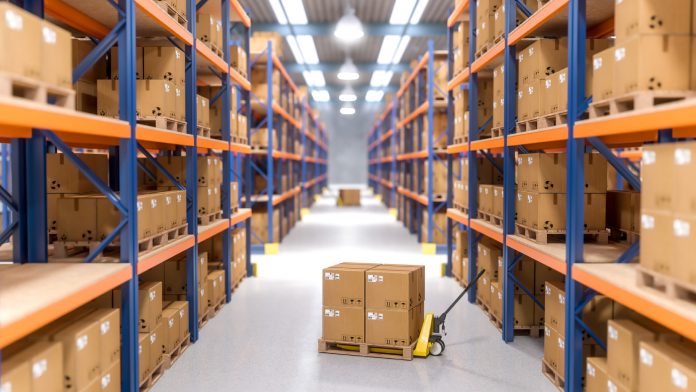
Backorder Vs Out Of Stock: Essential Things To Know About It
Do you want to know about the difference between Back Order Vs Out Of Stock? If yes, you must get through the complete details to have a better concept of it. Most of the time, people are in confusion about backorder vs out of stock. Backorder means stocks that are out of stock but will be again in stock very soon. Most of the time, the manufacturer of the product plans for a backorder. This is the basic concept about back order that you must know from your end. In most cases, customers can buy back-order items. Out-of-stock items, conversely, can be the ones that have no existence in the warehouse, and stock re-ordering needs to be done. Your distribution channel needs to be well aware of it. What Are The Difference Between Back Order vs Out Of Stock? There are several points of difference between Backorder vs Out Of Stock. You need to understand the reality while attaining your needs with complete simplicity. Once you follow the correct methods, things can be easier for you. 1. Meaning & Concepts: Back Order Vs Out Of Stock A backorder occurs when a customer places an order for a product that is temporarily unavailable or out of stock. But the seller accepts the order and promises to fulfill it as soon as the product becomes available again. An item is considered out of stock when the seller currently has no inventory of that particular product. When the warehouse is devoid of any stocks or items present in it, then we call it out of stock. This is the primary point of difference between Backorder vs Out Of Stock. 2. Promise Of Delivery With a backorder, the seller commits to delivering the product to the customer once it is back in stock. Even if there is a delay in the delivery, then the stocks will return to the customers. You should follow the correct strategy that can make things easier for you. Supply chain risk management will help you in meeting your needs. Unlike a backorder, when a product is out of stock, the seller cannot immediately fulfill orders for that item. Customers may need to wait until the product is restocked. There is no promise for delivery of the stocks. It can keep on changing over time. 3. Customer Communication: Back Order Vs Out Of Stock Customers are typically informed that the product is on back order, and they may be provided with an estimated restocking date. The order is usually accepted, and the customer is willing to wait for the item. Backorder vs. Out of stock can have an impact on your expectations. Customers are informed that the product is currently unavailable and the order cannot be fulfilled immediately. Depending on the situation, customers may choose to wait for restocking or explore alternative options. 4. Timing & Order Acceptance The order is accepted by the seller even when the product is not currently in stock. The commitment is to fulfill the order when the item becomes available. You should understand the scenario and the differences between the two concepts. The order may not be accepted until the product is back in stock. Furthermore, the customer may be informed that the order cannot be fulfilled at the moment. However, things can turn out to be worse for you if the order is not accepted. 5. Inventory Management: Back Order Vs Out Of Stock Back orders can be a part of a proactive inventory management strategy. It allows sellers to gauge demand and maintain customer satisfaction by fulfilling orders when stock is replenished. Occurs when the demand for a product exceeds the available inventory, and the seller needs time to restock. You should be well aware of the situations that can make things easier for you in the long run. How Do You Reduce The Pain Of Back Orders? There are several ways you can reduce the pain in the back orders. You cannot just make your selection of the orders in the wrong direction. However, things can prove to be tougher for you in the long run, but you cannot achieve your requirements with ease. 1. Transparent Communication Clearly communicate the status of back-ordered items to customers. Provide realistic estimates for when the product is expected to be back in stock and keep customers informed of any updates or changes to the timeline. You should ensure that the process of the communication must be clear and in good order. 2. Real Time Inventory Management Implement a robust inventory management system that provides real-time updates on stock levels. This helps in accurate order fulfillment and reduces the likelihood of unexpected backorders. There are several factors and differences between Backorder vs Out of stocks that you must know from your counterpart. 3. Set Clear Expectations Set clear expectations regarding shipping times and delivery dates during the ordering process. Clearly state whether a product is in stock or on back order, and provide estimated delivery times. However, your expectations must be clear if you want to get the stocks back for your own requirements. 4. Prioritize Customers Orders Establish a system to prioritize backorders based on factors such as order date, customer loyalty, or order value. This can help ensure that high-priority customers receive their items first when stock becomes available. 5. Offer Alternatives Provide customers with alternative products that are currently in stock and meet their needs. Offering substitutions or similar items can help prevent disappointment and provide customers with options. Final Take Away Hence, if you want to grow your business in the correct sequence. You must follow the mentioned process and know the difference between the concepts. Backorder vs Out Of Stock has several points of differences, and there lies the distinctions. You can share your views and comments in our comment box. It will help us to know your take on this matter in the long run. Without knowing the ways, things can turn worse for you. By employing these strategies, businesses can better manage backorders and enhance the overall customer experience during periods of product unavailability. Transparent communication and proactive measures are key to maintaining customer trust and satisfaction. For The Best Business Related Information Click Below!! LLC VS Sole Proprietorship: Major Differences That You Need To Know Vertical vs Horizontal Integration: What Are The Key Differences? Micro vs Macro Economics: What’s The Difference?
Feb 16, 2024

Upcoming Business Challenges In USA For Small Businesses To Note (2024 And Beyond)
It is important for businesses to anticipate the future correctly so as to deal with it. This holds especially true for small businesses. However, with major innovations and changes in the last few years, there are certain small business challenges in USA. There has been momentous shifts in the workplace. Despite various changes and challenges, businesses need to adapt accordingly to stay relevant in the marketplace. Let's understand about Upcoming Business Challenges In USA. In this article, you will learn about some major aspects that pose significant challenges for small businesses in the USA soon. However, before informing about upcoming challenges, this article discusses business challenges in general. Furthermore, you will learn about how business challenges affect small businesses. Finally, the article consists of things small businesses can do to cope with upcoming challenges. Business Challenges In USA: A Brief Overview In 2023, businesses had to come across many challenges. Some of the major challenges include the rise in interest rates, situations of a potential recession, the rise in inflation, and other factors. Furthermore, many small businesses, as well as big businesses, have had to lay off workers due to changing times. In addition to that, the introduction of AI platforms also threatened many job roles and businesses. Despite various changes, many businesses are optimistic about 2024 and the upcoming years. Although businesses had to deal with high inflation and long-lasting economic downturns, they are still looking forward to better times in 2024 and beyond. Some of the major findings and trends among small business owners are quite interesting. As compared to five years ago, most business owners think it is harder to own a small business now. According to the YouGov survey, “Out of the surveyed small business owners, nearly two-thirds (65%) stated it’s somewhat harder or much harder to be a small business owner in 2023. One in 10 (10%) say that it is easier to own a small business compared to a half-decade before, while 22% say there has been no change.” Roughly every two out of five businesses reported revenue growth in 2023. The rest did not report any revenue growth. On the other hand, there are many businesses that think things will look better by the end of 2024. Almost half of small business owners expect that their profits will grow in the coming years. However, one in every five businesses is pessimistic and does not expect business growth. How Do Business Challenges In USA Affect Small Businesses? The following are some of the major challenges that businesses faced in the last few years: Cashflow problems. Working for free Problems in finding a lender Problems in paying employees Dealing with layoffs, and many more. Furthermore, almost one in every ten business owners think that there will be layoffs in 2024. This number is a huge increase from last year when one in every twenty business owners talked about layoffs. Some of the other areas where business owners are prioritizing include: remodeling or expansion of the business higher investments in new technologies more investment in marketing and digital media expansion of the number of employees more focus on the welfare of employees integration of AI tools or capabilities in business operations One of the top concerns for most small businesses is inflation. According to the US Chamber, “A majority (54%) of small business owners cite inflation as a top concern. In fact, inflation is the top concern for small businesses regardless of region, number of employees, or sector. This is also the sixth consecutive quarter that inflation has topped the list of challenges small businesses see, and consistent with findings in Q1 2023 (54%). No other concern comes close.” Another major aspect that affected businesses in the last few years is rising interest rates. Higher interest rates have led small businesses to seek more finances. More than 75% of businesses have complained that rising interest rates have limited their ability to finance or raise capital. Apart from that, the spike in interest rates also affected their growth. Furthermore, many businesses said that they had to delay their plans for growth due to this. What Are The Upcoming Business Challenges In USA? With economic concerns, rising interest rates, and changes in technology, companies, especially small businesses, are facing challenges. The following are some of the greatest challenges that every small business owner should prepare for in 2024 (as well as in coming years): 1. High Inflation And Economic Slowdown You must have already come across several headlines about higher inflation. Furthermore, that trend will likely continue in 2024, too. According to Forbes.com, “Even though inflation has come down, consumers are still feeling the pinch of higher prices. This is because the prices are up significantly compared to pre-pandemic. If we compare prices in December 2023 to January 2020, overall prices are up 19%, food prices are up 25%, energy prices are up 26%, and the prices of shelter services are up by 21%.” However, recent reports showed that the rate of inflation is slowly getting back to normal. Despite that, prices will still be high. Because of this, many economies will shrink or come under stagnation. Hence, businesses need to prepare for the inflationary reality this year. 2. Disruptions In Supply Chain Supply chain security has become a key issue due to the rise of conflicts in other parts of the world. Apart from that, the backlogs of COVID-19 also added to the issue. Later on, the Ukraine-Russia conflict made things worse. Additionally, due to the Great Resignation, there have been labor shortages. Hence, it has become difficult to access parts and products. Also, the prices of items went up because of this. Furthermore, in the Eurozone, there have been many losses in 2023. 3. Higher Needs Of Customers With changing technology, customers also started demanding better experiences from companies in the metaverse and real world. Furthermore, nowadays, customers are also looking for in-store experiences, even in brick-and-mortar stores. Hence, if you own physical shops, you will need to consider adding more immersive experiences for customers. Paychex.com adds here - “To ensure success, small business owners should have a mobile-friendly, easy-to-navigate website with e-commerce options that allow consumers to quickly find what they want and purchase products or services from their mobile devices. The same attention to detail should be applied to traditional shopping methods.” Hence, companies need to ask themselves and find new ways to add more value to customers. Therefore, making experiences better for customers will help in acquiring and retaining customers. This way, companies will be able to engage customers both online and offline. 4. Faster Transformations In The Digital World The rise of artificial intelligence in the digital world has started to transform all aspects of businesses. This trend will obviously continue in the next few years because, with time, AI will only develop. Apart from that, there has been the introduction of other technologies as well. Some of them include blockchain, 5G, the cloud, and Internet of Things (IoT). These technologies are helping in the speeding up of AI, while developing each other as well. In addition to that, rapidly developing technological processes have also led to the creation of a fast-changing world. Hence, a time will come soon when all businesses need to act as tech businesses and need to invest heavily in technology. 5. Employees Facing Skill Gaps Another big challenge that companies will face is talent shock. Even now, companies are facing massive skill gaps for vital future skills. Hence, small businesses are left with employees with outdated skills. Hence, they need to invest heavily in upskilling and training their employees sometimes. According to Paychex.com, “New performance management techniques are transforming the way businesses prioritize their retention efforts. For instance, investing in learning management can help employees further develop key skill areas and better immerse themselves in the company culture. ” Hence, it is extremely important for companies to upskill, reskill, and train employees to deal with AI systems and new technology. 6. Security Issues In Data And Devices As the use of the internet increases with time, security issues are keeping up as well. With rising digitization, businesses are accumulating more data. These data are highly attractive to cybercriminals. This is evident from the number of cyberattacks individuals and businesses face sometimes. Furthermore, phishing scams and ransomware attacks are also on the rise. Hence, it has become hard for businesses to keep up. Mobile and IoT devices are facing cybersecurity threats as well. Furthermore, with the rise of quantum computing, existing security systems are also becoming obsolete. Hence, there is a high need for the inclusion of AI and proactive measures from businesses. 7. Slowing Down Of Sustainability Practices With rising environmental and sustainability concerns, consumers are also looking for companies that are transparent with their sustainability practices. Companies that produce more environment-friendly products and services seem to have a better future. Consumers want their companies to respond by being transparent about their business practices. To do this, companies also need to continuously perform audits of their supply chains. Also, companies must switch to renewable energy, move to sustainable packaging, and allow employees to work remotely. How Do You Deal With Upcoming Business Challenges In USA? The following are some of the major steps small businesses can take to deal with challenges in 2024: 1. To deal with inflation, companies need to ensure that there is end-to-end visibility of business functions, operations, units, and cost categories. This will lead to better accountability and reduced spending. 2. If companies want to deal with supply chain disruptions and security issues, they must resist the urge to order more than what is required. Companies do that to compensate for their backlogs. However, over-ordering can worsen the situation for companies. In such cases, companies need to focus on long-term recovery. Furthermore, restructuring the needs will help prevent shortages in the future. 3. To deal with customer experience and demand, online retailers can add extended reality (EX) features to their websites. This way, customers can try out clothing and makeup without even leaving their homes. 4. Fast technological developments require companies to redesign their processes. Furthermore, companies also need to ensure that they have skilled employees in their companies. This is because these employees need to work alongside intelligent AI systems. 5. To deal with talent shock, companies must start upskilling, reskilling, and training employees. Furthermore, companies must also offer a good working environment for employees that is also appropriate for the new world of work. 6. To ensure better cybersecurity systems, companies must take proactive measures for the same. To do the same, they must evaluate their data backup and recovery processes. Other measures include penetration testing, vulnerability scanning, and more. 7. Companies also need to demonstrate their sustainable practices to consumers. This will help satisfy consumers' needs and ensure they are indirectly contributing to sustainable practices. Small Businesses And Upcoming Business Challenges In USA No matter what the obstacle is, it is important for small businesses to focus on creativity and find new ways to solve the problem at hand. This will ensure that the company is on the verge of growth even in tumultuous times. Forbes.com adds - “A key finding from one of our recent small business owner surveys found that half of the companies surveyed agreed that cash flow management tool consolidation positively impacts profitability, and 71% said it positively impacts efficiency. Small business owners are now prioritizing their digital financial toolkits to improve their businesses.” Hence, whatever the challenge is, it is essential for small businesses to focus more on cash flow management. This will ensure that the business is running effectively. Wrapping Up Hope this article was helpful for you in forming about the upcoming business challenges in USA. The problems will be of paramount importance in 2024 and the next few years. However, as a small business owner, you will also need to update yourself with current problems and prepare for change. Do you have further solutions to add? Consider sharing your ideas and opinions in the comments section below. For More Business Related Article: ERTC Qualification Step-By-Step Guide What Is Safe Harbor 401K? Benefits And Types Sabbatical Leave: What Is It, And How Does It Work?
Feb 20, 2024
What Is Legacy Academy Franchise? Everything You Should Know
Today, parents have less time for their children, and they search for a complete school where the child's overall development is possible. Legacy Academy franchise offers such an opportunity to the parents of the 21st Century to provide their children the required care and time they deserve. You can remain assured of your quality childcare once you opt for the Legacy Academy Franchise. Do not waste your time admitting your child to an ordinary school. You can get different kinds of curriculum for your child from this Legacy franchise. Types Of Curriculum Legacy Academy Franchise Provides In 2022 There is a wide variety of Curriculum available for your child in the Legacy academy franchise. However, you have to ensure that you do not make your investments in the wrong places while you invest in Legacy Academy Franchise. 1. Brain Power The development of brainpower is an essential part of a child’s life during their infancy. You can rest assured that Legacy Academy Franchise offers brain power development programs to Infants and Toddlers. You have to take care of different kinds of services to improve your child’s future in the right direction. So work out your plans which can work well in your favor. In the first six to eight months, your Child's brain functions improve rapidly. However, you have to understand these facts while seeking the assistance of reputed schools. Brain development of your child will be possible when they get the guidance of a mentor, not only an ordinary teacher. 2. Infants Depending on the current brain research, certain sensory activities are developed among infants early, like drama, sensory age, literacy, curiosity, art, and language. In the Legacy academy franchise, we create a framework to develop the mortar skills of the child’s brain to perform the task aptly. Therefore, you need to understand the importance of your child's growth, and it is possible when you seek the services of Legacy Academy Franchise. The infancy stage of a child is the most crucial stage in their life. What they will learn at this age will be remembered and registered in their minds for a lifetime. 3. Toddlers Toddlers are a particular group of children who are unique in their approach. Therefore, the optimal time and positive interaction between the teacher and students are essential. You have to understand the facts before making your choices for creating proper bonding and building high self-esteem for your child. Toddlers require positive interaction with their teachers and seniors, and Legacy Academy Franchise offers just that to their children. The primary aim of Legacy Franchise is to promote Individual development and Toddlers' growth. Therefore, all the children are given the scope to develop their gross mortar skills by properly exploring the surrounding environment. 4. Pre-Schools The Preschool program of Legacy Academy Franchise is quite exciting for the students. The reason is that it enables the students to participate in group activities and make new friends. The exciting curriculum includes math and literacy lessons. In maths class, preschoolers are trained to develop thot cognitive skill sets. The Curriculum includes number recognition, geometric shapes, Counting, and classification. In addition, reading and writing skills are nurtured for three years to improve literacy skills. The three-year-old child is exposed to a better learning environment, and teachers plan their curriculum according to it. 5. Kindergarten Brainpower and character-building activities are the primary forms of learning that are practiced daily in Legacy Academy. In this Curriculum, the learners will be challenged to learn new things every day. Children will be motivated to explore new ideas and concepts, which can challenge their thought processes every time. All the concepts taught here are based on brainpower. It focuses on the objectives of the multisensory key experiences. However, the teacher's class size is such that they can interact with the child in a one-to-one conversation. Legacy Academy Franchise focuses on developing such a curriculum for your child, which will help them improve their problem-solving ability and decision-making capabilities. 6. School Age The Legacy Academy school-agers got the chance to call their parents before and after their school day was over. After and before school, the students will get some of the quality teachings and curriculum that are necessary for their overall development. Some of the quality services are as follows:- Group and individual activities. Homework Help. Eating Healthy Snacks. Team Building & Creating opportunities. They are invigorating the Outdoor Experiences among the students. The School Agers have plenty of time for playing games, having fun, and relaxing. In addition, legacy welcomes your school ager any time school is not in session. 7. Activities, Music & Foreign Language Certain activities, music, foreign language Legacy Academy Franchise offers to its clients. Research reflects that young Children are eager to learn new concepts and a Foreign language rapidly and efficiently. In addition, you can also learn new music if you love discovering new songs. The overall development activities of the Children include Karate, Yoga, and Dance activities with proper guidance. Your Child’s overall growth is ensured when you want to develop the child's creative skills. Qualified instructors can guide the Children. In addition, it can help young children learn new concepts. After discussing with the parents and diagnosing the Children's interests, they offer foreign language courses to the students. Of course, you have to understand the facts before deciding to select a foreign language. Final Takeaway Hence, if you want to ensure your child's overall development, then Legacy Academy Franchise will offer you the scope for that. Proper development of your child will be possible when your child is exposed to a better learning environment. You just have to make the admission of your child to this school. In the 21st century, only your child's academic excellence will not work well for your child. Instead, overall development is necessary. You can feel free to share your opinions about it. But you must remember that it is the question of your child's future, and you cannot take chances. However, the proper selection of the schools is significant here. More Resources: 7 Rules To Build Personal Brand For Your Business Visa Sponsorship - Everything You Need To Know About It Youtube Sponsorship - Everything You Need To Know About It
Jan 22, 2022

What It Takes To Grow A Business Sustainably
Growth is the lifeblood of any business. However, businesses are increasingly looking to expand rapidly and responsibly, ensuring longevity and stability. Sustainable growth considers the long-term effects of business strategies on the environment, society, and financial health. This article delves into the concept more thoroughly and discusses the key elements contributing to sustainable growth. Below, find in-depth insights to help navigate the journey toward sustainable business practices. What Is Sustainability In Business? Sustainability in business refers to the effect that the enterprises have on both the society and the environment. Profits must be the be-all and end-all in business. But at the same time, the business has to ensure that it takes steps to preserve the environment and address its issues. Ultimately, it will help companies to grow for a longer period. Businesses must adhere to sustainability strategies that assist them in addressing issues such as the use of natural resources, climate change, fair working conditions, income and gender inequality, and pollution. Benefits of Sustainability In Business There are diverse benefits to achieving sustainability in business. Let us understand the concept here. Business Driven By Purpose Help Gain Competitive Advantage Sustainability in business is all about sticking to one’s goals, imparting quality training to the workforce, and helping them get motivated. The organization must ensure that they takes all the responsibilities to satisfy the needs and requirements of the employees. It is the key to attain commercial succes in the long run. This is because this very policy helps the organization retain experienced employees and hire the best ones continuously. Sustainable Products Have A Growing Market According to a study, consumers are increasing their attention towards sustainable products. They have now shifted their choices, shaped by their responsibility towards nature. According to diverse observations, customers are looking to pay more for products that are made with environmental protection in mind. If you want your organization to go for sustainable products and practices, there is a higher chance of you emerging as a winner in this highly competitive market. Active Cooperation Action Can Drive Change At some point in time, you may feel completely overwhelmed and find it highly difficult to bring in effective changes in a meaningful way. However, addressing the pressing problems and the challenges it offers, organizations are looking to collaborate to combat them. Let me give an example before you. Palm oil is versatile, and hence, it finds usage in products like lipstick, ice cream, and soaps. It has resulted in record greenhouse gas emissions. This is why the stakeholders want to incorporate sustainable palm oil and change their harvesting practices. The Importance of Customer Retention and Value-Oriented Service While acquiring new customers is often a primary focus, the importance of customer retention cannot be overstated. Establishing a loyal customer base epitomizes sustainable growth, and this loyalty stems from delivering value-oriented service consistently. Customer-centric strategies involve not only meeting but exceeding customer expectations. By engaging customers through personalized experiences and fostering open communication, businesses can create a feedback loop that leads to continuous improvement and customer advocacy. Loyalty programs, responsive customer service, and mobile-optimized surveys are some of the tools that help in understanding and valuing the customer's voice. Such tools can provide insights that lead to better product development, service updates, and overall customer satisfaction. This approach to customer retention is cost-effective in the long run. It can be significantly cheaper to retain an existing customer than to acquire a new one, and the lifetime value of a loyal customer contributes to steady revenue streams that underpin sustainable growth. Building a Solid Foundation: The Role of Scalable Systems and Processes Ironically, rapid growth can be a pitfall for many businesses, leading to infrastructure strains and process inefficiencies. Constructing a solid foundation based on scalable systems and processes is essential to avoid these common growth-related complications. By adopting scalable approaches, businesses can ensure their operations expand effortlessly with increasing demand. Sophisticated network monitoring tools and digital solutions pave the way for efficient performance, continuity, and security, which are vital in maintaining operational integrity. Moreover, having a flexible business model that can adeptly respond to changing market conditions is indispensable. This might include diversifying product lines, exploring new markets, or adjusting pricing strategies dynamically. Scalability also demands a thorough understanding of capacity limitations and the insight to mitigate them before they become bottlenecks. Embracing Long-Term Vision and Incremental Progress Patience is key to sustainable business development. Companies must resist the temptation to pursue aggressive expansion in favor of a more measured approach. This requires a long-term vision that can weather immediate fluctuations and stay the course toward gradual progress. The pace of incremental progress might not satiate the hunger for instant results, but it instills resilience and adaptability. This approach ensures that each step forward is firmly rooted and that the business is less vulnerable to market volatility. Furthermore, an emphasis on small, steady advancements allows for thoughtful reflection and strategic redirection when necessary. A company with a long-term outlook is also more likely to cultivate lasting relationships with its customers, suppliers, and employees. Such relationships are built on trust and shared values, leading to a solid brand reputation and loyalty that no marketing budget can buy. Measuring Success: Key Performance Indicators for Sustainable Development Tracking and measuring progress are integral parts of navigating toward sustainable growth. Key performance indicators (KPIs) provide a clear view of where a business stands in relation to its long-term goals. Choosing the right KPIs is just as important as setting the goals themselves. For sustainable development, traditional financial KPIs are complemented by environmental, social, and governance (ESG) metrics. These include energy consumption, waste reduction, employee satisfaction scores, and community engagement levels. Such broad-based metrics provide a more nuanced picture of a company’s overall performance and impact. Conclusion Businesses can gain actionable insights that assist in course corrections and strategic planning by leveraging data analytics and performance management tools. The diligent application of KPIs ensures congruence between everyday operations and the broader mission of sustainable growth. As companies embrace these principles, they contribute not only to their own success but to the welfare of the planet and society at large. Read Also: ‘A Devastating Financial Blow’: McDonald’s Franchisee Group Slams California’s Harsh Fast Food Bill Future-Proofing Your Business: The Strategic Benefits Of ECommerce What Is Bottleneck In Business? Everything You Should Know About It
Dec 22, 2023