





Jeff Bezos Biography, Net Worth, Business, Age, & More

| Name: Jeffrey Preston Bezos |
| Age: 58 years |
| Business: Amazon, Elemental Tech, The Washington Post, Blue Origin, IMDb |
| Net Worth: US$146 billion in June 2022 |
It was in 2017 that Jeff Bezos surpassed the $100 billion milestone. After that, he never looked back and soared to the peak of success. After that, Forbes listed him as the wealthiest person in the world in 2018, with $112 as his net worth.
Bezos is the founder of the largest e-commerce platform Amazon and is the former CEO of the same. He is also the founder of a space company named Blue Origin. In addition, Bezos acquired The Washington Post and has other companies like Bezos expedition.
Bezos also holds significant investments in different industries and real estate companies. In addition, his charitable donations and funding of several educational projects reflect his generous side of him.
But how did Bezos become so rich? How was the journey to rise to the top of the Forbes List? Here is a brief overview.
How Did Jeff Bezos Become Rich?

Bezos had difficulty establishing Amazon as the biggest e-commerce behemoth as we know it. He could be an employee in one of the biggest companies like Intel, Anderson Consulting, and Bell Lab. Instead, he chose the path of entrepreneurship and built Amazon.
Amazon

Bezos did not choose to be an employee; instead, he ventured into a business. But there is a short story before that. Bezos initially wanted to start a business in news-by-fax service with CNET founder Halsey Minor. Unfortunately, his venture failed. He then became the youngest vice president of a Hedge Fund called D.E Shaw.
He proposed his idea of starting up an online bookstore to the CEO of D.E.Shaw but was rejected. In addition, in 1994 the internet saw a massive boom, and Bezos and Bezos wanted to use it to make his biggest business venture Amazon.
Jeff started his business from a garage, and put $10,000, he had into starting up the company. Jeff had no one but his wife and two other programmers during the start of amazon. He also took the $300000 that is received from his parents and invested it in Amazon.
He thought that Amazon could go bankrupt. Instead, it only grew, and Bezos had to expand the product list from only books to selling music and videos. Amazon became the largest eCommerce company in the world in 1999.
Formerly Bezos was the CEO of Amazon, and the seat currently belongs to Andy Jassy. Although, Bezos owns 12.7% of Amazon stock. In 2021 he sold $8.8 billion worth of stock of the company he founded.
Jeff Bezos – Blue Origin
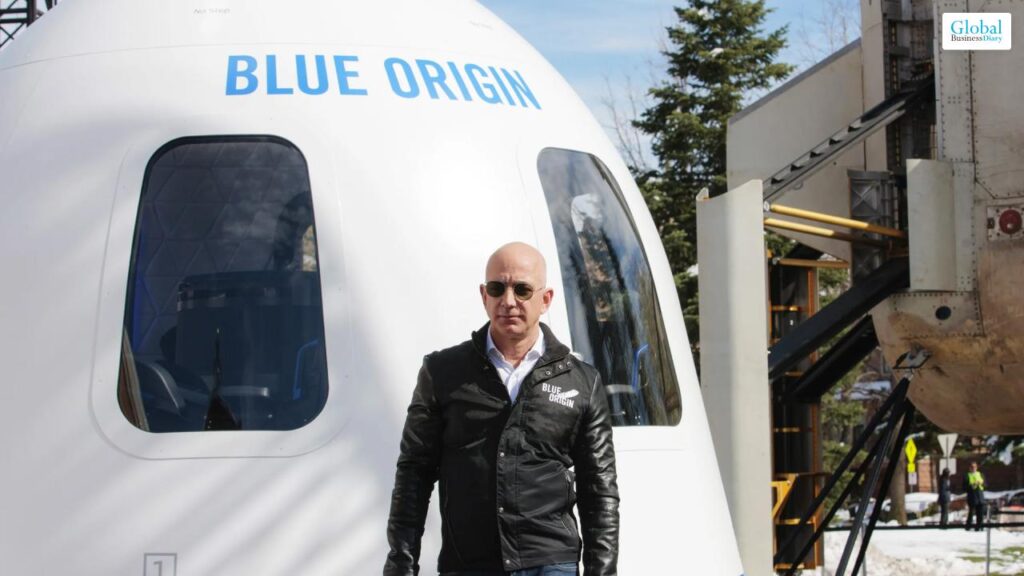
You are mistaken if you think that Elon Musk’s SpaceX is the only capable space flight tech company. Bezos also has a deep curiosity about space, and he put his money into that curiosity, starting up Blue Origin in 2003. Blue Origin is a startup company for human spaceflight technology.
By the end of 20914, his spending in Blue Origin was around $500 million. Bezos sells $1 billion worth of his own amazon share to fund his space venture with Blue Origin.
The Washington Post

Jeff Bezos has an LLC holding company named Nash Holding LLC, and he holds The Washington Post through this holding. In 2013, Bezos announced that he had purchased The Washington Post for $250 million in cash. However, he even made some changes to The Post and increased the annual turnover for that company after three years of Bezos owning it.
Jeff Bezos – Bezos Expedition
Jeff Bezos is also a great investor like Bill Gates and Warren Buffett. In 2005, he created Bezos Expedition to manage his investments. His investments include different types of businesses like real estate, technology, travel, media, charitable trusts, and different foundations and trusts.
He has shares in companies like Twitter, Airbnb, Stack Overflow, Uber, Workday, Business Insider, and General Assembly.
Frequently Asked Questions (FAQs)
Here are some most popularly asked questions about Jeff Bezos. I have answered some of them to fulfill all of your queries.
Jeff Bezos, the man who once became the richest person in the world, dropped down to the third number on the Forbes list. In the mid of April 2022, the Amazon stock tanked after a downbeat earnings report. As a result, his wealth dropped down by $20 billion.
To the downfall of the amazon sales report, the wealth of Jeff Bezos dropped down by $20 billion in 2022, placing him in the third position on the Forbes list.
Bezos was not born to rich parents. When his mother gave birth to him, she and his father were teenagers. They are 17 and 18 years old. However, Later Bezos’ mother married a Cuban immigrant, and Bezos was brought up on his grandfather’s ranch. He graduated summa cum laude from Princeton University in electrical engineering and started his career.
Bezos only pays $81,840 to himself. According to different reports, Bezos does not take any bonuses or any stocks. But there are other compensations from where he earns 1.6 million. Aside from that, he donates money to many charitable foundations. However, he donated $100 million to the charitable fund of Barack Obama.
Final Words
The current wealth of Jeff Bezos is around $150 billion. He stands right behind Bernard Arnault, the CEO of LVMH. Bezos is currently the third richest person in the world, following Arnault and Musk. Bezos has left the position of CEO of Amazon, and he still ranks as one of the richest people in the world.
I think this article was sufficient to answer your questions about Jeff Bezos and his wealth. If there is any further query, you can ask us in the comment.
Read More:
Tags:

Recent
Memory Chips Are Becoming More Important in the AI Era
Aug 06, 2026

Why Enterprise Web Applications Still Choose Angular for Long-Term Growth
Aug 04, 2026

Due Diligence Decoded: Why Careful Evaluation Still Wins in Business
Jul 11, 2026

How Hydraulic System Design Impacts Equipment Performance
Jul 01, 2026

Related Articles

Reasons To Believe That Leaders Are Made Not Born
Are leaders made or born? It is a common question that arises in our minds. Psychology ensures that leaders are mostly made. To do proper leadership in any field, you need various skills and attributes. One cannot put all the pressure on a particular person, and leaders ensure the balance within a team by motivating them in various ways. In this leadership process, a person tries to influence a large group of people to achieve some objectives. The importance of leaders in an organization is huge because they deliver coherent activities to lead the organization's goal in a particular way. Reasons To Believe Leaders Are Made: There are various reasons we can discuss that will suggest the presence of made leaders. Believing that leaders are born, not made, can be dangerous for anyone. If a person or an organization believes in born leadership, they will stop nurturing skills and attributes. This will ultimately harm the person or the organization with no development. If you want to nurture your leadership abilities, you can take help from professional leadership coaching. 1. Natural-Born Leaders Are Not Common If the leaders are only born leaders, then what about the people who have average intelligence and who are introverts? Are all of them not capable of being a leader? Certainly not. Suppose you want to be a good leader; you need to embark on some tough tasks to achieve the abilities of a proper leader. Always try to be the leader you want to be rather than focusing on inborn skills. Through self-development plans, you can look into things you can make for yourself to be a better option as a leader in this competitive market. 2. Lead By Example Sometimes it is considered an inborn quality, but if you want to be an example, you must have that experience. When you are leading a team, there are people who might want you to be their hero in the first place. In that case, you need to focus on helping others and giving them what they want. In addition, try to follow the needs of your followers and understand the obstacles present in front of you to become an example to others. You cannot ignore the timing of being an example. There will be particular phases where you need to be more accurate and skilled to be a prominent example. 3. Right Thing To Do If you are doing the right things for your team, you will get support as a leader. There is no exception to being self-aware and courageous. Again the timing becomes important for you as a leader. Right things have the right times to consider. As a leader, if you want to polish yourself, you should know the right timing and things. Leaders Are Made Not Born 4. Nonstop Learning There is always room for learning to develop yourself as a leader. If you want to be an expert on this platform, you need to constantly take on new challenges that can enhance your knowledge. Do not just lean on general things after settling in a place because prospering in life is a part of leadership attributes. 5. Introvert Vs. Extrovert Between an introvert and an extrovert, the first choice for a leader will be an extrovert. For instance, being bold, risk-taking as well as assertive can be added as positive skills. But if you nurture these skills on your own, you can be a good leader. Intelligence is not all. Often it has been seen that intelligent people are unable to empathize, which is a part of leadership. Through emotional intelligence, you will gain the upper hand in provoking your team to work effectively by understanding the importance of the situation. Understanding the social situation can be promising for your leadership career. To Conclude What do you think? Do you have all these abilities inborn? Or do you have to gain them? The answer lies within the question, and you have to make yourself a leader somehow. Attributes like values, character, beliefs, and ethics are all in the same place for a proper leader, but you have to travel through all of these to gain what you want as a leader. Read Also: Top 9 Successful Serial Entrepreneur Of All Time – 2022 UpdatesTop 5 Best B2B Marketing Strategies For The Entrepreneurs In 2021Which Entrepreneur Made Tractors Before Entering The Sports Car Business?
Jun 24, 2022

Elon Musk Biography, Business, Net Worth, Age And More
Name: Elon Reeve MuskAge: 50 yearsBusiness: Tesla, SolarCity, SpaceX, Neuralink, TwitterNet Worth: $277 billion It looks like Elon Musk's basket of businesses is never full. The founder of billion-dollar startups like SpaceX and Neuralink, Elon Musk, bagged yet another big name in his portfolio by buying Twitter for $44 billion. The business tycoon has been a disruptor in multiple industries. He is responsible for PayPal; he disrupted the electric car industry with Tesla; Musk even changed the Space technology with his startup SpaceX. He also acquired an immense amount of wealth, peaking at $340 billion in November 2021. Elon Musk has become and still reigns as the richest man in the world. But what are the business decisions that helped him reach the top? You can find that out in the following article. How Did Elon Musk Become Rich? Musk was a dropout from Stanford University. He started his business venture by co-founding x.xom; he moved on to Tesla and several other companies. Here is a brief business journey of Elon Musk that took him to the peak of his success. X.Com Musk Co-Founded X.com, an online financial service, in 1999. Users can pay online using the service provided by x.com. Later. X.com partnered with Confinity and was renamed PayPal in 2001. After PayPal became famous, Elon Musk used his 11.7% stake in PayPal to start his new business venture. Musk had 7,109,989 shares in PayPal. He is excited for PayPal to start new business ventures. SpaceX Fascinated with space, Musk started his space company, SpaceX. He started it as a nonprofit organization in 2002 and invested $100. After a few failures, Musk's spacecraft was a success. His success helped him land contracts with different organizations like ISS and NASA. Musk has a huge stake of 44% in SpaceX which has a net worth of over $100 billion. Tesla Motors One of the biggest business ventures that made Elon Musk the billionaire he is was his investment in Tesla. In 2004, Musk was financing the electric car company, Tesla. In 2008, Musk moved from being a board member of the company to being the CEO. In 2010, Tesla launched its IPO on NASDAQ, and the initial price for the shares was $17. However, as of March 2022, the Tesla share price reached a massive $800. With an aim to promote transportation using sustainable energy, Tesla made massive changes. They made electric cars for mass consumers. Tesla also made a sports electric car named Tesla Roadster. Musk does not have any salary from Tesla; he owns 20% of the Tesla stock. The Boring Company The main reason for the success of Elon Musk is that he invests in ideas. He came up with underground tunnels as a mode of transport in 2017 when stuck in traffic. After that, Elon musk founded the boring company. He plans to use the underground below roadways to make transportation easier and faster. The boring company will create tunnels giving vehicles extra paths to pass-through traffic. Elon Musk owns a 90% equity of the Boring company. The boring company intends to create underground pathways for vehicles while reducing the tunneling cost. Twitter In 2021, Elon Musk revealed that he owns a stake in Twitter, but the exact percentage was unknown. Earlier in 2022, he revealed that he owns a 9.2% stake in Twitter. All that was right until he shocked the world by announcing a total buyout of the Twitter company for the price of $44 billion. When asked, Musk replied that he wanted to endorse the right to speech and make Twitter better than it was before. Bitcoin Elon Musk is a big influencer when it comes to cryptocurrency investment. He owns a massive amount of 43,000 Bitcoin. Cryptocurrency investors religiously follow his Twitter for investment ideas. He also promoted dogecoins through his tweets. Frequently Asked Questions (FAQs) I think you got to know about all the businesses of Elon Musk from this article. If you have any further questions, you may relate to the following ones. 1. Who Are The Top Ten Richest Men In The World? The Business magazine Forbes releases a list of billionaires around the world. According to this list, we can judge who is the richest person in the world. Elon Musk currently sits at the top of that list, with some other notable richest persons following him. Here is a list of those persons –i. Elon Musk. ii. Jeff Bezos.iii. Gautam Adani.iv. Warren Buffett.v. Bill Gates.vi. Larry Page.vii. Sergey Brin.viii. Larry Ellison.ix. Steve Ballmerx. Mukesh Ambani 2. How Did Elon Musk Get Rich So Quickly? Musk was a brilliant student. But what is more interesting is his business acumen. He co-founded PayPal at the age of 27. Musk never stayed complacent with his success in PayPal. After exiting PayPal to start his own business venture and created giant companies like SpaceX, Tesla, SolarCity, and so much more. 3. Did Elon Musk Grow Up Rich? Elon Musk did not grow up rich. But he was from a family that supported him with a healthy upbringing. All rumors about Elon Musk growing up in a wealthy company are false. Musk grew up in a culturally rich and capable family. But all the wealth musk acquired was through his own hard work and business caliber. 4. Where Did Elon Musk Get His Money From Originally? The first-ever business venture of Elon Musk was his investment in Zip2 in 1995. Zip2 was an online local business directory. In 1999 it was sold to Compaq Computer Corp for $307 million. Musk earned $22 million from this sale. Later he invested in companies like PayPal, Tesla, and so on. Bottom Line Musk is a great investor and creator of innovative business ideas. His proliferation across multiple industries is the result of his adept business acumen. He has made so many good decisions with PayPal, Tesla, SpaceX, and other different businesses he is associated with. I hope that the article above helps you with the necessary information you are looking for about Elon musk. Also, If you have any further queries, You can ask us in the comment box. Read Also: What Is StockInvest? Is It Legit And Working In 2022?Adani Sets To Become The Global Wealth Giant Over smarting Bill Gates In 2022IPOE Stock – Present Price, Forecast, Statistics – Should You Invest In It In 2022?
Jun 16, 2022

Risk In Entrepreneurship : What Risks Do An Entrepreneur Face?
Risk in entrepreneurship is unavoidable and is actually an essential part of it. Every successful entrepreneur is a risk-taker and knows how to deal with risks at the right time. This makes entrepreneurs naturally risk-takers as they calculate the risks with the right vision for taking the business forward. However, at the personal level as well, entrepreneurs take the risk of leaving their jobs for business. In this article, you will generally learn about what are the major types of risks that are present in entrepreneurship. However, apart from that, we will also share with you what risk means in the context of entrepreneurship and what its importance is to the entrepreneur. Hence, to learn more about risk in entrepreneurship read on through to the end of the article. What Is A Risk In The Context Of Entrepreneurship? An entrepreneur’s life is full of risk. Actually, it starts when the individual decides to build a business from the ground up. In the first instance, the word “risk” basically represents a situation of unpredictability and chaos. However, in the context of entrepreneurship, this word has a different meaning. According to Hubspot.com, “Risk-taking in entrepreneurship is the process of identifying, evaluating, mitigating, and trying out potential opportunities and strategies that may help you build or grow your business but could also lead to personal or professional loss.” Risk in entrepreneurship is always calculated, and an entrepreneur needs to measure the risk with proper planning and assessment to keep the business on track. When it comes to entrepreneurship, you will need to understand here that entrepreneurs do not have a guaranteed monthly income and no guarantee of success. Apart from that, they also risk their work-life balance as they do not have enough time to spend with their families and close ones. Hence, each day is a challenge for these entrepreneurs. Read More: How To Become An Entrepreneur? – Steps To Follow Importance Of Risk In Entrepreneurship According to FirstRepublic.com, “Successful entrepreneurs tend to be willing to take chances, as pursuing a new business venture often involves taking calculated risks based on extensive research. Such research takes a great deal of time and energy but allows potential business owners to better understand several types of entrepreneurial risks.” Being an entrepreneur is in itself a risk. Despite having a dream of running a business, most people never become an entrepreneur just because they do not want to risk losing their job. In addition to that, 70% of startups fail within the first year itself, as they fail to take risks at the right time or are unable to deal with the risks in front of them. Because of the significant risks involved, entrepreneurs can strategize as per the method of their work. This might be a method that no one took advantage of. If the entrepreneur is successful in this new method, then it will be a discovery of a new strategy. This is how the entrepreneur creates a niche for the business, and hence the business works without any competitors for some time. The main thing about entrepreneurs is that they are not afraid of trying new things. However, they can do that since they look at problems differently, as they see them as opportunities to cash in on. They have a knack for exploring those unexplored avenues. Risk In Entrepreneurship - Major Risks For Entrepreneurs The following are the major types of risks in entrepreneurship: 1. Financial Risk According to Investopedia, “Any new business should have a financial plan within the overall business plan showing income projections, how much cash will be required to break even, and the expected return for investors in the first five-year timeframe.” Hence, the entrepreneur needs to put the finances properly into the business. For this to happen, proper planning and risk assessment is required. Failure to plan properly can lead to bankruptcy and losing all finances. Therefore, you must hire a lawyer in your company with complete knowledge of chapter 13 bankruptcy and other related fields. 2. Strategic Risk If the business is planned properly, it will attract investors surely. However, a strategy might get outdated as the world is becoming more fast-paced and dynamic. With market changes and changing business environments, a strategy can be proved wrong pretty quickly. The company might thus fail to reach its targets. 3. Technological Risk With the constant change of technological forces and with emerging new technologies, there are several risks for the entrepreneur on this front. Some of these technologies are called “paradigm shifts” or “disruptive” technologies. To stay relevant in business and to cater to changing demands, entrepreneurs need to invest heavily in new tech systems and processes. 4. Market Risk The market is unpredictable and always poses a risk for the entrepreneur. A certain product that is popular now can get outdated after a few months. This becomes more once a competitor launches a similar item at a lower price. Hence, analyzing and researching the market is important for the entrepreneur. 5. Risk Of Competition Talking about competition in the market, having full awareness of the strengths and weaknesses of the competitors is extremely important for the entrepreneur. Furthermore, if you have come up with a new idea or innovation, you must protect that with patents too. 6. Risks Of Reputation To stay in the market for the long run, a business needs to protect its reputation at all costs. This is especially true for new businesses, where they need to fight judgments and preconceived notions in the market as well. 7. Economic, Political, And Environmental Risks These are unavoidable problems, and hence entrepreneurs need to be fully prepared in this regard with the right insurance. Read More: What Is Indemnity Insurance ? And Its Different Types – Let’s Discover Way Forward Any risk in entrepreneurship is important, and it is important for entrepreneurs to improve their risk-taking capability. If you want to become successful with your entrepreneurial venture, you will need to have a strong risk-assessment framework. This will allow you to identify your risks better and come up with the best mitigation methods of the same. The best way to start is to take small risks and build a culture in the business where smart risk-taking is praised. Do you have any better recommendations on how to handle risk in entrepreneurship? Share your views with us in the comments section below. Read Also: What Are The Different Types Of Entrepreneurship? – Take A Look What Is Social Entrepreneurship? – Steps To Become A Successful Social Entrepreneur Business Entrepreneurship – What Should You Know Before You Start A Business In 2023?
Aug 23, 2023

Leadership Traits: 10 Top Qualities Of Effective Leaders
Leadership is not just a word but a trait that affects the lives of billions of people at the same time. An effective leadership trait can save the sinking ship of an organization. Experience and hard work are the two things that create a great leader. Quality leaders know the process and the method of developing the business. You must ensure that you do not make your selection on the wrong end. Ensure that you follow the correct process that can boost your brand value to a greater level. There are some critical leadership skills that you must be well aware of while meeting your goals with complete ease. You need to follow some steps to cultivate the best leadership skills on your end. Even in the Fintech business, the same thing applies. Qualities Of An Effective Leader There are several qualities of an effective leader that you must know in the end, while meeting your requirements with complete ease. Some of the crucial factors that you must know are as follows:- 1. Vision Effective leaders have a clear vision of the future and are able to communicate this vision to others, inspiring them to work towards a common goal. Although you must have a clear vision of the goals and objectives that you want to achieve through your team, this is very crucial in all possible aspects when you lead a team. A great leader always holds a vision to reach their goals on time. If you want to become a successful leader, then you must adopt this leadership trait to make things happen in your favor. You need to be well accustomed to the scenarios that can boost the scope of your accomplishments as a leader. 2. Integrity Leaders with integrity are honest, ethical, and trustworthy. They lead by example and are respected for their moral principles. The moral principles of a leader inspire the team members. It can boost the chances of your personality development. Honesty and commitment to the goals are two of the crucial leadership traits that you must possess. You need to identify the best solution that can help you in reaching your requirements with ease. If you want to become a successful leader, then your integrity in meeting deadlines and targets matters a lot. Seeing you, your juniors, and your team members will inspire them to work with full zeal and enthusiasm. 3. Decisiveness Effective leaders are able to make decisions confidently and quickly, even in difficult or uncertain situations. Proper decisiveness can help you reach your business goals with ease. The decision-making power of the leader matters a lot. You must be well aware of the situations that can make things work in perfect order. Proper decision-making can help your business grow at a faster pace. Making the right decisions at the right time matters a lot. A proficient leader is good enough to make the right decisions at the right time. You must be well aware of it while attaining your requirements with ease. 4. Communication Skills Leaders must be able to communicate effectively with others, both verbally and non-verbally, to convey their vision, goals, and expectations. The communication skill of a leader matters a lot. You need to identify the best options that can assist you in reaching your organizational goals with complete ease. Effective communication skills will help you in reaching your objectives. A quality leader must work on an employee retention strategy as well. Although the situation can be in your favor if you follow the right solution from your end, without knowing the process, things can turn worse for you in the long run. 5. Empathy Good leaders understand the emotions and perspectives of others, showing empathy and compassion in their interactions. Empathy is one of the most essential leadership traits that you should have while leading a team. It can increase team bonding among the team members. You must be well aware of the facts while meeting your requirements with ease. Situations cannot always be in favor of your team members. So, a good leader always tries to show empathy and motivate the team members to reach common goals. Once you show empathy to your team members, the chances of getting spirited performance from them increase. 6. Resilience Leaders must be resilient in the face of challenges and setbacks, demonstrating perseverance and determination to overcome obstacles. A good leader must have the resilience factor in their personality to deal with any situation with complete ease. Without proper planning, things can become worse for you in the long run. A resilient leader can convert a difficulty into an opportunity. You must be well aware of the facts while meeting your requirements with complete ease. Furthermore, you must employ the right process that can assist you in reaching your organizational goals with ease. 7. Adaptability Effective leaders are adaptable and able to adjust their strategies in response to changing circumstances or new information. Situations will not be in your favor all the time. It will keep on changing with time. A leader should not suffer from a lack of skills. You need to be adaptable to the situations to make things work perfectly well in your favor. Adaptability is one of the essential traits of a great leader. It can boost the chances of gaining more with limited resources at hand. An adaptable leader knows how to turn the situation in his own favor. You need to be well aware of it if you want to reach the team's goals with ease. 8. Accountability Leaders take responsibility for their actions and decisions, holding themselves and others accountable for their performance. You need to stay accountable for the things that matter the most. With proper planning, things can become easier for you to reach your objectives with ease. If the team is successful, then the leader gets the praise. Again, if the team faces failure, then the leader shall be accountable for this fact as well. A leader should take personal responsibility for their actions and decisions, regardless of the outcome. This means owning up to mistakes and learning from them. Furthermore, you must ensure that you follow the correct process from your end. 9. Courage Leaders display courage by taking risks, challenging the status quo, and standing up for their beliefs and values. Courage is one of the crucial leadership traits that a leader must possess. This will increase your confidence to face any kind of challenge with complete ease. Once you know the process well, things can become more difficult for you to reach your goals. Courage matters a lot in leadership traits. They must have the power within them to turn the adversity into a golden opportunity. Courageous leaders are willing to take calculated risks in pursuit of their goals. They understand that innovation and progress often require stepping outside of their comfort zone. 10. Inspiration Effective leaders inspire and motivate others to achieve their full potential, fostering a sense of enthusiasm and commitment among their team members. Inspirational leadership trait matters a lot. Inspired leaders have the ability to motivate and energize others to achieve their full potential. Leaders have a clear vision of the future and are able to communicate this vision in a compelling way. They paint a vivid picture of what success looks like and inspire others to work towards that vision. Inspired leaders lead by example, demonstrating the behavior and work ethic they expect from others. Their actions speak louder than words and inspire others to follow suit. Different Forms Of Leadership Styles There are different forms of leadership styles that you must know at your end while meeting your goals with ease. Some of the core forms of leadership styles that you should know from your end are as follows:- 1. Autocratic Leadership In this style, the leader makes decisions without input from others and expects strict adherence to their instructions. This style can be effective in situations that require quick decision-making or clear direction. This form of leadership is also known for your ability to take on any kind of challenge. You must ensure that you follow the perfect solution that can assist you in meeting the organization's requirements with ease. 2. Democratic Leadership Democratic leaders involve team members in the decision-making process and encourage collaboration. This style can lead to high employee engagement and creativity. Here, the team coordination matters a lot. Here, the involvement of the individual team members matters a lot. You need to identify the best solution that can make things work well in your favor within an estimated period. Democratic leadership can assist you in reaching your objectives with complete ease. Once you adopt this form of leadership, things can become easier for you in the long run. 3. Laissez-Faire Leadership Laissez-faire leaders offer minimal guidance to team members and allow them to make their own decisions. This style can be effective with highly skilled and motivated teams, but may lead to a lack of vision in others. Team members are given a high degree of freedom and autonomy to carry out their tasks in a way that they see fit. This can lead to increased creativity and innovation within the team. Laissez-faire leaders are often more concerned with the big picture and long-term goals rather than micromanaging day-to-day activities. However, you need to identify the best options that can assist you in reaching your requirements with ease. 4. Transformational Leadership Transformational leaders educate and motivate team members by creating a compelling vision and fostering a sense of purpose. They often lead by example and encourage innovation and creativity. Transformational leaders often have a charismatic personality that attracts and inspires others. They are able to create a sense of excitement and enthusiasm among their followers. Leaders inspire others to go above and beyond what is expected of them. They encourage creativity, innovation, and risk-taking, and they lead by example. Remote work management can assist you in reaching your goals with ease. 5. Transactional Leadership Transactional leaders focus on setting clear goals and objectives and rewarding team members for meeting them. They often use incentives and feedback to motivate performance. Most of the time, leaders also use a management-by-exception approach, where they intervene only when things are not going as planned. They focus on correcting errors and deviations from standards. Although they have the courage to take on any kind of challenge to run their business with complete ease, once you follow the correct solution, things can become easier for you to meet your goals with ease. How Can A Leader Turn Difficulty Into An Opportunity? There are certain tricks that an effective leader employs to turn difficulty into an opportunity. Some of the key factors that you should know here are as follows:- A leader can cultivate a positive mindset and encourage their team to see challenges as opportunities for growth and learning. Leaders should be flexible and adaptable, willing to change course or try new approaches when faced with difficulties. A leader can encourage creativity and innovation within their team, seeking new and unconventional solutions to problems. They foster a culture of collaboration, encouraging team members to work together to overcome challenges and find solutions. Demonstrate resilience in the face of adversity, showing their team that setbacks are temporary and can be overcome. Therefore, if you want to turn the situation in your favor, then you must consider the above-mentioned facts. It can assist you in reaching your goals with ease. Check out this YouTube video: Trait Theory of Leadership https://www.youtube.com/watch?v=-gqaq17fB98 Final Takeaway Hence, these are some of the facts that you must be well aware of if you want to reach your goals with complete ease. Try to keep things in proper order while meeting your requirements with complete clarity. Leadership traits matter a lot when you want to grow your career in the right direction. You can share your views and comments in our comment box. This will help us to know your take on this matter. Without knowing the facts, you cannot make things happen in your favor. These are just a few examples of the many different forms of leadership styles. Effective leaders often use a combination of these styles depending on the situation and the needs of their team. Continue Reading: Lead Management 101: A Comprehensive Guide to Success Project Management: What Is It? – Major Types, Examples, And More
Mar 15, 2024