





An Essential Guide To Setting Up Your Shipping Container Office
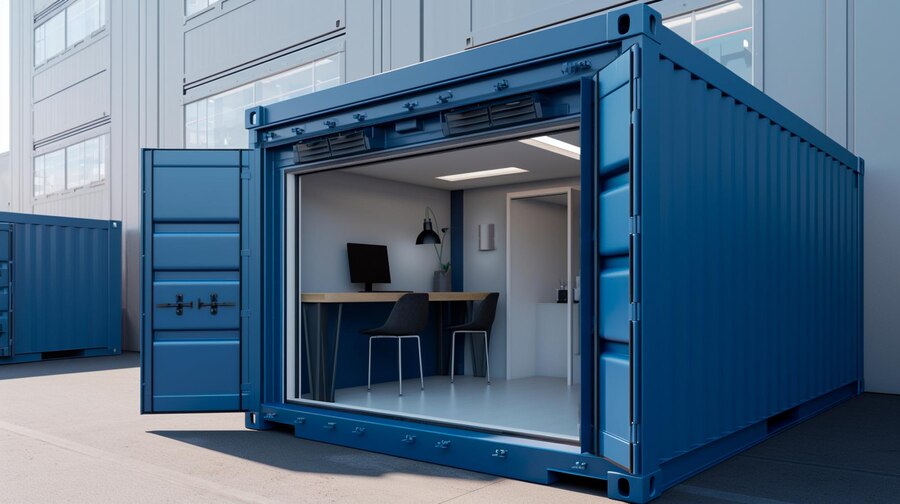
Embarking on creating a shipping container office is as exhilarating as it is challenging.
This alternative workspace solution offers a blend of innovation, efficiency, and eco-friendliness. But before delving into the nitty-gritty of design and aesthetics, it’s essential to get the groundwork right, starting with permits, planning, and foundational choices.
To guide you, here’s how to set up yours seamlessly, ensuring that your container office isn’t only functional and aesthetically pleasing but also compliant and safe:
Checking For Planning And Building Permits
When setting up a shipping container office, it’s crucial to ensure compliance with local building codes and regulations. Many localities treat these container offices as permanent structures, mandating specific permits and code adherence.
Here are some tips to ensure compliance:
- Research Local Regulations: Begin with your local building department or city hall to grasp specific guidelines for container structures.
- Review Zoning Laws: Some places, especially residential areas, might have restrictions. Ensure your container office’s purpose aligns with permitted activities.
- Engage A Local Expert: Consultation with a seasoned local architect or builder can help clarify region-specific nuances and requirements.
- Prepare Detailed Plans: Detailed architectural plans, including layouts and modifications, are often required before permit application.
- Consider Utility Connections: For water, electricity, or sewage connections, additional permits or checks might be needed.
- Stay Updated: Building codes evolve over time. Stay informed, especially if you anticipate future modifications.
Remember, adhering to local regulations guarantees not just legal peace but also enhances the safety and longevity of your workspace.
Choose The Right Container Size
Determining the correct container size for your office is pivotal. It dictates how much space you’ll have to work with and the overall comfort and functionality of your environment. The container’s size should cater to the nature of your business, the number of employees, and future growth prospects.
Consider the following tips when selecting a container size:
- Evaluate Your Needs: Start by listing the essentials—desks, chairs, equipment, and storage. Visualize the arrangement.
- Factor In Growth: If you plan to expand your team or add more equipment, opt for a larger size or think about a modular design that allows for expansion.
- Consult A Specialist: Engage with experts who’ve handled similar projects. Their insights can guide you toward the optimal choice.
Your container’s size serves as the foundation for your office setup. Make sure it’s the right fit from the get-go. It’ll save you time, money, and potential hassles down the road.
Inspect And Prepare The Container
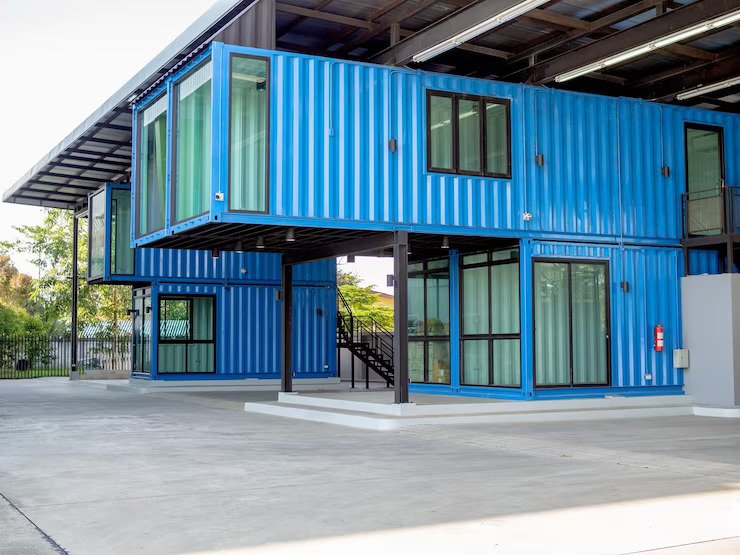
Before transforming a shipping container into an office, a thorough inspection is crucial. Remember, these containers have seen wear and tear from their journeys across the world. Preparing them correctly ensures a safe and comfortable workspace.
Here are some ways to ensure a proper and thorough inspection and preparation:
- Check For Damages: Look for dents, rust spots, or holes. Such imperfections might compromise the container’s integrity and your comfort.
- Test For Waterproofing: Seal any gaps or leaks. Containers must be watertight to prevent mold and water damage.
- Ensure A Clean Slate: Clean the interior thoroughly. Removing grime and dirt provides a healthy starting point for further modifications.
- Insulation And Climate Control: Shipping containers can become extremely hot or cold due to their metal construction. Consider implementing layers of insulation and installing efficient HVAC systems to regulate the container’s internal temperature year-round.
Paying close attention to the container’s condition and addressing any issues head-on lay the groundwork for a seamless office transformation.
Plan Your Interior Layout
Designing the interior of a shipping container office is pivotal to your daily operations. An apt layout can elevate productivity and promote well-being. Given the limited space, every design choice matters.
Here are some tips to optimize your container’s interior:
- Prioritize Movement: Keep ample space for easy and comfortable movement; avoid overstuffing with furniture.
- Multipurpose Furniture: Opt for items like foldable desks or seating with storage, balancing function with style.
- Zone Your Space: Segment the container into areas such as work, relaxation, and storage for organized efficiency.
- Add Windows And Doors: Introduce windows for natural light and doors, like sliding versions, to smartly demarcate zones.
- Incorporate Storage Solutions: A tidy space is crucial. Use vertical shelves, under-desk storage, or pegboards to manage essentials without clutter.
With mindful planning tailored to your routines and needs, you can transform your container into an efficient, harmonious workspace.
Set Up Electrical And Networking Systems
When transforming a shipping container into an office, setting up robust electrical and networking systems is vital. It’s not just about powering devices but also ensuring consistent connectivity for seamless operations.
Here’s a concise guide for this phase:
- Map Out Outlets: Visualize your layout first. Position outlets near desks and appliances, reducing the need for extension cords.
- Safety First: Incorporate ground-fault circuit interrupter (GFCI) outlets to mitigate electrical shocks. Additionally, consider hiring a professional to tackle the wiring.
- Connectivity Is Key: While Wi-Fi offers flexibility, an Ethernet connection provides stability. Strategically position routers and include multiple ports.
- Backup Power: Depending on your locale, consider investing in a backup generator or uninterruptible power supply (UPS) system for uninterrupted work.
- Stay Neat: Use cable management techniques for a tidier, hazard-free workspace.
- Think Ahead: Technology advances quickly. Make your setup flexible for future tech enhancements.
A well-thought-out electrical and connectivity plan ensures your container office remains a modern, efficient workspace, ready for the digital era’s challenges.
Choose Suitable Flooring
Flooring might seem like a mere aesthetic choice, but in a shipping container office, it carries added significance. From insulation properties to durability under daily wear and tear, the right flooring can profoundly impact the comfort and functionality of your workspace.
Here are some optimal flooring choices:
- Vinyl Flooring: A water-resistant, durable option, vinyl mimics wood or tile designs affordably. It’s low-maintenance and easy to install.
- Laminate Flooring: Cost-effective compared to hardwood, laminate is resistant to scratches. It provides a sleek, professional finish.
- Cork Flooring: Eco-friendly cork provides natural insulation. Its cushioned surface alleviates foot fatigue.
- Engineered Hardwood: Get the appeal of hardwood without the vulnerability to humidity shifts—vital in metal containers prone to temperature variations.
- Carpet Tiles: These versatile tiles provide comfort. Damage to one tile doesn’t mean redoing the entire floor; you just need to replace the affected piece.
- Rubber Flooring: Ideal for industrial-themed spaces, rubber is durable, sound-insulating, and easy to maintain.
Choosing the perfect flooring involves balancing operational needs, regional climate, and stylistic preferences. A well-selected floor amplifies both functionality and charm in your container workspace.
Prioritize Safety And Security

In transforming shipping containers into workspaces, blending aesthetics and functionality is paramount. Equally essential, though sometimes neglected, is the safety and security of your container office, given its unique structure.
For a secure shipping container office, consider the following:
- Install Surveillance Systems: Cameras can oversee your container’s surroundings, enhancing peace of mind.
- Opt For Quality Locks: Invest in high-grade padlocks, deadbolts, or electronic locks to deter potential break-ins.
- Light Up The Perimeter: Illuminate entry points and pathways at night as a deterrent.
- Prioritize Fire Safety: Outfit your container with smoke alarms and fire extinguishers and routinely inspect them.
- Regular Inspections: Check for potential hazards, like rust, and address them swiftly.
- Invest In A Security Alarm: An alarm system, potentially linked to security services, boosts your defense mechanism.
Safety and security in your container office ensure a confident, worry-free work environment. As you set up, these protective elements should be front and center.
Personalize Your Space
Crafting a functional shipping container office is essential, but integrating personal touches elevates the space. Infusing the office with elements reflecting one’s style and personality not only augments its visual allure but also positively impacts productivity and mood. A personalized workspace can serve as a source of daily motivation and inspiration.
Consider these strategies to infuse personal charm:
- Pick A Theme Or Color Palette: Choose colors or themes that echo your preferences. Be it a soothing blue, vibrant yellow, or a sleek monochrome scheme, this choice dictates the workspace ambiance.
- Integrate Art And Decor: Incorporate pieces like wall art, family photos, or inspiring quotes to anchor the space or spark daily motivation.
- Invest In Comfortable Furnishings: Go for ergonomic furniture and enhance with cushions, blankets, or area rugs for added warmth.
- Experiment With Lighting: Mix different lighting types, like task lights and ambient fixtures, to create your desired atmosphere.
Personalizing a container office transcends mere decoration; it’s about forging a space that resonates, offering both comfort and inspiration.
Conclusion
Embracing the shipping container office trend offers numerous benefits, from flexibility to sustainability. With this guide, setting up your new workspace should be a breeze. Remember, the key is to prioritize functionality without compromising on style or comfort. Happy setting up!
Read Also:
- Shipping Container Magic: Your Key To A Seamless Relocation
- How to start a logistics company? an expert guide
- Vital Tips For Packing And Shipping Items Safely
- FOB Shipping Point vs FOB Destination Point? Essential Points Of Difference
- CFR Vs CIF: What Are The Differences Between These Shipping Terms?

Recent
Memory Chips Are Becoming More Important in the AI Era
Aug 06, 2026

Why Enterprise Web Applications Still Choose Angular for Long-Term Growth
Aug 04, 2026

Due Diligence Decoded: Why Careful Evaluation Still Wins in Business
Jul 11, 2026

How Hydraulic System Design Impacts Equipment Performance
Jul 01, 2026

Related Articles

How To Grow Your B2B Business
Growing a business-to-business (B2B) business poses its own set of challenges, from understanding the intricate web of decision-makers to nurturing prolonged sales cycles. Strategies that thrive on the direct appeal of business-to-consumer (B2C) approaches must be reinterpreted to suit the nuanced nature of B2B transactions. Effective growth relies not only on the quality of goods or services provided but also on the depth of relationships and the sophistication of marketing strategies. Mastery of these elements can propel a B2B company to new heights, securing its position in a competitive marketplace. Below, we'll delve into crucial actions that can help your B2B business flourish. Driving B2B Growth With Targeted Digital Advertising Digital advertising represents an invaluable asset for B2B companies seeking to enhance their market presence. With the ability to tailor messaging and targeting, businesses can ensure they are reaching the most relevant audiences. For instance, retargeting ads can remind visitors of a service they viewed but did not purchase, bringing them back into the sales fold. One of the most effective digital advertising methods in the B2B sphere is pay-per-click (PPC) advertising. PPC can drive immediate traffic to a website, with the advantage of being easily measurable and adjustable. This level of control allows businesses to make data-driven decisions quickly and allocate budgets where they have the highest impact. Partnering with platforms that understand the B2B domain can enhance advertising efforts. For example, Sales Loop specializes in the kind of strategic outreach that aligns with B2B objectives. Utilizing such tailored services can streamline the advertising process, leading to better ROI and more efficient use of resources. It's also important to recognize the value of nurturing leads generated from digital advertising. Prospects may require time and information before committing, necessitating a follow-up action sequence. Well-crafted email sequences and educational content can keep leads warm and gradually move them through the sales funnel toward conversion. Leveraging Content Marketing For Sustainable B2b Growth Content marketing in the B2B realm serves a dual purpose: educating potential customers and establishing the brand as a thought leader in its industry. Unlike B2C content, which often aims for mass-market appeal, B2B content must be informative, in-depth, and tailored to the specific interests of a professional audience. An effective content strategy will attract the right kind of leads and foster enduring relationships with them. An integral part of B2B content marketing is centered around leveraging case studies, whitepapers, and webinars. These tools are effective not just for showing competence but also for showcasing a track record of success and the ability to solve complex problems. Prospective clients engage with this sort of material when they are looking to understand industry best practices and apply them within their organizations. The digital age has elevated the importance of a strong online presence where quality content plays a pivotal role. B2B businesses need to look closely at search engine optimization (SEO) practices to ensure that the valuable content they create is easy to find and ranks well in search engines. Regular updates and fresh content play a part in this, keeping the brand relevant and visible to those seeking solutions. Building Strong Relationships Through Customer Relationship Management Customer relationship management (CRM) systems are vital to the B2B growth engine. They enable businesses to keep track of customer interactions, orders, and service requests, ensuring that nothing slips through the cracks. A well-maintained CRM allows for a personalized approach to customer service, helping to cement strong and lasting relationships. CRM integration with other business systems can also heighten efficiency. By having customer information readily available across various departments, a business can provide seamless service. This integration ensures that sales, marketing, and customer support teams have a unified view of the customer journey, fostering internal collaboration and a more coherent outward-facing approach. Additionally, advanced CRM tools can provide predictive analytics capabilities, which can forecast customer needs and identify new sales opportunities. Such insights allow B2B companies to be proactive rather than reactive, giving them an edge in customer retention and satisfaction. By integrating these tactics, businesses can create a harmonious growth engine prepared to weather the complexities of the B2B marketplace. Read Also: What Are The Different Types Of Entrepreneurship? – Take A Look Business Entrepreneurship – What Should You Know Before You Start A Business What Is Social Entrepreneurship? – Steps To Become A Successful Social Entrepreneur
Jan 15, 2024

How Blockchain Infrastructure Is Revolutionizing Businesses
Blockchain infrastructure is revolutionizing businesses in a variety of ways. By eliminating intermediaries and allowing for the secure transfer of data, blockchain technology is proving to be an invaluable asset to companies that are trying to operate securely and save money Dysnix.com provides an easy-to-use platform that makes it easy for businesses to securely store, trade, and distribute digital assets. It also facilitates better communication between stakeholders by providing visibility into transactions and processes through its straightforward dashboard. Dysnix.com has been designed with flexibility in mind, allowing businesses to tailor their blockchain infrastructure as needed. This means businesses can quickly adjust their operations according to changes in the market without worrying about technical barriers or high costs associated with traditional financial systems. Furthermore, Dysnix's platform allows users to easily integrate smart contracts into existing business processes which adds another layer of security and trust between parties involved in a transaction. The benefits of integrating blockchain infrastructure extend beyond merely saving money and time - it also provides enterprises with a higher level of security for their data. With Dysnix's permission model, all sensitive data is kept on a private network, ensuring only authorized parties can access it. This prevents malicious actors from attempting to modify or steal any valuable information stored on the blockchain. Furthermore, Dysnix's encryption system ensures all transactions remain immutable and verifiable at all times, giving businesses more peace of mind when handling important assets or documents related to their business operations. At the same time, Dysnix also offers enhanced transparency due to its distributed ledger technology (DLT). All transactions are stored publicly on the ledger so they can be easily tracked by anyone who has access – meaning greater accountability for both parties involved in the transaction process. Additionally, since DLT eliminates middlemen like banks or brokers who may increase overhead costs or introduce delays due to manual verification processes, businesses have more control over their operations while ensuring they remain compliant with existing regulations at all times. In conclusion, with Dysnix's powerful blockchain infrastructure solution businesses are able to reduce overhead costs while increasing efficiency levels within their organization – all while delivering much higher security for their digital assets compared to traditional systems! Exploring The Benefits Of Decentralized Applications On Blockchain Infrastructures Decentralized Applications (DApps) are becoming increasingly popular in blockchain infrastructures due to their ability to provide improved security, privacy, and efficiency. At Dysnix.com, we believe that DApps can help to make the blockchain more accessible for a wide range of users, from individuals to enterprises. DApps are based on smart contracts that establish trustless agreements between different parties without the need for a third-party intermediary. This helps to make transactions faster, cheaper, and more secure as each transaction is cryptographically secured. Furthermore, since all the data is stored on a public ledger, it is immutable and tamper-proof. Using DApps also offers users greater autonomy over their funds and data as no centralized authority holds control over them. This makes DApps less prone to downtime or censorship compared to traditional applications. Additionally, decentralized applications can also be used in areas where trust is an issue such as online gambling or online voting platforms where fraud prevention is paramount. Another great benefit of using decentralized applications is scalability. As there is no single point of failure within the system, they are able to scale up easily without interruption or disruption of services which helps maintain user experience levels high even when demand increases significantly. Moreover, since each node in the network has equal responsibility for processing transactions and mining blocks, it helps decentralize power away from large mining pools which further enhances security levels on the blockchain infrastructure. The Leverage Potential Of Using A Distributed Ledger For Your Company's Data Management A distributed ledger is a system that uses blockchain-like technology to create an immutable and verifiable database of records. This technology has the potential to revolutionize how companies manage their data. By leveraging this type of ledger, organizations can increase security, reduce manual labor, automate processes, and ensure accuracy in data management. The use of distributed ledgers can provide significant leverage for companies when it comes to managing data. These ledgers are inherently secure due to the cryptographic nature of blockchains, making them virtually impossible to tamper with or corrupt. In addition, automating certain processes can help minimize manual errors and ensure accuracy in record keeping. Distributed ledgers also provide improved transparency into the state of any given record as each change is reflected in real-time across all participating nodes in the network. At Dysnix.com, we believe that distributed ledger technology can be used to offer significant benefits for companies looking to improve their data management procedures. Our team specializes in developing customized blockchain-based solutions tailored specifically to our client’s needs so that they can maximize the potential of this technology for their organization’s benefit. We also provide extensive consulting services so that our clients fully understand how best to utilize distributed ledgers for maximum efficiency and reliability when managing their data. Our platform is designed to enable easy integration with existing systems while providing unprecedented levels of security and accuracy throughout your organization's data management processes. Read Also: Understanding How VPS Hosting Can Help You Grow Your Online Business Top 5 Types Of Business That Are Giving More Profits To The Sellers 10 Signs Your Boss Is Testing You | Need To Know About
Feb 02, 2023
What Is Wholesale Distribution? – Importance, Benefits, And Examples
If you are a manufacturer or considering starting your manufacturing business or wholesaling business, you will need to have a good idea of the supply chain. With the help of wholesalers and distributors, most manufacturers move their products to the market. Hence, wholesaling and distribution serve important functions in the supply chain of companies. However, businesses that do both wholesaling and distribution fall under wholesale distribution. In this article, you will learn about wholesale distribution systems and how they work in the supply chain management of a business. Here, we will discuss various aspects and importance of such systems. Apart from that, you will also get a brief idea of the functions of wholesale distribution systems. Finally, we will discuss the major pros and cons of wholesale distribution systems. Hence, to learn more, read on through to the end of the article. What Is Wholesale Distribution? According to Indeed.com, “Wholesaling distribution is the method of delivering goods from a manufacturer to its customers through various distribution channels that make up a company's supply chain. While some manufacturers may sell their products directly to consumers, others can use intermediaries to supply their offerings to retailers or other end-users.” The intermediaries that exist in such a distribution process include wholesalers as well as distributors. Most of the companies in wholesale distribution include both of these functions in their processes. These wholesalers purchase products from manufacturers or distributors in bulk, mostly at a discounted price, and sell each of these products at a profit. In some cases, in a supply chain, there are various categories of wholesale distributors, where larger wholesale distributors supply to smaller wholesale distributors. These smaller wholesale distributors then supply to retailers, who sell small quantities to customers. Read More: Entrepreneurship In Economics: What Role Do Entrepreneurs Play In Economics? How Does Wholesale Distribution Work? - Importance According to Investopedia, “Wholesaling is the act of buying goods in bulk from a manufacturer at a discounted price and selling to a retailer for a higher price, for them to repackage and in turn resell in smaller quantities at an even higher price to consumers. Due to the large quantities purchased from the manufacturer at a discounted price, the wholesaler can also pass on this discount to retailers. The retailer sells at a price that reflects the overall cost of doing business.” As the product reaches the final consumer from the manufacturer, the wholesale distributor plays a vital role in between as a middleman. The wholesale distributor purchases products in bulk from manufacturers and distributes these products to retailers. These businesses or individuals make sure that stores have enough products to sell while the manufacturers can focus more on developing and creating new products. Wholesale distributors play a major role in the economy, account for more than 400K establishments in the United States itself, and contribute to a combined sales of $9 trillion. However, in recent times, wholesale distribution companies are facing rapid changes in the economy due to a number of factors. These factors include new competition, growth of eCommerce wholesalers, as well as rising expectations among customers. What Are The Functions Of Wholesale Distribution? In general, wholesale distribution systems are responsible for acquiring goods, storing them, and preparing them for sale in smaller numbers to consumers. The success of a wholesale distribution system depends upon gaining a good understanding of the needs and demands of consumers. Furthermore, they also get a good idea of the trends in the market, costs, as well as price points. In addition to that, as a wholesale distributor, you also need to maintain strong relationships with business partners, other wholesalers, and manufacturers as well. Moreover, you must also ensure that the operational efficiency of the wholesale distribution system is maximized with each stage. As a wholesale distributor, you will need to look for “upstream” relationships with suppliers or manufacturers of goods and services. Maintaining “downstream” relationships is also important as it will give you a greater idea of the needs and demands of customers through the retailers who buy in bulk from you. What Are The Pros And Cons Of Wholesale Distribution? According to NetSuite.com, “Success in wholesale distribution hinges on gaining a good understanding of customer needs, market trends, costs and price points; building strong relationships with business partners; and maximizing operational efficiency. Wholesale distributors must build solid “upstream” relationships with the suppliers or manufacturers of the goods they buy in bulk.” The following are the major pros and cons of wholesaling distribution: Pros Of Wholesaling Distribution Here are the top pros of wholesale distribution from which you can expect various benefits: You will have an increased reach in the supply chain, which will enable you to earn more profits. Wholesale distributors help simplify business operations for both retailers and manufacturers. In many cases, wholesale distributors help in lowering the cost of products and services, thereby lowering the overall cost of business. Due to having huge storage capacities, wholesale distribution companies free manufacturers and retailers from the burden of warehouse storage in many cases. As wholesale distributors purchase and maintain inventory, they are able to secure a stable supply of products. Thereby, they reduce the risk of shortages. Cons Of Wholesaling Distribution Here are a few cons of wholesale distribution that you need to be aware of: There is huge competition. In many cases, manufacturers like to sell directly by taking on the role of wholesale distributors and retailers. Continuous changes in consumer expectations pose a challenge for wholesale distributors. Due to tremendous downward pressure on prices, many wholesale distributors are leaving business. Final Thoughts Hope this article was helpful for you in getting a better understanding of the wholesale distribution system. Basically, such wholesale distributors purchase goods from manufacturers in high amounts and sell them at a higher rate to retailers for profit. Retailers also buy in bulk from wholesale distributors, thereby saving their own costs. Primarily, the process of wholesale distribution is a step in the entire supply chain that is a supplier of bulk products or raw materials, which goes to the retailer and ends with consumers. The retailer sells smaller items to consumers, thus earning profit. Do you have any more information regarding wholesale distribution? Share with us in the comments section below. Need More Business Related Information! Sabbatical Leave: What Is It, And How Does It Work? What Is Safe Harbor 401K? Benefits And Types What Is A Sole Proprietorship? – Let’s Find Out
Oct 26, 2023

Beyond the Box: What a Shipping Container’s Journey Reveals About the Supply Chain
A shipping container looks simple. A standard-size stackable steel box that moves from Point A to Point B. But once you zoom out, that same container becomes a live case study of your Supply Chain. And honestly? It tells you everything you need to know about how strong or fragile your operations really are. You might think the journey is predictable. After all, it's all about shipping back and forth. From the factory to the port, then to the vessel that lands at another port. This continues till it reaches the final destination. On paper, it might be, but in reality, not even close. The Journey Looks Straight. The Process Isn’t. A container leaves a production facility. Sounds routine. Yet before it even reaches the port, someone scheduled transport. Someone verified the documentation. Someone checked compliance codes. Someone confirmed space allocation. Miss one detail, and the delays start. Then it hits the port with congestion. Nightmares begin when the weather becomes your foe. Ultimately, you get bad customs reviews and even inspection flags. Suddenly, that “straight line” turns into a maze. This is where your Supply Chain shows its true character. So the question: Does your team anticipate bottlenecks? Do they reroute quickly? Do they communicate across departments or work in silos? Because one delay doesn’t stay small. It ripples outward. Inventory planning shifts. Delivery timelines adjust. Customer expectations tighten. And now the pressure is real. It’s Not About the Container. It’s About the People. You can invest in tracking systems or automation platforms, or even the smart routing tools. All of it matters, but none of it runs itself. Behind every smooth transition, there’s a freight coordinator double-checking manifests, a compliance specialist reviewing regulations, and a logistics planner recalculating timelines who ensures quiet work. Your Supply Chain doesn’t move on steel and software alone. It moves on judgment. And here’s the thing: when talent gaps appear, cracks form fast. An experienced professional spots risk early. A poorly trained one reacts too late. What's the difference? It can mean days of delay. Or thousands in unexpected costs. So when you look at a container crossing oceans, don’t just see cargo. See coordination. See strategy. See human decision-making at every checkpoint. Leadership Shapes the Flow Operations don’t drift into excellence by accident. Leaders decide whether hiring aligns with long-term logistics goals. Leaders decide whether teams operate with shared visibility. Leaders decide whether departments talk or just coexist. If leadership treats recruitment as separate from operational strategy, the Supply Chain weakens quietly. Systems look advanced. Reports look clean. Yet internally, misalignment builds. However, when leadership connects talent planning directly to supply chain performance, everything tightens up. Communication sharpens. Accountability increases. Risk exposure drops. And you feel it. In delivery consistency. In cost control. In customer trust. Every Link Connects, Whether You See It or Not A port delay affects warehouse scheduling. Warehouse congestion affects distribution timelines. Distribution delays affect customer satisfaction. Simple chain reaction. Because supply chains are interconnected ecosystems. Not isolated checkpoints. The more global your reach, the more fragile compartmental thinking becomes. One disruption overseas can shift domestic inventory levels within days. So you have to ask yourself, is your Supply Chain built for stability? Or just speed? Speed without resilience collapses under pressure. Stability without agility stalls growth. The balance matters. What the Container Really Teaches You A container’s journey is not just logistics. It’s a stress test, and it reveals: How well your teams communicate How quickly you adapt to uncertainty How aligned is your hiring strategy with operations How prepared are you for disruption In other words, it reflects your operational maturity. You can track every shipment in real time. That’s helpful. But tracking alone doesn’t build strength. People do. Process clarity does. Strategic alignment does. When you strengthen your workforce, improve coordination, and think beyond isolated tasks, you reinforce the entire Supply Chain from origin to destination. And that’s the bigger picture. Beyond the box, it’s about the system. And the people who keep it moving. Conclusion: Look Beyond the Box A shipping container may look like simple cargo in motion. But it quietly reveals the true strength of your Supply Chain. Every movement tells a story. Delays expose weak coordination. Smooth transitions prove alignment. Quick recoveries show resilience. Nothing hides for long. So when you think about improving your supply chain, don’t stop at systems or software. Focus on people. Focus on communication. Focus on leadership decisions that connect hiring, planning, and execution. Because at the end of the day, containers don’t move businesses forward. Well-aligned teams do. Explore how each stage connects in real time by viewing the accompanying visual resource from CS Recruiting, a 3PL recruitment company. Read Also: Feeding the Surge: How Seasonality Shapes Food Supply Chains Supply Chain Risk Management: Effective Strategies To Reduce It
Jan 23, 2026