





What Is Social Entrepreneurship? – Steps To Become A Successful Social Entrepreneur

Entrepreneurship is an age-old professional discipline and has been there for ages. There are different types of entrepreneurs. While some want the freedom of becoming their own boss and doing what they love, there are others who like to make a lot of money by building an empire. However, in the past few years, a new type of entrepreneurship has emerged called social entrepreneurship.
In this article, firstly, you will learn some general details of social entrepreneurship. Next up, we will discuss some of the major aspects of social entrepreneurship that make it different from other entrepreneurship options. Furthermore, you will also learn how to become a social entrepreneur with a few steps. Hence, to learn more, read on through to the end of the article.
What Is Social Entrepreneurship?
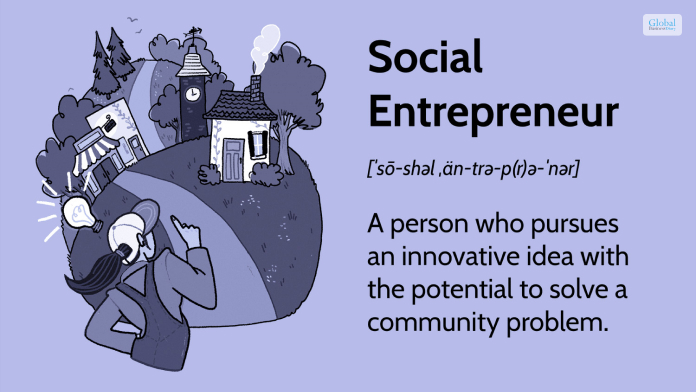
The central goal of any social entrepreneurship is social responsibility. Hence, any such business strategizes its steps accordingly. At the start, a social entrepreneur applies the principles and guidance of any other startup. However, the focus is on directly generating a social change or impacting a social cause.
According to a definition provided by Coursera –
“Broadly speaking, social entrepreneurship is a new, innovative business venture that influences change. A social entrepreneur has a specific cause that they care about, and they develop a business model around making a positive impact. The main goal is to create lasting social change through business.”
This type of entrepreneurship, although it uses the principles of any other business, the goal is to make a social change. The primary motivation of any social entrepreneur is to alleviate and solve a kind of systemic social or cultural problem that is limiting the development of society.
What Are The Major Aspects Of Social Entrepreneurship?

Everyone knows that the motivation of most entrepreneurs in society is to earn profit. However, this motive of the entrepreneurs does not prevent them from impacting society positively.
As Adam Smith, the 18th-century Scottish Economist and Philosopher, rightly puts it in his book The Wealth of Nations –
“It is not from the benevolence of the butcher, the brewer, or the baker that we expect our dinner, but from their regard to their own interest. We address ourselves, not to their humanity, but to their self-love, and never talk to them of our own necessities, but of their advantages.”
Here, according to Smith, when an individual pursues his own best interest, he would be guided to make decisions that benefit others. This is the major philosophy and mindset that works behind social entrepreneurship.
Any social entrepreneurship can operate in different ways, including profit, non-profit, hybrid business, and others. As a social entrepreneur, you can prefer the funding and structure of your business, depending on your goal, as well as your business model. The following are the major areas in which social entrepreneurs show their interest:
- Agriculture
- Education
- Gender equality
- Renewable energy
- Environmental sustainability
- Economic development
- Health care
- Community development
How To Become A Social Entrepreneur? – Steps To Follow

According to the information given in Investopedia,
“Social entrepreneurs try to fix problems. More specifically, social entrepreneurs identify a problem that the people in the previous section face. Usually, during the brainstorm phase of an entity, the social entrepreneur will link the two together.”
If you want to become a social entrepreneur, you will need to follow the steps given below:
1. Start Researching

As you are doing right now, start knowing what are the major aspects of social entrepreneurship and the various ways through which you can make a difference in society. You will also need to learn some of the key requirements that you need to have in place to start your business.
2. Know Your Market Inside Out

We have already discussed that a social entrepreneur tries to solve a problem that is prevalent in society and, at the same time, makes a profit. To do that, you will have to know your market, the exact problems, and areas of concern so that you come up with useful solutions.
3. Get Some Advice From An Expert

Getting a mentor as you run your startup is beneficial. Apart from that, you must also consider taking a course about social entrepreneurship from a reputed institute. Furthermore, you can also interview someone who is already making a social change with his/her business.
4. Have A Clear Goal In Your Mind For The Social Cause

Your social mission will help you run your business despite various odds that come your way. Apart from that, investors will also ask you questions about it, and you will need to be obvious about your goals. You might also face questions from journalists as well.
5. Financing Your Enterprise

Any venture, social or not, runs on funds and investments. There are many bigger organizations that are willing to give you money to start your business if they are convinced by your idea. You will also need to have startup business insurance beforehand to protect your enterprise.
6. Legalization Of Your Enterprise

The legal aspects related to a social enterprise can be a bit complicated. The way you set up your enterprise can directly affect how much you make through your business. Hence, you need to consider every document carefully before you register your business and protect it legally.
7. Have An Online Presence

Having an online presence, at least on social media platforms, has become a necessity for every business. Provided you are a social entrepreneur, you need to show the world that you are solving a social problem. This will also allow you to get customers fast, including social support, and you can make more funds as well.
Wrapping Up
If you want to make a big social change by becoming an entrepreneur, then social entrepreneurship is the best option for you to choose. Hope this article was helpful for you in getting a better idea of what this type of entrepreneurship actually is and how to start.
Just follow the steps given above, and you will be able to achieve success within a short span of time, provided you stick to the basics and grow your business. What do you think is a major success factor for social entrepreneurs? Share your views about it in the comments section below.
Read Also:
Tags:

Recent
Memory Chips Are Becoming More Important in the AI Era
Aug 06, 2026

Why Enterprise Web Applications Still Choose Angular for Long-Term Growth
Aug 04, 2026

Due Diligence Decoded: Why Careful Evaluation Still Wins in Business
Jul 11, 2026

How Hydraulic System Design Impacts Equipment Performance
Jul 01, 2026

Related Articles

Managing Remote Employees: What Steps You Must Take For Efficient Management?
With the rise in remote work, remote management has become extremely important. Upwork states that by 2025, 36.2 million Americans will choose remote work. Furthermore, many companies are also of the opinion that managing remote teams is easier for them. Hence, managing remote employees has become an essential factor as companies are enacting various remote work management practices. In this article, you will learn about the best practices for remote employee management. However, before that, you will find the significance and meaning of remote work management. Apart from that, the article also gives you an idea of what to expect as a remote work manager. Furthermore, the article also shows the different pros and cons of remote management. Hence, to learn more, read on through to the end of the article. Managing Remote Employees: What Is It? According to Bamboo HR, “Whether your organization has five or 500 remote workers, it’s important to learn how to manage them effectively and prevent disengagement. As you implement and maintain remote worker best practices, you can grow your reputation as a great place to work, attract top candidates from around the world, and retain the exceptional people you already have on your remote team.” However, it requires a change in mental state to be efficient at managing remote employees. This is especially true for managers who are traditional-minded. The managers also need to understand that there are adjustments needed both at the level of managers and the employees. The goal is to ensure the practice to effectively lead and oversee a workforce. However, here, the workforce is not operating inside a traditional office setting but rather operating remotely. Here, as a manager, you will need to combine a variety of elements to ensure that your team has proper engagement and high productivity. Connection and collaboration are the two principal elements of remote employee management. All you must do is keep your remote workers connected with each other. Furthermore, you will also need to ensure that your remote team gets enough opportunities to collaborate on important work and projects. The rapid shift from traditional work to remote work demands that the management and the HR of companies focus on remote work policies. Basically, in such an environment, you will need to work with both experienced remote workers and first-timers. Here, the way you take up the management of the work will have various implications for your business and its growth potential. Managing Remote Employees: Pros And Cons Of Remote Management To understand the viability of managing remote employees, you will need to understand the various pros and cons of remote work in general. By understanding the major pros and cons, you can manage better. According to Business News Daily, “Managing remote workers requires finesse from employers, as companies face unique challenges when employees are not together in a physical office. However, with a solid plan and effective communication, businesses with remote workers can overcome these obstacles.” The following are some of the major pros and cons of remote employee management that you need to learn: Pros Of Managing Remote Employees Here are the major pros of managing remote employees that you will benefit from: 1. Less Expenses Businesses that develop a remote work environment save a lot of money. One of the biggest savings is the overhead cost of having an office location. Here, the business does not have to pay rent, electricity, furniture, office supplies, etc. Hence, remote work leads to a lot of cost savings. 2. Higher Productivity As employees do not spend a lot of time commuting to and from work, they have less pressure to reach the office on time. Furthermore, employees also want to avoid office politics. Hence, in many cases, employees who do remote work tend to be happier. 3. Low Employee Turnover In an office environment, replacing employees who left the company gets expensive. Here, the company deals with the cost of hiring a replacement and lost productivity. Moreover, remote work also helps in boosting job satisfaction among employees. 4. Higher Employee Autonomy As employees are working from home, they feel the freedom to work the way they want. Apart from video calls and meetings, there is flexibility in the work and how employees complete their allocated work. 5. Better Work-Life Balance For Employees Commuting to work is one of the worst experiences for an employee. In other cases, employees also do not like the risk of illness from public transportation. Hence, when employees are working remotely, they are highly likely to stay healthier. Furthermore, employees who are introverts are more likely to choose remote work over an office job. Cons Of Managing Remote Employees Here are a few cons of managing remote employees that you must be aware of: 1. Lack Of Collaboration Lack of collaboration is one of the major aspects of remote work. Due to this, there is a lack of ideas and communication. This also leads to a halt in innovation. Such factors pose a lot of risk for the growth of the organization. However, with the help of various communication tools, businesses can collaborate better. 2. Team Building Suffers The impact of a team plays many roles in shaping an employee's performance. Basically, by being a part of a team, employees feel motivated to work. This feeling is hard to achieve when everyone is working from home. Despite having video conferences and virtual chats, it is not possible to provide in-person experience. 3. Lack Of Control Many business owners are still resistant to remote work because it involves giving up some control. Employees must do their job without overwatch or constant assistance. Hence, some amount of control is essential for the proper functioning of a business. 4. Isolation Although remote work provides autonomy to employees, there are some cases when an employee needs guidance. Furthermore, in remote work, an employee also loses the company of others. Hence, working from home becomes isolating for the employee, especially for those who live alone. Also, this isolation affects relationships among colleagues. 5. Limited Separation Between Work And Home When you do not separate your home from your office, it might be easy to work more than expected. Here, you need to have a clear understanding of when to shut off. Although many workers spend more time at home, they somehow feel the pressure to prove their productivity. Expectations To Have While Managing Remote Employees According to Forbes.com, “To start, managers need to understand factors that can make remote work especially demanding. Otherwise high-performing employees may experience declines in job performance and engagement when they begin working remotely, especially in the absence of preparation and training.” As a manager, if you want to lead your remote team well, you will need to understand that despite having less control, you will need to make your employees accountable. Here, you might not be able to monitor employees continuously, but you can focus on their output. Furthermore, you will also need to focus on whether the output meets the quality standards as is possible for work in the office. Basically, you will need to recalibrate how you lead your employees. Additionally, you will need to move away from micromanagement, which is practically not possible with remote work. Moreover, you must also become familiar with the best practices of working from home. Furthermore, you should also learn how to expect trials and errors in the process. This is because the trend of remote work will stay for years. Managing Remote Employees: Steps To Take For Better Efficiency According to Indeed.com, “As an employer, you should recognize that remote workplaces don’t necessarily carry new challenges. Instead, managing remote employees often means that common in-person workplace issues and principles are reiterated and sometimes exacerbated as their remote work counterparts.” The following are some of the major steps you can take in terms of managing remote employees: 1. Use The Right Virtual Tools To ensure that your employees do the best work, it is important to have the right tools in hand. This will help in ensuring better productivity, employee experience, and collaboration. The following are some of the major tools that you need to ensure: Chatting and collaborating application Video calling app Screen sharing tool Onboarding software Project Management System HR software system Rewards and Recognition System Ensure that while you are choosing the productivity tools, you have access to the best ones in the market. Here, you need to make sure that your employees get a seamless experience while they are working from home. 2. Ensure Virtual Socialization Indeed.com adds - “In addition to regular meetings and communication, it’s also essential that employees be able to socialize holistically and independently. By setting up casual forums such as an ongoing video conference for virtual co-working [...] you can facilitate connection and relationship-building within your teams.” Here, once you develop these connections, they can help the employees cope with social isolation. This can also help in yielding new ideas for your business. Hence, you need to make conscious efforts to create and maintain employee-to-employee relationships. 3. Allow The Team To Collaborate The best collaborations in teams happen outside team meetings and in casual conversations. However, this is not possible in a remote work environment. Furthermore, remote employees feel somewhat less informed and less appreciated. Here, Bamboo HR adds - “Remote employees need to feel a professional connection to their organization through collaboration to do their best work. If teams don’t make a sustained effort to collaborate and communicate with their off-site coworkers, they may move decisions and projects forward without consulting everyone who should be involved.” Hence, to ensure that your organization does not miss out on valuable expertise and input, you will need to implement best practices to ensure remote collaboration. 4. Create Policies For Remote Work Establishing a remote work policy for remote employees is crucial for employee engagement and productivity. You will need to ensure that there are certain compliance rules and a set of guidelines for employees to follow. Here, you must create policies that best work for your company, industry, and specific roles of employees. Furthermore, you must also outline policies for hybrid work and the roles of employees. 5. Be Available And Proactive In a remote work process, it is really challenging to always be available for team members. Here, you will need to be thoughtful of how to interact with employees. The best way to be available for employees is to set timings when your employees expect you to be available. Hence, you will be able to set a time when you all can interact easily with each other. 6. Encourage Face-To-Face Meetings Individual video meetings or individual chats with employees always help. Think how effective face-to-face meetings are in the office. You need to do a similar thing with your remote employees. This will also help you to know your employees better and learn about their problems. Thereby, you can provide them with useful solutions, too. 7. Ensure Everyone’s Presence In Meetings One of the major challenges in virtual meetings is that when there are technical issues, someone misses the meeting. There is also a lack of participation from employees in meetings. Ensure that there are set guidelines for your team to follow when there are meetings. Furthermore, make sure you maintain schedules and notify the team beforehand. 8. Create A System Of Regular Check-Ins To ensure that everyone is on track related to work, you need to implement a system of check-ins. If there are regular check-ins for employees to perform, you will not face the pressure to discuss responsibilities every time. Wrapping Up Hope this article was helpful for you in giving you a better idea of managing remote employees. If you learn the right methods and use the right tools, you can ensure high productivity, innovation, creativity, and performance from your remote workers. Hence, follow the steps in the last section to ensure effective remote work. Do you have more suggestions to add regarding remote work management? Consider sharing your ideas and opinions with us in the comments section below. For More Business Related Articles Click Below!! What Is Seller Credit And How Does It Work? What Is Sellers Concession? How To Get Sellers Concession Cestui Que Trust: Definition, Function, Importance, And More
Feb 21, 2024

Leadership Traits: 10 Top Qualities Of Effective Leaders
Leadership is not just a word but a trait that affects the lives of billions of people at the same time. An effective leadership trait can save the sinking ship of an organization. Experience and hard work are the two things that create a great leader. Quality leaders know the process and the method of developing the business. You must ensure that you do not make your selection on the wrong end. Ensure that you follow the correct process that can boost your brand value to a greater level. There are some critical leadership skills that you must be well aware of while meeting your goals with complete ease. You need to follow some steps to cultivate the best leadership skills on your end. Even in the Fintech business, the same thing applies. Qualities Of An Effective Leader There are several qualities of an effective leader that you must know in the end, while meeting your requirements with complete ease. Some of the crucial factors that you must know are as follows:- 1. Vision Effective leaders have a clear vision of the future and are able to communicate this vision to others, inspiring them to work towards a common goal. Although you must have a clear vision of the goals and objectives that you want to achieve through your team, this is very crucial in all possible aspects when you lead a team. A great leader always holds a vision to reach their goals on time. If you want to become a successful leader, then you must adopt this leadership trait to make things happen in your favor. You need to be well accustomed to the scenarios that can boost the scope of your accomplishments as a leader. 2. Integrity Leaders with integrity are honest, ethical, and trustworthy. They lead by example and are respected for their moral principles. The moral principles of a leader inspire the team members. It can boost the chances of your personality development. Honesty and commitment to the goals are two of the crucial leadership traits that you must possess. You need to identify the best solution that can help you in reaching your requirements with ease. If you want to become a successful leader, then your integrity in meeting deadlines and targets matters a lot. Seeing you, your juniors, and your team members will inspire them to work with full zeal and enthusiasm. 3. Decisiveness Effective leaders are able to make decisions confidently and quickly, even in difficult or uncertain situations. Proper decisiveness can help you reach your business goals with ease. The decision-making power of the leader matters a lot. You must be well aware of the situations that can make things work in perfect order. Proper decision-making can help your business grow at a faster pace. Making the right decisions at the right time matters a lot. A proficient leader is good enough to make the right decisions at the right time. You must be well aware of it while attaining your requirements with ease. 4. Communication Skills Leaders must be able to communicate effectively with others, both verbally and non-verbally, to convey their vision, goals, and expectations. The communication skill of a leader matters a lot. You need to identify the best options that can assist you in reaching your organizational goals with complete ease. Effective communication skills will help you in reaching your objectives. A quality leader must work on an employee retention strategy as well. Although the situation can be in your favor if you follow the right solution from your end, without knowing the process, things can turn worse for you in the long run. 5. Empathy Good leaders understand the emotions and perspectives of others, showing empathy and compassion in their interactions. Empathy is one of the most essential leadership traits that you should have while leading a team. It can increase team bonding among the team members. You must be well aware of the facts while meeting your requirements with ease. Situations cannot always be in favor of your team members. So, a good leader always tries to show empathy and motivate the team members to reach common goals. Once you show empathy to your team members, the chances of getting spirited performance from them increase. 6. Resilience Leaders must be resilient in the face of challenges and setbacks, demonstrating perseverance and determination to overcome obstacles. A good leader must have the resilience factor in their personality to deal with any situation with complete ease. Without proper planning, things can become worse for you in the long run. A resilient leader can convert a difficulty into an opportunity. You must be well aware of the facts while meeting your requirements with complete ease. Furthermore, you must employ the right process that can assist you in reaching your organizational goals with ease. 7. Adaptability Effective leaders are adaptable and able to adjust their strategies in response to changing circumstances or new information. Situations will not be in your favor all the time. It will keep on changing with time. A leader should not suffer from a lack of skills. You need to be adaptable to the situations to make things work perfectly well in your favor. Adaptability is one of the essential traits of a great leader. It can boost the chances of gaining more with limited resources at hand. An adaptable leader knows how to turn the situation in his own favor. You need to be well aware of it if you want to reach the team's goals with ease. 8. Accountability Leaders take responsibility for their actions and decisions, holding themselves and others accountable for their performance. You need to stay accountable for the things that matter the most. With proper planning, things can become easier for you to reach your objectives with ease. If the team is successful, then the leader gets the praise. Again, if the team faces failure, then the leader shall be accountable for this fact as well. A leader should take personal responsibility for their actions and decisions, regardless of the outcome. This means owning up to mistakes and learning from them. Furthermore, you must ensure that you follow the correct process from your end. 9. Courage Leaders display courage by taking risks, challenging the status quo, and standing up for their beliefs and values. Courage is one of the crucial leadership traits that a leader must possess. This will increase your confidence to face any kind of challenge with complete ease. Once you know the process well, things can become more difficult for you to reach your goals. Courage matters a lot in leadership traits. They must have the power within them to turn the adversity into a golden opportunity. Courageous leaders are willing to take calculated risks in pursuit of their goals. They understand that innovation and progress often require stepping outside of their comfort zone. 10. Inspiration Effective leaders inspire and motivate others to achieve their full potential, fostering a sense of enthusiasm and commitment among their team members. Inspirational leadership trait matters a lot. Inspired leaders have the ability to motivate and energize others to achieve their full potential. Leaders have a clear vision of the future and are able to communicate this vision in a compelling way. They paint a vivid picture of what success looks like and inspire others to work towards that vision. Inspired leaders lead by example, demonstrating the behavior and work ethic they expect from others. Their actions speak louder than words and inspire others to follow suit. Different Forms Of Leadership Styles There are different forms of leadership styles that you must know at your end while meeting your goals with ease. Some of the core forms of leadership styles that you should know from your end are as follows:- 1. Autocratic Leadership In this style, the leader makes decisions without input from others and expects strict adherence to their instructions. This style can be effective in situations that require quick decision-making or clear direction. This form of leadership is also known for your ability to take on any kind of challenge. You must ensure that you follow the perfect solution that can assist you in meeting the organization's requirements with ease. 2. Democratic Leadership Democratic leaders involve team members in the decision-making process and encourage collaboration. This style can lead to high employee engagement and creativity. Here, the team coordination matters a lot. Here, the involvement of the individual team members matters a lot. You need to identify the best solution that can make things work well in your favor within an estimated period. Democratic leadership can assist you in reaching your objectives with complete ease. Once you adopt this form of leadership, things can become easier for you in the long run. 3. Laissez-Faire Leadership Laissez-faire leaders offer minimal guidance to team members and allow them to make their own decisions. This style can be effective with highly skilled and motivated teams, but may lead to a lack of vision in others. Team members are given a high degree of freedom and autonomy to carry out their tasks in a way that they see fit. This can lead to increased creativity and innovation within the team. Laissez-faire leaders are often more concerned with the big picture and long-term goals rather than micromanaging day-to-day activities. However, you need to identify the best options that can assist you in reaching your requirements with ease. 4. Transformational Leadership Transformational leaders educate and motivate team members by creating a compelling vision and fostering a sense of purpose. They often lead by example and encourage innovation and creativity. Transformational leaders often have a charismatic personality that attracts and inspires others. They are able to create a sense of excitement and enthusiasm among their followers. Leaders inspire others to go above and beyond what is expected of them. They encourage creativity, innovation, and risk-taking, and they lead by example. Remote work management can assist you in reaching your goals with ease. 5. Transactional Leadership Transactional leaders focus on setting clear goals and objectives and rewarding team members for meeting them. They often use incentives and feedback to motivate performance. Most of the time, leaders also use a management-by-exception approach, where they intervene only when things are not going as planned. They focus on correcting errors and deviations from standards. Although they have the courage to take on any kind of challenge to run their business with complete ease, once you follow the correct solution, things can become easier for you to meet your goals with ease. How Can A Leader Turn Difficulty Into An Opportunity? There are certain tricks that an effective leader employs to turn difficulty into an opportunity. Some of the key factors that you should know here are as follows:- A leader can cultivate a positive mindset and encourage their team to see challenges as opportunities for growth and learning. Leaders should be flexible and adaptable, willing to change course or try new approaches when faced with difficulties. A leader can encourage creativity and innovation within their team, seeking new and unconventional solutions to problems. They foster a culture of collaboration, encouraging team members to work together to overcome challenges and find solutions. Demonstrate resilience in the face of adversity, showing their team that setbacks are temporary and can be overcome. Therefore, if you want to turn the situation in your favor, then you must consider the above-mentioned facts. It can assist you in reaching your goals with ease. Check out this YouTube video: Trait Theory of Leadership https://www.youtube.com/watch?v=-gqaq17fB98 Final Takeaway Hence, these are some of the facts that you must be well aware of if you want to reach your goals with complete ease. Try to keep things in proper order while meeting your requirements with complete clarity. Leadership traits matter a lot when you want to grow your career in the right direction. You can share your views and comments in our comment box. This will help us to know your take on this matter. Without knowing the facts, you cannot make things happen in your favor. These are just a few examples of the many different forms of leadership styles. Effective leaders often use a combination of these styles depending on the situation and the needs of their team. Continue Reading: Lead Management 101: A Comprehensive Guide to Success Project Management: What Is It? – Major Types, Examples, And More
Mar 15, 2024

10 Must-Have Entrepreneurial Characteristics
Entrepreneurs build and create something new out of their dreams and vision. They have a passion for creation and can quickly identify an unidentified potential. Let's Learn About The Top 10 Entrepreneurial Characteristics. They can see a need that has yet to be addressed. They use their entrepreneurial characteristics to build upon their dreams. Thanks to their different entrepreneurial qualities and skills, an entrepreneur can become successful. But we cannot talk about entrepreneurship as if it is something people are born with. One can exercise different entrepreneurial traits to become the type of entrepreneur they want to become. This article documents a few of the necessary features or entrepreneurial characteristics you can practice. If you're going to find them out, please keep reading. Creativity With entrepreneurship comes the creative zeal that makes an entrepreneur innovative something out of the blue. So, one entrepreneurial characteristic is always being creative and thinking out of the box. When someone is creative, they have more ideas to act upon. Indeed, not all ideas might be fruitful, but with failure comes experience, and experience can lead to success. The creativity of an entrepreneur not only helps them to come up with a new solution but also identify a problem that gets generally overlooked. They can easily develop a product or service solution in their niche market. Professionalism Professionalism is one of the fundamental entrepreneurial characteristics that not only shape one's business but the community around it. An entrepreneur's professional behavior with their clients and their employees can go a long way and shape a work culture and a productive and forward-thinking environment. Atop their professionalism in handling things, these entrepreneurs are also well disciplined, and they deliver what needs to be delivered on time. Their discipline can help organize and motivate others. This way, they can reach their targets and motivate others to do the same for themselves. Also, their reliability is one of the entrepreneurial characteristics that keep the teams motivated in terms of achieving their goals. Employees feel more at peace when the entrepreneur is reliable and keeps their promise. Taking Risks, But Not Risking It All Another entrepreneurial characteristic of entrepreneurs is to take risks. They are skilled at taking risks and venturing into the unknown. They are often using different unorthodox means to do something. Also, their capability to take a risk for different ideas when nobody else believes in them is also admirable. A good entrepreneur understands the degree of risk and the possible reward if they are successful. Indeed it is passionate to take a risk and travel the unchartered territories. But a good entrepreneur always has a plan B when they are risking their money and time. They are only sometimes risking it all. As an entrepreneur, one must always evaluate the risk before taking it. One must analyze the consequences of a risk taken. Passion For Entrepreneurship Entrepreneurship is also a passionate ambition one usually strives towards achieving. One of the most critical entrepreneurial characteristics is to have passion for what an entrepreneur is doing. They need to make passion the driving force for their objectives. Entrepreneurs are ambitious, professional, and creative, and they have the passion to pursue what they are seeking. Regular hours of work ensure growth, while extra hours make a difference. When an entrepreneur has the passion to put in extra hours and extra work, they are on their path to winning the game. Planning To Win There is a saying called, "If you fail to plan you are planning to fail." an entrepreneur cannot win without a plan of action. One of the most critical entrepreneurial characteristics is to have an active plan. There must be a vision, passion, and creativity to back it up. But an entrepreneur needs a plan to structure their vision. This planning means creating a strategy for the whole vision in time and working ahead of time. Their planning helps them with the optimum use of their resources at hand, progressing towards success and facing any crisis while withstanding any possible damage that could incur. So, planning is not only an entrepreneurial characteristic; it is an element of entrepreneurship. Knowledge An entrepreneur must have knowledge of what they are trying to do. More than passion, ideas, and creativity is needed to erect something paramount out of it. An entrepreneur must know their respective niche to build on their dream. This knowledge will not only help them build but also solve their problems and tackle crises. An entrepreneur has always to tackle difficult circumstances and difficult market landscapes. They have to comply with the changing market requirement they are operating under. That is why it is essential to know the ins and outs of the market. It is always necessary to explore the strengths and weaknesses of an entrepreneur and add more knowledge to their arsenal. A willingness to always learn is one of the important aspects of being an entrepreneur. Social Skills One of the must-have entrepreneurial characteristics is to have efficient social skills. Everyone can have different levels of social skills, but one can always work on them. Good social skills help an entrepreneur – Build good professional relationships. Help with talent sourcing and hiring. Formulation of team strategy. Openness To New Ideas Entrepreneurs can always be flexible and stuck doing something everybody else does. They are always open to new ideas and perspectives. An openness of their mind will help them identify opportunities and scenarios that can actually help them. This is not just for identifying more unique and better opportunities; an openness of mind on the entrepreneur's part also helps them better celebrate their victories and accept their defeat. With an open mind, an entrepreneur addresses a failure as one of the trials that did not work out. They accept failure, but they do not let it stop them from pursuing their entrepreneurial goals. Entrepreneurs try to learn from every single opportunity around them. This is called accepted learning, and a good entrepreneur agrees upon the possibility of learning from every opportunity and people around them. Empathy Having high emotional intelligence is one of the least discussed values of an entrepreneur. They are aware that the people working for them can make the business a success. A good entrepreneur takes the strengths and weaknesses of their employees into account and addresses them with empathy. An entrepreneur ensures to create a happy environment for the employees to come to work. Empathy makes it possible. A 'For Audience/Customer' Mindset Entrepreneurs know that what they do is meant for a certain set of customers. So, they must understand the needs and the pain points of their customer and tailor their business /service/ products accordingly. Apart from having a brilliant idea or an imagination, having a 'customer first' approach can make an entrepreneurial venture a success. Bottom Line Be it a small business or a unique and large entrepreneurial venture, one needs to have the different entrepreneurial characteristics mentioned in this article. Creativity, passion, professionalism, out-of-the-box thinking, empathy, and the rest of the traits not only makes one a good entrepreneur. It makes one a better human being as well. Read Also: How To Become An Entrepreneur? - Steps To Follow What Are The Different Types Of Entrepreneurship? – Take A Look Business Entrepreneurship – What Should You Know Before You Start A Business In 2023?
Sep 01, 2023

How To Become An Entrepreneur? – Steps To Follow
If you want to become an entrepreneur, there is no direct road for you to follow. There are some people that come with the required skills and personality traits that are essential to start and run a new business. However, there are some people that need to cultivate their skills and personality. This article will be mainly about how to become an entrepreneur. In this article, you will mainly learn about the best ways to follow to become an entrepreneur. However, before that, you will need to understand what makes a successful entrepreneur. Hence, we will discuss who is an entrepreneur and what is the importance of an entrepreneur currently. Therefore, to learn more, read on through to the end of the article. Who Is An Entrepreneur? According to Indeed.com, “For most new projects, an entrepreneur creates a business plan that lays out the resources required for hiring, financing and the leadership of a new business. Capital funding can be hard to come by for new entrepreneurs and their projects, so they often start small and invest their own resources into the project.” An entrepreneur is a particular individual that creates and manages any business. The entrepreneur willingly takes calculated risks than what an average businessman takes. However, since the entrepreneur takes more risks, he reaps more rewards as a result when the risky project turns out successful. Even at the socio-economic level, economists understand that entrepreneurship is one of the most important resources that enable production in the economy. Entrepreneurs use resources like land, capital, and labor to give back to the economy, as the business offers goods and services. Read More: What Are The Different Types Of Entrepreneurship? – Take A Look The Importance Of An Entrepreneurial Mindset As you have decided to become an entrepreneur, it is crucial to develop an entrepreneurial mindset. The first thing you need to have is risk-taking ability. An entrepreneur does not fear risks and takes them whenever required. According to the University of San Diego, “The reason developing a mindset is so important is because, to really be an entrepreneur, to truly embody that creative drive and determination, you need to develop a fundamental nature in how you think of a problem or approach an issue.” Furthermore, an entrepreneur is a person that does not fear risks and knows that change is required with time. The following are some of the major characteristics of an entrepreneur that you will need to ensure: Passionate about the future and the work of your venture Flexible enough to accommodate changes Must have a clear vision for the future and must be able to intercept tactics Persistent with your efforts Always motivated with your work Curious enough to learn new ideas Willing to learn new things and develop a learning culture Always try to solve problems with new ideas. The Best Steps To Take Before You Become An Entrepreneur Regarding the characteristics of an entrepreneur, Indeed.com says, “Entrepreneurs make difficult decisions, often taking risks to achieve their goals. It's because they're willing to take these risks that entrepreneurs make a significant impact on their local economies.” The following are some of the major steps that you need to take as an entrepreneur: 1. Focus On Building A Particular Skillset One of the best things that an entrepreneur can have is the ability to stay learn more and stay curious about an idea. You have to become a lifetime learner and develop a mindset. Start researching the market needs, and focus on working on a skill. As you work on it, you can master the skill and put it to work. 2. Start Building Your Network Every successful entrepreneur knows how to build a network. They have full access to partners, mentors, employees, and investors. You can also connect with professional advisors and lawyers, and at times to needs, you can request help from your network. To do that, you will also need to maintain connections with all the individuals on your network. 3. Claim A Niche And Start With An Idea According to HubSpot.com, “Great ideas can come from anywhere, and unmet needs often make the best business ideas. Here, we’ll share tips for brainstorming. Once you have an idea, you can start your entrepreneurship journey.” Once you have researched the market, you will have a good idea of where the market needs solutions. This will help you to choose your niche and focus on solving the problem at hand. As you solve the problem and offer your product/ service, you can make a profit. 4. Do A Market Research This is a continuation of the previous idea. If you do not do market research, you will never know what is required of you and which service you must offer. Having a good idea of the market will also enable you to test your ideas at the right time in the right manner. 5. Start Building On Your Ideas After you have decided on what business to take forward, then you will need to outline your business structure based on that idea in front of you. You will need to plan for developing a product or service that is viable and will stay in the market for a certain amount of time. 6. Get Funding For Your Venture Once you have the product as well as the plan, it is time for you to secure the funding that you will need to start your business. You will have to show your plan and convince investors to fund your business. To do that, you will need to talk with a financial advisor to structure your business’ finances rightly. Read More: Business Entrepreneurship – What Should You Know Before You Start A Business In 2023? Summing Up Hope this article was helpful for you in getting an idea of how to become an entrepreneur. You can see from the article that becoming an entrepreneur requires an entrepreneurial mentality. Furthermore, you will need to become a problem solver and be flexible enough to adapt to new changes. If you want to become an entrepreneur, follow the steps above, work on them, and start your business venture and grow. Do you have any more recommendations? Share your views in the comments section below. Read Also: What Is A Hold Harmless Agreement? – Let’s Take A Look What Is Indemnity Insurance ? And Its Different Types – Let’s Discover What Is Commercial Insurance? And Its Different Types – Let’s Discuss
Aug 11, 2023