





A Guide To How Structural Panels Can Revolutionize Your Construction Projects

In today’s rapidly evolving construction industry, the demand for efficient, cost-effective, and sustainable building solutions is ever-growing. Structural panels have emerged as a revolutionary alternative to traditional construction materials, offering a plethora of benefits across various projects. Let’s explore how structural panels are reshaping the landscape of construction.
Understanding Structural Panels

Structural panels are thin, flat, composite materials that can resist applied loads in specific applications. They are used for building walls, roofs, floors, and foundations and encompass a range of materials, including Structural Insulated Panels, Oriented Strand Board (OSB), and plywood. Read on to learn more about the different types of structural panels:
- Plywood: A flat panel made of sheets of veneer, called plies, that are glued together with alternating grain direction. Plywood is strong, durable, and versatile.
- Oriented Strand Board: An engineered panel composed of compressed wood strands arranged in layers at right angles to each other and bonded with waterproof adhesive. OSB is cheaper, lighter, and more uniform than plywood.
- Composite Panel: A panel containing a combination of veneer and other wood-based materials, such as medium-density fiberboard (MDF) or particle board. Composite panels have improved properties, such as fire resistance, sound insulation, or moisture resistance.
These panels are engineered for strength, durability, and thermal performance, consisting of multiple layers bonded together through advanced manufacturing processes. Their lightweight yet robust nature makes them ideal for a wide array of construction applications.
Benefits of Structural Panels

There are several benefits to using structural panels in construction projects. These are as follows:
Cost-effectiveness
Since structural panels are manufactured off-site and assembled at the building site, they help streamline the construction process. This also means they can easily be transported into areas with difficult access and craned into place, making the construction much shorter. Structural panels also reduce the need for additional beams, which lowers the material and labor costs while accelerating project timelines.
Energy efficiency
Structural panels have an insulating layer of rigid core sandwiched between two layers of structural board, such as plywood, oriented strand board (OSB), or metal.
As a result, they offer more thermal insulation compared to fiber insulation. In addition, structural panels provide airtight construction. This reduces the internal space through which air could pass through, thereby reducing thermal interference.
With superior insulation properties, structural panels minimize heat loss and air leakage, resulting in reduced energy consumption and lower operational costs.
Structural integrity
Engineered for strength and resilience, structural panels provide reliable support and withstand various environmental factors, ensuring long-lasting structures. Structural panels are quite strong because of the composite foam core.
The outer board strengthens the foam core. This akes structural panels much more stronger compared to timber. These panels also allow for flexibility in the design of the building, as they can be easily customized to fit certain building applications and designs.
Environmental sustainability
By utilizing sustainable materials and minimizing construction waste, structural panel contribute to eco-friendly building practices and help achieve green building certifications. Moreover, depending on the type and condition of the structural panel, as well as local regulations and available facilities, they can be reused and recycled as well.
Here are some general guidelines on reusing or recycling a structural panel:
- Reuse: If the panel is in good condition, then reusing it for another purpose, such as furniture, a workbench, a shed, or a fence, is the most preferable option. It will also help save resources, energy, and money.
- Recycle: If the panel is not in a condition to be reused, but its components can be separated, then recycling is the next best option. For instance, the wood component can be separated from the panel and sent to a Wood Recycler.
But if the structural panel cannot be recycled or reused or contains hazardous material, then disposal is the last resort. It can be disposed of by sending it to a landfill, hazardous waste facility, or an incinerator.
However, you should check the label on the panel or the manufacturer’s website for more information on the panel’s composition and recommended method of disposal.
Applications in Construction Projects
Some of the common applications of structural panels in construction projects are as follows:
Residential Construction
From single-family homes to multi-unit developments, structural panels offer efficient solutions for constructing energy-efficient and sustainable residences.
Commercial Construction
Offices, retail spaces, and industrial buildings benefit from the speed and cost-effectiveness of structural panel, facilitating rapid project completion and cost savings.
Industrial Construction
Factories, warehouses, and agricultural facilities require durable structures capable of withstanding heavy loads and harsh conditions, making structural panels an ideal choice.
Institutional Construction
Schools, hospitals, and community centers prioritize sustainability and longevity, making structural panels a preferred option for their construction projects.
Installing A Structural Panel At Home: Challenges and Considerations
Installing a structural panel in your home can be a great way to improve the energy efficiency, structural strength, and cost-effectiveness of your building. However, installing a structural panel requires proper planning, preparation, and technique to ensure a high-quality result.
In addition, you also take into consideration the following challenges before installing a structural panel at home:
- Initial investment and budgeting considerations, including material costs and installation expenses.
- Training and expertise are required for proper panel installation to ensure structural integrity and compliance with building codes.
- Local building regulations and zoning requirements may impact the use and design of structural panel in construction projects.
- Potential limitations in design flexibility compared to traditional building methods necessitating careful planning and coordination.
Future Trends and Innovations

Here are some of the future trends and innovations in the field of structural panels:
- Continued research and development to enhance the performance and sustainability of structural panel materials.
- Integration with emerging technologies such as Building Information Modeling (BIM) and prefabrication methods to streamline construction processes further.
- Expansion into new markets and applications, including modular construction and disaster-resistant housing.
- Collaboration between industry stakeholders to promote the adoption of structural panel and standardize best practices for their use in construction projects.
Conclusion
Structural panels represent a transformative innovation in the construction industry, offering unparalleled efficiency, sustainability, and durability. By embracing the benefits of structural panels and addressing associated challenges through innovation and collaboration, we can maximize construction efficiency and usher in a new era of sustainable building practices.
ADDITIONAL READING:

Recent
Memory Chips Are Becoming More Important in the AI Era
Aug 06, 2026

Why Enterprise Web Applications Still Choose Angular for Long-Term Growth
Aug 04, 2026

Due Diligence Decoded: Why Careful Evaluation Still Wins in Business
Jul 11, 2026

How Hydraulic System Design Impacts Equipment Performance
Jul 01, 2026

Related Articles

Money View: Information, Eligibility Criteria, Interest Rates, Review & More
If you are on the search for instant personal loans, you will need to download the Money View app now. The Money View platform offers loans with very low interest rates. You can get loans for as less as 1.33% interest rates. Furthermore, Money View loan amounts range up to ₹5 lakhs, with loan tenure up to 5 years. This article is basically a review of the Money View loan app. Furthermore, this will also be a Money View loan review. Apart from that, we will also discuss more about the types of loans offered by Money View, as well as the types of interest rates that you will get with each type of loan. Hence, if you want to get fully informed about the Money View loan app, consider reading through to the end of the article. Money View Loans – General Information If you are a self-employed person or a salaried employee, looking for an emergency loan, Money View is the best place for you to visit. The following are the major features of Money View personal loans: The Loan Amounts Are Flexible The loan amounts at Money View are not fixed, and depending on your needs and demands, you can get a variety of options when it comes to loans. From ₹5000 to ₹5 lakhs, you can get any amount between that. You Will Get Loans Fast The verification and loan approval at Money View is really fast. The verification process happens as fast as two minutes. Hence, in such cases, the disbursal of the loan amount is as fast as 24 hours. However, even if you do not get fast loans, you will get it within a couple of days. Loans Are Free From Collaterals One of the most worrying things about borrowers is the presence of collateral in loans. If you are getting loans from Money View, you will be able to get those loans free from collateral. This means, even if you are a defaulter of a loan, your collaterals will not be taken. Low Rate Of Interest One of the best things about Money View loan interest rates is that they are quite low. Since the Money View loan EMI payment depends upon the rate of interest, having a low interest helps loan borrowers a lot. The rate of interest starts at 1.33% per month. Full Paperless Transactions The loan borrowings are mostly free of any hassle with Money View. From the process of application, to the disbursement of the loan, everything is digital and paperless. This allows you to get a loan by not staying in person, and also get a loan fast. Apart from that, it contributes to the environment as well. Flexibility In Repayment Of Loans One of the best things about Money View personal loans is that you will enjoy flexibility with it. You can enjoy flexible repayment tenure of loans for up to 5 years with Money View. This is really helpful for individuals that have low monthly salary. Low Credit Scores Applicability You can borrow loans from Money View, even if you have a low credit score. Even if you have not taken a loan before, you can get once from Money View. The minimum CIBIL score that you need to have is 600, and the minimum Experian score required is 650. Benefits Of Money View Loans There are several benefits of the money view loans. You must go through the details of it while making your choices in the right direction. Money-view loans can be of great help for you when you are in dire need of that. You must go through the details to have a clear insight into it. 1. Quick & Convenient Application Process Money View Loans offers a quick and hassle-free application process. You can apply for a loan online through their mobile app or website, reducing the time and effort required for loan approval. You need to understand the convenient process that can make things easier for you in attaining your requirements with complete ease. You should ensure that the chances of mistakes and errors are as low as possible. 2. You Will Receive Flexible Loan Amount Money View Loans provides a range of loan amounts to suit different financial needs. You can choose a loan amount that aligns with your specific requirements. You need to get through the complete process that can make things easier for you in attaining your requirements with complete clarity. You should follow the right process that can make things easier and effective for your business. 3. Customized Loan Tenures Money View Loans offers flexible repayment tenures, allowing you to select a repayment period that fits your financial situation. This can help you manage your monthly EMI payments more effectively. According to your budget, you can make the selection of your loan tenure. There are no forceful pressure on you regarding this matter. 4. No Collateral Required Money View Loans are typically unsecured personal loans, meaning you don't need to provide collateral or assets as security for the loan. This makes it accessible to a broader range of borrowers. You do not have to submit any kind of collateral to get the loans on time. You cannot just make things too complex from your endpoints. 5. Competitive Interest Rates Money View Loans aims to provide competitive interest rates, making their loans more affordable compared to some other lenders. You will get the privilege to enjoy the competitive interest rates. You need to get through the process that can make things easier for you to reach your goals with complete clarity. 6. Quick Disbursements Once your loan application is approved, Money View Loans often disburses the funds quickly, sometimes within hours, which can be beneficial in emergencies or urgent financial needs. You must tryout to seek for those kinds of loans whose process of disbursement is easier and effective for your brand. It can make things happen well in your way. How To Download The Money View Loan App? The following are the steps you need to follow to perform Money View app download: Step 1: Open Play Store on your Android smartphone. Step 2: On the search bar, type “Money View.” Tap on the “Money View: Personal Loan App” option. Step 3: Tap the install button, and then let the download and installation process take place. Step 4: Once the Google Money View app is installed on your smartphone, you can start the app and then do a Money View loans login, to get access to the variety of loan options. Money View Loan Review – Loan Highlights Loan AspectsMoney View OfferingsRate of Interest1.33% per month onwardsLoan AmountINR ₹5000 to ₹5 lakhsTenureUp to 5 yearsMinimum Monthly Income- Salaried Professional: ₹13,500- Self-employed individual: ₹15,000Loan processing charges2% – 8% of loan amount approvedInterest on overdue EMIs2% per month on overdue principal loan amount/EMILoan cancellation chargesNo additional chargesCheque bounce₹500 each timeLoan Eligibility Age21 to 57 yearsMinimum CIBIL/ Experian ScoreCIBIL: 600 and Experian: 650 Money View Review – Borrower Reviews Of Money View Although there have been some Money View loan consumer complaints, but mostly reviews are good. Take a look: Image Source Image Source Image Source Image Source Summing Up In this article, you learned about Money View, the app it provides, and the loan services it offers. Hope, now you have a better idea of the types of loan opportunities that Money View offers. If you are looking to avail yourself a loan from the Money View platform, consider visiting the official website of Money View. There you can visit the “Apply Online for Personal Loan” option, and click the “Apply Online” button. Once you apply for a loan and your official documents get verified, you will be able to get a loan disbursal within 24 hours. If you have further questions about the Money View personal loan, consider asking it in the comments section below. Have A Look :- Maximizing Tax Refunds: Tips And Tricks For Canadians Speed Up Your Funding: A Quick Guide To Business Loans Starting A Business In The USA – 4 Tips To Kickstart Your Venture
Mar 25, 2023
Vertical vs Horizontal Integration: What Are The Key Differences?
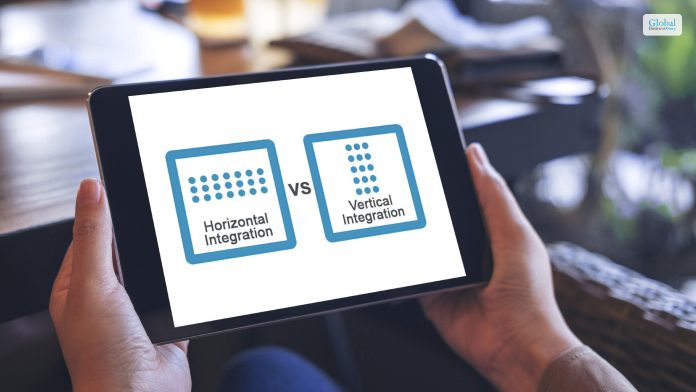
Growth and expansion are the fundamental aspects of any business. It is a universal truth, and you cannot negate it from your standpoint. You cannot sway away the reality from your endpoints. Vertical vs Horizontal integration is a business model that most businesses adopt. Horizontal integration is when a business acquires the same line of business at the same level of the value chain. It eliminates the competition to a greater extent. On the other hand, vertical integration includes ruling over the entire industry by covering the supply chain. It all depends on the organization and which form of integration they would like to adopt. You need to identify the key factors of each process that can help you to make your decision wisely. Key Differences Between Vertical Vs Horizontal Integration There are several points of difference between vertical vs horizontal integration you cannot negate these points from your end. Basis Of ComparisionHorizontal IntegrationVertical IntegrationConcept When two firms mix with each other due to their same product lines and products, it is horizontal integration. Vertical integration is that stage of an organization when one company acquires another company staying at the same stage or path. Objective Enhancing and increasing the size of the business. Developing the supply chain of the company. Consequence Your company gains maximum market share by eliminating the competition. Reduction of the wastage and cost. Capital Requirement The requirement of capital here is higher. The requirement of capital here is lower. Self Sufficiency No, it is not a self-sufficient approach. Yes!! It is a self-sufficient approach. Strategy Used To Control Market analysis Industry requirements After getting the tabular format of differences between the two concepts, let’s get the core insights of it as well. 1. Meaning Horizontal integration takes place when two firms combine with each other when their products and production levels are the same. In the case of vertical integration, the objective is to acquire the shares of the other company. You need to go through the meaning of the two integration processes to make the application in your organization. Once you follow the process, things will become easier for you. 2. Objective Horizontal integration aims to increase the size of your business. On the other hand, vertical integration aims at smoothening and strengthening the production process. You need to be well aware of the objectives of vertical vs horizontal integration. You cannot make your choices all of a sudden. Read the objectives behind it for your organizational development. 3. Consequences Horizontal communication eliminates the chances of competition. In other words, it wipes out the competition from the market. On the other hand, Vertical integration lowers the wastage and cost of production. You can use horizontal integration to improve your brand presence in the market. Again in the case of vertical integration, you can use it to reduce the wastage in your production and distribution process. 4. Capital Requirement The capital requirement in the case of horizontal integration is high compared to vertical integration. You cannot negate the investment part in the process of your brand development. The marginal cost will be less. You need to have enough capital with you to initiate the process of horizontal integration. On the other hand, in the case of vertical integration, minimum capital is enough to initiate the process with ease. 5. Self Sufficiency The chances of self-sufficiency in the case of horizontal integration are not there, whereas in the case of vertical integration, the chances of self-sufficiency are present. You need to get through the two integration processes to make your final business decisions. If you want to do business independently, then horizontal integration can be a loss for you. On the other hand, Vertical integration can be a great option for you if you like to do independent business. As per the experts, self sufficiency is important. 6. Controlling Factor Vertical integration can assist you in gaining control over the whole industry. You can gain control over the entire market with the help of horizontal integration. The chances of growth in the case of vertical integration are higher compared to horizontal integration. Vertical vs horizontal integration can make your journey easier in the process of controlling the business. You cannot make things happen all of a sudden. What Is Vertical Integration? Vertical integration is that stage of an organization when one company acquires another company staying at the same stage or path. Vertical integration occurs when a company expands its operations by acquiring or merging with businesses along its supply chain or distribution channels. You need to consider the inventory turnover ratio. Advantages Of Vertical Integration There are several advantages of vertical integration that you must know at your end. Some of the key core benefits of it are as follows:- Vertical integration can help you to achieve cost efficiency. It can help in bulk purchases and reduce the cost of transactions. Distribution cost is reduced as it cuts off the requirements of the middleman in the process of integration. Your organization's products can meet the desired quality level if you make the application of vertical integration. Price fluctuations of the suppliers can be reduced greatly due to the presence of vertical integration. Synergies between different stages of production and distribution can lead to increased overall efficiency. Your network marketing can grow due to this integration. Backward Vertical Integration In backward integration, a company acquires businesses that supply it with essential raw materials, components, or services. This allows the company to have more control over its supply chain, reduce costs, and ensure a stable supply of inputs. For example, an automobile manufacturer acquires a steel company to secure its source of steel. End Of The Integration Process Hence, from the mentioned discussion, I think the differences between vertical vs horizontal integration are clear to you. You need to understand the process that can make things easier and more effective for you in the long run. You can share your views and opinions with us in this regard. It will help us to know your take in this regard. Try to convey your feedback to us from time to time. Read Also: What Is A Holding Company? – Importance, Operation, And Pros & Cons What Is Net Operating Income? How To Calculate NOI? What Is The Leverage Ratio And How to Calculate It?
Oct 06, 2023

How To Tell If Your Married Boss Likes You Romantically?
It is usually not that uncommon for your married boss to notice the employees, but when it gets more than just noticing becomes something more, what then? It is important to know the right amount of balance between personal and professional relationships, especially between a married boss and their employee. But when it comes to your boss showing some extra attention to you, the signs are pretty clear, but how to tell if your married boss likes you romantically? That’s a whole new ball game. How To Tell If Your Married Boss Likes You Romantically? There are many different signs suggesting that your married boss likes you in a romantic way. If you are not aware of such signs yet, then you should definitely start paying attention more than you normally do. So keep on reading to know “how to tell if your married boss likes you romantically.” 1. They Want To See You Outside Of Work Do you and your boss meet outside of the workplace? If so, then things are no longer in a professional environment. Suppose your boss asks you for a drink or to grab dinner; then it is a huge clue that you should look for. And more so when they are hanging out with you alone and not even inviting other employees, then it’s possible that your boss may like you. 2. Your Boss Makes Excuses To See You When At Work When your boss has a crush on you, they would do anything to see you more, even at the office, and to spend time alone with you. Silly excuses like sudden face-to-face meetings may even come up to your desk to check up on you. Then there are definite signs that they might like you beyond just the employer-employee relationship. Read more: 10 Signs Your Boss Is Testing You 3. They Make Your Job Easier Suppose your boss shows favoritism or liking towards you, then they would try to make your life easier at the office. Such behaviors as helping you to complete your work, valuing you over other employees, and excusing your mistakes. This kind of behavior from a boss is very unfair and something that should not happen, but if they probably like you, then you can receive such treatment. 4. They Strike Up A Personal Conversation Suppose your married boss is looking forward to now you more than just in a professional way, then they will talk to you more auto personal things. This doesn’t have to mean that your boss likes you, but they are definitely trying to get to know you more on a personal level. Your boss might ask you about your hobbies and other interests in order to know you more. 5. They Don’t Mention Their Spouse A big sign of whether your married boss has feelings for you or not is whether they talk about their spouse in your presence. If they are into you, then they are totally gonna avoid the topic of their spouse or fiancé when you are present. They might hide the wedding ring or hang up on the call of their spouse when you are around, and even act abnormally when they are near. 6. They Show Interest In Your Personal Life When your married boss is talking to you about personal things, then observe properly whether they are showing any interest in your personal life or not. Suppose your boss likes you, then they are definitely going to ask you about your love life in a sly manner. And if you are in a relationship, then wait and see your boss’s expression, whether you can see a tinge of jealousy or not. If they quickly change the topic, then they are a bit jealous, knowing that you are in a relationship. 7. They Add You On Social Media Social media is a very “non-professional” platform, so let’s just say you're married boss is showing interest in you; they surely wanna know more about you and your life outside the office. And what better way to know about you than to follow you on social media? This way, they can even keep tabs on your whereabouts and your likes and dislikes. 8. They Send Messages To You For No Reason Trying to establish a more personal connection with you, your boss might text you when outside the office. They might be about “How are you doing?” or maybe “Have you reached home properly?” Even if these texts seem quite normal, if they suddenly start sending you suggestive texts that they might like you, then there is no clearer sign. 9. They’re Subtly Flirty With You Suppose you think your boss might be flirting with you, then you can easily recognize the signs of subtle flirting if you are an expert. Things like lightly touching you after a joke, making eye contact with you, and making suggestive comments to you. The signs are clear that your boss likes you, forgetting the fact that they are married. Read more: 10 Signs Your Boss Cares About You 10. They Get Physically Touchy With You Is your boss too touchy with you? Such as hugging you or maybe touching you unnecessarily? In a workplace, handshakes and the occasional pat on the back are acceptable. But anything more than that is definitely a sign that your boss might like you, and you don’t have to know any more signs of how to tell your married boss likes you romantically. How Can Romanticism In The Workplace Hurt Your Career? Romance in the workplace can lead to a higher level of distraction. It can ruin your concentration level and prevent you from achieving your set goals. If your Boss becomes flirty with you in the workplace, there is a high chance that you are in a high-risk zone. 1. Your Professional & Personal Life Can Be At Stake Your professional and personal life can be at stake. There are high chances of distraction and fewer chances of growth. This will offer you short-term happiness and long-term sadness. However, if you like this romanticism of your boss for a longer period, there is a high chance you will lose your self-esteem and confidence soon. 2. Growth Opportunities Will Become Less You will become distracted from the path of your career growth due to the romanticism in the workplace with your boss. This can lead to less searching for better career opportunities for you in the future. Most importantly, you will be stuck in one place. Your career will be trapped in the mud of stagnancy. 3. You May Be Confused About Your Boss's Mood Swings Romantic employees take care of the boss's mood, not his or her work. Ultimately, this can lead to short-term gains and long-term losses. There is a high chance that you miss out on some happy moments with your family and friends out of an illusory relationship that ceases to exist. The human mind is not very predictable. So if you have a woman boss, then the challenge will become 10 times more difficult for you to keep your boss happy all the time. 4. Better To Leave The Job Now, every problem in this world comes with a solution. So, here also is no exception to this matter. If you get signals from your boss that they try to carry a romantic relationship with you, immediately leave the job for your own betterment. Don’t enjoy this relationship longer than initially, as it will make you smile, but ultimately it will make you cry. 5. Skill Enhancement Chances Will Be Less Your skill Enhancement chances will be less due to your romantic boss. You will receive your next best job based on your skills, not your present boss's reference. Keep this thing in mind and then enter into a romantic relationship with your boss. There is a fundamental rule of thumb: “ Love your work.” As companies cease to exist. Frequently Asked Questions !! (FAQs): Here are some popular questions you might want to get an answer to – Q1. How Do You Know If Your Boss Likes You But Is Hiding It? Ans: Did your boss just tell you to stay late for a meeting after work? Well, this might be one of those tell-tale signs that he/she is into you. These bosses usually try to persuade their favorite employees to stay after work so that they can spend time together. This is one of many signs that they like you secretly but are still hiding it. Q2. Do Bosses Have Crushes On Employees? Ans: Although the office is a professional platform, that does not mean we leave our personal feelings behind at home when we head to work. It is possible for any human being to be attracted to others despite their differences in the employment hierarchy. Office romances and work spouses are very common in many countries, and it is quite normal for bosses to develop feelings for their employees. Q3. How Do You Know If Your Boss Admires You? Ans: Here are some common signs that your boss might have some feelings for you –• They may challenge you occasionally. • When your boss relies on you too much, it means that they secretly admire you. • They can leave key assignments and clients to you and feel no worry. • They make you feel respected at work. • They are often willingly recognizing and admiring your work. Check out this YouTube video: 17 Signs Your Boss Likes You Romantically https://www.youtube.com/watch?v=uv8UQPI16iU Wrapping Up! Now that you know all the ways to know how to tell your married boss likes you romantically, you can do something about it now. If you are uncomfortable with it, then ask for advice from someone trustworthy on how to deal with it. Then skillfully and professionally deal with the situation. So if you find this article helpful, then leave a like and comment below to get more similar content from us. Read Also: 10 Signs Your Boss Is Impressed By You 10 Signs Your Boss Wants You To Leave
Nov 28, 2022

Batch Failures and Contamination: The Broader Risks Beyond Lost Production
Contamination is not just a technical glitch. In pharma and medical device manufacturing, contamination is not a mere technical hiccup. Rather, it is a full-blown systems failure. It hits everything—production, logistics, reputation. In fact, lost batches are just the tip of what we see. The Domino Effect of Remediation Once contamination is detected, it is like pulling a thread. You have to start root cause investigations that are neither quick nor cheap. Then, you have to focus on cleaning. Thereby, you have to revalidate processes and requalify facilities. These include downtime stretches and product release stalls. Basically, restarting is not just flipping a switch. Budgets do not usually plan for this kind of complexity. Materials get tossed, sterility tests pile up, and validation protocols are rerun. Meanwhile, all that effort is reactive and expensive. As a result, teams scramble, timelines shift, and stress levels spike. Supply Chain Disruptions and Inventory Chaos Then there is the supply chain. Even if sterility is not totally compromised, batches get held and quarantined (Just in case). Moreover, testing takes time, release protocols are delayed, inventory backs up, and warehouses become clogged. Also, logistics becomes a nightmare, especially when capacity is already tight. Sometimes, it snowballs with shortage declarations, clinics waiting, hospitals improvising, and patients delayed. This is neither a good nor an acceptable idea. All of these happen from one contamination event. Infrastructure Damage and Equipment Wear Infrastructure goes through damage too. For instance, microbial residue and chemical traces do not just vanish. In this case, the following are the major damages: Filters degrade Tubing corrodes Chromatography media damage Replacement costs climb Capital budgets are not enough Refurbished equipment needs more care Maintenance cycles shorten Calibration becomes routine Operational costs swell. Confidence Erosion and Regulatory Scrutiny When confidence erodes, it recalls trigger scrutiny. Then, regulators circle, and even without formal recalls, inspections intensify. After that, corrective action plans are drafted, and quality oversight is tightened. Moreover, investors get nervous, clients ask questions, and partners reconsider. As a result, reputation management becomes a full-time job. In addition to that, audits multiply, and quality systems get torn down and rebuilt. Although it is exhausting and expensive, it is necessary. Uncovering Systemic Weaknesses Sometimes contamination reveals what has been lurking: Weak spots, monitoring gaps, training holes, or cleanroom design flaws. It is not just about fixing the immediate issue. Rather, it is about redesigning the system (airflow, filtration, gowning, training, etc.). A Strategic Shift in Mindset! Remediation is not just cleanup. It is a reinvention and a mindset shift. Also, contamination prevention is not optional. It is foundational. Hence, you will have to integrate it into your strategy. So, do you want to dig deeper? Scientific Safety Alliance has a resource from cleanroom testing experts that breaks down the hidden costs. It is worth a look, especially if you think contamination is just a one-off problem. It is not. It is a mirror. And sometimes, what it reflects is not pretty. Read Also: Managing Factory Relocation: Strategies to Prevent Costly Delays Reimagining Equipment Design to Prevent Food Recalls
Oct 16, 2025