





Why Get An MBA Degree: Reasons And Benefits

A Master’s in Business Administration (MBA) is a graduate degree that will enable you to acquire theoretical and practical skills to help you become proficient in business management. One of the main reasons you should get an MBA degree is that you will improve your chances of being promoted to top managerial positions.
Professional MBA programs are designed for learners with bachelor’s degrees but who have less than 5 years of professional experience. An executive MBA program targets learners working at senior management levels within their organizations. One consideration you should make while contemplating getting an MBA degree is that some programs would require you to have a working experience of 2 to 5 years while others do not.
Can you get an MBA without an undergraduate degree? No. Pursuing an MBA degree will require you to be a holder of a bachelor’s degree or even a master’s degree in another field. In case you have an associate’s degree, you should first enroll in an undergraduate before proceeding to an MBA. In addition, some higher learning institutions offer dual-degree MBA programs, which are suitable for students who want to pursue different master’s degrees but also want to improve their business acumen. Therefore you can get an MBA without a business degree.
Is Getting An MBA Worth It: Let’s Explore
It is expected that before you decide to get an MBA, you need answers to different questions due to the efforts and commitment involved in completing the program. I can assure you that MBA is one of the best programs in terms of career growth, salary increment, and extensive networking.
Here are the main factors that make MBA worth it:
Gain Unique Skills Required In Modern Businesses
The modern business environment is increasingly dynamic which requires professionals to have up-to-date skills to match the trends. Pursuing MBA allows you to widen your skillset to become more adaptable to the prevailing job market demands. For instance, you will get essential skills that will help your organization to remain competitive and adaptable to consumer preferences and demands.
An Opportunity To Understand Different Industries
Getting an MBA allows you to have a better understanding of diverse industries in several ways. First, it allows you to interact and collaborate with professionals from diverse industries allowing you to gain a better perspective on different fields such as science, economics, and psychology. Secondly, the program will expose you to real-life case studies of companies in different industries which will help you understand how they function and the leadership roles and responsibilities. You may decide to pursue a new challenge in an industry you never thought you would work in.
Completing assignments at an advanced academic level is sometimes challenging due to time constraints or the complexity of the field. To overcome these challenges, a custom dissertation writing service can be a reliable option to help you meet your deadlines and deliver exceptionally high-quality projects that guarantee your academic success. CustomWritings is one of the leading reliable and trustable dissertation writing services that would help you complete any of your assignments including Ph.D. proposals, theses, and dissertations among other types of academic work. If you are looking for assistance do not hesitate to contact the company’s customer service team for more information.
Speed Up Your Career Path
An MBA will open up an opportunity for you to climb the organizational ladder within the company you are working in. Some individuals pursuing MBA are not interested in changing their careers, rather they want to climb up the corporate ladder. With an MBA, you will gain more access to senior leadership roles allowing you to gain practical skills and knowledge about more challenging tasks.
Build Strong Networks
MBA allows you to establish strong professional networks that open numerous opportunities for career growth and development. Once you enroll for an MBA, you are undoubtedly joining a team of future corporate leaders and well-connected alumni. On most occasions, MBA programs provide networking events that will allow you to expand your reach, guaranteeing success in jobs.
Read Also: Profitable Business Ideas To Start In UAE
Why Should I Get An MBA Degree: Here Are The Benefits
If you are still pondering to answer “why get an MBA degree?” here are the unique benefits you will enjoy:
- Explore new career paths: one of the key benefits of an MBA is that it will help you explore new career paths. While you may be contemplating getting an MBA while working for career growth, you might end up choosing a completely different path due to the introspection you acquire from pursuing an MBA.
- Gain better communication skills: One of the important skills in the modern market environment is communication. When you become a better communicator, you can avoid organizational conflicts which adversely impact the attainment of organizational goals. You will express your ideas better, making a significant contribution to organizational growth.
- Enhance collaboration: Organizations achieve most of their goals through collaborative teams. One of the most important aspects of an MBA is that it emulates real-life scenarios such as collaboration and problem-solving. Whether you get an MBA online or otherwise, you will collaborate with other students to complete specific projects, gaining essential skills that you will transition to the workplace.
- A better understanding of the global business environment: An MBA will help you gain a better perspective on the international business environment. For instance, you will interact with students from diverse regions, who have different work experiences and perspectives. It will help you to better understand the global market.
Tips To Get An MBA Degree: Here Is How You Can Acquire Your MBA Degree
One of the main concerns before pursuing an MBA is how long it will take to complete the program. Irrespective of the course format, students will study the same units in the first year, electives, and Thesis in the second. Here are several tips that will help you accomplish your study goals within a specific time frame whether you are getting your MBA online or on campus.
- Part-time MBA program: If you don’t have adequate time and resources to complete your MBA full-time, this is the best option for you. You may take up to 5 years to complete the course.
- Full-time MBA program: the program takes 2 years to complete. Classes are offered on campus, on evenings and weekends, or online.
- Accelerated MBA program: The program has fewer courses and students pursuing the program are expected to master the concepts quicker than their counterparts in full-time and part-time programs. The program, however, is designed to be full-time, therefore, more demanding. If you wish to complete your studies quickly, it is the best option for you.
Read Also:

Recent
Dinmukhamet Idrisov and a Gold-Mine Dispute From Kazakhstan’s Oligarchic Past
Oct 16, 2026

Memory Chips Are Becoming More Important in the AI Era
Aug 06, 2026

Why Enterprise Web Applications Still Choose Angular for Long-Term Growth
Aug 04, 2026

Due Diligence Decoded: Why Careful Evaluation Still Wins in Business
Jul 11, 2026

Related Articles

How To Remove Audio From Iphone Video
The audio track that comes with a video can occasionally be distracting or raise privacy issues when you want to share it with others. There are instances when we must mute video (without a soundtrack) that contains offensive language or strange dialogue. We can then modify that on your iPhone and email it to someone else or save it safely. Any sound video may be turned into a silent video on the iPhone and iPad in a matter of seconds. You can also easily add text to video online if you want to remove the audio in your clips. Why Remove Audio? Why not capitalize on this trend now that we've shown that watching videos without audio is a common aspect? Making videos that don't have audio or may seem to have an impact without it is beneficial. This enables you to communicate with as many individuals as you can. Text, illustrations, and captions can help to fill in certain blanks. Your video's viewers will read it effectively. Check to see if you can establish an emotional connection while reinforcing your brand with appropriate graphics. Ensure your clip looks amazing if you choose to produce a video without audio. Key Benefits Availability Make the point that you shouldn't rely exclusively on speech to be heard or appreciated by using the concept of silent videos. You must include closed captions to your videos since some people may not be able to hear what you have to say. You may utilize the video's subtitles to highlight the key elements of your statement, then use the descriptive or subtitle area to make sure viewers who can't hear you can understand or see what you're trying to say. Subtitle Captions Subtitles Integrating text boxes with your visuals Enables You To Create Content That Is Precise And Has A Clear Message As you pause to consider how the general public will react to your message, you are also considering how you will communicate it clearly and succinctly. The clips you are producing will be well-thought-out and have a purpose. Which raises the bar for the standard of your effort. Long-term, this will significantly alter the situation. Utilizing noises or depending on music or your voice allows you to quickly convey information that might not otherwise strike a chord with your audience. Utilize Animations, Catchy Titles, And A Storyline Utilize text to emphasize key points or serve as a transition after a title that introduces your film. Your no-audio video may come to life with animation. Use your animations to craft an understandable narrative. Using strong or vivid colors is another effective approach to draw the eye. With this strategy, your animated video stands out. Use intriguing text if you must use it. To bring attention to your video, use superlatives like "most popular," "greatest," and "worst." Try using a negative title or attempting to stimulate viewers' curiosity. You must deliver a compelling storyline to engage your audience, audio or no audio. If you're going mute, make sure your narrative can be delivered visually or find a way to communicate your point without speaking. How To Remove Audio? To view videos you wish to edit, use the Photos application on your iPhone. You must locate the Photos Application. Follow the fundamental steps listed below for a thorough tutorial! Step 1: Using your iPhone, launch the Photos application. Click Albums Step 2: Under the Media section of the screen, select Videos. Step 3: Locate the particular video you wish to modify and hit edit. A Sound symbol displays in the top corner when you arrive at a certain panel. Tap the Sound button to turn off the video's audio. Step 4: Your changes will be saved if you choose Done in the bottom right corner of the screen. Step 5: Before posting the video on any social platform, view it at the maximum volume on your phone to be sure the audio if it is still there. Visit other clips that will have sound to see and check; this indicates that your task of removing the audio is complete. Take note: If you experience any problems tapping the Done button there might be a problem saving the clip, according to some users of the Photos app. Some of the problems that they encounter say “Please try once again later," Which could result from troubles with iPhone memory being full. How To Put Back The Audio Again? Step 1: Access a video in the Pictures app from which the music has been deleted. Step 2: Hit the Edit button. Step 3: Click on the grayed-out Sound icon. As a result, the Audio icon will become yellow. Step 4: To restore the audio in that particular video, press Done at the end. You may also choose the Revert option right away, but what would happen in such a case? All major changes to this video will be undone if you go back to the original. Hence, if you want to restore the original video, select Revert to the Original version; otherwise, use the first method to restore the audio track only. This is easy. Quite so many video editor apps are available in the app store that may be used to silence the video, edit some text, or cut the video and audio at either a certain time or position in the audio. How Do I Take Video On iPhone Without Sound? Do you want to take a video on iPhone and Sound? If so, you need to follow some of the steps for it. Let’s find out the steps one after the other to have a clear insight into it. You cannot just make things happen suddenly. Some of the key factors that you need to take care of here are as follows:- First, you need to record a video with your iPhone. You have to open the videos in photos, and then you have to click on Edit. Turn off the audio option present in the upper left corner. You need to follow these simple steps to remove the audio from your iPhone. You need to stay vigilant in this regard. You should make sure that things are arranged in proper order when you want to get things done in perfect order. What Are The Reasons For Switching Off The Audio In iPhone? There are certain reasons for switching off the audio on an iPhone. You need to take care of the reality while you want to get through the complete process that can make things easier for you to reach your requirements easily. To maintain privacy. To avoid noise creation around the surroundings. If you want to develop a better ambiance around you, then the noisy sound of the iphone videos must be muted. To keep the secrecy of the video content, you can also remove the audio from your iPhone videos. You need to understand why these types of steps you need to take. You cannot make your selection on the wrong end. You need to follow the perfect process that can make things easier and effective for your business. Tryout the best options that can make things easier for you in attaining your requirements with complete ease. Ensure that the scope of the errors must be as small as possible. You need to identify the best options that can make things easier for you to reach your goals with absolute clarity. What Are The Options Available To Remove Audio From iPhone Video? There are several options available for iPhone videos to remove the audio from the video. Some of the key options that you must consider here are as follows:- 1. iMovie iMovie is a free video editing app for iOS devices. It allows you to detach easily and delete the audio track from a video. 2. Third Party Video Editing Apps There are many third-party video editing apps are there on the App Store that provides more advanced video editing features, including audio manipulation. Some popular options are Adobe Premiere Rush, LumaFusion, and InShot. 3. Desktop Video Editing Software If you prefer to edit videos on a computer, you can transfer the video from your iPhone to a desktop video editing software like Adobe Premiere Pro, Final Cut Pro, or DaVinci Resolve. These tools provide more advanced audio editing capabilities. Conclusion You can remove audio from your iPhone clip by simply following these easy steps, regardless of whether you've said something awkward that you wouldn't want others to listen to. Even a song playing in the surroundings that you're concerned about will cause copyright infringements when expressed on a social medium platform. Nothing can compare to the effectiveness and durability that the applications provide, even while mobile apps make it easy to access the iPhone's playlist of videos that have audio removed. With the volume of video available on the internet now rising, it is more crucial than ever to make your content shine out of the video.
Feb 23, 2023

Develop An Employer Brand Strategy With These Tips
Managing a growing company is more than a little challenging. When you wish to develop an e there are specific things that need to be addressed, and you also need to set goals. Here are some measurable goals for your employer's brand strategy: Increase the number of job applicants Better quality candidates Find ways to improve the candidate’s engagement with your brand Nurture an awareness of the brand among employees Build a solid reputation as an employer If you want some professional help with developing your employer brand strategy, there are affordable HR services outsourced from a leading HR agency. This is one of many services the HR agency offers small businesses. They handle risk assessment support, annual leave, workforce management, and recruiting. Choose Your Ideal Candidate Start by defining traits that you wish to see in candidates, such as hardworking, punctual, loyal, a person with a level of diplomacy, and some you can rely on. Your management team should sit down and collaborate to create the ideal candidate. Never mind that this is a purely fictitious exercise, at least you will know what your ideal candidate looks like. Create An EVP This document is called an Employee Value Proposition, which looks at the employees and their perceived values working for the organization. The document can be long at the outset and gradually reduced to a few pages by using a skilled copywriter. Typical elements include pay, working conditions, performance bonuses, perks, and the company culture. The Power Of Visual Branding Use actual images of your employees in all relevant documents and paperwork, which gives employees a sense of belonging. You could create a short video to show what it is like to work for your organization, which would certainly impress new candidates. List Effective Communication Channels There are many ways to communicate with your employees, such as: Company website/ careers page Social media Review websites Email Events Job advertisements Listing these allows you to work on strategies that ensure you are using all of the right channels to communicate with the outside world. Create The Right Content Make videos to celebrate business or employee successes. If one of your employees takes part in a sponsored event, include that in your monthly newsletter. Create quality content for your social media channels, as this is vital for developing an employer brand. If you don’t have an employee to manage content creation, this is something you can outsource to a local HR agency. Let a team of experts start creating content for all your channels, putting out the right messages in the right places. Tracking & Measuring Of course, you do need to track and measure performance. A leading HR agency can collate all your data and accurately measure performance while making positive recommendations on how to improve. You should make good use of all your data when measuring performance. A local HR agency would be able to do this using your existing data. As a conclusion, if you wish to develop your employer brand strategy, all of the above aspects need to be included in your plan. You may not have the time to carry out this work, which is why you should contact a leading HR agency with experience in your sector and let the experts help you develop a strong employer brand. Consistency is a critical factor when aiming to develop an employer brand strategy. You need to constantly review what you are doing and check that you are accurately measuring results. Additional: HYIP Projects: Features How To Text Your Boss You Can’t Come In 10 Signs You Are Being Groomed For Promotion
May 08, 2023
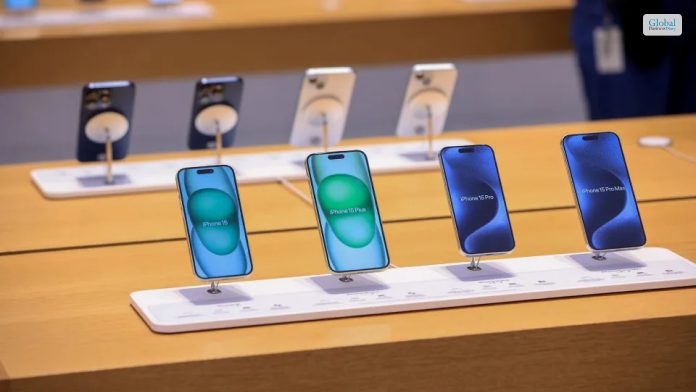
Warning Signs Grow Apple Is Losing Chinese Consumers To Huawei
Growing evidence is falling shy of its predecessors in China. It suggests a setback for the world’s most valuable company. In the overseas market, it showed its craze with full dominance a few years back, but in the Chinese market, it is gradually losing its grip. The iPhone series 15 has witnessed a decline in its sales over the past few years. You need to take care of these facts when you want to get things done in perfect order. You cannot make your selection on the wrong end. A 6% decline in sales in its launch month is making things too complicated for its counterpart, against the backdrop of the strong growth of the Huawei Mate 60 series, which recorded sales that are close to 1.5 million, in its launch month that are doubling from a year ago. https://twitter.com/economics/status/1718915770170982825 Reason For Apple Loosing Its Chinese Consumers There are several reasons for the loss of consumers in Huawei’s shares. You need to be well aware of the facts while attaining your requirements with complete ease. Ensure that the scope of the errors is as low as possible. Apple’s shipments were down by 4% in the third quarter. Hawei’s 60th series of recorded sales close over the past few years. The Apple iPhone 15 recorded a 6% decline in its sales figure over the past few years. Hence, these are some of the core reasons why you cannot make your selection and choices at the incorrect end. Ensure that the scope of errors in your endpoints is as small as possible. Tryout the perfect solution that can assist you in reaching your goals with complete ease. The iPhone series 15 has witnessed a decline in its sales over the past few years. You need to take care of these facts when you want to get things done in perfect order. You cannot make your selection on the wrong end. Read More Business Related News!! Amazon Beats Earning Estimates, Touts AI As The Future Of The Cloud Tesla Woes Bolster Appeal Of Top China EV Maker BYD: Tech Watch Intel Earnings: Stock Jumps On Q3 Earnings And Revenue Beats
Oct 31, 2023

What Is The Difference Between Direct And Indirect Distribution? – Let’s Find Out
What is the difference between direct and indirect distribution? – Both direct distribution and indirect distribution depend on the status of a distribution channel. Generally, a distribution channel comprises a chain of businesses. These businesses or intermediaries include manufacturers, retailers, warehouses, shipping centers, the Internet, etc. These include goods and services until they reach the consumers. In this article, you will learn about direct and indirect distribution channels. Apart from that, we will also take a look at the difference between the two distribution channels. In addition to these, we will also share with you the major features along with the pros and cons of each type of distribution channel. Hence, to learn more, read on through to the end of the article. What Is Direct Distribution? According to Indeed.com, “Direct distribution is a strategy in which a producer or manufacturer delivers products directly to the consumer. Using this type of distribution rarely includes the use of wholesalers or other distributors, as companies typically process and sell the products themselves. This type of distribution may also help companies increase revenue and save on out-of-pocket expenses for marketing services.” Generally, a direct distribution channel is one that allows the end consumers to purchase or receive goods directly from consumers. In some cases, companies that work through a direct distribution channel can promote their products and services through their in-store flyers or their websites. Essentially, working with a direct distribution channel means that you will need to take the responsibility of delivering the items directly to the consumers. In fact, many small business owners or entrepreneurs start their businesses using this distribution channel. Pros And Cons Of Direct Distribution The following are some of the major pros and cons of direct distribution channels: Pros Here are the pros of direct distribution channels: You can directly sell to consumers. It is easier for a business of a micro-scale to start their operations. It ensures proper delivery of products and services. You have better control over the marketing and sales processes. No fighting with competitors to win shelf space at a retail store. Cons Here are a few cons of a direct distribution channel: For some business owners, direct distribution can be expensive and time-consuming. Shipping and delivery are complex processes, especially for a small business. Your market coverage will be limited. What Is Indirect Distribution? According to Investopedia, “An indirect distribution channel involves intermediaries that perform a company's distribution functions. Indirect distribution frees the manufacturer from certain startup costs and responsibilities that can cut into the time it needs to spend on running the business. Plus, with the right vendor relationships, an indirect distribution channel can be much simpler to manage than a direct distribution channel.” One of the best things about indirect distribution is that your company will receive the support and expertise that you might not have at the start. Here, you are enlisting a distributor to get your products to a retailer. Essentially, the retailer will be the one who will sell your products to end consumers on your behalf. Although expensive at the start, this distribution model will give you returns. Also, it will be more effective as your business grows in the market. However, indirect distribution also comes with new costs. Apart from that, there is a cost of bureaucracy, which can add to the costs for the consumer. Also, such factors slow down the delivery process, and the manufacturer eventually loses control. Pros And Cons Of Indirect Distribution The following are the major pros and cons of indirect distribution channels: Pros Here are the major pros of an indirect distribution process: You can sell your products for wholesale to businesses. Hence, these businesses (distributors) sell those products to retailers. Your products are with experienced people who know how to get the products into the consumer’s hand. You do not have to worry about sales at the consumer level. Distribution companies have good specialization in how to get a product into different markets. Retailers have specialization in how to sell their products in the local market. Cons Here are the major cons of an indirect distribution process: Distributors and retailers will take a significant share of your profit. Retailers will sell the products of your competitors alongside your products. There is competition for buying shelf space at the retailer’s shop. What Is The Difference Between Direct And Indirect Distribution? Salesforce says – “Distribution channels are a cornerstone of successful business operations for multiple reasons. Firstly, they enable companies to broaden their market access, tapping into diverse customer segments across different regions. Secondly, these channels streamline the product's journey, resulting in operational efficiency and cost reduction.” However, before you choose a particular distribution channel for your business, you will need to understand the differences between them. Here are the differences between direct and indirect distribution channels: Direct DistributionIndirect DistributionYou have ultimate control over the distribution process.You have limited control over the distribution process. Here, you have to depend upon others.Generally, this one is expensive initially. But you can develop efficiency eventually.Since you are sharing costs, you can limit the financial impact. Also, a good relationship with a vendor can be extremely beneficial.You can develop a direct connection with customers. Hence, you will have better brand loyalty.The growth of your company depends on your intermediaries for better customer experience.Your company is responsible for logistics.Distributors and retailers manage logistics.Your focus on core business will be less due to distribution responsibilities.It is easier to focus on your core business.Generally, the delivery time is fixed.The delivery time might vary as it depends on the vendors.Your company is solely responsible for customer experience and awareness building.Problems in distribution can adversely affect customer relationships and brand awareness.You keep most of your profit.You have to share your profits with distributors and retailers. Wrapping Up What is the difference between direct and indirect distribution? – Hope you have found your answer in this article. However, choose your distribution channel based on the needs and demands of your business. Do you have some suggestions regarding these distribution channels? Consider sharing your opinions with us in the comments section below. Need More Business Articles Please Click Below!! Equity Theory: A Balancing Act for Modern Workplaces Transportation Expenses: Essential Things To Know About It What Is Free Alongside Ship? Essential Things To Know About It
Dec 30, 2023