





Reimagining Equipment Design to Prevent Food Recalls

Where do recalls really start in food manufacturing? When recalls happen, customers lose trust, and operations suddenly stop. In most cases, the problem starts way before the product even gets close to a shelf.
So what’s the culprit? Not always what you might expect. Sometimes it is the design of the equipment itself.
Hidden Trouble in the Metal
Of course, manufacturers follow the rules (at least they try). But some of these machines are too old, clunky, and are designed in a different era. Hence, you have surfaces that trap gunk, joints you need a contortionist to reach, and places where bacteria and contaminants exist.
In addition to that, there is the Frankenstein setups, that is, equipment that has been tweaked and patched over the years. Hence, they do not always line up with today’s hygiene standards. Thereby, cleaning becomes a nightmare. You miss a spot and the risk goes up.
Smarter Machines, Cleaner Outcomes
Nowadays, things are constantly shifting. Finally, smarter equipment is stepping in (systems built with safety baked in and not bolted on after the fact).
Think curved surfaces – sealed edges, and drainage that actually works. These are not merely good-looking features, but they are defense mechanisms against microbes and contamination. Thereby, it saves the equipment from the next recall.
Apart from that, automation is helping too. Now, there are fewer hands on the product (human interaction) and more control. Also, it helps to make controls tighter. Hence, there are fewer chances for things to divert.
Design Is Not Enough
To be honest, effective design is not enough. You also need backup in the form of operational support and regular maintenance. Also, you must have better access to machine parts and round-the-clock tech support.
Hence, if someone catches a problem early, they have options to fix it before it gets too late. If you wait too long, you are in damage control mode.
Also, don’t forget the crew. Give them tools, training, and machines that don’t fight back. That’s how you build a safety net.
Build It Right, Avoid the Fight!
At the outset, recalls don’t start with a bad batch. Rather, they start with bad design or bad preparation, or both.
Cleanliness, reliability, and ease of usage – if those are integrated into every machine, you are already ahead. In fact, you are not merely reacting to risk. Rather, you are erasing it before it even shows up.
So, do you want to see how it all fits together? Check out Bak Food Equipment’s visual breakdown of the recall lifecycle. They make industrial meat injectors, but the principles apply across the board.

Read Also:
Tags:

Recent
Memory Chips Are Becoming More Important in the AI Era
Aug 06, 2026

Why Enterprise Web Applications Still Choose Angular for Long-Term Growth
Aug 04, 2026

Due Diligence Decoded: Why Careful Evaluation Still Wins in Business
Jul 11, 2026

How Hydraulic System Design Impacts Equipment Performance
Jul 01, 2026

Related Articles
Successful Saas Landing Page Examples
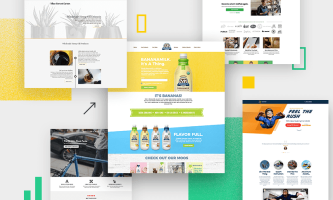
Are you looking for SaaS landing page examples to inspire your website design? If so, then this blog post is for you! We’ll be taking a look at some of the best SaaS landing pages from around the web and breaking down what makes them successful. We’ll also discuss how to use these examples to inform your own SaaS web design. So if you're ready to learn more about SaaS landing pages, read on! What Is Saas Web Design Before we start looking at SaaS landing page examples, let’s quickly discuss what SaaS web design is. SaaS stands for “Software as a Service” and refers to software that is hosted by a third-party provider. This model allows businesses to use the software without having to purchase it outright or manage their server infrastructure. SaaS web design focuses on creating an attractive and user-friendly experience for SaaS customers. SaaS landing pages, in particular, are designed to capture customer interest and encourage them to sign up for the product or service. Check out this website for more information on this. Why Is It Important To Have A Saas Landing Page Regarding SaaS web design, landing pages are one of the most important elements. A SaaS landing page should be designed with the customer’s needs in mind. It should clearly explain the benefits of your product or service and encourage customers to take action. Having a well-designed SaaS landing page can also help to increase conversions and boost revenue. How To Create An Effective SaaS Landing Page Now that we’ve discussed SaaS web design in general, let’s look at some successful SaaS landing page examples. Here are some tips to keep in mind when creating your own SaaS landing page: Keep it simple: Your SaaS landing page should be easy to understand and navigate. Avoid using complex language or visuals that could confuse or overwhelm customers. Make it engaging: Use high-quality images, videos, or animations on your SaaS landing page to make it more visually appealing and Use clear CTAs: Place prominent and clearly labeled calls-to-action on your SaaS landing page. This will help customers understand what action you want them to take. Include customer testimonials: Customer testimonials are an effective way to build trust in your product or service. Including them on your SaaS landing page can help to convince customers that your product or service is worth signing up for. Use A/B testing: A/B testing allows you to compare two different versions of the same SaaS landing page to see which one performs. This can help you optimize your SaaS web design and get the most out of your landing page. Overall, a successful SaaS landing page should be engaging, informative, and easy to use. By keeping these tips in mind and taking inspiration from successful SaaS landing page examples, you can create an effective web design for your product or service. Successful SaaS Landing Page Examples Now that we’ve discussed the basics of SaaS web design and some tips for creating an effective SaaS landing page, let’s look at some real-world examples. Here are five successful SaaS landing page examples: Slack: Slack’s landing page is simple and engaging, with a clear CTA and plenty of customer testimonials. The page also includes an animated video that explains the features of their product in an easy-to-understand way. Trello: It keeps its SaaS landing page design clean and simple. The page includes a prominent CTA, customer testimonials, and an animated video that demonstrates the features of their product. Zoom: Zoom’s SaaS landing page is designed with a clear focus on the CTA. It also has plenty of customer reviews and visuals to make it more engaging. Asana: Asana’s SaaS landing page focused on customer stories and offered a free trial to entice customers to sign up. The page also includes plenty of visuals and videos to demonstrate the features of their product. Dropbox: Dropbox keeps its SaaS landing page design simple. The page includes customer testimonials, videos, and a clear CTA to encourage customers to sign up. By taking inspiration from these successful SaaS landing page examples, you can create an attractive and user-friendly experience for your customers. Keep in mind the tips mentioned earlier and remember that A/B testing is an important method for optimizing your SaaS web design. Read Also: Why Use Automated Webinar Software For Your Business Best Practices For Creating A High-Converting SaaS Landing Page Creating an effective SaaS landing page can be a challenging task. But with the right strategy and design, you can create a web page that will help you reach your goals and increase conversions. Here are some best practices to keep in mind when creating a high-converting SaaS landing page: Optimize for mobile: Make sure your SaaS landing page is optimized for mobile so that it looks great on any device. Include customer stories: Including customer reviews and success stories on your SaaS landing page can help to build trust and convince customers to sign up. Include visuals: Use high-quality images, videos, or animations to make your SaaS landing page more engaging. Focus on CTA: Place your call-to-action prominently so that it’s easy to find and understand. Test different designs: Don’t be afraid to experiment with different design elements and use A/B testing to optimize your SaaS web design. By following these best practices, you can create an effective SaaS landing page that will help you convert more visitors into customers. Remember to take inspiration from successful SaaS landing page examples and use A/B testing to optimize your design for the best possible results. Conclusion Creating a successful SaaS landing page can be a difficult task. But by following the tips discussed here, you can create an attractive and user-friendly web design that will help you increase conversions. Take inspiration from successful SaaS landing page examples, optimize for mobile, include customer stories and visuals, focus on CTA, and don’t forget to use A/B testing for the best results. Good luck! Read Also: What Is Network Marketing And How To Do It Why Create A Powerful Business Continuity Plan? How To Start A Business In 2021 – Best Business Strategies
Jan 30, 2023

Real Estate Mobile App Development: Detailed Manual
Real estate mobile applications have experienced a tremendous surge in popularity in the past few years, owing to the ever-expanding estate sector. Real estate apps provide a bunch of features, such as property listings, virtual tours, mortgage calculators, and property management tools. These real estate mobile app development features make it easier for customers, salesmen, and representatives to interact and manage real estate transactions more efficiently. Real estate apps offer a level of convenience, accessibility, and online data to users. Buyers can investigate properties and view detailed information, images, and videos, as well as schedule virtual tours and connect with agents. Sellers can list the properties and connect with potential buyers straight through the property app. Agents can manage their listings, connect with clients, and track leads and sales with the assistance of the application. The development of such apps is highly lucrative, offering businesses a valuable opportunity to reach a broader audience, improve efficiency, and enhance customer satisfaction. In this article, we will delve into the topic of mobile app development for real estate industry. Сategories Of Real Property Apps You Should Know About The real estate mobile app development offers a large number of features that simplify real estate transactions for clients, salesmen, and representatives alike. With access to detailed property listings, virtual tours, mortgage calculators, and management tools, users can conveniently search for properties, view multimedia content, and connect with agents in real-time. For sellers, these apps allow them to list their properties and connect with potential buyers directly. Additionally, real estate agents take advantage of these apps to manage their listings, track leads and sales, and converse with customers. As a result, real property app development became an excellent way for businesses to expand their reach, enhance their efficiency, and improve customer satisfaction. Property Search Apps Property apps are accessible in various types, each with a unique purpose. One type is property search apps, which allow users to investigate properties by location, price range, and property type. Zillow and Airbnb are examples of property search apps that offer a comprehensive database of properties for sale and rent, providing users with precise data such as pictures, videos, and virtual excursions. Mortgage Calculator Apps Another type is mortgage calculator apps, which assist users in calculating the cost of a mortgage, which is based on various factors, such as the down payment, interest rate, and loan term. Mortgage Calculator by Quicken Loans is an example of a mortgage calculator app that enables users to calculate their monthly mortgage payments and see how different variables impact the overall cost of the loan. In addition, property management real estate mobile app development is widely used in the real property sector. These apps enable landlords and property managers to manage their properties, tenants, and leases using their mobile devices. Rent Manager is an example of a property management app that offers features like lease tracking, maintenance requests, and payment processing. Virtual Tour Apps Virtual tour apps are another type of real estate mobile app development that enables users to take a virtual excursion of a property, excluding the actual visit of it. These apps utilize virtual reality technology to provide a realistic and immersive experience of the property. Matterport is an example of a virtual tour app that creates 3D models of properties and allows users to navigate through them as if they were physically there. Real estate apps offer a variety of features that streamline real estate transactions, from searching for properties to managing them. With the appropriate real estate app, customers, salesmen, and representatives agents can improve their efficiency and effectiveness in the estate sector. Key Aspects Of Real Estate Mobile App To stand out in the crowded app market, it's crucial to have the following must-have features in a real property application: Property Search The property search feature provides users with the capability to explore listings based on their preferred location, type of property, and budget. This powerful tool gives users the ability to effortlessly and quickly find their ideal home by pinpointing properties within their desired price range. Virtual Tours The virtual property tour feature enables potential buyers to experience a 360-degree view of the property without the need for physical presence. This immersive experience allows users to gain a comprehensive understanding of the property. As a result, it saves clients and agents time while providing a more extensive experience to prospective buyers. Mortgage Calculator This feature helps buyers estimate the cost of a mortgage based on different variables such as the down payment, interest rate, and loan term. It also helps buyers make informed decisions before making an offer on a property. Push Notifications Push notifications to keep users informed of new property listings, price drops, and other important updates. They help users keep abreast with the latest information. Secure Payment System A secure and easy-to-use real estate mobile app development payment system is necessary for processing rental payments, security deposits, and other financial transactions related to real estate. This feature ensures the safety and convenience of both clients and salespeople. By incorporating such capabilities within a real estate mobile application, businesses can enhance user engagement, elevate customer satisfaction, and boost sales in the fiercely competitive real estate market. Real Estate Mobile App Development: What are the Costs Involved App Design A well-designed user interface and user experience are crucial to the success of a real estate mobile app. The more user-friendly and visually appealing the app, the higher the cost. Features And Functionality The cost of developing a real estate mobile app depends on the various features and functionality you want to include. For example, advanced features such as virtual tours, mortgage calculators, and property management tools can increase the cost. Platform The cost of real estate mobile app development varies based on the platform you want to build it on. Building an app for both iOS and Android will cost more than building one platform. Development Team The cost of hiring a real estate mobile app development team is a significant factor in the total cost of developing a real estate mobile app. The more experienced the team, the higher the cost. Maintenance And Updates Once it is developed, you need to maintain and update it regularly to keep it relevant and competitive. The cost of maintenance and updates can vary based on the complexity of the app and the frequency of updates. Conclusion The success of a real estate app relies on its ability to deliver a seamless user experience and provide unique features. A user-friendly interface, personalization, advanced features, and effective marketing strategies can help achieve these goals. Additionally, it is crucial to regularly update and maintain the real estate mobile app development steps to ensure it meets users' changing needs and stays up-to-date with the latest technology. Gathering feedback from users and incorporating their suggestions can also help improve the app's success. Finally, building trust with users by ensuring the security and privacy of their data is crucial to the success of a real estate app. Businesses should prioritize data protection and transparency in their practices to gain users' trust and loyalty. Read Also: How To Get Personal Loan On Bajaj Markets Best Practices For Mobile Data Collection: Tips And Tricks How Sustainability Sets Up Real Estate Developers For Success
Mar 28, 2023

Virtual Data Rooms: What They Are And Their Critical Importance For Businesses
A virtual data room (VDR) is a safe online location where documents are stored and are available to be shared among authorized groups of users. It is often used for examining, distributing, and disclosing every type of corporate documentation and seeing the other diligence procedures which are prior to a merger or acquisition. In this blog post, we will discuss the most notable benefits of using virtual data rooms. Benefits Of Virtual Data Rooms A virtual data room is known as the deal room. This is a secure online repository and document storage and distribution system. It is utilized during the diligence process and preceding an acquisition, share, and disclosure. The virtual data rooms hold every type of data. This is more like a data dictionary that holds every sort of data simultaneously used by a different person or organization. Virtual data rooms are replacing traditional data storage units. Here are the advantages of having virtual data rooms. 1. Let AI Handle the Laborious Tasks Recent VDR or virtual data room developments have included machine learning and artificial intelligence, like other established technologies. The only option that nimbly adjusts to your unique demands is Firmex – and you can click here to explore more. The virtual data rooms contain a variety of AI features that boost accuracy, provide considerable efficiencies, and give you more knowledge about your business and data. Duplicate queries are eliminated via automation, and full-text searches and auto-indexing can cut workloads and simplify them. Additionally, it can speed up and streamline the contract approval process. 2. Protection Of Data Data security and data protection is the most critical factor for any customer while using virtual data room storage systems. Other internal measurements which are providing the employee include checking for other malicious harmful software, watermarking files by using refined authorizations, limiting access to the data room, backing up data, and using file encryption. This is the addition that ensures their VDR data centers are turning out to be secure. These methods significantly increase the security of private data and reduce the chance of its illicit reading and spread. 3. Easy Configuration And Management VDRs offer superb usability for all end users and their special protections. Only those with a need to know should have access to sensitive information. However, your IT team will be in charge if you choose to use a conventional content management platform for external sharing. VDRs were created as front-office solutions to give corporate end users complete control and transparency. The platform protects IT resources which enable executives and other project managers to oversee their unique, secret initiatives, sometimes many at a single time in a single, centralized place like the virtual data rooms. Despite lacking real knowledge of the project or the contents of the folders, they must manage a complicated web of finely tuned-permission levels and deeply nested folder structures. Even people with less technological expertise may securely administer their virtual data rooms and project workspaces without assistance from their IT departments, ensuring that only those who need access to the VDR's contents do so. 4. Accountability Displaying all the important information that potential investors would want to see is made simple by data rooms. Investors dislike risk, and having everything in one place gives the impression that a firm is in control of its affairs and, in the end, trustworthy. Through well-organized virtual data rooms, businesses may establish connections with investors that are worth the time and effort in and of themselves. 5. Real-Time Chat All critical concerns are helped by the team's ability to communicate with each other in real time. Live chatting enables cooperation when ompanies and team members are dispersed throughout the nation or the globe or are unable to be in the same virtual data rooms. Live chats also provide a textual record of the conversation that team members can review later. The chats are increasing the number of customer responses. Virtual data room chat support sorts out the user’s inquiries within seconds. This is the reason why virtual data rooms are becoming popular. And as the system is a very secure system, it works as a dictionary. Wrapping It Up: The virtual data rooms are often working with secure systems. As a result, forming and maintaining the business requires lots of belief and faith from both sides. This is the main reason why every business believes in virtual data room concepts. Every document will be in safe hands, and this safety and security are believing up the faithful relationships from both sides. What is your opinion? Does your business use virtual data rooms? Comment back to us and let us know your opinion through the comment sections. Read Also: Understanding How VPS Hosting Can Help You Grow Your Online Business Top 5 Types Of Business That Are Giving More Profits To The Sellers 10 Signs Your Boss Is Testing You | Need To Know About
Dec 21, 2022

The Art Of Automation: Streamlining Marketing Processes With Tech
Automation is a paradigm change that has emerged in today's dynamic marketing environment, driven by the advancement of technology and strategy working together. This complex mix of strategic finesse and digital competence is reshaping the landscape of marketing tactics. Welcome to an investigation of this revolutionary force, a story that threads through the maze-like passageways where inventiveness and operational acumen meld together perfectly. On this journey, we explore a previously unexplored area where technology's deft manipulation of marketing tactics reveals a precision and efficiency tapestry. A new chapter in the always-changing marketing story will begin as the journey unveils the artistry of using technology wonders to orchestrate the symphony of simplified operations and precision-targeted campaigns. The Evolution of Automation: From Conception to Integration Automation is a story that arises as a revolutionary force in the evolution of marketing, from its early conception to its smooth assimilation into modern tactics. When automation first emerged, it was a novel idea and a bright moment when strategy and technology started working together to change how people approached marketing. This tour takes you through the stages of automation's transformation and into the halls of marketing history. From its conception as a fresh concept to its development as a pillar of contemporary marketing strategies, the evolution shows its significant influence on campaign accuracy and operational efficiency. Automation is woven into the marketing fabric like a finely woven tapestry, combining the strength of technology with strategic vision to transform marketing at its core. Harnessing Automation for Enhanced Consumer Engagement Automation is a key player in modern marketing, serving as a tool for operational efficiency and a designer of better customer interaction. By incorporating it into marketing efforts, firms can establish a closer relationship with their consumers. Brands may now establish closer ties with their consumers thanks to its incorporation into marketing methods. Automation creates individualized customer journeys by coordinating a symphony of customized interactions. It sorts through enormous amounts of data, finding trends and preferences that let marketers create custom experiences that deeply speak to people's desires. Additionally, this technology integration transforms into a channel for immediate engagements, surpassing standard marketing. Brands cultivate enduring relationships by proactively addressing demands and fostering an ongoing discussion through automated touchpoints. Automation precision increases engagement by weaving a story in which businesses synchronize with consumer needs seamlessly, resulting in a strong sense of advocacy and loyalty. Cloud Storage: A Pillar of Efficiency in Automated Marketing Strategies The combination of cloud storage and automated tactics signals a monumental shift in modern marketing. Cloud storage is like the much-lauded Backblaze B2 Cloud Storage for automated marketing operations—it's the cornerstone. It is a highly valuable asset due to its dependability, security, and scalability. This cutting-edge cloud storage solution empowers marketers, providing an expansive canvas to store and access voluminous data effortlessly. Backblaze B2 Cloud Storage reviews show its reliability, making it a linchpin in preserving, safeguarding, and optimizing marketing assets. Cloud storage is the silent orchestrator in the symbiotic link between automation and data protection, guaranteeing smooth access and strong operational continuity. Its incorporation gives automated marketing procedures an unmatched efficiency level, ensuring long-term success and flexibility in the ever-changing digital environment. Overcoming Challenges: Navigating the Terrain of Automated Marketing There are several tricky obstacles to overcome when navigating the automated marketing landscape. As brands integrate automation into their plans, they face a complex maze of obstacles. Data accuracy is one of these challenges. It's similar to navigating a maze to ensure data is accurate and relevant; it requires careful inspection and purification procedures to get useful insights without going down the wrong paths. There is also a dilemma in striking the right balance between automation and customization. It's like threading a needle through a large web of customer relationships to find the balance where automated interactions retain a human touch. An additional citadel is security. Fortifying defenses in an environment where threats are always changing is necessary to protect the data that powers automation against breaches or misuse. Brands are strengthened when they successfully overcome these obstacles and can use automated marketing while avoiding the many traps. Automation in the Future: Exploring Innovations and Uncharted Horizons The future of automated marketing holds both innovation and unexplored territory, offering a scene full of possibilities and complexity. Seeking cutting-edge developments in automated marketing is like sailing on unknown waters. Unlocking the potential of cutting-edge technology like AI, machine learning, and predictive analytics is essential to venture into unexplored areas. These uncharted territories present enormous opportunities for improving and enhancing automated tactics. However, accessing the terrain of the future requires overcoming difficulties similar to decoding cryptic texts. Innovative solutions are needed to address difficulties, including balancing automation with human touch, complying with strict data protection requirements, and adapting to changing consumer behaviors. Future automation holds both mystery and promise, pushing marketers to forge ahead, revealing previously unheard-of breakthroughs while deftly navigating the challenges inherent in this unexplored region. The Human Element in Automated Marketing: Balancing Technology and Personalization Harmonizing the human aspect with technology skills emerges as a complex orchestration in the symphony of automated marketing. Automation drives campaigns toward scale and efficiency, but including the human element in this automated ecosystem is like trying to weave delicate threads into a sturdy cloth. The foundation of customer relationships, personalization, requires a careful balancing act between empathy and algorithms. Reaching this balance is like creating a work of art. Ensure that every automated touchpoint maintains a feeling of uniqueness. It involves integrating automated procedures with the intuitive artistry of human contact. It's an art form to integrate the human aspect with computerized marketing. It takes skill to infuse algorithms with the coziness of customization, ensuring that tech-driven advertisements strike a chord with every customer. Achieving this equilibrium perfectly captures how automated marketing has developed into a seamless partnership between technology and human interaction. Related: Embracing Business Automation: 8 Practices For A Smooth Transition Conclusion: Embracing the Artistry of Automation in Modern Marketing In summary, the combination of marketing and automation is more than just a statement of technological convergence; it's an artistic expression that embodies the harmony of strategy and innovation in the digital sphere. Businesses that embrace the artistic potential of automation will be able to thrive in a future where human creativity and data-driven decision-making coexist. It's clear from seeing the world of contemporary marketing that, when applied skillfully, automation complements human creativity rather than diminishes it. It makes marketing's once-static canvas into a dynamic work of art by providing a platform for tailored interactions, strategic insights, and expedited processes. Businesses that embrace this artistry streamline processes and develop compelling stories that leave a lasting effect on viewers. The symphony of automation and human ingenuity in this expansive composition reflects a future where authenticity and innovation thrive together, influencing the ever-changing landscape of contemporary marketing. Read Also: Key Components Of An Effective Procure-To-Pay System How Payouts Work: Exploring The Basics And Beyond 8 Tips For Optimizing Your Salesforce CRM
Nov 24, 2023