





What You Should Consider Before Investing In Healthcare Company Stocks

While there’s no doubt that healthcare stocks are a highly exciting field to invest in, its many niches are by no means easy to navigate: You have drug stocks, medical services provider stocks, health insurance stocks, and medical devices stocks – each with their own individual advantages and risks.
So, before you decide to invest, make sure to take your time to consider your decision. Below, you’ll find three important things to take into account when looking into the healthcare stocks you’re considering.
Look Into Competition and Political Climate
First off, make sure the company has a solid business plan in place – which is not only designed to grow the company quickly, but is also realistic in the long run. Are they scaling at a reasonable pace that allows them to keep up development- and quality-wise? Who are their competitors, and are any of them gearing up to overtake them by offering a more advanced product, better prices, etc.?
People have gotten used to a wildly accelerated pace of development in the healthcare industry, making competition steeper than ever. Thus, with companies constantly one-upping one another, it’s easy to get caught up in hyping up a product – only for another company to offer a more advanced option that makes much more sense in the long run shortly thereafter.
During your research, you should also pay special attention to the political climate of the healthcare sector in the company’s target country or region. For instance, in the US, the cost of healthcare continues to climb right alongside patient dissatisfaction. This situation has been described as unsustainable by publications such as Forbes, leading many to believe regulatory changes are on the horizon – which could affect the value of any stocks you invest in right now.
Is It a Good Idea in the Long Run?
Another thing you should look into before investing in a company is whether growth is actually sustainable in the long run. Sure, the pitch might sound revolutionary, and the company might even have convinced a list of high-profile investors. But drug tests are notoriously unpredictable, and fine-tuning the product can take much longer (and be way more costly) than first estimated – plus, some founders are shockingly unrealistic about the potential of their product.
For instance, blood diagnostics is a tricky field, which requires years of expertise and thorough testing before systems can be safely used on patients. Thus, investors should always wait until they’ve seen proven results and documentation of claims – e.g. what blood diagnostics company Boule presents on their website, boule.com.
However, when 19-year-old Theranos founder Elizabeth Holmes claimed to have developed revolutionary, hyper-accurate testing technology requiring only minuscule amounts of blood, investors and healthcare professionals hailed her as a genius – only for it to be revealed that her devices couldn’t actually do what was claimed. Suffice it to say, investors in this company lost a lot of money on their lack of skepticism.
Are Healthcare Stocks Your Best Option?
Lastly, technology has never moved faster than it is right now, and predicting what will turn out to be the next important step is almost impossible. For instance, 3D printers were considered a fun, but still rather primitive gadget only a few years ago – but today, innovation has skyrocketed, and businesses of several early pioneers are thriving.
Likewise, many exciting technologies are currently under development in the healthcare sector, and telling how they’ll transform the industry in the future is anyone’s guess. So, if you’re squeamish about investing in less than absolutely certain successes – or still new to stock trading in general – stocks in small, individual healthcare startups might not be the best choice for you.
Instead, sticking to bigger, more established companies, ETFs or index funds will give you a bit more security. Then, once you get more experience, you can start taking more calculated risks.
Read Also:
Tags:

Recent
Memory Chips Are Becoming More Important in the AI Era
Aug 06, 2026

Why Enterprise Web Applications Still Choose Angular for Long-Term Growth
Aug 04, 2026

Due Diligence Decoded: Why Careful Evaluation Still Wins in Business
Jul 11, 2026

How Hydraulic System Design Impacts Equipment Performance
Jul 01, 2026

Related Articles

Top Green Energy Stocks in USA (2024)
There is more than one reason to be excited about the growth of green energy firms. It should grab your interest, especially if you are a stock trader. Green energy is growing as a new sector. However, the green company stocks are also performing well. While searching for Green Energy Stocks, you must know the factors impacting their growth or downfall. You must know which green energy sectors have performed better to invest better. The market of 2023 belonged to solar energy companies. However, companies investing in wind energy saw a downfall. Continuous federal investments and the decarbonization drive will keep empowering the green energy sector. However, Deloitte tracked that there will be variable growth of green companies. Increase in Investment Into Green Energy Stocks S&P Global clearly states that projected investment into the green energy sector will be $800 billion by the end of 2024. It means a 10 to 20% growth from 2023. This growth gained traction from a reduction in clean energy costs in 2024. The prices of solar and battery products have been lowering since 2020. This year, it will be the lowest. However, middle-market players like distributors and installers will face a slump in business. This is mainly due to declining prices and parallel increases in inventory. Role of COP28 The COP28 summit committed to increasing the capacity of green energy production by 2030 to eleven terawatts. This implies that the value of Green Energy stocks will rise exponentially. Now that you know Green Energy Stocks have a better future, it's time to see which stocks will perform and why. Best Green Energy Stocks in the US We have understood that 2024 is the year for all Green Energy Stocks. However, there are new start-ups in this sector every day. How will you decide which stock to invest in? NextEra Energy It is one of the global leaders in green energy. It is indeed one of the momentum stocks in 2024. If you don't know what a momentum stock is, read the article on Disruptive growth of tech stocks: best tech stocks 2024. The company might enjoy increased earnings till 2026. The rate of increase could be 6 to 8%. Moreover, the company has already given investors a return of 260% in the last ten years. The company also expects the highest investments. As a result, NextEra can pay more dividends to shareholders. It will be possible through a steady increase in renewable energy production. Brookfield Renewable It is also one of the biggest grossing Green Energy Stocks. This company deals in hydroelectric power production. However, the company is edging into wind, solar, and other areas. This value-based stock is the favorite of regular investors in the energy sector. Since its early days, Brookfield generated a total return of about 16%. Many development projects helped the company achieve steady growth. The earnings of the company have also increased by more than 10%. The steady growth in earnings will help the firm to give 5 to 9% annual returns to the investors. Certainly, it is one of the best Green Energy Stocks in 2024. Clearway Energy The variable growth of wind, solar, or hydropower will not impact Cleatway's growth. This company only deals with green energy-making facilities in the US. As a result, this company will deliver assured growth. Moreover, the company has a multi-channel revenue stream. Other than energy facilities, the company will gain from sales of power. Due to these improvements, Clearway will deliver 5 to 8% annual growth to investors within 2026. First Solar It is one of the most advanced solar panel manufacturing companies. By far, they have a very durable balance. Hence, investors can keep their trust. There are many new developments due to the company. Moreover, First Solar ended 2023 with a profit of $1.5 to $1.8 billion. It gives hope to their investors. Enphase Energy Inc. This company manufactures green energy-based microinverters. Such devices are used in liaison with proprietary networking and software for better energy monitoring. The prime benefit of the company's approach is its international growth. They invest in European markets, where mobility is high. As a result, the demand for shares will be high. Constellation Energy Corporation It is a company selling electricity in the USA. Their operations have five segments, spanning the whole of the USA. On the positive side, the company surpassed its Q3 GAAP EPS by approximately $1.23. You will understand the company's strength from the fact that the biggest shareholder of the company is Orbis Investment Management. The entity holds 6.15 million shares of the company. The accumulated value is $718.88 million. Hannon Armstrong Green stock buyers will also get incentives according to the Inflation Reduction Act. Investing in Hannon is better as it is the first US company to emphasize climate solution investments. The company has a strong ecosystem of grid-connected projects. These projects focus on decarbonization as well as ecological restoration. Based on this sustainable business profile, the company will grow its EPS to 10% by 2026. Investors should also note that the company maintained a baseline value of $2.23 for each share. The Must-Buy Green Energy Stocks In 2024, the most positive momentum belongs to Ferrari, Linde, and First Solar. Learn more about these three stocks before putting your money in. Linde PLC It is the biggest company in the world that deals with industrial gas. It is one of the leaders in the chemistry sector of the USA. Its clients are the biggest pharma companies, FMCG brands, and whatnot. However, their business of hydrogen infrastructure makes the company stand out. Linde plans to invest around $7 to 9 billion for clean energy growth. In FY 2023, this company's profits have grown sustainably. The operating profits of the firm were $8 billion. As a result, the EPS increased by approximately 16%. The increase in EPS resulted in a per-share value of $12.59. Ferrari Ferrari is not entirely a green energy company. However, the EV division of Ferrari witnessed sharp growth in the market. Ferrari's EPS was up by about 35% in the year 2023. Consequently, the company achieved a growth of about $6.90 each share. If you are new to investing, you can rely on such stocks. Such brands have been operating for a long time. They know their business and the market in and out. Ferrari also projects that a strong client base will help the EV business peak by 2026. This is good news for investors. Wrapping Up........ This article discussed the top Green Energy Stocks for the year 2024. However, investment is a diverse field. You should properly know why you are investing in a brand. You must be aware of external market factors that impact the growth prospects of any company. The selected Green Energy Stocks are based on the companies' current market positioning. The traction period for analysis of the organizational health of these companies is 2023 to 2030 for this article. It is recommended that long-term investments make the highest profit for you. You must endure market fluctuations. Moreover, you need a patient strategy to select the right time to buy or sell Green Energy Stocks. For More Business Related Information!! 5 Essential Aspects That Every Small Business Needs The Importance Of Keeping Your HR Team Certified Why Businesses For Sale Make Great Investments?
May 09, 2024

MediaAlpha, Inc. (MAX Stock) Is A Good Buy? Everything You Should Know
Do you want to buy the Max Stock from the market? If yes, you have to understand the company’s current financial and growth potential status before making your investment. In addition, you have to understand the facts that can help you achieve your objectives in the best possible ways. Media Alpha or MAX is a lead buying platform that helps clients connect with potential customers. You can select the leads on your risk profile solution. You have to control the need for creating the best decisions for yourself. Why Max Stock Leads Best To Buy? There are several reasons why the max stock leads are one of the best to buy. You have to understand the facts before making your investments in the Max stocks. To get a high-quality auto insurance lead, you must connect with your customers. There are several reasons why max stock leads are among the best stocks to buy. However, you have to understand the facts before you choose to buy the best leads. The application of max options trading can help you achieve your objectives correctly. 1. Control Your Pricing You can specify your bids for any consumer type, and it can help you change the price you are willing to pay at any point in time. The freedom to select leads makes the max stock price range high above the stock market. You can control your product prices when you know the max stock prices in the correct order. Do not make your choices in grey while improving your business. Their business works on the B2b model. 2. They Will Target Your Best Customers The main reasons for the growth of max stock are they provide precision and accuracy in the work process to improve your brand image. State, Zip Code, and radius of the client lead can work well in your favor. These businesses offer better opportunities to their target customers to improve their business standards. Therefore, proper Filtration of the leads is possible when you seek the services of the Max Stock. In addition, the application of the Max financial stock price can make things easier for you. 3. You Will Get A Proven Technology Partner Media Alpha has provided high-quality lead generation and insurance for the industry since 2011. In addition, they are well committed to client collaboration, feedback, and innovation. These Max Alpha attributes can help you achieve your goals in the best possible ways. The right investment plan can help you achieve your business goals in the best possible ways. It can help you achieve your business objectives in the best possible ways. However, do not make your choices in the wrong direction as it can lead to more problems in the years to come. 4. Clients Receives High-Quality Leads When the clients receive high-quality leads sourced directly from the media, Alpha is operated and owned by the insurance company. The best thing about high-quality leads is that they are vetted for quality and will never be sold to more than one agent for a single career. You will receive high-quality leads when you sell more than one agent all at a time. Do not make your choices grey, as it can make things more complicated for yourself. You have to ideate the facts before making your investments in Max option trading. 5. The Amount Of Flexibility You Need The amount of flexibility you require depends on how you act on several factors that can work well in your favor. If you want to get the assistance of the Max Stock, then your accounts need to be updated all the time. You can also reactivate for a longer time without having any long-term contracts. It can help you to achieve your objectives in the correct order. Before selecting the Max Stock, you need to know the company’s profile well before investing your money. 6. Optimizes Your Performances The Max stocks’ dedicated client management team can help you achieve the maximum value by sharing the best practices for getting your personalized recommendations. Optimization of the brand performance is the crucial factor that has increased the demand for the max stocks in the market. The Stock Max has the potential to grow in the upcoming months even more than its current situation. However, you have to understand the market scenario before making your choices for investing in Max stock. Why Should You Buy The Leads From Media Alpha? The lead quality matters the most when you seek the assistance of a lead generation company. In today’s marketplace, most of the agents are often flying blind. The diminishing lead quality and the ability to understand the performance fluctuations. In most cases, the high intent leads and the product team have significantly simplified the platform that allows the agent to filter the price leads that can help you understand which tips can give you business and which leads will not. The demand for the Media Alpha company is not increasing due to the customized lead generation and their media partners entrusting lots of investments in their shares. Therefore, the demand for the max stocks will be of prime importance in world market economics. What Are The Core Values And Culture Of Max Stocks? There are several core values and cultures of the Max Stocks that you need to remember at your end. Some of them are as follows:- The small tight group of smart people is the core reason for their success. Personal development is the critical factor for the Max stocks that one must be careful about while investing money. Openmindedness, Candor, and intellectual curiosity are the Max alpha company’s core values that have made this organization great. Why The Max Stocks Prices Are Creeping High In The Market? The demand for the max stocks prices is increasing at an alarming rate, and the main reason behind it is their market growth rate. So now you may have questions in your mind why the market growth rate of the Max Stocks is increasing at a rapid pace. They offer their clients data-driven monetization solutions. It is powered by data science that provides superior tech and better monetization information. With the help of deep integration, the monetization process becomes more accessible. You will get real-time insights into your competitors. Max Alpha provides better Yield maximization. Predictive Analytics will be possible. Final Take Away Today, the max stock prices are touching new heights in the stock market. It is why the demand for the Max stock prices can make things easier for you in all aspects. So do not make your choices in grey while improving your business on the right track. You can expect a price hike in recent years on Max Stock prices. FAQ( Frequently Asked Questions) Is Max stock a good buy now? Yes!! it is a good buying option for now as it can provide you with some profitable returns from your investments as of now. The chances for you to earn more profit from your investment increases. What Does Media Alpha Do? It is a platform that connects Website publishers with advertisers. You will get better returns from your investments if you invest in the stock prices. The anonymous data of the consumers you will get from this platform. How Many employees does Media Alpha Have? There are currently 89 employees present in Media Alpha company. The growth potential of this company is quite high. In the upcoming years, it will increase. #Disclaimer: The information provided on this blog is for educational and informational purposes only and should not be construed as financial advice. I am not a licensed financial advisor. Any investment decision you make is at your own risk, and you should consult with a qualified financial advisor before making any investment decisions. This site may contain affiliate links, and I may earn a commission at no additional cost to you. Read Also: Why Create A Powerful Business Continuity Plan? How To Start A Business In 2021 – Best Business Strategies Is Nykaa Going To Dominate The Market With Their Recent Launch?
Dec 11, 2021
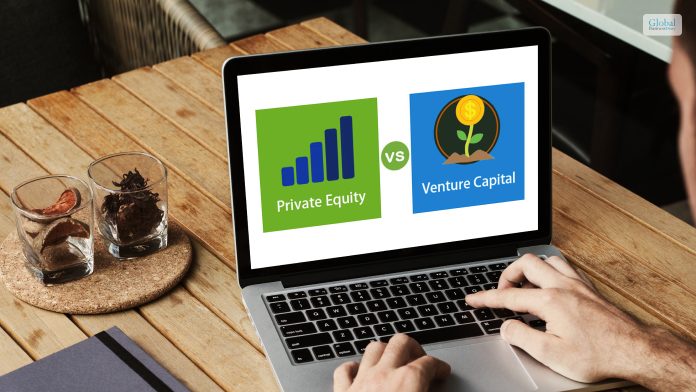
Private Equity Vs. Venture Capital: Key Differences
Private equity vs Venture capital - In most cases, people get confused about these two terms and want to know the differences between them. In some cases, they are even used interchangeably. But you must understand beforehand that these two terms do not refer to the same thing. However, in both cases, the terms refer to firms that invest in private companies and keep equity in exchange. In this article, you will learn in general about private equity and venture capital. Furthermore, we will also discuss the major differences between the two terms. Finally, we will share with you some of the important details regarding private equity and venture capital. Hence, to learn in detail about both these terms, read on through to the end of the article. Private Equity Vs. Venture Capital - Definitions According to Investopedia, “Private equity is sometimes confused with venture capital because both refer to firms that invest in companies and exit by selling their investments in equity financing, for example, by holding initial public offerings (IPOs). However, there are significant differences in the way firms involved in the two types of funding conduct business.” Both private equity and venture capital make investments in companies of different types and varied sizes. As they do so, they commit different sums of money and claim different equity percentages in the companies in which they are making investments. Before we learn the differences between private equity and venture capital, it is essential to understand the definitions of the two terms. Read More: Business Venture Definition, Types, And How To Start? Private Equity Private equity refers to a group of investors that make direct investments in a company. These types of investors mainly focus on investing in established companies (and generally shy away from startups). This is done in order to minimize the risk profile of investments and instead allow focus on long-term objectives and growth. With some groups like the Acacia group, there are certain kinds of businesses that are targeted with investment due to knowledge held by any given Acacia equity investment specialist who is looking for new investment opportunities. Having this specialization allows private equity firms to narrow their focus and provide better value to a business in order to help it grow (and generate higher returns on investment). Other kinds of private equity firms might buy a business in a downturn, improve its operations in the marketplace, and then sell the business to make a profit. The major goal of the private equity investor is to increase the worth of a particular company so that the company generates a better return on investment than the private equity made. Venture Capital Venture capitalists are behind the running and functioning of a venture capital firm. Venture capital is also a form of private equity, but there is a difference. A typical private equity firm prefers to invest in stable companies, while venture capital invests in risky startups that have immense growth potential. Basically, all venture capital firms are private equity firms, while all private equity firms are not venture capital. Venture capitalists provide venture capital to mostly small companies. To ensure that there is a good return on investment, venture capitalists unusually get involved in the decision-making of the business. Private Equity Vs. Venture Capital - Major Differences According to Wall Street Mojo, “Both private equity and venture capital make their investments in the companies. However, in the case of private equity, investment is generally made in the companies in their mature stage of working. In contrast, in the case of venture capital, investment is made in the companies in their early stage of working.” Before you understand the major differences between private equity and venture capital, it is important for you to understand that both these types of companies make money after exiting. That is, both of them make profits after selling their investments. However, both of them follow different methods of doing so. The first difference is that private equity firms invest in and buy public companies that are in their mature stage, while venture capital invests in early-stage companies and startups. While private equity firms invest across all industries, venture capital mainly focuses on technology, cleantech, and biotech, that is the ones that have future returns. In most cases, private equity firms buy 100% of a company in LBO, while venture capital buys only a minority part of a company. However, it can be up to fifty percent. Since private equity firms buy mature companies, their investments are large, ranging from $100 million to $10 billion. On the other hand, since venture capital firms deal with smaller companies, their investments are mostly up to $10 million. To generate capital for investments, private equity firms combine equity and debt, while venture capital firms only make use of equity to make an investment. Few Things To Consider For Private Equity And Venture Capital According to USChamber.com, “One of the advantages of bringing on a private equity investor is that you’ll have access to more than just cash— you’ll also get that person’s expertise. If they have experience within your industry, a private equity investor may help you find opportunities for improvement.” However, private equity firms get to say how a business is run, as they take a majority stake in the company they are investing in. In some cases, they even have the power to make calls for changing executives. If they think it is the right move, only then do they consider selling the company to make profits with equity. When a venture capital firm funds a company, it is really very helpful for the latter since they are not mature enough to make great returns. Furthermore, venture capital firms also share their knowledge and expertise in the decision-making process, which helps minimize unnecessary risks and mistakes startups make initially. Venture capital firms also come with various experienced connections, which help the new companies a lot. Read More: Difference Between Entrepreneur And Entrepreneurship With Examples Final Thoughts Hope you have found enough information regarding private equity vs venture capital. You can understand from this article that private equity is what an investment firm invests in a company or other entity that is not publicly listed or traded. Venture capital is a firm that funds startups and other young businesses that have good growth potential. Both private equity and venture capital buy companies of different types and sizes, claim different equity amounts, and invest different amounts of money. Do you have any further information to add regarding the differences between these two terms? Share your views with us in the comments section below. Read Also: What Is Social Entrepreneurship? – Steps To Become A Successful Social Entrepreneur How To Become An Entrepreneur? – Steps To Follow
Aug 30, 2023

What Is A Venture Capitalist, And What Are Their Functions?
What is a venture capitalist? - When an entrepreneur comes up with an idea to start a business to offer a new product or service, there is a big requirement of financial resources to create the business. To reach a high level of production, a large amount of money and business experience is required. The job of a venture capitalist is to provide capital in exchange for an ownership stake in the company. In this article, you will learn some general details about venture capitalists and their functions. Apart from that, we will also discuss the major importance of venture capitalists in business. Finally, we will share with you major tips on how to become a venture capitalist. Hence, to find out more about the job of venture capitalists, read on through to the end of the article. What Is A Venture Capitalist? According to Investopedia, “A venture capitalist (VC) is a private equity investor that provides capital to companies with high growth potential in exchange for an equity stake. A VC investment could involve funding startup ventures or supporting small companies that wish to expand but have no access to the equities markets.” Venture capitalists are investors that specialize in analyzing the risks associated with a startup business and the market, and they provide capital to startups. In exchange for capital, they take an ownership stake or equity in the business. Some of the most famous venture capitalists are Jim Breyer, Michael Moritz, Peter Thiel, and more. They provide funds for a startup business in exchange for a share in the profits the company makes. However, the reverse is true, as with the company’s loss, these venture capitalists also share a part of the loss as well. If you are starting out a business with a new idea, a venture capitalist for you shall be just another owner of the business alongside you, who is investing with capital in the business. Venture capitalists provide businesses with capital at different phases of the business - early-stage capital, expansion capital, late-stage capital, and acquisition/ buyout capital. Apart from just funding for the business, a venture capitalist can also be a mentor for the company’s owners in making decisions on daily operations, financial management, and growth. Read More: Entrepreneur : Who Coined The Term ‘Entrepreneur’? What Are The Jobs And Functions Of A Venture Capitalist? The following are the major functions of venture capitalists: 1. Investing The fund that venture capitalists offer to business helps in driving innovation and use that innovation to commercialize the products and services of the businesses. In exchange for providing funds, they take a share in the company’s profits and also get various decision-making power. 2. Expertise As the venture capitalist contributes funds to the business, they have the right to contribute to the business’ business operations too. These people work to hire the company’s management as the company grows in size. They also serve as board members to make top-end decisions for the company. 3. Financial Management Since venture capitalists provide private funds for the company, they are also accountable to the people (who are the partners to the venture capitalists) that provide the capital for the investment. Venture capitalists basically invest the funds of the partners into a new company to make it profitable. The investment partners make observe them to make the right decisions for the company. 4. Investment Closing Venture capitalists also negotiate exit strategies for businesses, which allow the business to end their investment after a particular time period. They also allow the leaders of the company to sell the business or publicize the stock of the company so that venture capital is no longer required. Indeed.com adds on venture capitalists - “They also act as fund managers and analysts whose job is to invest money into other businesses. Often, they work with partners to fund large-scale growth and are typically willing to take on more investment risks than traditional banks are.” As already discussed, venture capitalists make various financial choices since the individual has the right to do so, as he/she is investing the funds in the business, which allows the business to grow. Apart from making investment decisions, these venture capitalists are also involved in business analysis and mentorship to the business owners. How To Become A Venture Capitalist? According to TheForage.com, “Becoming a venture capitalist (VC) isn’t necessarily a linear career path, and you don’t need a specific degree or certification. When you work in venture capital, your industry experience — even in adjacent industries — is what matters most.” To become a venture capitalist, you will need to have relevant skills and experiences. Here are the steps to take if you want to be a venture capitalist: Step 1: Get a Degree in Business. Having a specialization in finance will help you in the long run, as you will have the skills to invest. The best degree to get for yourself is MBA, as you will have an advantage with the expertise and training to deal with capital and market changes. Step 2: Start working at a venture capital firm to get relevant experience. The best way to start is to get a job in a company that invests in the latest technology companies. You can also work at a startup to see how it works and what difficulties do startups face. Step 3: You should also get some experience working at a financial firm or a bank. Getting experience working at a bank that invests in business can be a great idea. Read More: What Are The Different Types Of Entrepreneurship? – Take A Look Bottom Line What is a venture capitalist? - A Venture Capitalist is an individual that offers capital to new companies and takes equity in exchange. It is quite common for startups to turn to venture capitalists to get funding to scale their businesses and commercialize their products and services. However, venture capitalists also assess the associated risks with a new business before they invest, as there is a high failure rate for venture capitalists. Do you have any tips for venture capitalists on how to avoid risks? Share some ideas with us in the comments section below. Read Also: Difference Between Entrepreneur And Entrepreneurship With Examples Risk In Entrepreneurship : What Risks Do An Entrepreneur Face? How To Become An Entrepreneur? – Steps To Follow
Aug 29, 2023