





Creating Effective Professional Presentations To Spur Business Growth

Professional Presentations are more than just a series of slides; they’re a pivotal tool for communication in today’s business world. A well-designed presentation can elevate your message, engage your audience, and drive business growth.
The key to a successful presentation is its ability to combine compelling content with superior design, resulting in a memorable experience for its viewers. Keep reading to explore how you can elevate your professional presentations to make a significant impact on your success.
What Are The Advantages Of Using The Powerpoint Slides
Providing a presentation of a concept is intrinsic to the business culture. When a new idea sprouts out, the management wants everyone to be aligned with it. It is how the organization moves forward with time. The advantages of PowerPoint presentations are now the core requirements of the present business ecosystem.
Looking for a new idea to present before your higher authority? You must go straight to the Microsoft powerpoint presentation and the Google Slides. However, we discuss some of the advantages of these PowerPoint slides in this section. It will help establish its importance in daily commercial life.
Easy To Use
The brightest feature of these PowerPoint presentations is their ease of use. PowerPoint is quite an intuitive platform, and its interface is similar to the other Office programs in Microsoft. There is nothing so easy as it is. This is why one must familiarize themselves with it to reap the benefits.
Compatibility
You can import and export diverse file formats like PDF, JPG, mp4 videos, and some other image formats like the .tif, .png, and others. It helps in extracting data from the original source to the powerpoint presentation. Hence, you have to bear the advantages of it here in this section.
Compatibility With Other MS Office
Microsoft, Word, Excel, PowerPoint- all belong to the same group. This is why you will be able to make your powerpoint slides more enriching by using other applications like spreadsheets. It is one of the advantages that the presenter has. It will make the entire application more inviting and attractive.
The ultimate aim of the PowerPoint application is to ensure clear ventilation of the idea to the ones before whom you are presenting an idea. This is where the powerpoint slides have a great advantage.
Apart from the advantages, there are also some disadvantages to these PowerPoint slides; they include overdependence on the slides, overloading of information, lack of adaptability, and technical difficulties.
Seeking the Help of a Presentation Design Service
Professional presentation design agencies can significantly enhance the quality and impact of your business presentations. With their expertise and creative approach, they have the ability to transform your ideas and content into visually appealing and compelling slides. By utilizing various design elements such as graphics, illustrations, and animations, they can create a visually engaging presentation that captures your audience’s attention.
One of the benefits of hiring a professional design agency for your presentations is the level of professionalism they bring to the table. They have a keen eye for design and a deep understanding of visual aesthetics. By using their skills, they can ensure that your slides are professionally designed, making your business look credible and trustworthy. Their expert knowledge in color theory, typography, and layout design allows them to create a consistent and cohesive visual style that aligns with your brand identity.
Furthermore, a professional presentation design agency can help you communicate your message more effectively. They understand the importance of visual storytelling and can create a narrative flow within your presentation that guides your audience through the key points and takeaways. They can also simplify complex information and data into easily digestible visuals, making it easier for your audience to understand and retain the information being presented.
Crafting Compelling Stories for Emotional Engagement

The art of storytelling has long been a powerful method of engaging audiences, and it certainly has a place in business presentations. Crafting a narrative that resonates with your audience can create an emotional connection to the content you’re presenting. A story can simplify complex ideas and make statistics more relatable, turning abstract concepts into something personal and impactful.
When developing a business presentation, it’s crucial to identify the core message you want to communicate and then build a story around it. The use of characters, challenges, and resolutions not only keeps your audience interested but also helps them retain the information presented. An emotionally charged story can motivate listeners to take action, which is particularly beneficial when pitching to potential clients or investors.
Enhancing Brand Credibility
Brand credibility isn’t built overnight; it requires consistent effort and attention to detail in all aspects of business communication, including presentations. A professionally designed presentation signals to your audience that you value their experience and are committed to conveying information in the most effective way possible. This attention to detail inherently boosts the perceived value of your brand.
A polished presentation design aligns with your company’s visual identity, creating a cohesive and branded experience for the viewer. By employing consistent fonts, colors, and graphics that reflect your brand’s ethos, you reinforce your brand identity and create a visual narrative that viewers can associate with your business.
Leveraging Data Visualization
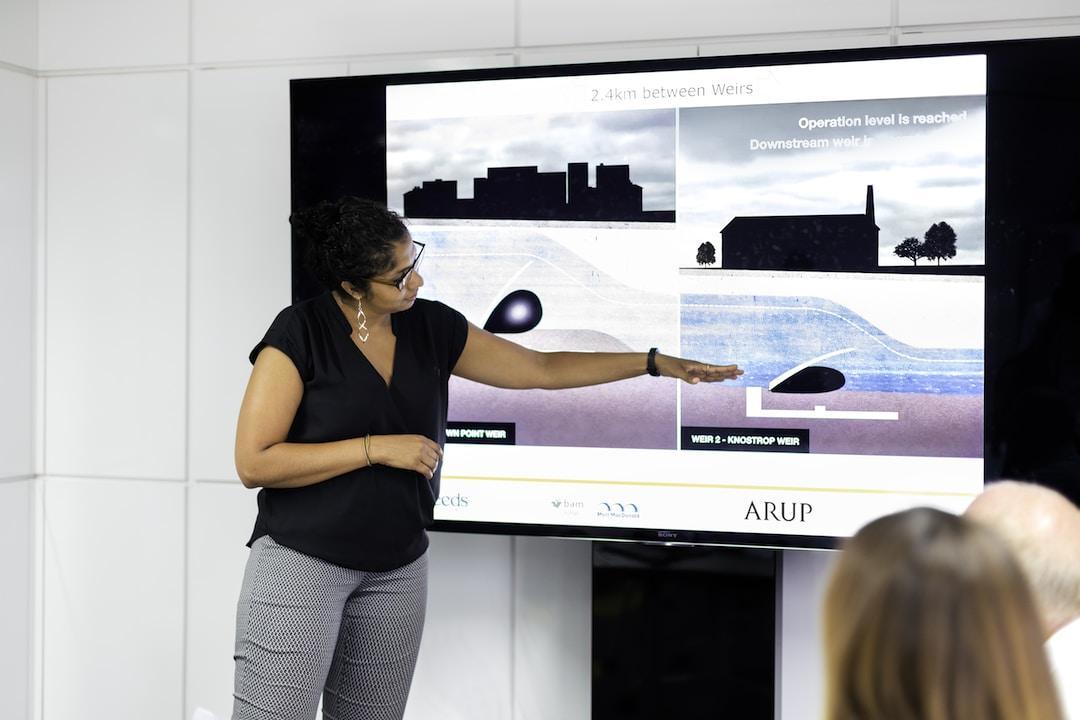
In our data-driven business environment, the ability to present complex information in a comprehensible and visually appealing manner is invaluable. Data visualization is the key to distilling large datasets into clear insights that can inform decision-making and strategy. When done correctly, it transcends language and education barriers, making your presentations universally understandable.
Using graphs, charts, and infographics can transform raw data into a narrative. Visual representations help identify patterns, trends, and outliers that might be missed in a traditional report format. By highlighting the most crucial points through visualization, the presenter can guide the audience’s attention to actionable insights that drive informed business decisions.
Conclusion
Overall, the synergy between storytelling, brand credibility, and data visualization creates a formula for successful business presentations that can stimulate growth and development. By meticulously crafting each presentation, companies unlock their potential to captivate audiences and drive tangible results in an increasingly competitive marketplace.
Read Also:

Recent
Memory Chips Are Becoming More Important in the AI Era
Aug 06, 2026

Why Enterprise Web Applications Still Choose Angular for Long-Term Growth
Aug 04, 2026

Due Diligence Decoded: Why Careful Evaluation Still Wins in Business
Jul 11, 2026

How Hydraulic System Design Impacts Equipment Performance
Jul 01, 2026

Related Articles

How To Ensure Your Warehouse Is Safe To Work In
If a large proportion of your working day gets spent in a warehouse, it’s important that you and other staff follow the correct safety precautions in place. Implementing safety procedures is a legal requirement, and they’re put in place to reduce the risk of accidents in the workplace. From providing and wearing the right PPE to educating the workforce, there are lots of things to consider in a higher-risk working environment than your standard office. Here are some things that should come under serious attention. Tips To Create A Safe Working Environment Are you looking for safe warehouse environments? Then there are a few basic tips that you can follow to create a safe working environment along with increasing the work speed. Keep The Space Clean And Tidy Maintaining a clean, tidy working area is essential to keep up with health and safety standards. This will not only prevent people from tripping over objects, but it will also allow staff to find items or equipment more easily, preventing them from rifling around and potentially coming into contact with other hazards. Make sure staff know how to lift heavy items safely, too, as this can cause serious harm otherwise. Depending on the sector, businesses will need to invest in the right equipment that fits their workplace. If you work in a factory, It may be worth investing in equipment like PVC strip curtains to reduce contamination or if the warehouse has the potential of falling objects, hard hats would be a must to help maintain a safe and tidy space. As a business, it’s imperative to judge what is necessary. Implement Vehicle Safety Procedures Anyone who will be working with vehicles in the warehouse should be aware of vehicle safety procedures – even if they are not operating the vehicles themselves. Following simple rules will make the safety precautions more easy. For example - only allowing staff to drive vehicles if they have completed the necessary training. As well, workers should not speed in the vehicles and follow the guidelines in place. Signs can be there as reminders to the staff of these restrictions. Racing and other dangerous use of the vehicle should not be tolerated under any circumstances. Keep all the guidelines just in front of every employee and the workers who are entering your warehouse. When all the guidelines are going to be in front of the people, you are actually going to minimize the chances of any accidents. Make sure your workers are wearing all the safety gear while working in the warehouse. Make Sure Staff Are Aware Of Health And Safety Policies Having policies in place and ensuring staff sticks to them is one of the best ways to prevent accidents from happening. Make sure you are maintaining the number of workers who are working in your warehouse. Introduce the digital trends then you can also minimize the human efforts in the warehouse. You can even print off posters or send out email reminders. Education is key – so make sure that everyone understands the company’s health and safety workplace policies so that colleagues are safe. After the pandemic, every country's government introduced some terms for warehouse workers. These terms include the distances and other pandemic-related safety concerning facts. Make sure all of your employees are maintaining safety concerning government-introduced norms and guidelines. Make Sure PPE Is Worn PPE (personal protective equipment) is a must when working in a warehouse. Any role that involves manual labor or the movement of large goods in and around your working environment demands essential protection. From hi-vis jackets to hard hats, each component has a unique design to reduce the risk of an accident occurring. Hi-vis equipment means that workers are now easier to spot. Meanwhile, hard hats, masks, or goggles are common for preventing the body from coming into contact with something harmful. Irrespective of what the objects are (hazardous substances/ falling objects) ensure that the workers are using PPE kits. It is also important to ensure that any PPE equipment remains stored properly. Also, ensure that your team abides by the rules and wears it at all times in dedicated areas. Wrapping It Up: These are the basic Warehouse guidelines. You have to maintain these guidelines while running the warehouse functions. The safety guidelines are very important. If you like to keep the terms intact, you have to introduce some of the automated infrastructures which are going to increase your functions and increase the safety of the warehouse. Which types of policies are you following? Let us know your opinion through the comment sections. Additional: A Brief Guide To Business Integrated Planning Is Southeast Steel Detailing Inc A Good Company To Invest? SESteel : Southeastern Steel – Overview And Things You Should Know Is Nykaa Going To Dominate The Market With Their Recent IPO Launch?
Jan 18, 2023

How Blockchain Infrastructure Is Revolutionizing Businesses
Blockchain infrastructure is revolutionizing businesses in a variety of ways. By eliminating intermediaries and allowing for the secure transfer of data, blockchain technology is proving to be an invaluable asset to companies that are trying to operate securely and save money Dysnix.com provides an easy-to-use platform that makes it easy for businesses to securely store, trade, and distribute digital assets. It also facilitates better communication between stakeholders by providing visibility into transactions and processes through its straightforward dashboard. Dysnix.com has been designed with flexibility in mind, allowing businesses to tailor their blockchain infrastructure as needed. This means businesses can quickly adjust their operations according to changes in the market without worrying about technical barriers or high costs associated with traditional financial systems. Furthermore, Dysnix's platform allows users to easily integrate smart contracts into existing business processes which adds another layer of security and trust between parties involved in a transaction. The benefits of integrating blockchain infrastructure extend beyond merely saving money and time - it also provides enterprises with a higher level of security for their data. With Dysnix's permission model, all sensitive data is kept on a private network, ensuring only authorized parties can access it. This prevents malicious actors from attempting to modify or steal any valuable information stored on the blockchain. Furthermore, Dysnix's encryption system ensures all transactions remain immutable and verifiable at all times, giving businesses more peace of mind when handling important assets or documents related to their business operations. At the same time, Dysnix also offers enhanced transparency due to its distributed ledger technology (DLT). All transactions are stored publicly on the ledger so they can be easily tracked by anyone who has access – meaning greater accountability for both parties involved in the transaction process. Additionally, since DLT eliminates middlemen like banks or brokers who may increase overhead costs or introduce delays due to manual verification processes, businesses have more control over their operations while ensuring they remain compliant with existing regulations at all times. In conclusion, with Dysnix's powerful blockchain infrastructure solution businesses are able to reduce overhead costs while increasing efficiency levels within their organization – all while delivering much higher security for their digital assets compared to traditional systems! Exploring The Benefits Of Decentralized Applications On Blockchain Infrastructures Decentralized Applications (DApps) are becoming increasingly popular in blockchain infrastructures due to their ability to provide improved security, privacy, and efficiency. At Dysnix.com, we believe that DApps can help to make the blockchain more accessible for a wide range of users, from individuals to enterprises. DApps are based on smart contracts that establish trustless agreements between different parties without the need for a third-party intermediary. This helps to make transactions faster, cheaper, and more secure as each transaction is cryptographically secured. Furthermore, since all the data is stored on a public ledger, it is immutable and tamper-proof. Using DApps also offers users greater autonomy over their funds and data as no centralized authority holds control over them. This makes DApps less prone to downtime or censorship compared to traditional applications. Additionally, decentralized applications can also be used in areas where trust is an issue such as online gambling or online voting platforms where fraud prevention is paramount. Another great benefit of using decentralized applications is scalability. As there is no single point of failure within the system, they are able to scale up easily without interruption or disruption of services which helps maintain user experience levels high even when demand increases significantly. Moreover, since each node in the network has equal responsibility for processing transactions and mining blocks, it helps decentralize power away from large mining pools which further enhances security levels on the blockchain infrastructure. The Leverage Potential Of Using A Distributed Ledger For Your Company's Data Management A distributed ledger is a system that uses blockchain-like technology to create an immutable and verifiable database of records. This technology has the potential to revolutionize how companies manage their data. By leveraging this type of ledger, organizations can increase security, reduce manual labor, automate processes, and ensure accuracy in data management. The use of distributed ledgers can provide significant leverage for companies when it comes to managing data. These ledgers are inherently secure due to the cryptographic nature of blockchains, making them virtually impossible to tamper with or corrupt. In addition, automating certain processes can help minimize manual errors and ensure accuracy in record keeping. Distributed ledgers also provide improved transparency into the state of any given record as each change is reflected in real-time across all participating nodes in the network. At Dysnix.com, we believe that distributed ledger technology can be used to offer significant benefits for companies looking to improve their data management procedures. Our team specializes in developing customized blockchain-based solutions tailored specifically to our client’s needs so that they can maximize the potential of this technology for their organization’s benefit. We also provide extensive consulting services so that our clients fully understand how best to utilize distributed ledgers for maximum efficiency and reliability when managing their data. Our platform is designed to enable easy integration with existing systems while providing unprecedented levels of security and accuracy throughout your organization's data management processes. Read Also: Understanding How VPS Hosting Can Help You Grow Your Online Business Top 5 Types Of Business That Are Giving More Profits To The Sellers 10 Signs Your Boss Is Testing You | Need To Know About
Feb 02, 2023

Business Venture Definition, Types, And How To Start?
A business venture generally starts when there is a product or something that is lacking in the market, but there is an inherent need for it. It is basically the formation of a new business with a business plan, where the expectation is to offer products and services in return for financial gains. The venture starts once the owners identify the needs in the market and start investing. Join us in deciphering the definition of a business venture with this article. This article consists of a general explanation of what a business venture is and how it operates in the market. Apart from that, you will also learn about the major types of business ventures. Next up, we will give you tips on the best ways to start a business venture. Hence, to learn more about business ventures and the ways to operate, read on through to the end of the article. Business Venture Definition - What Is It? A business venture, according to Indeed.com, is “a new business or business activity that entrepreneurs or institutions launch that involves the potential for a return and risk. The entrepreneur, owner or founder assumes the risk to satisfy specific clients for a return on investment.” An individual or an organization can start a new business activity to deliver to the needs and demands of the market so as to solve an existing need or problem. To deal with such needs and problems, these individuals can start a business venture and develop an organization whose objective is to cater to those needs and thereby generate profits. A business venture can be of various levels. Some might have no structure, and some might depend upon operations based on a formal business structure. A structure is a necessary part of a business venture if the operations are complex and the business needs to expand through markets or wants to make additional investments to increase profits. An entrepreneur is mostly the person behind the start of a new business or producing something new in the market and making profits. However, successful business entrepreneurship requires an entrepreneur to possess strong communication skills, risk-taking ability, organization skills, sales skills, and problem-solving. Read More: Risk In Entrepreneurship : What Risks Do An Entrepreneur Face? What Are The Characteristics Of A Business Venture? A business venture basically tries to cater to the need for something that is lacking in the market. According to Smart Capital Mind, “This need can be a service or product that consumers are asking for or need to serve a particular purpose. Once the need is identified, the venture can be started by a smart investor or small business person that has the resources and time to develop and market the new commodity on the open market.” The following are some of the major characteristics of a business venture: 1. Needs Entrepreneurial Control Since there is an element of risk and reward with a business venture, there is a need for entrepreneurial control. The entrepreneur can expose the resources of the business to the associated risks to pursue the rewards of the market. 2. Needs A Great Plan For Business Execution And An Idea If an entrepreneur starts a business venture along with a proper business plan, they can avoid uncertainty and risk. Entrepreneurs can identify a market gap and know how to fill the gap with the help of a solution. 3. Satisfies The Market Needs A business venture starts by resolving a particular need or demand in the market and turns the solution into a profit-making exercise. Based on the price of inputs plus the demand for the product or service, an entrepreneur can determine its price to be sold in the market. 4. Works In A Particular Sector Although a business venture can exist in more than one industry or sector, they still need to focus on creating a particular product or service of specialization, at least for a start. Hence, entrepreneurs must start a business venture in an area that they understand. How To Start A Business Venture? - Steps To Take According to FounderJar.com, “Any new business venture often starts from an existing gap in the market. It could be a demand for a product that consumers require or simply because of the lack of services available to them. No matter what business you are launching, you must have an idea to provide customers with a specific value.” Here are the steps to take if you want to start a business venture as an entrepreneur: 1. You will first need to make a decision on the type of business venture that you want to start. Choosing one will help you focus on a single idea and make it grow. 2. By researching the market gaps, you will be able to get an idea and find the types of opportunities so that you can cash in on that part. 3. You will need to plan long-term based on the idea. You will need to decide how to take steps with your business based on the market forces. Here, you will also need to consider all your major resources at hand and create backups for yourself as well. 4. Every business needs to be of a legal structure. The business’ legal structure is important as you will not be able to change it after you invest your resources. 5. Once you are done with the legal structure, you will need to register your business with your state, and this will help you ease your tax returns. 6. After discussing with your financial advisor, you will need to get an idea of the amount of investments you need for the business venture. Only then you shall be able to launch your business. Read More: Difference Between Entrepreneur And Entrepreneurship With Examples Final Thoughts If you want to start a business venture, you will need to ensure that you properly research the market demands and plan your services accordingly. Sticking to your plan will allow you to take the right steps at the right time and keep focus on your business, despite ups and downs. Although starting a new business venture might be intimidating, it can be extremely rewarding if you use the right strategy and implement it at the right time. Do you have any more recommendations on how to start a business venture? Share your ideas with us in the comments section below. Read Also: Entrepreneurship In Economics: What Role Do Entrepreneurs Play In Economics? What Are The Different Types Of Entrepreneurship? – Take A Look How To Become An Entrepreneur? – Steps To Follow
Aug 29, 2023

What Is A Domestic Staff Agency And What Does It Do?
When one thinks of domestic staff nowadays it more often than not draws the mind to European aristocrats and nobility several hundred years ago. Even if domestic staff used to be a lot more common than it is today, there is still a huge demand for these types of employees. With the rise of the internet, it has never been easier to find domestic staff regardless of your needs and wants. Everyone is different and there is no guarantee that you’re someone whose home and lifestyle are suitable for hiring help in Singapore. However, if you are interested in learning more about what hiring a butler or a nanny could mean in your day-to-day life and activities it’s best to reach out directly to a domestic staff agency. By clicking the following link you’ll be directed to one of the leading domestic staff agencies in the entire business, where you can learn more about the profession and get help with any further inquiries that you might have. Domestic staff agencies train future employees of private individuals One of the key roles and missions of domestic staff agencies is to train and educate domestic staff to be. This is a process that stretches across months and is incredibly thorough. The training can be laborious and stressful but produces incredibly skilled workers who are very good at what they do. One of the key mantras of a butler is to see to the need before it arises, something that comes naturally with training. Domestic staff agencies can act as an intermediary between those looking for work and those looking for staff Another one of the key aspect of a domestic staff agency's work is pairing up those looking for work with those looking for staff. This process is also something that can take a long time as it’s absolutely key that both the employee and the employer feel comfortable with each other and that personalities match to be able to build a long and successful relationship regardless of whether it’s a butler or a nanny that’s being employed. It also becomes a matter of finding the right skill set and pairing it up with the needs of the client in question. This is something that can be difficult to pull off for a private individual, as the domestic staff agency tends to have a very good understanding of what is needed for a pairing to work in the long run. Quality over quantity tends to be a working mantra and the happiness and satisfaction of both customer and staff is incredibly important. Domestic staff agencies take a huge amount of pride in what they do When it comes to the leaders in the industry, both on the agency level and for the private individuals, a common theme is the fact that they take a massive amount of professional pride in what they do. Butlers, nannies, and other similar professions need to take the service mindset to the next level while also often becoming friends with their employers. Read Also: The Dos And Don’ts Of Setting Up Your Restaurant Kitchen A Guide To Starting A Successful Gym Business Great Business Opportunities in Thailand
Apr 25, 2023