





Reducing Micro-Defects in Medical Manufacturing

In medical manufacturing, tiny mistakes don’t stay tiny for long. That’s the whole problem. A barely visible crack. A rough little edge nobody notices at first. Something microscopic. Feels harmless, until the device actually gets used in a real medical setting. And yeah, that changes the stakes completely.
That’s why manufacturers obsess over precision now more than ever. Not just during final inspection either. Throughout the entire process. Cutting, machining, finishing, testing, all of it. Because when you’re building medical devices, “almost accurate” is honestly a dangerous place to sit.
Why Tiny Defects Become Big Problems in Medical Manufacturing
In medical manufacturing, “almost perfect” usually isn’t good enough. That’s the reality. A tiny crack you can barely notice. A microscopic burr sitting on the edge of a component. Slight surface roughness that seems harmless at first glance. In many industries, those flaws might slide through without causing major trouble. But in medical devices? Different story entirely. Because these products interact directly with people. Real patients. Real surgeries. Real outcomes. And honestly, that changes everything.
A single micro-defect can affect how a device performs inside the body, how long it lasts, or how safely it functions under stress. Something as small as an uneven edge can interfere with coatings, weaken structural integrity, or create contamination risks during procedures.
That’s why medical manufacturing revolves around precision at every level. Not just visible precision either. Deep-level accuracy. Microscopic consistency. The kind most people never even think about. As medical technology continues to evolve, manufacturers face greater pressure to produce smaller, more complex, and more reliable components. So now, reducing micro-defects isn’t just part of quality control anymore. It’s basically part of patient protection.
Looking Beneath the Surface
Here’s where things get tricky. Many manufacturing flaws never appear during a basic visual inspection. You might hold a component under normal lighting and think everything looks fine. Smooth, clean, and ready to go. But underneath? Problems may already exist.
Microcracks can form during machining. Tiny burrs may remain after cutting or drilling. Surface inconsistencies can develop from heat, friction, or finishing processes. And because these imperfections are incredibly small, they often stay hidden until the device experiences stress during actual use. That’s the dangerous part.
Even small inconsistencies can create major reliability issues later. A weak point in a surgical instrument may shorten its lifespan. Poor surface uniformity could affect how coatings bond to implants. In some cases, microscopic contamination areas may even increase infection risks. So manufacturers can’t rely only on traditional visual checks anymore. They need deeper inspection systems. More advanced validation. More data-driven monitoring. Basically, they need to look beneath the surface. Literally.
Why Conventional Manufacturing Methods Sometimes Fall Short
Traditional manufacturing still plays an important role across many industries. But when you’re dealing with ultra-precise medical components, conventional methods can introduce variability that becomes difficult to manage consistently. And variability is the enemy here.
Tool wear alone creates problems over time. A cutting tool that worked perfectly during the first batch may slowly lose accuracy after repeated use. Small dimensional differences start appearing. Surface finishes change slightly. Tiny inconsistencies build up little by little.
Manual handling adds another layer of risk, too. Human involvement is valuable, obviously, but people naturally introduce variation. Alignment shifts happen. Pressure differences occur. Environmental factors change throughout the day. Even temperature fluctuations inside production facilities can affect tolerances. The weird part? Components may still technically meet standard specifications while microscopic defects remain hidden inside the process.
That’s why manufacturers are moving toward more controlled and automated production systems. Not because humans are incapable. But because consistency at this level requires tighter control than traditional workflows usually provide.
Advancing Precision Through Modern Technology
This is where modern manufacturing technologies start changing the game. Laser cutting, micromachining, automated fabrication systems, and advanced polishing methods all of these help reduce variation while improving repeatability. And honestly, repeatability matters almost as much as precision itself. Because making one perfect part is nice. Making thousands of identical parts consistently? That’s the real challenge.
Laser cutting technologies, for example, create cleaner edges with minimal physical contact. That reduces burr formation and lowers mechanical stress during production. Micromachining allows manufacturers to achieve extremely tight tolerances without damaging delicate materials. And fewer secondary finishing steps mean fewer opportunities for additional defects. You also see manufacturers integrating automation into inspection systems now. Not just production itself.
Automated vision systems can detect surface irregularities faster than manual inspections. High-resolution imaging tools identify cracks and imperfections invisible to the human eye. Real-time monitoring software tracks deviations during manufacturing rather than waiting until the final inspection stage. That shift matters a lot. Because catching a problem early is cheaper, faster, and safer than discovering it after thousands of parts are already completed.
Real-Time Inspection Is Becoming Essential
Old-school quality control usually happened at the end of production. Make the part first. Inspect later.
But medical manufacturing doesn’t really have the luxury of waiting anymore.
Today, many manufacturers use in-process inspection systems that monitor quality continuously while components move through production lines. This creates immediate feedback loops. If something drifts outside acceptable tolerances, teams can correct the issue before it spreads across the batch. Pretty huge difference. Real-time inspection systems may include:
- Automated optical inspection
- Surface roughness analysis
- Dimensional verification tools
- Laser measurement systems
- AI-assisted defect detection
- High-magnification imaging platforms
And honestly, this approach saves more than just money. It protects consistency. Instead of reacting to problems afterward, manufacturers prevent them during production itself. That proactive mindset is becoming one of the biggest shifts in modern medical manufacturing.
Why Design and Manufacturing Teams Need Better Alignment
Sometimes defects don’t start on the production floor at all. They start during design. A component may look perfect in CAD software yet remain extremely difficult to manufacture consistently in real-world conditions. Tight tolerances that seem manageable theoretically may create excessive stress during machining or finishing. That disconnect causes problems fast.
So now, successful medical manufacturers push for stronger collaboration between design engineers and production teams from the beginning of the process. When manufacturing realities are considered early, defect risks drop significantly later. Design-for-manufacturability practices help teams create components that maintain both precision and production practicality.
Basically, it’s about asking smarter questions earlier. Can this geometry be produced consistently? Will this material respond well during machining? Could this tolerance create instability later? That kind of collaboration reduces surprises before production even starts.
Process Control Creates Long-Term Consistency
Precision doesn’t happen once and stay forever. It needs constant maintenance. Machines drift over time. Calibration shifts happen. Equipment performance changes slowly, sometimes so gradually that operators barely notice until defects start increasing. That’s why strict process control sits at the center of high-level medical manufacturing. Manufacturers rely heavily on:
- Scheduled calibration procedures
- Equipment validation
- Environmental monitoring
- Traceability systems
- Documented workflows
- Statistical process control
These systems create stability across long production cycles. And honestly, traceability has become incredibly important too. If an issue appears later, manufacturers need the ability to trace components back through specific machines, operators, materials, and production conditions. Without that visibility, solving quality problems becomes way harder.
To learn more about minimizing micro-mistakes in medical manufacturing, view the resource below from Trinity Brand Industries, providers of laser cutting services.
Continuous Improvement Never Really Stops
Here’s the thing about medical manufacturing. The standards keep rising. Devices are getting smaller. Procedures are becoming less invasive. Materials are more advanced. Expectations around safety and reliability continue increasing year after year. So manufacturers can’t afford to become complacent.
Continuous improvement plays a huge role in reducing micro-defects over time. Teams constantly analyze production data, identify recurring patterns, and refine processes to improve consistency. Sometimes the adjustment is small. A tooling modification. A better polishing method. A slight environmental control improvement. But small changes add up.
Over months and years, these refinements dramatically reduce variation and improve reliability across entire production systems. And honestly, that’s what separates reactive manufacturers from truly advanced ones.
The Bigger Picture Behind Precision
At the end of the day, reducing micro-defects isn’t just about manufacturing efficiency. It’s about trust. Hospitals trust devices to perform correctly. Surgeons trust instruments during procedures. Patients trust products they’ll never even see internally. That trust depends on microscopic precision most people never think about.
When advanced fabrication technologies, real-time inspection systems, disciplined process control, and smarter collaboration work together, manufacturers create something bigger than just accurate parts. They create reliability. And in medical manufacturing, reliability can directly influence patient outcomes. That’s why precision here isn’t optional. Never really was.

Read Also:

Recent
Memory Chips Are Becoming More Important in the AI Era
Aug 06, 2026

Why Enterprise Web Applications Still Choose Angular for Long-Term Growth
Aug 04, 2026

Due Diligence Decoded: Why Careful Evaluation Still Wins in Business
Jul 11, 2026

How Hydraulic System Design Impacts Equipment Performance
Jul 01, 2026

Related Articles

How To Deal With Facebook Marketplace Scams? Steps To Follow
No one wants to get scammed, especially when it comes to online buying and selling. However, unfortunately, various news have been circulating about Facebook Marketplace scams, as the platform has become an attractive place for scammers. They have several tricks and techniques so that you can give away your money or products to them. However, by following some careful steps, you will be able to stay safe in the Facebook Marketplace. In this article, you will learn about Facebook Marketplace scams. Apart from that, we will also discuss some of the most common scams on Facebook Marketplace that you might face. We will then share with you how to ditch those scams so that you can stay away from getting scammed by some random scammer. Finally, we will also show you how to report a Facebook Marketplace scam on Facebook. Hence, read on to learn more. What Are Facebook Marketplace Scams? According to AndroidPolice.com, “Millions of users buy and sell goods on Facebook's e-commerce platform every month. It's free, simple to use, and an attractive option to get rid of unnecessary Christmas gifts and other items. While the overall shopping experience on Facebook Marketplace is seamless, you should be aware of growing scams on the platform.” In recent years, the Facebook Marketplace has become a go-to destination for many local buyers and sellers who want to buy and sell small goods online. Apart from that, the most important reason why so many buyers and sellers are present on the Facebook Marketplace is because Facebook does not charge any fee for listing on the Marketplace platform. However, with time, as the Facebook Marketplace got popular, it became an attractive destination for scammers. However, these scammers are not hard to detect if you know what to look for. All you need to do is get the right knowledge of how the Facebook Marketplace works and what you must do to deal with scams. This will help you to stay safe and not lose your hard-earned money. Read More: What Is Continuity In Business, And Why Is It Important? Common Facebook Marketplace Scams: How To Detect One? According to NordVPN.com, “Facebook scammers use quite a few methods to steal your money or credentials. Modern cybercriminals will often resort to social engineering to trick unwitting consumers into falling for scams. A scammer can fool someone into a false sense of security by relying on a victim’s craving for the cheapest deal.” The following are some of the common things to stay away from on Facebook Marketplace if you do not want to get scammed: 1. The Buyer Wants You To Send The Item Before Payment If you are a seller, never send an item to a buyer before receiving payment. The buyer might be a scammer and not pay you later. 2. The Seller’s Listing Is Too Good To Be True The price for which the seller listed the product is too good to be true. Hence, you must avoid such listings and move on so as not to get scammed. 3. Electronic Products The item you receive might be faulty. The best way to buy electronics is in person. If not, then buy it from a top-end, assured seller in an eCommerce platform. 4. Overpayment And Then Asking For Refunds Here, Business Insider warns - “Someone sends you an overpayment — usually in the form of a check — and, for some convoluted reason, asks you to refund the overage. If you do this, you'll find that the check will eventually bounce.” Hence, you will lose the item you are selling. Therefore, never receive an overpayment. 5. Someone Asking For A Code They Texted You The scammer asks you to send back a code to check whether you are “real” or not. The code can be a scam where the scammer might hack all the details of your accounts. 6. Claims Of Lost Packages A buyer can claim that he/she never received the product, even though they did receive it. They just want to get the money back. Hence, always use a tracking number for the shipped product. How To Report A Facebook Marketplace Scam? If you think you are about to get scammed, or you have already been scammed, there are certain things you can do to not get scammed any further. The first thing you should do here is stop communicating with the buyer or seller on Facebook Marketplace. After doing so, immediately report the incident to Facebook or the Facebook Marketplace helpline. If you think a certain listing on the Facebook Marketplace platform is a scam, here’s what you should do if you are a buyer: Step 1: Open the listing Step 2: Click on the three-dot menu on the right alongside the Share button. Step 3: A dropdown menu will open. Here, choose the “Report Listing” option. If you are a seller listing products on the Facebook Marketplace, and you think a potential buyer is a scammer, here are some steps you can take to report the individual: Step 1: Go to the right hand of the listing. Step 2: You will find a module named “Seller Information.” Hover over to the seller’s name. Step 3: In the area, click the “Report” option. Step 4: Click “Scam” and then follow further instructions in the menu to successfully submit your scam report. In both cases, the authorities of Facebook Marketplace will check the viability of the scam and find out whether the scammer is real or not. Based on the information, they will take further steps. Read More: Business Continuity Plan – What Is It, And How Does It Work? Final Thoughts If you are buying or selling items on the Facebook Marketplace, you will need to be absolutely aware of scammers. You will need to ensure that you ship the item only after you have received payment for the product. Furthermore, it is also important for you to use a tracking number for the product you have just shipped so that you can track the product to the end. In recent times, the Facebook Marketplace has become an attractive destination for scammers. If you know what to look for, you will not find it hard to detect scammers. Do you have any information to add regarding how to identify scammers on the Facebook Marketplace? Share your information with us in the comments section below. Read Also: Marketing Campaigns: How To Do It? – Steps To Follow Market Orientation – What Is It, And How Does It Work? Market Cannibalization – Definition, How Does It Work, Example, And More
Sep 28, 2023

A Guide To Starting A Successful Gym Business
The fitness industry is expected to grow at a monumental 171.75% with an estimated value of $434.74 billion between 2022 - 2028 (source). Every business owner wants a slice of the pie. But, no matter what the competition is like, you can come out on top if you have a foolproof plan. If you’re passionate about starting a successful gym business, this guide is for you. How to Start a Successful Gym Business in 6 Steps 1. Find A Niche Perform your market research and study your ideal audience. What kind of gym are you going to be running and what customers are you targeting? The fitness industry is huge and encapsulates a lot of different niches. Finding and settling on a niche would help you specialize in one field and make you stand out. When choosing a niche keep these pointers in mind: You should be passionate about it It needs to be profitable It has competition but not too much It isn’t too specific or too broad Having a niche will then guide the kind of accreditations you would need to pursue. 2. Get A License Opening a gym is like any other business, so to get started you would need a business license. However, business licensing varies from country to country. You should find out what your local law states to make sure you get the proper licensing and permits if needed. This will usually include generic business bits like having first aid-trained staff, fire exits and a general health and safety plan. It might even include more specific details like mandated cleaning schedules or equipment audits. To cover these bases, it can be helpful to look into maintenance for gyms and how to get this handled optimally. 3. Invest In Gym Equipment Without proper, high-quality gym equipment you won’t be attracting customers any time soon. When it comes to investing in gym equipment you have two main options: buying and leasing. Buying equipment may be more expensive but it pays off in the long run. Leasing is cheaper, but the expenses add up as years pass. Determining what's best for you boils down to your financial plan. This includes calculating your expenses and determining a pricing strategy. 4. Determine Your Expenses Starting a gym can be costly and the costs may depend on which type of gym you’re opening. Typically, a gym would have the following expenses: Rent and utilities including heating, electricity, waste management, Wi-Fi, etc. Initial cost and maintenance of gym equipment Salaries of staff members and gym trainers Marketing costs including website maintenance, ad campaigns, etc. Miscellaneous accessories like towels, music systems, screens, etc. 5. Choose Your Pricing Strategy You need to have a clear idea of how you’re going to price your customers before moving forward. After you’ve calculated your expenses, you need to find a suitable pricing strategy. These are common pricing strategies used to run a gym: Competitive pricing - charging similar to what your competition is charging. Skim pricing - charging customers a high price at launch and lowering it as competition increases. Pay per session - flexible pricing plan for irregular customers where they’re charged for a single class. Membership plans - the most common type of pricing model. Offer a gym membership where customers opt for a prepaid plan where customers have full access to the gym for a fixed period. When setting your pricing, give customers flexible options and earn their trust. This includes: Offering pricing tiers, so each customer can pay according to their budget Offering monthly plans and easy cancellation Letting customers know upfront the total costs - don’t have any hidden costs Include extra fees, such as registration, in the membership plan rather than charging them separately 6. Start Marketing Your Gym After setting up, it’s time to let people know you’re open for business. Good marketing can be the deciding factor between success and failure, so it’s important to invest in marketing to run effective campaigns for your business. There are many ways to market your business while ensuring a high ROI on your campaigns. One such way is to sell merchandise to existing customers which would increase brand awareness while generating some passive income. Some of the top gym clothing brands manage to earn millions of dollars in revenue from selling fitness apparel alone. Conclusion Opening a gym is not for the faint-hearted. It takes patience, determination, and proper funding to get your business up and running. This guide has given you an idea of what to expect when starting your own gym business, so you can make it a success. Read Also: The Resources You Need To Start Your Business How To Start A Business In 2021 – Best Business Strategies Everything Any Entrepreneur Needs To Know Before Starting A Business
Apr 10, 2023
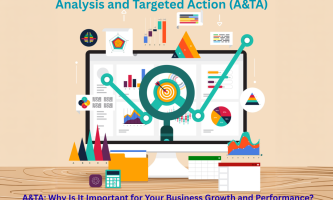
A&TA: Why Is It Important for Your Business Growth and Performance?
With changing times, the business world is getting faster. That is why many companies are looking for ways to improve their performance. This way, they are working toward sustainable growth. Hence, many of them are turning toward Analysis and Targeted Action (A&TA). At the outset, A&TA is a strategic approach that includes combining data-based insights and efficient execution. So, whether you have a small startup or a large business, you will be able to make the most of A&TA. This will help you make major differences in your business outcomes. That is why it is important to learn the basics of A&TA. Therefore, read on to get a better idea of A&TA. Also, you will learn how to implement this approach in your business for better outcomes. What Is A&TA? A&TA stands for Analysis and Targeted Action. The following are the two parts of A&TA: 1. Analysis This stage includes collecting and studying your business data. The following are some examples of business data: Sales numbers Customer feedback Market trends Employee performance, and more. Basically, the goal is to understand what is working for your business. Also, you will get a better idea of what is not working. Moreover, you will also learn about the major opportunities that your business can make the most of. 2. Targeted Action After data analysis, you have small and focused steps to improve your business processes. However, these steps are not random. Rather, you plan and execute as per your insights. In this case, you might get through analysis that your customers have complaints regarding delivery times. Hence, you will be able to take action to streamline your logistics processes. Therefore, A&TA is a process through which you make better decisions. Based on those decisions, you act effectively. Ways Through Which A&TA Helps You Make Better Decisions Primarily, a lot of businesses work with data. However, not many businesses know how to utilize data properly. This is where A&TA is important. In fact, you do not have to go through multiple spreadsheets and reports. Rather, A&TA enables you to turn your information into simple and actionable steps. For instance, you might own a business. A situation might occur where your sales are dropping due to an unknown reason. Hence, with analysis, you find out that some products are problematic. Hence, by analyzing, you determine what action to take. Therefore, with a simple change, you will be able to improve your sales and customer satisfaction. Actually, the best thing about this approach is that it works well across industries. That is why your job is to focus on the right data. This way, you will be able to act properly. How A&TA Boosts Business Performance? The following are the ways through which A&TA improves different processes of your business: 1. You Make Better Decisions As you work with A&TA, you make decisions based on facts and not guesswork. In this case, you know about the following factors: What are your customers asking for? How is your team performing? Where is your money going? Hence, with this clarity, you will be able to make better choices. This way, you will get better results for your business. 2. You Will Have More Efficiency Targeted actions eliminate waste. Rather than trying different approaches, focus on what the data shows you. This way, you will be able to save your valuable time and money. 3. Your Customer Experience Will Be Better You will be able to serve your customers better after you get a better idea of their pain points and demands. With A&TA, you will be able to identify what works better for your customers. This way, you will be able to tailor your services better. 4. Your Team’s Performance Will Improve With analysis, you will get to know the performance of different departments in your organization. Hence, focus on the following targeted actions: Training Restructuring New tools and more. 5. You Will Have a Competitive Advantage If you start making the most of A&TA, you will benefit from a competitive advantage. In fact, you will be able to adapt faster and respond to market changes. Moreover, you will innovate faster than competitors who do not rely on analysis. Essential Steps to Perform A&TA The following are the major steps you must follow if you want to start utilizing A&TA for your business: 1. Collect Essential Data In this case, start with the data that you already have. Basically, choose data that aligns with your goals. The following are some examples: Sales records Customer reviews Employee feedback Website analytics 2. Analyze the Data In this case, check patterns, trends, and problems. This way, you will be able to determine what is working well for your business. Moreover, you will also find out what is holding your business back from its ultimate potential. Essentially, you might start utilizing various tools available online. 3. Determine Your Targeted Actions As per your analysis, determine what changes you want to make.. Be specific. For instance, do not say “Improve marketing!” Rather, start saying things like “Post three times a week on Instagram…” 4. Start Implementing At the outset, you have to put your plan into action. Then, keep track of results. This way, you will find out whether your sales went up or not. Also, you will find out whether your customers are happier or not. Hence, depending on your findings, you will be able to adjust your processes. This cycle — analyze, act, monitor — keeps your business moving forward. Common Mistakes to Avoid with A&TA While A&TA is powerful, it’s important to use it wisely. The following are some of the major mistakes you must avoid while working with A&TA: Ignoring the data: Do not forget information after collecting it. Rather, utilize them to make better decisions. Taking vague actions: Do not take actions like “Working harder!” Instead, focus on targeted actions. Basically, you have to be particular and measurable. Not following up: If you make changes, try to measure their impact. In those cases, if things do not improve, analyze and repeat the process. Overcomplicating the process: Always try to keep things simple. Basically, you have to focus on one issue at a time. This way, you will be able to build accordingly. Frequently Asked Questions (FAQs) The following are some of the most common questions you will come across regarding A&TA: 1. What does A&TA stand for? A&TA means Analysis and Targeted Action. Primarily, it is a strategy that works with data to guide particular business improvements. 2. Why is A&TA important for business growth? A&TA helps businesses with the following aspects:1. Make smarter decisions2. Improve efficiency3. Respond quickly to customer requirements.4. Deal with market changes. 3. Can small businesses use A&TA? Absolutely. A&TA works for businesses of all sizes. Even basic data like customer feedback or sales trends might lead to powerful actions. 4. How do I start using A&TA? Begin by collecting relevant data, analyzing it for patterns, and then taking focused actions based on what you learn. 5. What are common mistakes in applying A&TA? Avoid vague actions, ignoring data, or failing to track results. A&TA works best when it's specific, consistent, and monitored over time. A&TA is Important for Every Business! In a world full of competition and constant change, businesses can’t afford to rely on guesswork. A&TA provides a clear path to growth by combining insight with action. It helps you understand your business better, serve your customers more effectively, and make decisions that lead to real results. Whether you’re launching a new product, expanding to a new market, or just trying to improve daily operations, A&TA gives you the tools to succeed. Read Also: How Does A Consumer Know Whether A Purchase May Be A Good Deal? Embracing Business Automation: 8 Practices For A Smooth Transition Business Continuity Plan – What Is It, And How Does It Work? Why Business Continuity Planning Is Essential For Your Company? What Is Risk Management? – Find Out How To Manage Risks in Business The Best Risk Mitigation Techniques For Your Business
Nov 19, 2025

YouTube Sponsorship – Everything You Need To Know About It
Are you wondering how you can get a YouTube Sponsorship? If yes, you must consider specific essential facts in the light of the matter to get a better insight into it. Ensure that you have made some valuable content that can win you the YouTube Sponsorship. The more you can think positively in this regard, the better you can develop your business. One of the best things about YouTube sponsorship is that you can monetize it and earn millions. Multiple ways exist by which you can get YouTube sponsorship for your business. Ensure that your content on the YouTube channel is relevant to your target audience. Read also: Google Help - Add paid product placements, sponsorships & endorsements Different Tips To Get YouTube Sponsorship There are multiple tips that you can use to get a YouTube sponsorship. Therefore, let’s explore the ways by which you can seek YouTube sponsorship for your brand. 1. An Established Brand Persona An established brand persona is very crucial for getting YouTube Sponsorship. Compatibility is one of the most important things that the sponsors look for in your YouTube channel. Sponsors are interested in you sharing their values using your YouTube channel. You need to understand that if you want to develop your brand image or get sponsorship, you need to fulfill your sponsors’ demands. For example, a gamer or a vlogger known as Markiplier possesses 22 million subscribers. When you want to establish your brand persona, then you must ask the following questions of yourself:- What do you want to do? What are you selling? Who is your target audience? What is the core value of your brand? What is your brand personality? If you need to choose five characters for your brand, what do you select from your end? 2. A Similar Target Audience Having a similar target audience is an essential factor that your sponsor must consider for your YouTube sponsorship. Your sponsor will offer you the sponsorship if your channel offers content related to your target audience. You must not make things haphazard from your end. If you want to develop your business and your target audience’s attention, then your YouTube video content must showcase the sponsor’s interest. You must take a look at the type of people who watch videos that you must look for, like: Consider how old they are. What is your prime interest? Where do you conduct your shopping? What is the habit of your spending? What do you do for a living? What do the other brands love? Once you have this information, you must consider these facts to help your business grow in the right direction. 3. Quality Of The Content You must focus actively on the quality of the content. If your content quality is worse on the YouTube channel, you will not get the YouTube Sponsorship. You need to understand that if you want to develop your business, you must focus on the quality of the content. Companies do not want to associate with brands whose quality of content is not up to par. You need to ask for sponsorships while you have low-quality content with you. If you have low-quality content, then it can get blacklisted at a certain point in time. Before you reach out to the sponsors, you must do a quality audit. You must look at the content, and you must do quality research before you put the content on the YouTube channel. Another essential way to do content research is to review the quality of the content. 4. Create Affiliate Sponsorship You must create an affiliate sponsorship in such a way that it can help your business grow effectively. Ensure that you have made your choices in the right direction. It will help your business to grow in a better manner. The whole idea here is to track your target audience to track the product you are linking to. You must consider the affiliate landing pages to buy the products in a better manner. There are multiple affiliate sponsorships for YouTube that you must include. Amazon Target Skillshare Movavi pointsprizes. Here, you need to develop the perfect branding process to get the YouTube sponsorships in a better manner. You must consider these issues properly so that you can get the YouTube sponsorships in the right order. 5. Promote Selling Digital Products You must promote your digital products so that they can help your business grow in a better manner. YouTube Sponsorships will help your business grow in a better manner. You need to understand things properly so that they can help your business grow in a better manner. You must not consider some of the crucial facts of YouTube Sponsorship for granted. It will help your business to grow in a better way. You must not consider facts casually from your end. Ensure that you have made the right choices on your end. Do not make a mess out of it. If you want to develop your brand image, you must consider these factors to ensure that you have made the right choices. What Type Of Digital Products Must You Sell? You must consider buying the digital products depending on the sales and possible endless opportunities that can help your brand get the YouTube sponsorship better. There are certain things, like software, photography, ebooks, and other digital products, that you can sell using YouTube Channels. You need to understand these things in advance while you make your decisions for getting the YouTube sponsorships. What Are The Factors To Consider While Getting The Sponsorship Hence, if you are planning to select the best YouTube Sponsors, then you must consider several essential things in light of this matter to get things done in proper order. Tenure of his sponsorship. Mode of his payment. Types of branding you want to do. Proper research on the content is required or not before you select the sponsorship. If you want to develop your business, you must think about matters proactively to develop your brand image. Ensure that you have made your choices in the correct order to get the maximum returns from them. Check out this YouTube video: How to Get Sponsored on YouTube https://www.youtube.com/watch?v=6NmoWvkOHHQ Read Also: Visa Sponsorship – Everything You Need To Know About It Fiscal Sponsorship – Everything You Need To Know About It 7 Business Opportunities That Can Change Your Life In 2021 Top 5 Successful Serial Entrepreneur Of All Time – 2021 Updates Top 5 Types Of Business That Are Giving More Profits To The Sellers
Mar 05, 2021