





Building Better Warehouse Traffic Flow Through Operational Design
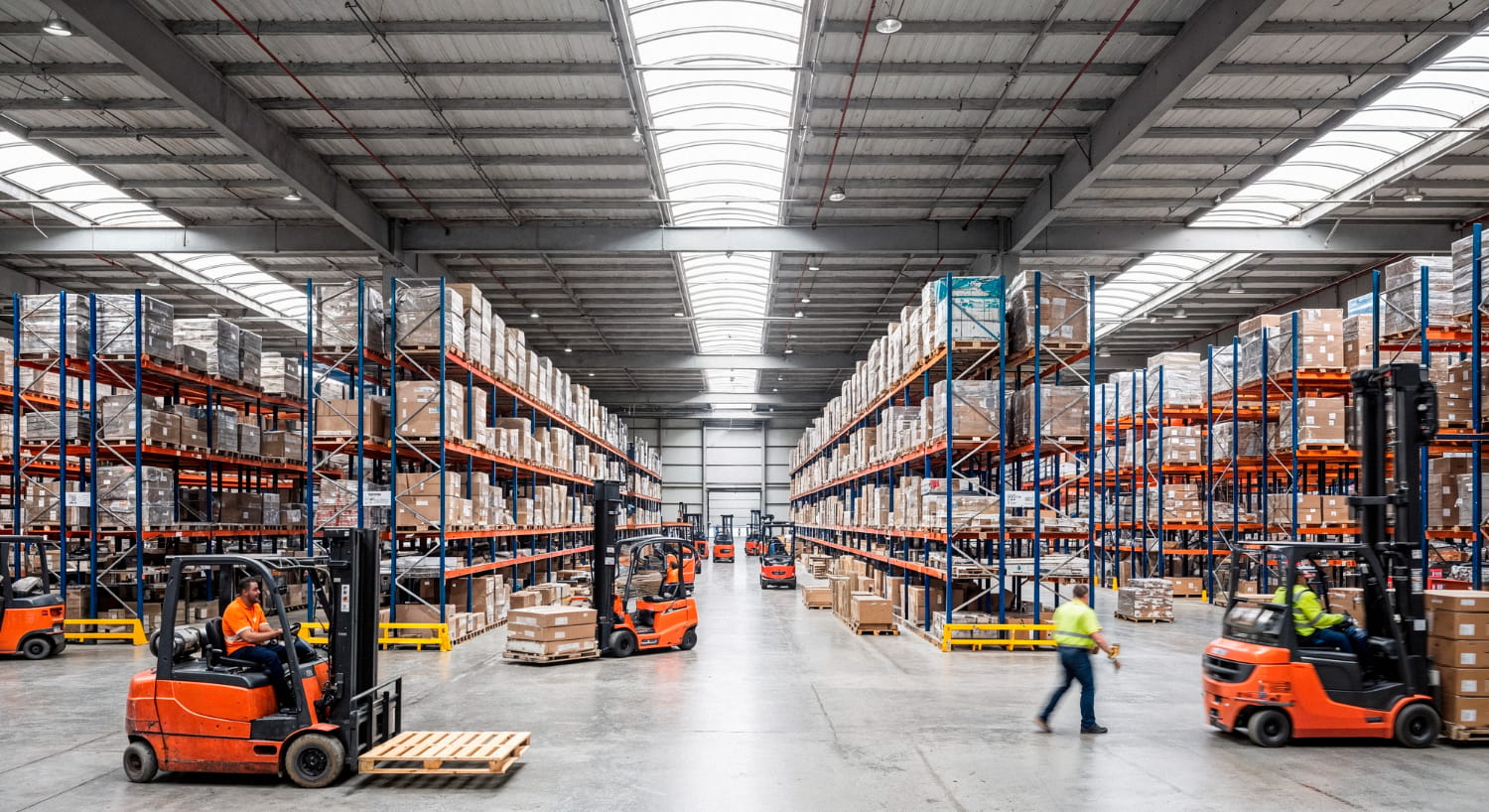
When its come to warehouse traffic flow, safety is the greatest concern. Why? Who wants collisions between forklifts and pedestrians? Every business owner tries their best to keep their production house accident-free and out of unnecessary risks. But here’s the thing. Traffic flow impacts far more than safety. It directly and indirectly impacts the productivity, the efficiency, the space utilization, and most importantly, the profitability.
Warehouse management comes with a huge cost of time and resources. The entire process may seem sustainable. Yet when movement becomes inefficient, the effects spread across the entire operation. That’s why leading facilities don’t treat traffic management as a standalone safety initiative. They treat it as part of operational design. Because when movement is planned properly, everything tends to work better.
Why Warehouse Traffic Flow Matters More Than You Think
Walk through any busy warehouse, and you’ll see constant movement. Forklifts transporting pallets. Employees picking orders. Inventory moving from receiving docks to storage locations. Maintenance teams accessing equipment. Shipments heading toward loading areas. It’s a nonstop cycle. Now imagine what happens when those movements aren’t coordinated. Equipment starts waiting for access, then employees take longer routes. Even congestion develops around key areas and orders take longer to process. And suddenly, small delays start creating larger operational challenges. That’s why warehouse traffic flow isn’t just about avoiding accidents. It’s about keeping work moving smoothly. The easier it is for people, vehicles, and materials to move throughout a facility, the more productive that facility becomes. Simple idea but very big impact.
Understanding How Warehouses Change Over Time
One common mistake many facilities make is assuming the original layout will continue working forever. It won’t be warehouses that evolve, the order volumes increase and the inventory profiles change. New equipment gets introduced. Customer expectations shift. And before long, a layout that once felt efficient begins showing signs of strain. This happens more often than people realize. A receiving area that worked perfectly three years ago may now struggle during peak periods.
A staging zone designed for smaller volumes may become overcrowded. Aisles that once handled traffic comfortably may now experience frequent congestion. The warehouse hasn’t failed. The operation has simply outgrown parts of the original design. That’s why traffic flow should never be viewed as a one-time project. It’s an ongoing process.
Identifying Warehouse Bottlenecks
Not every traffic jam screams for attention. Some of the worst inefficiencies in the process? They hide right there in plain sight. You know those spots where your team keeps stopping and waiting around? Or where forklifts line up like cars in rush hour during peak times? Maybe certain aisles turn into a nightmare to move through once inventory piles up. Those little things are actually screaming “bottleneck.” And bottlenecks suck because they drag everything else down with them. One jammed-up area sends ripples across the whole warehouse.
That’s why smart operational leaders get out there and watch the flow during the crazy busy hours, not the quiet ones. You catch the real weaknesses when things are moving at full speed. And that’s exactly when the best fixes start showing up.
Reducing Unnecessary Movement
One of the fastest ways to fix warehouse traffic flow is surprisingly simple. Just reduce movement. Sounds obvious, right? Yet so many warehouses still make their people and equipment travel way farther than they need to. You often find hot-selling products stored too far from the picking zones. Workstations that force employees to cross active paths again and again. Or staging areas sitting way out of the way from receiving and shipping. All that extra back-and-forth quietly eats up time and energy. You start cutting this waste, and the whole floor starts moving more smoothly.
Every extra step adds time. Every unnecessary trip adds cost. Over the course of a year, those small inefficiencies can become significant. That’s why product placement matters. Fast-moving inventory should be easy to access. Workstations should support natural workflows. And staging areas should be positioned to minimize travel requirements. Less movement often means greater efficiency.
Designing Layouts Around Real Workflows
A warehouse diagram can look perfect on paper. Reality is usually messier; people adapt, and the processes evolve. Ultimately, the unexpected challenges emerge. That’s why effective traffic flow design focuses on how work is actually performed. Not how it’s assumed to be performed. For example, employees often create informal shortcuts when official routes aren’t practical. Forklift operators may develop preferred travel paths that differ from planned routes.
Inventory may temporarily overflow into nearby spaces during busy periods. These behaviors reveal valuable information. They’re telling you how the facility naturally wants to function. Instead of ignoring these patterns, successful facilities use them to improve future layout decisions. Because the best traffic flow systems support real-world behavior. Not theoretical behavior.
Creating Structure in High-Traffic Areas
As warehouse activity grows, structure becomes increasingly important. Without clear expectations, movement becomes unpredictable. And unpredictability creates problems. That’s where physical controls come into play. Pedestrian walkways help separate foot traffic from equipment routes. Protective barriers create safer operating zones. Designated forklift lanes reduce confusion. Restricted-access areas prevent unnecessary traffic. These measures don’t just improve safety. They improve efficiency, too. People spend less time guessing where to go. Equipment operators encounter fewer unexpected obstacles. And operations become more consistent overall. The goal isn’t to restrict movement. It’s to guide it.
How Technology Supports Better Traffic Flow
Technology is changing warehouse operations at a rapid pace. And traffic management is changing along with it. Conveyor systems help reduce repetitive transportation tasks. Warehouse management systems improve inventory placement decisions. Equipment tracking solutions provide visibility into movement patterns. And increasingly, automation is becoming part of the equation. Autonomous mobile robots. Automated guided vehicles. Smart material handling systems. These technologies can significantly improve efficiency. But they also introduce new movement considerations. Because now humans and automated systems must share the same environment. That’s why route planning becomes even more important. Clear operational boundaries help reduce interference and support smoother workflows. The technology itself matters. But the way it integrates into facility movement matters just as much.
The Link Between Traffic Flow and Productivity
Here’s something many businesses overlook. Poor traffic flow doesn’t just create delays. It creates lost productivity. Every minute spent waiting for access. Every unnecessary trip across the warehouse. Every congestion-related slowdown. It all adds up. Individually, these delays seem minor. Collectively, they can consume hundreds of labor hours over time. That’s why improving traffic flow often delivers benefits beyond safety improvements. Faster order fulfillment. Better equipment utilization. Improved employee efficiency. And in many cases, lower operational costs. The gains can be surprisingly significant.
Continuous Improvement Creates Long-Term Results
The most effective warehouses don’t assume they’ve solved traffic flow forever. They review, adjust, improve, and then repeat to keep up with the pace. Traffic patterns should be evaluated regularly. Especially after major operational changes like new equipment or automation projects. All of these can influence movement throughout the facility. What worked well five years ago may not support today’s demands. And that’s okay. The key is staying proactive. Because small improvements made consistently often produce the strongest long-term results.
Final Thoughts
Warehouse traffic flow is about much more than painted lines on a floor. It’s about understanding how people, equipment, and materials interact throughout the day. It’s about reducing unnecessary movement. Eliminating bottlenecks. Creating structure. And designing facilities around real operational needs. When movement is planned strategically, warehouses become safer. But they also become faster. More efficient. And more productive. That’s why the most successful facilities view traffic flow as part of a larger operational strategy, not just a safety initiative. Because when work moves better, business usually does too.
For additional guidance on improving warehouse traffic flow, view the companion resource from Bradford Systems, a provider of storage system lockers.

Read Also:

Recent
Dinmukhamet Idrisov and a Gold-Mine Dispute From Kazakhstan’s Oligarchic Past
Oct 16, 2026

Memory Chips Are Becoming More Important in the AI Era
Aug 06, 2026

Why Enterprise Web Applications Still Choose Angular for Long-Term Growth
Aug 04, 2026

Due Diligence Decoded: Why Careful Evaluation Still Wins in Business
Jul 11, 2026

Related Articles

Top Expert Network Companies In USA
Do you want to know about top expert network companies in the USA? If yes, you must read this article till the end to have a better idea of it. You must know the facts well about these companies before calling them to be the best in the business. Top expert companies in the USA will help you in reaching your objectives with complete ease. Identifying the income streams and leveraging the expertise will help you reach your goals with ease. Some leading companies in this sector will offer you some of the expert opportunities to build your wealth in the right direction. You need to follow right path when you want to know about the details of the top expert network companies. However, you need to consider the distribution channel as well. What Are Expert Networks? Expert networks are professional services that connect individuals or organizations seeking insights, information, or expertise with industry professionals, subject matter experts, and consultants who possess specialized knowledge in particular fields. In simple words, these companies are often thought leaders in specific industries. Thanks to their extensive expertise and skills in specific industries, they can provide varying levels of suggestions and solutions to clients seeking the same. These networks act as intermediaries, facilitating interactions between clients (such as businesses, investors, or researchers) and experts who can provide valuable insights, guidance, or information on specific topics. Although the challenges are huge here. Top Expert Network Companies Yes, expert network companies are industry specific. There are several that specialize in business services and have earned quite a reputation. The following are some names you can try. 1. GLG (Gerson Lehrman Group) GLG is one of the largest and most well-known top expert network companies globally. It connects clients with professionals across various industries for consultations and information. However, the chances of a backorder are less here. Furthermore, you can get access to a maximum market disorders. The Benefits Of Seeking Gerson Lehrman Group Are As Follows:- GLG has an extensive and diverse network of experts, including industry leaders, former executives, academics, and professionals from various fields. They provide clients with access to experts who have deep industry-specific knowledge. The company also facilitates quick and efficient connections between clients and experts. This can be crucial when clients need timely information or insights for decision-making, research, or strategic planning. Offers customized consulting services based on the unique needs of clients. GLG operates on a global scale, providing clients with access to experts from different regions and markets. 2. Guidepoint Guidepoint provides access to experts and industry professionals for consulting services. It connects clients with experts to help them make more informed business decisions. Some Of The Core Benefits Of Seeking The Services Of Guidepoint Are As Follows:- Guidepoint has a comprehensive and diverse network of experts, including professionals from various industries, sectors, and domains. The expert network provides clients with access to experts with deep industry knowledge. It facilitates efficient and timely connections between clients and experts. Offers customized consulting solutions based on the specific requirements of clients. It Operates on a global scale, providing clients with access to experts from different regions and markets. For clients in finance and investment, Guidepoint's expert network can be valuable for risk mitigation and due diligence. 3. AlphaSights AlphaSights is a global expert network that connects clients with industry professionals. It includes former executives, consultants, and academics to provide insights and expertise. Some of the core benefits of the Alpha sights include: - Some Of The Benefits Of Alpha Sights Are As Follows:- AlphaSights has a diverse and extensive network of experts worldwide, covering various industries, sectors, and regions. They provide clients with access to experts who possess deep industry knowledge. Facilitates quick and efficient connections between clients and experts. Offers customized consulting solutions based on the unique requirements of clients. AlphaSights prioritizes confidentiality and privacy in expert engagements. Expert networks such as AlphaSights are likely to stay abreast of industry changes and continuously adapt to meet client needs. 4. Thirdbridge Third Bridge connects clients with industry experts to gather insights and information. It serves a diverse range of clients, including private equity firms, hedge funds, and corporations. Some of The Benefits Of Thirdbridge Are As Follows:- Third Bridge provides clients with access to a diverse and extensive network of experts spanning various industries, sectors, and domains. Clients can benefit from industry-specific insights as Third Bridge connects them with experts who possess deep knowledge in specific sectors. Facilitates quick and efficient connections between clients and experts. Third Bridge offers customized consulting solutions based on the unique requirements of clients. Operating on a global scale, Third Bridge allows clients to access experts from different regions and markets. 5. Experts Exchange Experts Exchange focuses on connecting businesses and individuals with technology experts. It allows users to ask questions and receive expert answers. Following is some of the benefits of Experts Exchange - Some Of The Benefits Of Experts Exchange Are As Follows:- Expert Exchange provides users with access to a community of technology experts. Users can post technology-related questions on the platform and receive responses from experts. This network company covers a wide range of technology topics and categories. The platform fosters a sense of community collaboration where users can learn from one another. Users often bring real-world problems and challenges to the platform. 6. Zintro Zintro is an expert network platform that connects clients with experts across various fields for consulting and advisory services. They are one of the top expert network companies in the USA that you can consider -- Some Of The Benefits Of Zintro Are as Follows:- Zintro provides users with access to a diverse network of experts, including professionals, consultants, and industry veterans. Among across different fields and industries. Users can find experts with specialized knowledge tailored to their specific needs. This facilitates consulting and advisory engagements between users and experts. The platform typically employs a matching algorithm to connect users with relevant experts quickly. It operates on a global scale, providing users with access to experts from different regions and markets. 7. ProSapient ProSapient is an expert network platform that connects clients with industry experts, consultants, and professionals for research and advisory services. It is one of the top network expert companies in the USA. Some Of The Benefits Of Seeking The Services From ProSapient Are As Follows:- ProSapient provides clients with access to a network of experts spanning various industries and domains. Clients can engage with experts on ProSapient for customized consulting solutions. The platform likely employs an efficient matching process, connecting clients with relevant experts quickly. ProSapient's network may include experts from different regions, providing clients with access to global perspectives. Clients can engage with experts on ProSapient using different models, such as hourly consultations, project-based collaborations, or ongoing advisory relationships. Experts on ProSapient typically have verified profiles showcasing their credentials, experience, and expertise. 8. ENG ENG (Experts Network Group) provides access to experts for market research, due diligence, and consulting purposes. It is also one of the top expert network companies in the USA. Following are some benefits you’ll have if you hire them -- Some Of The Benefits Of seeking the services from ENG are as follows:- ENG provides clients with access to a diverse network of experts across various industries and domains. Clients can engage with experts on ENG for customized consulting solutions. The platform likely employs an efficient matching process, connecting clients with relevant experts quickly. ENG's network may include experts from different regions, providing clients with access to global perspectives. Clients can engage with experts on ENG using different models, such as hourly consultations, project-based collaborations, or ongoing advisory relationships. What Are The Benefits Of Top Expert Network Companies? Upon hiring expert network companies, businesses can have several different benefits as we have mentioned here. Following are some examples - 1. Assess To Specialized Knowledge Expert networks provide clients with access to individuals who possess specialized knowledge in specific industries, sectors, or domains. This allows clients to tap into the expertise needed for projects, research, or decision-making processes. 2. Global Expertise Many expert networks operate on a global scale, connecting clients with experts from different regions. This global reach provides clients with diverse perspectives and insights, particularly valuable in a world where businesses often operate across borders. 3. Quick & Targeted Insights Expert networks facilitate quick and targeted interactions between clients and experts. This can be crucial for obtaining timely insights, conducting market research, or making informed decisions within tight deadlines. 4. Efficient Decision Making By leveraging the expertise of industry professionals, clients can make more informed and data-driven decisions. Expert networks help streamline the decision-making process by providing relevant information and perspectives. 5. Adaptability To Industry Trends Expert networks are likely to adapt to emerging industry trends and technologies. This adaptability ensures that clients can access expertise relevant to evolving markets, technologies, and business landscapes. 6. Risk Mitigation & Due Diligence In sectors such as finance and investment, expert networks play a crucial role in risk mitigation and due diligence. Clients can consult experts to assess investment opportunities, evaluate market risks, and make informed financial decisions. 7. Customized Solution Expert networks may continue to offer customized solutions based on the specific needs of clients. Whether it's a short consultation or a more extensive research project, the flexibility of expert network services allows for tailored solutions. What Are The Challenges Of Top Network Expert Companies? There are several challenges of the top network expert companies that you must know if you are planning to choose one. Regulatory compliances, data security and privacy concerns, data security and privacy concerns, Ethical considerations, and privacy concerns are among the most common challenges of hiring a Network Expert Company. 1. Regulatory Compliance Compliance with regulations and legal standards is a significant challenge for expert network companies. Ensuring that engagements comply with privacy laws, data protection regulations, and industry-specific guidelines can be complex. You must know these facts that can help you in attaining your goals with complete clarity. 2. Data Security & Privacy Concerns Given the sensitive nature of information exchanged during expert-client engagements, maintaining robust data security and privacy measures is critical. The risk of data breaches and ensuring client and expert confidentiality are ongoing challenges. 3. Ethical Considerations Ensuring ethical conduct and preventing any misuse of information is crucial. Companies need to establish and enforce ethical guidelines to maintain the integrity of expert-client interactions. You cannot overcome the challenges unless you work ethically. 4. Quality Assurance Maintaining the quality of expert insights and ensuring that clients receive accurate and reliable information is a challenge. Expert network companies must continuously assess and monitor the expertise and credibility of their network members. However, maintaining quality assurance at a time can prove to be an even bigger challenge than it seems to be. 5. Matching Algorithm Accuracy Many expert network companies use matching algorithms to connect clients with relevant experts. Ensuring the accuracy and effectiveness of these algorithms in identifying the right experts for specific queries is an ongoing challenge. Final Take Away Expert networks play a crucial role in helping businesses and professionals make more informed decisions by tapping into the specialized knowledge of industry experts. They are commonly utilized in areas such as investment research, market analysis, legal due diligence, technology assessments, and strategic planning. If you are planning to use any such services, make sure to follow both the challenges and rewards of hiring one. In this article, we have already offered solutions you might be looking for. Thank you for reading. Read More: Market Orientation – What Is It, And How Does It Work? What Is Continuity In Business, And Why Is It Important? Business Continuity Plan – What Is It, And How Does It Work?
Jan 31, 2024

How To Start A Business In UAE Free Zones
For entrepreneurs and companies wishing to establish operations in the region, the UAE Free Zones are designated locations inside the United Arab Emirates that provide advantageous tax policies and business laws. The Free Zones provide a number of advantages for enterprises, including 100% ownership, exemption from corporation and income taxes, and no limits on currency or capital movements. They are intended to draw international investment and foster economic growth in the UAE. DMCC (Dubai Multi Commodities Centre), Jebel Ali Free Zone, and Abu Dhabi Global Market are a few of the most well-known free zones. These Free Zones are perfect sites for companies wishing to grow their operations in the UAE and abroad because they provide cutting-edge infrastructure, top-notch business services, and access to a big and diversified talent pool. How Can One Start A Business In UAE Free Zones? Starting a business in the UAE Free Zones can be a great way to take advantage of the country's favorable tax and business policies, while also accessing a wide range of business opportunities. Whether you're looking to set up a new company or expand your existing business, Free Zones in UAE can offer a wealth of benefits that can help you achieve your goals. Here are some steps you can follow to knowing how to start a business in UAE Free Zones: 1. Choose The Right Free Zone The UAE has several Free Zones, each with its own set of rules and regulations. Therefore, it's important to choose the right Free Zone based on your business needs. The top popular Free Zones in the UAE are Dubai Multi Commodities Centre (DMCC), Jebel Ali Free Zone (JAFZA), and Abu Dhabi Global Market (ADGM). Each Free Zone has its own set of advantages and disadvantages, so it's important to research them and choose the one that suits your business requirements. 2. Determine Your Business Activity Determining your business activity is a crucial step when starting a business in the UAE Free Zones. Each Free Zone has its own set of permitted activities, and it's important to ensure that your business falls within the allowed categories. Before you can obtain a license and start operating your business, you need to provide a detailed description of your business activity and ensure that it complies with the regulations of the Free Zone you're applying to. To determine your business activity, you need to identify the goods or services that you plan to offer, and then cross-reference them with the permitted activities of the Free Zone. For example, if you plan to set up a tech startup, you'll need to ensure that your business activity is classified under the technology or IT sector of the Free Zone. Similarly, if you plan to import or export goods, you'll need to ensure that your business activity falls under the logistics or trading sector of the Free Zone. 3. Decide On The Company Structure When setting up a business in a Free Zone, you can choose between several company structures, such as a Free Zone Establishment (FZE), a Free Zone Company (FZCO), or a Branch of a Foreign Company. Each structure has its own benefits and drawbacks, so it's important to research them and choose the one that suits your business requirements. 4. Gather The Necessary Licenses You must get the required permits to conduct business in the Free Zone once you have settled on the firm structure. Depending on the nature of your firm, several sorts of licenses could be needed. For instance, you'll need a trade license if you're starting a trading firm. Similarly to this, you'll need a manufacturing license if you're starting a business. Depending on the regulations of the Free Zone you select, you could additionally need extra licenses and permissions. 5. Register Your Business After obtaining the necessary licenses, you need to register your business with the relevant authorities. This includes obtaining a business registration certificate and registering for VAT, if applicable. The process of registration can vary depending on the Free Zone you choose, so it's important to research the specific requirements for your chosen Free Zone. 6. Open A Bank Account Opening a bank account is an important step when starting a business in the UAE Free Zones. Having a local bank account makes it easier to manage your finances, receive payments, and make transactions in the local currency. Most Free Zones have partnerships with local banks, which can make it easier for you to open a bank account, but you'll still need to provide the necessary documentation and meet the bank's requirements. 7. Hire Employees If you plan to hire employees for your business, you need to obtain the necessary visas and work permits. Most Free Zones have their own immigration departments that can assist you with the visa and work permit process. The UAE Free Zones offer many opportunities for networking and collaboration. Attend business events and seminars, and connect with other entrepreneurs and business owners in your industry. This can help you build valuable relationships and gain insights into the local business landscape. 8. Get Professional Advice Starting a business in the UAE Free Zones can be a complex process, especially if you're not familiar with the local laws and regulations. Consider getting professional advice from lawyers, accountants, or business consultants to ensure that you're following all the necessary legal requirements. Conclusion Starting a business in the UAE Free Zones requires careful planning and research. By following these steps, you can set up your business and take advantage of the many benefits that the Free Zones have to offer. With favorable tax policies, a stable economy, and access to a wide range of business opportunities, the UAE Free Zones can be an excellent choice for entrepreneurs and businesses looking to expand their operations. Read Also: The Resources You Need To Start Your Business Starting A Business In The USA – 4 Tips To Kickstart Your Venture Everything Any Entrepreneur Needs To Know Before Starting A Business
Mar 29, 2023

Mastering Plastics Manufacturing: Key Tactics For Success
The plastics manufacturing industry is pivotal in various sectors, from packaging to automotive and electronics. As demand for plastic products continues to rise, manufacturers must employ strategic tactics to remain competitive and ensure sustainable growth. Understanding The Current Plastics Manufacturing Landscape One must first have a comprehensive grasp of the industry landscape before attempting to innovate or disrupt the status quo. Market Trends And Shifts The plastics manufacturing sector is experiencing a notable shift towards sustainable and environmentally conscious practices. Consumers and businesses alike are increasingly favoring products that are ecologically responsible. For instance, the demand for bioplastics, derived from renewable sources, has surged, reflecting a growing preference for greener alternatives. Identification Of Key Competitors In this competitive field, big and experienced companies are important, but so are new startups. These emerging players are innovating with products like compostable packaging, which shows how new ideas can be game changers. To excel, manufacturers must identify their competitors and analyze their strengths and weaknesses. This knowledge helps in positioning and differentiating the brand effectively. Customer Preferences And Evolving Market Needs Customers are the compass guiding any kind of industry, and the same is true for plastics manufacturing. Knowing what customers want is important. There is a rising focus on eco-friendliness among consumers, so products like biodegradable packaging are gaining traction. Adapting to the market’s changing preferences and addressing emerging needs is essential for survival. Key Tactics For Success Let’s delve into essential tactics that can amplify your competitive edge and ensure a thriving presence in the industry. Innovation And Research And Development (R&D) Innovation is the heartbeat of progress. By consistently developing novel materials and embracing cutting-edge manufacturing technologies, you can pave the way for groundbreaking solutions. That’s on top of enhancing the quality and performance of your pre-existing products, which is equally important. For example, integrating precise temperature controllers into your processes ensures optimal conditions, further elevating product consistency and overall efficiency. Sustainability And Environmentally-Friendly Practices Your business can align with the growing demand for eco-friendly products by taking stock of how your product is manufactured. Review the credentials of your suppliers, waste management, and energy use policies. Initiatives like reducing waste and minimizing carbon footprint not only resonate with environmentally conscious consumers but also contribute to a positive brand image. Streamlined Supply Chain Management Efficient supply chain management minimizes delays and optimizes resource utilization. Collaborative partnerships with suppliers foster reliability and agility, both crucial factors in meeting consumer demands promptly. A well-oiled supply chain ensures timely delivery and cost control. Skilled Workforce And Talent Development Behind every successful operation are skilled professionals. Nurturing talent through training and development programs fosters a capable workforce. This is especially important to ensure that your business remains adaptable in a rapidly evolving landscape. Market Diversification And Expansion The adage “don’t put all your eggs in one basket” rings true even in plastics manufacturing. Diversifying your market reach by exploring new industry verticals and applications spreads risk and opens doors to fresh revenue streams. Expanding globally through calculated market penetration strategies enables your business to tap into uncharted territories of growth. Consider partnering with a skilled Google Ads agency to amplify your market expansion efforts, leveraging digital advertising expertise to reach a wider and more targeted audience. Successful Implementation Of Strategies Here are some companies that have effectively navigated the competitive waters of the plastics manufacturing industry, showcasing tangible successes through strategic implementation. NaturePlast Based in France, NaturePlast has emerged as a trailblazer in sustainable plastics. By investing heavily in research and development, they successfully created a range of bio-based plastics derived from renewable sources like cornstarch and sugarcane. These not only meet the stringent demands of various industries but also address the growing consumer preference for eco-friendly alternatives. Novatec This plastics manufacturing company in the United States embraced lean manufacturing principles to optimize its operations. By streamlining processes, reducing waste, and enhancing production efficiency, Novatec achieved remarkable cost savings while maintaining product quality. This strategic approach not only boosted their competitiveness but also allowed them to offer more competitive pricing to customers. Greiner Packaging Greiner Packaging, an Austrian-based company, leveraged collaborative partnerships to expand its market reach. By strategically forming alliances with brands across various industries, they gained access to new markets and diversified their product portfolio. This approach enabled them to offer specialized packaging solutions tailored to different sectors, from food and beverage to healthcare. Overcoming Challenges In The Competitive Landscape In any industry, challenges inevitably emerge, but they also present opportunities for growth and resilience. Here are some strategies to get past some of these hurdles. Pricing Pressures And Cost Management Balancing quality and cost-effectiveness are key. The pressure to offer good prices while staying profitable is real. Smartly managing resources, fine-tuning production, and using smart pricing strategies can help you find the right balance. Regulatory Compliance And Quality Assurance Stringent regulations require adherence. Adapting quickly to changing standards means having strong quality checks. By making rule-following part of how you work, you can build trust with customers and show your industry expertise. Technological Disruptions And Adaptation Technology is changing fast, and that can be a challenge. Industry 4.0 brings automation, data analysis, and AI. Embracing these changes and teaching your team new skills helps your business run better. By turning tech challenges into opportunities, you can stay strong even as things evolve. Anticipating Future Trends As the plastics manufacturing landscape continues to evolve, keeping an eye on upcoming trends is pivotal for staying ahead of the curve. Continued Emphasis On Sustainability Sustainability will remain a cornerstone of the industry, driving demand for eco-friendly materials and processes. Businesses that embrace and innovate in this realm will not only meet market expectations but also contribute to a healthier planet. Integration Of Digital Technologies And Data Insights In the future, AI and data analytics will play more pivotal roles. Smart factories and data-driven insights will optimize production, enhance decision-making, and uncover new avenues for efficiency and growth. Embracing these technologies will be pivotal in maintaining a competitive edge. Evolution Of Customer Expectations As consumers become more conscious and discerning, their expectations will continue to evolve. Customization, personalization, and ethical practices will become even more critical. Adapting to these shifts and aligning your offerings with evolving customer values will be essential for long-term success. Takeaway In the dynamic world of plastics manufacturing, success hinges on a combination of innovation, efficiency, and strategic thinking. By embracing technological advancements; focusing on quality, sustainability, and customer-centricity; and staying adaptable in the face of change, manufacturers can navigate the competitive landscape and secure their position as industry leaders. Read Also: boxed packaged goods: the right guide to uplift your business how to ensure your warehouse is safe to work in how to boost warehouse productivity
Aug 31, 2023

Tackling A Mice Infestation In Your Local Business
Dealing with a mice infestation in a business setting can be a daunting task. Mice can cause significant damage to property, contaminate food supplies, and pose health risks. It's crucial for business owners to take swift and effective action to address the problem and prevent future infestations. This article will guide you through the steps to effectively handle a mice infestation at your local business. Identifying The Signs Of Mice Infestation The first step in dealing with mice is identifying their presence. Common signs include droppings, gnaw marks on furniture or food packaging, and strange noises, especially at night. Once you confirm an infestation, immediate action is necessary to control the situation. Developing A Comprehensive Mice Control Strategy A thorough approach to mice control involves several key steps: Inspection and Assessment: Conduct a thorough inspection of your premises to identify the extent of the infestation and potential entry points for mice. Sanitation Measures: Improve cleanliness to remove food sources that attract mice. Regularly dispose of garbage and store food in sealed containers. Exclusion Techniques: Seal any cracks, holes, or openings where mice can enter. Use materials like steel wool or caulk to block these entry points. Trapping and Removal: Set up traps in strategic locations. There are various types of traps available, including snap traps, live traps, and glue traps. Ongoing Monitoring and Maintenance: Regularly inspect your premises for signs of mice and maintain cleanliness and exclusion measures. Professional Pest Control: When To Call The Experts While small infestations can often be managed in-house, larger or recurring problems may require professional pest control services. Pest control professionals can provide more comprehensive solutions, including advanced trapping techniques and safe use of rodenticides. You may need to look at engaging a mice exterminator to make sure the problem gets dealt with properly, and quickly. Here’s a comparison of DIY vs. professional pest control methods: Method DIY Approach Professional Service Scope Suitable for small, localized infestations Ideal for extensive or persistent infestations Cost Generally lower cost Higher cost but more thorough Expertise Limited to common methods Access to expert knowledge and advanced techniques Safety Requires careful handling of traps and baits Professionals are trained to handle rodenticides safely This table highlights the differences and helps you decide when it's time to call in the experts. Legal And Health Considerations In Mice Control Business owners must also consider legal and health aspects when dealing with mice infestations. It’s important to comply with local health regulations and ensure the safety of employees and customers. This includes using humane methods for trapping and removal and avoiding the use of toxic substances that could harm people or other animals. Building A Long-Term Partnership With Pest Control Professionals For businesses that have faced recurring mice problems or want to ensure ongoing protection, building a long-term partnership with a reliable pest control service can be invaluable. These professionals can provide regular inspections, preventative treatments, and rapid response to any new infestation signs. Establishing this relationship not only gives you peace of mind but also ensures that your business is always one step ahead in pest control. They can offer tailored advice based on your specific business environment and needs, helping to maintain a mice-free establishment. This proactive approach is particularly crucial for businesses in areas prone to infestations or those with high foot traffic, where the risk of pest problems is greater. Prevention: The Key To Long-Term Mice Control Finally, prevention is better than cure. Regular building maintenance, proper waste management, and ongoing vigilance are crucial to prevent future infestations. Educating your staff about prevention measures can also play a significant role in keeping your business mice-free. In conclusion, effectively dealing with a mice infestation in your local business requires a multifaceted approach. From early detection and DIY methods to professional intervention and prevention strategies, taking the right steps can ensure your business remains safe and hygienic, safeguarding your property, your customers, and your reputation. Read Also: Top 7 Best Types Of Marketing On Which You Should Focus In 2021 Top 5 Best B2B Marketing Strategies For The Entrepreneurs In 2021 How To Create A Powerful Strategic Marketing Plan – Step By Step Guide 5 Most Powerful Marketing Strategy That Will Change Your Business In 2021
Nov 28, 2023