





Managing Factory Relocation: Strategies to Prevent Costly Delays
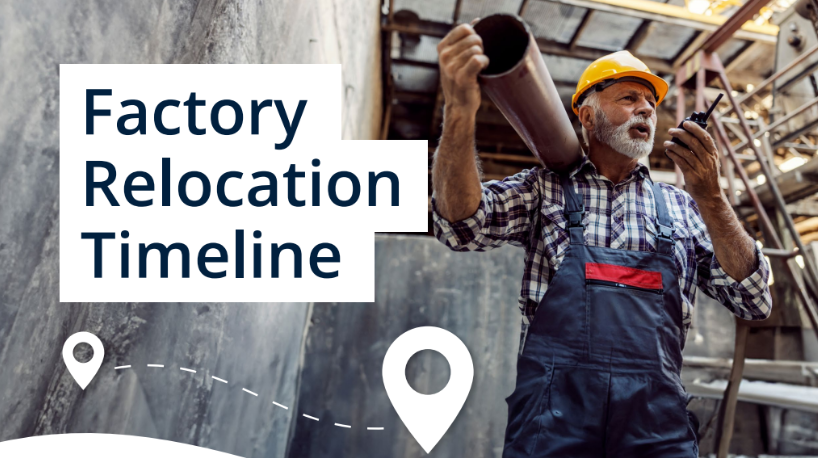
Are you relocating a factory? It is not just a big move, but a major one. You are not just hauling machines across town. You are also uprooting the entire rhythm of production. It includes the pulse, the flow, and everything else. And if you are not careful, things unravel fast, costs balloon, timelines slip, and people get frustrated.
Understanding the Risks of Downtime
Downtime is the biggest problem in factory relocation. Every hour offline is money out the door. Moreover, it is not just the obvious things. Rather, it is taking things apart, loading trucks, and reinstalling. It is the hiccups, the “oh no” moments, broken parts, and wrong fittings. Also, no one is available to fix it.
Companies often misjudge this. They think it will be quick. However, it is not. In fact, you need a plan that is more than a checklist. That is, a full-on blueprint where you have to inventory everything. This way, you will know what is fragile, what is critical, and what is irreplaceable. Although that prep work is boring, it still saves you later.
Protecting Equipment and Infrastructure
Machinery is expensive (some are really expensive) and fragile in different ways. Hence, if there is one bump, one drop, you will have to invest weeks of repair. In some cases, it might even need replacement. That is why professionals matter – movers who know industrial gear and who have done this before.
Basically, they know various aspects of protecting machinery, like load balancing, vibration control, permits, routes, and all the aspects that does not show up in spreadsheets but wrecks your schedule if ignored. They also bring crates that fit, shock pads, and labels that actually make sense.
Managing Time and Coordination
Time is always slipping away, and everyone underestimates it. Hence, reinstalling is not plug-and-play. Rather, it is recalibration, alignment, and integration. Also, it takes longer than you think.
Build the schedule with everyone at the table. These include the following:
- Logistics
- Maintenance
- Engineering
In fact, if they are not in the room, you will miss something. Moreover, do not forget to determine “what ifs”, like
What if the truck is late?
What if the power is not ready?
Is the crew short?
Understand that contingency is not pessimism. It is what ensures your business survives in the long run.
Building a Foundation for Success
Success does not come from luck. It comes from preparation. Basically, it is about knowing what you have. Also, it is about talking to the right people and listening. Apart from that, you must take necessary steps like auditing your gear, hiring the right movers, and building a timeline that breathes, bends, and does not break.
This is because relocation is risky. However, it is also a chance to upgrade, rethink, and streamline. Hence, if it is done right, it gives your business a big momentum.
For more on this, check out the resource by Equip Trucking. It is a provider of heavy equipment moving services.

Read Also:
Tags:

Recent
Dinmukhamet Idrisov and a Gold-Mine Dispute From Kazakhstan’s Oligarchic Past
Oct 16, 2026

Memory Chips Are Becoming More Important in the AI Era
Aug 06, 2026

Why Enterprise Web Applications Still Choose Angular for Long-Term Growth
Aug 04, 2026

Due Diligence Decoded: Why Careful Evaluation Still Wins in Business
Jul 11, 2026

Related Articles

Navigating Business Travel Abroad With Security And Confidence
Traveling for business can be a thrilling part of your career, offering opportunities to explore new places, cultures, and business environments. However, when traveling abroad, security becomes a paramount concern. Being in unfamiliar surroundings while managing important business matters requires a strategic approach to ensure safety and success. From securing sensitive information to understanding cultural nuances, here’s a guide to traveling securely as a business professional abroad. What Are The Issues Linked With Business Travels? Business travels unravel a new sky of opportunities. If you have to develop your business and stay at arm's length with your competitors, you must look beyond your periphery. It is the only solution linked to the development of business. However, there are some of the core challenges that you face with today’s business travel. So let's try to understand them here. Dispersed Information On Travel If you have taken a trip, you would definitely want all your papers, both relating to travel and business, in order. From managing your reservations to taking care of your important documents, you must be up-to-date. However, you can get help from the different travel management software. Inappropriate Packing Packing is undoubtedly one of the core tasks that you have to manage in your business. You must be up-to-date with your packing beforehand so that you can better manage your other things with direct and indirect relationships with your business travel. Safety Concerns Business travels, and that too in foreign destinations, is pregnant with uncertainties. You can enter various types of threats during domestic as well as international trips. We say substantial truth. According to a study, 93% of businesswomen travelers face different types of safety-related problems. Hence, you have to ensure that you have a well-designed corporate travel security policy and a safety training module so that you can be out of danger. Prioritizing Digital Security in a Global Setting In an era where business is often conducted digitally, securing your electronic devices and data is crucial. Before embarking on your journey, ensure that all your devices are updated with the latest security software. It’s wise to use the best VPNs (Virtual Private Networks) when accessing public Wi-Fi networks to encrypt your online activities. Be cautious about sharing sensitive information over the phone or in public spaces, and always backup important data in secure cloud storage. Keeping digital security at the forefront not only protects your business information but also prevents potential cyber threats. Cultural Awareness and Local Customs Understanding the cultural context of the country you’re visiting is not only respectful but also a key security practice. Familiarize yourself with local customs, dress codes, and social etiquette to avoid unintentional offenses. In some countries, business practices and negotiations can be vastly different, and being aware of these nuances can prevent misunderstandings. Additionally, learning a few phrases in the local language can go a long way in establishing a relationship and displaying respect for the host country. Essential Security Measures for Business Travelers Security Aspect Tips for Secure Travel Reason for Importance Document Safety Keep digital copies of important documents Quick access in case of loss Financial Security Use credit cards over cash, notify bank of travel Prevent fraud and theft Health Precautions Carry a basic first-aid kit, know local emergency contacts Health emergencies Local Laws and Regulations Research and adhere to local laws Legal safety and compliance Communication Plans Keep regular contact with your home office Ensure ongoing support and safety This table highlights key security measures to consider when traveling for business, offering tips for secure travel and explaining their importance. Creating a Balanced Itinerary While business is the focus, balancing your itinerary can improve both your security and overall travel experience. Avoid over-scheduling, as fatigue can lead to lapses in judgment and increased vulnerability. Allow time for rest and leisure to recharge. When scheduling meetings or events, consider safe, well-known locations and plan your transportation routes in advance. Leveraging Local Knowledge and Building Networks An often underutilized strategy in business travel is tapping into local knowledge and networks. Before your trip, reach out to local contacts, business partners, or even expat communities who can provide valuable insights into the local business environment and potential security concerns. These connections can offer advice on safe neighborhoods for accommodation, reliable transportation options, and even trustworthy places for business meetings. Additionally, building a network of local contacts can be immensely beneficial for navigating unexpected challenges and emergencies. It provides you with a support system in a foreign land, which is not only reassuring from a security standpoint but can also open doors to local business opportunities and cultural experiences that enrich your travel. Travel Insurance and Emergency Preparedness Investing in comprehensive travel insurance is a wise decision for business travelers. This should cover medical emergencies, trip cancellations, and loss of belongings. Be aware of the emergency protocols of the country you’re in, including the location of the nearest embassy or consulate. Carrying a small emergency kit with basic first-aid supplies, emergency contacts, and essential medication can be invaluable in unexpected situations. Conclusion Traveling abroad for business requires meticulous planning and a heightened awareness of security practices. By prioritizing digital security, understanding cultural contexts, and taking practical steps to ensure your overall safety, you can navigate foreign business environments with confidence. Remember, being well-prepared not only safeguards your well-being but also sets the stage for successful and productive business engagements. Read Also: Best Business Credit Cards For Startups In 2023 What Are Distribution Channels In The Context Of Business? Beyond The Desk: The Evolution Of Field Service Management In Modern Business
Dec 07, 2023

How To Start A Dropshipping Business In 2021 – A beginners Guide
Are you willing to start your dropshipping business in 2021? If yes, you need to follow certain norms that can help you achieve the same for your business. Here you must plan the things in proper order. It will help you to achieve the desired goals for your dropshipping business. Many of you have questions in your mind about how to start a dropshipping business? The answer to this question is quite simple you have to follow certain norms as per the situation’s needs. It will help you achieve your goals effectively. Proper planning can help you to get things done in the correct order. Different Ways To Start The Dropshipping Business Multiple ways are using which you can start your dropshipping business. Here you must plan things well to get the desired goals for your business. Proper planning can help you to achieve your goals effectively. 1. Select A Niche You first need to dive into the concept that which is the best niche for your dropshipping business. Here, proper planning can help you to achieve your business goals effectively. How to start a dropshipping business is not a big question? Instead, which niche will you select to start your dropshipping business is a huge question. The reason is whichever product you select or choose; you will have to face the competition. You need to have the confidence with you that you can bypass the competition properly. Here, you need to innovate things properly. It will help you to achieve your goals. 2. Perform the Competitor Product Research You must know your competitors well, and you must do your research correctly. It will help your business to expand and proliferate at the right moment in time. Proper planning can help you to achieve your business goals properly. How to start a dropshipping business is not a big question to ask here? Instead, you must know how you can outsmart your competitors in your dropshipping business. More effectively, you need to do proper competitor research. It will help your business expand rapidly. You need to make some careful considerations here. 3. Find A Reputable Dropshipping Supplier You need to find out a reputable Dropshipping supplier that can help you achieve your business goals effectively. The reputation of the supplier will help you increase your affiliate products’ sales to a great extent. Here, you need to plan things as per your requirements that can help your business expand beyond the boundaries. The selection of the right supplier will help you build mutual trust between your customer and your business. You cannot take these factors casually at your end. 4. Build An Online Store You need to build your online E-commerce store to make your products available to your potential customers. You need to plan things properly here. How to start a dropshipping business is no longer a big question if you have a proper online store with you. Adequate planning here holds the key to developing your business in the right direction at the right point in time. Having an online store will help you achieve your desired goals for making your dropshipping business successful and providing a platform from where you can earn money at your wish. Proper arrangement of the product line will play a vital role here. You must select the best product that can help you to achieve your goals effectively. 5. Improve & Analyze Your Store All the products in your online store may not have equal demand. You need to analyze the product line that will provide you the maximum returns and have less potential to give you the required profitability. The more you know the market, the better you can develop your brand image. Identify the products in your store that are resulting in the loss of your business. Find out the critical areas of their defect and make the proper solution to eliminating these defects adequately. It will help you to achieve your business goals effectively. You need to make the right decisions at the right time to avoid the wastage of your products from your online store. Proper planning can help you to achieve your business goals effectively at the right time. 6. Properly Market Your Dropshipping Business You need to build awareness of your dropshipping business effectively. It will help you to achieve your desired goals effectively. Your potential target audience will search for the best offers from your company. Now I think that the concept is clear how to start a dropshipping business? If you can provide them the best offers that they are searching for from you, it can help you increase your profitability in the long run. Proper planning here holds the key. It can help you determine whether your potential customers will buy from you or your competitors. You must make a robust branding policy to help your business grow at a rapid pace. Is Dropshipping A Profitable Platform Now? With the growing popularity of the affiliate business model, dropshipping is one of the best business models or the platform that can help you earn in millions. It can help your business grow to the next level as you want to develop it from your counterpart. Proper planning can help you to achieve your goals in the right direction. Here you need to make your niche popular as it will help you increase the profitability of your business in the long run. The demand for dropshipping is growing at a rapid pace now. Conclusion Hence, if you plan to develop your dropshipping business in such a way that it can help you grow your affiliate marketing business effectively. Selection of the niche here is crucial as it can make or break your business in the long run. Before you start your dropshipping business, you must give a complete idea of the niche you will market your product in the market. Select the best product that can help you to select the best profitability in a short time. Ensure that you have made the right choices from your end. Read Also: What Is A Mass Market Paperback? Explained In 2021 How To Start A Landscaping Business With Less Investment In 2021 What Is A Business Development Consultant, And What Are Their Job Roles?
May 03, 2021
The Overlooked Bottleneck: Why the First 100 Feet Deserve More Attention
It’s funny how the smallest stretch of space can quietly dictate the rhythm of an entire warehouse. The first 100 feet, from the dock door to storage or storage back to the dock, looks ordinary and almost boring. Yet this zone is where momentum either builds or collapses. People often dismiss it as a handoff, a neutral ground between truck drivers and warehouse staff. That assumption is dangerous. Because when this area is underplanned, the ripple effects are everywhere: trucks idling, staging areas clogged, workers scrambling. It’s not chaos in the first 100 feet itself, but the consequences echo across the building. Why Simplicity Deceives? The problem is perception. This zone lacks the glamour of robotics or automated picking systems. It feels straightforward, so managers often leave it with outdated conveyors, awkward traffic flows, or heavy reliance on manual labor. That “basic” setup becomes friction. And friction here multiplies. Logistics is unpredictable with order spikes, weather delays, and staffing gaps. Also, small inefficiencies in this stretch magnify under pressure. Suddenly, the bottleneck is not visible where it starts, but in late shipments, stressed crews, and missed schedules. Rethinking the First 100 Feet Treating this space as passive is a mistake. It should be designed for flow, flexibility, and safety. Conveyor sorter systems, for example, accelerate loading and unloading, reduce congestion, and minimize physical strain. Dock scheduling software adds another layer, with shared visibility between transport and warehouse teams. When arrivals and departures are transparent, handoffs stop being chaotic. Coordination becomes smoother, predictable. Conveyor systems reduce manual handling. Scheduling tools align transport and warehouse timing. Worker safety improves with reduced strain. These are not flashy upgrades. But they change the rhythm as they turn the first 100 feet into a controlled, reliable transition instead of a hidden choke point. Momentum Matters The truth is simple: the first 100 feet sets the tone. However, if it is messy, the rest of the warehouse inherits that mess. Meanwhile, if it is structured, the workflow downstream benefits. In fact, efficiency, accuracy, and adaptability metrics that people obsess over are shaped here. Moreover, facilities that prioritize this zone see measurable gains. This is not because they added robots or futuristic tech, but because they respected the basics. This way, the overlooked bottleneck becomes the foundation. And once that foundation is solid, everything else moves faster, smoother, better. Read Also: Managing Factory Relocation: Strategies to Prevent Costly Delays PLG Supplies: Your Roadmap to Improved Supply Chain Operations Backorder Vs Out Of Stock: Essential Things To Know About It
Nov 19, 2025
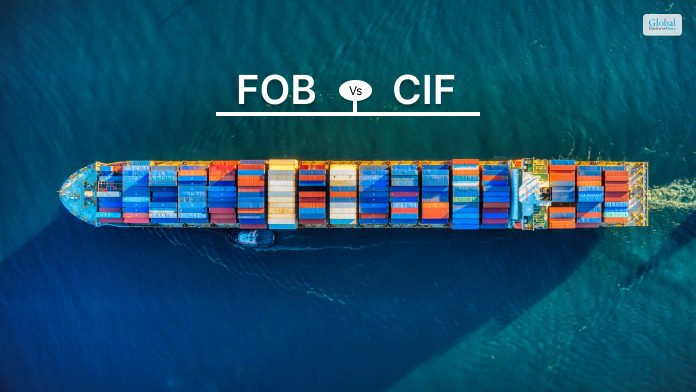
FOB vs CIF: What Are The Differences?
FOB vs CIF: What are the differences between the two? – There are many differences between CIF and FOB. However, there is one principal difference. In FOB, the seller gives up responsibility for the goods once they are loaded onto the ship. However, in a CIF agreement, the seller has the responsibility for the goods until they reach the destination port. After that, the buyer assumes responsibility. FOB vs CIF: A General Overview Of Shipping Agreements According to Investopedia, “Cost, insurance, and freight (CIF) and free on board (FOB) are international shipping agreements used in the transportation of goods between buyers and sellers. They are among the most common of the 11 international commerce terms (Incoterms), which were established by the International Chamber of Commerce (ICC) in 1936.” Although the definitions of FOB and CIF differ with countries, both contracts contain details on origin and destination information. These data help in determining the beginning and end of liabilities. Apart from that, these pieces of information also outline the responsibilities of both buyers and sellers based on scenarios. What Is Free On Board (FOB)? Under the free-on-board (FOB) agreement, the supplier of the product does not take responsibility for the goods after they go into the shipping vessel. Hence, the supplier pays only for the transport of the good to the port and onto the vessel. As a result, the seller of the product has limited responsibilities for the goods under the contract. After the goods go into the ship, the buyer of the product takes on the responsibility of the goods. The buyer takes full responsibility once the voyage starts. This includes transport, insurance, and other added fees. The buyer also pays for the unloading of the goods. What Is Cost, Insurance, And Freight (CIF)? Sellers use this technique mostly during large deliveries, especially for oversized goods that they ship by sea. The seller of the good takes responsibility for the good until it is delivered to the buyer’s port. The buyer assumes full responsibility for the goods as soon as it reaches the destination port. Hence, if there are extra costs after the good reaches the destination port, the buyer will need to take responsibility for the same. After the payment, the transport service transfers the documentation for the goods over to the buyer. FOB vs CIF: Major Pros And Cons According to an article on Alibaba.com, “With a CIF agreement, the seller is liable for the goods during transit, and with a FOB, the buyer is liable for the goods during transit. […] Generally, FOB is considered a more cost-effective approach. This is because buyers can make more cost-effective decisions about the shipment, such as buying the minimum insurance policy or going with a lower-cost freight company since they are in control.” The following are the major pros and cons of FOB and CIF that you must know: Pros And Cons Of Free On Board (FOB) Here are the major pros of FOB that you will benefit from: The buyer of the product has more control over the delivery process. It is possible for the buyer to make various cost-effective decisions in some cases. The seller does not have to take responsibility for added costs. Here are the major cons of FOB that you need to be aware of: Since the buyer has more responsibilities, the individual will need to deal with added costs if necessary. If the goods are damaged during transit, the seller is not responsible for that. This might send the buyer into an absurd situation. Pros And Cons Of Cost, Insurance, And Freight (CIF) Here are the major pros of CIF that you will benefit from: The seller has more control over the goods delivered to the customer. Also, the buyer of the product has little to no responsibility when it comes to the delivery of the product. The buyer gets a more seamless experience with the CIF process. As a result, the delivery process is less stressful for the buyer. As the buyer is getting more convenient with this process, it gives the seller a certain advantage over its competitors. Here are the major cons of CIF that you need to be aware of: The seller has to take full responsibility for the damage to goods in transit. Buyers of the product have little to no control over the cost of the delivery process. There can be additional costs for sellers. This raises the costs of the goods at the time of delivery. FOB vs CIF: Which Is The Best One To Buy? During international shipping, most companies opt for either Free on Board (FOB) or Cost, Insurance, and Freight (CIF) agreements. According to Investopedia, “Inexperienced buyers typically prefer CIF, which places much of the shipping responsibility on the seller, including shipping costs, insurance, and freight to the destination port, while giving the buyer greater convenience. However, because the seller takes on more risk and responsibility, CIF often comes with a higher cost.” Basically, in CIF, the seller of the product takes care of almost everything up to the final delivery at the destination port of the buyer. On the other hand, the ones that have enough experience in international shipping tend to prefer FOB. This is because they have more control over the goods in this case. When the goods leave the ship, the responsibility for the goods goes to the buyers. The seller considers the goods as delivered once they clear the goods for export and load them onto the shipping vessel. Apart from that, the FOB also offers flexibility over logistical details. These are to learn the needs of the buyer and to lower the costs since the seller cannot negotiate directly with shipping companies. On a side note, the scale and expertise of the company also determine the choice between FOB and CIF. Wrapping Up FOB vs CIF: Hope this article was helpful enough to provide accurate information. You can see from the article that, in general, sellers choose FOB more than CIF. However, if it is a big item and you want to have more control as a seller, choose CIF. Consider sharing your ideas and opinions with us in the comments section below. Explore More Finance By Clicking Below!! Periodic Inventory System: What Is It, How It Works, Applications, And More What Is Free Alongside Ship? Essential Things To Know About It Cost Insurance Freight? Everything You Should Know About It
Dec 29, 2023