





How To Design Effective Custom Business Store Signs

attention-grabbing custom business signs are key to driving up sales and keeping customers coming back. By taking a few simple design principles into account, you can create store signs that effectively communicate your message and brand identity.
In this blog post, we’ll explore some tips on how to design eye-catching and effective business signs for your store. Stay tuned for some great advice on custom sign design!
Define Your Target Audience
Our store signs are specifically targeted to a particular audience that blends a contemporary style sense with practical sensibilities. Our designs appeal to modern consumers who have an eye for both quality craftsmanship and fashion-forward motifs.
Whether a homeowner looking to make a statement in their garden or a business owner seeking detailed signage for their retail space, we cover all preferences. With our vast options ranging from traditional wooden signage to neon light displays, there is something for every shopper’s needs.
Keep It Simple
Signage is one of the most effective ways to get your message across in a concise and meaningful manner. As such, it is important to ensure that you are not trying to cram too much information onto the sign itself. By keeping things simple and sticking to one or two key points, you can easily capture the attention of viewers without overwhelming them with too much detail.
Additionally, this will help to make your message easier to comprehend and may even make it more likely that viewers retain the information. Overall, remember that brevity is best, and opt for simplicity when creating signage – your audience will thank you for it!
Use Durable Materials
When making any investment in outdoor materials, selecting high-quality is always essential. Not only will it provide better protection from the elements and last longer, but it may also save you time and money down the road by not having to replace it anytime soon. Quality materials are still a great value over cheaper options because they consistently offer a higher level of performance that can’t be easily matched.
Make sure to look for signs of extreme durability like water resistance or UV protection when deciding which materials are best for your project or purchase. With proper care and maintenance, using high-quality materials should ensure your purchase is strong enough to withstand the elements and remain in good condition for many years.
Be Creative With Design
When it comes to designing a visually stunning and effective piece, it is important to use creative elements such as color, letters like cast metal letters, Channel letters, Gemini letters, etc, shapes, and images. Colors can be used to create a mood or atmosphere that will draw attention and give an immediate impression of the project.
Meanwhile, shapes and lines help bring focus, guide readers’ eyes, and make the design stand out. Images also help give the piece a unique look by adding texture and dimension. Understanding how these different design elements work together is essential for creating something truly eye-catching.
Get Others’ Input
When you create a store sign design, it’s important to get the opinion of others before you finalize anything. Get input from family, friends, and neighbors – these are people who know you and will provide an honest assessment of how your design looks. You might even be surprised how useful their input is when it comes to color choice, lettering size, and placement of elements on the design.
Remember, an effective store sign not only stands out but also communicates your business message clearly – two key ingredients that can come together with the help of feedback from those around you! Taking the time to get input from others can definitely give your design a greater impact than if done in isolation.
Conclusion
Store signs can be an invaluable marketing tool that helps people discover the unique products and services your business offers. To ensure they serve their purpose, it’s important to find the right balance between aesthetics, practicality, and creativity. Make sure you define your target audience and use colors, shapes, and images that will catch their eye. Quality materials should also be used so that your sign is long-lasting and weather-resistant. Finally, don’t hesitate to seek input from different sources; family members or friends may have great ideas that could make your store signs stand out. With these tips in mind, designing appealing signs for your business is within reach!
Read Also:
Tags:

Recent
Memory Chips Are Becoming More Important in the AI Era
Aug 06, 2026

Why Enterprise Web Applications Still Choose Angular for Long-Term Growth
Aug 04, 2026

Due Diligence Decoded: Why Careful Evaluation Still Wins in Business
Jul 11, 2026

How Hydraulic System Design Impacts Equipment Performance
Jul 01, 2026

Related Articles

SmartCoin: Information, Eligibility Criteria, Interest Rates, Review & More
SmartCoin is a great platform for you if you are looking for instant personal loans. SmartCoin comes with an app with the help of which it will get easier for you to get loans easily, within only a matter of minutes. There are various instant personal loans apps like PaySense, India Lends, Money View, and others, but what makes SmartCoin different from them? In this article, we will discuss the SmartCoin app and how you can get loans from the SmartCoin platform. Apart from that, you will also get to know about the types of loans that SmartCoin offers. Furthermore, you will know about the major features of the SmartCoin app as well. In addition to that, you will also get to look at some of the major reviews regarding the SmartCoin app. SmartCoin Financials - What Is SmartCoin? SmartCoin is a platform that connects loan borrowers with lenders that, include Banks and non-banking financial institutions. With SmartCoin, every loan application is sanctioned and approved by the reserve Bank of India. Apart from that, every bank or NBFC that offers loans through the SmartCoin app is also registered under the RBI. SmartCoin is based in India and focuses mostly on microloans to provide loan offerings to people in the lower and middle-class demographics. The loans are mostly targeted toward self-employed individuals and salaried professionals. The best part about the SmartCoin loan app is that you will get loans in no time, and you will just have to clear some necessary basic verifications to avail yourself of a loan. All the loans offered by SmartCoin are available fully online. Apart from that, you will not need to keep something as collateral to get loans for yourself. The process of getting the loan is also safe, and you can do it with your smartphone within a matter of minutes. Furthermore, the rate of interest is also low since these loan options are created by keeping in mind the needs and necessities of people that fall under young and low-income groups. Benefits You Will Get Through SmartCoin Personal Loans SmartCoin is one of the best platforms to get loans from if you are looking for instant personal loans of short value. If you avail of loans from SmartCoin, you are sure to get benefitted from the app in many ways. The following are some of the major advantages of the SmartCoin app that you will benefit from if you want to avail of loans: You will get instant loans through your smartphone anywhere and anytime. The loan application process is fast and easy, and it takes barely a few minutes to finish the application. You can get loans for a variety of reasons – medical emergencies, property, education, business, travel, wedding, etc. With just a few verification processes, the approval is also fast. Once the lender verifies your credentials, and CIBIL score, you will get loans instantly. You will not have to keep collateral for the loans that you borrow from SmartCoin. Even if you do not have a credit score, you will still get loans. However, this depends on the lender whom you are choosing for the loans. Download The SmartCoin App – How To Do SmartCoin Login? The following are the ways through which you will be able to download the SmartCoin app on your smartphone: Step 1: Open Play Store on your Android smartphone. Step 2: On the search bar, type “SmartCoin.” Tap on the “SmartCoin - Personal Loan App” option. You can also download the app by clicking on the link: https://smartcoin.co.in/# Step 3: Tap the install button, and then let the download and installation process take place. Step 4: Once the Google SmartCoin app is installed on your smartphone, you can start the app and then do a SmartCoin loans login to get access to the variety of loan options. Features Of SmartCoin Loans - SmartCoin Funding The following are the major features that you will need to know about SmartCoin if you want to avail of loans from this platform: Details As Per SmartCoin WebsiteLoan Amount₹1000 to ₹25,000Interest Rate- Minimum APR 20% p.a.- Maximum APR 36% p.a.Loan TenureThree months to four months – (91 days to 120 days)Loan Processing FeesNot ApplicableDetails As Per SmartCoin AppLoan Amount₹4000 to ₹1,00,000Interest Rate0% p.a. to 30% p.a. based on the type of loan riskLoan TenureTwo months to six months (62 days to 180 days)Loan Processing Fees- Low -Risk Customers: 0%-2.5% of the principal- High-Risk Customers: 4%-7% of the principalEligibility- Must be an Indian Resident- Profession: Self-employed individuals, Salaried professionals, Support executives, and Business Owners- Minimum Income: ₹13,000 p.m.SmartCoin Customer Care Number/ SmartCoin complaints+91-9148 380504SmartCoin Emailhelp@smartcoin.co.in SmartCoin App Review – Top User/ Borrower Reviews Here are some of the SmartCoin reviews from users or borrowers of loans: “I HAVE BEEN USING SMART COIN APP FOR LAST 2 YEARS NOW TAKEN LOAN SEVERAL TIMES PEOPLE WHO ARE DISLIKING THE APP MUST HAVE BAD CIBIL SCORE DUE TO WHICH THEIR LOANS ARE NOT GETTING APPROVED.” BY :- VEENA RAUTELA “AS I APPLIED FOR LOAN ON 11TH JULY AND TODAY IS 23RD JULY ALMOST 15 DAYS HAS BEEN GONE, MY LOAN IS APPROVED READY TO RECEIVE ME BUT STILL AMOUNT IS NOT CREDIT IN MY ACCOUNT AND I CALLED SO MANY TIMES TO CUSTOMER CARE ALSO THEY SAID BECAUSE OF TECHNICAL ISSUES YOU HAVE TO FACING THIS PROBLEM AND IT WILL BE RESOLVE AS SOON AS POSSIBLE BUT WHEN WILL YOU RESOLVE ALREADY 15 DAYS HAS BEEN COMPLETED.” BY :- KIRTI CHAUHAN “E-MANDATE ISSUE & REPAYING THE AMOUNT BEFORE OR ON TIME THEN ALSO THE LIMIT NEVER GET INCREASED. JUST DISGUSTING.” BY :- NILAY MUKHERJE Summing Up Hope this article was helpful for you in giving you a better idea of the SmartCoin app platform. If you are looking for instant loans, there are hardly any platforms that can be considered better than SmartCoin. However, the rate of interest at SmartCoin is slightly higher than some of the most popular loan apps in India. What do you like the most about the SmartCoin platform? Share your experiences with us in the comments section below. Have A Look :- How To Improve Energy Efficiency In Your Data Centre Money Tap Loan App: Information, Eligibility Criteria, Interest Rates, Review & More Virtual Data Rooms: What They Are And Their Critical Importance For Businesses
Mar 27, 2023
What Is Bottleneck In Business? Everything You Should Know About It
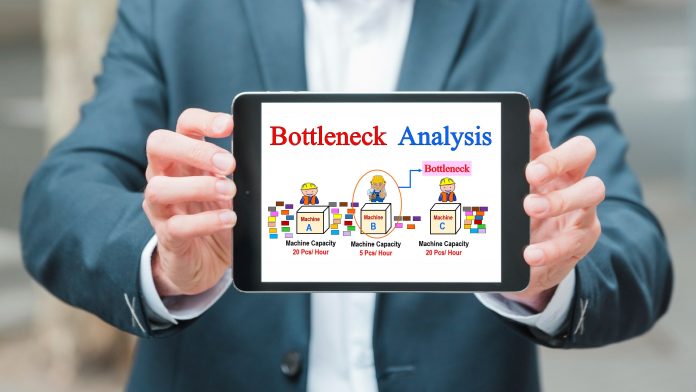
Do you want to know what a bottleneck in business is? If yes, then read this article carefully, and you will get all the answers to your query. A bottleneck is known as the congestion point in the production process. In this scenario of bottleneck, the production stops, and the systems slow down. It severely affects the productivity of an organization. You cannot make your selection and the choices in the dark. Apply the equity theory to get over this situation. The inefficiencies caused by the bottleneck in business increase the cost of production and delay the production process. Most organizations cannot recover from the bottleneck situation and collapse due to it. What Is Bottleneck In Business? In a business context, a bottleneck refers to a point in a process or system. Here the flow of work is significantly impeded or slowed down. It causes a delay in the overall output or efficiency of the system. This is a constraint that limits the capacity of the entire process. It often results in inefficiencies, increased lead times, or decreased productivity. How Do You Recover From A Bottleneck Situation In business? There are several methods you can employ from your end to recover from the bottleneck situation in your business. You need to know the methods well to have a better idea of it. Try to recover from this situation as soon as possible. As it can hamper the growth of your business significantly in the long run. Let’s find out some of the techniques to recover from it quickly. 1. Identify The Bottlenecks Analyze the workflow and processes to pinpoint the specific stage or area causing the slowdown. You need to identify the exact point of your production process that is creating the problem for your business. Crosscheck the areas of your bottlenecks in business and why they are creating such a mess in your operation process. Only then can you solve your issues easily within a limited time. 2. Assess Impact & Prioritize Evaluate the impact of the bottleneck on overall operations. Prioritize based on the severity of the impact on revenue, customer satisfaction, or other critical business aspects. The bottleneck in business can kill the possibilities of your business growth. You need to identify the area of your business that gets impacted severely due to the bottleneck. Furthermore, it will help you take further steps with ease. Supply chain risk management is the best example of this situation. 3. Immediate Mitigation Implement short-term solutions to alleviate the bottleneck's immediate effects. This might involve redistributing tasks, reallocating resources, or adjusting work schedules temporarily. Your employees may also have higher levels of dissatisfaction in the workplace. It can easily create a bottleneck in business. You need to understand the scenario and then take the necessary actions. 4. Analyze The Root Cause Of Bottleneck In Business Dig deeper to understand the causes of the bottleneck. Examine factors such as resource limitations, process inefficiencies, technology constraints, or dependencies on specific steps/people. Find out the root cause of the problem, then you can go for the best solution. Once you know how to solve the problem, it will become easier for you. 5. Implement The Long Term Solution Develop and implement strategies to address the underlying causes identified. This might involve process redesign, technology upgrades, resource reallocation, or retraining of staff. Try to make implementations of the long-term solutions to your business problems. It must not impact your business for a longer duration of time. Otherwise, things can become tougher for you. Reduce the capital expenditure by reducing bottlenecks. 6. Monitor & Measure Continuously monitor the workflow and measure performance after implementing changes. This helps assess the effectiveness of solutions and identifies any new bottlenecks that might arise. Once the bottleneck problem is resolved, you need to monitor it continuously. So that it did not create any kind of problem in your business operation again. You must stay alert to this fact regarding the recurrence of the bottlenecks in business once the problem is solved. 7. Continuous Improvement Foster a culture of continuous improvement. Encourage teams to identify and address potential bottlenecks proactively, ensuring ongoing optimization of processes. You should encourage continuous improvement in the process of production. Otherwise, things can turn worse for you. Try to implement the latest technologies to improve the production process in your organization. It can contribute to the growth of your business on a huge scale. 8. Regular Review & Adaptation Regularly review processes, systems, and workflows to adapt to changing business needs or growth. Adaptation ensures scalability and prevents bottlenecks from recurring. A business needs to keep on working with the environmental changes. You cannot stick to your old strategy once and forever. Try to rebuild your new strategies in such a way that it can boost your production process with ease. 9. Cross Training & Redundancy Implement cross-training programs to ensure multiple team members are capable of handling critical tasks, reducing dependency on specific individuals. Redundancy in systems or resources can also prevent future bottlenecks in case of failures. You need to train your employees from time to time. It will increase their confidence in the workplace. Ultimately, it can improve the proficiency of your employees by a huge margin. 10. Collaboration & Communication Foster open communication and collaboration among departments. This allows for early identification of potential bottlenecks and enables a swift response to mitigate them. You must enable healthy communication among teams to foster the growth of your organization. However, it an also boost the productivity of your organization. Final Take Away Hence, these are some of the effective methods you can employ to reduce the bottleneck in business. You need to understand the business scenario first, and then you have to take the right actions. It can help you to reach your business goals with ease. You can share your experiences with us. Comment on this matter and highlight the areas of the article you like most. Ensure that you follow the correct method to reduce business complications. Try to think out of the box to solve the issues of your business. Reduce the ill effects of bottlenecks as soon as possible otherwise, it can kill the possibility of your business growth. Interested In Business Read The Best Articles By Clicking Below!! What Is a Bear Hug? Let’s Discuss The Benefits Equity Theory: A Balancing Act for Modern Workplaces What Is A Distribution Channel? Essential Things To Know About It
Dec 20, 2023

What Is Sellers Concession? How To Get Sellers Concession
At the time of buying and selling, the home sellers concession can be of great help to you. It can sweeten the deal and sometimes can help to speed up the sales process. You need to know the facts well while attaining your requirements with ease. There are some of the downsides as well for sellers' concessions. A seller's concession is also known as a seller contribution or seller assist. It is a real estate agreement where the seller agrees to pay certain closing costs on behalf of the buyer. Closing costs are fees and expenses associated with the purchase of a home that goes beyond the property's purchase price. These costs may include items such as loan origination fees, title insurance, appraisal fees, and other miscellaneous charges. What Is A Sellers Concession? A seller's concession, also known as a seller contribution or seller assist, is a real estate agreement. Here the seller agrees to pay certain closing costs on behalf of the buyer. Closing costs are fees and expenses associated with the purchase of a home that go beyond the property's purchase price. How Seller Concession Work? There are certain steps using which the seller concession works. You need to get through the steps to have a better idea of it. Some of the core steps of it are as follows:- 1. Negotiation During the negotiation phase of a real estate transaction, the buyer may request a seller's concession to help cover some of the closing costs. You can seek the help of strategy consultant. 2. Agreement If both parties agree to the concession, the specific terms (such as the percentage or a fixed amount) are outlined in the purchase agreement. 3. Closing At the closing of the real estate transaction, the seller contributes the agreed-upon amount towards the buyer's closing costs. The funds are usually transferred to an escrow account and applied to the buyer's closing costs. What Sellers Concession Cover? There are certain things that the sellers concession covers. You need to know the facts well while attaining your requirements with absolute ease. Some of the essential factors that you must know are as follows:- 1. Loan Origination Fees Charges starting from the lender for processing the mortgage loan. It will help to process the loan faster than usual. You need to take care of the facts perfectly while attaining your goals with complete ease. Net operating income can be easy to calculate here. 2. Appraisal Fees The cost of developing the property's value. Application of the appraisal fees can make things easier and effective for you in all possible manner. Ensure that the scope of irregularities is as low as possible from your counterpart. 3. Title Insurance Insurance that protects the buyer and lender against defects in the title. The application of title insurance can make things easier for you to attain your goals with absolute clarity. Ensure that you follow the process with ease. 4. Escro & Settlement Fees Fees associated with the escrow process and the settlement of the real estate transaction. The settlement of the real estate transaction will make things easier and perfect for your business to grow at a rapid rate. Try out the best options that can make things perfect for your counterpart. 5. Home Inspection Cost Fees for professional home inspections. The chances of the home inspection cost can be less than your counterpart. You need to get things to work as per your choices. Effective planning can help you in reaching your objectives with ease. 6. Recording Fees Charges for recording the new deed and mortgage with the appropriate government office. It is one of the fundamental aspects that you need to take care of the facts. While achieving your requirements with ease, things are going to be easier. Develop a better market segmentation. 7. Transfer Taxes Taxes imposed by local or state authorities on the transfer of real estate ownership. In this type of scenario, the seller's concession can be of great help to you. You must encash the option or the opportunity to attain your requirements with ease. 8. Prepaid Property Taxes A prorated amount of property taxes paid by the seller on behalf of the buyer. You must follow the process that can help you reach your requirements with complete ease. Try to reduce the chances of the errors as much as possible. How To Negotiate Seller Concession? There are several effective ways you can adopt to make the negotiation for seller concession. You must know the ways to adopt it in your process. 1. Understand The Closing Cost Both buyers and sellers should have a clear understanding of common closing costs. This knowledge will help in determining a reasonable amount for seller concessions. 2. Know Loan Program Limits Be aware of any restrictions on seller concessions imposed by the buyer's chosen loan program. Different mortgage programs may have specific guidelines regarding the maximum allowable contribution from the seller. Similar information is present in Forbes.com. 3. Conduct Market Research Understand the local real estate market conditions. In a buyer's market, sellers may be more willing to offer concessions to attract buyers. 4. Work With Real Estate Agents Real estate agents play a crucial role in negotiations. Buyers should communicate their desire for seller concessions to their agent, who can then convey the request to the seller's agent. 5. Present A Strong Offer A strong offer, may include factors like a competitive purchase price and pre-approval for a mortgage. It can make the buyer's request for concessions more appealing to the seller. 6. Be Reasonable Buyers should be realistic about the amount of sellers concession they are requesting. Excessive demands may lead to resistance. You need to identify these facts to make things easier for you in future. 7. Prioritize Concessions Identify the most critical closing costs that the buyer would like the seller to cover. Prioritizing can help focus negotiations on key points. Final Take Away Hence, if you want sellers concession then the mentioned points can be of great help for you. Try to make things work perfectly while attaining your needs with ease. You should not make your selection in the wrong end. You can share your views and opinions in our comment box. It will assist us to know your take on this matter. Try to keep things in perfect place while attaining your goals with ease. Without proper planning things will be tougher for you. Get More Into Business By Clicking Below!! NetReputation Reviews: Is It Good For Your Business? What Are Distribution Channels In The Context Of Business? What Is Wholesaling? – Importance, Working, And Role In Supply Chain
Nov 26, 2023

Home Credit: Information, Eligibility Criteria, Interest Rates, Review & More
If you are looking for quick and instant personal loans, you must download the Home Credit app on your smartphone and explore the platform. The starting rate of interest on a Home Credit Personal Loan is 2% per month. Furthermore, you can get a loan amount of up to 5 lakhs and also get a loan tenure of up to 51 months. The best part about HomeCredit Finance is that you will get personal loans within a matter of minutes after your document verification is done. In this article, we will mainly discuss the various loan-related features of Home Credit, its rate of interest, the eligibility of the borrower, and customer reviews. Hence, read on through to the end of the article to get fully informed. Home Credit – General Information If you want to avail of loans from the Home Credit platform, you will need to show your documents to the lenders on the platform. Home Credit is a non-banking financial company, and it claims to provide loans at low-interest rates within only a few hours of application for the loan. If you apply for a loan now, you will get your loan within a few hours. However, your personal documents must be verified, and you will have to show your reason for availing of your loans. On the other hand, you will also need to make sure that all the documents you provide are true, and you will also need to provide your scanned photo and your current selfie. Home Credit – Personal Loan Highlights And Loan Features The following are the major highlights that will give you a better idea of the loan features of the Home Credit personal loan platform: Home Credit Personal LoansLoan AmountUp to ₹5 lakhsFor existing Home Credit BorrowersMinimum: ₹10,000Maximum: ₹5,00,000For new Home Credit BorrowersMinimum: ₹25,000Maximum: 2,00,000Rate of Interest On Loan2% per month onwardsLoan Tenure- For existing Home Credit Borrowers: 9 months to 51 months- For new Home Credit Borrowers: 6 months to 48 monthsMinimum Income to Avail Loan₹10,000Loan processing fees 0% to 5% of the PrincipalForeclosure feeNoneFlexible Personal Loan Processing Fees2.5% of the loan amountHome Credit India Address (Home Credit office near me)DLF Infinity Towers, Tower C, 3rd Floor, DLF Cyber City Phase II, Gurgaon-122002, IndiaHome Credit customer care number Delhi+91 - 124 - 662 – 8888 (Between 9:00 AM - 6:00 PM, All Days)Emailgrievanceofficer@homecredit.co.in Home Credit – Late Payment Charges (Personal Loan) Annualized PercentageStarts From 24%Number of days due1 day30 days60 days90 days120 days150 days180 daysLate Payment Charges₹350₹450₹550₹750₹750₹750₹750Total Late Payment Charges₹350₹800₹1350₹2100₹2850₹3600₹4350 Home Credit – Eligibility And Required Documents The followings are the eligibility and the required documents needed at the time of availing loans from Home Credit: Eligibility- If you want to avail of loans from Home Credit, you must fulfil the below-mentioned eligibility: Must be a citizen of India Must be either of the three: Salaried employee, Self-employed individual, or pensioner. Must be aged between 19 to 68 years. Must have an active bank account. At least 90 have passed since the last Home Credit loan application. Required Documents- The following are the documents you need to have for verification of Home Credit personal loans: PAN Card Address Proof: Voter ID Card/ Driver’s License/ Property Tax Receipt/ Passport Government House Allotment Letter. How To Download Home Credit App? The following are the steps you will need to follow to download the Home Credit Loan App on your smartphone from Google Play Store: Step 1: Open Play Store on your Android smartphone. Step 2: On the search bar, type “Home Credit.” Tap on the “Home Credit: Loan App” option. (You can also apply for Home Credit loans by going to the following website: https://www.homecredit.co.in/en/home) Step 3: Tap the install button, and then let the download and installation process take place. Step 4: Once the Google Home Credit app is installed on your smartphone, you can start the app and then do a Home Credit loans login to get access to the variety of loan options. Home Credit – Top Borrower Reviews The following are some of the interesting reviews by Home Credit borrowers that must be helpful for you: “WORST EXPERIENCE WITH HOME CREDIT . THESE GUYS IRRITATE THE CUSTOMERS AND DEDUCT AMOUNT REGULARLY FROM BANK ACCOUNT. FORCED FOR THE VALUE ADDED SERVICES AND DONT REFUND AMOUNT. I REQUESTED TO ALL OF U PLEASE DON'T TRUST ON HOME CREDIT FINANCE.” BY :- JITENDRA MEENA “DON'T TAKE ANY KIND OF LOAN , SERVICES BAD , HIDDEN CHARGES , INTEREST PERCENTAGE VERY HIGH., AND CUSTOMER SERVICE REPRESENTATIVE VERY POOR CATEGORY.” BY :- bagderahul04 “I LIKED HOME CREDIT MINI CASH LOAN OPTION VERY EASY PROCEDURES. I TAKEN MINI CASH LOAN FROM HOME CREDIT FOR MY SON SCHOOL FEES ON THAT IT'S REALLY HELPS ME. I GOT 2 DAYS DELAY TO GET CREDIT BUT REALLY HAPPY WITH HOME CREDIT. I THINK THIS IS THE FIRST FINANCE GIVEN THIS TYPE EASY PROCEDURE TO GET LOAN. THANKU” BY :- MANJU6431 “I HAVE PURCHASED 2 MOBILE PHONES THROUGH HOME CREDIT INDIA WITH ZERO DOWN PAYMENT. ONLY A SMALL AMOUNT OF PROCESSING CHARGES. MINIMUM DOCUMENTS REQUIRED FOR THIS. AND THEY ALSO PROVIDE A SMALL FINANCE OF RUPEE 10000 FOR IMMEDIATE EMERGENCY. IT WILL BE AVAILABLE QUICKLY.” BY :- NEENU1234 Summing Up As you have seen from the reviews of Home Credit in this article, the reviews related to the Home Credit app are mixed. However, you can also read popular reviews of Home Credit loan borrowers. If you see any hidden charges on the loan you are taking, ensure that you ask for full information. Make sure to read every piece of information related to the loans properly before you avail yourself of the loan from Home Credit. Although the app looks genuine, and the platform is certified, the borrower reviews say it all. Have you taken loans through the Home Credit app? Share your experience with us in the comments section below. Have A Look :- How To Improve Energy Efficiency In Your Data Centre Money Tap Loan App: Information, Eligibility Criteria, Interest Rates, Review & More Virtual Data Rooms: What They Are And Their Critical Importance For Businesses
Mar 27, 2023