





What Is Bottleneck In Business? Everything You Should Know About It
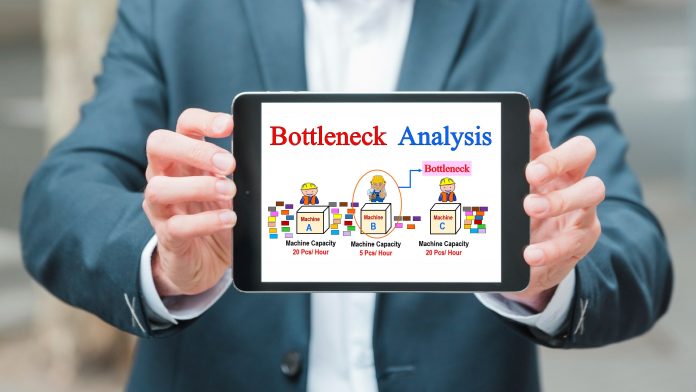
Do you want to know what a bottleneck in business is? If yes, then read this article carefully, and you will get all the answers to your query. A bottleneck is known as the congestion point in the production process.
In this scenario of bottleneck, the production stops, and the systems slow down. It severely affects the productivity of an organization. You cannot make your selection and the choices in the dark. Apply the equity theory to get over this situation.
The inefficiencies caused by the bottleneck in business increase the cost of production and delay the production process. Most organizations cannot recover from the bottleneck situation and collapse due to it.
What Is Bottleneck In Business?
In a business context, a bottleneck refers to a point in a process or system. Here the flow of work is significantly impeded or slowed down. It causes a delay in the overall output or efficiency of the system. This is a constraint that limits the capacity of the entire process. It often results in inefficiencies, increased lead times, or decreased productivity.
How Do You Recover From A Bottleneck Situation In business?
There are several methods you can employ from your end to recover from the bottleneck situation in your business. You need to know the methods well to have a better idea of it. Try to recover from this situation as soon as possible. As it can hamper the growth of your business significantly in the long run. Let’s find out some of the techniques to recover from it quickly.
1. Identify The Bottlenecks
Analyze the workflow and processes to pinpoint the specific stage or area causing the slowdown. You need to identify the exact point of your production process that is creating the problem for your business. Crosscheck the areas of your bottlenecks in business and why they are creating such a mess in your operation process. Only then can you solve your issues easily within a limited time.
2. Assess Impact & Prioritize
Evaluate the impact of the bottleneck on overall operations. Prioritize based on the severity of the impact on revenue, customer satisfaction, or other critical business aspects. The bottleneck in business can kill the possibilities of your business growth. You need to identify the area of your business that gets impacted severely due to the bottleneck. Furthermore, it will help you take further steps with ease. Supply chain risk management is the best example of this situation.
3. Immediate Mitigation
Implement short-term solutions to alleviate the bottleneck’s immediate effects. This might involve redistributing tasks, reallocating resources, or adjusting work schedules temporarily. Your employees may also have higher levels of dissatisfaction in the workplace. It can easily create a bottleneck in business. You need to understand the scenario and then take the necessary actions.
4. Analyze The Root Cause Of Bottleneck In Business
Dig deeper to understand the causes of the bottleneck. Examine factors such as resource limitations, process inefficiencies, technology constraints, or dependencies on specific steps/people. Find out the root cause of the problem, then you can go for the best solution. Once you know how to solve the problem, it will become easier for you.
5. Implement The Long Term Solution
Develop and implement strategies to address the underlying causes identified. This might involve process redesign, technology upgrades, resource reallocation, or retraining of staff. Try to make implementations of the long-term solutions to your business problems. It must not impact your business for a longer duration of time. Otherwise, things can become tougher for you. Reduce the capital expenditure by reducing bottlenecks.
6. Monitor & Measure
Continuously monitor the workflow and measure performance after implementing changes. This helps assess the effectiveness of solutions and identifies any new bottlenecks that might arise. Once the bottleneck problem is resolved, you need to monitor it continuously. So that it did not create any kind of problem in your business operation again. You must stay alert to this fact regarding the recurrence of the bottlenecks in business once the problem is solved.
7. Continuous Improvement
Foster a culture of continuous improvement. Encourage teams to identify and address potential bottlenecks proactively, ensuring ongoing optimization of processes. You should encourage continuous improvement in the process of production. Otherwise, things can turn worse for you. Try to implement the latest technologies to improve the production process in your organization. It can contribute to the growth of your business on a huge scale.
8. Regular Review & Adaptation
Regularly review processes, systems, and workflows to adapt to changing business needs or growth. Adaptation ensures scalability and prevents bottlenecks from recurring. A business needs to keep on working with the environmental changes. You cannot stick to your old strategy once and forever. Try to rebuild your new strategies in such a way that it can boost your production process with ease.
9. Cross Training & Redundancy
Implement cross-training programs to ensure multiple team members are capable of handling critical tasks, reducing dependency on specific individuals. Redundancy in systems or resources can also prevent future bottlenecks in case of failures. You need to train your employees from time to time. It will increase their confidence in the workplace. Ultimately, it can improve the proficiency of your employees by a huge margin.
10. Collaboration & Communication
Foster open communication and collaboration among departments. This allows for early identification of potential bottlenecks and enables a swift response to mitigate them. You must enable healthy communication among teams to foster the growth of your organization. However, it an also boost the productivity of your organization.
Final Take Away
Hence, these are some of the effective methods you can employ to reduce the bottleneck in business. You need to understand the business scenario first, and then you have to take the right actions. It can help you to reach your business goals with ease.
You can share your experiences with us. Comment on this matter and highlight the areas of the article you like most. Ensure that you follow the correct method to reduce business complications.
Try to think out of the box to solve the issues of your business. Reduce the ill effects of bottlenecks as soon as possible otherwise, it can kill the possibility of your business growth.
Interested In Business Read The Best Articles By Clicking Below!!

Recent
Memory Chips Are Becoming More Important in the AI Era
Aug 06, 2026

Why Enterprise Web Applications Still Choose Angular for Long-Term Growth
Aug 04, 2026

Due Diligence Decoded: Why Careful Evaluation Still Wins in Business
Jul 11, 2026

How Hydraulic System Design Impacts Equipment Performance
Jul 01, 2026

Related Articles

Bernard Arnault & Family Biography, Net Worth, Age, Height
When we talk about the luxury industry, he is what we call a “Mogul.” He owns more luxury brands in the world than anyone else. This is what secured his place as the Second Richest Man In The World, with a net worth of $139.1 billion. Who Is Bernard Arnault? Born to a business family in France, Bernard Arnault showed business acumen from a young age. In 1989, became the CEO of LVMH Moet Hennessy Louis Vuitton. He is also the main shareholder of Louis Vuitton. Bernard Arnault became The Richest Man in France and The Second Richest Man in the World. Bernard Arnault net worth is $139.1 billion. His business empire stretches over more than 70 big brands. A few of them are Louis Vuitton, Sephora, Christian Dior, and Le Bon Marche. Personal Information BornBernard Jean Etienne Arnault5th March 1948, Age - 73Roubaix, FranceAlma MaterEcole Polytechnique, PalaiseauBernard Arnault & Family Net Worth$139.1 billionOccupationBusinessman, media proprietor, art collectorFamous ForFounder of LVMHTitle CEO & Chairman of LVMH, Christian Dior SEParentsJean Arnault (Father), Marie-Josephe Savinel (Mother)SpousesAnne Dewavrin (m.1973- div. 1990), Helene Mercier (m.1991)ChildrenDelphine Arnault, Antoine Arnault, Alexandre Arnault, Frederic Arnault, and Jean ArnaultHeight6’1” or 185cmBernard Arnault HouseBordeaux, French Alps, Paris, Beverly Hills, BahamasNicknameThe Terminator Early Life Bernard Arnault was born to French manufacturer Jean Leon Arnault and mother Marie-Josephe Savinel in 1949. He completed his education at Ecole Polytechnique, France’s best Engineering school. He then began working for his father’s company. Later he convinced his father to shift his business from civil engineering toward real estate, which was booming at that time. He remanded his father’s company from Ferret-Savinel to Ferinel. He sold the industrial construction division of the company. After he acquired a textile company, they again renamed the real estate division George V Group. Career 1. Professional Initiation (1971-1987) Bernard Arnault started his career at his father’s company Ferret- Savinel. There he was the president from 1978 till 1984. In 1984, the French Government was looking for someone to take over Bouccas Saint-Freres. With Antione Bernheim’s help, who was the senior partner at Lazard Freres, Bernard Arnault was able to acquire Financiere Agache, the luxury goods business. He then became the CEO there and also won the bid to take over Boussac Saint-Freres. Along with Boussac Saint- Freres and Christian Dior’s assets which included department store Le Bon Marche and diaper manufacturer Peaudouce. Arnault fired about 9000 employees from Boussac two years after buying and got the nickname “The Terminator.” He then sold all the company assets except for Christian Dior and Le Bon Marche's department store. By the mid of 1987, the company was again profitable and earned about $112 million in revenue on a $1,9 billion dollar stream. 2. Acquisition Of LVMH (1987-1989) Toward the end of 1987, Arnault thought of creating a chain of luxury brands. He started working with the CEO of Moet Hennessy, Alain Chevalier, and Louis Vuitton President Henry Racamier. Together they formed the LVMH in 1987. In July of 1988, Arnault gave about $1.5billion dollars to the company Guinness which had about 24% shares in LVMH. Bernard Arnault then spent about $600 million to acquire 13.5% of LVMH, making him the biggest shareholder. In 1989, he spent about $500 million again to buy 43.5% of LVMH shares. Having a different viewpoint than Henry Racamier, LV president, he turned on Racamier and stripped him of his powers. In 1989, on 13th January, Bernard Arnault was unanimously elected the Chairman of the executive management board. What Benefits Does Bernard Arnault Get After Acquiring LVMH? Bernard Arnault, through his company LVMH (Moët Hennessy Louis Vuitton), has reaped several benefits after acquiring various companies and expanding the conglomerate's portfolio. Some of the notable advantages include: 1. Diversification Of Luxury Brands LVMH's acquisition strategy has allowed Arnault to build a diverse portfolio of luxury brands across multiple sectors, including fashion, cosmetics, watches, jewelry, and spirits. This diversity helps mitigate risks and allows for broader market penetration. 2. Increased Market Power By acquiring renowned luxury brands like Christian Dior, Bulgari, Tiffany & Co., and many others, LVMH has strengthened its position as a dominant player in the luxury goods industry, giving it more leverage in negotiations with suppliers and retailers. 3. Synergies & Cost Efficiencies Consolidating various luxury brands under one umbrella allows for synergies in areas such as marketing, distribution, and production, resulting in cost efficiencies and improved profitability. 4. Access To New Markets Acquiring companies in different regions or with strong footholds in specific markets grants LVMH access to new customer bases globally, helping it expand its global presence. It is one of the turning points of his business success that makes him so big in terms of the acquisition. You must not make your selection and the choices on the incorrect end. 5. Brand Collaboration & Innovation Cross-brand collaborations and sharing of expertise among acquired companies can foster innovation and unique product offerings, enhancing the appeal of LVMH's luxury brands. 6. Increased Revenue & Profit The addition of successful luxury brands to LVMH's portfolio has contributed to substantial revenue and profit growth, bolstering its financial standing. Owning a range of prestigious and iconic luxury brands elevates LVMH's reputation in the luxury goods sector, attracting consumers seeking high-end, aspirational products. Overall, Bernard Arnault's strategic acquisitions and the growth of LVMH's portfolio have positioned the conglomerate as a powerhouse in the luxury goods industry, offering numerous advantages in terms of market dominance, financial performance, and brand recognition. 3. LVMH Growth And Expansion (1989 - 2001) After becoming Chairman, Arnault led the company to become the biggest luxury brand group in the world as it is now. In 1988, he started acquiring different luxury brands like Celine, Christian Lacroix, Berluti, and Kenzo. In 1996, he bought Loewe, Marc Jacobs, and Sephora. Next year, another five brands joined the group Thomas Pink, Emilio Pucci, Fendi, DKNY, and La Samaritaine. 4. Increase In Success And Profit (2001 - Present) Few years back in 2011; Bernard Arnault said that he bought 50.4% of Bulgari. In 2017, he acquired Dior haute couture and ready-to-wear and footwear again in 2018, Arnault drove the company to have a record-breaking sale of 42.6 billion Euros in 2017. In November 2019, Bernard Arnault announced his intention to buy Tiffany &Co. The deal was supposed to be closed by June 2020. But due to a breach in the contract, Arnault called off the deal. Arnault announced it was due to the way Tiffany was conducting business during COVID-19. But after a brief legal proceeding, Arnault and Tiffany came to an understanding and agreed to the original contract. But this time, the price is slightly reduced to $16 billion instead of $16.2 billion. 5. Other Investments In 1998, along with businessman Albert Frere, Bernard Arnault bought the Chateau Cheval Blanc. Later in 2009, LVMH bought its shares to add to its Chateau d’Yquem, wine property. In 1999, Arnault was among the initial investors of Netflix. 6. Art Collection Art collection of Bernard Arnault Bernard Arnault is renowned for being one of the biggest collectors of art. His massive collection includes great works by Picasso, Henry Moore, Andy Warhol, and Yves Klein. He is also the reason why LVMH is a huge patron of the France art collection. He also owned the Phillip de Pury & Company from 1999 to 2003. In 2006, he also opened the LV Foundation is dedicated to creating contemporary art. The building was designed by the famous Architect Frank Gehry. Some Popular Achievements Of Bernard Arnault There are some of the popular achievements of Bernard Arnault that most of us are unaware of. You must know about it to have a clear insights about the achievements of his life. You need to take care of the realities while attaining your goals with ease. 1. Building LVMH Bernard Arnault is best known for his role in building and leading LVMH (Moët Hennessy Louis Vuitton), one of the world's largest luxury conglomerates. LVMH comprises numerous prestigious brands, including Louis Vuitton, Dior, Fendi, Givenchy, Moët & Chandon, Hennessy, and many more. Under his leadership, LVMH has become a global powerhouse in the luxury goods industry. 2. World’s Wealthiest Bernard Arnault has consistently been one of the wealthiest individuals globally, according to Forbes' Billionaires List. He has held the title of the world's richest person on multiple occasions. His business ideas have made him one of the wealthiest person in the world right now. A man becomes big due to his hard work and innovative ideas and Arnault is doing best at it. 3. Acquisition & Expansion Arnault is known for acquiring iconic luxury brands to add to LVMH's portfolio. His strategic acquisitions have included brands like Christian Dior, Bulgari, and Tiffany & Co. These moves have solidified LVMH's position as a dominant force in the luxury market.You need to get through the complete process that can make things easier for you in attaining your needs with complete. You should not make things too complex from your end while you want to make things work for you in all possible manners. 4. Philanthropy Arnault has been involved in philanthropic efforts. He and his family pledged significant donations to various causes, including disaster relief, educational initiatives, and cultural preservation. You should ensure that the chances of the errors must be as less as possible while you want to get things done in perfect order within a specific period of time. 5. Art Patronage Bernard Arnault has been a patron of art and culture. He played a significant role in the development and funding of the Louis Vuitton Foundation, a cultural and art center in Paris designed by architect Frank Gehry. His significant work in the art center has created lots of people to take interest in art and culture today in the world. 6. Sustainable Practices Under Arnault's leadership, LVMH has made commitments to sustainability and environmental responsibility. The company has taken steps to reduce its environmental footprint and promote ethical practices in the luxury industry. Frequently Asked Questions (FAQs): 1. How Did Bernard Arnault Become So Rich? Bernard Arnault gained his wealth through great investments in multiple luxury brands over the years. He owns major shares of many renowned brands. 2. Who Is The Ceo Of Louis Vuitton? The CEO of Louis Vuitton is Bernard Arnault. He is a French businessman and the second richest man in the world. 3. Is Louis Vuitton Still Family-Owned? Yes, LVMH is still a family-owned luxury brand. It is owned by the Arnault family, with an ownership share of 47.44%. And a voting power of about 63.5%. Wrapping Up! Undoubtedly Bernard Arnault has achieved a remarkable level of achievement. The dramatic level of rising in his net worth is something worth mentioning. It is expected that his net worth is only going to rise from here onwards. Read More: 11 Tips For Saving On Business Insurance Boris Johnson: UK’s Top Political Leader and Sitting PM Resigning From His Service ACTC Stock – Present Price, Forecast, Statistics – Should You Invest In It In 2022?
Jul 13, 2022

Main Types Of Logos: Why Is It Needed?
The logo of a company is the singular most important aspect of brand image. Branding itself in its root form is about establishing an image or a trademark that differentiates things from other things. When creating a logo, you should look into different logo designs and choose the one that suits your business the best. There are different types of logos, and these are best for different types of businesses under different circumstances. Logo design research is something that every entrepreneur and business does at some point in time. If your team is brainstorming on logo designs, definitely you need to read this information if you are interested in this topic. There are multiple styles of the logo to use but choosing the right one is vital so that clutter is avoided. In this article, we discuss the different types of logo designs, their characteristics and when you need them the most. Read on to find out more about logo designs and how to make a difference in the design. Different types of logo designs and their importance in branding Wordmark logo The classic and pure form of a logo that is very simple is a wordmark-style logo. The wordmark style uses text only in its representation. The use of wordmarks can be seen in many popular companies in the present scenario. The wordmark style is often called the logotype, and it simply writes the company name in a creative way. The major elements of the logo are text, typography and font play. The use of simple text can invoke emotions and values of the company in the customers and help people recognise the brand. The use of particular fonts has been very popular among all companies. For example, most fortune 500 companies use Sans Serif to create their wordmark logo. The use of the wordmark logo is a fail-safe option and can be applied across multiple mediums of marketing. The use of this type of logo helps create consistency for your brand easily. Sometimes, brands create the compact form of their wordmark logo with the use of a monogram. Monogram The use of a Monogram logo design is another simple way of representing your brand. Monograms can be used even to represent your initials for your personal brand. If the company name is very long, you can simplify the logo with a monogram design. The monogram leaves a very strong imprint on the customer’s mind when it is designed in detail and very cleverly. A monogram is very easy to incorporate in branding, merchandise design and packaging so that there is consistency in branding and logo placement. The monogram can be very eye-catching when it is meaningful and intriguing. The best way to use a monogram is a capitalised letter designed with a stylish font and framed well. Textual designs of logos like monograms and wordmarks are very popular. In fact, more than half of the companies have capitalised letters in the form of monograms and wordmarks. Monograms can be used in digital space as well as physical aspects. For example, you can print the monogram on the back of your visiting cards, or you can use the monogram as the loading button of your website or the front of your business app. Combination logo Combination logos are styles that incorporate both visual elements and textual elements. Combination logos are very popular among many companies. The logo design usually includes a symbol and a letter mark to create a combination. The benefit of a combination logo is that you can use all the elements together or the visual symbol when you want. You can also use the letter mark when necessary. Combination logos give more space for creativity and collaboration. The combination logo can be a meaningful image or only a letter out of the name. The symbol can be incorporated into the letter mark so that it can create one logo with a smart design. The symbol should be well linked with the letter mark so that the customer registers all the aspects and remembers the whole logo. Combination logos are great for new companies that need to create new identities for the brand. However, once brand awareness is created, it is important to rethink the logo and simplify it for better impact. Moreover, a combination logo is the most popular design style among all companies. Pictorial mark There are many different logos and pictorial marks, or simply the visual element is one of them. The standalone image is also called the brand mark logo. The brand mark logo only has the pictorial mark and does not include the textual part or the company name. By only using the pictorial mark; the brand takes a huge risk. However, with the right kind of approach and the right selection, it can leave a huge impact on the minds of the customer. Pictorial marks are very easy to visualise and remember. However, pictorial marks are mostly chosen when the brand is already established and recognised. Most brands that remodel their logo or rebrand use pictorial marks. The use of the pictorial mark is one step ahead of the combination mark. Start with using the combination mark and then slowly move toward the pictorial mark once the brand is well recognised. The transition from the combination mark to the pictorial mark should be very smooth. Emblem logo The use of an emblem logo has been very common and is the oldest form of branding. Emblem logos are usually vintage style and can even include the company name inside a symbolic image. The use of emblems can be incorporated into the use of badges, cups, seals and other merchandise. Conclusion The use of a logo drives brand recognition for your brand. However, you need to use the right kind of logo design based on the phase of branding your business. There are multiple styles to use, and you can even choose a combination of styles. However, the rule is to keep everything simple and appealing. The use of creativity and different elements can be very refreshing and unique for the creation of the logo. Read More: How To Create A Powerful Business Continuity Plan?How To Build A Personal Brand For Your Business? – 7 Rules To FollowHow To Create A Powerful Strategic Marketing Plan – Step By Step Guide
Oct 11, 2022

Starting A Business In The USA – 4 Tips To Kickstart Your Venture
November is National Entrepreneurship Month. It has always been an honor for the USA to hold such tenacious, imaginative, and motivated men and women who choose to start a new business. In the United States, there are more than 30 million small firms. Since 2010, they have produced 65% of all new jobs. Therefore, it's crucial to adhere to some fundamental legal standards if you want your company to be successful and compliant. Before starting a firm, you must choose your services and target market. In addition, there are some fundamental legal conditions that you must follow to launch a small business and procure Employment Based Immigrant Visas in the US. Kickstarting Your Business In The USA Given below are some of the important steps you need to follow to start your business in the USA— 1. Planning The Structure And NameYour Business Some people choose a straightforward sole proprietorship because they believe there is no chance of legal action, while others may want to register as a corporation. The forms you use to report these taxes and your precise federal tax responsibilities will depend on the structure of your firm. Here are some of the most common structures that can get you Employment Based Immigrant Visas for your business— A. Sole Proprietorship An organization owned and run by only one person is known as a single proprietorship. You must file a Doing Business As form if you wish to give the company a different name (DBA). This procedure notifies your state or local authorities of the name under which you are conducting business. B. LLC A private limited corporation structured to provide a legal separation between the enterprise and the owner is a limited liability company (LLC). Consider it the next level up from a single proprietorship that can get business owners Employment-Based Immigrant Visas. It offers pass-through taxation like a partnership and the restricted liability of a corporation. C. S Corporation An organization that the IRS has given the Subchapter S classification is known as an S-Corporation. With this structure, subject to the same constraints as for LLCs, you have distinct tax entities and a restricted legal responsibility. The corporation avoids paying corporate taxes by disclosing profits and losses on its personal tax returns. D. C Corporation A C-Corp is a particular kind of corporation in which the owner and the company file separate tax returns. You need a name for your new small business so that your regional and state governments can keep track of your activities. You must register a Fictitious Business Name (FBN) or Doing Business As (DBA). 2. Gather The Required Documents Every company that conducts business as a corporation or partnership must have an Employer Identification Number (EIN). You may create a business bank account, file tax returns, and apply for business licenses using your EIN, which is your company's tax identification number. Applying for an EIN online on the IRS website is the simplest method. However, permits and licenses must be obtained by independent contractors. Depending on your sector and the location, your company could require a federal license in addition to a state or municipal license. Businesses engaged in activities overseen and controlled by a government agency must have federal licenses. However, depending on the area, state licenses and permissions may differ. 3. Understand The Tax Policies Taxes are a yearly obligation for all small company owners who have received Employment Based Immigrant Visas in the US. The amount and kind of taxes you pay depend on the structure of your firm. Some companies with workers are obligated to contribute to unemployment insurance, necessitating the owner's acquisition of extra tax identification numbers. You'll need to set up tax withholding records if you're recruiting staff. In addition, a W-2 Form must be completed and filed for each new hire at your small business. Along with federal taxes, you'll also have to pay state and local taxes. To guarantee compliance, working with a tax counselor could be a good idea. 4. Business Insurance You are in charge of ensuring your consulting is legally and financially sound as a small company owner. One of the best methods to shield yourself from liability is through business insurance. A single natural calamity or legal action is all it takes to spell the end for your small business. Review and comprehend the legislation that can apply to your company. Many clients will need you to have these insurances, and it's also necessary to secure your business against the possibility of liability damages. Plan Your Business Today When you’re a foreign national in the US, you must start planning your business early. Hire a competent corporate lawyer who can suggest ideas and guide you through the process of establishing your own business legally. We hope this article helped you to kickstart your business. Please let us know your thoughts in the comment section. Read Also: What Is an Operating Agreement: Does Your Business Need One?11 Tips For Saving On Business InsuranceProfitable Business Ideas To Start In UAE
Oct 31, 2022

Batch Failures and Contamination: The Broader Risks Beyond Lost Production
Contamination is not just a technical glitch. In pharma and medical device manufacturing, contamination is not a mere technical hiccup. Rather, it is a full-blown systems failure. It hits everything—production, logistics, reputation. In fact, lost batches are just the tip of what we see. The Domino Effect of Remediation Once contamination is detected, it is like pulling a thread. You have to start root cause investigations that are neither quick nor cheap. Then, you have to focus on cleaning. Thereby, you have to revalidate processes and requalify facilities. These include downtime stretches and product release stalls. Basically, restarting is not just flipping a switch. Budgets do not usually plan for this kind of complexity. Materials get tossed, sterility tests pile up, and validation protocols are rerun. Meanwhile, all that effort is reactive and expensive. As a result, teams scramble, timelines shift, and stress levels spike. Supply Chain Disruptions and Inventory Chaos Then there is the supply chain. Even if sterility is not totally compromised, batches get held and quarantined (Just in case). Moreover, testing takes time, release protocols are delayed, inventory backs up, and warehouses become clogged. Also, logistics becomes a nightmare, especially when capacity is already tight. Sometimes, it snowballs with shortage declarations, clinics waiting, hospitals improvising, and patients delayed. This is neither a good nor an acceptable idea. All of these happen from one contamination event. Infrastructure Damage and Equipment Wear Infrastructure goes through damage too. For instance, microbial residue and chemical traces do not just vanish. In this case, the following are the major damages: Filters degrade Tubing corrodes Chromatography media damage Replacement costs climb Capital budgets are not enough Refurbished equipment needs more care Maintenance cycles shorten Calibration becomes routine Operational costs swell. Confidence Erosion and Regulatory Scrutiny When confidence erodes, it recalls trigger scrutiny. Then, regulators circle, and even without formal recalls, inspections intensify. After that, corrective action plans are drafted, and quality oversight is tightened. Moreover, investors get nervous, clients ask questions, and partners reconsider. As a result, reputation management becomes a full-time job. In addition to that, audits multiply, and quality systems get torn down and rebuilt. Although it is exhausting and expensive, it is necessary. Uncovering Systemic Weaknesses Sometimes contamination reveals what has been lurking: Weak spots, monitoring gaps, training holes, or cleanroom design flaws. It is not just about fixing the immediate issue. Rather, it is about redesigning the system (airflow, filtration, gowning, training, etc.). A Strategic Shift in Mindset! Remediation is not just cleanup. It is a reinvention and a mindset shift. Also, contamination prevention is not optional. It is foundational. Hence, you will have to integrate it into your strategy. So, do you want to dig deeper? Scientific Safety Alliance has a resource from cleanroom testing experts that breaks down the hidden costs. It is worth a look, especially if you think contamination is just a one-off problem. It is not. It is a mirror. And sometimes, what it reflects is not pretty. Read Also: Managing Factory Relocation: Strategies to Prevent Costly Delays Reimagining Equipment Design to Prevent Food Recalls
Oct 16, 2025