





Brand Affinity: What It Is and Secrets to Building a Loyal Audience

In today’s hyper-competitive market, brands not only strive to attract consumers but also to leave a lasting impression to advocate loyalty and increased sales. The whole phenomenon in layman’s terms is known as Brand Affinity. It is a powerful driver that ushers customer retention, pricing power, and word-of-mouth marketing.
In the current article, we will explore the concept of brand affinity and how it differs from brand loyalty. Furthermore, we will reveal some actionable secrets to building a loyal audience that takes your brand to a new level.
What is Brand Affinity?
Brand affinity, as a term, refers to the emotional connection a customer feels toward a brand based on shared values, beliefs, and experiences. When a customer aligns with the vision and mission of the brand, the brand becomes a part of their identity and emotional values.
For example, when you hear Nike, you resonate with Michael Jordan and Ronaldo, where they showcase their struggles to become a top athlete. The shoe is only great when the right player wears it. That way, the brand creates a strong affinity among the youth and athletes alike.
Eventually, this bond with the brand drives the customer to buy Nike shoes and other sports amenities. More than the quality, it is how the brand creates a bond with customers that drives repeat purchases and positive word-of-mouth marketing.
Brand Affinity vs Brand Loyalty

Even though both concepts are interlinked with each other, but there are a few significant changes between brand affinity and loyalty –
- Brand Loyalty refers to the behavioral aspect of customers who repeatedly buy products from the same brand. Brand loyalty doesn’t necessarily form due to emotional reasons, due to lower price, or incentives. For instance, most people in the UK choose Tesco to buy various food items and other things. This is because their loyalty program offers great incentives and discounts, which keep the customers visiting their stores all year round.
- Brand Affinity refers to the emotional connection one customer feels with the brand due to its values and personalities. Thereby, it is the connection that builds the loyalty, and thus, the sentiment encourages the purchasing behavior and enables the customer to buy the product. For instance, people are attached to Apple due to its amazing product design and consistent UI. Moreover, it encourages entering the Apple world and keeps all the devices connected, as it enhances the security and productivity of the individual.
Why is it Important to Build Brand Affinity?
Building a brand affinity has various advantages for brands, as it fuels –
- Improved Customer Retention: Customers can connect with your brand emotionally and stay loyal due to your values and vision. This leads to the creation of a predictable revenue stream.
- Increased Revenue: Brand affinity helps the brand to hold on to its premium pricing, as customers will pay for the value rather than just the product itself. For instance, companies like Gucci and Dior sell their premium products repeatedly, as they create that value through their various product accessories.
- Organic Marketing: Brand affinity drives passionate organic marketing, as customers themselves would the word-of-mouth marketing. Nowadays, customers use social media to talk about their loved brands and their products, and this can certainly help the brand to get deeper penetration in the market and generate the necessary awareness.
- Stay Ahead of Competition: Another thing that you will get from brand affinity is competitive resilience. The emotional connection with brands makes customers less likely to switch to other brands. For instance, once someone has entered the Apple ecosystem, it becomes difficult for customers to switch to other brands.
The Secret to a Loyal Customer Base Through Brand Affinity
Building Brand Affinity takes strategic actions and efforts to keep the customer engaged with the brand. Here are a few key steps to build a loyal customer base –
1. Empathize with Your Audience
For any brand, it is necessary to understand your audience and empathize with their value, passions, and issues. This goes beyond the demographic aspects; rather, place your objectives at the human level to understand the behavioral patterns of your customers. Use surveys, social media listening, and customer feedback to get insights and use them to build a much better brand. Following the feedback, you can align your vision and mission to customers’ needs and communicate accordingly.
2. Define Your Brand Value
It is necessary to state what your brand stands for and how it will help them manage their daily challenges and add value to their life. Therefore, you must articulate your brand’s mission and vision clearly on the website. Also, ensure that these values align with your target audiences, and similarly, build your marketing strategies and customer-centric policies. Consistency is key to building trust and strengthening an emotional connection with customers.
3. Build Meaningful Customer Interactions
Another key secret you need to adhere to is to engage with your customers organically, both offline and online. Therefore, you need to train your customer service to give a positive experience to your customers and address their problems promptly. For this, you need to look into Amazon, who are the experts in customer service, and give utmost priority to every issue of customers. Similarly, you should be attentive to social media and share relatable content, and respond to comments to connect with your customers. Moreover, you should also celebrate customer stories and deepen connections with your customers.
4. Form a Sense of Community
Building communities is key for customers, as they can interact with people who follow the same brand and generate the feeling of belonging. You can create communities on Facebook and other Meta platforms, where customers can learn about brand events and loyalty programs. Eventually, it can help you to foster brand affinity and boost your sales and revenue margin.
5. Encourage Customer Participation
Another thing that you can do is encourage customer participation to keep your customers engaged with your brand. Create opinion polls and interactive activities to encourage customers to share their feedback and ideas. This will highlight how much you, as a brand, value your customers and forge better emotional bonds and loyalty.
6. Maintain Consistent Positive Experiences
Lastly, brand affinity is built through repeated positive experiences. From product quality to customer service to brand messaging, you need to meet the expectations of a high-quality brand. That way, you can establish an emotional connection and encourage customers to buy your products repeatedly.
Conclusion
In the end, we can say that brand affinity is the glue that binds customers to your brand and gain greater market space in the industry. Therefore, you need to empathize with your customers through defined brand values and build meaningful connections with them. Moreover, you need to create a vibrant community, which will help you to cultivate brand affinity.
So, focus on building a great product that mitigates the customer’s issues and daily challenges. That way, you are garnering greater revenue and repeat sales to champion your brand for years to come. Eventually, it will create a big brand like Amazon and Apple to cater to sustainable growth and cash inflow.
Read Also:
Tags:

Recent
Dinmukhamet Idrisov and a Gold-Mine Dispute From Kazakhstan’s Oligarchic Past
Oct 16, 2026

Memory Chips Are Becoming More Important in the AI Era
Aug 06, 2026

Why Enterprise Web Applications Still Choose Angular for Long-Term Growth
Aug 04, 2026

Due Diligence Decoded: Why Careful Evaluation Still Wins in Business
Jul 11, 2026

Related Articles

Digital PR: The Gamechanger Of The Marketing Landscape
Digital marketing has changed the face of marketing and given small-to-medium enterprises (SMMEs) and start-up firms the opportunity to sell their products and services in the same manner as major corporations, hence it meets the definition of a game changer. Digital marketing really outperforms traditional marketing, such as advertising in magazines or newspapers, in that it allows you to track the success of your advertising and determine where you should focus more of your marketing budget. What Is Digital PR? Public relations techniques known as "digital PR" are used to advance and safeguard a brand's online reputation. In order to reach and engaging target audiences, it entails producing and distributing content, establishing connections with important influencers, and utilizing social media and other digital channels. Digital PR agency uses the power of the internet to reach a larger, more varied audience than traditional PR, which mostly relied on print and broadcast media. It also offers options for real-time engagement and two-way communication with audiences and enables more accurate monitoring of the impact of PR activities. Digital PR aims to improve a brand's reputation online, boost its exposure and trustworthiness, and increase website traffic and sales. Importance Of Digital PR In The Marketing Landscape A bigger and more diversified audience can be reached by firms via digital channels like social media, influencer marketing, and content distribution thanks to digital PR. Cost-effectiveness: Digital PR is more economical than traditional PR because it does not require costly print and television commercials. Measurable outcomes: Digital PR makes it possible to monitor and gauge the success of PR initiatives, enabling ongoing optimization and development. Real-time interaction: Digital PR enables brands to interact in real-time with their target market, enabling two-way dialogue and developing a sense of community. Integration with other marketing initiatives: To increase impact and reach, digital PR may be readily combined with other digital marketing initiatives like search engine optimization (SEO) and social media marketing. Building and keeping an online reputation: As customers are more likely to accept suggestions from reliable sources and influencers than commercials, digital PR is essential for both building and sustaining an online reputation for a firm. Key Components Of Digital PR Content creation and distribution: The creation and delivery of high-quality, pertinent, and interesting material are key components of digital public relations. These digital channels include blogs, infographics, videos, and social media posts. Influencer marketing: By collaborating with influencers who have a sizable and active following, a brand's message may be amplified, and it can reach new audiences. Social media engagement: Social media platforms give brands the chance to interact with their target market and instantly address queries, complaints, and issues. Influencer marketing: Influencer relationships are essential for the success of digital PR because they may aid a business by generating buzz, driving traffic, and establishing a reputation. Social media engagement: Reaching out to the media and pitching topics to journalists and relevant media outlets can help secure media coverage and boost exposure for the brand. Data and analytics: To evaluate the efficacy of PR initiatives and make wise choices, digital PR includes monitoring and tracking indicators, such as website traffic, social media engagement, and influencer reach. Brand reputation management: Digital PR includes keeping an eye on and maintaining a brand's online reputation, as well as handling any bad press and preserving the brand's reputation. Rise Of Digital Media And The Need For Digital Pr The development of digital media has significantly changed how companies interact with and reach out to their target markets. Consumers are spending more time online and consuming more digital information than ever because of the ubiquitous use of the internet and the growth of digital gadgets. As a result of this shift in consumer behavior, brands now have new opportunities to connect with and engage with their target audience via digital channels. As a result of the overwhelming amount of information customers are exposed to and their growing skepticism of conventional advertising, new problems have arisen. In this setting, digital PR has grown in significance as a means for firms to connect with their target market, establish credibility, and set themselves apart from their competitors. Digital PR gives brands the chance to reach new audiences, interact with their target audience in real-time, and establish and uphold a good online image by utilizing digital media. It may assist organizations in establishing themselves as thought leaders and gaining the trust of their target audience by producing and disseminating high-quality, pertinent, and engaging content, as well as developing connections with important influencers and media sources. Digital PR Tactics: Content Creation And Distribution: The production and dissemination of content are one of the most essential elements of digital PR. Brands can become thought leaders in their field and gain the trust of their target audience by producing high-quality, timely, and interesting content. There are numerous ways to present content, such as blog entries, infographics, films, social media posts, and more. Brands may reach a larger and more varied audience by distributing this information through digital channels like social media, email marketing, and content distribution networks. In order to extend the audience of content and secure media coverage, which can help raise visibility and boost website traffic, digital PR also entails the use of influencer marketing. Influencer Marketing: Another essential element of digital PR is influencer marketing, which enables businesses to partner with people who have huge and active followings in order to reach new customers and establish a reputation. Working with influencers allows brands to access their fan base, expand the reach of their message, and establish them as thought leaders in their field. Product reviews, sponsored content, and social media updates are just a few examples of the varied ways influencer marketing may be used. Influencer marketing may be a very efficient approach to reaching new audiences, raising brand awareness, and establishing brand reputation when done right. Social Media Engagement: An important element of social media engagement in digital PR is the chance it gives firms to interact in real-time with their target audience and establish a solid online reputation. Brands can interact with customers on social media to reach new audiences, address their concerns, and foster brand awareness and adherence. Brands can use social media channels to create and share high-quality, relevant, and interesting content, participate in influencer marketing campaigns, respond to customer questions and grievances immediately, and grow a loyal following. Media Outreach And Pitching: As they give brands opportunities to acquire media coverage and establish trust with their target audience, link-building and pitching are essential elements of digital PR. Brands may share their story, spread their message, and position themselves as thought leaders in their sector by contacting journalists, bloggers, and other media sources. Digital PR specialists need to have a thorough awareness of the media environment and be able to recognize the journalists and outlets that are most appropriate for their business. Measuring The Success Of Digital PR: Setting Goals And Kpis: A crucial step in gauging the effectiveness of digital PR campaigns is creating goals and KPIs. It can be challenging to evaluate the results and efficacy of digital PR activities without specific goals and KPIs. The following are some common goals and KPIs for digital PR: Increased brand awareness: Through digital PR, brands can aim to become more visible and connect with new audiences. Tracking indicators like website traffic, social media interaction, and media placements can be used to gauge this. Better reputation management: Digital PR can be utilized to improve a brand's online reputation and immediately address unfavorable comments. Tracking measures like sentiment analysis, customer reviews, and online mentions can be used to gauge this. Tracking And Analysing Metrics: Digital PR relies heavily on tracking and analyzing data since it enables marketers to gauge the success and impact of their initiatives. Brands may use metrics and analytics to continuously improve their outcomes and make data-driven decisions about their digital PR strategy. Some frequent KPIs used in digital PR include the ones listed below: Media placements: Tracking media placements, such as those in articles, blogs, and news stories, can give you an idea of how visible and well-known your brand is. Website traffic: Analysing website traffic, such as the number of unique visitors and pageviews, can give information on how well digital PR campaigns have been done at directing people to a brand's website. Social media engagement: Tracking engagement indicators on social media, such as likes, comments, shares, and follows, can help determine how successful a campaign is. Conversion rate: Analysing the conversion rate—the proportion of website visitors who complete an activity, like making a purchase or subscribing to a newsletter—gives information on how well digital PR works to encourage conversions. Sentiment analysis: Using sentiment analysis, such as keeping track of the tone of online comments and reviews, can give information about how the public views a business and how digital PR activities have affected reputation management. Conclusion: With technology evolving continually and new digital channels emerging, the future of digital PR looks very promising. To make the most of the technology in the marketing landscape, you must hire a digital PR agency and acquire its benefits. Read Also: How To Create A Powerful Business Continuity Plan? Top 5 Successful Serial Entrepreneur Of All Time – 2021 Updates How To Create A Powerful Strategic Marketing Plan – Step By Step Guide
Mar 15, 2023

What Is Network Marketing And How To Do It In 2021
Network marketing is a new trend in the global business arena. The central concept behind network marketing is it can help your business increase the sale of the products and services by building a network and community faster. Here the word of mouth and direct sales concept is widely prevalent. The more accurate your planning is the better you can develop your network to increase your sales in the long run. You need to plan things properly to help you get the proper assistance to build your network marketing business in 2021. Here the more you can expand your team, the better commission you will get. Tips To Become Successful In Your Network Marketing Business You must follow several tips while you are planning to do a successful network marketing business. Let’s explore the facts that can help you to achieve your goals in a better manner. 1. Assess The Opportunity The scope of the income in the network marketing is vast. The best thing is that you will get instant money from the client if you can crack the deal at your merit. You must assess the company, its products, services, and the demand for the product in the market. Network marketing is all about creating demand in the market. It will help you assess your products and services’ right objective and services that can help your business grow in the right direction. There are several questions you need to be very clear in your mind while you are doing the Network marketing business. Do your product has the demand in the market? What is the reputation of the brand? What is the potential of your business in future Do you have to create the demand for your product in the market, or is it already there? All these questions you need to address very carefully while you plan to do network marketing and want to pursue your career in it. 2. Who You Are You must know who you are in the market? What reputation does your brand hold in the market? Here you need to plan your strategy that can help your business to meet your goals. Proper planning can help you to achieve your goals effectively. Proper planning can help your business to grow in the right direction at the right time. Network marketing can help you to create a broader appearance in the market. The more active and aggressive you are, the better you can handle your network and team to get the job done. Your planning and execution here play a vital role. It can help your brand to get things done in proper order at the right point in time. 3. Get Results In any business, achievement of the results and the target holds the key. The same thing applies to network marketing. If you want to develop your business, then the network marketing application can effectively help you achieve your goals. To achieve the desired results and achieve success in your network marketing business, you must understand that you must create a trust factor in your customer’s minds. It will help you to achieve your goals effectively. Proper planning can help you to achieve the common objectives of your team effectively. You need to understand the market and the people to get things done in your favor. 4. Develop Relationship Skills Building a strong rapoo with your customers is the key to success in network marketing. It will help you to achieve your desired goals effectively. Relationship skills will help you to build a strong connection with your target audience. Relationship skills are the foundation of network marketing. You cannot bypass it while you are in the business. You need to do a regular follow-up of your client. It will help you build confidence in your customer’s minds that they are not investing their money in the wrong place. In network marketing, the trust of your customers holds the key. You need to seek the best services that can help you to achieve your goals. Proper planning and execution can make things happen in your favor. 5. Master Mindset Try to understand the mindset of your customers. You must understand what your customers expect from you and what your team members are expecting from you. You need to read between their minds to make a correct decision. Ensure that your client must show interest in your words while demonstrating your products and services to them. In network marketing, the key is to understand the expectation of the customers from you. You have to play with the customers’ minds to gain the maximum profit for your team and your business. Here, you do not have the option to say no to your client if required; you can provide some lucrative offers and gifts to your clients to make them loyal to your brand. 6. Set The Foundation Set a solid foundation of your brand in the mind of your customers. It will help your team members to achieve the desired objective of your business. You can multiply your business when your team performs well. You need to show your skills to your other team members to feel motivated to achieve the desired objectives. Here one-man army concept will not work. You need to motivate your team and the team members to achieve the common objectives. Network marketing is all about the team game where you are as good as your team members are. Conclusion Hence, if you plan to achieve the desired goals for your network marketing business, you have to follow the above steps. The matter of fact here is that these steps are also not very hard to follow. You must not make your choices in grey. The more accurate your plan is, the better you can achieve your goals. You must ensure that your team members must stay motivated and active all the time. It will help you to achieve your goals effectively. Proper planning and execution here can make you achieve your goals effectively. Ensure that you have made the correct choices of team members from your end. Read Also: Which Local Businesses Are Best For You To Start In 2021? Top 5 Types Of Business That Are Giving More Profits To The Sellers How To Create A Powerful Business Models For Your Business In 2021 Top 7 Best Startups Revenue Model That Will Grow Your Business In 2021
May 03, 2021

Market Cannibalization – Definition, How Does It Work, Example, And More
Market cannibalization is one of the worst things that a business can face with its products and services. It mostly happens when a company comes in with a new product for the market, and because of this, the demand for its original product starts to decline. This leads to the business experiencing losses not only in sales but also in revenue and market share. Hence, due to this fear, many companies hesitate to develop new products. In this article, you will also learn about market cannibalization, how it works for businesses, and the ways in which it affects a business’s market as well as its product line. We will take a look at the phenomenon with the help of a simple example. Finally, we will provide you with tried-and-tested steps to prevent market cannibalization in business. Hence, to learn more, read on through to the end of the article. What Is Market Cannibalization? According to Investopedia, “Market cannibalization is a loss in sales caused by a company's introduction of a new product that displaces one of its own older products. The cannibalization of existing products leads to no increase in the company's market share despite sales growth for the new product.” It works in most cases where the earlier product, as well as the new product of the business, share a common base of customers. It can also happen when a fast food outlet or chain store loses its customers after a store of the same brand starts operating nearby. It also happens when the new product is almost the same as the product that is already existing. Both these products have the same target audience. However, the introduction of the new product in the market puts the existing products of the business out of the market. This, in turn, affects the business a lot, as the business faces stagnant growth in the market despite an increase in sales of the new product it launched. Despite enticing new customers with the new products, the phenomenon results in attracting the already existing customers towards the new product as well. As a result, the sales and growth of the company take a major hit. How Does Market Cannibalization Work? According to Indeed.com, “Even with a detailed marketing plan, cannibalization may occur depending on how the general customer base reacts to the new product. Whether or not the products are competitive, customers may prefer the new one. A common reason why this happens is that two products may be too similar.” Let’s say a technology company sells smartphones. And they introduce a new one, which is similar to the old one. The customers who were attracted to the old one now start liking the new one and purchase it. Hence, the new product was sold at the cost of the sales of the old one. Therefore, although the new product got major sales, the sales of the old product were affected. Hence, there is no increase in sales of the company. In fact, considering a new product was launched, the sales were actually affected. In various marketing campaigns, companies, however, unintentionally discourage their existing customers from using previous products. The tone of the marketing here suggests that the product has become obsolete compared to the new one. Example Of Market Cannibalization Corporate Finance Institute gives a simple explanation of market cannibalization - “There are certain situations where market cannibalization cannot be avoided. For example, we now see tons of department stores that operate as online businesses as well. The store owners already understand the risk that its online sales can jeopardize those of its brick-and-mortar stores.” Let’s take an example of a well-known company - Apple Inc. When Apple releases a new iPhone with new features, it never shies away from explaining why the product is better than before. Furthermore, the company also ensures that the new iPhone reaches all Apple stores throughout the world. Hence, many people are attracted to the new one since they know that the latest one is better than the previous one, despite it being more expensive. As a result, the sales of the older iPhones start dropping. However, Apple makes up for this loss amazingly. It increases the price of the new one and also captures the current customers of its competitors. This helps in increasing Apple’s customer base. How To Prevent Market Cannibalization? - Steps To Follow The following are some of the major steps that you will need to take if you want to prevent market cannibalization in your company: 1. Determine Your Market Goals Before launching a product, have a clear idea of what your goals are with that. What do you want to achieve - customer loyalty? Eliminate competition? filling a market gap? - Find out through research. 2. Analyze Your Market Never ever launch a product without properly understanding your customers’ behavior and market dynamics. Always research the performance of your existing products and how much customers like them. 3. Test Your Customers Before Extending The Product Find out your potential customers, and test the product beforehand. Ask for genuine feedback from the customers. You can do so by surveys, interviews, experiments, etc. Validate your assumptions based on results. 4. Monitor The Product’s Performance Monitor the performance of the product after its initial launch. You can use various metrics like - customer satisfaction, market share, profit, sales, etc., to evaluate the product’s extension. 5. Focus On Innovation Constant innovation and differentiation are required for your products if you want to avoid cannibalization. Keeping up with the needs and demands of customers might help. Summing Up Hope this article was helpful for you in understanding the phenomenon of market cannibalization and how it affects businesses. In many cases, companies use it as a deliberate strategy to blow out competition, while sometimes, it results in the failure of the company itself to reach its target market. To stop market cannibalization from happening, consider following the aforementioned steps in the previous section. What is your opinion on market cannibalization, and do you have any recommendations to stop it? Share your insights on the matter with us in the comments section below. Read Also: Market Orientation – What Is It, And How Does It Work? Matrix Organizational Structure – What Are Its Pros And Cons? Business Continuity Plan – What Is It, And How Does It Work? What Is Continuity In Business, And Why Is It Important?
Sep 14, 2023
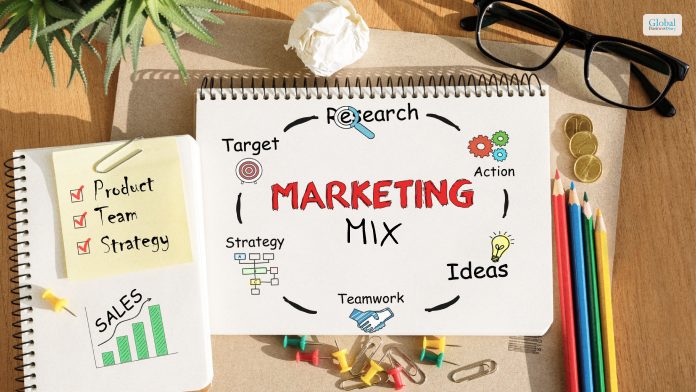
Marketing Mix – What Are The 4 Ps Of Marketing?
Having the best product in the market never helps if the company fails to get the word into the market. Your target customers should have a good idea of what you offer so that the company is able to develop its brand in the marketplace. They must know what you are trying to offer. However, the strength of your marketing mix is the important thing that will enable you to achieve your marketing goals. In this article, you will learn what a marketing mix is, its purpose, and how it works for different companies in different situations. In addition to that, we will also discuss how the marketing mix is performed with the help of the 4P structure, as well as the 7P structure. Finally, we will also discuss some other essential marketing tools. Hence, to find out more about the marketing mix read on through to the end of the article. What Is A Marketing Mix? According to Indeed.com, “A marketing mix includes the tactics and tools you use to market your company’s offerings and influence customers to buy them. The best marketing mix is one that uses up-to-date market research and data-driven strategies to reach customers and drive sales.” In some cases, to develop a marketing mix for your business, you might need to change your current marketing strategy. If your marketing mix is not in a continuous state of flux, you must be doing something wrong with your marketing strategy. You will need to understand that just because something worked for the business to get more customers ten years ago, or even three years ago, might not work at the present time. Hence, you will need to consistently assess your target audience from time to time. Apart from that, you must also evaluate your marketing tools as well as the marketing plan you use for the execution of the marketing process. In a comprehensive marketing plan, there are multiple areas of focus if one takes the marketing mix into consideration. In most cases, a company’s marketing mix is classified into 4Ps - product, placement, price, and promotion. Read More: Market Orientation – What Is It, And How Does It Work? Why Is Marketing Mix Important? According to Investopedia, “At its core, a marketing mix is focused on promoting a product or service to generate revenue for a company. On the whole, it integrates key marketing strategies that create brand awareness, build customer loyalty, and drive product sales.” Rather than running through only one marketing message, effective marketing touches on various broad ranges. This helps the brand to reach a wider audience. Furthermore, with the help of the 4Ps of marketing, it becomes easier for marketing professionals to maintain more focus on the major things that matter. It also gets easier for organizations to make more strategic decisions when they are launching a new product or revising an existing product. What Are The 4Ps Of Marketing Mix? The following are the four P classifications of the marketing mix strategy in business: 1. Product This is the product or service that the business offers to satisfy the needs and demands of customers. To market the product, the company needs to determine what differentiates it from competing products. 2. Price Here, the business needs to find out what the actual price of the product is and what the consumers are willing to pay based on the demands of the product in the market. Marketers also find out the costs based on R&D, manufacturing, marketing, and distribution so as to do cost-based pricing. 3. Placement It is also important for marketers to find out the type of product they are trying to sell to the consumers. They need to determine whether they want to categorize the product in the basic or premium category. 4. Promotion These include the forms of marketing practices the marketers are willing to employ to promote the product in the market. Here, the budget is one of the major factors to consider. In addition to that, marketing professionals also construct a message based on the previous three Ps as they try to reach their target consumers. What Are The 7Ps Of Marketing Mix? (Three More Ps) Here are the three more Ps that are also used in a business’s marketing mix: 5. People People include the employees that are interacting directly with the consumers. In such cases, a business might consider showcasing a positive company culture, which becomes a part of their brand strategy. Many companies also include customer relationship management to increase customer loyalty. 6. Physical Evidence Physical evidence might include the packaging of the product, as well as the structure and layout of the physical store. This is done to create a strong impression on the customers. 7. Process Here, the marketers identify areas from the standpoint of logistics so as to ensure that customers are provided with a seamless experience of the product or service. Other Helpful Marketing Tools According to Investopedia, “Not all marketing is product-focused. Customer service businesses are fundamentally different than those based primarily on physical products, so they often will take a consumer-centric approach that incorporates additional elements to address their unique needs.” In addition to all the seven Ps, marketers also consider some other elements in their marketing strategies. Some of them include furniture, signage, and layout. In addition to that, marketers also study the needs and demands of customers (both present and future possibilities). To do this, they get feedback from customers and define the type of feedback. Read More: Market Cannibalization – Definition, How Does It Work, Example, And More Wrapping Up The marketing mix is one of the most essential requirements for a brand if it wants to successfully promote its products and services in the marketplace. As per the strategy, companies make use of four Ps, namely, product, price, placement, and promotion. The ultimate goal of working with a marketing mix is to generate more sales for the business. In addition to the four Ps, in some cases, three more approaches are integrated, namely, people, process, and physical evidence. This is done to reinforce a marketing strategy that is more centered on customers. Do you have any more information to offer related to the marketing mix? Share your information with us in the comments section below. Read Also: Marketing Campaigns: How To Do It? – Steps To Follow What Is A Venture Capitalist, And What Are Their Functions? Project Management: What Is It? – Major Types, Examples, And More
Sep 15, 2023