





How To Start A Landscaping Business With Less Investment In 2021

You may be wondering about the fact how to start a landscaping business? But the concept of beginning the landscaping business is not that tough as it seems to be. If you want to create a successful landscaping business, you can make your plans in the right direction. There are specific plans that you need to make right as per the situation’s requirement.
You need to make your plans properly to help you achieve your goals in the right direction. Proper planning and the plans’ execution can make you achieve your goals in the right direction and in a correct way.
Different Ways To Start Landscaping Business With Less Investments
There are different ways to start your landscaping business with fewer investments. Let’s explore facts that can help your business grow in the right direction and adequately.
1. Create A Business Plan
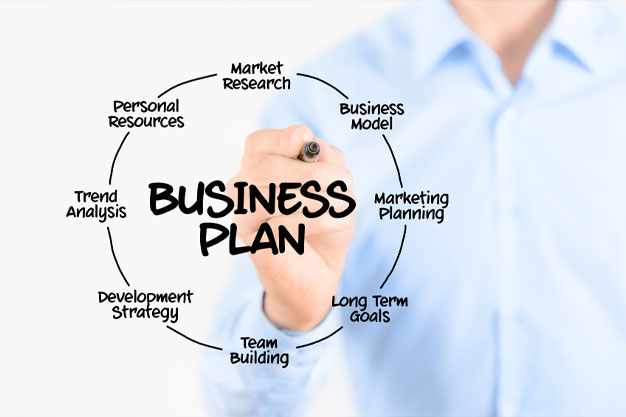
You need to create a proper business plan to help you effectively achieve your goals. An adequate and accurate business plan can help you to achieve your goals effectively. These are some of the projects that can help you to understand how to start a landscaping business?
You need to structure your business plan in such a way that it can help your business to grow in the right direction. Proper planning can help you to the required investment and funding from the banks or any other investors. Your investment plan can help you to achieve your goals appropriately.
2. Apply For Funding 

You can apply for the fundings as the state governments and the governments can provide you the grants for your business if you can show them the right business plan as per the situation’s needs.
You can get the required funds for your business if you can show a well-organized plan to the banks and other investment agencies. How to start a landscaping business? It is no longer a tricky question if you can follow a proper plan for your business. You can reach you to angel investors who can adequately help your business grow in the right direction.
3. Make A Proper 

You must make proper market analyses that can help your business to grow in the right direction at the right time. The more accurate your plans are, the better results you can drive from your company.
Proper Market analysis will help you understand the current market scenario and get an idea of how to start a landscaping business? Ensure that you have made plans to help you achieve your goals in the best way. It will inform you who your competitors are and how you can outshine them effectively.
4. Get Proper Licensing
You cannot start your landscaping business if you do not have the proper license with you. If your project value is more than $30000, you must have the license to do the landscaping business. Without proper paperwork, you cannot start your landscaping business on a large scale. The more vigilant you are, the better results you can derive from it.
You need to pass an examination if you want to get the proper paperwork. Here, you cannot compromise on the facts that can bother you dearly in the future. You will get the license to do the landscaping business if you can pass this examination.
5. Purchase Necessary Equipment

In your landscaping business, you must have all the necessary types of equipment that can help you complete the task on time. It will help you move the earth and handle materials that can help you finish the job quickly.
Some of the essential tools that you must have with you for your landscaping business are as follows:-
- Dump trucks
- Dozers
- Water trucks
- Compactors
- Wheel loaders
- Telehandlers
- Hydraulic Excavators.
- Backhoe Loaders
All these types of equipment are required to start your landscaping business in the right direction. Here, you must make the proper arrangements of the funds to purchase this equipment or tools to start your landscaping business successfully. Now, how to start a landscaping business will no longer be a difficult question to answer from your end.
6. Make Your Branding Perfect

You can take the online platforms to spread your business awareness at a faster pace. You have this option with you to take the right action at the right point in time. Proper implementation of the brand awareness strategy will become successful if your online marketing strategy is accurate.
You must make your plans perfect as they can help your business to grow in the right direction at the right point in time. Proper implementation of the online strategy can help you to achieve your business goals effectively. The more accurate you are in your planning, the better results you can derive from your landscaping business.
Why You Need To Have The License For Landscaping Business
You must have the license to start your landscaping business. It signifies that your business abides by the rules of the land where you want to establish your landscaping business. You must pay the taxes to that country’s government who has provided permission to start your landscaping business in your country.
You must try to make your process as transparent as possible. It will help you to get rid of the legal hassles in the near future. Proper planning here you need to do as per the situation demands from you. The more active you are in this matter, the fewer hassles you will have to bear in the long run.
Conclusion
Hence, if you want to know how to start a landscaping business, this article of mine will be of great help to you. I have discussed all the crucial matters that are essential for you to know about the landscaping business.
It will help you to make the correct decision at the right point in time. You must implement these plans in the correct order to get critical success for your business. The more accurate your plan will be the better benefits you can derive from your business.
Read Also:

Recent
Dinmukhamet Idrisov and a Gold-Mine Dispute From Kazakhstan’s Oligarchic Past
Oct 16, 2026

Memory Chips Are Becoming More Important in the AI Era
Aug 06, 2026

Why Enterprise Web Applications Still Choose Angular for Long-Term Growth
Aug 04, 2026

Due Diligence Decoded: Why Careful Evaluation Still Wins in Business
Jul 11, 2026

Related Articles

2-1 Buydown: Essential Things To Know About It
A 2-1 buydown is a type of mortgage financing arrangement that involves temporarily reducing the interest rate on a mortgage loan. This is especially true for the first few years of term loans. This reduction in interest rate is achieved by "buying down" the interest rate with upfront payments or points. You must develop and generate a clear idea about this concept. Without knowing the calculation process, things can turn worse for you in all possible manner. Try out the perfect solution that can make things work perfectly well in your favor. Without proper planning, things can turn worse for you. Try out the best solution that can make things easier and effective for you in the process of your calculation. How 2-1 Buydown Works? There are several ways 2-1 buydown works. You need to know the ways that can make your process of working easier in this process. Some of the effective ways are as follows:- 1. Initial Interest Rate At the start of the mortgage, the borrower is offered a reduced interest rate for the first year. This interest rate is typically 2 percentage points (2%) lower than the fully indexed interest rate. For example, if the fully indexed interest rate is 5%, the initial interest rate under the 2-1 buydown would be 3%. Distribution channels will help you in achieving your goals with ease. 2. Gradual Reduction Over the subsequent years, the interest rate gradually increases. In the second year, the rate is increased by 1 percentage point (1%). So, using the example above, the interest rate in the second year would be 4%. In the third year and beyond, the interest rate typically returns to the fully indexed rate, in this case, 5%. 3. Stable Longterm Rate The borrower or the seller may pay a lump sum upfront to fund the buydown. This upfront payment is used to compensate the lender for offering the reduced initial interest rate. The payment can be in the form of discount points, which are prepaid interest paid at closing. Strategy Consultant can make things easier for you. What Is The Function Of 2-1 Buy Calculator? There are several ways that you can adapt to buy a 2-1 buy calculator while attaining your requirements with complete ease. Some of the core functions of the 2-1 buy calculator are as follows:- Making proper payment calculations. Developing the amortization schedule. Making total cost comparison. Effective budgeting and planning is possible with amortization. The decision-making process will become easier for you in the long run. 2-1 buydown calculator serves as a valuable tool for borrowers considering a mortgage with a buydown arrangement. It enables you to assess the financial impact of lower initial payments followed by gradually increasing payments. Strategy consulting can make your job easier using this tool. By providing detailed payment schedules and cost comparisons, it assists borrowers in making informed decisions about their mortgage financing. Benefits Of 2-1 Buydown Application There are several benefits of the 2-1 Buydown application. It can help you to meet your requirements as per your needs. You should try out the best options that can make your life easier by following this process. Benefits For Borrowers There are several benefits for the borrowers when you make the application of the 2-1 Buydown application in your business. Some of the core factors to know here are as follows:- 1. Lower Initial Payments The primary benefit for borrowers is that a 2-1 buydown temporarily reduces their initial monthly mortgage payments. This can make homeownership more affordable in the early years of the loan when money may be tight. Especially when purchasing a new home. Investopedia states the same thing. 2. Financial Flexibility Lower initial payments can provide borrowers with greater financial flexibility. It can free up funds for other essential expenses or savings, allowing them to better manage their finances during the initial years of homeownership. 3. Budgeting Ease Predictable monthly payments make budgeting more straightforward. Borrowers can plan their finances with confidence, knowing that their payments will increase gradually over time. 4. Qualification Assistance Some borrowers may find it easier to qualify for a mortgage. With a 2-1 buydown, the initial lower payments can reduce the debt-to-income ratio, making the loan more accessible. 5. Future Income Growth A 2-1 buydown is often beneficial for borrowers who expect their income to increase over time. As their financial situation improves, they can better absorb the gradually increasing payments when the buydown period ends. Benefits For Lenders Along with the borrowers, lenders also help your business to get things done on time. You need to get the perfect solution that can make things work perfectly well for you. Some of the key benefits to the lenders are as follows:- 1. Attracting Borrowers Lenders can use 2-1 buydowns as a marketing tool to attract more borrowers. Lower initial payments can make homeownership more appealing, potentially increasing demand for mortgage loans. 2. Reduced Risk Lenders may view 2-1 buydowns as a way to mitigate risk. Lower initial payments can make it easier for borrowers to meet their financial obligations, reducing the risk of delinquency. Foreclosure during the critical early years of the loan. 3. Competitive Advantage Offering 2-1 buydown programs can give lenders a competitive advantage in the mortgage market. Borrowers may be more inclined to choose a lender that provides such financing options. 4. Customer Retention Lenders that offer 2-1 buydowns may retain customers over the long term. Borrowers who benefit from lower initial payments and have a positive experience with their lender may be more likely to stay with that lender for future financial needs. Final Take Away Hence, a 2-1 buy-down can offer you the complete solution to your problems with complete ease. You need to follow the process that can make things easier and effective for you in all possible manner. You can share your views with us in the comment box. It will help us to know your take on this matter. Plan out the perfect solution that can make things easier for you to reach your goals with clarity. Keep in mind that this is a simplified explanation, and mortgage calculations can be more complex, especially when taxes, insurance, and other factors are included. To save time and get accurate results, you can use online 2-1 buydown calculators, which are readily available on various financial websites and mortgage calculators. Need More Business Related News Click Below!! What Is Strategy Consulting? – Career, Importance, And Scope How To Become A Strategy Consultant? Roles & Responsibilities What Is Wholesale Distribution? – Importance, Benefits, And Examples
Nov 23, 2023

How To Get Money Using Fundrise? Is It Legit To Use? App Review In 2023
You don't have to be filthy rich to be able to invest in real estate trusts. Now, you, too can buy into real estate private commercial and residential properties, thanks to Fundrise. Average investors can now buy into private real estate investment trusts that are tailored to different financial goals and investment strategies. These places offer access to non-publicly traded fund assets which poses some extra risks when it comes to investing in the real estate industry. But there are ways to generate some profit by adding real estate investment to your portfolio. You can easily do so by using Fundrise. Before you use Fundrise, give this review a quick read and know if it is any good for you. About Fundrise Fundrise is a real estate company online that allows average investors to buy into real estate properties (private, commercial, and residential). Investors can buy into a real estate property by pooling the assets using an investment platform. However, the real products of Fundrise are real estate investment trusts. The real assets of Fundrise are REITs that generate income through the purchase and management of properties or through holding them. These assets are usually addressed as eREITs by the company. Fundrise offers eFunds. The company offers eFunds to pool money from investors and use them to develop housing and buy lands before selling them for a profit. Investors can also go for Flagship Funds, which are high-liquidity funds with lots of room for diversification. The latest addition to the offerings of the Fundrise platform is the “Innovation Fund.” it only focuses on shares of tech companies held privately. How Fundrise Operates? Investors can purchase their shares on Fundrise through one of the different strategies offered by them. Here is how an investor can generate profit from one of the strategies of the company – Fixed Income: This strategy allows investors to make modest income with lower risk through real estate loans. Core Plus: this strategy offers a higher amount of income and modest growth through property investments. Value Add: value add investment allows investors to earn by investing in properties that require renovations. Opportunistic: this type of investment is all about investing in projects with the high-potential returns. Such investments also pose a greater risk as well. Fundrise functions by determining the mix of eREITs and eFunds in each of the investment strategies and the properties underlying those investment strategies. It also offers Premium and Advanced levels of accounts. Once you choose your preferred investment strategy, they will manage your fund and include properties in your portfolio based on your investment objectives. Fundrise Features Before investing, Fundrise investors need to know about the different features that this platform has for investors. Investment Available For Non Accredited Investors Many online real estate platforms are exclusive to US citizens with a net worth of 1 million dollars (excluding the value of their home) or an annual income of $200,000.But, Fundrise makes its assets available to nonaccredited investors. Low Investment Minimums Thanks to Fundrise, investors can get into real estate investment even without a lots of money in their bank account. You don't have to pay a hefty amount of money to invest in real estate properties. Ease Of Use You do not need pro-level investment skills or tech savvy to get started with Fundrise. It only takes a few minutes to set up your account (excluding the time you need to read the investor disclosure). When signing up, you have to provide your Phone Number, Address, and Social Security number. After that, you have to choose the mode of depositing funds into your account. You can choose from ACH transfer, wire transfer, or by filling out your bank information. Redemptions New investors love this feature of Fundrise. The platform allows investors to sell their funds back to Fundrise. However, when doing so, investors have to pay one percent of fees back to the fund if they have not held their shares for a minimum of five years. Interval Funds If Fundrise investors need a more liquid investment opportunity, they may look for interval funds. It offers improved access to the investment fund of the investors in the type of quarterly repurchase offers. So, when you liquidate your interval funds quarterly, you don't have to pay any penalties like eREITs and eFUNDs. It is also capable of holding more assets with a higher possibility of diversification. Fundrise Pros & Cons There are both pros and cons to investing in Fundrise. You may go through the ones mentioned below – Pros The platform finds, manages, and buys real estate properties on behalf of the investors. The minimum investment required for Fundrise is very low. It operates and invests your balance automatically based on your investment objective. Offers high liquidity to investors. These investments have a high potential to generate massive returns and income. Investors can easily use this platform. Cons The platform requires 1% in annual fees every year. Larger balances don't enjoy any additional discounted fees. Liquidity for private REITs is much less compared to publicly-traded REITs. When facing any market downturns, the platform might limit withdrawal which is often frustrating for investors. For some funds, you have to pay some penalty when you withdraw your fund within five years of your investment. They don't have the best customer support suited for a platform of this stature. Is Fundrise For You? Whether Fundrise is for you or not depends on the type of investor, you are. If you are more of a conventional investor investing in large real estate properties, then Fundrise is not the platform you should choose. However, if you want to invest in real estate properties without having to buy a property for a hefty amount, then Fundrise is the right place for you to invest in. Also, if you are using this platform, you should at least have a long-term goal (a minimum of five years. There are some penalties in some types of investments, but some of the funds offer early redemptions free of any penalty. So, if you are looking for an investment smaller in scale but with the potential of high return in the REITs, you can choose to invest in Fundrise. Have A Look :- How to Choose the Right Federal Law Firm for Your Legal Needs Money Tap Loan App: Information, Eligibility Criteria, Interest Rates, Review & More KreditBee Loan App: Information, Eligibility Criteria, Interest Rates, Review & More
Mar 25, 2023

The Benefits Of Migrating From Monolithic To Composable Ecommerce
The world of eCommerce is constantly changing, and businesses everywhere are looking for ways to stay ahead of the curve. One of the newest trends in the industry is migrating from monolithic to composable eCommerce. This move is beneficial to businesses of all sizes, as it allows them to optimize their current structure and create a more efficient process for their customers. The composable approach allows for the construction of smaller, more focused eCommerce solutions that are tailored to each business’s specific needs. Additionally, businesses can use composable eCommerce to create a unified customer experience across all of their channels. With a composable approach, businesses can reduce costs, increase agility, and streamline their processes, all while delivering a better customer experience. All of these benefits make migrating from monolithic to composable eCommerce an attractive option for businesses looking to stay ahead of the competition. What is monolithic eCommerce? According to the dictionary, the term "monolith" describes a large mass of stone. Similarly, a monolithic application is constructed from one piece or block, functioning as an integrated and undivided unit. This form of an app is characterized by a single, tightly-knit codebase and a single database. This is a widely-used traditional method for developing applications, but it has the potential to create major issues over time, potentially leading to unmanageability. The illustration below shows the components of this architecture: a user interface on the client side, an application on the server side, and a database. All of these components work together as a single unit, so any changes to the codebase necessitate an update of the entire application. So, monolithic eCommerce refers to an eCommerce solution that’s built on a single platform. Such platforms include Shopify, Amazon, or other known shopping cart systems. In some cases, an eCommerce solution is built on a single platform — without the help of a third-party vendor. The drawbacks of monolithic programs include a lack of scalability, resulting from the fact that the entirety of the application needs to be scaled instead of individual components. Furthermore, this type of software has reliability issues, since any minor problem could cause the whole system to crash. Additionally, the components of the application are closely intertwined, making it difficult to introduce modifications. This lack of flexibility restricts users to a single technology and makes it expensive and time-consuming to rewrite the application. As the program becomes more extensive, the structure becomes increasingly complex and hard to comprehend. What is composable eCommerce? Instead of having a single, rigid structure, microservices architecture splits applications into multiple, independent components and decomposes the program into its essential parts - each part is known as a service. Each job is handled by these components as a standalone service and each is self-contained; this implies that if one service fails, it won't affect the other services. In simpler terms, the application is created as a collection of services, where each service has its own logic, database, and capacity to perform specialized tasks. Composable eCommerce is the transition from a monolithic system to a composable one. It’s a gradual move from a single system to a composite one. In this way, the organization reduces costs and increases agility by using a headless front end (FEaaS) to support all of the best-of-breed integrations such as the commerce platform (backend), payment channels, content management, and any other 3rd party tools it needs. Benefits of migrating from monolithic to composable eCommerce Monolithic eCommerce, on the other hand, can offer all of these benefits, but can also come with limitations. For example, monolithic eCommerce allows for scalability, but these benefits must be carefully managed. Likewise, a single platform can increase agility and reduce costs, but these benefits must be managed as well. Composable eCommerce, on the other hand, offers all of these benefits, but can also come with fewer limitations. 1. Cost savings As monolithic eCommerce systems become more complex, they tend to become more expensive. However, when transitioning to composable eCommerce, businesses can use a variety of applications. This allows them to reduce costs by using an inexpensive platform. Plus, composable eCommerce platforms tend to be much less expensive than monolithic eCommerce platforms. Another way for businesses to save money with composable eCommerce is to use a lower-cost alternative to the underlying technology. For example, using an open-source shopping cart or an inexpensive cloud computing service can help businesses save money. 2. Improved customer experience Monolithic eCommerce systems can often feel outdated, and they can also feel slow. This can lead to a poor customer experience as customers might be forced to wait longer than they’d like. The combination of a complex system and a slow customer experience can lead to unhappy customers. As businesses migrate to composable eCommerce, they begin using various best-in-its-class applications. This allows them to improve their customer experience by providing a clear path for customers. Moreover, businesses can also optimize their workflow by using a different platform for each stage of their customer experience. 3. Increased agility Monolithic eCommerce systems often have many processes that have been in place for years. These processes can make it difficult for businesses to react quickly to changes in the market and/or customer needs. As businesses migrate to composable eCommerce, they begin with a single platform. This allows them to improve their agility by using this platform to support a variety of processes. For example, businesses can use a separate platform for marketing campaigns so that they can provide campaigns that are relevant to the customers’ needs. 4. Streamlined processes Monolithic eCommerce systems can often feel like a maze. As a result, it can be difficult for businesses to easily track and manage how their processes are unfolding. As businesses migrate to composable eCommerce, they begin with a single platform (frontend or backend) and add other applications via APIs. This platform is then used to support various business processes. This allows businesses to streamline their processes by using a single platform with an API layer. For example, businesses can plug in a platform for order management so that they can quickly track orders and manage orders. Wrapping up Monoliths can be beneficial when you have a small team and a basic application; however, they can't meet the needs of a growing business. Meanwhile, microservices are more suitable for complex, changing applications that need to be frequently and quickly released and are especially beneficial when the existing architecture is unmanageable. It all comes down to the specific requirements of your business and the skills of your team. If you opt for microservices, it is crucial to use a feature management tool to follow the flags in your system and how the features are performing. Read Also: Speed Up Your Funding: A Quick Guide To Business Loans How To Get A Mortgage As A Small Business Owner The Resources You Need To Start Your Business
Feb 16, 2023
Vertical vs Horizontal Integration: What Are The Key Differences?
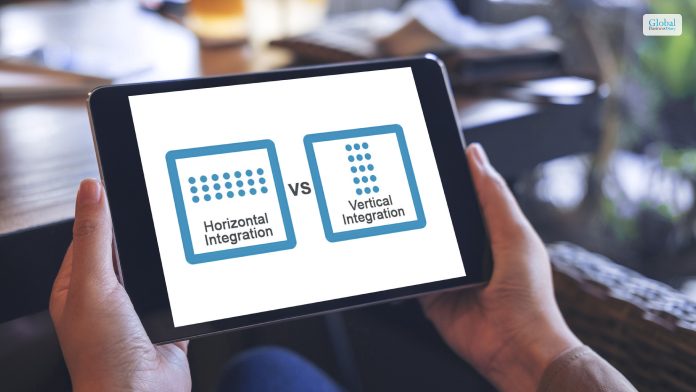
Growth and expansion are the fundamental aspects of any business. It is a universal truth, and you cannot negate it from your standpoint. You cannot sway away the reality from your endpoints. Vertical vs Horizontal integration is a business model that most businesses adopt. Horizontal integration is when a business acquires the same line of business at the same level of the value chain. It eliminates the competition to a greater extent. On the other hand, vertical integration includes ruling over the entire industry by covering the supply chain. It all depends on the organization and which form of integration they would like to adopt. You need to identify the key factors of each process that can help you to make your decision wisely. Key Differences Between Vertical Vs Horizontal Integration There are several points of difference between vertical vs horizontal integration you cannot negate these points from your end. Basis Of ComparisionHorizontal IntegrationVertical IntegrationConcept When two firms mix with each other due to their same product lines and products, it is horizontal integration. Vertical integration is that stage of an organization when one company acquires another company staying at the same stage or path. Objective Enhancing and increasing the size of the business. Developing the supply chain of the company. Consequence Your company gains maximum market share by eliminating the competition. Reduction of the wastage and cost. Capital Requirement The requirement of capital here is higher. The requirement of capital here is lower. Self Sufficiency No, it is not a self-sufficient approach. Yes!! It is a self-sufficient approach. Strategy Used To Control Market analysis Industry requirements After getting the tabular format of differences between the two concepts, let’s get the core insights of it as well. 1. Meaning Horizontal integration takes place when two firms combine with each other when their products and production levels are the same. In the case of vertical integration, the objective is to acquire the shares of the other company. You need to go through the meaning of the two integration processes to make the application in your organization. Once you follow the process, things will become easier for you. 2. Objective Horizontal integration aims to increase the size of your business. On the other hand, vertical integration aims at smoothening and strengthening the production process. You need to be well aware of the objectives of vertical vs horizontal integration. You cannot make your choices all of a sudden. Read the objectives behind it for your organizational development. 3. Consequences Horizontal communication eliminates the chances of competition. In other words, it wipes out the competition from the market. On the other hand, Vertical integration lowers the wastage and cost of production. You can use horizontal integration to improve your brand presence in the market. Again in the case of vertical integration, you can use it to reduce the wastage in your production and distribution process. 4. Capital Requirement The capital requirement in the case of horizontal integration is high compared to vertical integration. You cannot negate the investment part in the process of your brand development. The marginal cost will be less. You need to have enough capital with you to initiate the process of horizontal integration. On the other hand, in the case of vertical integration, minimum capital is enough to initiate the process with ease. 5. Self Sufficiency The chances of self-sufficiency in the case of horizontal integration are not there, whereas in the case of vertical integration, the chances of self-sufficiency are present. You need to get through the two integration processes to make your final business decisions. If you want to do business independently, then horizontal integration can be a loss for you. On the other hand, Vertical integration can be a great option for you if you like to do independent business. As per the experts, self sufficiency is important. 6. Controlling Factor Vertical integration can assist you in gaining control over the whole industry. You can gain control over the entire market with the help of horizontal integration. The chances of growth in the case of vertical integration are higher compared to horizontal integration. Vertical vs horizontal integration can make your journey easier in the process of controlling the business. You cannot make things happen all of a sudden. What Is Vertical Integration? Vertical integration is that stage of an organization when one company acquires another company staying at the same stage or path. Vertical integration occurs when a company expands its operations by acquiring or merging with businesses along its supply chain or distribution channels. You need to consider the inventory turnover ratio. Advantages Of Vertical Integration There are several advantages of vertical integration that you must know at your end. Some of the key core benefits of it are as follows:- Vertical integration can help you to achieve cost efficiency. It can help in bulk purchases and reduce the cost of transactions. Distribution cost is reduced as it cuts off the requirements of the middleman in the process of integration. Your organization's products can meet the desired quality level if you make the application of vertical integration. Price fluctuations of the suppliers can be reduced greatly due to the presence of vertical integration. Synergies between different stages of production and distribution can lead to increased overall efficiency. Your network marketing can grow due to this integration. Backward Vertical Integration In backward integration, a company acquires businesses that supply it with essential raw materials, components, or services. This allows the company to have more control over its supply chain, reduce costs, and ensure a stable supply of inputs. For example, an automobile manufacturer acquires a steel company to secure its source of steel. End Of The Integration Process Hence, from the mentioned discussion, I think the differences between vertical vs horizontal integration are clear to you. You need to understand the process that can make things easier and more effective for you in the long run. You can share your views and opinions with us in this regard. It will help us to know your take in this regard. Try to convey your feedback to us from time to time. Read Also: What Is A Holding Company? – Importance, Operation, And Pros & Cons What Is Net Operating Income? How To Calculate NOI? What Is The Leverage Ratio And How to Calculate It?
Oct 06, 2023