


Smarter Packaging: Protecting Your Food, Health, and the Planet

Every week (as if like a clockwork), perfectly good food gets into the trash. These include soft bananas, wilted spinach, and that pasta from Tuesday night. They were still edible and safe for consumption. However, somehow they did not, and they ended up in waste.
Although it seems like a small inconvenience, it is actually annoying. In fact, these are expensive and wasteful mistakes. Moreover, it is somewhat heartbreaking when you think about it. Hence, the fix might be simpler than we think. The answer is packaging that is not showy and flashy but functional.
The Real Cost of Spoilage
Food waste is not just a personal issue. Rather, it is a global one. For instance, food waste costs $1 trillion globally. Most of it happens in homes, and not in factories and farms.
Moreover, it is not just the food. It is the water that is used to grow it, the fuel to ship it, and the energy to keep it cold. Hence, these are all wasted when the food ends up in the bin.
In addition to that, that food produces methane. In fact, rotting food in landfills pumps out methane. It is way worse than CO₂. Hence, tossing leftovers is not harmless but a climate requirement, too.
Why Does Food Go Bad Faster Than It Should?
This happens because of either contamination or moisture. However, they are deadly to your groceries.
In general, contamination happens due to bad handling or bad storage. Sometimes, the raw meat is too close to the vegetables. It might also happen due to unwashed hands and dirty containers. This is how bacteria start infesting.
Meanwhile, moisture is quieter but just as brutal. It happens when fridges are humid. Also, weak packaging traps the dampness. This way, mold moves in and breakdown starts.
Packaging That Actually Helps
Packaging is not just about convenience anymore. Rather, it is protection. In fact, some suppliers are stepping up. For instance, plastic packaging solutions come up with containers that resist moisture. Also, these come with ventilated designs, durable builds, and polypropylene corrugated boxes. Hence, these are surprisingly effective for produce and dry goods.
Reusable containers help, too. These lead to less plastic waste and longer shelf life. Hence, it is a win-win.
It is Not Just About Waste But About Safety
At the outset, spoiled food is not merely gross. It is also dangerous. In fact, foodborne illnesses cost billions. However, they are preventable. Basically, the symptoms range from mild illnesses to ER visits.
Meanwhile, kids and seniors are immunocompromised. They are the most vulnerable when it comes to foodborne illnesses. Hence, protective packaging is not optional. Invest in them now to safeguard your home.
Essential Ways to Cut Down on Spoilage
Obviously, you do not need to be an eco-warrior at the start. However, you might start by tweaking a few habits:
- Be picky at the store. Look for breathable, protective packaging, especially for fresh items.
- Upgrade your storage. In this case, airtight and reusable containers are worth it.
- Control fridge humidity. Liners and breathable bags help.
- Stay clean. Always wash hands, surfaces, and containers. Do not compromise in this case.
- Always buy less. Buy in smaller portions and use what you have got.
Small Changes, Big Impact
You do not have to be perfect to reduce food wastage. Rather, you need to take small steps to progress. Hence, choose better packaging and smarter storage. They will add up to save your money. Also, it will contribute to fewer sick days and a planet that breathes a little easier.
Moreover, every meal you save is a win. Hence, every container that keeps food fresh is a step forward. Those small changes are really powerful.

Read Also:
Tags:

Recent
Understanding the Dynamics of the Global Beef Trade
Mar 26, 2026

What Do the 2026 SALT, Senior Bonus, and Standard Deduction Changes Mean for Your Taxes?
Mar 24, 2026

Corporate Software Inspector: The Simple Way to Keep Your Company Safe
Mar 02, 2026

Why Business Intelligence Exercises Are Important for Effective Data Analysis
Feb 22, 2026

Related Articles

A Brief Guide To Business Integrated Planning
First, let’s begin by stating the definition of integrated business planning (IBP). While used across vast industries, it also can’t be denied that it’s not exactly the most popular term in the business sector. To set it straight this early on, IBP is an enhanced form of Sales & Operations Planning (S&OP) that includes the entire value chain of the business that uses it. The whole premise of IBP is that it ties together profit-related and strategic business objectives with short and mid-term operational planning decisions through a cross-functional scenario analysis. Despite its importance, so many businesses still struggle to get started with IBP. Likewise, once they’ve created it, the struggle may not end there since they may find it challenging to integrate it into their entire operations. To further convince you that it’s definitely worth giving business integrated planning (IBP) a second look. Here’s a brief guide to help you get started as you enrich your knowledge with more information and realize that it’s ideal and feasible for your business. What business Integrated Planning (IBP) Does Compared to S&OP, business integrated planning has various advantages. To begin, one of its most significant benefits is that it assists in aligning all of an organization's different divisions and activities toward a common purpose. This results in 'soft' benefits such as increased trust and confidence. Companies using IBP in their system can expect the following benefits: 1. It Supports Business’ Long-Term Strategy S&OP methods are most commonly used to support medium-term planning strategies with a maximum period of 18 months. IBP, on the other hand, operates for a longer time to coincide with long-term strategic planning. This includes budgetary planning, as information is entirely compatible with budgets. 2. It Increases Visibility The term ‘visibility’ refers to supply chain and strategic plan projections. Cross-departmental visibility will improve, allowing those projections and plans to be consolidated into a single corporate strategy, both on your own and with the help of professionals such as a business development consultant. This has the additional advantage of potentially generating better and more robust financial ventures. 3. It Measures Performance In Financial Terms IBP can evaluate financial performance goals and achievements, mainly when they're applied from a financial standpoint. This proves to be a significant advantage for firms because it allows them to track their financial objectives. Keep in mind that when your business has that information, effective business management can now be within reach. 4. It Consistently Delivers Outstanding Results IBP leaders have consistently shown timely and well-delivered outstanding results. This brings in improvements in both the bottom-line and top-line customer service of a company. 5. It Fosters Better Supply & Planning Decisions Supply chain planning is one of the most critical components that firms must understand. Poor supply chain planning can have disastrous consequences, affecting corporate operations. You can't meet client requests if you don't have enough supplies at any particular time. Not only will you lose economic potential, but you'll also lose consumer satisfaction. On the other hand, if the supply is overabundant, there will be a lot of waste and surplus storage. This can cause unduly high warehouse operating expenses. Additionally, if you’re finding it challenging to have optimal supply chain operations, that’s when IBP will come in handy. The information it carries can help support supply chain planning. Now, it’s possible to identify decisions that can improve the bottom line, influencing supply chain planning while enhancing profits. 6. It Improves Accountability Throughout The Organization Accountability means that you can immediately identify failure to deliver and unsatisfactory performance. That way, they may be addressed before the problems worsen. Better accountability is a natural result when each department has a better knowledge of its plans and responsibilities. What Are The Basic Elements Of Business Integrated Planning IBP's ability to integrate its finances with its business operations is critical. Other fundamental requirements, on the other hand, are as follows: 1. Marketing & Sales Strategy This is what closes the loop with strategic planning and market research. The sales strategy can be considered successful when the products and services are sold at the expected level. 2. Demand Forecasting & Predictive Analysis This refers to the use of qualitative methodology, which is regularly checked against the actual sales results. 3. Market Research & Strategic Planning With this, all documents needed to develop the research and planning methods are available to all employees who need them. Moreover, goal-setting and strategy processes are also well-achieved, without any exceptions. 4. Profitability Analysis The profitability of a business is shaped by specific financial metrics identified as the cost of goods sold (COGS), net and operating profit margin, and the business’ cash flow. Furthermore, a more accurate profitability analysis can be achieved when all this information is adequately identified. What Are The Common Pitfalls A discussion on business integrated planning can’t be complete without discussing the pitfalls and risks when applying it to your business. In addition, awareness of those risks can give you an idea of what needs to be avoided for your IBP efforts and pursuit to be successful. To start, here are some of the common risks related to business integrated planning: A lack of commitment comes from the departments responsible.A thorough understanding of what the trade-offs may be lacking.Targets and forecasts can be mixed.Decisions and plans may be too granular.Information may not be readily available as you expected it to be. Final Thoughts Business integrated planning may be highly technical, but it’s not hard to master, especially when you make it a clear-cut goal to learn and adapt for your business. In essence, it combines classic planning, cloud-based solutions, and modern machine-learning heuristics to make better predictive functions. If you’re keen on applying IBP in your business, it would be best to consult the experts to guide you through the right process. When you have an expert team working to implement this, you can be sure how IBP can benefit your business and yield exemplary results in the long run. Read Also: How To Build An Ecommerce Website To Boost Your BusinessBoxed Packaged Goods: The Right Guide To Uplift Your BusinessHow To Start A Concession Stand Business? – A Complete Guide
Jun 20, 2022
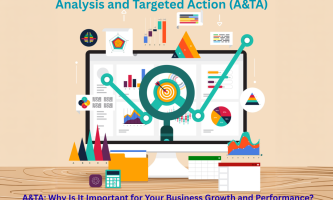
A&TA: Why Is It Important for Your Business Growth and Performance?
With changing times, the business world is getting faster. That is why many companies are looking for ways to improve their performance. This way, they are working toward sustainable growth. Hence, many of them are turning toward Analysis and Targeted Action (A&TA). At the outset, A&TA is a strategic approach that includes combining data-based insights and efficient execution. So, whether you have a small startup or a large business, you will be able to make the most of A&TA. This will help you make major differences in your business outcomes. That is why it is important to learn the basics of A&TA. Therefore, read on to get a better idea of A&TA. Also, you will learn how to implement this approach in your business for better outcomes. What Is A&TA? A&TA stands for Analysis and Targeted Action. The following are the two parts of A&TA: 1. Analysis This stage includes collecting and studying your business data. The following are some examples of business data: Sales numbers Customer feedback Market trends Employee performance, and more. Basically, the goal is to understand what is working for your business. Also, you will get a better idea of what is not working. Moreover, you will also learn about the major opportunities that your business can make the most of. 2. Targeted Action After data analysis, you have small and focused steps to improve your business processes. However, these steps are not random. Rather, you plan and execute as per your insights. In this case, you might get through analysis that your customers have complaints regarding delivery times. Hence, you will be able to take action to streamline your logistics processes. Therefore, A&TA is a process through which you make better decisions. Based on those decisions, you act effectively. Ways Through Which A&TA Helps You Make Better Decisions Primarily, a lot of businesses work with data. However, not many businesses know how to utilize data properly. This is where A&TA is important. In fact, you do not have to go through multiple spreadsheets and reports. Rather, A&TA enables you to turn your information into simple and actionable steps. For instance, you might own a business. A situation might occur where your sales are dropping due to an unknown reason. Hence, with analysis, you find out that some products are problematic. Hence, by analyzing, you determine what action to take. Therefore, with a simple change, you will be able to improve your sales and customer satisfaction. Actually, the best thing about this approach is that it works well across industries. That is why your job is to focus on the right data. This way, you will be able to act properly. How A&TA Boosts Business Performance? The following are the ways through which A&TA improves different processes of your business: 1. You Make Better Decisions As you work with A&TA, you make decisions based on facts and not guesswork. In this case, you know about the following factors: What are your customers asking for? How is your team performing? Where is your money going? Hence, with this clarity, you will be able to make better choices. This way, you will get better results for your business. 2. You Will Have More Efficiency Targeted actions eliminate waste. Rather than trying different approaches, focus on what the data shows you. This way, you will be able to save your valuable time and money. 3. Your Customer Experience Will Be Better You will be able to serve your customers better after you get a better idea of their pain points and demands. With A&TA, you will be able to identify what works better for your customers. This way, you will be able to tailor your services better. 4. Your Team’s Performance Will Improve With analysis, you will get to know the performance of different departments in your organization. Hence, focus on the following targeted actions: Training Restructuring New tools and more. 5. You Will Have a Competitive Advantage If you start making the most of A&TA, you will benefit from a competitive advantage. In fact, you will be able to adapt faster and respond to market changes. Moreover, you will innovate faster than competitors who do not rely on analysis. Essential Steps to Perform A&TA The following are the major steps you must follow if you want to start utilizing A&TA for your business: 1. Collect Essential Data In this case, start with the data that you already have. Basically, choose data that aligns with your goals. The following are some examples: Sales records Customer reviews Employee feedback Website analytics 2. Analyze the Data In this case, check patterns, trends, and problems. This way, you will be able to determine what is working well for your business. Moreover, you will also find out what is holding your business back from its ultimate potential. Essentially, you might start utilizing various tools available online. 3. Determine Your Targeted Actions As per your analysis, determine what changes you want to make.. Be specific. For instance, do not say “Improve marketing!” Rather, start saying things like “Post three times a week on Instagram…” 4. Start Implementing At the outset, you have to put your plan into action. Then, keep track of results. This way, you will find out whether your sales went up or not. Also, you will find out whether your customers are happier or not. Hence, depending on your findings, you will be able to adjust your processes. This cycle — analyze, act, monitor — keeps your business moving forward. Common Mistakes to Avoid with A&TA While A&TA is powerful, it’s important to use it wisely. The following are some of the major mistakes you must avoid while working with A&TA: Ignoring the data: Do not forget information after collecting it. Rather, utilize them to make better decisions. Taking vague actions: Do not take actions like “Working harder!” Instead, focus on targeted actions. Basically, you have to be particular and measurable. Not following up: If you make changes, try to measure their impact. In those cases, if things do not improve, analyze and repeat the process. Overcomplicating the process: Always try to keep things simple. Basically, you have to focus on one issue at a time. This way, you will be able to build accordingly. Frequently Asked Questions (FAQs) The following are some of the most common questions you will come across regarding A&TA: 1. What does A&TA stand for? A&TA means Analysis and Targeted Action. Primarily, it is a strategy that works with data to guide particular business improvements. 2. Why is A&TA important for business growth? A&TA helps businesses with the following aspects:1. Make smarter decisions2. Improve efficiency3. Respond quickly to customer requirements.4. Deal with market changes. 3. Can small businesses use A&TA? Absolutely. A&TA works for businesses of all sizes. Even basic data like customer feedback or sales trends might lead to powerful actions. 4. How do I start using A&TA? Begin by collecting relevant data, analyzing it for patterns, and then taking focused actions based on what you learn. 5. What are common mistakes in applying A&TA? Avoid vague actions, ignoring data, or failing to track results. A&TA works best when it's specific, consistent, and monitored over time. A&TA is Important for Every Business! In a world full of competition and constant change, businesses can’t afford to rely on guesswork. A&TA provides a clear path to growth by combining insight with action. It helps you understand your business better, serve your customers more effectively, and make decisions that lead to real results. Whether you’re launching a new product, expanding to a new market, or just trying to improve daily operations, A&TA gives you the tools to succeed. Read Also: How Does A Consumer Know Whether A Purchase May Be A Good Deal? Embracing Business Automation: 8 Practices For A Smooth Transition Business Continuity Plan – What Is It, And How Does It Work? Why Business Continuity Planning Is Essential For Your Company? What Is Risk Management? – Find Out How To Manage Risks in Business The Best Risk Mitigation Techniques For Your Business
Nov 19, 2025

How Do Commercial Printing Provide Any Business With Increased Awareness?
Having a professional appearance is a great way for any business to have an advantage over its competitors, often through brand awareness. It builds confidence among its client base, who are likely to recognize products and return to make purchases, leading to profit being made. Importance Of Using Professionally Printed Products There are several ways to ensure that a company is being seen, with a robust marketing strategy being one. While a digital presence can certainly play a part, commercial printing in Eagan, MN (available in a city near you), can include everything from storefront printing to popular products that offer a visual reminder to those who receive them. While many of the younger generations enjoy gleaning their information through mobile devices, there are many who enjoy print forms. Having a book or catalog listing products provides a permanent source of reference that many, wherever it is placed, might pick up and enjoy at their own convenience. The same applies to brochures, which can publicize the latest offers or upcoming events and be handed out as a promotion to those passing by the premises on foot. Having them produced professionally provides an instant impression. How Do Professionally Printed Products Help? A consistent professional image of any organization can be created when they have stationary produced, whether it be letterheads or envelopes. Receiving a business card from a representative is far more personal than giving someone a call to exchange numbers, as it acts as a permanent reminder of who it is and who it belongs to, rather than another meaningless contact details that will be erased from a phone. Owners may also wish to consider essential aspects that any small business needs. Rather than sending an email with an attachment that will be scanned over or not even opened, handing over printed documents with financial statements or annual reports is far more likely to receive attention and be looked at several times so that the information provided is taken in. Communication is vital for shareholders to feel truly valued, and corporate documents are a way of ensuring that they are. Maybe there is a local fare in the calendar with the potential to engage with many new customers. Having flyers to hand over to them while they are passing, or even postcards for youngsters, will grab their attention. It might be to inform them of limited offers that are available, which will give any campaign a boost, or perhaps to announce an upcoming special event that sees attendance figures increased, which makes the printing excellent value for money and an asset in the overall marketing strategy of any business. Maybe some future customers might also wish to visit an art gallery. Posters and banners along with signage can also be produced by a professional printing company which will give any commercial business massive assistance when looking to enhance their profile. Maybe it might be through having stickers produced, which are increasingly popular, or labels for products. Major Benefits Of Using Professionally Printed Products In recent years, the use of professionally printed products increased steadily. With the coming of new technology and newer machinery, businesses are looking to expand and reach new heights. This is because professionally printed products help them engage better with their target audience. If your business needs high-quality brochures or catalogs, business cards, advertisement banners, custom vinyl banner printing etc., then you may need to avail of the services of professional printing companies. The following are some of the major benefits of using professional printing services: 1. Wide Range Of Services Some of the best professional printing companies come with a high number of resources and services in hand. This allows these printing services to have better opportunities and flexibility as compared to other businesses. Furthermore, if you avail of the services of the best printing companies, you will be able to get the best designs and printed products to attract customers. 2. Better Efficiency And Convenience The best professional printing experts have years of experience and top-quality printing equipment at their disposal. Hence, this also allows them to come up with better designs, as well as prints, in the most efficient manner. Moreover, since investing in printing equipment, inks, papers, and experts is quite high, you must consider outsourcing your printing needs to a professional printing company in Lisle, IL, or a company local to you. 3. High-Quality Printed Products Not only are the top printing companies efficient and provide convenient services, but they also constantly provide quality services. To ensure that the customer gets the best print, they use high-quality papers, software systems, and printers. Although these things might seem irrelevant on the outside, the quality of the print is exactly what the customer is looking for in a professional printing company. 4. Consistent Performance It is important for businesses to ensure brand consistency. Your target customers will be easily able to recognize your brand. Hence, you must maintain color consistency in all of your printed materials and documents. If your branding and packaging maintain consistency, your target customers will actually regard you as a professional. You will be able to ensure consistency and uniformity if you hire a professional printing service. They will be able to provide you with printed material for all your business purposes. 5. High Cost-Efficiency Since professional printing companies work with hundreds or even thousands of clients, they have to produce prints in bulk. This is the reason they buy materials in bulk and, hence, are able to provide prints at lower costs. On the other hand, if you try to print professionally, you will have to spend a lot more. Hence, it is beneficial to take the services of a professional printing company. Wrapping Up Visibility is the key when it comes to marketing any business, and this can be guaranteed when having printed products that will add professionalism to impress customers and stakeholders. Hope this article was helpful for you in understanding more about professional printing services and professionally printed products. What is your opinion on the relevance of professional printing services in this digital age? Consider sharing your opinions in the comments section below. Read More: Entrepreneur : Who Coined The Term ‘Entrepreneur’? Entrepreneurship Skills – Types, Importance & Examples Risk In Entrepreneurship : What Risks Do An Entrepreneur Face?
Feb 07, 2024

How To Raise Funds For A Startup Post-Pandemic
Are you planning to raise your funds post-pandemic? If yes, you have to scroll down the best option that can work well for you. You have to make the correct selection of the funding options to choose better business options. Make sure that you do not commit any mistakes in this regard. Try to make your choices in the correct way to achieve your business goals in a better way. Plan out how to raise your funds from targeted business options that can make things happen properly. Try to make your choices correctly to achieve your business goals in the best possible ways. There are different types of marketing you will see when you want to raise money for your business. Benefits Of Raising Money For Startups Post Pandemic There are several benefits of raising money for startups post-pandemic. Here in this article, you will get the complete details once you go through my article. So let’s find out the details one after the other to get a better insight into it. 1. Allows You To Grow Your Business The best thing about the startup raising fund is that it allows your business to multiply. But, unfortunately, in the post-pandemic situation, the market for small-scale businesses has become fragile. You never know what will happen next if you have enough capital in your hand right now. Two valuable benefits you can derive from it. First, you can cut off the operating cost, and secondly, you can focus on employee hiring. 2. You Can Invest In Innovation Most of the business lacks the technology and innovation especially the SME’s. You have to understand these facts while you want to raise funds for your business from various sources. Seed Capital is required for meeting the innovation requirements of your business. Try to achieve your business goals in the best possible ways to meet your needs effectively. 3. It Allows You To Acquire Other Businesses Your company may not be a giant organization in your business domain. But if you can make the right choices for your business, you get better results in the long run regarding selecting the best sources for raising funds. So try to make your choices in the correct direction while developing your business regarding raising funds. 4. Signifies The Vote Of Confidence Your company’s stakeholders will start to trust you when you have enough capital backup to support your business contingencies. The confidence of the stakeholders will help your business to grow at a rapid pace. It can help you to achieve your business objectives in the best possible ways. The vote of confidence will always be there in your favor. Different Ways To Raise Funds For Startups Post Pandemic There are multiple sources and ways to raise funds for the Startups Post Pandemic. You have to identify the ways that can suit your budget and time to get the things done as per your wish and the requirements. Developing a proper investment plan can help your business to grow in the correct way. 1. Bootstrapping Self-funding is also commonly known as bootstrapping. It is an effective way for startup financing. It is the best option when you are planning to start your business. First-time entrepreneurs often commit this mistake while they start their new venture. The reason is they do not have enough traction to start their business on a long-term basis. You can make your investments on a long-term basis without having any savings for your friends and families to make a contribution to it. It is another lucrative method to raise the fund for your business. 2. Crowdfunding Crowdfunding is another lucrative option that you can opt for your business development. In this method, you can take a loan for your business on a pre-order basis. An entrepreneur will provide the details of his business on his crowdfunding platforms to increase the chances of funding options for your business growth. It can help you to generate your business funding options to develop your business to the next level. The best thing about Crowdfunding is that it will help you to raise funds at a minimum cost. It is one of the competitive places to earn funding. Unless your business is rock solid, you cannot raise the chances of Crowdfunding for your business. 3. Get The Angel Investment In Your Startup You can seek the assistance of angel investors who can help you to get better returns from your investors. Angel investors can be anyone, even your family members too. Even the reputed companies in the world like Google, Yahoo, and Alibaba are showing their interest in investing their money in startups. They are one of the best sources for raising funds for your startup business. You have to select the best money-raising medium to develop your business. Proper planning can work well in your favor. Angel investors are one of the prime investors to increase the chances of getting the seed capital for your business. 4. Get The Venture Capital For Your Business Raising funds from venture capital is one of the easiest ways to collect money for your startups. There is one limitation in it as the venture capitalists will invest their money in those startups that have the potential to grow. It can help your business to grow at a steady rate in a short time frame. Proper planning can help you to achieve your business goals if you can get the money for your business from a professional venture capitalist. 5. Accumulate The Funding From Incubators And Accelerators In the early stage of your business, you can accumulate funding from the incubators and accelerators for your funding option. You can get funding options from the hundreds of startups and incubators in almost all the major cities of the world to provide adequate funding. There is a slight difference between the incubators and accelerators. The main reason is accelerators do not take an active part in the business whereas incubators can take an active part in the business daily affairs for its development and growth. 6. Raise Funds By Winning The Contest Today, there has been an increase in the number of contests that you have to take care of while you want to raise funds for your business. You need to plan out the ways in the correct order to achieve your business goals. Winning a contest that offers a lump sum money can increase your chances to get the required amount of money for your business. It is one of the best means to raise the funds for your business. Raising funds from winning the contest can provide you the option to save the planned money for better investments in the future. An accurate business strategy can help your organization to grow your business in the right direction. It can increase the chances of your business growth in the long run. Plan out the best means to develop your business. 7. Raise Money Through Bank Loans Raising money through bank loans is one of the traditional ways of raising funds for your business. It can help your business to multiply rapidly in a short time frame. Prepare the best business strategy that can work well for you by all means. If you want to get the loans from the banks then you have to show your business plans to them. There are two kinds of bank loans a business gives to its investors. The first type of loan is a working capital loan and the second type is funding. In both, the forms of raising funds Capital stock of your business may get involved in it. It actually dictates the term and the tenure of the loans to help your business to grow in the right direction. 8. Get The Business Loans From Microfinance Providers In most cases, it is found that startups do not get qualified for getting loans from the banks. In such a scenario you can collect the loans from the micro-finance providers to get the best out of it. NBFC(Non-Banking Financial Corporations) provides loans to the startups in the form of micro-finance to start their business at the initial level. It can help your business to grow at a rapid pace in a short time span. These are some of the risky funding options that you can opt for at your end. Remember that do not make the wrong choices or the selection of the sources for raising funds that can put your money at stake. 9. Product Pre-sales Selling the products before they are launched in the market is one of the effective ways for raising funds for your business. The product pre-sales is one of the best options as you are indirectly creating your channel partners for your business. Apple and Samsung have started investing their money in the pre-sales model for developing their business in the right direction. It can help you to achieve your business goals in the best possible ways. Product pre-selling can help you to achieve your business goals in the right direction in a short time span. Prepare the best mode of raising the funds that can work well for you. 10. Selling Assets Selling out the assets in a crisis situation is one of the effective means for raising funds for your business. It can help your business to grow and prosper in the right direction before getting stopped in a crisis situation. Selling the assets can help you to meet short term fund requirements of your business. Once your business gains stability you can get back all the assets you have sold in the market. During the pandemic, it has become quite difficult to raise money at a faster pace. It has actually collapsed the entire financial system of the world. Startups have become confused about how to raise money during a pandemic? Final Take Away Hence, these are some of the best sources for raising funds you can seek for developing your business post-pandemic. It is better to say that post-pandemic these are the best options available in your hand for raising funds for your business. You have to ensure that you do not make any mistakes while selecting the best options for raising the money. Frequently Asked Questions (FAQs) 1. Is A Bank Loan A legit Idea To Raise Money For Your Start-up Business? If you have a strong business plan to show to the banks then it is a legit idea for raising funds from the bank loans. Otherwise, banks may deny your candidature to grant loans for your business. Banks will cross-check whether your business has the profit potential to grow in the future or not. 2. Can NBFC Provide You Security For Your Investments? NBFC can provide you initial fund support to your business but they cannot guarantee financial support to your business. You cannot consider it as a reliable fiscal sponsorship for your business to grow in the latter half of your business. 3. What Is The Best Way For Raising The Seed Capital For Your Business? There are several ways you can raise the seed capital for your business from various sources. Angel investors. From your personal savings. Incubators. Accelerators. Micro financiers. Read Also: 7 Business Opportunities That Can Change Your Life In 2021 Top 7 Best Types Of Marketing On Which You Should Focus In 2021 Top 5 Types Of Business That Are Giving More Profits To The Sellers
Oct 21, 2021