





Trends In The Aluminum Extrusion Markets And Its Role In Modern Manufacturing
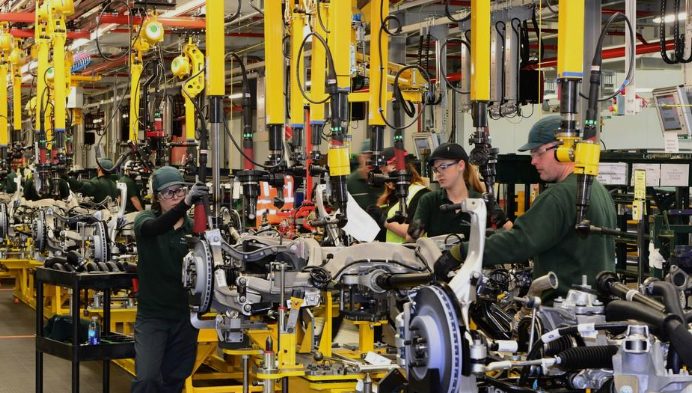
As modern manufacturing looks back on its history, one metal, in particular, stands out as one that made a tremendous impact on the world we live in today. That metal is Aluminum.
Perhaps second only to steel, aluminum, of all other metals, has been a versatile metal that impacts many aspects of the manufacturing process. Factories of all sizes and types employ aluminum in building products that are essential to everyday life. Whether it is a car, an airplane or a spaceship, aluminum is sure to be found as one of the essential building elements of all of these modern-day marvels that make our life easier and allow us to be transported from one place on the planet to another in mere hours rather than weeks. One of the companies leading the charge towards this is http://signaturealum.com which is leading the way towards more sustainable and technological trends in the industry. So, what are some of the trends and recent technological advances that have made this metal even more versatile and an essential element in the modern manufacturing process?
What Is The Extrusion Process?
Aluminum extrusion is a manufacturing technique that has revolutionized modern manufacturing. It involves pushing aluminum alloy through a designed tool to create specific profiles with precise dimensions. The process starts by heating the aluminum billet to a temperature that makes it easily moldable. The temperature that is required for this is very high, then the heated billet is loaded into the extrusion press where it is forced through the tool to give it the desired shape. This method allows for the production of profiles with a wide variety of shapes and sizes, such as rods and tubes. It is also possible to produce complex and customized designs. Achieving precision involves controlling factors like temperature, pressure, and speed during extrusion. Once extruded, the profiles are allowed to cool down first, and then they are cut into desired lengths and often undergo heat treatment for improved properties. The end result is an extruded aluminum profile that offers strength, lightweight characteristics, and excellent resistance against corrosion.
Trends In The Industry
The aluminum manufacturing and extrusion industry has seen recent growth and changes in times influenced by several key trends shaping the modern manufacturing landscape. Industries around the globe are increasingly adopting sustainability and efficiency making the aluminum market a key area for increased demand and for advancements. What are some of the key elements that are driving this increased demand?
Increased Demand For Lightweight And Sustainable Materials
One of the factors driving the expansion of this versatile industry is the increased need for materials that are both lightweight and environmentally friendly. Industries such as automotive, aerospace, construction, and electronics are actively seeking ways to reduce weight and enhance fuel efficiency. Aluminum has become a leading choice for many of these applications due to its strength-to-weight ratio, making it an ideal candidate for the most sophisticated applications that require strong metals. It should be no surprise that there is a shift towards using materials like aluminum to address concerns about sustainability in manufacturing processes.
Advancements In Technology
Technology plays a role in fostering innovation across industries including the key industry of manufacturing aluminum alloys. With advancements in computer-aided design (CAD) software and simulation tools, manufacturers can now design shapes with precision. They can also optimize their production processes for improved efficiency and adherence to customer requirements. Specifications that would have been impossible to manufacture in the past are now easily possible due to this explosion of technological advances in the manufacturing process. Additionally, digitalization has enabled real-time monitoring of production lines, resulting in quality control measures that further increase efficiency and reduce waste.
Sustainability At The Forefront
Sustainability has become a focus of many governments in the past decade, and this also holds true in the aluminum extrusion industry with businesses that have been paying attention to ecofriendly practices. Aluminum is known for its recyclability, which is great for the environment and improves energy efficiency. As environmental concerns continue to rise companies are embracing approaches making aluminum extrusions an option for consumers who care about the environment.
Expanding Global Market
The market for aluminum extrusion is witnessing growth in regions in emerging markets and across the world. Developing countries are investing in infrastructure and industrial development leading to an increased demand for aluminum extruded products across sectors like construction and transportation. This expansion presents opportunities for both established and emerging players in the market.
As the realm of the aluminum industry expands into new markets, it involves reaching out to customers and industries in various locations around the world. This trend reflects the growing demand for aluminum extruded products on a level that is driven by factors like infrastructure development, industrialization, and a stronger focus on materials. As the aluminum extrusion industry expands worldwide, manufacturers and suppliers are exploring emerging markets, forming partnerships, and adjusting their strategies to meet the requirements and regulations of regions. This expansion brings in additional sources of revenue, and it also encourages collaboration and the exchange of technologies, ultimately contributing to the industry’s overall growth and competitiveness on a global scale.
Enhance Customer Capabilities
In today’s market, customers have higher expectations when it comes to customizing products. This holds true for industries that rely on aluminum profiles since they seek tailored solutions that not just meet their specific requirements but also improve efficiency and remain cost-effective. The emergence of techniques like port die technology has played a significant role in facilitating this customization process.
The aluminum market is constantly expanding and improving, which creates new possibilities for products and materials that would have been undreamt of in the past. The industry is trending to continue upward, and these trends suggest a dynamic future. With a focus on sustainability and advancements in technology the industry is adjusting to meet the needs of sectors. Whether it’s in automotive, aerospace, construction, or other industries, aluminum extrusions are becoming a part of manufacturing. This aligns directly with many businesses and government incentives on sustainability, technological advances, and improvements.
Read Also:
- Boxed Packaged Goods: The Right Guide To Uplift Your Business
- How To Ensure Your Warehouse Is Safe To Work In
- How To Boost Warehouse Productivity
Tags:

Recent
Dinmukhamet Idrisov and a Gold-Mine Dispute From Kazakhstan’s Oligarchic Past
Oct 16, 2026

Memory Chips Are Becoming More Important in the AI Era
Aug 06, 2026

Why Enterprise Web Applications Still Choose Angular for Long-Term Growth
Aug 04, 2026

Due Diligence Decoded: Why Careful Evaluation Still Wins in Business
Jul 11, 2026

Related Articles

Functional Organizational Structure – What Is It, And How Does It Work?
A functional organizational structure is a team structure within an organization where the organization groups its employees into various departments based on the expertise of the employee. This is one of the most common types of organizational structure in business and is mostly seen in larger companies. Here, the company groups its employees based on their performance, functions, and capabilities. In this article, you will also learn about what a functional organizational structure is and how it works in a business organization. Next up, we will elaborate on this using a simple example based on this organizational structure. Finally, we will discuss the major pros and cons of having such an organizational structure for business. Hence, to learn more about this structure, read on through to the end of the article. What Is A Functional Organizational Structure? According to Indeed.com, “A functional organizational structure is a common type of business structure that organizes a company into different departments based on areas of expertise, grouping employees by specialty, skill or related roles. It’s based on levels of hierarchy that include different departments, under the direction of designated leaders.” Most businesses operate with the use of the functional organizational structure. This is because this organizational structure groups the employees of the organization based on their expertise, capabilities, and knowledge. This helps companies achieve their goals in an efficient manner when they use this structure within a team environment. A major example of a functional organizational structure includes different departments in an organization, where the employees are grouped based on their skills and capabilities. Some examples of such departments include the marketing department, sales department, production department, HR department, etc. This type of structure is a vertical management structure. Here, if you take each department and observe, you will find out that the employees of each of these departments communicate only with each other and their respective leaders. Subsequently, the leaders of these departments will report to their respective managers, who then will report to the company’s top management. Read More: What Is Social Entrepreneurship? – Steps To Become A Successful Social Entrepreneur How Does A Functional Organizational Structure Work? - Example Regarding this organizational structure, the Human Capital Hub states - “Businesses typically utilize functional structures because it groups individuals with comparable knowledge and, when used in a team setting, helps organizations achieve their goals. It is a sort of organizational structure in which the organization is divided into smaller units based on specific functional areas such as information technology, finance, human resources, or marketing.” This structure basically recognizes individual employees based on their skills, qualifications, expertise, and related roles. The business is organized as per layers of hierarchy. In each of these hierarchical structures, you will find several departments with authorized leaders leading them. Since individuals with different abilities and expertise come together in each of these functional organization structures, the structure itself allows a higher efficiency of operation. However, one of the major problems of this organizational structure is that the functional groups of this organization might not interact with each other. This leads to negative competition and a lack of communication between departments. In this case, the matrix organizational structure comes to the rescue. The following are some of the major characteristics of a functional organizational structure: This deals with a vertical management structure. The business organization divides itself into different functional departments. In each of these departments, there are employees who are specialized in specific tasks. Each of the functional departments works in silos, as each of these has their own management structures. Employees report to their respective leaders, who, in turn, report to their managers in the department. Employees typically communicate within their respective departments rather than interacting with employees of other departments. The managers of each department report to a higher management in another functional leadership structure. In some cases, managers of different departments interact with each other at times of need. Functional Organizational Structure - Major Pros And Cons According to AccountingTools.com, “The functional organizational structure is the dominant mode of organization in larger companies, since these entities deal with such large sales and production volumes that no other form of organizational structure would be nearly as efficient.” However, like every organizational structure, the functional organizational structure has its own pros and cons, which a business must have a full idea of. Here are they: Pros Of A Functional Organizational Structure The following are the major pros of a functional organizational structure that benefits organizations a lot: Since the structure contains groups of individuals by duties and capabilities. There is autonomy for groups, but the management works as a point of contact between functional structures. People are groups as per their specialization. Hence, this assures the specialty of departments. Due to specialty and expertise in departments, along with good intra-departmental communication, the speed of operation is high. It ensures clarity and accountability within each of the departments within the organization. Hence, there is better utilization of time and resources. It helps in lightening the workload of the senior members of the organization. This structure helps in developing executives. There is more scope for expansion of the organization, as the competencies are high. There is better control and oversight of the enterprise due to the presence of expertise and specialized knowledge. Cons Of A Functional Organizational Structure Here are some cons of the functional organizational structure, which you must be aware of while you implement it: Team silos are created, and hence there is less interaction between departments. Common bonds weaken. Inter-departmental coordination weakens. Limited perspectives. There can be territorial conflicts. Delays in decision-making, as things are too structured. Final Thoughts You will need to implement the functional organizational structure as your business grows. Having separate departments for your IT Staffing and other areas will become a need. The functional manager(s) will need to work with the managers of all the departments so as to coordinate the tasks. The command chain is clear both within the departments and outside them. The management structure frequently utilizes specialized resources and standardized processes. However, there can be departmental silos and slowdown of decision-making due to the presence of hierarchy. What is your opinion regarding this management structure? Share your thoughts and opinions with us in the comments section below. Read Also: Entrepreneur: Who Coined The Term ‘Entrepreneur’? What Is Continuity In Business, And Why Is It Important? Business Continuity Plan – What Is It, And How Does It Work?
Sep 13, 2023
What Is Continuity In Business, And Why Is It Important?
What is continuity? - In business, continuity means that the business is implementing procedures so that the organization can still operate near normal during a disaster or post-disaster. The disaster can range from natural disasters and man-made disasters to cyber-attacks and network errors. Hence, businesses create continuity plans where procedures of what to do is well-documented. In this article, you will learn about what is business continuity and what are the major features of business continuity planning. Then, we will share with you the importance of business continuity planning and how your business can benefit from it. Then, you will also learn about the major constituents of continuity in business. Hence, to learn more about business continuity read on through to the end of the article. What Is Continuity In Business? According to Investopedia, “A business continuity plan (BCP) is a system of prevention and recovery from potential threats to a company. The plan ensures that personnel and assets are protected and are able to function quickly in the event of a disaster.” A business continuity plan is involved in creating a prevention and recovery system for the business so as to deal with the potential threats to the company. Apart from that, the continuity plan also helps to protect the assets and personnel of the organization and ensures that the organization functions appropriately. A business continuity plan is also strongly tested so that there are no weaknesses in the system. This shall ensure that the organization can be able to take the right steps at the time of disaster. It is also important to define all the risks that can possibly affect the company at the time of disaster. Importance Of Continuity In Business Having a continuity plan is one of the most important steps that you can take for your business. The plan basically makes you look at the organization as well as yourself. According to TechTarget.com, “The plan should enable the organization to keep running at least at a minimal level during a crisis. Business continuity helps the organization maintain resiliency in responding quickly to an interruption. Strong business continuity saves money, time and company reputation. An extended outage risks financial, personal and reputational loss.” The purpose of creating a continuity plan is to create and document procedures so that the company can respond to incidents. The plan is basically a guide that will give you instructions at the time of the disaster on how to operate. The guide is about how to manage and contain incidents and continue operations while there is a disruption of services. For example, let’s assume a cyber attack disrupts the business network. You will then be forced to work offline. Here, a business continuity plan will help you to consider how you will continue operations and provide services to your customers or clients. Creating a business continuity plan is also necessary to ensure legal compliance in many cases. Hence, you have to understand the regulations that can affect an organization's processes. What Are The Constituents Of Business Continuity? According to LinkedIn.com, “Business continuity planning involves conducting a complete analysis of your organization and all procedures, with clear guidelines on what to do during an incident. It also means implementing preventative measures to avoid incidents.” The following are the major preventive measures you can take to avoid incidents: 1. Cloud Backup You will need to back up all the essential data of your business to a cloud system. Hence, if your business system breaks down due to unavoidable circumstances, you can access your data from the cloud at times of need. 2. Analysis Of The Impact On Business You will need to have an idea of the impact of the various disasters on your business work processes. You will need to consider who and what can be affected in the organization. Furthermore, you need to quantify the effects of them on your business. 3. Development Of The Business Continuity Plan To do this step, you will need to have a full idea of all the processes in the organization. This way, you can develop a plan for your business and create procedures on how to respond to a disaster. Furthermore, you just need to create alternative arrangements for the continuation of the operations. 4. Implementation Of The Business Continuity Plan The implementation of the business continuity plan consists of running drills in the business by creating a dummy situation of a disaster. In addition to this, you need to do incident response training in various other scenarios. 5. Training The Staff To make your staff understand various threats that can arise at the time of disaster, you will need to provide training to your staff. This will give them a better understanding of when to do what and how to respond to the disaster situation in the organization. Apart from the business continuity plan, you will also need to have a set plan, which you will need to review, test, and update on a regular basis. In addition to this, you will also need to communicate responsibilities to others, run practice drills, and evaluate procedures, as it is about how the personnel of the organization should act in times of crisis. Hence, as you arrange for the management of the business continuity plan, you will need to review and update policies based on practice incidents for situations when threats really emerge. Hence, you will need to create steps as per your needs and demands. Summing Up What is continuity? - Hope you have found the answer to this question. You can see from this article that continuity is just a process in business. Here, the business creates continuity plans for the organization as a prevention and recovery system. This helps the business to deal with potential threats to the organization. The business continuity plan provides a documented procedure and backup that helps the business to operate at the time of disasters or after them. Do you have any recommendations relating to the usage of a business continuity plan? Share your views and ideas with us in the comments section below Read More: Entrepreneur : Who Coined The Term ‘Entrepreneur’? Intrapreneurship – Definition, Importance, Duties, And Responsibilities What Is a Franchise, And How Does It Work? – Examples, Benefits & More
Sep 07, 2023

Everything You Need To Become A General Contractor
In every construction project, general contractors play a significant role. They coordinate the project, manage workers, and make strategic decisions to ensure the successful completion of the project. But how does one become a general contractor? What does it take, and what paths are available for those interested in this career? Keep reading to learn more. Understanding the Role of a General Contractor A general contractor oversees all stages of a construction project, from inception to completion. They manage day-to-day operations on a construction site, coordinate subcontractors, and liaise with engineers, architects, and stakeholders. Their role also includes requesting and evaluating bids, negotiating contracts, and obtaining necessary permits and licenses. Besides, general contractors follow project specifications and enforce safety regulations. They must be conversant with building codes and construction-related legal matters. They also maintain open communication with clients, providing updates and addressing concerns promptly. Another important responsibility of a general contractor is to maintain the site equipment. This includes making sure that items such as grease fitting caps are in good condition and replaced when necessary. Essential Skills and Qualifications for Becoming a General Contractor To become a successful general contractor, certain skills and qualifications are necessary. First and foremost is a strong background in the construction industry. Most contractors get this through years of on-the-job experience, whether as laborers, tradespeople, or construction managers. Another key competency is project management skills. General contractors need to plan for projects, manage resources, and coordinate teams to execute the tasks. These activities require excellent time management, problem-solving, and decision-making skills. One must also have strong communication skills. General contractors frequently interact with workers, subcontractors, clients, suppliers, and regulators. They need to effectively communicate project expectations, safety precautions, and task deadlines to all these different stakeholders. Most states also require general contractors to have a license. The process of obtaining a license often includes proof of experience and education, taking an exam, and acquiring General Contractors Insurance. If you’re looking for a Contractors Insurance Ontario provider, it's important to carefully review and understand the terms and coverage of the insurance policies to ensure appropriate protection for specific needs and risks. Financial and Business Management Tips for General Contractors Effective financial and business management is crucial to the success of any general contractor. This includes setting accurate project estimates, pricing bids correctly, managing project costs, and ensuring the project delivers a profitable return. One of the essential aspects of financial management is cash flow monitoring. This allows general contractors to pay for materials, labor, and overhead without running short. A positive cash flow ensures the smooth running of projects, avoiding project delays or shortfalls. Developing a clear business plan is also fundamental. This should detail the services offered, target market, marketing plan, sources of funding, and expansion plans. Additionally, it should also include risk management strategies to mitigate any potential threats that might arise. Business management also involves maintaining a strong reputation in the industry. A well-respected contractor often has access to the best contracts, the best team, and the best protection against the unexpected. Staying Ahead in the General Contracting Industry: Embracing Continuous Learning and Technology The construction industry, like any other industry, is subject to constant change and evolution. To stay ahead, general contractors need to embrace continuous learning and be open to new technologies that can help streamline operations. Continuous professional development can be achieved through workshops, seminars, and professional courses. These often focus on emerging trends and technologies in the construction industry, including green building practices, energy efficiency, and project management software. Digital tools and software can assist in various areas such as project management, estimating, bidding, and scheduling. Embracing these can help improve efficiency, reduce errors and rework, and enhance communication among team members. Additionally, networking is incredibly crucial. Maintaining strong relationships with clients, subcontractors, suppliers, and other industry professionals can lead to more business opportunities and continuous growth. Overall, becoming a successful general contractor requires a balance of diverse skills, proper licensing, effective business management, and a willingness to continuously learn and adapt. By cementing a strong foundation in these areas, you will navigate the fast-paced construction industry with confidence and success. Read Also: What Is QuickBase? A Low-Code Database Platform For Citizen Developers Business Deductions And Tax Planning: Two Critical Steps To Save Money Where And Why Should I Get An NDA?
Nov 01, 2023

Tips to Update Your Manufacturing Business through CNC Machines
How does providing your clients with more products at shorter lead times sound? How about improved manufacturing productivity, repetitive accuracy, manufacturing various complex parts in different markets, and reduced scraps? Your manufacturing business using manual methods can reap these benefits when you update with CNC (computer numerical control) machines. Technology keeps moving forward, so don’t get left behind. Set your goals right now, plan out strategies, and consider these tips to update your manufacturing business through CNC machines. Take the First and Small Steps Calculate Fixed and Variable Costs Maximize Factory Space Evaluate Your Current Setup for the Appropriate Equipment Assess Your Manpower’s Capabilities Consider the Raw Materials for Machining Search for the Best CNC Systems Research and Talk with CNC Machine Companies or Suppliers Here are the tip details. 1. Take the First and Small Steps Starting is always challenging. You just have to take the first step and continue with a small step at a time when updating your manufacturing business through CNC machines. P&T Precision Engineering started with a vertical milling machine and updated to another CNC machine every two years. Over the years, they were able to update to the most sophisticated CNC machines doing the most complex processes. According to USC, you should replace the most heavily manual machine first for the highest cost and time savings and faster return on investment (ROI). 2. Calculate Fixed and Variable Costs Don’t get overwhelmed by the dreadful costs or flattering results. Costs can be manageable when you consider the fixed and variable costs for updating your manufacturing business with CNC machines. Fixed Costs Take into account the capital expenditure you would incur in purchasing the machine. Include in your computation the machine’s depreciation value and the interest in case you opt for a loan. Variable Costs Consider also the following variable costs in updating through CNC machines. materials you use operators, personnel training, and other manpower expenditures maintenance and servicing machine spare parts tooling Calculate well because cheaper CNC machines do not secure the effective production and profitability of your manufacturing business. To obtain promising results, devise short-term and long-term plans and properly implement your strategies. 3. Maximize Factory Space Does your factory have room for new machines? Does your factory space facilitate the productivity and safety of workers? A negative answer to these questions entails an effort to maximize your factory space, including room for expansion. A maximized factory space ensures efficient worker movements from one machine or process to another. The efficient flow and movement of raw materials and end products from one place to another, as well as collection and disposal, must be ensured. You must also provide power sources to strategic locations in your factory. And most importantly, provisions for workers’ safety must be in place. 4. Evaluate Your Current Setup for the Appropriate Equipment Your existing machine needs updating to a CNC machine when it no longer functions according to its intended purpose. Evaluate if the CNC machine replacement is cost-effective, including the machine’s current gaps and life span. Your evaluation will enable you to select the appropriate equipment to purchase. Update to CNC machines based on your existing manufacturing services and clientele. As mentioned above, you can gradually upscale to more advanced machines depending on your manufacturing business’s growth. CNC machines process parts with complexity and precision. If you invest in more advanced machines, you will be able to manufacture other types of parts and use different kinds of raw materials, thus entering new markets and creating new income streams. If your goal is to manufacture parts for aerospace, automotive, defense, or medical industries, you may consider machining centers with 3 to 5 axes or turning centers with 2 to 8 axes. For the standard to highly complex processes or batch production, choose 2 to 5-axis horizontal or vertical CNC lathes or 3 to 5-axis milling machines. If your manufacturing business is geared toward heavy industry and machinery, horizontal boring mills are for you. 5. Assess Your Manpower’s Capabilities CNC machines need different skills and expertise compared to manual machines. Assessing the prior knowledge and capabilities of your machine operators and personnel lets you identify if they need training for the new machine. You can consult with your CNC machine supplier if they provide the appropriate training. Automated manufacturing machines require lesser human intervention, but you need not lay off workers. You can assign your personnel to other income-generating roles and tasks in your manufacturing business. 6. Consider the Raw Materials for Machining Whether you machine aluminum, copper steel, titanium, or even plastic, note that the type of raw materials affects factors like machine design, spindle to be utilized, durability, performance, and precision. The maximum spindle speed and the needed spindle motor power and torque also depend on the physical characteristics and optimal cutting conditions of the raw material. 7. Search for the Best CNC Systems You may say that all CNC systems are the same. The processes are different from one manufacturing business to another. Match your machine to the appropriate and most practical CNCs. The best CNC systems have effective, reliable, and user-friendly controls and stable software. 8. Research and Talk with CNC Machine Companies or Suppliers Be aware that you have to do prior research before talking with a representative of a CNC company. Doing your research first allows you to formulate questions and ask any concerns you will have to ask. Reach out to multiple suppliers and discuss with them the details about your business and your manufacturing business goals. The decision will be up to you after comparing the products and services they offer. Carry the Day with CNC Machines Don’t be left far behind your competitors. Don’t let the opportunity for your manufacturing business’s productivity, accuracy, repetitiveness, and new income streams fly. Embrace technology. Update through CNC machines by following these tips, and carry the day! Additionals Is Southeast Steel Detailing Inc A Good Company To Invest? What Is Nano Dimension? Is Nano Dimension A Good Investment? Impact Of Covid-19 On The World Market Economics And Its Future Which Entrepreneur Made Tractors Before Entering The Sports Car Business?
Nov 05, 2022