





What Do the 2026 SALT, Senior Bonus, and Standard Deduction Changes Mean for Your Taxes?

In high-tax states, taxpayers have waited seven years for meaningful SALT relief. As of 2026, that wait ends now. This is due to the One Big Beautiful Bill Act. This act was signed into law in July 2025. It brings in the most significant overhaul to federal deductions in nearly a decade.
Also, there are updated tax brackets, IRA limits, and 401(k) contribution caps. Basically, all these changes entirely reshape the outlook for 2026 wealth management.
At the outset, homeowners, retirees, and middle-income earners stand to benefit. That part is clear enough. But it only works if the changes are understood properly and the positioning follows accordingly.
Your State Tax Bill Finally Gets Federal Recognition
Since 2018, homeowners in places like New York, California, and New Jersey have been dealing with the fallout. In fact, that was when the Tax Cuts and Jobs Act imposed the $10,000 SALT cap, which tightened things more than expected. That effectively penalized residents of high-tax states who previously deducted far more.
Meanwhile, the new legislation quadruples that limit. The SALT deduction cap rises to $40,400 for 2026. Also, there are annual 1% increases through 2029.
Consider a married couple in New Jersey. State income taxes are at $25,000, and property taxes are another $15,000. That totals $40,000, now fully deductible, which wasn’t the case earlier. Back then, the cap stopped everything at $10,000, cutting off the rest without much room to adjust.
There’s a catch, though. High earners start losing the benefit. In 2026, the expanded cap phases down once income crosses $500,000. Around $600,000, it drops back to $10,000, almost like a reset.
The provision isn’t permanent either. It sunsets in 2030 unless extended.
All of this shifts the calculation. Itemizing starts to matter again, so revisiting earlier assumptions becomes necessary.
A Fresh Tax Break Lands Exclusively for the 65-and-Over Crowd
Retirees get the flashiest piece here. Maybe the most talked about, too. A new deduction shows up, $6,000 for those 65 and older. Married couples where both qualify can claim $12,000, which feels substantial at first glance, almost unusually generous.
It doesn’t come alone. The deduction stacks, which is where things get interesting. Seniors already receive an extra standard deduction, $2,050 for single filers and $1,650 per qualifying spouse. Add the base deduction, and the numbers climb quickly. A single senior can shield $24,150. Joint filers, both over 65, can reach $47,500. The scale shifts quietly but significantly.
Data from the White House Council of Economic Advisers suggests 88% of seniors receive Social Security benefits. That’s about 51.4 million people, a wide sweep, though outcomes will still vary.
Of course, there are limits to this. In fact, the full deduction phases out above $75,000 for single filers. Meanwhile, for joint fillers, it is $150,000. Moreover, it disappears entirely at $175,000 and $250,000, respectively. Basically, that cutoff matters more than it first appears.
One detail stands out. The deduction applies whether itemizing or not. That flexibility changes planning decisions. Seniors with medical expenses or charitable contributions still qualify, and the provision runs through 2028, leaving a narrow window to act.
Small Gains Stack Up Over Time
With inflation, the standard deduction goes upward for 2026. Although the shift isn’t dramatic, it is still there. Joint filers can claim $32,200, while singles get $16,100. Meanwhile, heads of household earn $24,150. These numbers might feel routine on paper, but they still matter.
Individually, the increases seem minor. Easy to overlook, honestly. But they stack over time, slowly, almost quietly. Around 90% of taxpayers take the standard deduction, per IRS data. Over decades, these small adjustments start adding up, shaping outcomes more than expected.
Why These Changes Demand a Longer View
The first instinct is simple. Take the deduction, lock in the savings, move on. But that approach rarely holds up over time. Durable strategies need a slower, more deliberate kind of thinking.
The interaction between provisions complicates things. A senior in a high-tax state now faces multiple pathways: the expanded SALT cap, the $6,000 bonus, and a higher standard deduction. The choice between itemizing and the standard deduction isn’t straightforward anymore. It carries more weight now.
Nothing here is permanent. The SALT expansion sunsets in 2030. The senior bonus fades after 2028. Flexibility matters, maybe more than precision, especially with deadlines approaching.
Q&A
It comes down to totals, really. Itemizable expenses, all of them together. SALT is now capped at $40,400, not the old $10,000, which changes the math quite a bit. Taxpayers in high-tax states need to recalculate.
Itemizing starts to make more sense if the following factors exceed the standard deduction:
1. State taxes
2. Property taxes
3. Mortgage interest
4. Charitable contributions.
Yes. This part stands out a bit. The senior bonus applies either way, itemizing or not. Retirees with high medical costs or charitable giving can claim both, which shifts the calculation slightly.
When these provisions expire, the SALT cap reverts to $10,000 in 2030. The senior bonus ends after 2028. Building strategies that account for these sunsets makes more sense than assuming Congress will extend them.
Timing matters more than it seems. Actually, deductions shift taxable income. This then nudges contribution limits and even Social Security thresholds. When planning connects across these areas, outcomes tend to improve.
Read Also:
Tags:

Recent
Dinmukhamet Idrisov and a Gold-Mine Dispute From Kazakhstan’s Oligarchic Past
Oct 16, 2026

Memory Chips Are Becoming More Important in the AI Era
Aug 06, 2026

Why Enterprise Web Applications Still Choose Angular for Long-Term Growth
Aug 04, 2026

Due Diligence Decoded: Why Careful Evaluation Still Wins in Business
Jul 11, 2026

Related Articles

Credit Card Frauds and What You Can Do to Avoid Them
As of 2021, the most common payment method out of all the fraud reports in the US was credit cards. In 2020, when the world was battling COVID-19, there were a total of 459,297 cases of such fraud. Most of these fraud victims were between the ages of 30 and 39, the target demographic for credit card issuers. As a result, theft by credit card fraud increased by almost 45% compared to 2019. Credit card fraud is one of the biggest threats today’s eCommerce industry faces. No one’s bank account is entirely safe from these perils, from credit card theft to credit card data breaches. A card issuer does their best to stop offline and online transactions from a stolen credit card whenever they suspect fraud. It’s also possible to recover funds from credit card fraud via a funds recovery company. These companies can easily back you up as long as you have sufficient evidence. However, you to be vigilant as well regarding this issue. So, here are a few things you can do to avoid credit card fraud. Never Save Your Credit Card Details In 2021, Google sent millions of users a chilling email when it told them their passwords had been compromised. The data breach exposed millions of users’ saved login and payment credentials. You often save your credit card information on various websites. The purpose is that you don’t have to re-enter the same details the next time you want to buy something from them. However, hackers can access your information when they manage to breach the website’s security measures. As a result, your credit card information is no longer safe. It might already be too late by the time you get to know it. Scan Your Computer and Phone for Virus and Malware The number of online transactions reaches the million mark almost every day. Most of these are credit card transactions, where people are buying stuff online. Since you’re either using your mobile or PC for this, you must make sure no one is snooping on you and your credit card information. Scan your PC and smartphone for viruses and malware. Hackers and scammers can access confidential information on your devices by planting a backdoor. At the same time, you should be careful while installing third-party software on your devices. Read : What Is Stockinvest? Is It Legit And Working In 2022? Use Stronger and More Secure Security Measures Not saving your login credentials and credit card information will go a long way in protecting you from fraud. However, you can still do more to protect yourself from credit card fraud. Using a secure password should be your priority. Use a mix of alphabets, symbols, and special characters to compose the password. Never use guessable passwords like your birthdate or pet name. Look into other ways of securing your devices. Biometric authentication is a highly efficient way of doing so. After all, it won’t be easy to replicate your eyes, face, or fingerprints. Don’t Use Your Credit Card On an Insecure Website Never purchase anything using your credit card on a website without an SSL certificate. The SSL certification verifies that the website encrypts sensitive information passed between the user and the server. No SSL certificate means that anyone can snoop on that information. When you wish to install an SSL certificate make sure it is from a reputed CA like RapidSSL, GlobalSign, DigiCert, etc. A few well-known certs are popular among developers including RapidSSL wildcard Certificate for subdomains, comodo multi domain SSL, and Thawte SSL for a single domain. A site owner can choose as per the site's requirements. When using your credit card online, you send your card number and security pin to the receiver’s server. Anyone with the right tools and brains can snoop on these exchanges and steal your credit card information. That is even worse than when someone steals your credit card. With credit card theft, you’ll at least know that someone stole it. There’s no easy way to tell if someone stole your credit card information during the transaction process. Be Careful While Using Your Card When using your credit card, keep the following points in mind. Make sure the card reader at the ATM is not loose. Cover your pin as you enter it into the machine. Never let anyone use your credit card. At the same time, never tell your credit card pin to those at the payment terminal or counter of the store. Immediately call your card issuer and block the card if you lose it. Read more : PooCoin Stock Forecast: Everything You Should Know. Be Aware of Unauthorized Transactions Always keep your credit card bills in check. When you spot an unauthorized or suspicious transaction, notify the credit card company. Don’t risk keeping your card active at that stage. Your credit card issuer will also notify you when it sees that you’re trying to make a transaction to a suspicious or blacklisted website. Listen to their reasons for the notification and possible transaction block. Avoid using your credit card on those sites if possible. Credit card fraud will continue as long as people are not careful about how they use it. So, your best bet to avoid these frauds is to ensure you stay extra cautious all the time.
Apr 22, 2022
Which Describes A Type Of Tax That Funds City Programs? – Let’s Find Out
Which describes a type of tax that funds city programs? – The answer is local income tax or local tax. These taxes are mostly meant to fund local public services. These include education, maintenance, etc. These taxes also come in many forms for employees and businesses. Businesses need to perform tax planning accordingly to withhold the income tax of employees and also file the tax for business earnings as well. In this article, you will learn about the essential details of local income tax and how it works in the United States. Next up, you will also learn about the types of local taxes that are applicable. Furthermore, you will also learn about the types of state and local taxes one must pay. Hence, to learn more about the local tax, read on through to the end of the article. Which Describes A Type Of Tax That Funds City Programs? Local tax is the tax that funds city programs. According to Investopedia, “A local tax is an assessment by a state, county, or municipality to fund public services ranging from education to garbage collection and sewer maintenance. Local taxes come in many forms, from property taxes and payroll taxes to sales taxes and licensing fees. They can vary widely from one jurisdiction to the next. Taxes levied by cities and towns are also referred to as municipal taxes.” Most states impose income taxes on employees and businesses. In the case of employees, businesses withhold the taxes and file those taxes with the help of Forms W2 and W4. Local taxes also include those taxes that states and cities impose on goods and services. Apart from that, the property tax bill is also a type of local tax that homeowners pay to the local government. However, TaxFoundation.org states – “Cities, counties, school districts, and other localities that have instituted taxes on their residents’ incomes have done so either to reduce other taxes or to raise more revenue for local services. These may be laudable goals on paper, but local income taxes come with more undesired consequences than other local revenue sources, both for taxpayers and the governments that rely on these revenue streams.” How Does Local Tax Work In The United States? As per the Constitution of the United States, the federal government and the state governments have the authority and right to impose taxes on US residents. According to TaxPolicyCenter.org, “The individual income tax base in most states is similar to the federal tax base. Most states start with federal adjusted gross income, but a few start with federal taxable income. Alternatively, a handful of states use their own definition of income, but even these states rely heavily on federal rules when establishing their tax base. Even the states that start with the federal tax base, however, often apply different rules for certain types of income.” With the help of these taxes, local government fund government services. These services include police, health, fire services, education, maintenance of the locality, etc. Apart from that, with the help of these taxes, local governments also create projects that benefit various communities at large. Apart from that, there are also services that receive federal funds using grants. Local taxes include state, county, and municipal taxes. These taxes are not under federal taxes. When it comes to levying taxes, municipalities face a constant balancing act. They do not keep those taxes high. This is because high taxes face resistance from the public. However, low taxes mean that there are cutbacks in essential services. On a side note, if you want to learn more about tax refund tips, click on the given link. What Are The Types Of Local Taxes? Most of the states in the US impose taxes like personal income tax, estate tax, corporate income tax, fuel tax, and sales tax. The following are the common types of local taxes: Property Tax The property tax is the largest tax that most people (homeowners) receive. The value of the tax depends on the value of the home, which depends on a variety of factors. In each state, there is a guideline under which local governments of the state impose property taxes. Miscellaneous Taxes Local income taxes are imposed by states and cities. The government allows businesses and organizations to withhold those taxes from the wages of employees. Furthermore, there are local wage taxes that a total of sixteen states permit. School district tax is a local tax that you can find in Ohio and Pennsylvania. Sales taxes are for goods and services that residents of a state or municipality purchase. This is a type of regressive tax, as all customers pay the same percentage of tax regardless of their income. However, sales taxes are not applicable to states like Alaska, Montana, Delaware, Oregon, and New Hampshire. Other Government Funding Sources There are other ways through which governments fund capital projects in the community. One of the most common techniques they use is to issue bonds. Investors buy those municipal bonds. As a result, they are lending money to the government. The government, in return, is repaying the principal on a future date along with a set amount of interest. To pay its debt or to fulfill interest and repay the principal, the municipal government might issue a new tax or increase the percentage of the local tax. What Is The Importance Of Local Taxes? It is important to pay your tax bill, especially the local taxes. Municipalities and state governments use these taxes to pay the salaries in public services and to fund other costs of running society. They fund social programs, education, maintenance, local infrastructure, and more. Wrapping Up Which describes a type of tax that funds city programs? – The answer is local tax. Hope this article was helpful for you in getting a better understanding of what local tax is and how it works for governments. Do you have more information to add regarding local taxes? Share your information with us in the comments section below. Get More Financial Issue By Clicking Below!! Stakeholder Theory: What Is It, Working, Benefits, Challenges, And More What Is An Endowment? – Working, Purpose, Types, And More What Is a Bear Hug? Let’s Discuss The Benefits
Dec 08, 2023

How Much Does It Cost To Buy Down Interest Rate?
How much does it cost to buy down Interest rate? Most of the time, people have this question in their minds. A buy down happens due to the lower interest rate by paying all the discount points at the time of closing. Discount points are also known as mortgage points. You can also consider it as the prepaid interest point. It is a one-time fee upfront. In the case of discount points, interest rates are lower for the loan term. Consider your capital expenditures in this matter. In the alternate form of buy down, the points purchase reduces the interest rates within a given amount of time starting at the beginning of the loan. Most of the time, you need to pay for it through funds. This is one of the essential points that you must consider at your end. How Much Does It Cost To Buy Down Interest Rate? The cost of every discount point depends on the amount you, as a borrower, take out as form of loan. Each point that the borrower pays is equal to 1% of the loan amount. The mortgage lender may offer the borrower the complete ability to reduce the rate of interest by 0.25%. It offers an interest rate of 4%. If you pay $4000, then it will lower their rate of interest by 3.75%. Who Can Buy Down A Mortgage? There are certain types of people who can buy down a mortgage. You need to know about them to have a better idea of it. How much does it cost to buy down interest rate? It will be no longer a question for you once you buy it. 1. Buyers The majority of the negotiations for buydowns take place between buyers and lenders. Most of the time, home buyers offer specific numbers of points upfront and in return. Most of the time, they receive lower interest rates, thus making their mortgage an affordable solution. It is available for a certain number of years for a fixed amount of term. You should get through the details to have a clear idea of it. A 2-1 buydown can be an option for you. 2. Sellers Sellers can also offer the buydown of the mortgage in order to incentivize the buyers to make the purchase. Most of the time, sellers can use a one-time payment as well as a deposit. You must be well aware of the facts if you want to gain benefit from it. The entire loan term forms part of the seller's concession. The payment or subsidy lowers the buyer's interest rates to a great extent. You should be well aware of it while achieving your goals with complete ease. To the purchase price of the home, the seller will add the subsidy. 3. Builders Almost like the sellers, builders will offer pay points to buy down all the mortgages. Most of the time, the builders will make all the upfront payments. It will entice early buyers to purchase the properties in the newly built communities. Once your community establishes, builders will usually be less inclined to make such payments. How Buydowns Are Structured? Buy downs on mortgages structured through the payment of points. Here each point is equal to 1% of the total loan amount. There are a few common ways buy downs are structured: 1. Discount Points This involves paying upfront fees to the lender in exchange for a lower interest rate. For example, you might pay 1 point (1% of the loan amount) at closing to reduce the interest rate by a specific amount, such as 0.25%. How much does it cost to buy down interest rate? It will no longer be an issue for you once you know this point. 2. Temporary Buy Downs This method involves a fixed reduction in the interest rate for a certain period (usually one to three years). You pay additional upfront costs to subsidize lower initial monthly payments. After the specified period, the interest rate typically adjusts to the original rate. 3. Permanent Buy Downs With this approach, you pay additional points at closing to permanently lower the interest rate over the entire term of the loan. You must get through the complete process to get the perfect solutions in this regard. Should You Buydown By Mortgage Rate? There are several benefits of the buydown by the mortgage rate. You must be well aware of it while attaining your goals with complete ease. Try to avoid the mortgage rate to make the buydown process work perfectly well in your way. 1. It Can Lower The Monthly Payments By paying points upfront to reduce the interest rate, you can decrease your monthly mortgage payments. This can free up funds for other expenses or savings. Consider the best Mortgage buydown options from your end. 2. Cost Savings Over Time A lower interest rate means paying less interest over the life of the loan. This can result in significant savings, especially on long-term mortgages like a 30-year fixed-rate loan. You must not make your selection incorrectly. It can make things too difficult for you if you do not give priority to it. 3. Improved Affordability Lower monthly payments can make homeownership more affordable. Especially during the initial years of the loan when budgets might be tighter. It will not push you for making heavy investments in the initial stages. 4. Potential For Long Term Savings If you plan to stay in the home for an extended period. The savings from the reduced interest rate could outweigh the upfront cost of buying down the rate. You can ensure the long-term savings for a longer period of time. Final Take Away Hence, if you want to know how much does it cost to buy down interest rate. Then the mentioned points can be of great help to you. You cannot make your selection and the choices out of the dark. You can share your views and opinions in the right order. It will help us to know your take on this matter. Without proper planning, things can turn worse for you in the long run. Ensure that you follow the correct process from your end. For More Business Related Article Click Below!! Stakeholder Theory: What Is It, Working, Benefits, Challenges, And More What Is An Endowment? – Working, Purpose, Types, And More What Is a Bear Hug? Let’s Discuss The Benefits
Dec 05, 2023
Instant Loan App: Top 25 Best Loan Apps Should You Know In 2023
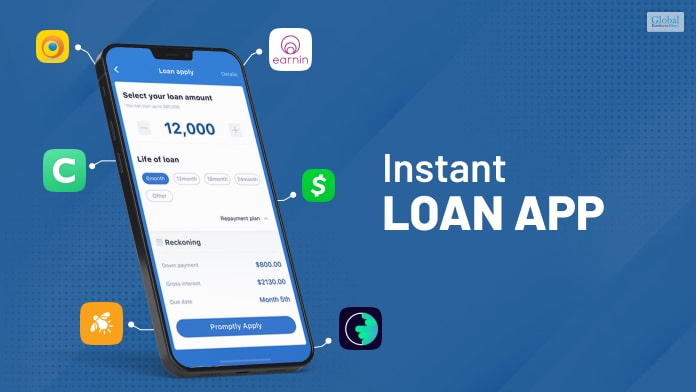
With the rise in the level of digitization, there has been a simultaneous rise in the number of instant loan apps in the last few years. As per various sources, in the year 2022 itself, the demand for personal loans surged by 50% in the retail industry. However, a very interesting fact is that in the disbursement of personal loans, non-banking financial institutions were on top of banks. In this article, we will mainly discuss the top twenty-five instant loan apps that offer personal loans in 2023. These are the best loan apps that will allow you to avail of loans fast. However, these apps come with different types of service options, and the time of disbursal changes with the app. Hence, to get fully informed, read on through to the end of the article. The Best 25 Instant Loan Apps In 2023 The following are the best instant loan apps that you must look for before you try to avail yourself of personal loans fast in 2023: 1. Earnin If you are qualified to get loans in this app, you can get an emergency loan from this app if you are confident to pay it back. The advances are large. 2. Chime This is one of the best $50 Loan Instant Apps if you are looking for payday loans. However, lenders can still charge high interest. 3. Current The best thing about this app is that there are no overdraft fees associated with it. Furthermore, you can get overdraft protection of $200. 4. MoneyLion You can get an instant cash advance of up to $300 dollars, and you can also be able to access and improve your credit score. 5. Brigit This is one of the best cash advance apps. If you are an eligible member, cash advances are available to you between #50 and $250. 6. Dave This is one of the best $100 loan instant apps that you will come across. Cash advances start here at only $5, and there is also automatic overdraft protection. 7. Spotloan Once you do a SpotLoan login, they will inform you, "It’s an installment loan, which means you pay down the balance with each on-time payment.” It means that it is not a payday loan app. 8. Bright Lending You can get loans from $300 to $1000, but there are also triple-digit APRs, as well as short terms for repayment. 9. Cash App How to borrow money from Cash App? The Cash App borrow loan services allow you to use the app and access loans from multiple devices using the tag “$cashtag”. 10. MoneyLion With the help of Moneylion NYC, you will be able to avail of credit-builder loans without a credit check if you are a member. 11. SoFi The best thing about this loan app is that you can get even $5000 to $100,000 loans and can get your funds on the same day. 12. PayActiv You can get here early paycheck access, and also you will be able to get up to 50% of earned wages before your payday. 13. Even If you are eligible, you can get up to 50% of your earned wages early, and you can get budgeting tools to track your spending as well. 14. Branch Apart from getting 50% of your earned wages early, you will also benefit from no credit checks and zero-cost loans. 15. Grain If you have low credit scores, then this is one of the best loan apps for you. This is also great if you have a short credit history. 16. Vola If you are able to pay a monthly fee, with the help of Vola, you can permanently avoid overdraft fees with the help of instant cash advances. 17. Empower Borrowing a small number of finances can be easy with the help of the Empower Loan App. Furthermore, there are budgeting tools to track expenses. 18. CLEO The app uses AI to help you analyze your spending and help you by giving actionable insights as well. You can also avoid overdraft charges with the help of rewards and auto savings. 19. SoLo Once you apply for a loan here, you will get a soft credit check, which will not affect your credit score. However, based on the credit check, lenders will have a better idea in regards to lending their money to you. 20. Upgrade Personal Loans You can get fast loans with Upgrade, You can get loans up to $50,000. However, there is a high origination fee associated with the borrowing. 21. Varo Apart from being a loan app, this is also a bank account, which gives you an account with a minimum balance with no monthly charges or overdraft. Furthermore, the credit card option is also secure. 22. Albert According to Business Insider, “Albert is a financial app offering automatic savings tools, cash accounts, cash-back rewards, auto-investing, and much more.” However, you can get some customer service issues, as per complaints of borrowers. 23. LendJet Although not a direct lender, you can get access to a variety of lenders through this platform. Hence, it will be easier to look for personal loans from various options. 24. ZippyLoan Like the other platforms, ZippyLoan also offers you to choose from a variety of lenders. You can get loan amounts from $100 to $15,000. 25. Viva Payday loans You can apply for loans in this app without having a credit history for yourself. The loans are hassle-free, and you will get fast approvals as well. Summing Up Hope this list is informative enough to give you a better idea of the best instant loan apps in 2023. If you are trying to avail of fast loans, then you must try one of these apps mentioned above to get the best services. However, we will still recommend you read all the information related to availing of loans. This will give you a better idea of what services are offered by the loan app that you are taking a loan from. Which of the aforementioned loan apps do you think is the best option for you? Share your reviews with us in the comments section below. Read Also About: Credit Card Frauds and What You Can Do to Avoid Them Home Credit: Information, Eligibility Criteria, Interest Rates, Review & More
Apr 20, 2023