





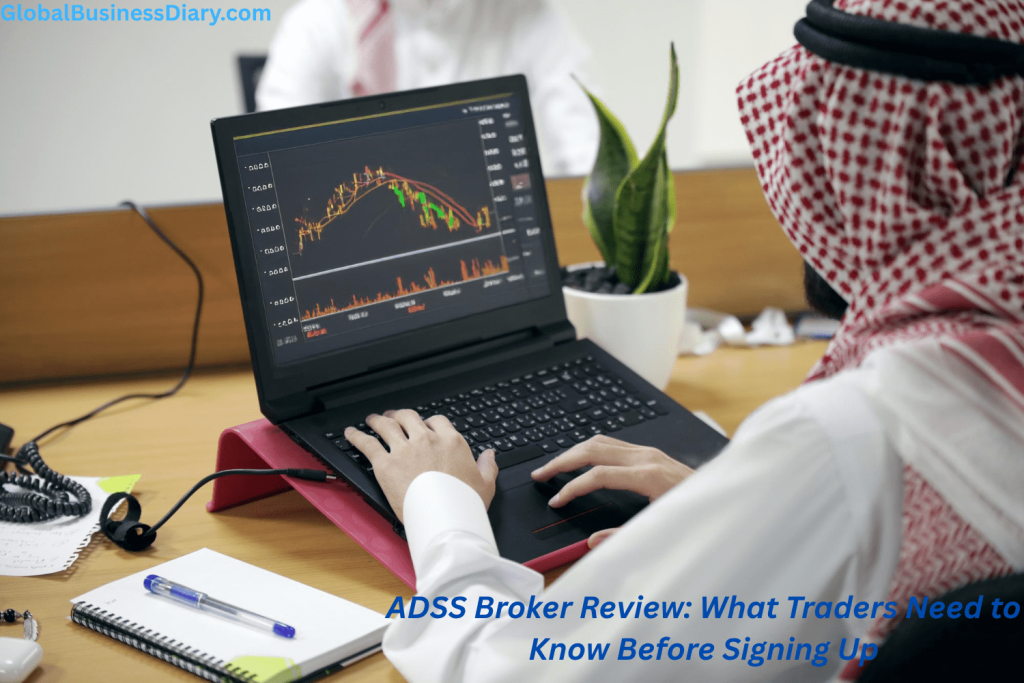
ADSS Broker Review: What Traders Need to Know Before Signing Up

In this competitive landscape, it is imperative to choose the right CFD broker to gain better leverage and opportunities. ADSS stands out in the UAE and among the wider GCC states (excluding Saudi Arabia) due to its adherence to local regulations, regional support infrastructure, and multi-asset offerings.
The Securities and Commodities Authority (SCA) regulates ADSS in the UAE. They are one of the few brokers who hold their license, giving traders stronger legal protections and regional credibility.
Thus, before you open an account, traders must consider factors like fees, customer support, product range, and platform usability. Let us discuss in the next section.
Instruments Available for Trading
ADSS offers CFD-only trading. This means you don’t own the underlying assets. Some of the available instruments include:
- Stocks and ETFs– include global equity CFDs like Tesla, Apple, Amazon, plus ETFs.
- Cryptocurrencies– include Bitcoin, Ethereum, Bitcoin Cash, and Litecoin.
- Forex– includes 60+ currency pairs (majors, minors, exotics).
- Indices– include S&P 500, Nikkei, DAX, FTSE, and more.
- Commodities– include gold, silver, natural gas, and crude oil.
Note: You will not get direct stock ownership, bonds, mutual funds, or Islamic accounts.
Account Types and Minimum Deposits
| Account Type | Minimum Deposit | Spreads | Commission | Best For |
| Classic | $100 | From 0.7 pips | No | Beginners and retail traders |
| Elite | $100,000 | Tighter | No | High net worth traders |
| Pro | $250,000 | Custom Pricing | No | Institutional clients |
Basically, ADSS earns from spreads and not from commissions. All accounts access the same CFD range, with varying benefits based on tier.
Platforms and Technology
Traders with ADSS can choose between two platforms:
1. WebTrader
ADSS’s proprietary web-based platform is built for intuitive use. It offers real-time market pricing, integrated charting tools, and full trade execution functionality. There’s no software installation required, and the platform is compatible with most desktop and mobile browsers.
2. MetaTrader 4 (MT4)
MT4 is a widely used platform among forex and CFD traders, offering support for automated trading (via Expert Advisors), custom indicators, and flexible charting tools. It’s available for desktop, mobile, and web use.
Both platforms support multiple order types, real-time quotes, and multi-asset trading from a single interface. For UAE traders, Arabic language support is available, and platforms are stable even during high-volume market periods.
Leverage, Spreads, and Trading Conditions
ADSS offers leverage up to 1:500, although this varies depending on the instrument and account level. Traders can apply leverage dynamically based on their preferences and risk appetite.
Trading costs are embedded in the spread, and there are no commission charges for Classic or Elite accounts. As an example:
- EUR/USD: From 0.7 pips
- Crude Oil: Spreads from 0.02
- Gold: Typically around 0.3 to 0.5, depending on market activity
While spreads are generally competitive, especially for forex and commodities, traders should keep in mind that overnight financing (swap fees) apply. These can either be debits or credits, depending on the position and currency rates. ADSS does not offer Islamic or swap-free accounts.
There is also a flat $5 withdrawal fee, regardless of method, and no inactivity charges — an advantage for traders who prefer to operate flexibly.
Funding, Support, and Local Services
ADSS supports account funding in AED and USD, allowing UAE clients to avoid unnecessary currency conversion fees. Deposits can be made via bank transfer, credit/debit card, or regional payment options. Withdrawals are processed promptly, and the broker maintains a transparent funding structure.
Customer support is available 24/5 through live chat, email, and phone, with service in both English and Arabic. UAE traders benefit from direct access to support teams based in the region, which can help resolve technical or administrative queries.
ADSS also offers:
- An economic calendar
- Regular market analysis and video commentary
- Platform tutorials and trading guides
- Multilingual FAQ sections and onboarding materials
These educational resources are designed to help traders navigate both the platform and market fundamentals, though they should not be seen as personalised advice or trade recommendations.
Who Is ADSS Best Suited For?
ADSS is best suited for traders in the UAE and broader GCC who are looking for:
- A locally regulated CFD broker
- Access to multiple asset classes
- Leverage and spread-based pricing with no commissions
- Arabic-language support and AED deposits
- Reliable access to both MT4 and a proprietary web platform
It may not appeal to those seeking copy trading, Islamic account features, or long-term investment products, but it is a strong choice for self-directed CFD traders who value regional presence, flexibility, and platform diversity.
Pros and Cons of Trading with ADSS
Here are a few Pros of trading with ADSS:
- No presence of the commission model. They earn via spreads
- AED funding is available to avoid FX fees
- Locally-based customer service and Arabic support
- For UAE residents, you will get an SCA-regulated broker
- You can access both WebTrader and MT4
- Ideal for flexible traders, as there is no inactivity fee
Here are a few Cons of trading with ADSS:
- High deposit minimums for Elite tiers
- No presence of educational certifications for guidance
- There are no swap-free or Islamic accounts
- Only CFD products are traded, and no space to trade physical assets
Key Facts at a Glance
| Feature | Details |
| Regulation | SCA (UAE) |
| Max Leverage | 1:500 |
| Account Currencies | USD, AED |
| Trading Instruments | Forex, Stocks, Indices, Commodities, Crypto |
| Platforms | MT4, WebTrader |
| Commission-Free Trading | Yes (spread-based) |
| Swap-Free Account | Not Available |
| Copy Trading | Not Available |
Confession Box: A Trader’s Honest Review
“I signed up with ADSS because of their local presence and regulation. The onboarding was smooth, and I appreciated being able to deposit in AED. However, I do wish they had swap-free accounts for religious compliance. The spreads are fair, and execution is solid. I’ve stuck with their WebTrader over MT4, it’s just cleaner for my daily routine.” — Faisal M., Dubai-based Forex trader.
Final Thoughts
ADSS remains a competitive option for UAE-based traders entering the global CFD markets. Its combination of SCA regulation, local account support, and multi-platform access makes it a practical broker to consider, especially for those who prioritise local service over offshore alternatives.
For more information and user insights, refer to this detailed ADSS broker review published by Investing.com.
Commonly Asked Questions (CAQs): ADSS
Here are a few frequently asked questions –
No, they do not offer swap-free and Islamic accounts are not available to customers.
Yes, customers can trade crypto coins like Bitcoin and Ethereum with the help of ADSS.
Yes, you can fund your account with AED or USD. You can minimize conversion fees for UAE residents.
The Securities and Commodities Authority (SCA) regulates and licenses ADSS in the UAE.
Yes, you can access free demo accounts to test both platforms before you commit to real funds.
#Disclaimer: The information provided on this blog is for educational and informational purposes only and should not be construed as financial advice. I am not a licensed financial advisor. Any investment decision you make is at your own risk, and you should consult with a qualified financial advisor before making any investment decisions. This site may contain affiliate links, and I may earn a commission at no additional cost to you.
Read Also:
- Coyyn – Revolutionizing Modern Trading for All!
- Lessinvest.com Crypto – The Future Of Crypto Investment?
- Icryptox – The Future of Trading and Crypto Investment?
- 5starsstocks.com Making Stock Screening Easier For All!
- Lessinvest – The Latest Tool To Help Investors Engage Smartly With Markets!
- What is Pattern Day Trading? – Fundamentals of Pattern Day Trading
- Why Do You Need a Fundamental Analysis of Stocks?
- A Beginner in Stocks? Learn Investing in Stocks for Dummies
- How Does a Share Work? Benefits, Challenges and Best Tips
- The Comparison of Stock Vs. Share: Definition, Significance and Values
- Technical Analysis Vs Fundamental Analysis: What’s The Best Way to Analyze Stocks?
Tags:

Recent
Dinmukhamet Idrisov and a Gold-Mine Dispute From Kazakhstan’s Oligarchic Past
Oct 16, 2026

Memory Chips Are Becoming More Important in the AI Era
Aug 06, 2026

Why Enterprise Web Applications Still Choose Angular for Long-Term Growth
Aug 04, 2026

Due Diligence Decoded: Why Careful Evaluation Still Wins in Business
Jul 11, 2026

Related Articles

PooCoin Stock Forecast: Everything You Should Know
Do you want to buy the PooCoin Stock? If yes, you have to understand several things that can help you make better investment decisions at your end. First, proper application of the plans can make things easier and more effective. Applying the PooCoin Stock forecast can make things easier and more effective for your business. However, you must not select your stocks investment in grey. It can cause a huge loss for you in the future if you are not careful. Let me share with you some of the crucial details of the Poocoin To get things done in the right direction. Some of the crucial facts in this matter you need to take care of are as follows: What Is PooCoin? PooCoin is a token in the Binance smart chain. The application of the PooCoin stock chart delivers the information of the Portfolio management of PooCoin. The Binance smart chain delivers the existing bright chain for enhancing the smart chain for improving the DEX in several ways. It completely works with the unisap that is used to make the trading with Ethereum and Pancake swap in most cases. Whenever you make the investments in the PooCoin Stock, ensure that it does not take any wrong shape while you plan to invest in it. PooCoin Stock Price Prediction Year On Year Basis The Poocoin stock price prediction on the Year On Year basis. It also helps on poor job delivery price predictions and the fluctuations to get the things done in the proper sequence within a stipulated period. It is currently trading at $1.69. This token displays the growth that makes the traders inspired to invest in it. You need to understand these facts while achieving your objectives correctly. PooCoin Stock Price $1.69 Price Change 24th $-0.09548 24th Low/ 24th High The annual price change is 5.34% Trading Volume 24th $1.67/$1.83 Volume or Market Cap The volume of the market cap is 20.32% Market Dominance No valid data is released Market Rank No Valid data is removed till now Market Cap No Valid information is released till now Fully Diluted Market Cap The fully diluted market cap is $17,009 380.79 1. PooCoin Stock Price Prediction In 2022 You can monitor the current price of this token is $1.71. The chances of the PooCoin Stock prices growing this year is very high. The chances of increasing the token are very high. It is estimated that the prices of the tickets will surely get a significant bounce in the years 2022 and the estimated token is $2.62 every year. You need to understand these facts while improving and making things happen correctly. Before you make the investments in the PooCoin, ensure that the Stock predictions are in the proper sequence while you want to get the better returns from your investments. 2. PooCoin Stock Price Prediction In 2023 The Price prediction in 2023, as the experts clearly stated, must not go down. The price of the token will never go down as per the opinion of the experts. It is expected by many of the experts that the price of the PooCoin stock will rise in the upcoming years. Experts believe that the price of PooCoin stock will increase to USD 2.9. The Bitcoin prices will rise on a bigger scale. It can make things easier and more effective for you. 3. Poocoin Stock Price Prediction In 2024 The PooCoin Prices will multiply in 2024. You will get better returns from your investments. If you invest your money in PooCoin stock, then it can be much more compelling at times. The token must appear much more realistically. It will increase the prices in the upcoming years. The token you will grow in the year 2024. The price hike is expected to be USD 3.67. You need to make things work in the right way to achieve your objectives in the correct sequence. 4. PooCoin Stock Price Prediction In 2025 You will get a considerable return from your investments if you make your investments in the right place. The market will never be the same today. It will grow continuously. The main reason behind this is that the prices of the coins and the tokens will keep on changing constantly. The estimated price prediction for the upcoming years is $4.29. Work out the perfect time frame in the year 2025 to make your investments in the right place. Proper application of the strategy can make things work in your favor. 5. PooCoin Stock Price Prediction In 2026 The PooCoin Prices will rise to $5 in 2025, and it can rise to $5.26 in 2026. You can gain a considerable return from your investments in the upcoming years. It will be the best thing at your end. You must not make your stock prices wrong while you want to achieve your business goals in the right direction. What Is The PooCoin Price Today? The current price of the PooCoin is 0.922 USD today. You need to understand the current trend before making your investments in PooCoin. Do not make things work in the wrong direction at your end. Will PooCoin Prices Drop Or Fall? Yes!! PooCoin prices can drop or fall from the price range of 0.922 to 0.110 USD. The change can be around -88.0153%. You need to ensure that you do not make things work incorrectly while developing stock returns in the right place. Calculation For Trading In PooCoin The calculation for making the trading in PooCoin can be done in the following ways:- R1 (Resistance Level)=0.990 R2 (Resistance Level)= 1.017 R3 (Resistance Level= 1.071 Pivot Point= 0.936 S1 (Support Level)=0.9094 S2 (Support Level)=0.856 S3 (Support Level)=0.829 FAQs (Frequently Asked Questions) 1. Will PooCoin Replace Surpass And Overtake Bitcoin? Ans: According to our predictions, all these things will not occur shortly. The prices will remain the same. Work out the perfect strategy before making the investments. 2. Will PooCoin Hit 1USD Within This Year? Ans: PooCoin will not hit 1 USD this year as the market trends are pretty turbulent. 3. Will PooCoin Hit 5USD In A Year? Ans: No PooCoin will not hit the 5USD this year. However, it can hit these figures in the upcoming years. You have to consider these facts at your end. Final Take Away Hence, these are some of the core factors essential for you to track. At the same time, you want to get better returns from your investments. Therefore, avoid making choices in the wrong direction. Work out the perfect plans to help you properly achieve your goals and objectives. Disclaimer All the data and figures mentioned here may change with the market trend. Read and analyze the trends carefully before investing. Market price of the PooCoin stock keep on changing from time to time, and you need to make a careful analysis while dealing with these facts. You must make your selection of the stocks in grey. Try to invest in these Cryptostocks carefully as they are subject to market volatility. You must not make things work in the wrong way while investing your money in PooStocks. Also Check: GGP Share Price Forcast: Everything You Should KnowEUA Share Price Forecast: Everything You Should KnowBNKU Stock: MicroSectors US Big Banks Index 3X Leveraged ETNs
Mar 24, 2022

Lessinvest.com Crypto – The Future Of Crypto Investment?
Bitcoin, Dogecoin, and Ethereum have become akin to knowing the ABCs now. Lessinvest.com crypto was one of the ways I learned my new ABCs. Given the low regulatory risk compared to real estate and stocks (back in 2011), its popularity has grown. This boom in cryptocurrency was imminent due to its freedom from regulations and great returns (Bitcoin reached USD 103,332.30 in 2024). It also occurred around the time when US presidential elections pushed it to a bull run. In this article I’ll explain crypto and investing more easily – making it simpler. LessInvest has become one of the fastest-growing platforms for people to receive accurate information. Concept of Crypto Investing Cryptocurrency, or crypto, is one of the fastest growing and stable investment avenues. It is a digital currency that is quickly gaining interest from investors across the investment spectrum. It was introduced in the investment sector in 2011 and started growing in 2013. After several growth and retractions, consistent periods led to its boom. During the early years, we all heard the term Bitcoin in conversations. However, it was not given a lot of importance, mainly due to the lack of awareness. Lessinvest.com crypto is a great way for me to understand crypto and how to invest smartly. I started investing in crypto around a year ago (around the same time I found LessInvest), and the returns have been quite stable compared to stocks. Well, just as the returns depend on the stock you choose, crypto is similar. Recently, Dogecoin, Ethereum, Stellar, and Binance have grown in popularity, joining Bitcoin in the race. However, as Bitcoin has been around for some time, I have been able to see it perform well on the market. This platform is great for newbies and seasoned employees who want to know more about investing here. Lessinvest.com crypto is a digital platform that allows you to get the most out of your investment through expert insights and the latest news on cryptocurrencies. The platform has a dedicated section that readers can navigate easily. You can easily get a complete understanding of the different digital currencies. With lessinvest.com crypto, I was able to learn so much! From the various types of cryptocurrencies that exist to getting started with investing. Types of Crypto Investments As Per Lessinvest.com Crypto There are various types of cryptocurrencies performing on the market daily. Apart from Bitcoin and Dogecoins, it is important to know the different kinds of crypto based on their functions: Payment Cryptocurrencies: These are designed for everyday transactions and as a store of value. Examples are Bitcoin, Dogecoin, and Bitcoin Cash. Utility tokens work for specific blockchain ecosystems. For example, Ethereum’s gas token (works on Ethereum network) and Binance Coin (works on Binance cryptocurrency exchange). Stablecoins are pegged to stable assets such as the US dollar to maintain a consistent value. For example, tether, Gemini Dollar, and USDC. Bitcoin falls under cryptocurrency which functions as a decentralized payment system and store of value. How to Start Investing in Crypto With LessInvest? If you want to start investing in cryptocurrencies such as bitcoin (BTC) start from lessinvest.com crypto. Here’s how you can access quick information from it: Simply go to lessinvest.com Find the drop-down sign in the upper left-hand corner and look for “Invest More” There you’ll find “LessInvest Crypto” Voila! There you have it – the complete list of cryptocurrencies you can invest in. Here, you’ll find various educational resources, such as how to invest in different crypto. I found their guides particularly helpful, as they provide information in simple language that does not complicate things. Investing in cryptocurrency is increasingly popular due to its high returns and easier handling. By equipping yourself with knowledge and adopting a disciplined approach, you can mitigate the inherent risks people talk about. What LessInvest Suggests As per Lessinvest.com crypto, here’s how you start investing in cryptocurrencies: Research Choosing a cryptocurrency exchange Setting up a wallet Funding your account Start investing! Points 1 through 4 form the initial steps to set up the base for your crypto investment. To thoroughly understand the investment, you can learn more about these steps on their platform. People get some information wrong about the platform—it is not an investing platform; it is a resourceful site that helps you learn a lot. Lessinvest.com crypto is great for learning different strategies, such as diversifying and trading (buying and selling). Many people get crypto investment wrong—with the expert advice from LessInvest, you can easily get it right. When I started my crypto investment journey, I knew that I could put my money in BTC, and I was set! However, if you have been following us, you’ll know that we always advise following either the traditional or modern approach. The traditional approach focuses on splitting your principal into several different options. Lessinvest.com crypto follows the minimalist investment approach, which is the modern investment mantra. If you prefer stress-free investment with good returns, minimalist investment is your go-to approach. Let’s have a look at the benefits of investing in cryptocurrency. 5 Benefits of Investing in Cryptocurrency Now that you know to rely on lessinvest.com crypto for all your Cryptocurrency updates and resources, here are the benefits briefly: Protection from inflation: There is a limited number of cryptocurrencies that will rise in value as inflation decreases the dollar’s value. Diversification allows you different avenues than traditional financial assets (stocks and bonds). Due to their digital nature, cryptocurrencies are quite accessible and easier to invest in. In addition, due to their decentralized operation, they are accessible to anyone with an internet connection! These are better secured as no one can simply gain access to the private key for your crypto wallet. However, this is also a con of this cryptocurrency—if you lose the private key, you will be unable to recover your funds. Transparency with cryptocurrency is much better than stocks and bonds, due to their presence on the publicly distributed blockchain ledger. These are some of the most prominent benefits of investing in cryptocurrency. You can also get the most out of this by smartly investing and staying on top of the trends. 5 Tips for Successful Crypto Investing If you want to start your crypto investment journey, here are some tips that helped me thrive in the market: Never invest more than you can afford to lose. It isn’t just financially draining but can also be massively damaging to your emotional health. The coins’ value solely depends on another crypto investor’s price for the cryptocurrency. Go for the popular coins for better stability and risk management. These coins also offer deeper liquidity and a longer track record than some lesser-known smaller coins. Buy other investments, too. Never put all your eggs in one basket—no matter the asset class. If not 4-5, at least 1-2 other investments. Crypto ETFs are a good option, too. For example, spot Bitcoin or Ethereum ETFs for a diverse investment portfolio. They are great for accessing and helping those who prefer stress-free investing. Stay up to date with crypto regulations to avoid fines. Global crypto regulations vary from country to country, so be sure to check the one for your region. Before you think of investing in crypto, you must go through this checklist to ensure it is keeping your finances safe. It is also important to ensure that you have the right approach to crypto investment—from researching well to choosing the right crypto in your portfolio, always take time for such decisions. Risks and Precautions to Consider Investing in anything comes with certain risks – investing yourself in a relationship to investing in stocks or crypto. It all encompasses dangers and precautions that you must take. Check out the following: Regulatory uncertainty is still evolving and will continue to do so due to global changes. Several other factors affect crypto’s performance in the market. Volatility is one of the prominent risks associated with crypto. In addition, there is still a lot of unpredictability around crypto, so research well and diversify always! Due to their digital nature, cryptocurrencies are vulnerable to security attacks. If you share the security key with someone else, you’d have to say goodbye to your assets. Market manipulation is one of the most considerable areas in crypto. However, crypto is not susceptible to market manipulation, unlike traditional financial markets. Bitcoin lacks an inherent value that can make it vulnerable in the long run. As it is decentralized (not backed by the government) or a tangible asset, it may not be the most stable asset in the future. Only time will tell. Considering these risks will give you clarity when starting your crypto investment journey. Why Choose Lessinvest.com for Your Crypto Investments? That’s why you should choose lessinvest.com crypto for your crypto investment needs. Suppose you are thinking of starting this journey without the help of a professional. In that case, you will need something that supports you. LessInvest is a great choice for educational resources, tools, and updates! With my experience on this platform, I’ve seen many differences in my investment approach. The educational resources and expert insights I received from the platform helped me make the most of crypto investment. Always consult a specialist if you are unsure about investing in crypto or stocks. #Disclaimer: The information provided on this blog is for educational and informational purposes only and should not be construed as financial advice. I am not a licensed financial advisor. Any investment decision you make is at your own risk, and you should consult with a qualified financial advisor before making any investment decisions. This site may contain affiliate links, and I may earn a commission at no additional cost to you. Read Also: What is Pattern Day Trading? – Fundamentals of Pattern Day Trading 5starsstocks.com Making Stock Screening Easier For All! Top 10 Best AI Stock Trading Bots
Feb 01, 2025

5starsstocks.com Making Stock Screening Easier For All!
Who doesn't love all things that come with a 5-star rating? Well, stocks also have a 5-star rating that clarifies their performance on the market. In addition, the site works wonderfully for everyone across the investment spectrum. 5starsstocks.com is a platform to view the list of 5-star stocks under an index. Contrary to popular (mis)belief, there are two sites of the same name. 5starstocks.com is a standalone platform providing stock screening services, while 5 Star Stocks is a feature of the stock market information site MoneyWorks4Me. The former is a stock screener that helps users view 5-star stocks on the stock market. The following article will illustrate how the platform works, provide some examples of 5-star stocks, and explain how you can use it effectively. It will also dive into the steps to get started with the site. Key Features of 5StarsStocks.com 5starsstocks.com is an empowering site that helps investors and traders across the investment spectrum generate great ROI. The site provides access to essential tools that help new or experienced investors achieve their financial goals. Like any other stock trading site, this site is a great way to achieve long-term financial goals. If you've been in the stock trading scene for some time, you'd know how dynamic it is. Platforms such as 5starsstocks.com help you navigate this dynamic landscape efficiently. Some of the key features include: Research Tools One of the strongest features of this site is the research tools available to users. The platform offers the following set of beginner-friendly tools: Stock screens that help you filter stocks based on various criteria such as dividend yield, market capitalization, and historical performance. Charting software that helps you visualize the market trends and stock performance. Analytical reports that help you understand market dynamics and individual stock performances. Real-time Insights This feature helps you stay ahead of market movements, making the most of this experience. Real-time insights help make decisions about investments. You can leverage the following tools: Livestock quotes that help you receive up-to-the-minute news and market data. Stay informed with the latest market news and updates. Economic indicator monitoring that influences market trends. Personalized Investment Plans The platform is great for anyone looking for a personalized investment approach. They can help you develop personalized investment strategies with the help of: Portfolio management tools that help you track and manage your investment portfolio effectively Risk assessment tools that help you evaluate the potential risks associated with the various investment options. Diversification strategies that help you diversify your investments help manage risks. Educational Resources The platform boasts a plethora of educational resources that can help you enhance your investment knowledge. This is important as you need complete information before you make any investment decisions. The platform hosts webinars and provides tutorials that the user can participate in to cover various investment topics, such as financial terminology. How 5StarsStocks.com Works The platform comes with various features that help you make the most of your investment in the stock market in the following ways: Provides a Subscription-based Access to Features The platform is known to provide the best support to users—new or experienced—with a suite of features. Users can make the most of the site by subscribing to access various features. The subscription also includes daily market updates, stock picks, trading alerts, and detailed analysis reports. Technical Analysis Tools The platform uses technical indicators such as moving averages, support and resistance levels, chart patterns, and volume analysis. These helps identify trading entries and exits based on historical price data. Fundamental Analysis Insights Fundamental factors such as the company's financial health, earnings report, and industry trends help evaluate potential investment opportunities. The platform combines this with technical analysis to evaluate potential investment opportunities. AI-powered Analysis The platform uses artificial intelligence to scan large amounts of data, patterns, and trading signals, which enhances the accuracy of its recommendations. Community Features The platform uses discussion forums and chat rooms to interact with analysts and other members and share insights and perspectives. This helps members make decisions based on complete information and market insights. How to Get Started with 5StarsStocks.com Here's how you can get started with 5starsstocks.com easily: The first step is to create an account on the website. This can be done by accessing personalized features. Click on 'Sign Up,' fill in your details, and you're set! Then, familiarize yourself with the various tools and educational resources present on the platform. This can give you a head start on your investment journey. Finally, use the platform's resources to develop an investment strategy that works for you and aligns with your financial goals. With daily updates, the platform can help beginners start their investment journey and learn more about the stock market. Expert insights help you make informed decisions. Subscription Plans and Pricing The subscription plans on 5starsstocks.com are cost-effective and help users make the most of this platform without burning a hole in their pockets. The free plan offers basic features such as daily updates and real-time data analysis tools. The advanced features unlock with a paid plan with additional resources and tools. How 5StarsStocks.com Compares to Competitors The platform offers several features that can help beginners and experienced investors improve their investments. The resources - both software and educational - can help users expand their knowledge about the market and various stocks. One of the most unique features of this platform is the use of AI-powered tools to conduct analysis, which enhances decision-making. By analyzing the stock market using AI, users can also get better recommendations. Other platforms providing stock information and investment tools have a complicated platform that hinders experience. The platform also ensures there is no information overload. Stock Investment Made Easy! Platforms such as 5starstocks.com make it easy to invest in stocks and diversify your portfolio over time. They combine easy-to-use tools, expert insights, and the latest updates to make this possible. Moreover, the sign-up procedure is quite easy, and you can get started instantly! In addition, the platform helps you meet your financial goals easily. Whether investing in a new stock or refining your strategy, you can easily get the most out of this platform. Effective platforms such as 5starsstocks can help you easily create strategies and improve your ROI! #Disclaimer: The information provided on this blog is for educational and informational purposes only and should not be construed as financial advice. I am not a licensed financial advisor. Any investment decision you make is at your own risk, and you should consult with a qualified financial advisor before making any investment decisions. This site may contain affiliate links, and I may earn a commission at no additional cost to you. Read Also: Lessinvest – Latest Tool To Help Investors Engage Smartly With Markets! How Does a Share Work? Benefits, Challenges and Best Tips What Is Market Sentiment Analysis in The Share Market?
Jan 30, 2025

What Is Capital Investment? – Definition, Working, Types, And Example
What is capital investment? - It is the money that businesses use to invest in fixed assets. Fixed assets include buildings, lands, machinery, etc. The investment money is in the form of cash, loans, or assets. On the other hand, it is also the money that investors invest in a business with the understanding that the business will use that money to buy fixed assets. Capital investment is important, as without it, businesses will find it hard to get off the ground. In this article, you will learn about what capital investment is and how it works. We will also learn from subsequent sections how this type of investment is useful for a business and can help it to grow. Furthermore, we will look at some of the major types of capital investments. Hence, to learn more, read on through to the end of the article. What Is Capital Investment? According to Investopedia, “Capital investment is the acquisition of physical assets by a company for use in furthering its long-term business goals and objectives. Real estate, manufacturing plants, and machinery are among the assets that are purchased as capital investments. The capital used may come from a wide range of sources from traditional bank loans to venture capital deals.” Capital investment is one of the essential aspects businesspersons need to consider at the time of starting a business. It is basically the expenditure of money that a company considers to spend on its long-term growth. On the other hand, the term is also popular when a company acquires permanent fixed assets such as real estate or equipment. While reporting in financial accounts, accountants report capital assets as non-current assets. Furthermore, they also go into the depreciation account since such assets depreciate over time. Some examples of capital investments include buildings, lands, machinery, equipment, or software. Capital investment funds can also come from a variety of sources, not necessarily angel investors. It can come through cash on hand or through big projects. In some cases, businesses finance funds for capital investment through loans or by issuing stocks. However, it is important to do some research before making any investment decision. Hence, businesses need to focus on research and situations of the market. Capital Investment: How Does It Work? According to TheBalanceMoney.com, “The term capital investment has two usages in business. First, capital investment refers to money used by a business to purchase fixed assets, such as land, machinery, or buildings. Secondly, capital investment refers to money invested in a business with the understanding that the money will be used to purchase fixed assets, rather than used to cover the business's day-to-day operating expenses.” To purchase additional capital assets with capital investments, a growing business might need to seek financing. In most cases, the financing options are debt financing or equity financing. In the first case, businesses take help from financial institutions, while in the second case, businesses take help from angel investors and venture capitalists. With capital investments, the goal of businesses is to achieve their goals. These are some of the major reasons for businesses to make capital investments: By acquiring additional assets for expansion, businesses can increase unit production, add more value, or create new products. Businesses can take advantage of new technology and developments with the help of better machinery and equipment. This can help businesses to increase their efficiency and reduce costs. Businesses also resort to capital investment to replace existing assets that have reached their end-of-life. How Is Capital Investment Useful For Businesses? According to the Corporate Finance Institute, “For a company, invested capital is a source of funding that enables them to take on new opportunities such as expansion. It has two functions within a company. First, it is used to purchase fixed assets such as land, building, or equipment. Secondly, it is used to cover day-to-day operating expenses such as paying for inventory or paying employee salaries.” To understand the usefulness of capital investment for businesses, let’s look at some pros and cons of it: Pros Here are the pros of capital investment: An efficient capital investment increases productivity It results in manufactured goods of better quality Investments can be cheaper as compared to other expenses in the long run. It helps in providing the business with a competitive advantage Cons Here are the cons of capital investment: The investment can be too expensive for the company to make a purchase of its own. It limits the short-term profitability of the company Additional operating expenses of the company create further problems It leads to a reduction of liquidity of the company. Hence, it becomes difficult to sell the company’s capital assets. What Are The Types Of Capital Investments? The following are the major types of capital investments: Land: In this case, companies buy bare land for expansion and development. Building: These include buildings that are used for manufacturing, production, storage, etc. Furniture And Fixtures: Although these are temporary in nature, in some cases, they come under capital investments. Machine And Equipment: Investment in machines and equipment helps increase production. Software And Computer Devices: Companies invest to buy or build software. Assets Under Development: Here, companies incur spending over time to capitalize assembled assets. Companies can gain a competitive advantage in the market by investing in long-term assets. If a company is willing to take risks through investing, it can create a barrier to entry which competitors cannot overcome. Bottom Line Hope this article was helpful for you in understanding what is capital investment and how it works. When companies invest in capital, they consider long-term benefits as compared to short-term investments. They make capital investments to make more innovations and modernization while capturing a competitive advantage over competitors. Companies make capital investments in illiquid assets such as land, buildings, equipment, or machinery. Hence, they require a large sum of money to invest. Due to the depreciation of such assets, the accounting treatment is different. Do you have more to add regarding capital investment? Share your ideas and opinions with us in the comments section below. Enhance Your Business Acumen By Reading These Articles!! What Is Seller Credit And How Does It Work? 2-1 Buydown: Essential Things To Know About It What Is Mortgage Buydown? Essential Things To Know About It
Nov 27, 2023