





Preventing Product Recalls: The Critical Role of Equipment Design
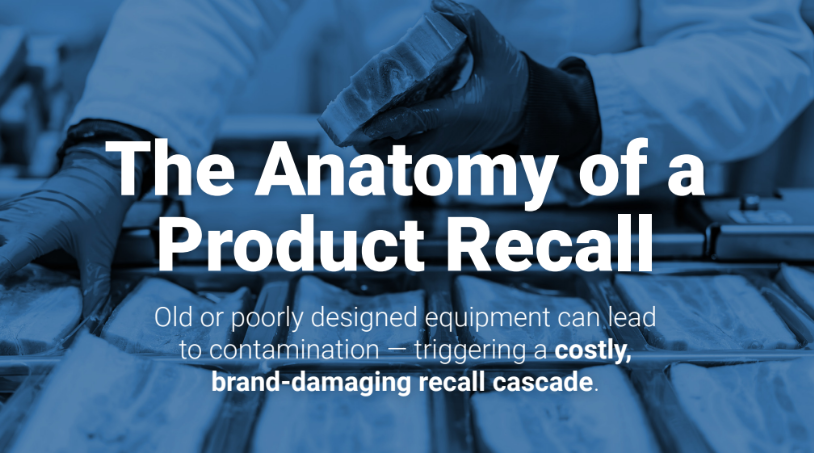
Recalls have a huge impact. Not just the bottom line, even trust takes the real blow. Also, consumers do not forget easily. One bad batch, and suddenly your brand is swimming upstream. However, it is important to note that contamination rarely just “happens.” Rather, it brews quietly and starts way earlier than anyone notices.
The Hidden Dangers of Outdated or Poorly Designed Equipment
Old machines – that is where it begins sometimes (not always, but often enough). You walk into a facility, and everything looks clean. But look closer, and you will see seams gaping, corners collecting grime, and parts you cannot reach without a wrench and a prayer. That is the bacteria’s playground. Moreover, it is not just about dirt but about design.
Apart from that, structure matters in stainless steel. Poorly designed equipment is a liability. In fact, even the most diligent sanitation crew cannot scrub what they do not have access to. Modified machines, patched over time, lose their original integrity. Hence, if they are not clean or are not easy to disassemble, that is a problem. This way, cleaning becomes a game of guesswork, and guesswork does not cut it in food safety.
Modern Equipment Design as a Preventive Measure
Leading manufacturers who have seen the cycle are shifting. They are investing in gear that is built with hygiene baked in, rounded edges, welds sealed tight, and surfaces that drain like they are supposed to. These features act as shields against contamination, recalls, and chaos.
Automation is another layer. Less human contact means fewer chances for error (fewer hands lead to fewer germs). These are the machines that do the heavy lifting and keep the workflow tight. It is not just about speed. Rather, it is about control, precision, and predictability.
Support Systems Matter as Much as the Machines
Equipment alone does not win the war. Support systems are just as critical. It is important to ensure that maintenance schedules do not get skipped, or spare parts that do not take weeks to arrive. Support systems also ensure that tech support actually picks up the phone. In fact, these small things matter a lot.
Monitoring tools (the little sensors and alerts) might catch trouble before it snowballs. Hence, early detection is everything. However, training cannot be a one-and-done. In fact, staff need refreshers, especially when the machines are new, intuitive, and designed to be cleaned properly.
Focusing on Prevention Rather Than Reaction
Prevention beats reaction every time. You do not want to be the company scrambling to explain a recall. Rather, you want to be the one who never had to. That starts with intentional design and with systems that anticipate problems before they show up. Hence, you have to make decisions early and not under pressure.
Explore how intentional equipment design and proactive process planning come together to reduce risk in the visual breakdown of the recall lifecycle from Bak Food Equipment, a provider of industrial intermeshing paddle mixers.

Read Also:
Tags:

Recent
Memory Chips Are Becoming More Important in the AI Era
Aug 06, 2026

Why Enterprise Web Applications Still Choose Angular for Long-Term Growth
Aug 04, 2026

Due Diligence Decoded: Why Careful Evaluation Still Wins in Business
Jul 11, 2026

How Hydraulic System Design Impacts Equipment Performance
Jul 01, 2026

Related Articles

CFR Vs CIF: What Are The Differences Between These Shipping Terms?
CFR vs CIF: What is the difference between the terms? – You will find both terms standard in shipping and transport, and both are part of international trade rules. CFR is a trade term that means the seller will transport goods by sea to the destination port. On the other hand, CIF means that the seller pays to cover the cost of shipping and insurance to ensure there is no potential damage or loss for the buyer. In this article, you will learn about two popular terms in shipping: CIF and CFR. First, we will get a general overview of both the terms. Then, we will discuss the function of the seller in both cases. Finally, we will examine the differences between the two terms. Hence, to learn more about the two terms, read on to the end of the article. CFR Vs CIF: An Overview Of The Terms One of the interesting things about both terms is that they are known as incoterms. According to Indeed.com, “Incoterms are common trade rules developed by the International Chamber of Commerce (ICC). They define the responsibilities of sellers and buyers while participating in international trade. CIF is an Incoterm specifically meant for shipping across oceans or international waters. There are other internationally recognized Incoterm that buyers and sellers can use when delivering products.” Furthermore, both are part of the larger group of international trade rules. The International Chamber of Commerce (ICC) devised the rules. The first version of the rules came out in 1936. both terms consist of guidelines for traders. Basically, CFR and CIF are similar terms. However, in CIF, the seller will also need to pay for the marine insurance to offer protection against loss, destruction, and damage to the order. What Is Cost And Freight (CFR)? As per Investopedia’s definition, “Cost and freight (CFR) is a legal term used in foreign trade contracts. In a contract specifying that a sale is cost and freight, the seller is required to arrange for the carriage of goods by sea to a port of destination and provide the buyer with the documents necessary to obtain them from the carrier.” This term strictly finds its use in cases of cargo transport through sea or inland waterways. However, in this case, the seller does not have the responsibility of procuring marine insurance, as is the case with CIF. The insurance is to provide protection against the risk of loss or damage to the product during transit. What Is Cost, Insurance, And Freight (CIF)? On the other hand, CIF (cost, insurance, and freight) gives responsibilities to both buyers and sellers. This is also the case in the case of deliveries through transport through seas or inland waterways. The term gives information about who will merchandise the shipment and when. If you follow the rules of a CIF agreement, you will be able to divide your shipping costs. Apart from that, you will also have a basic understanding of when you have responsibility for the shipment in the shipping process. With the CIF agreement, you are transferring both your costs and your risks, but at different times. Here, as a seller, you are transferring the cost when the financial responsibility of the product shifts from the seller to the buyer. Generally, the cost transfer occurs when the product reaches the destination port. Here, you will have to take responsibility for any merchandise cost before that. The risk transfer happens when the responsibility for the lost or damaged item shifts from the seller to the buyer. In this agreement, this risk transfer happens after the goods are loaded onto the ship. Hence, while the goods are traveling, the seller is responsible for handling shipping costs. However, the buyer will be responsible for the damages to the merchandise or in case of loss. CFR Vs CIF: What Are The Differences? According to Investopedia, “Each term refers to an agreement governing the responsibilities of shipping that fall respectively to buyers and sellers in an international trade transaction. This system of agreements aids in an orderly process of international trade by making contract models available that are easy to identify and understand in all languages.” However, there are some primary differences between the two agreements. The major difference lies in one additional responsibility for the seller (shipper). In the case of CIF, the seller must also provide a minimum amount of marine insurance on the shipped goods. Here, the buyer and seller agree on the insurance amount beforehand. Apart from that, the seller of the product takes up the responsibility for additional costs related to the transportation of the product. In addition to that, the seller also pays for paperworks, custom inspections, rerouting, etc., that might occur during the transport of the product. However, the buyer here has to take responsibility for any damage to goods or even loss during transit. CFR Vs CIF: Understanding The Difference With Example You can understand the difference between CFR and CIF easily with the help of this example. Let’s say Seller X sells a particular good from Spain to Buyer Y in the United States. Here, Seller X pays for the shipping from Spain to the US. Also, the seller is responsible for the shipment until the goods are loaded on the shipping vessel. After the loading of the vessel, Buyer Y takes over the responsibility for the goods. This agreement is the same for both CFR and CIF. However, under CIF, there are additional responsibilities for Seller X. Here, Seller X needs to buy insurance for the transfer of goods. With the insurance, the seller will need to cover the loss or damage to the goods at the time of shipment. Eventually, after the goods reach the destination port, the seller does not have any responsibility. Wrapping Up CFR vs CIF – Hope you have found an understanding of both the terms and the differences between them. You can see from the article that both are quite similar agreements. However, in the case of CIF, the seller bears an additional responsibility. Do you have more information to add? Consider sharing them with us in the comments section below. Find More About Business By Clicking Below!! Equity Theory: A Balancing Act for Modern Workplaces What Is A Distribution Channel? Essential Things To Know About It How Does The Procurement Process Work? Essential Things To Know About It
Dec 29, 2023

10 Signs Your Boss Cares About You
Working in an office environment where your work culture is good, with healthy communication with other employees, and your boss cares about your needs. But wait! How would you know whether your boss cares for you or not? Are there any signs your boss cares about you? There sure is, and today we are going to talk about those signs exactly. Signs Your Boss Cares About You If you are wondering about the signs of whether your boss cares about you or not then, then you don’t need to stress about that. Here are 10 signs your boss cares about you. 1. Make You Believe Like An Important Member Of The Team To know that your boss really cares about you is if they value your work and also compliment you about being a valuable member of the team. Certain behavior of the boss might make you think they really care about you, such as. Ask for you when an important project comes up. Ask you to go to certain client meetings and conferences. 2. They Reach Out To You Often If the boss comes to you more often than anyone else, then it is a sign your boss cares about you. You can also take advantage of this situation by letting them know about certain things they are in the unknown. You will get to know that your seniors are reaching out to you if they show certain behaviors. Comes to you for a certain task other than sending someone else. Greets you whenever they pass your cabin or cubicle. 3. Listens To Everything You Say, Rather Than Pretending Other than just pretending that they are listening to your suggestions and opinions, they actually listen to you. This is a clear sign your boss cares about you and your expertise. You will see this genuine action when. Your boss gives you good feedback. Appreciates your great ideas. 4. Gives Credit For Your Work A sure sign your boss cares about you is when they show appreciation towards you when you do good work. They can take it one step up by praising you in front of everyone. This will definitely give you a confidence boost. You will see your boss give you credit when he. Takes your name, particularly during important meetings. Praise and appreciates you front of everyone. 5. Never Intentionally Embarrass You It is important to see what your boss does when you make a mistake, whether they embarrass you in front of the whole team or help you rectify the mistake without making a huge deal out of it. The signs that your boss doesn’t embarrass you but rather encourages you. Include you in meetings that are important. They always recommend you in important cases. 6. Apologizes To You When Required It is possible that, either unknowingly or knowingly, your boss might have hurt your feelings, and instead of hesitating, they apologize to you right on the spot. This is because your boss cares for you and respects you. So if they did something wrong to you, and because of that, you are feeling low and down, then your boss will definitely apologize to you. And would make sure you are feeling good enough in the workplace. If your boss is ready to apologize to you at once, then. They will never let you feel down. They will make sure you feel better. They will even try to cheer you up in the workplace. 7. They Help You To Face The Challenges And Ace Them The most obvious green flag as a sign your boss cares about you is if you see that your boss is helping with the problems and challenges that you are facing in the workplace. They will help you with resources and offer you certain training as well. Your boss will want you to become the strongest employee who is able to face any challenge or problem quite efficiently. To see whether your boss helps you with certain challenges, see the signs. Your boss will push you harder to face any challenge with confidence. Your boss will help you with any problem you may face. 8. Values And Respect Your Time A great boss is known to value and respect their employees. If you see your boss is very respectful towards you, then it is signs your boss cares about you. They will value your opinion and expertise. Your boss will even invite and ask you to attend certain meetings and sessions. They will also be respectful towards your work pressure and won’t give you too much work in a limited time. To know whether your boss respects you and values you, see these signs. Never give you a heavy workload in a short amount of time. Your boss will value your time and schedule your work accordingly. 9. Helps In Developing New Skills In The Office A caring and good boss will always make sure their employees are of the highest quality of expertise. So if you see signs your boss cares about you, then they will want you to develop your skills and help you in that as well. Your boss will make sure that you get the best training possible in order to develop your skills and expertise. Your boss will help you develop new skills with the best resources. If you have any dormant skills, then your boss will help you grow and develop that skill set. 10. Never Makes You Feel Left out Because Of Your Weakness If you see genuine signs your boss cares about you, then they are never gonna make you feel low because of your certain weaknesses. But on the other hand, a caring boss would help you with your shortcomings and weaknesses. So to see signs your boss cares about you, see for the signs. Your boss helps you to gain knowledge. They will provide you with all the resources to make you gain knowledge. Signs Your Boss Positive Attitude Towards You Makes Your Collegues Jealous There are some simple signs that clearly indicate that your colleagues are jealous of your success. Some of the core factors that you need to take care here are as follows:- Your colleagues will start to flatter you of your success. They will start to underestimate your achievements. Your colleagues will start to celebrate your failure. Considers you as your biggest competitor. Starts to spread negative word of mouth behind you. If you find the above mentioned things happening against you in the workplace then you must stay away from those people as much as possible. You need to stay cautious about these kinds of people so that you can take the corrective actions within a specific point in time. Signs Your Boss Is Happy With Your Performance There are some of the signs your boss will display on your that clearly show that your boss is happy with your performance. You need to find out those areas where your boss shows gratitude towards your performance. Your boss will offer you tough love. They will give you feedback for your work and will focus on your improvement. You need to get through the process to improve your performance in the workplace. If your boss asks for your inputs in the meeting then it is a clear sign that your boss is happy with your performance. They will try to understand your thought process and will implement your ideas. They do not always come up with the compliments rather your boss will offer you some valuable advice as well. It will improve your performance in the workplace. If your boss defers you and says other employees to seek guidance from you to perform better in the workplace. It is a clear indication your boss is happy with your performance. Your superior will ask you to teach others. It is a clear indication that your boss is highly impressed with your performance. You need to identify the reasons that can make things easier and effective for your career in the long run. Your boss will ask for your favour to manage the teams and to take some extra responsibilities. It will ensure growth in your career in the long run. You cannot just make things happen suddenly. You need to get through the complete process that can make things easier for you in attaining your needs with clarity. Wrapping Up! As I have said earlier, a good boss will always make sure that their employees are in good spirits and work with good energy. So they will make sure all the employees are taken care of. But if you are not sure about the signs your boss cares about you, then this article will definitely help you in noticing the signs. So if you liked this article, then leave a like and comment down below if you think your boss cares for you as well. Read Also: 10 Signs Your Boss Doesn’t Like You 10 Signs Your Boss Wants You To Leave 10 Signs Your Boss Is Testing You | Need To Know About
Nov 18, 2022

What Is Mortgage Buydown? Essential Things To Know About It
Mortgage buydown is the prepayment of the payment when you pay the interest upfront. It can reduce your monthly payment, which can help you to rocket the interest savings for the long term. You need to know the process to make the correct choice as a homeowner. A mortgage buydown is a financial arrangement in which a homebuyer or a third party, such as a builder or seller, pays additional upfront funds in exchange for a lower interest rate on a mortgage loan. This can be useful to make the monthly mortgage payments more affordable for the borrower. It is important, especially in the early years of the loan. Different Types Of Mortgage Buydowns There are several types of mortgage buydowns that you must be well aware of the facts while achieving your goals with ease. You need to get through the process that can make things easier for you in all possible manner. 1. Temporary Buydown In a temporary buydown, the borrower or a third party contributes funds to the lender to reduce the interest rate. On the mortgage loan for a specified initial period, often 1 to 3 years. You can buy an LLC to attain your requirements. This temporary reduction in the interest rate can make the monthly mortgage payments more affordable for the borrower. Especially during the initial period. The additional fund offer is usable to subsidize the lower interest rate. The subsidy decreases over time until the interest rate returns to the original, higher level. 2. Permanent Buydown A permanent buydown involves paying additional funds upfront to the lender to permanently lower the interest rate over the entire life of the mortgage loan. This type of buydown can result in a lower monthly payment for the borrower throughout the term of the loan. Benefits Of Mortgage Buydown There are several benefits of the Mortgage Buydown. You need to get through the complete process that can assist you in attaining your goals with absolute ease. Ensure that the scope of errors is as low as possible. 1. Lower Initial Payments One of the primary benefits of mortgage buydowns is that they can result in lower initial monthly mortgage payments. This can be helpful for homebuyers who may face financial constraints in the early years of homeownership. Those who want to allocate their funds to other expenses they can also go for mortgage buydowns. The application of Experian.com can be of great help to you. 2. Improved Affordability By reducing the monthly mortgage payments in the initial years, mortgage buydowns can enhance the overall affordability of homeownership. This may enable individuals or families to qualify for a larger loan amount, making it easier to purchase a home. Vertical vs Horizontal Integration can make things easier for you. 3. Easier Qualification Lower initial payments resulting from a mortgage buydown may help borrowers qualify for a mortgage. They might not have qualified for a higher initial interest rate. This can be especially beneficial for first-time homebuyers or individuals with tight financial profiles. Net operating income can make things easier for you. 4. Seller Incentives Sellers may use mortgage buydowns as an incentive to attract buyers and make their properties more appealing. Offering a temporary reduction in the buyer's mortgage interest rate can differentiate a property in a competitive real estate market. 5. Reduced Interest Cost While there is an upfront cost associated with a mortgage buydown, the borrower can save money on interest payments over the life of the loan, especially with a permanent buydown. This can result in significant long-term savings, particularly if the borrower plans to stay in the home for an extended period. 6. Financial Flexibility For borrowers who anticipate an increase in income in the future, a temporary mortgage buydown can provide financial flexibility. It offers lower initial payments during a period of lower income, with the expectation that payments will increase later. 3-2-1-Buydown Calculator A 3-2-1 buydown calculator is a tool that helps individuals, typically homebuyers or those involved in real estate transactions. It estimates the potential savings and costs associated with a 3-2-1 buydown arrangement on a mortgage loan. The "3-2-1" refers to the structure of the buydown. It indicates different percentage reductions in the interest rate for the initial three years of the loan. 1. First Year In the first year of the mortgage, the interest rate is reduced by 3% below the actual interest rate determined by the lender. 2. Second Year In the second year, the interest rate is reduced by 2% below the actual interest rate. 3. Third Year In the third year, the interest rate is reduced by 1% below the actual interest rate. You need to get through the details of the facts to have a better idea of it. Avoid making the process more critical of your counterpart. Key Steps Involved In 3-2-1-Buydown Calculator There are several key steps that are involved in the process of the 3-2-1 buydown calculator. You need to take care of these facts with your counterpart. Some of the key factors that you must know are as follows:- Enter The Loan Details Input the loan amount, the original interest rate, and the term of the loan. Calculate The Buydown Amounts The calculator will determine the reduced interest rates for each of the three years based on the 3-2-1 structure. Display Adjusted Payments The calculator will show the adjusted monthly mortgage payments for each of the three years, considering the buydown. Total Cost Of Buydown Some calculators may also provide the total cost of the buydown, which is the sum of the upfront funds paid to achieve the reduced interest rates. 3-2-1 buydown calculator, individuals can assess the short-term affordability benefits of the buydown. You can make informed decisions about whether this type of mortgage structure aligns with your financial goals and circumstances. Final Take Away Hence, if you want to grow your mortgage buydown in the correct order, then you must take care of the above facts that can assist you in attaining your goals. You need to get through the process that can make things easier and perfect for you in all possible. 3-2-1 buydown calculator, individuals can assess the short-term affordability benefits of the buydown. You can make informed decisions about whether this type of mortgage structure aligns with your financial goals and circumstances. You can share your views and comments in our comment box. It will assist you to attain your requirements with ease. Find out the best options that can make things easier for your business. Go For The Best Business Article By Clicking Below!! Entrepreneurship – Definition, Meaning, Scope, And More What Are The Different Types Of Entrepreneurship? – Take A Look What Is Indemnity Insurance? And Its Different Types – Let’s Discover
Nov 23, 2023

5 Reasons To Work On Your Customer Service
The customer is always right, so keeping them happy should be at the top of your priority list. One of the best ways to do so is to provide excellent customer service that they’ll never forget. With so many options available to consumers nowadays, great customer service has really become a way for businesses to stand out above the crowd and leave a lasting impression. This is why you need to spend some energy improving your customer service this year. Need more convincing? Keep reading for more. Improve Customer Satisfaction Great service leads to satisfied customers, and satisfied customers will always come back for more. By working on your customer service and improving your customer contact centers, you can ensure that customers are receiving prompt assistance, personalized interactions, and quick and practical problem-solving from your team. This will encourage loyalty and positive feedback that will boost your business. Build Customer Loyalty A satisfied customer is also a loyal customer, or so the statistics say. When customers are treated well, responded to in a timely manner, and have their problems solved, they develop a sense of trust and connection with your brand. Developing and managing customer loyalty can make a significant difference to your business. Loyal customers are more likely to make repeat purchases and recommend your brand to their friends and family too. Gain A Competitive Edge As we mentioned, great customer service has become a way to stand out in the crowd, and in this digital age, this is a crucial factor to consider. Great customer service is often the only difference between two competing businesses, so make sure that you have the upper hand. By investing in your customer service strategy, you prove to your customers that their experience matters to you, leaving a positive lasting impression. Increase Your Revenue It might not feel like it, but improving your customer service can have a direct impact on your revenue. As we’ve already explained, customers who have a positive experience are more likely to come back and even recommend your products. This means that by working on how your handle customer queries, complaints, and feedback, you can drive revenue growth and boost your profitability. If this isn’t a great incentive to start working on your strategy, we don’t know what is. Gain Valuable Insights Finally, remember that you can use a good customer service strategy for your own benefit too. When your customer service is managed well, you’ll be able to gather plenty of feedback and other data from your consumers. This information might pertain to their perception and experience of your business, as well as their buying behaviors. By analyzing this data, you’ll be able to make better decisions, refine your products and services to better suit your audience, and contribute to long-term success for your company. Final Thoughts Customer service might be the last thing on your mind in such a fast-paced environment, but we hope that this article has shown you why it should move to the top of your list. Improving your customer service is a smart strategic move that will see lasting benefits for your business. Read Also: How To Improve Energy Efficiency In Your Data Centre Money Tap Loan App: Information, Eligibility Criteria, Interest Rates, Review & More Virtual Data Rooms: What They Are And Their Critical Importance For Businesses
Jun 28, 2023