


What Is Bottleneck In Business? Everything You Should Know About It
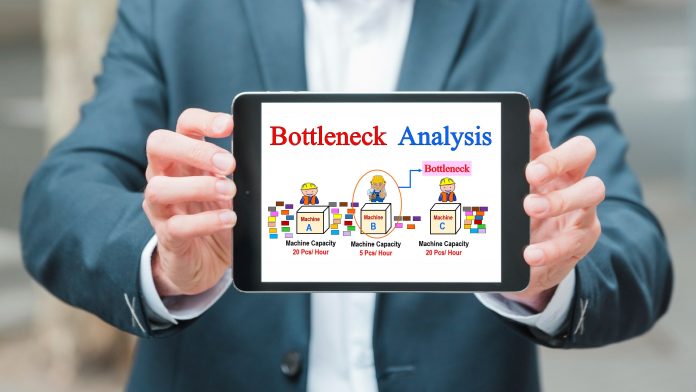
Do you want to know what a bottleneck in business is? If yes, then read this article carefully, and you will get all the answers to your query. A bottleneck is known as the congestion point in the production process.
In this scenario of bottleneck, the production stops, and the systems slow down. It severely affects the productivity of an organization. You cannot make your selection and the choices in the dark. Apply the equity theory to get over this situation.
The inefficiencies caused by the bottleneck in business increase the cost of production and delay the production process. Most organizations cannot recover from the bottleneck situation and collapse due to it.
What Is Bottleneck In Business?
In a business context, a bottleneck refers to a point in a process or system. Here the flow of work is significantly impeded or slowed down. It causes a delay in the overall output or efficiency of the system. This is a constraint that limits the capacity of the entire process. It often results in inefficiencies, increased lead times, or decreased productivity.
How Do You Recover From A Bottleneck Situation In business?
There are several methods you can employ from your end to recover from the bottleneck situation in your business. You need to know the methods well to have a better idea of it. Try to recover from this situation as soon as possible. As it can hamper the growth of your business significantly in the long run. Let’s find out some of the techniques to recover from it quickly.
1. Identify The Bottlenecks
Analyze the workflow and processes to pinpoint the specific stage or area causing the slowdown. You need to identify the exact point of your production process that is creating the problem for your business. Crosscheck the areas of your bottlenecks in business and why they are creating such a mess in your operation process. Only then can you solve your issues easily within a limited time.
2. Assess Impact & Prioritize
Evaluate the impact of the bottleneck on overall operations. Prioritize based on the severity of the impact on revenue, customer satisfaction, or other critical business aspects. The bottleneck in business can kill the possibilities of your business growth. You need to identify the area of your business that gets impacted severely due to the bottleneck. Furthermore, it will help you take further steps with ease. Supply chain risk management is the best example of this situation.
3. Immediate Mitigation
Implement short-term solutions to alleviate the bottleneck’s immediate effects. This might involve redistributing tasks, reallocating resources, or adjusting work schedules temporarily. Your employees may also have higher levels of dissatisfaction in the workplace. It can easily create a bottleneck in business. You need to understand the scenario and then take the necessary actions.
4. Analyze The Root Cause Of Bottleneck In Business
Dig deeper to understand the causes of the bottleneck. Examine factors such as resource limitations, process inefficiencies, technology constraints, or dependencies on specific steps/people. Find out the root cause of the problem, then you can go for the best solution. Once you know how to solve the problem, it will become easier for you.
5. Implement The Long Term Solution
Develop and implement strategies to address the underlying causes identified. This might involve process redesign, technology upgrades, resource reallocation, or retraining of staff. Try to make implementations of the long-term solutions to your business problems. It must not impact your business for a longer duration of time. Otherwise, things can become tougher for you. Reduce the capital expenditure by reducing bottlenecks.
6. Monitor & Measure
Continuously monitor the workflow and measure performance after implementing changes. This helps assess the effectiveness of solutions and identifies any new bottlenecks that might arise. Once the bottleneck problem is resolved, you need to monitor it continuously. So that it did not create any kind of problem in your business operation again. You must stay alert to this fact regarding the recurrence of the bottlenecks in business once the problem is solved.
7. Continuous Improvement
Foster a culture of continuous improvement. Encourage teams to identify and address potential bottlenecks proactively, ensuring ongoing optimization of processes. You should encourage continuous improvement in the process of production. Otherwise, things can turn worse for you. Try to implement the latest technologies to improve the production process in your organization. It can contribute to the growth of your business on a huge scale.
8. Regular Review & Adaptation
Regularly review processes, systems, and workflows to adapt to changing business needs or growth. Adaptation ensures scalability and prevents bottlenecks from recurring. A business needs to keep on working with the environmental changes. You cannot stick to your old strategy once and forever. Try to rebuild your new strategies in such a way that it can boost your production process with ease.
9. Cross Training & Redundancy
Implement cross-training programs to ensure multiple team members are capable of handling critical tasks, reducing dependency on specific individuals. Redundancy in systems or resources can also prevent future bottlenecks in case of failures. You need to train your employees from time to time. It will increase their confidence in the workplace. Ultimately, it can improve the proficiency of your employees by a huge margin.
10. Collaboration & Communication
Foster open communication and collaboration among departments. This allows for early identification of potential bottlenecks and enables a swift response to mitigate them. You must enable healthy communication among teams to foster the growth of your organization. However, it an also boost the productivity of your organization.
Final Take Away
Hence, these are some of the effective methods you can employ to reduce the bottleneck in business. You need to understand the business scenario first, and then you have to take the right actions. It can help you to reach your business goals with ease.
You can share your experiences with us. Comment on this matter and highlight the areas of the article you like most. Ensure that you follow the correct method to reduce business complications.
Try to think out of the box to solve the issues of your business. Reduce the ill effects of bottlenecks as soon as possible otherwise, it can kill the possibility of your business growth.
Interested In Business Read The Best Articles By Clicking Below!!

Recent
Corporate Software Inspector: The Simple Way to Keep Your Company Safe
Mar 02, 2026

Why Business Intelligence Exercises Are Important for Effective Data Analysis
Feb 22, 2026

The Hidden Cost of Dirty Curtains: More Than Just an Eyesore
Feb 20, 2026

Strategic M&A: Turning Opportunity Into Lasting Value
Jan 24, 2026

Related Articles

SmartCoin: Information, Eligibility Criteria, Interest Rates, Review & More
SmartCoin is a great platform for you if you are looking for instant personal loans. SmartCoin comes with an app with the help of which it will get easier for you to get loans easily, within only a matter of minutes. There are various instant personal loans apps like PaySense, India Lends, Money View, and others, but what makes SmartCoin different from them? In this article, we will discuss the SmartCoin app and how you can get loans from the SmartCoin platform. Apart from that, you will also get to know about the types of loans that SmartCoin offers. Furthermore, you will know about the major features of the SmartCoin app as well. In addition to that, you will also get to look at some of the major reviews regarding the SmartCoin app. SmartCoin Financials - What Is SmartCoin? SmartCoin is a platform that connects loan borrowers with lenders that, include Banks and non-banking financial institutions. With SmartCoin, every loan application is sanctioned and approved by the reserve Bank of India. Apart from that, every bank or NBFC that offers loans through the SmartCoin app is also registered under the RBI. SmartCoin is based in India and focuses mostly on microloans to provide loan offerings to people in the lower and middle-class demographics. The loans are mostly targeted toward self-employed individuals and salaried professionals. The best part about the SmartCoin loan app is that you will get loans in no time, and you will just have to clear some necessary basic verifications to avail yourself of a loan. All the loans offered by SmartCoin are available fully online. Apart from that, you will not need to keep something as collateral to get loans for yourself. The process of getting the loan is also safe, and you can do it with your smartphone within a matter of minutes. Furthermore, the rate of interest is also low since these loan options are created by keeping in mind the needs and necessities of people that fall under young and low-income groups. Benefits You Will Get Through SmartCoin Personal Loans SmartCoin is one of the best platforms to get loans from if you are looking for instant personal loans of short value. If you avail of loans from SmartCoin, you are sure to get benefitted from the app in many ways. The following are some of the major advantages of the SmartCoin app that you will benefit from if you want to avail of loans: You will get instant loans through your smartphone anywhere and anytime. The loan application process is fast and easy, and it takes barely a few minutes to finish the application. You can get loans for a variety of reasons – medical emergencies, property, education, business, travel, wedding, etc. With just a few verification processes, the approval is also fast. Once the lender verifies your credentials, and CIBIL score, you will get loans instantly. You will not have to keep collateral for the loans that you borrow from SmartCoin. Even if you do not have a credit score, you will still get loans. However, this depends on the lender whom you are choosing for the loans. Download The SmartCoin App – How To Do SmartCoin Login? The following are the ways through which you will be able to download the SmartCoin app on your smartphone: Step 1: Open Play Store on your Android smartphone. Step 2: On the search bar, type “SmartCoin.” Tap on the “SmartCoin - Personal Loan App” option. You can also download the app by clicking on the link: https://smartcoin.co.in/# Step 3: Tap the install button, and then let the download and installation process take place. Step 4: Once the Google SmartCoin app is installed on your smartphone, you can start the app and then do a SmartCoin loans login to get access to the variety of loan options. Features Of SmartCoin Loans - SmartCoin Funding The following are the major features that you will need to know about SmartCoin if you want to avail of loans from this platform: Details As Per SmartCoin WebsiteLoan Amount₹1000 to ₹25,000Interest Rate- Minimum APR 20% p.a.- Maximum APR 36% p.a.Loan TenureThree months to four months – (91 days to 120 days)Loan Processing FeesNot ApplicableDetails As Per SmartCoin AppLoan Amount₹4000 to ₹1,00,000Interest Rate0% p.a. to 30% p.a. based on the type of loan riskLoan TenureTwo months to six months (62 days to 180 days)Loan Processing Fees- Low -Risk Customers: 0%-2.5% of the principal- High-Risk Customers: 4%-7% of the principalEligibility- Must be an Indian Resident- Profession: Self-employed individuals, Salaried professionals, Support executives, and Business Owners- Minimum Income: ₹13,000 p.m.SmartCoin Customer Care Number/ SmartCoin complaints+91-9148 380504SmartCoin Emailhelp@smartcoin.co.in SmartCoin App Review – Top User/ Borrower Reviews Here are some of the SmartCoin reviews from users or borrowers of loans: “I HAVE BEEN USING SMART COIN APP FOR LAST 2 YEARS NOW TAKEN LOAN SEVERAL TIMES PEOPLE WHO ARE DISLIKING THE APP MUST HAVE BAD CIBIL SCORE DUE TO WHICH THEIR LOANS ARE NOT GETTING APPROVED.” BY :- VEENA RAUTELA “AS I APPLIED FOR LOAN ON 11TH JULY AND TODAY IS 23RD JULY ALMOST 15 DAYS HAS BEEN GONE, MY LOAN IS APPROVED READY TO RECEIVE ME BUT STILL AMOUNT IS NOT CREDIT IN MY ACCOUNT AND I CALLED SO MANY TIMES TO CUSTOMER CARE ALSO THEY SAID BECAUSE OF TECHNICAL ISSUES YOU HAVE TO FACING THIS PROBLEM AND IT WILL BE RESOLVE AS SOON AS POSSIBLE BUT WHEN WILL YOU RESOLVE ALREADY 15 DAYS HAS BEEN COMPLETED.” BY :- KIRTI CHAUHAN “E-MANDATE ISSUE & REPAYING THE AMOUNT BEFORE OR ON TIME THEN ALSO THE LIMIT NEVER GET INCREASED. JUST DISGUSTING.” BY :- NILAY MUKHERJE Summing Up Hope this article was helpful for you in giving you a better idea of the SmartCoin app platform. If you are looking for instant loans, there are hardly any platforms that can be considered better than SmartCoin. However, the rate of interest at SmartCoin is slightly higher than some of the most popular loan apps in India. What do you like the most about the SmartCoin platform? Share your experiences with us in the comments section below. Have A Look :- How To Improve Energy Efficiency In Your Data Centre Money Tap Loan App: Information, Eligibility Criteria, Interest Rates, Review & More Virtual Data Rooms: What They Are And Their Critical Importance For Businesses
Mar 27, 2023

10 Signs Your Boss Cares About You
Working in an office environment where your work culture is good, with healthy communication with other employees, and your boss cares about your needs. But wait! How would you know whether your boss cares for you or not? Are there any signs your boss cares about you? There sure is, and today we are going to talk about those signs exactly. Signs Your Boss Cares About You If you are wondering about the signs of whether your boss cares about you or not then, then you don’t need to stress about that. Here are 10 signs your boss cares about you. 1. Make You Believe Like An Important Member Of The Team To know that your boss really cares about you is if they value your work and also compliment you about being a valuable member of the team. Certain behavior of the boss might make you think they really care about you, such as. Ask for you when an important project comes up. Ask you to go to certain client meetings and conferences. 2. They Reach Out To You Often If the boss comes to you more often than anyone else, then it is a sign your boss cares about you. You can also take advantage of this situation by letting them know about certain things they are in the unknown. You will get to know that your seniors are reaching out to you if they show certain behaviors. Comes to you for a certain task other than sending someone else. Greets you whenever they pass your cabin or cubicle. 3. Listens To Everything You Say, Rather Than Pretending Other than just pretending that they are listening to your suggestions and opinions, they actually listen to you. This is a clear sign your boss cares about you and your expertise. You will see this genuine action when. Your boss gives you good feedback. Appreciates your great ideas. 4. Gives Credit For Your Work A sure sign your boss cares about you is when they show appreciation towards you when you do good work. They can take it one step up by praising you in front of everyone. This will definitely give you a confidence boost. You will see your boss give you credit when he. Takes your name, particularly during important meetings. Praise and appreciates you front of everyone. 5. Never Intentionally Embarrass You It is important to see what your boss does when you make a mistake, whether they embarrass you in front of the whole team or help you rectify the mistake without making a huge deal out of it. The signs that your boss doesn’t embarrass you but rather encourages you. Include you in meetings that are important. They always recommend you in important cases. 6. Apologizes To You When Required It is possible that, either unknowingly or knowingly, your boss might have hurt your feelings, and instead of hesitating, they apologize to you right on the spot. This is because your boss cares for you and respects you. So if they did something wrong to you, and because of that, you are feeling low and down, then your boss will definitely apologize to you. And would make sure you are feeling good enough in the workplace. If your boss is ready to apologize to you at once, then. They will never let you feel down. They will make sure you feel better. They will even try to cheer you up in the workplace. 7. They Help You To Face The Challenges And Ace Them The most obvious green flag as a sign your boss cares about you is if you see that your boss is helping with the problems and challenges that you are facing in the workplace. They will help you with resources and offer you certain training as well. Your boss will want you to become the strongest employee who is able to face any challenge or problem quite efficiently. To see whether your boss helps you with certain challenges, see the signs. Your boss will push you harder to face any challenge with confidence. Your boss will help you with any problem you may face. 8. Values And Respect Your Time A great boss is known to value and respect their employees. If you see your boss is very respectful towards you, then it is signs your boss cares about you. They will value your opinion and expertise. Your boss will even invite and ask you to attend certain meetings and sessions. They will also be respectful towards your work pressure and won’t give you too much work in a limited time. To know whether your boss respects you and values you, see these signs. Never give you a heavy workload in a short amount of time. Your boss will value your time and schedule your work accordingly. 9. Helps In Developing New Skills In The Office A caring and good boss will always make sure their employees are of the highest quality of expertise. So if you see signs your boss cares about you, then they will want you to develop your skills and help you in that as well. Your boss will make sure that you get the best training possible in order to develop your skills and expertise. Your boss will help you develop new skills with the best resources. If you have any dormant skills, then your boss will help you grow and develop that skill set. 10. Never Makes You Feel Left out Because Of Your Weakness If you see genuine signs your boss cares about you, then they are never gonna make you feel low because of your certain weaknesses. But on the other hand, a caring boss would help you with your shortcomings and weaknesses. So to see signs your boss cares about you, see for the signs. Your boss helps you to gain knowledge. They will provide you with all the resources to make you gain knowledge. Signs Your Boss Positive Attitude Towards You Makes Your Collegues Jealous There are some simple signs that clearly indicate that your colleagues are jealous of your success. Some of the core factors that you need to take care here are as follows:- Your colleagues will start to flatter you of your success. They will start to underestimate your achievements. Your colleagues will start to celebrate your failure. Considers you as your biggest competitor. Starts to spread negative word of mouth behind you. If you find the above mentioned things happening against you in the workplace then you must stay away from those people as much as possible. You need to stay cautious about these kinds of people so that you can take the corrective actions within a specific point in time. Signs Your Boss Is Happy With Your Performance There are some of the signs your boss will display on your that clearly show that your boss is happy with your performance. You need to find out those areas where your boss shows gratitude towards your performance. Your boss will offer you tough love. They will give you feedback for your work and will focus on your improvement. You need to get through the process to improve your performance in the workplace. If your boss asks for your inputs in the meeting then it is a clear sign that your boss is happy with your performance. They will try to understand your thought process and will implement your ideas. They do not always come up with the compliments rather your boss will offer you some valuable advice as well. It will improve your performance in the workplace. If your boss defers you and says other employees to seek guidance from you to perform better in the workplace. It is a clear indication your boss is happy with your performance. Your superior will ask you to teach others. It is a clear indication that your boss is highly impressed with your performance. You need to identify the reasons that can make things easier and effective for your career in the long run. Your boss will ask for your favour to manage the teams and to take some extra responsibilities. It will ensure growth in your career in the long run. You cannot just make things happen suddenly. You need to get through the complete process that can make things easier for you in attaining your needs with clarity. Wrapping Up! As I have said earlier, a good boss will always make sure that their employees are in good spirits and work with good energy. So they will make sure all the employees are taken care of. But if you are not sure about the signs your boss cares about you, then this article will definitely help you in noticing the signs. So if you liked this article, then leave a like and comment down below if you think your boss cares for you as well. Read Also: 10 Signs Your Boss Doesn’t Like You 10 Signs Your Boss Wants You To Leave 10 Signs Your Boss Is Testing You | Need To Know About
Nov 18, 2022

Tips For Designing A Unique Business Card
In today's digital age, where much of our communication is done virtually, the significance of a well-designed business card may often be overlooked. However, the truth is that a well-crafted business card can still have a powerful impact on how you are perceived in the business world. It serves as a physical representation of you and your brand that can set you apart from the crowd and make a lasting impression. In this article, we will explore the importance of designing unique business cards. Key Elements to Consider for Business Card Design Certain key elements should not be overlooked when designing a business card. These compose the foundation upon which creative variations can be applied. Your name and company name should stand prominent on the card. It also needs to clearly display your job title and contact details, including phone number, email address, and website, if available. Branding elements such as a logo and color scheme consistent with your company's identity also hold a significant place. These help reinforce your brand's image and help you gain better recognition. Lastly, the quality of paper used also sends out a signal about your business standards. Hence, one must not compromise on this front. Ensuring Your Business Card Stands Out Uniqueness catches the eye, and the same stands true for business cards. Thus, one must strive to design a distinctive business card that stands out in the crowd of sameness. If you're looking for a way to make your business card stand out from the rest, consider opting for a design that incorporates foil. Business cards with foil can instantly take it to the next level and give it a touch of elegance and sophistication. The use of foil can elevate the overall look of your design, making it more visually appealing and memorable. Another easy way to elevate your business card is by using creative layouts or unusual geometric shapes beyond the traditional rectangular format. This adds an unconventional touch to your card. The use of impactful visuals can also add a striking feature to your card. If your business allows, you can utilize the backside of the card for printing these. Infusing some aesthetics along with vital information can indeed make your card memorable. Moreover, using premium enhancements like embossing or UV coating can add an exclusive touch and make your card irresistibly tactile, particularly distinguishing it from standard business cards. Avoiding Common Pitfalls in Business Card Design While striving for uniqueness is important, one must avoid some common pitfalls at the same time. Simplicity is the key. Cramming up too much information or going overboard with graphics can backfire by making your card look jumbled and unprofessional. Also, it’s essential to pick a readable font and ensure that color contrast does not affect visibility. Just like business presentation fonts, it's also critical to ensure readability. A card is of no use if the receiver cannot decipher the details written on it. Another pitfall lies in the material quality. Sometimes, in an attempt to cut costs, businesses compromise on the card quality, which affects their brand's image. It’s advisable to invest in a sturdy card that withstands wear and tear. Lastly, one must also be mindful of cultural considerations when dealing across countries. For instance, in some cultures, a double-sided print could cause confusion. Overall, while the design of a business card might seem like a minor element in a vast professional landscape, it is a powerful tool in your networking arsenal. Not only can your business card provide contact information, but it can also direct customers to social networks and websites where you can interact with them further. You can design a business card that leaves a lasting impression by embracing creativity and uniqueness and avoiding common pitfalls. So, get started and make your mark! Read Also: Consideration For Choosing Or Comparing Credit Cards The Art Of The Deal How: Photo Books Elevate Business Meetings Realtor Postcards An Effective Marketing Tool: Debunking Common Myths
Oct 26, 2023

Most Popular Social Media In The US In 2024
Social media platforms are now gaining momentum in the US. Now, most of our professional as well as personal lives are encircled by the application of social media platforms. Most popular social media in the US is creating a long-term impact on society. You need to get a deep dive into the social media platforms that can make things easier for you in attaining your goals. The popularity of social media platforms can uncover the untapped truth with ease. Most of the time, people often wonder about the most popular social media in the US. You need to identify the facts well while attaining your requirements with ease. The capital expenditures can vary in social media marketing. Most Popular Social Media In The US There are several popular social media platforms in the US that you must know at your end. You need to take care of the facts that can make your way easier while judging the US market. In short, the US market is evolving at a faster pace with the help of social media platforms. 1. Facebook Despite facing some decline in popularity among younger users. Facebook remained one of the most widely used social media platforms across all age groups. Most of the time, in the US, Facebook stands as the unrivaled leader with 77% of the share. It is undoubtedly the most popular platform with a diverse audience and fostering better connections all over the world. Facebook disseminates the news and facilitates the wider scope of group discussions. Consider a 2-1 buydown from here. 2. YouTube Known primarily as a video-sharing platform. YouTube has a vast user base in the United States, with users consuming a wide range of content. This social media platform is another of the most popular social media in the US which occupies 65% of the market share. It occupies its supremacy to have the largest market share in video content. Users came to this platform for education, tutorials, and entertainment. You need to be aware of it while meeting your needs easily. 3. Instagram Particularly popular among younger demographics, Instagram continued to grow in popularity, especially for photo and video sharing. It is also the most popular social media platform in the US, holding 56% of the market share. Consider seller's concession meeting your goals. The best part of this platform is it is usable for both personal as well as professional purposes. If you want to feature your stories and reels, then it is the best platform for you. Although challenges are still present, the response rate from the customers and users will be higher. 4. Twitter Widely used for short-form content and real-time updates, Twitter has a significant user base in the United States. Tiktok gains 45% of the market share, where you can make short-term and creative expression videos. It gains popularity among the younger demographics to make their social media journey worthwhile. You need to get through the process that can offer you the scope of social media's best offers. 5. Snapchat Known for its disappearing photo and video messages, Snapchat was popular among younger users and continued to be widely used. Snapchat holds 34% of the market share in terms of usability. Consider the distribution channels for your brand promotion. The disappearing photos and videos of Snapchat make it the first choice for its users. You must understand this fact from your end while attaining your goals with complete ease. This is why it is also one of the most popular social media in the US to deliver quality services. 6. Linkedin Focused on professional networking, LinkedIn has a substantial user base among professionals and job seekers. This covers 20% of the market shares, which can assist you in attaining your goals with a complete process. The net operating income of your business will increase due to it. LinkedIn facilitates connections for job seekers to meet their goals with complete ease. You should try to make use of this platform in the US for both your personal and professional use. Just avoid making things too complex from your end. 7. Pinterest A platform for discovering and saving ideas, Pinterest appealed to users interested in visual content and creative inspiration. Pinterest is the home for imaginative and curative content. This holds 26% of the market share. You should ensure that you follow the best process that can make things easier for you to attain your needs with ease. Ensure that you know this fact from your end. Today, the US population makes use of this platform to make proper investments. How Are Social Media Platforms Impacting The Lives Of People In The US? There are several ways social media platforms can impact the lives of US citizens. Most of the time, we are unaware of it. You need to be aware of the social media platforms that can assist you in reaching your objectives. Social media platforms have had a profound impact on the lives of people in the United States. Influencing various aspects of society, culture, communication, and individual well-being. 1. Communication & Connectivity Social media platforms facilitate instant communication and connection with friends, family, and acquaintances, regardless of geographical distances. They enable users to stay updated on each other's lives through status updates, photos, and videos. Communication will become easier for you once you use social media platforms. Try to develop things in the correct process that can make things easier for you in the long run. 2. Information Access Social media serves as a primary source of news and information for many individuals. Allowing them to stay informed about current events, trends, and topics of interest. However, the ease of sharing information also raises concerns about the spread of misinformation and fake news. Sharing valuable notifications and information about your brand progress forms an essential part of your branding. The most popular social media platforms in the US can help you achieve your goals with ease. 3. Personal Expression Social media platforms provide individuals with a platform to express themselves. You can share their opinions and showcase their creativity through posts, photos, and videos. Users can build personal brands and share their talents or interests with a wide audience. Once you look for personal information, things will become easier for you in the long run. Try to make things work on the correct end while attaining your goals with ease. Ensure that you follow the right methodology to make things happen in the perfect manner. 4. Impact On Mental Health Social media use has been linked to both positive and negative effects on mental health. Positive aspects include social support and community building. Again, On the negative side, excessive use, cyberbullying, social comparison, and pressure. This can curate a perfect online image that can contribute to anxiety, depression, and low self-esteem. Once you follow the perfect process, things can become easier for you in the long run. 5. Political & Social Activism Social media has played a crucial role in political campaigns and activism. It provides a platform for politicians to connect with constituents and for grassroots movements to organize and mobilize. However, it has also been associated with issues like the spread of misinformation during elections. The manipulation of public opinion through targeted advertising. Sometimes, social media platforms can trigger political issues by a bigger margin. You must be aware of it while attaining your requirements with clarity. Follow the right process that can reduce the chances of errors in the long run 6. Business & Marketing Social media plays a role in shaping public opinion and influencing behaviors. Trends, opinions, and movements can gain momentum quickly through viral content. The "echo chamber" effect can contribute to the reinforcement of existing beliefs and the polarization of opinions. You must ensure that the chances of errors in the business and marketing will meet your goals with absolute clarity. Once you develop your presence on the social media platform, things can become easier for you. 7. Privacy Concerns Social media platforms often collect and use personal data for targeted advertising, leading to concerns about user privacy. Instances of data breaches and misuse of personal information have raised questions about security. That too of user data on social media. Maintaining the privacy of the brand becomes difficult if you make use of the social media platforms. You must ensure that you follow the perfect process from your counterpart. Platforms like Facebook, Instagram, Twitter, and LinkedIn allow businesses to target specific demographics, increasing the efficiency of marketing efforts. Impact Of Social Media Platforms On Business In The US The impact of social media is huge in the USA's business industry. You need to understand the facts that can make things easier for you in the long run. Once you follow the process, things can become easier for you. Some of the key impacts of the social media on the US business are as follows:- 1. Marketing & Brand Awareness Social media provides businesses with powerful tools for marketing and building brand awareness. Companies can create and share content, engage with their audience, and promote products or services. Platforms like Facebook, Instagram, Twitter, and LinkedIn allow businesses to target specific demographics, increasing the efficiency of marketing efforts. Most popular social media in the US can offer you the chance to spread your business. Your brand will become viral once you make use of the popular social media platforms for your business. 2. Customer Management & Engagement Social media platforms enable direct communication between businesses and their customers. Companies can respond to customer inquiries, provide support, and gather feedback in real-time. Engaging content, such as polls, surveys, and contests, encourages interaction and helps build a community around the brand. Building the engagement will become easier for you in the long run. 3. E-commerce Engagement Many social media platforms offer e-commerce features, allowing businesses to sell products directly through their profiles. This has streamlined the online shopping experience and created new revenue streams. Platforms like Instagram and Facebook feature such as shopping tags, making it easier for users to discover and purchase products. It makes the buying journey of the user easier at the time of making the investments. 4. Influencer Marketing Social media has given rise to influencer marketing, where businesses collaborate with influencers to promote their products or services. Influencers who have a significant following can help reach a broader audience and build credibility for a brand. Social media influencers can help your brand to grow at a faster pace. Try to make your selection on the correct end. Influencer marketing can create an impact on your website traffic. 5. Advertising Opportunities Social media platforms offer robust advertising solutions, allowing businesses to create targeted campaigns based on demographics, interests, and online behavior. Paid advertising on platforms like Facebook, Instagram, and Twitter can be highly effective in reaching specific target audiences. This can also increase the conversion rate of your business as well in the long run. 6. Data Analytics & Insights Social media analytics tools provide businesses with valuable insights into the performance of their campaigns. Companies can track metrics such as engagement, reach, and conversion rates, allowing for data-driven decision-making. Analytics helps businesses understand their audience better and refine their strategies for improved results. Again, it can offer the business owners the correct information about their business and where they stand in the competition. 7. Crisis Management Social media has become a crucial platform for crisis management and communication. Companies can address issues, respond to customer concerns, and manage public relations in real-time during crises. Rapid communication through social media helps businesses maintain transparency and build trust with their audience. Once you follow the correct methodology, things can become easier for you in the long run. Final Take Away Hence, these factors are quite important for business to flourish in the USA. These are the most popular social media in the USA. You must be aware of the reality that can make things easier for you in all possible manners. You can share your comments with us. It will help us to know your needs on this matter. Ensure that you follow the correct path from your end. Follow the correct process that can make things easier and more effective for you. While social media has brought numerous benefits to businesses in the US, it's important to note that challenges such as maintaining a positive online reputation, handling negative feedback, and adapting to algorithm changes also exist. Read More About More Articles By Clicking Below!! How Digital Marketing Consultant Can Help Your Business? What Is Strategy Consulting? – Career, Importance, And Scope How To Become A Strategy Consultant? Roles & Responsibilities
Jan 23, 2024