





The 10 Best AI Companies in the World

AI is the next-gen technology. Most companies are investing in it to build mor efficient processes. Here, we look at the most effective AI companies. Some of these companies mastered the use of Ai in their business process. For instance, Amazon uses AI search to filter customer preferences.
On the other hand, companies like OpenAI excel in innovative AI focused products.
Gradually, more US companies will embrace AI. Estimates suggest that the market value of AI will be $118.6 billion by 2025.
According to US news, companies not investing in AI will no longer be relevant. Hence, most companies are in a hunch to derive a competitive advantage by using AI.
The most apparent ai companies use it for enormous language models, making intelligent apps, digital assistants and many more.
Let’s look at the ten most prospering ai companies. Most of these companies did well in the stock market as well.
10 Best AI Companies
Here’s a list of the best ai companies. There are a few factors used to rank the companies here. Firstly, we assessed the business innovation, use case for AI, and current recent metrics.
1. Microsoft Corp
Microsoft is building an AI ecosystem. They are developing new and innovative AI use cases.
For instance, Bing’s ChatGPT integrated search has increased the platform’s popularity. At the same time, Microsoft is also the biggest investor in the startup OpenAI.
They invested a whopping $13 billion into the business.
Microsoft’s innovation as an ai company doesn’t end here.
All different AI Co-pilots are integrated into a single platform by Microsoft.
For the first time, Microsoft developed its Surface PCS with a dedicated AI button. You can easily access the AI chatbot powered by ChatGPT with that button.
According to Joseph Bonner, we can easily invest in Microsoft stock, as it will expand further, disrupting the market.
Soon, there will be more cases of Microsoft’s AI being used.
Why is Microsoft at the top of the chart?
The answer is simple. Microsoft’s cloud services and AI products are pretty popular. There are more such things in the pipeline.
At the same time, Microsoft’s journey of integrating AI solutions into business processes is also unparalleled.
Owing to these AI-powered developments, Microsoft made a phenomenal net income of $86.18 billion, in 2024.
2. Amazon

Amazon disrupted the market with AI in recent times. That’s why the company holds the #2nd spot in the list of best ai companies.
Technically, Amazon, an e-commerce giant, uses AI in all business processes.
The three most popular AI products belong to Amazon:
- Alexa
- Amazon Prime’s search engine (AI-powered)
- Amazon Go
We must also speak of the integrated AI ecosystem that Amazon created.
Amazon Echo is an integrated AI powered assistant network.
It uses the speech recognition system to run ML algorithms and respond to users. The same technology is also used to detect problems in user commands.
Amazon’s spectacular journey involving integrative AI also accounted for a 13% annual revenue growth.
In 2024, it reported a revenue of $143.3bn in the first quarter. Moreover, they surpassed Wall Street’s projection of $142.65 billion.
That’s not all.
Amazon’s repertoire also has AWS.
It is an IT services platform. The platform provides cloud computing services to potential clients.
3. Google

Google occupies the #3rd place in the list of best ai companies.
Like Amazon, Google uses AI in almost all business processes, including new product development.
The most common example is Google Assistant.
Google Assistant is the most progressive natural language processor among all AI systems.
But it only works as a chatbot.
Google is a specialist in making simple utility-based products.
You can connect to Google Assistant with phones, speakers, TVs, and more.
However, these are not the only AI masterpieces that Google produced.
The brand also developed Google Translate, a revolutionary product using AI-based speech recognition and trans-language communication.
Wait, there is more to Google.
Google is constantly investing in the development of fresh AI uses. With this ambition, Google took over DeepMind.
Most importantly, this company does new research to find the scope of AI usage in new fields.
Because of their rigorous AI growth, Google already grossed $30.7 billion in 2024.
4. NVidia
Talking of new and innovative AI uses, you cannot leave behind NVidia.
It is one brand that disrupted the market of generative AI. However, experts say that NVidia is very successful because of its unique product portfolio.
They are a manufacturer of high-end chips. There is no alternative to these chips while running AI-powered applications. Almost all tech companies are potential clients of NVidia.
NVidia offers a whole stash of AI-friendly products. Some of these are:
- Hardware
- Software
- Client services
These products make the use of large language models easier for any company.
Most of these diverse AI products in their portfolio were recently launched.
As an outcome, NVidia’s revenue also grew manifold. In 2024, the reported revenue was up by 18% compared to the last quarter.
It is also one of the most profitable tech stocks in the US.
5. Meta Platforms Inc

Meta is the parent company of Facebook, Instagram, and other major platforms.
All these platforms use generative AI successfully now.
For instance, Facebook uses AI to track user content preferences.
So, you get suggestive content matching your choices, at your fingertips.
The same applies to Instagram.
Meta Inc. also released their virtual assistant Meta, which was built with the most advanced Llama 3 model.
Even Wall Street couldn’t fathom the hike in Meta’s revenue after they started using integrative AI across their platforms.
Bonner stated that Mark Zuckerberg has an exceptional talent for monetizing technology innovatively and searing profits.
6. Anthropic
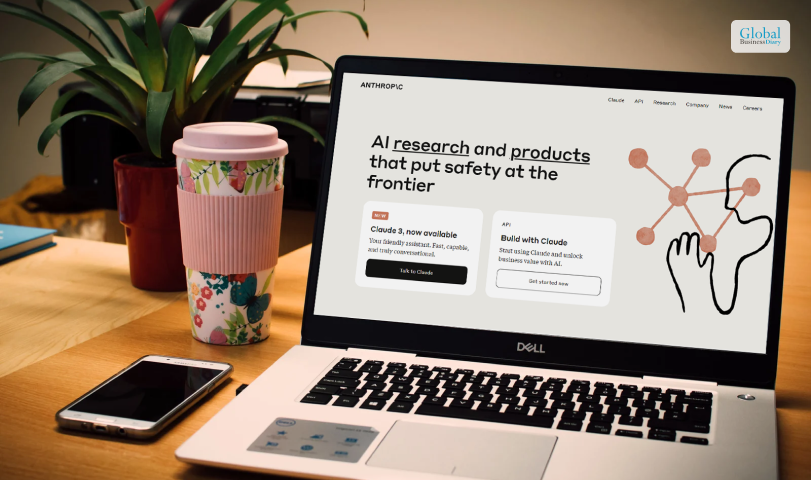
This San Francisco based company is also opening new dimensions for using AI in business processes.
Among the current ai companies, Anthropic holds a unique place. It is one of the few companies working with the concept of AI safety and AI use ethics.
Experts say that there are various downsides to AI. In other words, AI can be used mainly to spread hate speech, manipulate opinion, and usurp vital databases for selfish interests.
Anthropic has addressed many critical concerns facing AI deployment across industries. At the same time, they assist clients in cyber security. Mainly, they deal with the AI use threats of the clients.
Meanwhile, Anthropics also created the platform, Claude.
Like its predecessors, Claude is also a natural language processor. It has conversational capabilities.
You can use the platform to create impeccable content, reduce workload, and satisfy customers.
7. Tesla

Tesla has reached the horizon of AI powered self-driving technology. There might be other AI innovations or Tesla use cases. However, the brand is known worldwide mainly for its self-driving AI-powered vehicles.
In the US, Tesla has the highest market share (56%).
But what AI innovations are used by Tesla?
To name some, we can talk about its AI’s real-time data and instruction processing capability. We must also speak of Tesla’s ability to create a safe autonomous driving ecosystem.
With a current revenue of $94.74 billion, Tesla still tops the chart of best AI hardware manufacturers.
8. Apple

When was the last time you had a conversation with Siri?
We can all admit that Apple built the most popular, if not most effective, interactive AI.
Apple’s AI based innovation is spontaneous and cannot be ignored.
For instance, the latest iPhones have the A12 chip. The chip can use a neural network for image and speech recognition.
Apple is also planning a global ecosystem of AI related brands. The firm has invested in 20 AI-powered startups since 2010.
Most people also say Apple’s Face ID is unparalleled.
9. Adobe Inc
Only a few of us talk about Abobe’s AI products. But that does not mean that their Firefly generative ML model is less in strength.
The Sensei AI of Adobe also uses ML for their products like:
- Adobe Analytics
- Target Products
- Campaign
Recently, Adobe’s Ai assistant also emerged. Among all AI companies, Adobe is the first to create readers’ AI assistants (dedicated).
These significant AI innovations earned Adobe a 10.76% YoY growth in revenues.
10. Intel
Intel is a legendary user of complex AI-powered algorithms that make computer hardware and software. Experts say Intel is one of the leaders in processing accurate real-time information using AI.
As a result, modern complex computing units are faster and more secure.
Intel is also creating AI solutions for healthcare and online security businesses.
Wrapping Up……….
The bottom line is that ai companies are still investing to achieve disruptive growth and success. Most ai companies are tech giants. However, Tesla is an exception. In the future, the dynamic market of AI companies also sees new market leaders.
For More Business Related Articles Click Below!!

1 response to “The 10 Best AI Companies in the World”

Jack
September 01, 2024 at 12:44 pm
Hi, I'm Jack. Your website has become my go-to destination for expert advice and knowledge. Keep up the fantastic work!
Recent
Dinmukhamet Idrisov and a Gold-Mine Dispute From Kazakhstan’s Oligarchic Past
Oct 16, 2026

Memory Chips Are Becoming More Important in the AI Era
Aug 06, 2026

Why Enterprise Web Applications Still Choose Angular for Long-Term Growth
Aug 04, 2026

Due Diligence Decoded: Why Careful Evaluation Still Wins in Business
Jul 11, 2026

Related Articles

2-1 Buydown: Essential Things To Know About It
A 2-1 buydown is a type of mortgage financing arrangement that involves temporarily reducing the interest rate on a mortgage loan. This is especially true for the first few years of term loans. This reduction in interest rate is achieved by "buying down" the interest rate with upfront payments or points. You must develop and generate a clear idea about this concept. Without knowing the calculation process, things can turn worse for you in all possible manner. Try out the perfect solution that can make things work perfectly well in your favor. Without proper planning, things can turn worse for you. Try out the best solution that can make things easier and effective for you in the process of your calculation. How 2-1 Buydown Works? There are several ways 2-1 buydown works. You need to know the ways that can make your process of working easier in this process. Some of the effective ways are as follows:- 1. Initial Interest Rate At the start of the mortgage, the borrower is offered a reduced interest rate for the first year. This interest rate is typically 2 percentage points (2%) lower than the fully indexed interest rate. For example, if the fully indexed interest rate is 5%, the initial interest rate under the 2-1 buydown would be 3%. Distribution channels will help you in achieving your goals with ease. 2. Gradual Reduction Over the subsequent years, the interest rate gradually increases. In the second year, the rate is increased by 1 percentage point (1%). So, using the example above, the interest rate in the second year would be 4%. In the third year and beyond, the interest rate typically returns to the fully indexed rate, in this case, 5%. 3. Stable Longterm Rate The borrower or the seller may pay a lump sum upfront to fund the buydown. This upfront payment is used to compensate the lender for offering the reduced initial interest rate. The payment can be in the form of discount points, which are prepaid interest paid at closing. Strategy Consultant can make things easier for you. What Is The Function Of 2-1 Buy Calculator? There are several ways that you can adapt to buy a 2-1 buy calculator while attaining your requirements with complete ease. Some of the core functions of the 2-1 buy calculator are as follows:- Making proper payment calculations. Developing the amortization schedule. Making total cost comparison. Effective budgeting and planning is possible with amortization. The decision-making process will become easier for you in the long run. 2-1 buydown calculator serves as a valuable tool for borrowers considering a mortgage with a buydown arrangement. It enables you to assess the financial impact of lower initial payments followed by gradually increasing payments. Strategy consulting can make your job easier using this tool. By providing detailed payment schedules and cost comparisons, it assists borrowers in making informed decisions about their mortgage financing. Benefits Of 2-1 Buydown Application There are several benefits of the 2-1 Buydown application. It can help you to meet your requirements as per your needs. You should try out the best options that can make your life easier by following this process. Benefits For Borrowers There are several benefits for the borrowers when you make the application of the 2-1 Buydown application in your business. Some of the core factors to know here are as follows:- 1. Lower Initial Payments The primary benefit for borrowers is that a 2-1 buydown temporarily reduces their initial monthly mortgage payments. This can make homeownership more affordable in the early years of the loan when money may be tight. Especially when purchasing a new home. Investopedia states the same thing. 2. Financial Flexibility Lower initial payments can provide borrowers with greater financial flexibility. It can free up funds for other essential expenses or savings, allowing them to better manage their finances during the initial years of homeownership. 3. Budgeting Ease Predictable monthly payments make budgeting more straightforward. Borrowers can plan their finances with confidence, knowing that their payments will increase gradually over time. 4. Qualification Assistance Some borrowers may find it easier to qualify for a mortgage. With a 2-1 buydown, the initial lower payments can reduce the debt-to-income ratio, making the loan more accessible. 5. Future Income Growth A 2-1 buydown is often beneficial for borrowers who expect their income to increase over time. As their financial situation improves, they can better absorb the gradually increasing payments when the buydown period ends. Benefits For Lenders Along with the borrowers, lenders also help your business to get things done on time. You need to get the perfect solution that can make things work perfectly well for you. Some of the key benefits to the lenders are as follows:- 1. Attracting Borrowers Lenders can use 2-1 buydowns as a marketing tool to attract more borrowers. Lower initial payments can make homeownership more appealing, potentially increasing demand for mortgage loans. 2. Reduced Risk Lenders may view 2-1 buydowns as a way to mitigate risk. Lower initial payments can make it easier for borrowers to meet their financial obligations, reducing the risk of delinquency. Foreclosure during the critical early years of the loan. 3. Competitive Advantage Offering 2-1 buydown programs can give lenders a competitive advantage in the mortgage market. Borrowers may be more inclined to choose a lender that provides such financing options. 4. Customer Retention Lenders that offer 2-1 buydowns may retain customers over the long term. Borrowers who benefit from lower initial payments and have a positive experience with their lender may be more likely to stay with that lender for future financial needs. Final Take Away Hence, a 2-1 buy-down can offer you the complete solution to your problems with complete ease. You need to follow the process that can make things easier and effective for you in all possible manner. You can share your views with us in the comment box. It will help us to know your take on this matter. Plan out the perfect solution that can make things easier for you to reach your goals with clarity. Keep in mind that this is a simplified explanation, and mortgage calculations can be more complex, especially when taxes, insurance, and other factors are included. To save time and get accurate results, you can use online 2-1 buydown calculators, which are readily available on various financial websites and mortgage calculators. Need More Business Related News Click Below!! What Is Strategy Consulting? – Career, Importance, And Scope How To Become A Strategy Consultant? Roles & Responsibilities What Is Wholesale Distribution? – Importance, Benefits, And Examples
Nov 23, 2023

How To Get Sponsored For Your Brand? The Best Guide For Beginners
Are you willing to get the sponsorship for your branding purpose? If yes, then you must consider some of the essential things in the light of this matter. To get the sponsorship of your brand, you must develop a proper strategy that can help you get the desired sponsorship at the right point in time. In the Forbes Study, it is mentioned that if you want to develop your business, then getting the right sponsorship is crucial. You can also get the idea from here how to get sponsored on YouTube? There are several essential points that you must consider while you are planning to get the sponsorship of your brand. You must not take things casually here while you are a beginner for getting your brand’s support. Now, the billion-dollar question is how to get sponsored? How To Get Sponsored: Different Ways To Get The Sponsorship You can get sponsorship for your brand; you must follow some of the crucial points in the light of this matter to get a better insight into it. Therefore, let’s explore some of the essential issues on how to get sponsored. 1. Give Your Proposal You must set a wow proposal that can attract the interest of the sponsor towards your brand. You present your CV to the interviewer to catch their attention for getting the job, so you must also develop your proposal n the same attractive way to get the business order in your brand name. There are certain factors that you must consider from your end while developing the proposal. Therefore, let’s explore some of the essential points in the light of this matter to get a better understanding of it like: Tell the story of your company. Describe all the things that you want to do? Describe the demographics of your audience in the best possible manner? All the factors mentioned above are crucial for getting the sponsorship. You must not consider things casually here. You must also know how to get sponsored on YouTube? 2. Offer Some Incentives To The Sponsor Are you planning to develop your brand image in the best possible manner? If yes, you must consider some of the crucial but essential points to expand your business in the right direction. Therefore, let’s explore some of the vital points to get a better insight into them. Here are some of the tips that you can follow:- Give your sponsor a free booth for the trade shows and exhibitions. On event, promotional flyers, and banners, place the names of your sponsors or the logo. On social media post, or in the blog post, place your sponsor’s name; it will please them to give you the sponsorship. In all your promotional gear, use the logo of your sponsor. Encourage your social media followers to share and like your sponsor’s content. You must give offers to your sponsor that pleases them, and it can help you multiply your business. You must think proactively in this regard, how to get sponsored? 3. Offer Them A Minimum Risk Solution Sponsoring any event is a risk. It involves lots of stakes if your company is of a smaller size. The best way to overcome this problem is to propose a trial deal. You must have the alternative plan ready to reduce both the parties’ risk factors in the deal. Instead, you ask for a smaller amount for the sponsorship and give your sponsor the privilege to select the risk-free option. It will encourage your sponsor to invest the money in your brand. How to get Sponsored on YouTube? You must think proactively in this regard. You cannot consider things for granted. This strategy will work well if you want to work well with your sponsor. It will help your brand to move forward. It will develop your business in the best possible manner. 4. Form Partnership With Most Established Companies You must go for the most established brand to develop your brand in the best possible manner. The reason is it will help you to build your brand image in the best possible way. Select that brand to help your business give the boost to move forward to the next level. You must have the right strategy in place to develop your business in the right direction. In the Hub spot report, you will understand how best marketing practices can help your brand grow. It can help your business grow in the right way as you will get additional advantages from your co-partnering brand. You must have an idea how to get sponsorship? It will help you to improve your brand image in the best possible manner. 5. Study What Your Potential Sponsors Want From You There are several essential factors that you must consider from your end that can help your business to grow in a better manner. Correctly do your homework before you get the sponsorship from your sponsor. How to get sponsored is one of the prime questions that most entrepreneurs have in their minds? You must remember some of the essential points in the light of this matter to get a better idea about it. You must understand how to get sponsored? From the below-mentioned points. Do your sponsor take part in any of the recent events? Are there any changes in the form of leadership? Do some current events effects the sponsorship? Are you launching a new product? Hence, some of the essential factors can help your brand develop your business in the best possible ways. You must not ignore these points at the time of your branding. The more you can think pro-actively, the better you can understand the crucial points in this regard. From this article, you can get the insights of getting sponsorship. Conclusion Remember one thing that “Champions are not made in the ring they are merely recognized there.” If you want to get the best sponsor for your brand, you must make your research work in the best possible manner. The only thing that matters here is applying your mind and the consensus to boost your brand image in the best possible way. You must not lose your sponsor due to your small but irrevocable mistakes that can develop doubt in your target audience’s minds. The only thing you cannot compromise here is not to get the sponsorship from the best person. You must have the right idea of how to get sponsored by the right company and person for your brand. Read Also: How To Create A Powerful Business Continuity Plan? Top 5 Best B2B Marketing Strategies For The Entrepreneurs In 2021 5 Most Powerful Marketing Strategy That Will Change Your Business In 2021
Feb 12, 2021
What Is Bottleneck In Business? Everything You Should Know About It
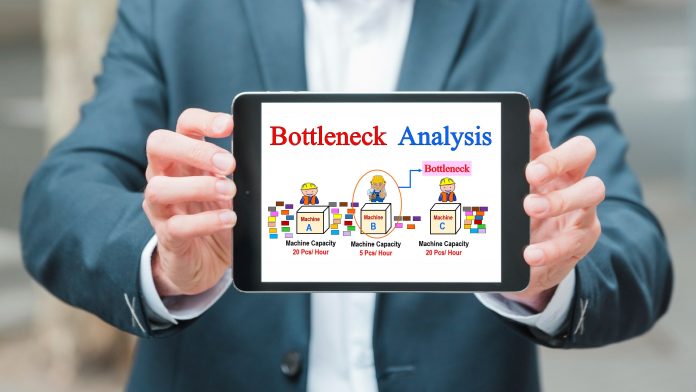
Do you want to know what a bottleneck in business is? If yes, then read this article carefully, and you will get all the answers to your query. A bottleneck is known as the congestion point in the production process. In this scenario of bottleneck, the production stops, and the systems slow down. It severely affects the productivity of an organization. You cannot make your selection and the choices in the dark. Apply the equity theory to get over this situation. The inefficiencies caused by the bottleneck in business increase the cost of production and delay the production process. Most organizations cannot recover from the bottleneck situation and collapse due to it. What Is Bottleneck In Business? In a business context, a bottleneck refers to a point in a process or system. Here the flow of work is significantly impeded or slowed down. It causes a delay in the overall output or efficiency of the system. This is a constraint that limits the capacity of the entire process. It often results in inefficiencies, increased lead times, or decreased productivity. How Do You Recover From A Bottleneck Situation In business? There are several methods you can employ from your end to recover from the bottleneck situation in your business. You need to know the methods well to have a better idea of it. Try to recover from this situation as soon as possible. As it can hamper the growth of your business significantly in the long run. Let’s find out some of the techniques to recover from it quickly. 1. Identify The Bottlenecks Analyze the workflow and processes to pinpoint the specific stage or area causing the slowdown. You need to identify the exact point of your production process that is creating the problem for your business. Crosscheck the areas of your bottlenecks in business and why they are creating such a mess in your operation process. Only then can you solve your issues easily within a limited time. 2. Assess Impact & Prioritize Evaluate the impact of the bottleneck on overall operations. Prioritize based on the severity of the impact on revenue, customer satisfaction, or other critical business aspects. The bottleneck in business can kill the possibilities of your business growth. You need to identify the area of your business that gets impacted severely due to the bottleneck. Furthermore, it will help you take further steps with ease. Supply chain risk management is the best example of this situation. 3. Immediate Mitigation Implement short-term solutions to alleviate the bottleneck's immediate effects. This might involve redistributing tasks, reallocating resources, or adjusting work schedules temporarily. Your employees may also have higher levels of dissatisfaction in the workplace. It can easily create a bottleneck in business. You need to understand the scenario and then take the necessary actions. 4. Analyze The Root Cause Of Bottleneck In Business Dig deeper to understand the causes of the bottleneck. Examine factors such as resource limitations, process inefficiencies, technology constraints, or dependencies on specific steps/people. Find out the root cause of the problem, then you can go for the best solution. Once you know how to solve the problem, it will become easier for you. 5. Implement The Long Term Solution Develop and implement strategies to address the underlying causes identified. This might involve process redesign, technology upgrades, resource reallocation, or retraining of staff. Try to make implementations of the long-term solutions to your business problems. It must not impact your business for a longer duration of time. Otherwise, things can become tougher for you. Reduce the capital expenditure by reducing bottlenecks. 6. Monitor & Measure Continuously monitor the workflow and measure performance after implementing changes. This helps assess the effectiveness of solutions and identifies any new bottlenecks that might arise. Once the bottleneck problem is resolved, you need to monitor it continuously. So that it did not create any kind of problem in your business operation again. You must stay alert to this fact regarding the recurrence of the bottlenecks in business once the problem is solved. 7. Continuous Improvement Foster a culture of continuous improvement. Encourage teams to identify and address potential bottlenecks proactively, ensuring ongoing optimization of processes. You should encourage continuous improvement in the process of production. Otherwise, things can turn worse for you. Try to implement the latest technologies to improve the production process in your organization. It can contribute to the growth of your business on a huge scale. 8. Regular Review & Adaptation Regularly review processes, systems, and workflows to adapt to changing business needs or growth. Adaptation ensures scalability and prevents bottlenecks from recurring. A business needs to keep on working with the environmental changes. You cannot stick to your old strategy once and forever. Try to rebuild your new strategies in such a way that it can boost your production process with ease. 9. Cross Training & Redundancy Implement cross-training programs to ensure multiple team members are capable of handling critical tasks, reducing dependency on specific individuals. Redundancy in systems or resources can also prevent future bottlenecks in case of failures. You need to train your employees from time to time. It will increase their confidence in the workplace. Ultimately, it can improve the proficiency of your employees by a huge margin. 10. Collaboration & Communication Foster open communication and collaboration among departments. This allows for early identification of potential bottlenecks and enables a swift response to mitigate them. You must enable healthy communication among teams to foster the growth of your organization. However, it an also boost the productivity of your organization. Final Take Away Hence, these are some of the effective methods you can employ to reduce the bottleneck in business. You need to understand the business scenario first, and then you have to take the right actions. It can help you to reach your business goals with ease. You can share your experiences with us. Comment on this matter and highlight the areas of the article you like most. Ensure that you follow the correct method to reduce business complications. Try to think out of the box to solve the issues of your business. Reduce the ill effects of bottlenecks as soon as possible otherwise, it can kill the possibility of your business growth. Interested In Business Read The Best Articles By Clicking Below!! What Is a Bear Hug? Let’s Discuss The Benefits Equity Theory: A Balancing Act for Modern Workplaces What Is A Distribution Channel? Essential Things To Know About It
Dec 20, 2023

How To Start A Business In 2024 – Best Business Strategies
Are you planning to start your business in 2024? If yes, then you must have the best business strategy to implement your thoughts into action. You cannot consider things for granted. You need to think proactively to develop your business. Building business is not that essay, especially after that hit of COVID-19 in 2020. If you are confused about how to start a business? Then, you need to follow specific tips to do that more effectively. You must consider several points that will help your brand to move further in the pathway of success. Do not lack in your passion for running your business in the best possible manner. Try to know what you need to know for starting a business. Essential Tips To Start Your Business In 2024 Several tips are there that can help your brand to develop. You must consider several aspects in the light of this matter to build your business. Therefore, let’s explore the tips one after the other to get a better insight into them. You need to know how to start a business. 1. Improve Your Leadership Skills If you want to develop your business, then you must try to improve your leadership skills properly. You must ensure that your employees stay motivated and give their best services when it requires them to deliver the same. It is very crucial that your team must stay motivated all the time. To maintain a dynamic business environment, a motivated group of professionals is essential. It will help your business to remain relevant and profitable. The year 2024 will be the most valuable year for entrepreneurs and business leaders. You must plan properly to make your current year successful. You can follow ceratin strategy to become successful in that like Setting up team meetings weekly. You must set up team goals properly to achieve your business goals. Create a positive work environment. Consider the core interest area of your team members. What do you need to know for starting a business? 2. Build A Winning Team You can achieve your business goals when you can create a winning team for your business. Try to be aware that a strong team’s contribution is vital to every successful business. Recognize their valuable assistance in your business. Building a successful team does not mean that you recruit people with the right mix of professional skills. It means that you must recruit the best people who can help you to achieve your business goals and objectives in the best possible manner. More so, it can help your brand to develop in the right direction. You must have people around you who must share your business vision with their colleagues and outsiders positively. Every teammate can bring different types of skill set to the table. How to start a business may still be the question in the mind of many people. 3. Develop A Well Crafted Business Plan You must develop a well-crafted business plan to achieve your goals in the best possible manner. A proper business plan is essential as it helps the entrepreneurs to take the right set of strategic steps to develop their business. A good business plan will help you achieve both the short term and the long term business objectives. You need to address some specific questions that will help you develop your brand strategy in the best possible manner. Your business plan must have the following components in it that you must address in the best possible manner Like: - What are your business priorities? What is your product or service? Who is your target audience? What are the different ways you can reach your target audience? What are the products and services your people must buy from you? What are your contingency plans to save your business? These are some of the fundamental questions that you must address before making your business plan effectively. 4. Practice Creative Solving Problems You must practice solving the problems of your day to day business affairs creatively. In addition, try to think out of the box to develop your branding policy. You must develop a proper plan to make your business successful. Create an innovative business plan to get to your desired business goal. Furthermore, Put your concentration on what business goals you must perform, not on how to start your business. You must plan creatively to develop your brand image in the best possible manner. Creative problem-solving ability will help you to boost your brand image to a great extent. Additionaly, according to Forbes’s study, it is clearly stated that 92% of the business have to reinvent themselves to compete with the other brands in the market. 5. Take Advantage Of The Marketing Tools You must take advantage of the marketing tools that can help your business to the next level. Also, it will help your business to grow in the right direction. You must consider several factors that will help your business to go into the new dimension. Usage of the correct marketing tools is very crucial to improve your business. You must not falter in this regard. Avoid keeping doubt in your mind while you want to implement your business plans effectively. Conclusion Hence, if you want to develop your business, you must follow the above steps. It will help your business to grow properly. You must create a proper marketing strategy that can help your business to boost your business in a short period. You cannot achieve your business goals unless you have a strong team with you. Accuracy in the business policy plays a vital role in developing your business plan; you must not consider things for granted here. You must be vigilant in your policy-making and business strategy to build your business planning in the right direction. You must not make rash decisions while framing your business policies.
Feb 11, 2023