





The Power Of SEO: Elevating Your Online Presence

SEO (Search Engine Optimization) is a digital marketing strategy focusing on enhancing a website’s visibility in search engine results.
It involves optimizing website design, content, and coding, use of relevant keywords, building high-quality backlinks, and ensuring mobile-friendliness. This increases organic (non-paid) traffic from search engines like Google, Bing, and Yahoo, thus boosting brand awareness, credibility, and customer engagement.
Hiring an SEO analyst for a website is critical in today’s digital age. They optimize your website to achieve higher search engine rankings, increasing your site’s visibility.
More visibility leads to more traffic, potentially translating into higher sales or wider audience reach. Moreover, an SEO analyst understands the latest trends and algorithms, keeping your site relevant. Thus, an SEO analyst plays a crucial role in the online success and growth of your business.
Understanding SEO
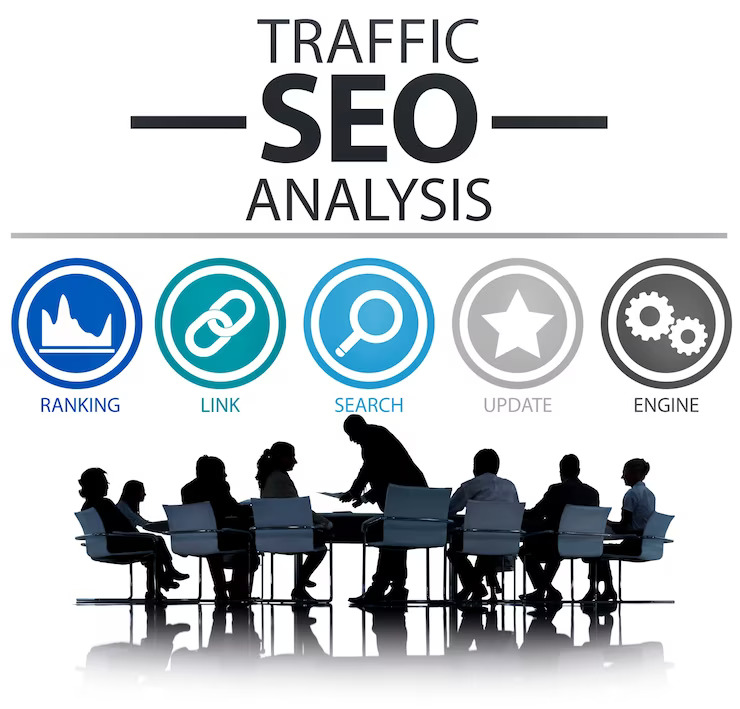
SEO, or Search Engine Optimization, works by enhancing various elements of a website so it appears higher in search engine results. It involves the incorporation of relevant keywords and phrases in a website’s content, such that search engine ‘crawlers’ can identify them.
This, along with other factors like UX/UI design and backlinks, helps improve website ranking and visibility, thereby generating more organic traffic. SEO is a critical aspect of digital marketing strategy.
SEO (Search Engine Optimization) offers several benefits to your website. It improves your site’s visibility and rankings on search engines, thereby increasing organic traffic.
With SEO, you can target specific demographics and convert visitors into customers by enhancing the user experience through relevant content. It also builds your brand credibility, as search engines are trusted by users. Plus, it’s a cost-effective strategy for long-term business growth.
The Significant Role of an SEO Analyst
An SEO Analyst is responsible for improving a company’s online presence by optimizing its websites for search engines. Their duties encompass researching and implementing keyword strategies, improving website ranking and traffic, analyzing performance through SEO tools, and generating reports to illustrate progress.
They also work on website design to ensure it is user-friendly and often cooperate with content creators to incorporate SEO best practices. The overall aim is to increase visibility and conversions.
An experienced SEO Analyst can profoundly impact a business website. Their expertise can optimize a website’s visibility, increase its ranking on search engine result pages, boost organic traffic, and improve conversion rates.
The analyst’s ability to perform comprehensive keyword research, analyze competitors, and understand algorithm changes is vital to maximize the site’s potential. Essentially, the expertise of an SEO Analyst can elevate a business’s online presence and increase revenue.
The impact of SEO on website visibility
SEO, or Search Engine Optimization, plays a significant role in enhancing website traffic. It involves optimizing a website and its content with relevant keywords, enhancing the site’s visibility in search results.
SEO not only helps in attracting more visitors but also attracts quality traffic with higher conversion potential. The more SEO-friendly a website is, the higher it ranks on search engines like Google, leading to increased visibility and consequently higher website traffic.
Website ranking on search results is crucial for digital visibility and business growth. It directly affects the amount of traffic your website receives. A higher rank increases the chance of internet users finding and engaging with your business.
It’s also a sign of credibility and relevance to both search engines and users, contributing to user trust and brand reputation. Therefore, optimizing your website for search engine ranking is an essential part of online marketing strategies.
Choosing the right SEO Analyst
When hiring an SEO Analyst, consider their analytical skills, understanding of SEO trends, and proficiency in SEO tools. Experience in keyword research, content optimization, link building, and SEO audits is vital.
They should understand your business niche and have a proven track record of improving website rankings. It’s also crucial that they possess excellent communication skills to effectively articulate strategies and suggest improvements. A certified SEO Analyst with technical expertise can drive your business’s online visibility.
When examining an individual’s portfolio or previous work, look for consistent quality, creativity, and versatility. Ensure that their style aligns with your project or company’s aesthetic. Their portfolio should showcase a range of skills and be updated with their most recent work. It’s also essential to assess practical elements like their ability to meet deadlines and their responsiveness to feedback. If possible, look for testimonials or seek out reviews of their past performance.
The process of SEO analysis

A typical SEO audit involves an examination of a website’s on-page and off-page performance to determine its rank-ability on search engines. This process includes analysis of website speed, mobile-friendliness, URL structure, meta descriptions, keyword relevancy, and backlinks. The audit aims to identify issues that could be hindering the site’s organic search performance and provides recommendations for necessary improvements to enhance SEO effectiveness.
Continuous SEO monitoring and updating are vital for maintaining and enhancing the online visibility of a website. It helps keep your site relevant in ever-changing digital landscapes by adapting to updated algorithms, user behavior, and market trends.
Continuous SEO activities not only ensure a higher ranking in search engine results, but also improve user experience, leading to increased traffic, conversion rates, and return on investment. Without consistent SEO monitoring and updates, even the best-planned strategies can become ineffective.
The potential ROI on hiring an SEO Analyst
An SEO analyst can significantly increase your revenue by improving your website’s visibility on search engines. They devise strategies to amplify your content’s reach, ensuring it appears in relevant keyword-related searches.
This increases your chance of attracting and converting prospective clients, driving more high-quality organic traffic to your site. With their expertise in user experience, conversion optimization, and web analytics, an SEO analyst assists in creating an engaging and user-friendly website that heightens customer retention and boosts sales.
Hiring an SEO analyst may seem expensive initially; however, the potential benefits often outweigh the costs. An SEO analyst can boost your website’s ranking on search engines, increasing visibility and bringing more organic traffic.
Higher traffic usually translates to more leads and sales, subsequently improving your business’s revenue. Thus, though the upfront costs for hiring an SEO analyst can be high, the potential return on investment can make it a financially valuable decision.
Read Also:
Tags:

Recent
Dinmukhamet Idrisov and a Gold-Mine Dispute From Kazakhstan’s Oligarchic Past
Oct 16, 2026

Memory Chips Are Becoming More Important in the AI Era
Aug 06, 2026

Why Enterprise Web Applications Still Choose Angular for Long-Term Growth
Aug 04, 2026

Due Diligence Decoded: Why Careful Evaluation Still Wins in Business
Jul 11, 2026

Related Articles
Digital PR: The Gamechanger Of The Marketing Landscape
Digital marketing has changed the face of marketing and given small-to-medium enterprises (SMMEs) and start-up firms the opportunity to sell their products and services in the same manner as major corporations, hence it meets the definition of a game changer. Digital marketing really outperforms traditional marketing, such as advertising in magazines or newspapers, in that it allows you to track the success of your advertising and determine where you should focus more of your marketing budget. What Is Digital PR? Public relations techniques known as "digital PR" are used to advance and safeguard a brand's online reputation. In order to reach and engaging target audiences, it entails producing and distributing content, establishing connections with important influencers, and utilizing social media and other digital channels. Digital PR agency uses the power of the internet to reach a larger, more varied audience than traditional PR, which mostly relied on print and broadcast media. It also offers options for real-time engagement and two-way communication with audiences and enables more accurate monitoring of the impact of PR activities. Digital PR aims to improve a brand's reputation online, boost its exposure and trustworthiness, and increase website traffic and sales. Importance Of Digital PR In The Marketing Landscape A bigger and more diversified audience can be reached by firms via digital channels like social media, influencer marketing, and content distribution thanks to digital PR. Cost-effectiveness: Digital PR is more economical than traditional PR because it does not require costly print and television commercials. Measurable outcomes: Digital PR makes it possible to monitor and gauge the success of PR initiatives, enabling ongoing optimization and development. Real-time interaction: Digital PR enables brands to interact in real-time with their target market, enabling two-way dialogue and developing a sense of community. Integration with other marketing initiatives: To increase impact and reach, digital PR may be readily combined with other digital marketing initiatives like search engine optimization (SEO) and social media marketing. Building and keeping an online reputation: As customers are more likely to accept suggestions from reliable sources and influencers than commercials, digital PR is essential for both building and sustaining an online reputation for a firm. Key Components Of Digital PR Content creation and distribution: The creation and delivery of high-quality, pertinent, and interesting material are key components of digital public relations. These digital channels include blogs, infographics, videos, and social media posts. Influencer marketing: By collaborating with influencers who have a sizable and active following, a brand's message may be amplified, and it can reach new audiences. Social media engagement: Social media platforms give brands the chance to interact with their target market and instantly address queries, complaints, and issues. Influencer marketing: Influencer relationships are essential for the success of digital PR because they may aid a business by generating buzz, driving traffic, and establishing a reputation. Social media engagement: Reaching out to the media and pitching topics to journalists and relevant media outlets can help secure media coverage and boost exposure for the brand. Data and analytics: To evaluate the efficacy of PR initiatives and make wise choices, digital PR includes monitoring and tracking indicators, such as website traffic, social media engagement, and influencer reach. Brand reputation management: Digital PR includes keeping an eye on and maintaining a brand's online reputation, as well as handling any bad press and preserving the brand's reputation. Rise Of Digital Media And The Need For Digital Pr The development of digital media has significantly changed how companies interact with and reach out to their target markets. Consumers are spending more time online and consuming more digital information than ever because of the ubiquitous use of the internet and the growth of digital gadgets. As a result of this shift in consumer behavior, brands now have new opportunities to connect with and engage with their target audience via digital channels. As a result of the overwhelming amount of information customers are exposed to and their growing skepticism of conventional advertising, new problems have arisen. In this setting, digital PR has grown in significance as a means for firms to connect with their target market, establish credibility, and set themselves apart from their competitors. Digital PR gives brands the chance to reach new audiences, interact with their target audience in real-time, and establish and uphold a good online image by utilizing digital media. It may assist organizations in establishing themselves as thought leaders and gaining the trust of their target audience by producing and disseminating high-quality, pertinent, and engaging content, as well as developing connections with important influencers and media sources. Digital PR Tactics: Content Creation And Distribution: The production and dissemination of content are one of the most essential elements of digital PR. Brands can become thought leaders in their field and gain the trust of their target audience by producing high-quality, timely, and interesting content. There are numerous ways to present content, such as blog entries, infographics, films, social media posts, and more. Brands may reach a larger and more varied audience by distributing this information through digital channels like social media, email marketing, and content distribution networks. In order to extend the audience of content and secure media coverage, which can help raise visibility and boost website traffic, digital PR also entails the use of influencer marketing. Influencer Marketing: Another essential element of digital PR is influencer marketing, which enables businesses to partner with people who have huge and active followings in order to reach new customers and establish a reputation. Working with influencers allows brands to access their fan base, expand the reach of their message, and establish them as thought leaders in their field. Product reviews, sponsored content, and social media updates are just a few examples of the varied ways influencer marketing may be used. Influencer marketing may be a very efficient approach to reaching new audiences, raising brand awareness, and establishing brand reputation when done right. Social Media Engagement: An important element of social media engagement in digital PR is the chance it gives firms to interact in real-time with their target audience and establish a solid online reputation. Brands can interact with customers on social media to reach new audiences, address their concerns, and foster brand awareness and adherence. Brands can use social media channels to create and share high-quality, relevant, and interesting content, participate in influencer marketing campaigns, respond to customer questions and grievances immediately, and grow a loyal following. Media Outreach And Pitching: As they give brands opportunities to acquire media coverage and establish trust with their target audience, link-building and pitching are essential elements of digital PR. Brands may share their story, spread their message, and position themselves as thought leaders in their sector by contacting journalists, bloggers, and other media sources. Digital PR specialists need to have a thorough awareness of the media environment and be able to recognize the journalists and outlets that are most appropriate for their business. Measuring The Success Of Digital PR: Setting Goals And Kpis: A crucial step in gauging the effectiveness of digital PR campaigns is creating goals and KPIs. It can be challenging to evaluate the results and efficacy of digital PR activities without specific goals and KPIs. The following are some common goals and KPIs for digital PR: Increased brand awareness: Through digital PR, brands can aim to become more visible and connect with new audiences. Tracking indicators like website traffic, social media interaction, and media placements can be used to gauge this. Better reputation management: Digital PR can be utilized to improve a brand's online reputation and immediately address unfavorable comments. Tracking measures like sentiment analysis, customer reviews, and online mentions can be used to gauge this. Tracking And Analysing Metrics: Digital PR relies heavily on tracking and analyzing data since it enables marketers to gauge the success and impact of their initiatives. Brands may use metrics and analytics to continuously improve their outcomes and make data-driven decisions about their digital PR strategy. Some frequent KPIs used in digital PR include the ones listed below: Media placements: Tracking media placements, such as those in articles, blogs, and news stories, can give you an idea of how visible and well-known your brand is. Website traffic: Analysing website traffic, such as the number of unique visitors and pageviews, can give information on how well digital PR campaigns have been done at directing people to a brand's website. Social media engagement: Tracking engagement indicators on social media, such as likes, comments, shares, and follows, can help determine how successful a campaign is. Conversion rate: Analysing the conversion rate—the proportion of website visitors who complete an activity, like making a purchase or subscribing to a newsletter—gives information on how well digital PR works to encourage conversions. Sentiment analysis: Using sentiment analysis, such as keeping track of the tone of online comments and reviews, can give information about how the public views a business and how digital PR activities have affected reputation management. Conclusion: With technology evolving continually and new digital channels emerging, the future of digital PR looks very promising. To make the most of the technology in the marketing landscape, you must hire a digital PR agency and acquire its benefits. Read Also: How To Create A Powerful Business Continuity Plan? Top 5 Successful Serial Entrepreneur Of All Time – 2021 Updates How To Create A Powerful Strategic Marketing Plan – Step By Step Guide
Mar 15, 2023

Marketing Mix – What Are The 4 Ps Of Marketing?
Having the best product in the market never helps if the company fails to get the word into the market. Your target customers should have a good idea of what you offer so that the company is able to develop its brand in the marketplace. They must know what you are trying to offer. However, the strength of your marketing mix is the important thing that will enable you to achieve your marketing goals. In this article, you will learn what a marketing mix is, its purpose, and how it works for different companies in different situations. In addition to that, we will also discuss how the marketing mix is performed with the help of the 4P structure, as well as the 7P structure. Finally, we will also discuss some other essential marketing tools. Hence, to find out more about the marketing mix read on through to the end of the article. What Is A Marketing Mix? According to Indeed.com, “A marketing mix includes the tactics and tools you use to market your company’s offerings and influence customers to buy them. The best marketing mix is one that uses up-to-date market research and data-driven strategies to reach customers and drive sales.” In some cases, to develop a marketing mix for your business, you might need to change your current marketing strategy. If your marketing mix is not in a continuous state of flux, you must be doing something wrong with your marketing strategy. You will need to understand that just because something worked for the business to get more customers ten years ago, or even three years ago, might not work at the present time. Hence, you will need to consistently assess your target audience from time to time. Apart from that, you must also evaluate your marketing tools as well as the marketing plan you use for the execution of the marketing process. In a comprehensive marketing plan, there are multiple areas of focus if one takes the marketing mix into consideration. In most cases, a company’s marketing mix is classified into 4Ps - product, placement, price, and promotion. Read More: Market Orientation – What Is It, And How Does It Work? Why Is Marketing Mix Important? According to Investopedia, “At its core, a marketing mix is focused on promoting a product or service to generate revenue for a company. On the whole, it integrates key marketing strategies that create brand awareness, build customer loyalty, and drive product sales.” Rather than running through only one marketing message, effective marketing touches on various broad ranges. This helps the brand to reach a wider audience. Furthermore, with the help of the 4Ps of marketing, it becomes easier for marketing professionals to maintain more focus on the major things that matter. It also gets easier for organizations to make more strategic decisions when they are launching a new product or revising an existing product. What Are The 4Ps Of Marketing Mix? The following are the four P classifications of the marketing mix strategy in business: 1. Product This is the product or service that the business offers to satisfy the needs and demands of customers. To market the product, the company needs to determine what differentiates it from competing products. 2. Price Here, the business needs to find out what the actual price of the product is and what the consumers are willing to pay based on the demands of the product in the market. Marketers also find out the costs based on R&D, manufacturing, marketing, and distribution so as to do cost-based pricing. 3. Placement It is also important for marketers to find out the type of product they are trying to sell to the consumers. They need to determine whether they want to categorize the product in the basic or premium category. 4. Promotion These include the forms of marketing practices the marketers are willing to employ to promote the product in the market. Here, the budget is one of the major factors to consider. In addition to that, marketing professionals also construct a message based on the previous three Ps as they try to reach their target consumers. What Are The 7Ps Of Marketing Mix? (Three More Ps) Here are the three more Ps that are also used in a business’s marketing mix: 5. People People include the employees that are interacting directly with the consumers. In such cases, a business might consider showcasing a positive company culture, which becomes a part of their brand strategy. Many companies also include customer relationship management to increase customer loyalty. 6. Physical Evidence Physical evidence might include the packaging of the product, as well as the structure and layout of the physical store. This is done to create a strong impression on the customers. 7. Process Here, the marketers identify areas from the standpoint of logistics so as to ensure that customers are provided with a seamless experience of the product or service. Other Helpful Marketing Tools According to Investopedia, “Not all marketing is product-focused. Customer service businesses are fundamentally different than those based primarily on physical products, so they often will take a consumer-centric approach that incorporates additional elements to address their unique needs.” In addition to all the seven Ps, marketers also consider some other elements in their marketing strategies. Some of them include furniture, signage, and layout. In addition to that, marketers also study the needs and demands of customers (both present and future possibilities). To do this, they get feedback from customers and define the type of feedback. Read More: Market Cannibalization – Definition, How Does It Work, Example, And More Wrapping Up The marketing mix is one of the most essential requirements for a brand if it wants to successfully promote its products and services in the marketplace. As per the strategy, companies make use of four Ps, namely, product, price, placement, and promotion. The ultimate goal of working with a marketing mix is to generate more sales for the business. In addition to the four Ps, in some cases, three more approaches are integrated, namely, people, process, and physical evidence. This is done to reinforce a marketing strategy that is more centered on customers. Do you have any more information to offer related to the marketing mix? Share your information with us in the comments section below. Read Also: Marketing Campaigns: How To Do It? – Steps To Follow What Is A Venture Capitalist, And What Are Their Functions? Project Management: What Is It? – Major Types, Examples, And More
Sep 15, 2023

The Power Of Brand Storytelling In Marketing
In an ever-increasingly competitive global marketplace, consumers find themselves bombarded from all angles with messages from companies vying for business. The power of brand storytelling cannot be underestimated — it’s a potent tool that, when used properly, can cut through the daily noise of other companies’ marketing, and connect in a more personal and lasting way with an audience. In a world driven by digital experiences, the art of storytelling is more important than ever, as it allows brands to humanize their identity, foster emotional connections, and build unwavering customer loyalty — the last of which is at a premium when it comes to repeat business. Digital experiences are dominant in the world of marketing and storytelling, but there is room for more traditional marketing techniques alongside that. Let’s take a closer look. Beyond Products And Services ‘Experience’ and ‘journey’ have become watchwords in modern marketing. In a marketplace saturated with similar products and services, brands are discovering that consumers are not merely purchasing a product; they are investing in an experience. Through storytelling, brands can make consumers feel that they are making not only a purchase but a lifestyle choice. A great example is Apple, whose brand narrative revolves around innovation, creativity, and pushing the boundaries of what's possible. By telling stories that go beyond the features of their products and instead focus on how these products fit into the lives of their users, Apple has created a brand identity that extends beyond technology – it's about inspiration and lifestyle. It has also always appealed to the end user rather than focusing on business computing solutions. Fostering Emotional Connections Brand storytelling can evoke a sense of emotion in consumers — effective storytelling involves the customer in the spirit and mission of the brand. Take Nike's "Just Do It" campaign, for instance. The brand isn't sportswear; it sells the spirit of determination, the will to overcome obstacles, and the joy of achieving one's goals. Consumers are buying into empowerment and athleticism. Branding Techniques It’s no secret that digital channels are far and away the most popular in today’s marketplace — after all, everyone is glued to their phones half the time. Powerful visual imagery can indeed be communicated effectively via video campaigns and social media messages. But there is also space for more traditional methods — printed materials can also effectively build brand awareness and storytelling. Print also has a longer lifespan than digital content, which is often scrolled past. A tangible object you can read can often communicate your brand message more effectively. No matter what your product or service is, combining digital and traditional methods will increase your level of communication with your customers. Differentiation And Trust In a competitive market, where products and services often appear interchangeable, brand storytelling becomes a powerful tool for differentiation. When consumers are faced with a myriad of choices, they are more likely to gravitate towards brands with narratives that align with their values and beliefs. We live in an era where authenticity is highly valued, and brand storytelling serves as a vehicle for building trust. Consumers are more likely to engage with brands they perceive as genuine and authentic. Storytelling provides an avenue for brands to showcase their values, origins, and the people behind the scenes, creating a transparent and relatable image. The Everlasting Impact On Customer Loyalty While storytelling can be a powerful tool for attracting new customers, its real strength lies in its ability to cultivate customer loyalty, and this is the key to a successful relationship between company and client. Repeat business is at a premium, and when consumers connect with a brand's story, they are more likely to become repeat customers and brand advocates. This loyalty extends beyond the product; it becomes a loyalty to the brand's narrative, values, and the emotions associated with it. Starbucks is a good example of this. By consistently telling this story through its marketing and portraying itself as a home-away-from-home, Starbucks has not only built a loyal customer base but has also become synonymous with the experience of a comforting and welcoming environment. What Is The Importance Of Brand Storytelling, And How Do You Tell One? The brand story has its own importance. It helps the customer comprehend your position and identity in the business world. At the same time, brand stories help understand the reason behind your existence. It will help an individual become your loyal customer. So, let's get going with the discussion so that you form a transparent idea. However, let's try to understand how to write down a brand story. Highlight The Conflict Within Your Story The readers come across hundreds and thousands of data and content. Hence, you have to create a level of interest and charm to connect with the audience. One of the first steps to create a brand story is to highlight the conflict within the story. If you evoke the crisis, only then can you make a storyline that arrests the attention of the audience. You Have To Create The Status Quo Another important aspect that is related to brand storytelling is the status quo. Consumers are faced with overwhelming amounts of messages from brands every single day. Getting your message across can often rely on effective storytelling and taking your customers on a journey with your products and services. Remember, a conflict helps force the protagonists to look for solutions. If there is no crisis in life, then life will be completely bland. In sum, the structure of your brand must first have the status quo, then the conflict, and finally, the resolution of the conflict. Brand Storytelling Story Telling Is Central To Content Marketing Employing brand storytelling is very potent. The humans react to the narrative in a complex way. If you successfully work on your storytelling, then it makes retention quite easy. You have to create the foundation of the story that is very much emotional. Again, good storytelling helps create authenticity. It is found in a study that around 90 percent of buyers believe in authentic stories. So, if you successfully create brand authenticity, then there is a high chance that you will quit strong marketing storytelling. Read Also: How To Improve Energy Efficiency In Your Data Centre Money Tap Loan App: Information, Eligibility Criteria, Interest Rates, Review & More Virtual Data Rooms: What They Are And Their Critical Importance For Businesses
Feb 05, 2024
Top 7 Best Types Of Marketing In 2023
Are you planning to do marketing activities for your business in 2021? If yes, then you must focus on doing it in a better way. You need to understand that you must make your marketing activities stronger to achieve your business’s desired goals if you plan to develop your business. Different types of marketing opportunities are there in the market to look for today. You must identify the types of marketing activity that can help your business grow in the right direction. Develop plans that can help your business grow in a better manner. Focus on doing your business in the right manner. Ensure that you have made your choices in a better way. Types Of Marketing Activities On Which You Must Focus On 2021 There are different types of marketing activities that can help your business to grow in the right direction. Therefore, let’s explore the facts that can help you to achieve your business goals. 1. Optimize Your Google Updates Google Page updates or the experience coming in May 2021 will provide you with the core metrics known as the core web vitals; it will help your business grow in the right direction. The type of marketing activity you want to do depends on your site load time, interactivity, and content stability. It will help you to improve your overall search rankings. You must understand one thing that if you want to develop your business, then you need to understand the metrics of Google in a better way. Develop different types of marketing strategies to grow your business. You can be the owner of the web design agency as it will help you develop the core web vitals of your website. 2. Prepare The End Of Third Party Cookies The third-party cookies will not work any further from 2021 to 2022. You need to reshape your branding process to help your business grow in a better manner. Ensure that you have made the correct choices from your end. Always look for the alternative that can help you in your branding process. Ensure that you have made the right choices from your end. It will help you to achieve the business goals in a better manner. Multiple types of marketing activity can help your business to grow in the right direction. 3. Focus On Retaining The Customers You must focus your attention on retaining the customers. It will help your business to grow in a better manner. Remarketing is the best way to do that. Keep your ads crisp and to the point. It will help your business to grow in a better manner. You must focus your attention on retaining your customers by applying personalized text messages or push notification through smartphones or mobile apps. Ensure one thing this type of marketing must help your business to grow in a better manner. You must not make any mistake while you are remarketing your products on any social media platforms to keep your customers stay aware that you are awake in the market. 4. You Can Start Selling On Social In this type of marketing, you can start selling on social media platforms. It can help your business to grow in a better manner. If you want to grow your business, then social media marketing is an effective means of your branding. You need to understand that if you wish to develop your business, social media marketing can be one of the ultimate ways to do that. Develop your idea in such a way so that it can help your business grow further in a better manner. 5. Follow The Statements Of Purpose With Actions You must follow the statements of purpose with all the related actions to it. It means a statement of your brand that highlights your brand personality. It will help your business to grow in a better manner. If you want to develop your business, accurate statements with actions can help your brand grow in the right direction. You must make efforts to develop your business so that it can help you achieve your goals in a better manner. Brands will do it to enlighten the customers in a better manner. If you want to achieve your business objectives, it can help your business grow better way. 6. Grow Communities You must grow your community to help your business get the real boost, and you can do these types of marketing to develop your brand image. Brands must focus their attention on creating loyal customers. If you want to develop your business, you must focus on developing the community that can help you to enhance your brand reach. Community buildup can enhance your market share to a great extent. Different types of marketing strategies to grow your business you can employ to build your brand reputation. 7. Doing Webinars Doing the webinars will help you to achieve the desired objectives of your brand. You can spread your brand message to a large group of your target audience in a better way. If you want to develop your business, then you need to spread your brand message effectively. These webinars can connect you directly with your target audience, and you can do one-to-one interactions. You must develop the process of your branding innovatively. It will help you to achieve the desired goals of your business. It is one of the innovative types of marketing that you can practice from your end. Ensure that you have given your hundred percent effort into it. Why Must You Experiment On Different Types Of Marketing Practices? You must experiment with different types of marketing practices to gain the maximum market reach in a short time. You need to understand one thing that if you want to develop your business, then you must consider individual essential facts to make things happen in your favor. Business always works in an everchanging environment, and it can push you back if you are not complying with the recent marketing trends to develop your business. Ensure that you have made the right choices from your end to develop the perfect business model. The more you can think pro-actively, the better you can respond to the market needs in a better way. Ensure that you have made your choices in the right direction. Final Take Away Today, the business world is changing rapidly and you need to respond actively. You cannot make things happen in one day. Rather you have to put your efforts in the right direction to achieve success in your field. Different types of marketing opportunities are there in the market which you need to grab for your business development. Read Also: Why Create A Powerful Business Continuity Plan? Different Ways To Start A Business In 2021 – Best Business Strategies How To Create A Powerful Strategic Marketing Plan – Step By Step Guide
Mar 04, 2021