





LazyPay: Information, Eligibility Criteria, Interest Rates, Review & More

LazyPay is a loan app that claims to offer instant personal loans to salaried professionals and self-employed individuals. The LazyPay app is run by PayU Finance and offers borrowers access to credit and pay later options. The credit options from LazyPay range from ₹10,000 to ₹5,00,000. Hence, to know more about LazyPay, consider reading through to the end of the article.
In this article, we will mainly give you an overview and a review of LazyPay. Furthermore, we will also give you details about the loan options that you will get once you use LazyPay. Later on, you will also learn about the loan eligibility of LazyPay and various other factors. Therefore, to get fully informed, read the upcoming sections of the article.
What Is LazyPay?

LazyPay is an app that offers two types of services – namely, pay later options, where you can shop now and pay late, and also personal loan options. With pay-later services, LazyPay offers you to settle your amounts every fifteen days. The auto-repayment feature with LazyPay’s pay later deducts the amount every fifteen days.
On the other hand, LazyPay also offers instant personal loans. You can borrow personal loans up to 5 lakhs INR, depending on your credit score and various factors, including age, salary, job, etc. The loan app claims to give you Flexible EMI options, fast application of loans, and quick approvals of those loans.
Is LazyPay Safe?

With various loan options and pay later related information on their official website, LazyPay seems legit to us. However, due to a variety of complaints from loan borrowers and other customers, LazyPay does not have a good review on the Internet.
Even there are many complaints against LazyPay in the Indian Consumer Forum. The Ministry of Electronics and Information Technology of India has blocked LazyPay on various platforms. They are charged with the misuse of the data of the consumer, which is considered important for national security and integrity.
According to TechCrunch.com, “The LazyPay website has been blocked by several internet service providers in the country. A message on the Prosus-owned website says the action was taken in compliance with the IT Ministry’s order.”
LazyPay Payment – What Does It Offer?
| Loan Aspects | What LazyPay offers you? |
| Loan Amount | ₹ 10,000 – ₹ 5,00,000 |
| Loan Tenure | 90 days to 720 days |
| Rate of interest on loans | 0.05% per day |
| Loan Processing fee | 2% of the loan amount |
| Loan review time | Depending upon the amount of the loan (may take from 5 minutes to 7 days) |
| Late payment of the loan | – Application of Penalties every day based on the overdue loan- Updating the credit score as default with credit rating agencies (CIBIL, CRIF High Mark, etc.) |
| Loan Repayment | Loan repayment is made automatically from the provided bank details as per the approved schedule. |
Once you open the app, you will get a variety of loan options to choose from from different LazyPay Merchants available to offer you loans through the app. However, different merchants have different viewing mechanisms, and depending on the merchant you choose, you can get your loan accordingly.
LazyPay Loan App – Eligibility
The following is the major eligibility-related information that you will need to know before you avail of loans from LazyPay:
| Loan Requirements | Eligibility |
| Age of the borrower | 22 to 55 years old |
| LazyPay credit score | Depends on the type of loan applied for. |
| Type of Employment | Salaried professionals and self-employed individuals. |
| Minimum monthly income | Any monthly income is eligible to take loans |
| Work Experience | Work experience requirements change with the amount of the loan demanded. |
| Required Documents | 1. Salaried Employees- Need to fill out KYC- Verification of KYC- Need to submit bank details- Bank account number & IFSC- Net banking required for auto-repayment 2. Self-Employed Individuals- PAN card required- Address proof (Voter ID or Passport)- Aadhar Card- Bank account number & IFSC- Net banking required for auto-repayment |
How To Delete LazyPay Account?

After LazyPay Bill Payment in LazyPay pays later, you will have the option to delete your LazyPay card permanently. According to LazyPay, “A permanent block deletes your card details and cannot be reversed. Keep in mind that this step will deactivate your virtual card number as well. If you suspect your card or card details have been stolen or compromised in any way, we urge you to permanently block your card as soon as possible.”
Go to your LazyPay account, and find the “Manage Card” section. Scroll down, and you will see an option that lets you permanently delete it.
LazyPay Customer Care

If you are finding problems with any of the LazyPay services, be it pay later or instant personal loan, you can call LazyPay Customer Care no at +91 8069081111 from 9 am to 9 pm any day. You can also go to this page to get help with various issues: https://lazypay.in/needhelp.
LazyPay Reviews
Praveenthomascook:

Krishnasingadi:

Merrview:

Summing Up
Hope this article was helpful for you to get a better idea of the services offered by LazyPay, and various details related to eligibility for loans and pay later options in the platform. Regarding safety, hope you have enough information from the reviews of the customers, and also the safety issues pointed out by the Government of India. We would recommend you be careful and get the information fully before you borrow loans from LazyPay. Do you know of any people facing problems with LazyPay? Share with us some information about that in the comments section.
Read Also About:
Tags:

Recent
Memory Chips Are Becoming More Important in the AI Era
Aug 06, 2026

Why Enterprise Web Applications Still Choose Angular for Long-Term Growth
Aug 04, 2026

Due Diligence Decoded: Why Careful Evaluation Still Wins in Business
Jul 11, 2026

How Hydraulic System Design Impacts Equipment Performance
Jul 01, 2026

Related Articles

Debtor Ghosting You? Here’s How to Collect the Debt Fast And When to Hand It to Taurus Collections
When a debtor goes quiet, it’s rarely “just busy”. It’s usually a decision to delay, avoid, or test whether you’ll keep pushing. And the longer you let it drag on, the harder it gets to collect. Late payment is not a small-business nuisance in the UK. It’s a cash-flow killer. Over 1.5 million UK businesses are affected by late payments each year, with an estimated £26 billion tied up in late payments at any given time. If your debtor is ghosting you, your goal is simple: move from chasing to collecting, fast. Below is a practical, step-by-step playbook you can use today, plus a clear point where it makes sense to hand the job to Taurus Collections Debt Collection Agency, focused on quick, professional recovery. What “debtor ghosting” usually means Ghosting typically falls into 1 of these buckets: They are stalling for cash-flow reasons and paying whoever shouts loudest. They are disputing the invoice informally but avoiding committing it in writing. They think you will give up, discount, or write it off. They are sliding toward insolvency and prioritising survival spending. The key is to stop treating silence like a communication problem and start treating it like a collections process. Step 1: Get your facts tight before you chase Before you send another “just checking in” email, collect your evidence in 1 place: The signed contract, purchase order, or written acceptance The invoice and payment terms Proof of delivery or completion (emails, job sheets, delivery notes) The full statement of account Any dispute emails or comments (even vague ones) The debtor’s correct legal name and registered address This matters because confidence wins. Wobble on the details and you give them room to wriggle. Step 2: Stop being polite and start being clear Polite chasing keeps you stuck in the maybe pile. Clarity moves you into the pay pile. Use a message that is short, specific, and time-bound: What is owed: £X What it relates to: invoice number and date What you need: payment today or a call today What happens next: late payment action and escalation Example (email or WhatsApp style): You have an overdue balance of £[amount] for invoice [number], due on [date]. Please confirm today that payment will be made by [time]. If we do not hear from you, we will begin formal recovery action. Keep it calm. No threats. Just consequences. Step 3: Make contact harder to ignore If you’re only emailing the accounts inbox, you’re easy to ignore. Go multi-channel in a controlled way: Call accounts payable and ask for the exact payment run date Call the buyer, contract manager, or director who benefits from your work Send a letter to the registered office If appropriate, send a final reminder by SMS or WhatsApp You are not being awkward. You are protecting your business. Small businesses already spend an average of 86 hours chasing late payments. You cannot afford to donate that time. Step 4: Use a 7-day escalation ladder Here’s a simple timeline that works well in the UK. Day 1 Call. Follow up by email summarising what was said. Day 3 Second call. Ask a yes or no question: Are you paying today, or do you need a payment plan? Day 5 Send a Final Demand with a clear deadline (48 hours). Attach the invoice and statement. Day 7 Issue a Letter Before Action (LBA). This is the line in the sand. The mistake most businesses make is waiting 30 to 60 days before getting firm. By then, the debtor has trained you to accept delays. Step 5: Add lawful pressure with interest and costs In many business-to-business situations, you can claim statutory interest on late commercial payments at 8 percent above the Bank of England base rate, unless your contract specifies a different rate. You may also be able to claim fixed late payment compensation depending on the size of the debt (under UK late payment rules). This is not about being punitive. It’s about signalling that delaying payment gets more expensive, not less. If you’re unsure what applies in your case, you can still do the most important thing: put the debtor on notice that you will add interest and recovery costs where legally permitted. Step 6: Neutralise the “fake dispute” tactic Ghosting often comes with a last-minute line like: “We had issues with the service.” Your response should be simple: Ask for the dispute in writing within 24 hours Ask for specific details: dates, evidence, what they want Confirm the undisputed amount is due now Example: If you are disputing the invoice, please set out the exact reasons in writing within 24 hours, including evidence. Any undisputed amount remains payable immediately. This stops vague objections becoming a permanent excuse. When to hand it to Taurus Collections You do not need to chase forever. In fact, you shouldn’t. As a rule, consider handing it over when: The invoice is 14 to 21 days overdue and communication has gone quiet You’ve chased 3 times with no firm payment date The debtor promises payment, then breaks the promise You’re spending more time chasing than the profit is worth You suspect the debtor is paying others first You want to preserve the relationship by keeping emotion out of it This is where Taurus Collections fits neatly: you stop being “the supplier who keeps asking” and the situation becomes “a formal recovery process”. Taurus Collections positions itself as a UK-wide debt collection company with fast recovery and options like No Win No Fee and outsourced credit control, which is useful when you want results without building an internal collections function. Why escalation works faster when a professional steps in A debtor can ignore you because there’s no immediate consequence. Professional collections changes the psychology: Your request becomes a demand with structure and deadlines Communication is logged, consistent, and persistent The debtor realises you are prepared to take the next step And crucially, it protects your headspace. Late payments are estimated to cost the UK economy almost £11 billion per year, and thousands of businesses close each year because of overdue invoices. You cannot treat this like an admin. It’s survival. Next steps If a debtor is ghosting you, you do not need more patience. You need a tighter process. Get your documents straight, set firm deadlines, switch channels, issue an LBA, and add interest and costs where applicable. If you hit silence, broken promises, or endless excuses, hand it to Taurus Collections so you can focus on running your business while the recovery is handled properly. Feature Image Source: tauruscollections.com Read Also: Need Help with Tax Debt? Check Out These Relief Options
Jun 09, 2026

Trade With Precision_ Steps To Implement Your Prop Trading Strategy
Proprietary (prop) trading firms have carved a unique niche in the trading ecosystem. They operate on a simple premise: the firm provides capital to traders, who invest these funds in the financial markets. The profits generated are then split between the trader and the firm. This arrangement is particularly attractive for individuals who have the skill but lack the substantial capital required to maximize their trading strategies. However, success in this realm demands more than just understanding market trends. It requires a precise, well-implemented trading strategy. Crafting Your Strategy: More Than Just Numbers Before you dive into the markets with the firm's capital, it's vital to have a robust trading strategy. This isn't merely about deciding which assets to trade or predicting market directions. It's about your trading style, understanding risk management, setting realistic profit targets, and knowing what times you wish to trade. Are you a scalper, a day trader, or a swing trader? Your strategy should reflect this. Furthermore, your strategy must be flexible. The financial markets are not static, and neither should your approach be. Adaptability is key to responding effectively to market volatility. Backtesting: Confidence In Your Approach Once your strategy is outlined, it's not yet time to hit the market. You need to test your approach, which is where backtesting comes into play. It involves applying your strategy to historical market data to see how it would have performed. While past performance is not a perfect indicator of future success, it provides a way to spot potential flaws in your strategy and make necessary adjustments. This step is crucial in building confidence in your approach. Knowing that your strategy has a history of success can provide the psychological steadiness needed when facing the live markets. Live Testing: A Bridge To Real Market Conditions After backtesting, the next step is live testing or paper trading. This involves implementing your strategy under real market conditions, but without using real capital. Many platforms, including FXIFY, offer demo accounts where you can engage the markets in real-time, without the financial risk. This phase is crucial for experiencing market pressures, without the emotions that real losses can bring. Continuous Learning: The Market Is Your Classroom Even after successfully backtesting and live testing your strategy, your education is far from over. The financial markets are a dynamic classroom. Continuing to learn, be it from market patterns, other traders, or additional educational resources, is crucial. Many prop trading firms offer learning resources, including webinars, courses, and one-on-one coaching, to help traders continually refine their strategies. Emotional Control: The Underrated Component Finally, a word on psychology. The best strategies can fail if a trader cannot control their emotions. Fear and greed are potent, and learning to keep these in check is vital. This emotional control is, in many ways, the glue that holds your trading strategy together in the live market. In Conclusion: Precision Is A Process Crafting and implementing a successful prop trading strategy involves meticulous planning, testing, adaptation, and emotional control. It's a process that evolves with every trade you make. However, with careful precision, ongoing learning, and the support resources provided by prop trading firms, you can position yourself to make the most of the opportunities that proprietary trading offers. Remember, in prop trading, precision isn't just a goal; it's the journey. Read Also: bnku stock: microsectors us big banks index 3x leveraged etns tui share price forcast: everything you should know poocoin stock forecast: everything you should know
Oct 31, 2023

Investment Thesis: A Guide To Seed Fundraising
New businesses must invest in office space, machinery, and employees. Most importantly, they have to continue to develop. They will almost certainly need funding from outside sources to carry out their activities. It is common practice to refer to the original funding obtained by a corporation as "seed" capital. However, if you need to learn to attract investors, you will need someone like the B Capital Group to help you get additional information. Before moving on to the final stage, you must make many decisions and go through the planning and drafting processes multiple times. In this section, I will provide you with a quick overview of the investment thesis so that it can serve as a guide for seed fundraising. Stay tuned for further updates! What Is a Thesis on Investments Called? A well-reasoned case in favour of a specific investment strategy, supported by research and analysis, is what is meant when people talk about having an investing thesis. Individual investors, as well as businesses, frequently develop investment theses for themselves or their clients. Analysts and other professionals in the financial industry may generate these kinds of official written documents to deliver to their respective clientele. Acquiring Knowledge of the Investment Thesis A written document that gives information on a potential investment is known as an investment thesis. It is a proposal based on research and analysis typically produced by an investment or financial professional to provide insight into assets and pitch investment ideas. The purpose of the proposal is to present investment ideas and to provide insight into investments. For example, venture capitalists and private equity firms are examples of types of businesses in which the investor would sometimes create their investment thesis. This thesis can serve as a valuable instrument for making strategic decisions. Investors and companies can use an idea to help them decide whether or not they should pursue a specific investment, such as purchasing a stock or merging with another business. On the other hand, one can utilize it as a means to go back and analyze why a specific decision was made in the first place—and determine whether or not it was the best one. Putting things in writing can have a significant influence on the path that a potential investment takes. Taking Into Account Particulars A formal investment thesis will typically have supporting documentation, but there needs to be set guidelines for what should be included in this documentation. Some of them call for immediate activity and do not involve complex compositions. The investment thesis may be extensively documented when a thesis is about a significant development, like a global macro viewpoint. It may even include many promotional materials that may be presented to potential investing partners. This is because the thesis is about a significant trend. The management of portfolios has evolved into a scientific field comparable in some ways to engineering or medicine. As in those other areas, advancements in fundamental theory, technological development, and market dynamics consistently transfer into product improvements and professional practices that underpin them. The investing thesis has been bolstered using qualitative and quantitative methodologies that are now generally acknowledged in the industry. What Components Make Up a Typical Investment Thesis? Despite the absence of a universally accepted industry standard, this document typically has several of the same sections. Remembering that an investment thesis is often a proposition founded on study and analysis is essential. In this sense, it serves as guidance about the viability of a specific investment. The majority of investment theses cover the following ground, though they are not limited to information: The investment that is under consideration The objective(s) of the investment The investment's viability, including the existence of any trends that lend support to the investment Possible adverse outcomes and hazardous circumstances that are connected to the investment. Costs, potential profits, and any losses that may ensue are considered. Some theses also attempt to respond to essential questions such as the following: Does the investment correspond to the goal (or goals) that were intended? What could go wrong here? What do the financial accounts reveal about the business? What is the possibility for growth associated with this investment? Putting everything on paper can assist investors in making more well-informed selections. For instance, a company's management team can use a thesis to decide whether or not to purchase a competitor by determining whether or not to seek the acquisition of a rival company. The thesis may emphasize whether the acquirer's vision matches the target's goal, or it may uncover market growth chances. Both of these are possible outcomes. It is essential to remember that the nature of the investment and the type of investor involved determine the degree of difficulty of an investment thesis. Therefore, the investment thesis for a company trying to purchase a competitor may be more in-depth and complex than that of an individual investor looking to build a portfolio of investments. Related: How To Get Money Using Fundrise? Is It Legit To Use? App Review In 2023 Why Is It Necessary to Have an Investment Thesis? An example of an investment thesis is a written proposal or research-based analysis of why investors or firms should pursue an investment. It is possible that, in certain circumstances, it can also serve as a historical guide indicating whether the investment was a wise move. Regardless of the motivation, having an investing thesis allows investors to make better, more educated decisions regarding whether or not they should put their money into a particular investment. This written document provides information about the investment, the objectives, any costs involved with the acquisition, the likelihood for returns, and any prospective risks and losses that may arise from the investment. How Does One Construct a Thesis Regarding Investments? Putting your investment thesis into writing is a critical step to take. Having your idea presented in written form can help you make a more informed choice. When putting up your investing thesis, you want to ensure you're being as precise and concise as possible. Be sure to carry out your investigation and include any data and numbers that can be of assistance to you in reaching a judgment. Make sure to mention your goals, the possibility for upside, and any potential hazards that may arise. You should ask and find answers to specific vital concerns, such as whether the investment satisfies your investing goals and what problems might occur if you proceed with the arrangement. Final Thoughts Having a strategy is essential in any situation, but especially so when it comes to financial matters, including investments. After all, you are playing with your money and jeopardising it. If you have an investing thesis, deciding whether a potential investment is worth your time and effort will be easier. Be sure to document your idea and respond thoughtfully to the questions concerning the expenses and possible results. The presence or absence of a solid plan can mean the difference between earning returns on your investment and losing all of your money. And that's presuming that your thesis backs up the investment in the first place. Read Also: Maximizing Tax Refunds: Tips And Tricks For Canadians Investing In Resilience: Building Wind-Resistant Properties In Florida What You Should Consider Before Investing In Healthcare Company Stocks
Jul 18, 2023
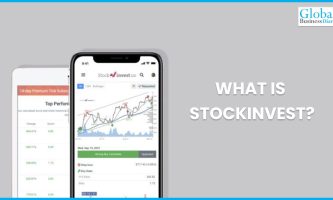
What Is Stockinvest? Is It Legit And Working In 2024?
The human psyche always indicates that greed and wants will cost you much of your money. And the only way to keep multiplying your money is by investing in stocks. Have you heard about StockInvest? If you haven’t, it’s totally fine, because we are here to tell you all about the same! But then greed can be so influential that when the price of your stocks goes up, your greed will only multiple, and you will definitely not want to sell your assets when prices finally go down. In fact, experts even say that only 1 out of every five traders makes it huge in the stock market. The only road to success? Play according to all the rules of the market and not against the same. Scroll down to find out how you can play according to the rules of the market with the help of StockInvest. What Is StockInvest? The year was 2016 when the website of StockInvest was launched in Vilnius, Lithuania. Run by the UAB Exigam, StockInvest us offers financial data and commentaries on stock analysis to nearly 30 thousand publicly traded organizations or companies. The goal of the website? The popular website aims to help investors make decisions related to selling and buying shares. From working with 20 thousand independent stock traders to working with 60 thousand traders every month, the StockInvest website saw much growth during the above-mentioned time period. What started with the stock market in the United States later expanded to European exchanges, Shenzhen Stock Exchange, Australian Securities Exchange, and Tokyo Stock Exchange. The best part? Individual traders can request predictions on stock prices from fellow traders. And that’s not all - traders could also take the help of list-building tools for generating ideas on stock trading based on their preferences and trading style. Moreover, the insights provided by the site are self-explanatory, easy to grasp, and deep for both trading professionals and newcomers. Trade Better With StockInvest By Your Side: As we mentioned before, one out of every five traders makes it huge in stock markets. So if you have been investing for relatively a longer period of time, there are high chances that you will be that one lucky investor. But, again, as mentioned before, you can only play this game successfully if you play according to the rules of the market. And how can you play according to the rules of the market while discovering what stocks to invest in? Only if you can grasp how to read and analyze financial and technical statistical data - your ticket to performing ten times better. This is where StockInvest steps in to save the day. The value investor or trader will keep saying that the value is the sole truth. But if that’s true, then why did several big companies witness massive falls, in spite of making more money than ever? We will tell you why. This is because it is the market that decides on the price, it doesn’t matter whether you agree or disagree. Features Of StockInvest: The features of the StockInvest app are as follows, 1. Lists One of the best features of the Stockinvest website is all the many lists on the platter. The platform makes things pretty easy by dividing all the lists into two major categories - sell and buy lists. For instance, The Top 100 Buy list can help users quickly find out the top hundred scoring stocks depending on the algorithm of the platform. Similarly, there is also The Top 100 Sell list that helps users to find out the top hundred sale setups depending on the platform’s algorithm. Finally, another list that every trader must check out is the Golden Star indicators. A more updated version of the Golden Cross, the Golden Star analyzes data worth 50 to 200 days for even defining a single technical signal. 2. Individual Stock Predictions And Ratings What every trader loves about StockInvest is the plethora of data available on every stock page. After all, the StockInvest us predictions, as well as ratings, are exactly what people come looking for on websites like these. The stock viewer feature even enables users to access technical indicators like moving crossovers and pivot points. Not only the platform provides plenty of information, but it also offers users the opportunity to request predictions related to stocks that are of interest to them in the StockInvest community. However, it must be noted that although experienced traders are not affected by these predictions, it is the newcomers who stand to benefit the most. 3. Customization Options One of the best parts about using StockInvest is the easy and simple user interface with customizable navigation buttons and drop-down menus. In addition, although the website is not really a charting platform yet, it enables users to build custom watchlists, and that too in extensive numbers. Naturally, such customization options provide users the benefit of getting each list reviewed by the algorithm of the platform. This is also inclusive of all the selling, buying, and holding recommendations. StockInvest: Pros The advantages of using the StockInvest us app are as follows, The platform provides information and analytical data of nearly 8000 organizations or companies, all of which are traded on NYSE, Nasdaq, and similar stock exchanges. StockInvest provides predictions related to the future price of stocks which can prove to be very beneficial to newcomers. All users on the platform also enjoy the benefit of getting automated portfolios. The platform enables all users to create unlimited watchlists prioritizing technical indicators. The platform has a user-friendly interface that can be easily navigated. IEX provides data in real-time. The top sells and buy lists are one of the best parts of using StockInvest. The platform can be conveniently accessed from both mobile phones and laptops. StockInvest: Cons The disadvantages of using StockInvest are as follows, One of the minor disadvantages of StockInvest is the platform never reveals any information about the functioning of its algorithm. Another disadvantage of the platform is it has not been designed keeping in mind the needs of experienced traders. Thirdly, traders on the platform might need to use a charting software for verifying all the technical analyses. Risks Associated With Stockinvest In 2024 There are several forms of risks associated with Stockinvest that you must know before making investments in it. Some of the critical risks associated with making an investment in it are as follows:- 1. Market Volatility Stock markets can experience significant fluctuations due to various factors like economic conditions, geopolitical events, interest rate changes, or global crises. Volatility can lead to rapid price changes, impacting investment values. 2. Economic Uncertainty Economic factors such as inflation, interest rates, GDP growth, and government policies can affect stock prices. Uncertainty in these areas can lead to market turbulence and impact investment returns. 3. Company Specific Risks Individual stocks can be influenced by company-specific factors such as poor financial performance, management issues, legal problems, or competition. Investing in a single company increases the risk of losing money if that company under-performs. 4. Sectoral Risks Investing heavily in a particular sector exposes investors to risks associated with that sector. For example, industries like technology, healthcare, or energy may face unique challenges or regulatory changes impacting stock prices. It is the reason why Stockinvest can offer you the opportunity to analyze the stock trend before making the investments. 5. Liquidity Risks Some stocks might lack liquidity, meaning there might not be enough buyers or sellers in the market. This could make it challenging to buy or sell shares at desired prices. You need to consider these kinds of risks as it can make your earning fall in the long run. 6. Interest Rate Changes Changes in interest rates by central banks can impact stock prices. Higher interest rates can make borrowing expensive for companies, affecting their profitability and, subsequently, their stock prices. To mitigate these risks, investors often diversify their portfolios across different asset classes, industries, and regions. Additionally, conducting thorough research, staying informed about market trends, and investing for the long term can help manage risks associated with stock investing. Seeking advice from financial professionals is also advisable to make informed investment decisions aligned with your risk tolerance and financial goals. Frequently Asked Questions!! (FAQs): PricingFeaturesFree (Trial period of five days)Ad-free browsing, Golden Star, automated portfolios, list builder, and the like.15.92 dollars (Recurring every month)Ad-free browsing, Golden Star, automated portfolios, list builder, and the like.159.20 dollars (Recurring every year)Ad-free browsing, Golden Star, automated portfolios, list builder, and the like. Zacks Investment Research, Motley Fool Stock Advisor, Trade Ideas, Stock Rover, Tim Alerts. Wrapping Up: The StockInvest us reviews by so many users across the world always point out how good the site is for new traders. Yes, it is of no use to experienced investors. But at the same time, not every site is meant for every group audience. Thus, if you are new to the stock market, you can keep up with the market by following StockInvest. Forget about minor details like StockInvest us cost because the returns you will get after investing will automatically make up for all the costing you paid for. Don’t forget to let us know below in the comments what you think! Read Also: BNKU Stock: MicroSectors US Big Banks Index 3X Leveraged ETNs TUI Share Price Forcast: Everything You Should Know PooCoin Stock Forecast: Everything You Should Know
Apr 15, 2022