





What Is The Defeasance Clause?-Everything You Need To Know

Do you want to get the whole idea about the defeasance clause as it is an essential part of your business if you start as a young entrepreneur?
When you want to start your business as a young entrepreneur, you must know about all the essential factors required for accumulating money for your business.
Several factors are essential for your business to grow well in all aspects for your business. First, work out the plans that can help you to achieve your goals in the right way. Now, let’s get some ideas about this Clause.
What Is The Defeasance Clause?
It is found in the deed of a mortgage. Here the lender commits to paying the property’s title ownership after clearing all the mortgage payments. Once all the borrower like you clears all the payments in the mortgage, the defeasance clause becomes a binding contract.
First, the deed of the mortgage gets nullified, and afterward, the contract. Second, it conveys the property’s title to the borrower. The defeasance clause makes the borrower get the clear and free title once all the debts are cleared.
Now, to get the complete details of this clause, there are several factors that you have to take care of at your end.
A Brief About Mortgage Theory


In the past, when any lender grants any mortgage loans, then it will demand defeasible fees. For the property as security for ensuring the complete repayment of any debt. Under the mortgage theory, the lender is offered the defeasible title for the property.
The defease claws would challenge the lender’s security, and it will also provide access to the borrower to regain security. Thus, you can quickly recover the ownership of the property once you arrange the same.
Lien Theory For The Defeasance Clause
There are many states in the USA that do not require the defeasance clause for the mortgage agreement. Instead, the borrower grants the lender or the lien by signing the mortgage agreement.
If the borrower does not provide a mortgage agreement, you can acquire the rights of the property by initiating and completing the foreclosure procedure.
The lender will not be awarded the Defeasance Title under the lien theory. So, along with that, there is no need for the defeasible clause.
How Does The Loan Defeasance Clause Work?

It is a provision of the mortgage agreement that has a strong correlation with the land and the real estate property.
The mortgage promises that the mortgage will regain the title upon their property on making the full payment of the mortgage. This is the core method of how the defeasance clause works.
Loan Security
You can get the clause to work for getting the loan security to work for the borrowers. It will help to secure the payment of the land until the full payment is being made.
Unfortunately, in the mortgage agreement, all the states do not require the defeasance clause. Many states provide the property’s title to the borrower even if the mortgage is not paid off.
The lender does not have the title and the rights on the property unless the property is being foreclosed following any default browser. It is one of the best ways to get a business loan in a short period.
Assignment Of Title

The time when you protect the lender for getting the defeasance clause ensures that the home buyer will regain the unencumbered as well as one of the free titles to the property once all the payment is made to the lender of the property.
When the home buyer makes the final payment, the lender will be allotted the proper rights of the property which they will have on it.
Benefits of the Defeasance Clause
There are several benefits of the defeasance clause that you need to take care of while you want to develop your business properly. Some of the Core benefits of the defeasance clause are as follows:-
- The defeasance clause will impose an obligation legally to the lender for transferring the property’s clear title to the borrower once all the loan is cleared.
- Another big advantage of the defeasance clause is that it will eventually make you the property’s owner, granting the defeasance rights to the property’s lender until the mortgage is fully cleared.
- The Defeasance clause will allow a person to become the property owner even if that person does not have enough funds left with him at a particular point in time.
Application Of The Defeasance Clause In Real Estate
The application of this clause is essential for your business. It can help your business to move in the right direction in a short time frame. This is because the title of the property is related in regards to the mortgage as well as the loan agreements.
It executes the deeds of the defeasance clause in real estate. It provides the exchanges of the fund to the banking property. Prepare the appropriate plans that can work well in your favor. Work out the plans that can help you to achieve your business goals in the right direction.
Application of The Defeasance Clause In Mortgage
- The lender keeps the title of the property in some of the loans and agreements.
- The mortgage requires the defeasance fee of the property in return for getting the funds.
- You can be the owner of the property with fewer hassles once you make use of this clause.
- Better planning with the help of this clause can make things easier and effective for you.
What Are The Exceptions To The Defeasance Clause?
There are certain exceptions to the defeasance clause that you must consider some of the effective factors that can make things work perfectly well for you. Some of the essential exceptions to the defeasance Clause.
1. Payment Of Outstanding Debt
Typically, one of the main exceptions to a defeasance clause is that the borrower or issuer must fully repay the outstanding debt. This includes not only the principal amount but also any accrued interest and fees. Once the debt is paid off, the defeasance clause may come into effect.
2. Fulfillment Of Covenants
The borrower or issuer may be required to fulfill certain covenants or conditions specified in the contract. These could include maintaining a certain credit rating, providing financial reports, or meeting other financial performance metrics. Failure to meet these conditions can prevent the defeasance clause from being triggered.
3. Timing & Notice Requirements
Many defeasance clauses have specific timing and notice requirements that must be adhered to. For example, the borrower or issuer may need to provide advance notice to the bondholders or lenders, and the defeasance must occur within a specified timeframe.
4. Payment Source Restrictions
Some defeasance clauses may specify the sources from which the funds for repayment or defeasance must come. This could include restrictions on using certain types of funds or assets. For example, the clause may require that the repayment comes from a segregated account or specific investments.
5. Consent Of Bond Holders & Lenders
In some cases, the consent of bondholders or lenders may be required before the defeasance clause can be invoked. This is often the case in bond agreements, where bondholders may need to approve the substitution of collateral or changes to the terms of the bond.
6. Legal & Regulatory Compliance
The borrower or issuer may need to ensure that the defeasance complies with all applicable laws and regulations. This can include tax laws, securities regulations, and other legal requirements.
7. Trustee Or Third Party Approval
If a trustee or third party is involved in overseeing the terms of the contract, their approval or confirmation may be required for the defeasance to proceed.
It’s essential to carefully review the specific terms and conditions of the defeasance clause in any financial contract, as these can vary widely depending on the agreement and the parties involved. Legal counsel and financial experts are often consulted to ensure that all requirements and exceptions are properly understood and followed when invoking a defeasance clause.
Final Take Away
Hence, these are some of the essential facts that you have to take care of while you want to use the defeasance clause in the mortgage loan agreement to claim the ownership right of the property in the best possible manner.
Make things happen in your favor while you want to improve and develop your business in the right direction in a short time frame with a minimum effort. Try to make the correct choices in a short period while growing your business in the right direction within a short time frame. Work out the best plan for your business.
Read Also:
Tags:

Recent
Dinmukhamet Idrisov and a Gold-Mine Dispute From Kazakhstan’s Oligarchic Past
Oct 16, 2026

Memory Chips Are Becoming More Important in the AI Era
Aug 06, 2026

Why Enterprise Web Applications Still Choose Angular for Long-Term Growth
Aug 04, 2026

Due Diligence Decoded: Why Careful Evaluation Still Wins in Business
Jul 11, 2026

Related Articles
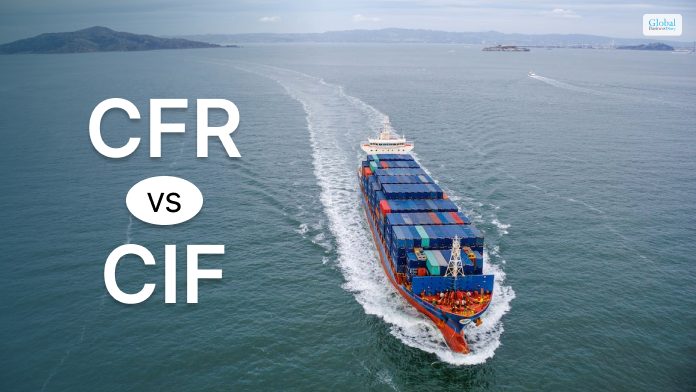
CFR Vs CIF: What Are The Differences Between These Shipping Terms?
CFR vs CIF: What is the difference between the terms? – You will find both terms standard in shipping and transport, and both are part of international trade rules. CFR is a trade term that means the seller will transport goods by sea to the destination port. On the other hand, CIF means that the seller pays to cover the cost of shipping and insurance to ensure there is no potential damage or loss for the buyer. In this article, you will learn about two popular terms in shipping: CIF and CFR. First, we will get a general overview of both the terms. Then, we will discuss the function of the seller in both cases. Finally, we will examine the differences between the two terms. Hence, to learn more about the two terms, read on to the end of the article. CFR Vs CIF: An Overview Of The Terms One of the interesting things about both terms is that they are known as incoterms. According to Indeed.com, “Incoterms are common trade rules developed by the International Chamber of Commerce (ICC). They define the responsibilities of sellers and buyers while participating in international trade. CIF is an Incoterm specifically meant for shipping across oceans or international waters. There are other internationally recognized Incoterm that buyers and sellers can use when delivering products.” Furthermore, both are part of the larger group of international trade rules. The International Chamber of Commerce (ICC) devised the rules. The first version of the rules came out in 1936. both terms consist of guidelines for traders. Basically, CFR and CIF are similar terms. However, in CIF, the seller will also need to pay for the marine insurance to offer protection against loss, destruction, and damage to the order. What Is Cost And Freight (CFR)? As per Investopedia’s definition, “Cost and freight (CFR) is a legal term used in foreign trade contracts. In a contract specifying that a sale is cost and freight, the seller is required to arrange for the carriage of goods by sea to a port of destination and provide the buyer with the documents necessary to obtain them from the carrier.” This term strictly finds its use in cases of cargo transport through sea or inland waterways. However, in this case, the seller does not have the responsibility of procuring marine insurance, as is the case with CIF. The insurance is to provide protection against the risk of loss or damage to the product during transit. What Is Cost, Insurance, And Freight (CIF)? On the other hand, CIF (cost, insurance, and freight) gives responsibilities to both buyers and sellers. This is also the case in the case of deliveries through transport through seas or inland waterways. The term gives information about who will merchandise the shipment and when. If you follow the rules of a CIF agreement, you will be able to divide your shipping costs. Apart from that, you will also have a basic understanding of when you have responsibility for the shipment in the shipping process. With the CIF agreement, you are transferring both your costs and your risks, but at different times. Here, as a seller, you are transferring the cost when the financial responsibility of the product shifts from the seller to the buyer. Generally, the cost transfer occurs when the product reaches the destination port. Here, you will have to take responsibility for any merchandise cost before that. The risk transfer happens when the responsibility for the lost or damaged item shifts from the seller to the buyer. In this agreement, this risk transfer happens after the goods are loaded onto the ship. Hence, while the goods are traveling, the seller is responsible for handling shipping costs. However, the buyer will be responsible for the damages to the merchandise or in case of loss. CFR Vs CIF: What Are The Differences? According to Investopedia, “Each term refers to an agreement governing the responsibilities of shipping that fall respectively to buyers and sellers in an international trade transaction. This system of agreements aids in an orderly process of international trade by making contract models available that are easy to identify and understand in all languages.” However, there are some primary differences between the two agreements. The major difference lies in one additional responsibility for the seller (shipper). In the case of CIF, the seller must also provide a minimum amount of marine insurance on the shipped goods. Here, the buyer and seller agree on the insurance amount beforehand. Apart from that, the seller of the product takes up the responsibility for additional costs related to the transportation of the product. In addition to that, the seller also pays for paperworks, custom inspections, rerouting, etc., that might occur during the transport of the product. However, the buyer here has to take responsibility for any damage to goods or even loss during transit. CFR Vs CIF: Understanding The Difference With Example You can understand the difference between CFR and CIF easily with the help of this example. Let’s say Seller X sells a particular good from Spain to Buyer Y in the United States. Here, Seller X pays for the shipping from Spain to the US. Also, the seller is responsible for the shipment until the goods are loaded on the shipping vessel. After the loading of the vessel, Buyer Y takes over the responsibility for the goods. This agreement is the same for both CFR and CIF. However, under CIF, there are additional responsibilities for Seller X. Here, Seller X needs to buy insurance for the transfer of goods. With the insurance, the seller will need to cover the loss or damage to the goods at the time of shipment. Eventually, after the goods reach the destination port, the seller does not have any responsibility. Wrapping Up CFR vs CIF – Hope you have found an understanding of both the terms and the differences between them. You can see from the article that both are quite similar agreements. However, in the case of CIF, the seller bears an additional responsibility. Do you have more information to add? Consider sharing them with us in the comments section below. Find More About Business By Clicking Below!! Equity Theory: A Balancing Act for Modern Workplaces What Is A Distribution Channel? Essential Things To Know About It How Does The Procurement Process Work? Essential Things To Know About It
Dec 29, 2023

Elon Musk Takes Over Twitter for $44 Billion – What’s Known So Far?
Elon Musk set another milestone by acquiring Twitter on Monday; the Social Media giant, from now on, will be headed by Tesla CEO Elon Musk. The Tesla head again proved himself to be the best by acquiring the social media giant Twitter on Monday. Now the world can witness the innovation of a genius Elon Musk when he works with Twitter. It’s time for us to see something great and something big in the upcoming years from the social networking site. https://twitter.com/elonmusk/status/1518677066325053441 What’s The Deal All About A Short Briefing? On Monday, Twitter agreed to sell itself to Elon Musk, Worth $44 billion. The deal has the potential to expand the billionaire's business empire and put the world in charge under the wealthiest and most innovative person in the world right now, Elon Musk. Some of the critical points of the deal to get a better insight into it:- Twitter’s biggest shareholder will be from now on is Elon Musk, with the potential to deliver better returns from its investments. Under this deal, each old and existing shareholder of Twitter will receive $54.20 in cash on each share of the Twitter stocks. Elon clearly stated that he is looking forward to working with this company and unlocking the potential of this company to deliver quality services to its clients and users in the times to come. Elon Musk is also ready to deliver $46.5 billion in financing to Twitter shareholders to make their life easier. Wrapping It Up All the shareholders and users of Twitter are now hoping to witness some of the innovative features in Twitter to make things work well in your way. The world will witness a change in the social media sites to deliver quality services to its users. Let’s all witness the change in the social media world. Also Read: BNKU Stock: MicroSectors US Big Banks Index 3X Leveraged ETNsTUI Share Price Forcast: Everything You Should KnowPooCoin Stock Forecast: Everything You Should Know
Apr 26, 2022

Upcoming Business Challenges In USA For Small Businesses To Note (2024 And Beyond)
It is important for businesses to anticipate the future correctly so as to deal with it. This holds especially true for small businesses. However, with major innovations and changes in the last few years, there are certain small business challenges in USA. There has been momentous shifts in the workplace. Despite various changes and challenges, businesses need to adapt accordingly to stay relevant in the marketplace. Let's understand about Upcoming Business Challenges In USA. In this article, you will learn about some major aspects that pose significant challenges for small businesses in the USA soon. However, before informing about upcoming challenges, this article discusses business challenges in general. Furthermore, you will learn about how business challenges affect small businesses. Finally, the article consists of things small businesses can do to cope with upcoming challenges. Business Challenges In USA: A Brief Overview In 2023, businesses had to come across many challenges. Some of the major challenges include the rise in interest rates, situations of a potential recession, the rise in inflation, and other factors. Furthermore, many small businesses, as well as big businesses, have had to lay off workers due to changing times. In addition to that, the introduction of AI platforms also threatened many job roles and businesses. Despite various changes, many businesses are optimistic about 2024 and the upcoming years. Although businesses had to deal with high inflation and long-lasting economic downturns, they are still looking forward to better times in 2024 and beyond. Some of the major findings and trends among small business owners are quite interesting. As compared to five years ago, most business owners think it is harder to own a small business now. According to the YouGov survey, “Out of the surveyed small business owners, nearly two-thirds (65%) stated it’s somewhat harder or much harder to be a small business owner in 2023. One in 10 (10%) say that it is easier to own a small business compared to a half-decade before, while 22% say there has been no change.” Roughly every two out of five businesses reported revenue growth in 2023. The rest did not report any revenue growth. On the other hand, there are many businesses that think things will look better by the end of 2024. Almost half of small business owners expect that their profits will grow in the coming years. However, one in every five businesses is pessimistic and does not expect business growth. How Do Business Challenges In USA Affect Small Businesses? The following are some of the major challenges that businesses faced in the last few years: Cashflow problems. Working for free Problems in finding a lender Problems in paying employees Dealing with layoffs, and many more. Furthermore, almost one in every ten business owners think that there will be layoffs in 2024. This number is a huge increase from last year when one in every twenty business owners talked about layoffs. Some of the other areas where business owners are prioritizing include: remodeling or expansion of the business higher investments in new technologies more investment in marketing and digital media expansion of the number of employees more focus on the welfare of employees integration of AI tools or capabilities in business operations One of the top concerns for most small businesses is inflation. According to the US Chamber, “A majority (54%) of small business owners cite inflation as a top concern. In fact, inflation is the top concern for small businesses regardless of region, number of employees, or sector. This is also the sixth consecutive quarter that inflation has topped the list of challenges small businesses see, and consistent with findings in Q1 2023 (54%). No other concern comes close.” Another major aspect that affected businesses in the last few years is rising interest rates. Higher interest rates have led small businesses to seek more finances. More than 75% of businesses have complained that rising interest rates have limited their ability to finance or raise capital. Apart from that, the spike in interest rates also affected their growth. Furthermore, many businesses said that they had to delay their plans for growth due to this. What Are The Upcoming Business Challenges In USA? With economic concerns, rising interest rates, and changes in technology, companies, especially small businesses, are facing challenges. The following are some of the greatest challenges that every small business owner should prepare for in 2024 (as well as in coming years): 1. High Inflation And Economic Slowdown You must have already come across several headlines about higher inflation. Furthermore, that trend will likely continue in 2024, too. According to Forbes.com, “Even though inflation has come down, consumers are still feeling the pinch of higher prices. This is because the prices are up significantly compared to pre-pandemic. If we compare prices in December 2023 to January 2020, overall prices are up 19%, food prices are up 25%, energy prices are up 26%, and the prices of shelter services are up by 21%.” However, recent reports showed that the rate of inflation is slowly getting back to normal. Despite that, prices will still be high. Because of this, many economies will shrink or come under stagnation. Hence, businesses need to prepare for the inflationary reality this year. 2. Disruptions In Supply Chain Supply chain security has become a key issue due to the rise of conflicts in other parts of the world. Apart from that, the backlogs of COVID-19 also added to the issue. Later on, the Ukraine-Russia conflict made things worse. Additionally, due to the Great Resignation, there have been labor shortages. Hence, it has become difficult to access parts and products. Also, the prices of items went up because of this. Furthermore, in the Eurozone, there have been many losses in 2023. 3. Higher Needs Of Customers With changing technology, customers also started demanding better experiences from companies in the metaverse and real world. Furthermore, nowadays, customers are also looking for in-store experiences, even in brick-and-mortar stores. Hence, if you own physical shops, you will need to consider adding more immersive experiences for customers. Paychex.com adds here - “To ensure success, small business owners should have a mobile-friendly, easy-to-navigate website with e-commerce options that allow consumers to quickly find what they want and purchase products or services from their mobile devices. The same attention to detail should be applied to traditional shopping methods.” Hence, companies need to ask themselves and find new ways to add more value to customers. Therefore, making experiences better for customers will help in acquiring and retaining customers. This way, companies will be able to engage customers both online and offline. 4. Faster Transformations In The Digital World The rise of artificial intelligence in the digital world has started to transform all aspects of businesses. This trend will obviously continue in the next few years because, with time, AI will only develop. Apart from that, there has been the introduction of other technologies as well. Some of them include blockchain, 5G, the cloud, and Internet of Things (IoT). These technologies are helping in the speeding up of AI, while developing each other as well. In addition to that, rapidly developing technological processes have also led to the creation of a fast-changing world. Hence, a time will come soon when all businesses need to act as tech businesses and need to invest heavily in technology. 5. Employees Facing Skill Gaps Another big challenge that companies will face is talent shock. Even now, companies are facing massive skill gaps for vital future skills. Hence, small businesses are left with employees with outdated skills. Hence, they need to invest heavily in upskilling and training their employees sometimes. According to Paychex.com, “New performance management techniques are transforming the way businesses prioritize their retention efforts. For instance, investing in learning management can help employees further develop key skill areas and better immerse themselves in the company culture. ” Hence, it is extremely important for companies to upskill, reskill, and train employees to deal with AI systems and new technology. 6. Security Issues In Data And Devices As the use of the internet increases with time, security issues are keeping up as well. With rising digitization, businesses are accumulating more data. These data are highly attractive to cybercriminals. This is evident from the number of cyberattacks individuals and businesses face sometimes. Furthermore, phishing scams and ransomware attacks are also on the rise. Hence, it has become hard for businesses to keep up. Mobile and IoT devices are facing cybersecurity threats as well. Furthermore, with the rise of quantum computing, existing security systems are also becoming obsolete. Hence, there is a high need for the inclusion of AI and proactive measures from businesses. 7. Slowing Down Of Sustainability Practices With rising environmental and sustainability concerns, consumers are also looking for companies that are transparent with their sustainability practices. Companies that produce more environment-friendly products and services seem to have a better future. Consumers want their companies to respond by being transparent about their business practices. To do this, companies also need to continuously perform audits of their supply chains. Also, companies must switch to renewable energy, move to sustainable packaging, and allow employees to work remotely. How Do You Deal With Upcoming Business Challenges In USA? The following are some of the major steps small businesses can take to deal with challenges in 2024: 1. To deal with inflation, companies need to ensure that there is end-to-end visibility of business functions, operations, units, and cost categories. This will lead to better accountability and reduced spending. 2. If companies want to deal with supply chain disruptions and security issues, they must resist the urge to order more than what is required. Companies do that to compensate for their backlogs. However, over-ordering can worsen the situation for companies. In such cases, companies need to focus on long-term recovery. Furthermore, restructuring the needs will help prevent shortages in the future. 3. To deal with customer experience and demand, online retailers can add extended reality (EX) features to their websites. This way, customers can try out clothing and makeup without even leaving their homes. 4. Fast technological developments require companies to redesign their processes. Furthermore, companies also need to ensure that they have skilled employees in their companies. This is because these employees need to work alongside intelligent AI systems. 5. To deal with talent shock, companies must start upskilling, reskilling, and training employees. Furthermore, companies must also offer a good working environment for employees that is also appropriate for the new world of work. 6. To ensure better cybersecurity systems, companies must take proactive measures for the same. To do the same, they must evaluate their data backup and recovery processes. Other measures include penetration testing, vulnerability scanning, and more. 7. Companies also need to demonstrate their sustainable practices to consumers. This will help satisfy consumers' needs and ensure they are indirectly contributing to sustainable practices. Small Businesses And Upcoming Business Challenges In USA No matter what the obstacle is, it is important for small businesses to focus on creativity and find new ways to solve the problem at hand. This will ensure that the company is on the verge of growth even in tumultuous times. Forbes.com adds - “A key finding from one of our recent small business owner surveys found that half of the companies surveyed agreed that cash flow management tool consolidation positively impacts profitability, and 71% said it positively impacts efficiency. Small business owners are now prioritizing their digital financial toolkits to improve their businesses.” Hence, whatever the challenge is, it is essential for small businesses to focus more on cash flow management. This will ensure that the business is running effectively. Wrapping Up Hope this article was helpful for you in forming about the upcoming business challenges in USA. The problems will be of paramount importance in 2024 and the next few years. However, as a small business owner, you will also need to update yourself with current problems and prepare for change. Do you have further solutions to add? Consider sharing your ideas and opinions in the comments section below. For More Business Related Article: ERTC Qualification Step-By-Step Guide What Is Safe Harbor 401K? Benefits And Types Sabbatical Leave: What Is It, And How Does It Work?
Feb 20, 2024
FOB Shipping Point vs FOB Destination Point? Essential Points Of Difference
FOB shipping point vs FOB destination point often becomes a matter of confusion between many people and supply chain providers. You should be well aware of the reality before you use it. Free On Board shipping point states that the buyer takes onus for the loss or damage of goods. Once the goods are away from the shipper. However, you need to understand it before getting an insight of the entire concept. Free On Board Destination means that the seller retains the liability for the loss of damage. Unless the goods delivery process is initiated to the buyer. These are the basic differences between the two concepts. FOB vs CIF will also offer you some clear insights into it. Difference Between FOB Shipping Point vs FOB Destination Point There are several points of difference between the FOB shipping point and the FOB destination point. You need to go in-depth to have a better insight into it. Avoid making your opinion and conclusion depending on inaccurate information. Both parties need to clearly define their responsibilities regarding documentation. It can include bills of lading to ensure a smooth and efficient transfer of ownership and control. 1. Ownership & Responsibility: FOB Shipping Point vs FOB Destination Point In FOB Shipping Point, the buyer assumes responsibility and ownership for goods as soon as they are loaded onto carrier. They are usually a truck or a vessel at the seller's shipping point. FOB shipping point vs FOB destination point has this core point of difference. In FOB Destination Point, the seller has ownership and responsibility for the goods until they reach the buyer's specified destination. It is essential that you know the facts well while attaining your needs with ease. This is one of the crucial points of differences between the FOB shipping point vs FOB destination point. You need to identify the perfect solution that can make things easier for you in attaining your requirements. 2. Loss Or Damage Responsibility: FOB Shipping Point vs FOB Destination The buyer is responsible for the shipping costs, insurance, and any potential damage or loss that may occur during transit from the seller's location to the destination. The onus will stand still with the buyer. The seller is responsible for the shipping costs, insurance, and any potential damage or loss that may occur during transit from the seller's location to the buyer's specified destination. FOB shipping point vs FOB destination point has some differences in terms of their damage of property. 3. Accounting Entry The accounting entry for the seller is typically recorded as a sale once the goods are loaded onto the carrier at the shipping point. You should get through the complete concept to need a correct idea of it. FOB shipping point vs FOB destination also has differences in terms of their accounting entry. The type of consignment you use matters a lot here. The accounting entry for the seller is usually recorded as a sale once the goods reach the buyer's destination. You need to know the truth while attaining your requirements with complete ease. Once you develop the perfect solution, things can become easier for you in the long run. 4. Shipping Cost: FOB Shipping vs FOB Destination FOB Shipping Point: The buyer is responsible for shipping costs from the seller's location to the destination. You need to understand reality if you want to grow your business in the right order. Try to ensure that the shipping cost must be as low as possible. FOB Destination Point: The seller until the goods reach the buyer's specified destination. You need to know the truth while meeting your requirements with absolute ease. 5. Insurance FOB Shipping Point: The buyer is typically responsible for obtaining insurance coverage for the goods during transit. Here, the onus of getting the insurance for the shipment lies with the buyer. The distribution channel here matters a lot. FOB Destination Point: The seller is usually responsible for providing insurance coverage for the goods during transit. Try out the perfect solution that can make things easier for you in attaining your requirements simply. 6. Delivery Cost FOB Shipping Point: The buyer has more control over the shipping process and can potentially receive the goods faster. The reason is the ownership transfers at the point of shipment. You need to get through the complete idea that can make situations easier for you to get your requirements with ease. Ensure that you make the proper arrangements of the delivery cost. FOB Destination Point: The seller has more control over the shipping process, and the buyer might experience a longer delivery time. The reason is that ownership transfers at the point of destination. Although the responsibility of the seller keeps on moving with the places. 7. Revenue Recognition FOB Shipping Point: The seller can recognize revenue once the goods are loaded onto the carrier at the shipping point. The point of seller recognition holds the key here. You must be well aware of it while meeting your needs. FOB Destination Point: Revenue recognition may be delayed for the seller until the goods reach the buyer's destination. Try to make things work in the correct order while attaining your needs with complete ease. Final Take Away Hence, these are some of the core points of difference between the FOB Shipping Point and FOB Destination point. You need to be well aware of it while attaining your requirements with absolute clarity. You can share your views and points in our comment in our comment box. It will assist us to know your take on this matter. Once you follow the right methods, things can become simpler for you. It's crucial for parties involved in a transaction to negotiate carefully and specify the FOB terms in the sales contract. To avoid misunderstandings and ensure that responsibilities and risks are clearly defined. FOB shipping point vs FOB Destination Point has some core differences that you must go through with proper plans. Without a piece of proper knowledge, you cannot boost your business to the next level. Need More Global Business News Please Click Below!! How Digital Marketing Consultant Can Help Your Business In 2023? What Is Strategy Consulting? – Career, Importance, And Scope How To Become A Strategy Consultant? Roles & Responsibilities
Feb 16, 2024