





Jeff Bezos Biography, Net Worth, Business, Age, & More
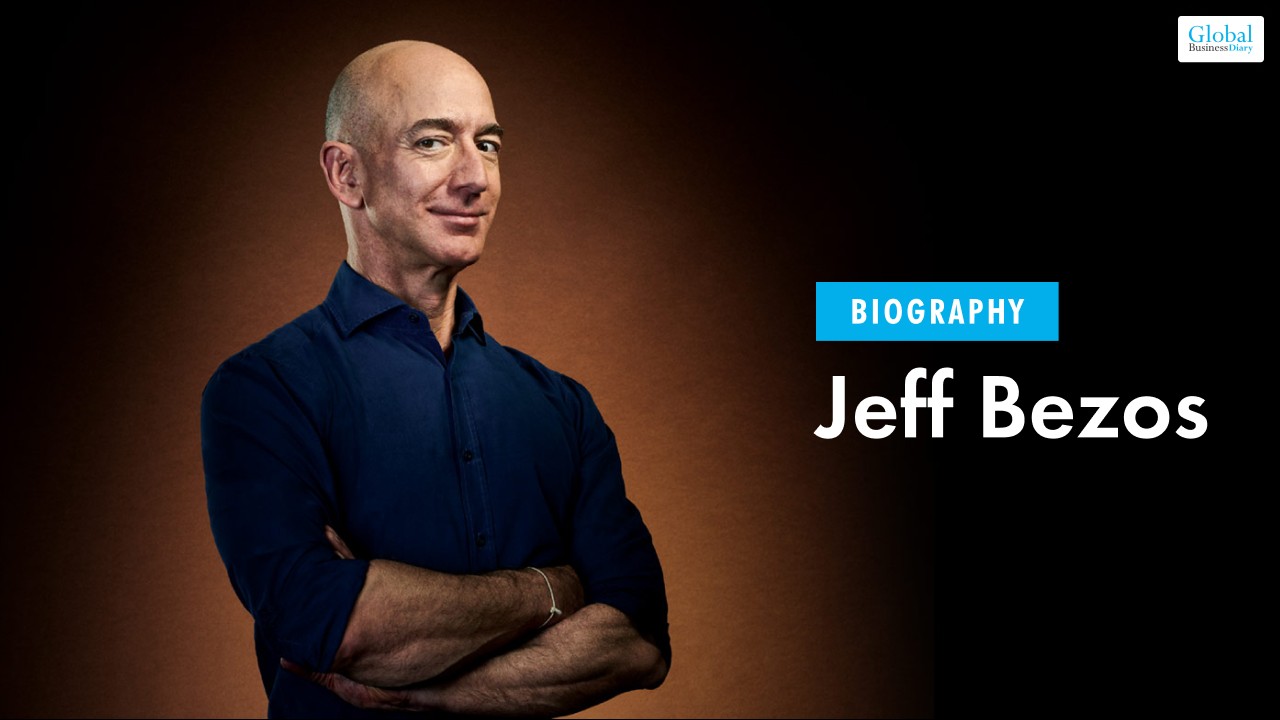
| Name: Jeffrey Preston Bezos |
| Age: 58 years |
| Business: Amazon, Elemental Tech, The Washington Post, Blue Origin, IMDb |
| Net Worth: US$146 billion in June 2022 |
It was in 2017 that Jeff Bezos surpassed the $100 billion milestone. After that, he never looked back and soared to the peak of success. After that, Forbes listed him as the wealthiest person in the world in 2018, with $112 as his net worth.
Bezos is the founder of the largest e-commerce platform Amazon and is the former CEO of the same. He is also the founder of a space company named Blue Origin. In addition, Bezos acquired The Washington Post and has other companies like Bezos expedition.
Bezos also holds significant investments in different industries and real estate companies. In addition, his charitable donations and funding of several educational projects reflect his generous side of him.
But how did Bezos become so rich? How was the journey to rise to the top of the Forbes List? Here is a brief overview.
How Did Jeff Bezos Become Rich?

Bezos had difficulty establishing Amazon as the biggest e-commerce behemoth as we know it. He could be an employee in one of the biggest companies like Intel, Anderson Consulting, and Bell Lab. Instead, he chose the path of entrepreneurship and built Amazon.
Amazon
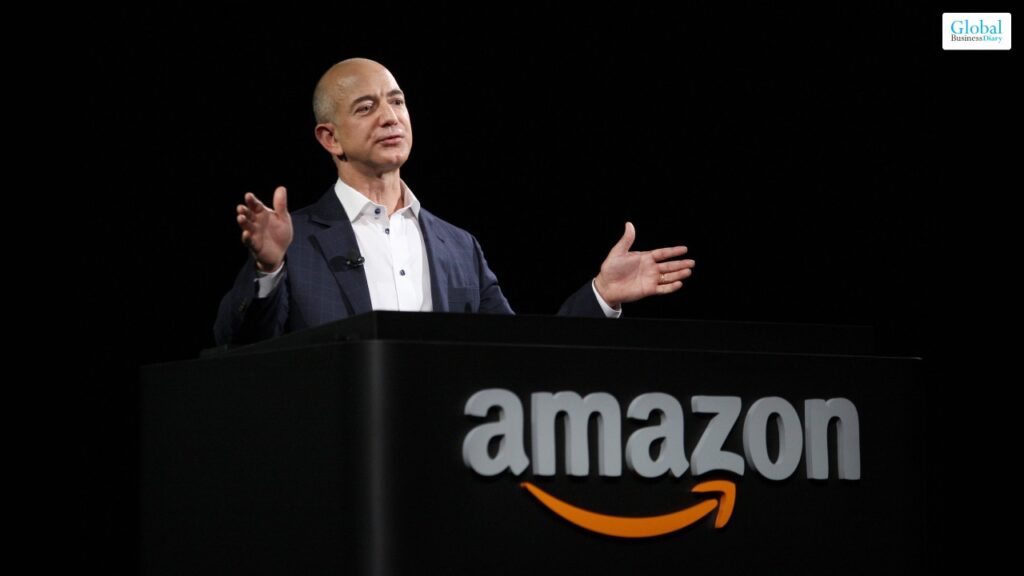
Bezos did not choose to be an employee; instead, he ventured into a business. But there is a short story before that. Bezos initially wanted to start a business in news-by-fax service with CNET founder Halsey Minor. Unfortunately, his venture failed. He then became the youngest vice president of a Hedge Fund called D.E Shaw.
He proposed his idea of starting up an online bookstore to the CEO of D.E.Shaw but was rejected. In addition, in 1994 the internet saw a massive boom, and Bezos and Bezos wanted to use it to make his biggest business venture Amazon.
Jeff started his business from a garage, and put $10,000, he had into starting up the company. Jeff had no one but his wife and two other programmers during the start of amazon. He also took the $300000 that is received from his parents and invested it in Amazon.
He thought that Amazon could go bankrupt. Instead, it only grew, and Bezos had to expand the product list from only books to selling music and videos. Amazon became the largest eCommerce company in the world in 1999.
Formerly Bezos was the CEO of Amazon, and the seat currently belongs to Andy Jassy. Although, Bezos owns 12.7% of Amazon stock. In 2021 he sold $8.8 billion worth of stock of the company he founded.
Jeff Bezos – Blue Origin
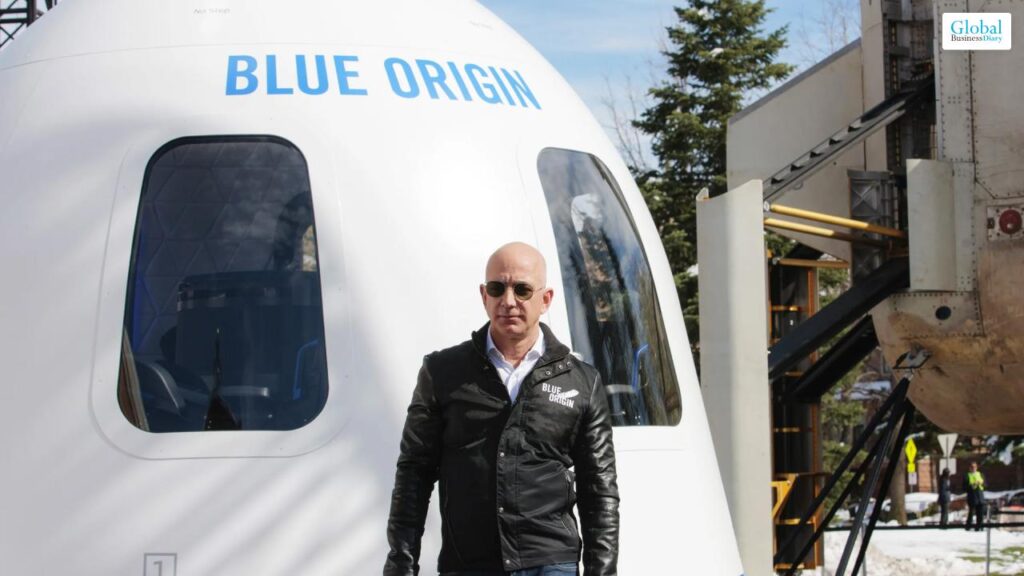
You are mistaken if you think that Elon Musk’s SpaceX is the only capable space flight tech company. Bezos also has a deep curiosity about space, and he put his money into that curiosity, starting up Blue Origin in 2003. Blue Origin is a startup company for human spaceflight technology.
By the end of 20914, his spending in Blue Origin was around $500 million. Bezos sells $1 billion worth of his own amazon share to fund his space venture with Blue Origin.
The Washington Post

Jeff Bezos has an LLC holding company named Nash Holding LLC, and he holds The Washington Post through this holding. In 2013, Bezos announced that he had purchased The Washington Post for $250 million in cash. However, he even made some changes to The Post and increased the annual turnover for that company after three years of Bezos owning it.
Jeff Bezos – Bezos Expedition
Jeff Bezos is also a great investor like Bill Gates and Warren Buffett. In 2005, he created Bezos Expedition to manage his investments. His investments include different types of businesses like real estate, technology, travel, media, charitable trusts, and different foundations and trusts.
He has shares in companies like Twitter, Airbnb, Stack Overflow, Uber, Workday, Business Insider, and General Assembly.
Frequently Asked Questions (FAQs)
Here are some most popularly asked questions about Jeff Bezos. I have answered some of them to fulfill all of your queries.
Jeff Bezos, the man who once became the richest person in the world, dropped down to the third number on the Forbes list. In the mid of April 2022, the Amazon stock tanked after a downbeat earnings report. As a result, his wealth dropped down by $20 billion.
To the downfall of the amazon sales report, the wealth of Jeff Bezos dropped down by $20 billion in 2022, placing him in the third position on the Forbes list.
Bezos was not born to rich parents. When his mother gave birth to him, she and his father were teenagers. They are 17 and 18 years old. However, Later Bezos’ mother married a Cuban immigrant, and Bezos was brought up on his grandfather’s ranch. He graduated summa cum laude from Princeton University in electrical engineering and started his career.
Bezos only pays $81,840 to himself. According to different reports, Bezos does not take any bonuses or any stocks. But there are other compensations from where he earns 1.6 million. Aside from that, he donates money to many charitable foundations. However, he donated $100 million to the charitable fund of Barack Obama.
Final Words
The current wealth of Jeff Bezos is around $150 billion. He stands right behind Bernard Arnault, the CEO of LVMH. Bezos is currently the third richest person in the world, following Arnault and Musk. Bezos has left the position of CEO of Amazon, and he still ranks as one of the richest people in the world.
I think this article was sufficient to answer your questions about Jeff Bezos and his wealth. If there is any further query, you can ask us in the comment.
Read More:
Tags:

Recent
Dinmukhamet Idrisov and a Gold-Mine Dispute From Kazakhstan’s Oligarchic Past
Oct 16, 2026

Memory Chips Are Becoming More Important in the AI Era
Aug 06, 2026

Why Enterprise Web Applications Still Choose Angular for Long-Term Growth
Aug 04, 2026

Due Diligence Decoded: Why Careful Evaluation Still Wins in Business
Jul 11, 2026

Related Articles

Entrepreneurship – Definition, Meaning, Scope, And More
Entrepreneurship is a dream for many, but it is a certain type of professional discipline that one cannot properly define. There are a variety of challenges and opportunities that individuals face in entrepreneurship as they start working on their new business. Although there are some major risks in this field of profession, there are some big rewards as well that act as major motivations. In this article, you will learn about entrepreneurship in varied ways. First, we shall discuss what entrepreneurship is and who is an entrepreneur. Then, you will learn about entrepreneurship’s importance and scope in today’s world. Finally, you will learn about some of the major types of entrepreneurship. Hence, to learn more about this topic, read on through to the end of the article. What Is Entrepreneurship? – Definition According to Oberlo.com, an online Shopify branch, “Entrepreneurship is the act of creating a business or businesses while bearing all the risks with the hope of making a profit.” However, this definition is limited since we explained earlier that one cannot define entrepreneurship. In the modern world, the definition of entrepreneurship also means the process of transforming the world while at the same time offering solutions to big problems. These entrepreneurs try to bring social change as well, as they create innovative products, with the help of which they challenge the way people live on a regular basis. In short, the way an entrepreneur sets up a business and runs the business and the process is known as entrepreneurship. To understand who an entrepreneur is, check this subsection below. Read More: How To Double Your Money – A Simple And Easy Formula For The Entrepreneurs Entrepreneurship: Who Is An Entrepreneur? According to the definition given in Investopedia - “Entrepreneurs play a key role in any economy, using the skills and initiative necessary to anticipate needs and bring new ideas to market. Entrepreneurship that proves to be successful in taking on the risks of creating a startup is rewarded with profits and growth opportunities.” An entrepreneur is an individual who takes up a major role in the discipline of entrepreneurship. The individual creates a new business and is responsible for taking up most of the associated risks in the business. On the other hand, due to that person taking the most risks, he/she enjoys most of the rewards. The entrepreneur takes on the risk of starting a new business and creating a new firm to implement their own idea or an already existing idea. To earn a profit, the individual uses capital and labor for the required production of goods and services in the market. The Importance Of Entrepreneurship At Social And Individual Levels A century ago, the scope of entrepreneurship was quite less. If someone did not have the major skills to run a business or capital to maintain the business, the individual was out of luck in no time. However, fast-forward to 2023, there are nearly 600 million entrepreneurs in the world. This huge rise in the number of entrepreneurs in the last few decades is only because of a higher number of opportunities. The following are some of the major reasons that make entrepreneurship an important factor for an individual as well as for society at large: Entrepreneurship helps in creating more jobs in the economy. First, entrepreneurs take the initial risk of employing themselves. However, with time, as their businesses grow, they create more jobs with the rising need for businesses. Entrepreneurs focus on innovating and know how to use innovations to use in society. They are problem solvers. When they see a problem in society, they try to solve that issue at hand and make a profit out of it. Although there is a prevalent notion that rich entrepreneurs are selfish and greedy, it is not always the case, as most entrepreneurs focus on the greater good of society, too. As they make more money, they do more tax returns, too. Entrepreneurs are the ones who keep the wheel of the economy moving, as they contribute a lot to the national income. They help in generating new wealth in the economy. One of the major requirements of entrepreneurship is the mindset of the entrepreneur. The entrepreneur requires, in most cases, a bullet-proof mindset, where he can identify with the problems before him, learn from their failures, and make the most out of the opportunities in front of them. No matter what or how big the challenge is, the entrepreneur makes the most out of it. What Are The Major Types Of Entrepreneurship? As already discussed, the mindset of an entrepreneur is one of the big assets of society. According to the University of Michigan, “Research shows that an entrepreneurial mindset is highly sought by future employers, can improve academic results, and is essential for creating new business ideas.” The type of entrepreneur you are can be disparate from someone else. Also, your environment, society, problems, life, challenges, and other factors influence your choice of entrepreneurship. The following are the major types of entrepreneurship: Social entrepreneurship includes giving back to the community by offering solutions to big social problems. Scalable startup entrepreneurship focuses on growing and bringing new and innovative ideas while expanding their business and generating more profit. A small business entrepreneur focuses on creating and running their own business, either with a small number of people or with their family. Innovative entrepreneurs try to develop their businesses with the idea of bringing new products with innovative ideas to solve an existing problem while earning profit. Read More: 10 Best Investment Apps Bottom Line Hope this article was helpful for you in getting a better idea of what entrepreneurship is and who is an entrepreneur. You can see from this article that entrepreneurship is an essential part of society, and the importance of entrepreneurs in society is at the helm. They are the ones who bring new ideas to the market, and by fulfilling the needs of the market, they make a profit. Do you aspire to get into entrepreneurship? Share what you think is the need for entrepreneurs in the future in the comments section below. Read Also: How To Create A Powerful Strategic Marketing Plan – Step By Step Guide How To Create Powerful Business Models For Your Business? Angel Investors – Overview, Pros, And Cons
Aug 03, 2023

Which Of The Following Is Not A Creative Thinking Exercise Entrepreneurs Use To Generate Ideas?
Question: which of the following is not a creative thinking exercise entrepreneurs use to generate ideas? A. Challenge the Usual B. Judge Each & Every Idea as Realistic or Not C. Draw Idea Maps D. Think Backward Answer: (B) Judge Each Idea as Realistic or Not Entrepreneurs have different mental exercises where they go through various ideas, create mindmaps, judge the feasibility of an idea, and more. Here are a few alternative answers to the question asked. As you can already see, option B is the right answer to the question asked. If you want an explanation, I will suggest going through this article. Explanation For The Right Answer Entrepreneurs often use a variety of creative thinking, and they are usually different from common thought patterns. They think this way to look for innovative ideas for a business. Entrepreneurs intend to break free from the traditional thought pattern and explore many different ideas. However, generating ideas does not happen alongside judgment. If we look at options A, C, and D, clearly all of those options easily come under practices followed for generating ideas. However, judging an idea's feasibility and seeing how realistic it is does not fall under developing ideas. Please take a closer look at these different alternatives below to find out the credibility of this answer. Challenge The Usual Entrepreneurs usually identify opportunities for improvising, innovating, and differentiating their businesses. They do it by challenging the usual and coming up with a different idea. This tendency to question the usual gives them the capacity to break the existing norm, routines, and assumptions and come up with a new direction. This process involves the entrepreneurs questioning the pre-existing practices and norms. They examine these practices critically and identify different areas where they can solve a complexity. They introduce new ideas around those areas, breaking the norms and practices in the process. They are usually asking questions like – “why do we do it this way?” and “what could we have done better?” This is undoubtedly one of the ways for entrepreneurs to come up with a new idea for their business. Read More: What Is Social Entrepreneurship? – Steps To Become A Successful Social Entrepreneur Draw Idea Maps Another process called creating mind maps allows entrepreneurs to organize their ideas. Creating an idea map is a process where the entrepreneur creates s diagram connecting different concepts and thoughts related to a specific concept. Entrepreneurs can identify new connections through the visualization of the relationship between different elements of their ideas. This exercise leads to nonlinear thinking and allows the entrepreneur to explore different possibilities. Sometimes this leads them to follow new solutions, ideas, and more. So, based on the question asked here, clearly drawing a mind map is creative thinking. Think Backward Thinking backward takes an entrepreneur through the back steps to come up with that massive initial push for running. It allows them to imagine what they want to achieve and work backward to find out what they need to do to reach there. This imaginative situation allows entrepreneurs to envision things that are beyond their current circumstances. When they are picturing their end goal, they can challenge the constraints and the obstacles that are keeping them from achieving it. Sometimes it also leads to alternative paths that they had not considered otherwise. One can easily surmise thinking backward is a process to allow entrepreneurs to think out of the box. Which Of The Following Is Not A Creative Thinking Exercise Entrepreneurs Use To Generate Ideas? Creative thinking is the process that allows entrepreneurs to come up with divergent thinking formulates regardless of the feasibility or reality behind those ideas. The Creative Phase When an entrepreneur is looking for ideas, they allow themselves to come up with an idea first without any judgment. At this part, they do not bring reason along with them. When encouraging the free flow of ideas, one should keep judgment aside. However, it is common for some entrepreneurs to be dismissive of their ideas while they are in their premature stage. The phase of creativity is about taking risks and embracing uncertain things. They explore new possibilities, pushing boundaries and push different boundaries and think beyond their current positions. This allows an entrepreneur to make their business stand out in the market. In this phase, they come up with unconventional solutions and breakthroughs with innovative solutions. The Judgement Phase But when an entrepreneur is judging the feasibility of the idea, they are being realistic. This is not the phase where they leave an idea to the imagination, passion, or just the idea itself. They have different parameters allowing them to evaluate these ideas. Certain parameters for judging these ideas would include judging it based on market demand, resource requirement, funds, technical feasibility, regulatory restrictions, and the wide competitive landscape. Judgment during the ideation phase can cause the dismissal of lots of premature ideas. But, judging an idea based only on initial realism can result in an incremental thinking mindset. This leads the entrepreneurs to follow ideas that fit into their existing products, ideas, and services. Read More: Business Entrepreneurship – What Should You Know Before You Start A Business? Conclusion For a new idea to come out and flourish, an entrepreneur needs an environment where the possibility of an idea is welcome. An entrepreneur needs an environment or culture where creativity is encouraged and new ideas can live and grow. Also, the idea of judging every idea is not really a realistic way to develop creative thinking. So, according to the question, if an entrepreneur is being creative, they cannot bring their judgment along the way and see if each of those ideas is realistic or not. Did this article clear your queries? Please let us know your feedback on the same. Read Also: How To Start An Insurance Company? – Steps You Must Take Is Startup Business Insurance Necessary For New Businesses? What Is Commercial Insurance? And Its Different Types – Let’s Discuss
Aug 11, 2023

Entrepreneur : Who Coined The Term ‘Entrepreneur’?
You might have come across some “Entrepreneur” who is a hard-working person, loves to take risks, and is always optimistic about business opportunities. The word finds its roots in the French vocabulary, which means “to undertake.” It sums up such a person since an entrepreneur loves to undertake an enterprise, and the life of such an individual is nothing short of an adventure. In this article, you will learn about entrepreneurs in general and find out who coined the term ‘Entrepreneur.’ You shall also know some essentials about the person as well. Apart from that, we will also provide you with a brief history of the word entrepreneur. Hence, to find out more, read on through to the end of the article. Who Is An Entrepreneur? As per the definition of Investopedia, “An entrepreneur is an individual who creates a new business, bearing most of the risks and enjoying most of the rewards. The entrepreneur is commonly seen as an innovator, a source of new ideas, goods, services, and business/or procedures.” Entrepreneurs are really important in today’s time, as they play a key role in the economy. They make use of their skills and initiative in such a way that they find out the needs and demands of the market, which others cannot. By finding market opportunities and gaps, entrepreneurs try to offer solutions in the form of products and services. According to Entrepreneur.com, “There is, consequently, an entrepreneurial element in most or all business undertakings. Entrepreneurship is ultimately to bear the risk of the enterprise. It must be heroic and creative since the action requires that the costs of establishing and carrying out production are borne before market demand is known.” With the help of solutions, entrepreneurs bring new ideas to the market. If an entrepreneur becomes successful in taking risks in the market, the individual gets to make profits. Apart from that, the individual is able to find out better growth opportunities and fame as well. On the opposite end, the entrepreneurs that fail after taking risks suffer from losses and become less prevalent with time. Read More: What Are The Different Types Of Entrepreneurship? – Take A Look Who Coined The Term ‘Entrepreneur’? The word entrepreneur finds its origins in the late 18th century. Even after so many years, economists were unable to provide a consistent definition of the word “entrepreneur” or “entrepreneurship”. Although the concept of entrepreneurship remained in society for centuries, the 18th-century or 19th-century definition of entrepreneurship did not talk about entrepreneurs taking risks or bringing something new to the table. Only in the 20th century did economists take entrepreneurship as a serious matter for economic models and try to incorporate the same into theories. A major economist named Joseph Schumpeter was of the opinion that entrepreneurs are the ones behind the creation of new things to earn profit. Before that, economists thought companies were responsible for it. Schumpeter proved this old theory wrong. In addition to that, another economist, Frank Knight, held the opinion that entrepreneurs are the ones that bear the uncertainty of the market. He also held entrepreneurs responsible for risk premiums in the financial market. Israel Kirzner held that entrepreneurship is the process that leads to the discovery of the new. A Short History Of The Term ‘Entrepreneur’ Many people think that the famous Scottish economist Adam Smith coined the term “entrepreneur”. However, it is not true. However, Adam Smith was the first person to describe the capitalist production theory in detail and business owners’ profit motive. The entrepreneur is the type of person Adam Smith overlooks in his famous “Wealth of Nations”. However, a big admirer of Adam Smith’s book, Jean-Baptiste Say, coins the term “entrepredre” a few years later in France. The meaning of the word is simply “an undertaker”, “one who undertakes”, or “an adventurer”. Say agreed with all the points of Smith’s book, “Wealth of Nations,” and he stated that Smith’s serious flaw was the removal of the enterprising businessman from the whole subject. According to Investopedia, “Jean-Baptiste Say pointed out in his own writings that it was entrepreneurs who sought out inefficient uses of resources and capital and moved them into more productive, higher yield areas. Simply put, entrepreneurs seek opportunities for profit and, by doing so, create new markets and fresh opportunities.” Entrepreneurs are the people that constantly disrupt the balance of competition, as they prevent monopolies in the market from creating a large number and diverse range of products. Monopolies create a situation in the market that allows consumers to keep consuming and producers to keep producing. Because of taking such risks, some of the richest entrepreneurs that you see today make fortunes that are way more than the normal and small entrepreneurs in the economy. Jean-Baptiste Say put more focus on the importance of entrepreneurs. This is because he was one himself. He was a cotton manufacturer, and he knew the importance of an entrepreneur’s ability to recognize and manage market opportunities in an effective manner. Hence, Jean-Baptiste Say came up with “A Treatise on Political Economy, or the Production, Distribution, and Consumption of Wealth.” With this book, he captured the thought and imagination of a lot of economists of the time. American leaders of the time, like Thomas Jefferson, were very much inspired by Say’s outlook. Hence, Say’s theories and philosophy found a lot of mileage in the United States of America. The US combined Adam Smith’s free-market principles and Say’s entrepreneurial principles, created a major industrial revolution, and quickly became the strongest world economy within a few years. Read More: How To Become An Entrepreneur? – Steps To Follow Final Thoughts In capitalist economies like the United States, entrepreneurs play a major part in ensuring the economic growth of the country. They take on a lot of risks to bring new ideas into play and more innovation as they find new ventures in the market. The economist and philosopher Jean-Baptiste Say coined the term “Entreprendre”. This term is the root word behind the word entrepreneur. The word means a person who undertakes a new venture. What are your own opinions of the history of the word ‘Entrepreneur’? Share your views with us in the comments section below. Read More: Lead Management 101: A Comprehensive Guide to Success Is Startup Business Insurance Necessary For New Businesses? What Is Commercial Insurance? And Its Different Types – Let’s Discuss
Aug 22, 2023
Elon Musk Biography, Business, Net Worth, Age And More
Name: Elon Reeve MuskAge: 50 yearsBusiness: Tesla, SolarCity, SpaceX, Neuralink, TwitterNet Worth: $277 billion It looks like Elon Musk's basket of businesses is never full. The founder of billion-dollar startups like SpaceX and Neuralink, Elon Musk, bagged yet another big name in his portfolio by buying Twitter for $44 billion. The business tycoon has been a disruptor in multiple industries. He is responsible for PayPal; he disrupted the electric car industry with Tesla; Musk even changed the Space technology with his startup SpaceX. He also acquired an immense amount of wealth, peaking at $340 billion in November 2021. Elon Musk has become and still reigns as the richest man in the world. But what are the business decisions that helped him reach the top? You can find that out in the following article. How Did Elon Musk Become Rich? Musk was a dropout from Stanford University. He started his business venture by co-founding x.xom; he moved on to Tesla and several other companies. Here is a brief business journey of Elon Musk that took him to the peak of his success. X.Com Musk Co-Founded X.com, an online financial service, in 1999. Users can pay online using the service provided by x.com. Later. X.com partnered with Confinity and was renamed PayPal in 2001. After PayPal became famous, Elon Musk used his 11.7% stake in PayPal to start his new business venture. Musk had 7,109,989 shares in PayPal. He is excited for PayPal to start new business ventures. SpaceX Fascinated with space, Musk started his space company, SpaceX. He started it as a nonprofit organization in 2002 and invested $100. After a few failures, Musk's spacecraft was a success. His success helped him land contracts with different organizations like ISS and NASA. Musk has a huge stake of 44% in SpaceX which has a net worth of over $100 billion. Tesla Motors One of the biggest business ventures that made Elon Musk the billionaire he is was his investment in Tesla. In 2004, Musk was financing the electric car company, Tesla. In 2008, Musk moved from being a board member of the company to being the CEO. In 2010, Tesla launched its IPO on NASDAQ, and the initial price for the shares was $17. However, as of March 2022, the Tesla share price reached a massive $800. With an aim to promote transportation using sustainable energy, Tesla made massive changes. They made electric cars for mass consumers. Tesla also made a sports electric car named Tesla Roadster. Musk does not have any salary from Tesla; he owns 20% of the Tesla stock. The Boring Company The main reason for the success of Elon Musk is that he invests in ideas. He came up with underground tunnels as a mode of transport in 2017 when stuck in traffic. After that, Elon musk founded the boring company. He plans to use the underground below roadways to make transportation easier and faster. The boring company will create tunnels giving vehicles extra paths to pass-through traffic. Elon Musk owns a 90% equity of the Boring company. The boring company intends to create underground pathways for vehicles while reducing the tunneling cost. Twitter In 2021, Elon Musk revealed that he owns a stake in Twitter, but the exact percentage was unknown. Earlier in 2022, he revealed that he owns a 9.2% stake in Twitter. All that was right until he shocked the world by announcing a total buyout of the Twitter company for the price of $44 billion. When asked, Musk replied that he wanted to endorse the right to speech and make Twitter better than it was before. Bitcoin Elon Musk is a big influencer when it comes to cryptocurrency investment. He owns a massive amount of 43,000 Bitcoin. Cryptocurrency investors religiously follow his Twitter for investment ideas. He also promoted dogecoins through his tweets. Frequently Asked Questions (FAQs) I think you got to know about all the businesses of Elon Musk from this article. If you have any further questions, you may relate to the following ones. 1. Who Are The Top Ten Richest Men In The World? The Business magazine Forbes releases a list of billionaires around the world. According to this list, we can judge who is the richest person in the world. Elon Musk currently sits at the top of that list, with some other notable richest persons following him. Here is a list of those persons –i. Elon Musk. ii. Jeff Bezos.iii. Gautam Adani.iv. Warren Buffett.v. Bill Gates.vi. Larry Page.vii. Sergey Brin.viii. Larry Ellison.ix. Steve Ballmerx. Mukesh Ambani 2. How Did Elon Musk Get Rich So Quickly? Musk was a brilliant student. But what is more interesting is his business acumen. He co-founded PayPal at the age of 27. Musk never stayed complacent with his success in PayPal. After exiting PayPal to start his own business venture and created giant companies like SpaceX, Tesla, SolarCity, and so much more. 3. Did Elon Musk Grow Up Rich? Elon Musk did not grow up rich. But he was from a family that supported him with a healthy upbringing. All rumors about Elon Musk growing up in a wealthy company are false. Musk grew up in a culturally rich and capable family. But all the wealth musk acquired was through his own hard work and business caliber. 4. Where Did Elon Musk Get His Money From Originally? The first-ever business venture of Elon Musk was his investment in Zip2 in 1995. Zip2 was an online local business directory. In 1999 it was sold to Compaq Computer Corp for $307 million. Musk earned $22 million from this sale. Later he invested in companies like PayPal, Tesla, and so on. Bottom Line Musk is a great investor and creator of innovative business ideas. His proliferation across multiple industries is the result of his adept business acumen. He has made so many good decisions with PayPal, Tesla, SpaceX, and other different businesses he is associated with. I hope that the article above helps you with the necessary information you are looking for about Elon musk. Also, If you have any further queries, You can ask us in the comment box. Read Also: What Is StockInvest? Is It Legit And Working In 2022?Adani Sets To Become The Global Wealth Giant Over smarting Bill Gates In 2022IPOE Stock – Present Price, Forecast, Statistics – Should You Invest In It In 2022?
Jun 16, 2022