





Trading on Emotion: How to Neutralize Psychology-Driven Mistakes
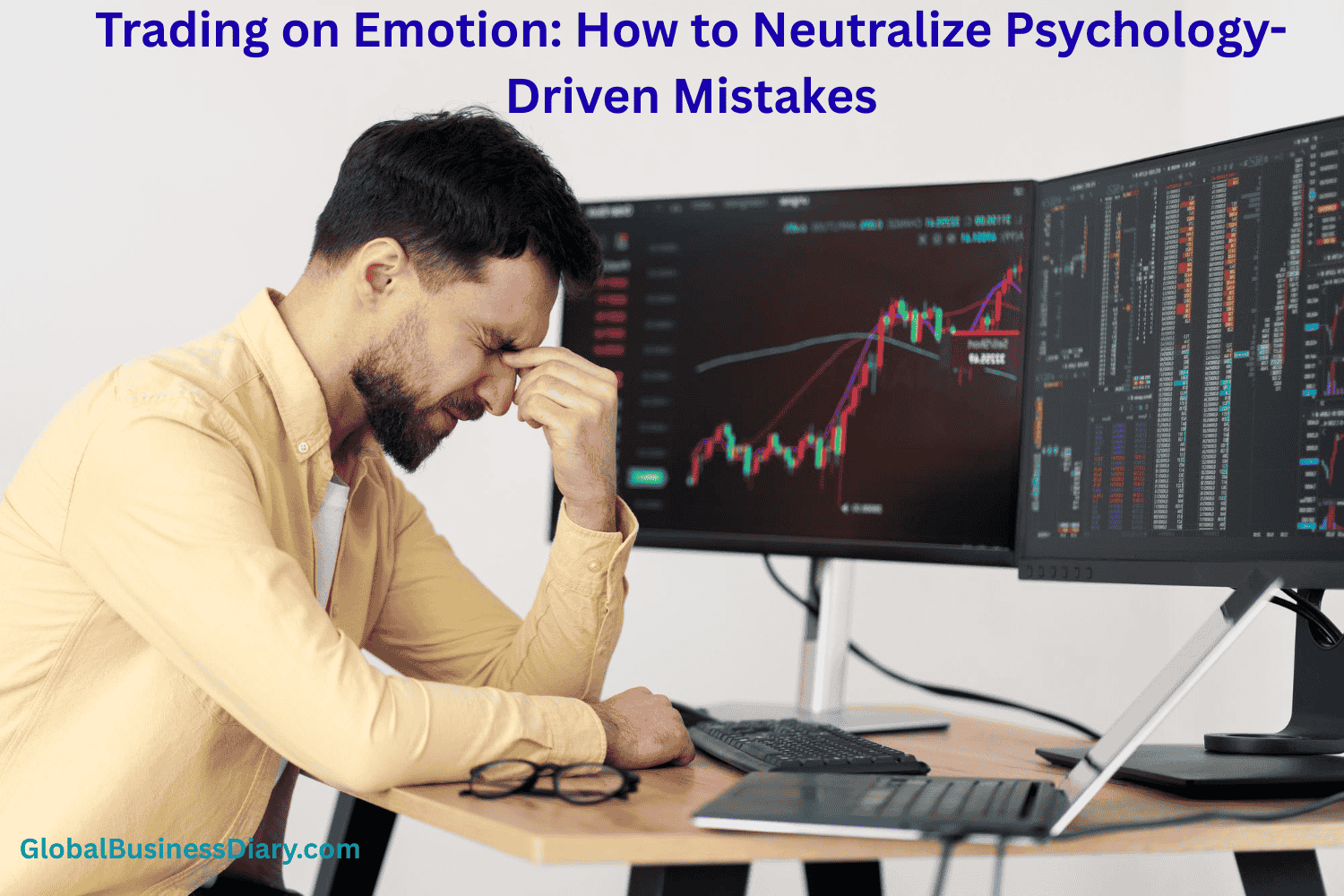
In the world of trading, numbers, charts, and data are often regarded as the ultimate decision-makers. Yet, ask any seasoned investor and they will tell you that emotions play just as significant a role, sometimes more. Fear, greed, overconfidence, or even impatience can all cloud judgment, leading to rushed decisions and costly mistakes. While it’s natural for emotions to surface in high-stakes financial environments, the real challenge lies in learning how to neutralize them and prevent psychology from sabotaging long-term strategies.
Understanding how emotions influence trading behavior is not only a matter of self-awareness but also a critical factor in achieving consistency. By recognising the subtle psychological traps and equipping yourself with techniques to counter them, you can approach the markets with greater clarity and control.
Why Emotions Are So Influential in Trading
Trading is more than just the mechanical act of buying and selling assets – it’s a high-pressure activity where outcomes can have direct personal and financial consequences. These stakes naturally trigger psychological responses.
- Fear arises when markets drop sharply, often prompting traders to sell prematurely and lock in losses.
- Greed pushes investors to chase rising prices without due diligence, exposing them to heightened risks.
- Overconfidence can cause traders to ignore warning signals or overestimate their ability to predict trends.
- Impatience may lead to overtrading, where frequent buying and selling erode profits through fees and poor timing.
The brain, wired to avoid loss, tends to magnify negative experiences. In fact, behavioral finance studies reveal that the pain of losing money is psychologically twice as powerful as the joy of gaining it. This “loss aversion” is at the root of many emotion-driven mistakes.
Common Psychological Traps Traders Fall Into
Recognising the patterns of emotional trading is the first step in preventing them. Some of the most common traps include:
- Revenge Trading: After suffering a loss, traders might impulsively enter new positions to “win back” what they lost, often without proper analysis.
- Confirmation Bias: Seeking out information that supports an existing viewpoint while ignoring contradictory data.
- Herd Mentality: Following the crowd in a market frenzy, which can amplify volatility and result in buying at the top or selling at the bottom.
- Paralysis by Analysis: Becoming so overwhelmed by data and potential outcomes that you fail to make timely decisions.
These traps not only damage portfolios but also erode a trader’s confidence, perpetuating a cycle of emotional decision-making.
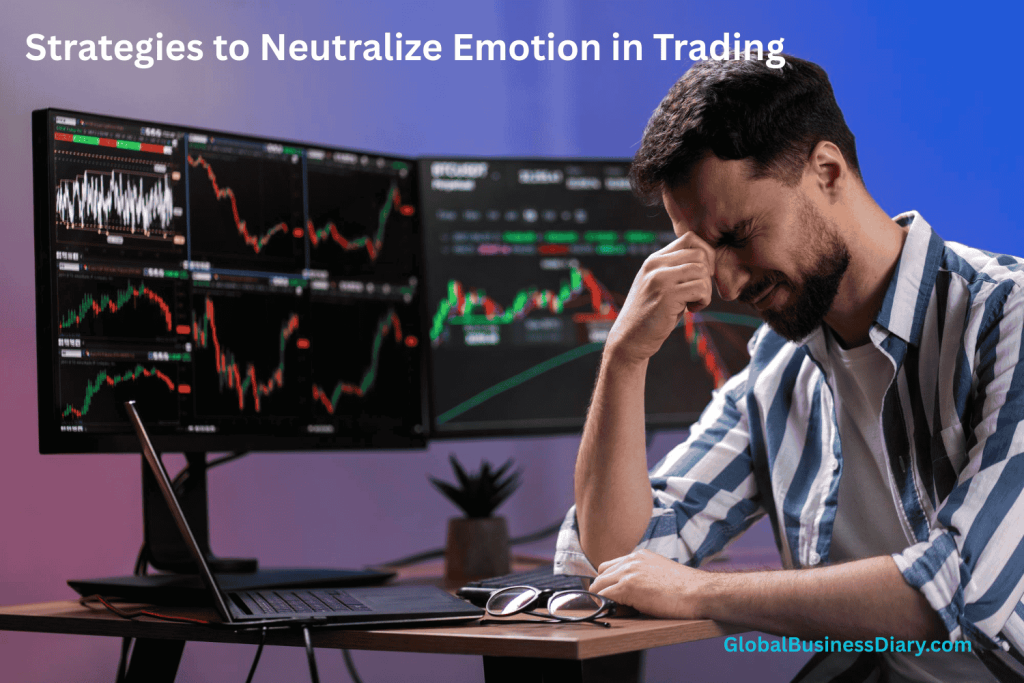
Strategies to Neutralize Emotion in Trading
The good news is that emotional mistakes are not inevitable. With deliberate strategies, traders can reduce the influence of psychology on their decisions.
1. Develop a Trading Plan
A well-structured trading plan is like a compass – it provides direction when emotions threaten to take over. By outlining entry and exit points, stop-loss levels, and risk tolerance ahead of time, you create rules that anchor your actions. Sticking to this plan prevents impulsive decisions during market swings.
2. Practise Risk Management
One of the strongest antidotes to fear and greed is robust risk management. Allocating only a small portion of capital to any single trade and using stop-loss orders can help traders feel secure even when markets turn volatile. Knowing that your downside is limited reduces the emotional intensity of trading decisions.
3. Keep a Trading Journal
Documenting trades – both wins and losses – along with the emotions felt during each decision can be an eye-opening exercise. Over time, patterns emerge, revealing emotional triggers that may be influencing decisions. By identifying these triggers, traders can take corrective action.
4. Use Technology as an Ally
Automated trading tools or alerts can help remove emotion from the process by executing trades based strictly on pre-defined rules. While human oversight is still essential, delegating some decision-making to algorithms can help reduce impulsive reactions.
5. Step Away When Needed
Sometimes the best way to neutralize emotion is to take a break. Walking away from the screen after a loss, or when feeling overly euphoric about a win, gives you space to regain perspective before making your next move.
The Role of Continuous Learning
Trading psychology is a discipline in itself, and becoming more aware of its influence is an ongoing process. By seeking out resources that explore the link between emotion and investment behavior, traders can refine their mindset alongside their technical skills. For example, suppose you’d like to delve deeper into the behavioral aspects of investing. In that case, you can tap to explore a guide that breaks down how emotions shape investment decisions and what you can do about it.
Building resilience against psychological pitfalls requires time, reflection, and commitment. However, the payoff is significant: greater consistency, more rational decision-making, and ultimately, better results.
Conclusion
The markets will always be unpredictable, filled with both opportunities and risks. What you can control, however, is how you respond to them. By recognising the impact of fear, greed, overconfidence, and impatience, and by applying strategies to neutralize these influences, you position yourself for greater success.
Trading on emotion is a common pitfall, but it’s not inevitable. Through planning, risk management, and continuous learning, traders can create a buffer between instinctive reactions and informed decisions. The ultimate goal is not to eliminate emotions but to master them – transforming them from obstacles into guides that enhance, rather than undermine, your trading journey.
#Disclaimer: The information provided on this blog is for educational and informational purposes only and should not be construed as financial advice. I am not a licensed financial advisor. Any investment decision you make is at your own risk, and you should consult with a qualified financial advisor before making any investment decisions. This site may contain affiliate links, and I may earn a commission at no additional cost to you.
Read Also:
- Forex Trading Charts: How Traders Predict Volatility with Price Action and Structure
- ADSS Broker Review: What Traders Need to Know Before Signing Up
- Coyyn – Revolutionizing Modern Trading for All!
- Icryptox – The Future of Trading and Crypto Investment?
- What is Pattern Day Trading? – Fundamentals of Pattern Day Trading
- Successful Trading Strategies With Bullish Engulfing Patterns
- Trading Options Using Iron Condors
Tags:

Recent
Memory Chips Are Becoming More Important in the AI Era
Aug 06, 2026

Why Enterprise Web Applications Still Choose Angular for Long-Term Growth
Aug 04, 2026

Due Diligence Decoded: Why Careful Evaluation Still Wins in Business
Jul 11, 2026

How Hydraulic System Design Impacts Equipment Performance
Jul 01, 2026

Related Articles

What Is A Rotary Vane Vacuum Pump And How Does It Work?
A rotary vane vacuum pump is an excellent device that can build a highly efficient vacuum environment. It works by creating an airtight chamber, which is then evacuated of all the air inside. This process uses a set of vanes (also known as blades) that are carefully designed to spin around an axis. This creates a vacuum inside the chamber, allowing for various applications. Busch Vacuum Pump is widely used in a variety of industries, including food processing and packaging, medical instruments, industrial pumps, chemical processes, and many more. In addition to creating a vacuum environment, it can also be used for pressure applications such as degassing or filling cylinders with gas. In this article, we’ll explain how rotary vane vacuum pumps work and their advantages. Explain the Basic Process The basic process of creating a vacuum using a rotary vane pump is relatively simple. First, an inlet valve is opened, allowing air or other gasses to enter the pump. This creates a pressure differential inside the chamber, which causes the vanes to spin. As they spin, they draw in more and more gas molecules, creating a vacuum environment within the chamber. As the vanes rotate, they reduce the amount of air pressure inside the chamber. This causes the atmosphere outside the pump to push in, creating a vacuum environment. As more and more gas molecules are drawn in, the pressure difference between inside and outside grows until it reaches a desired level. Design and Construction of the Pump The design and construction of a rotary vane vacuum pump are important considerations in ensuring its effectiveness. It needs to be robust enough to handle the high speeds that are required for creating a strong vacuum, as well as be able to operate quietly for extended periods of time. Operation of the Pump Mechanism The operation of the pump mechanism is based on two basic principles: creating a pressure differential and controlling flow. Each individual vane creates a pocket that enables gas molecules to be sucked in from outside the vacuum chamber. At the same time, this process creates a pressure differential inside the chamber that causes air from within to push out. This helps create a more efficient vacuum environment. Advantages of the Rotary Vane Vacuum Pump This vacuum pump offers a number of advantages over other types of pumps. Here are some of the key advantages of using a rotary vane vacuum pump: High Efficiency: The design of the vanes creates a pressure difference within the chamber that allows for efficient air removal. This results in a higher efficiency level than other types of vacuum pumps. Low Noise Levels: Rotary vane vacuum pumps operate at much lower noise levels than other types of pumps, making them ideal for applications where noise is a concern. Long Lifespan: The design of the vanes and construction materials used help to ensure that these pumps can provide reliable service over long periods of time. Cost-Effective: Rotary vane vacuum pumps are cost-effective solutions for creating a high-level vacuum environment. Check out this YouTube video: How does a rotary vane vacuum pump work? https://www.youtube.com/watch?v=9tV6FeDR-vQ In Conclusion You can get the most out of this versatile device by understanding how it works and its advantages. In most industries, rotary vane vacuum pumps are the preferred choice due to their high efficiency, low noise levels, long lifespan, and cost-effectiveness. Read Also: Tips to Update Your Manufacturing Business through CNC Machines Best Paying Jobs In Oil/Gas Transmission | Best Guide To know
Feb 13, 2023

Important Considerations For Employing A Veteran Or Active-Duty Service Member
Employing former members of the armed forces is one of the most time-consuming and difficult issues faced by any firm. When the standard inquiry, "could you please tell me about yourself?" is posed to you, what do you say? It's easy to jump to a conclusion when a candidate says they only have one skill to offer, but resist the urge to do so. Yet, there is a separate set of regulations that must be complied with when employing former members of the armed forces. When you hire someone who has served in the military, you need to look into the following factors first. Their Past Experience The history of the person you are considering hiring is an essential aspect of their profile that needs to be investigated by you. Military personnel is frequently put in challenging situations that call for skill sets that are distinct from those required of civilian employees. Make sure to do research on them first to find out what else they have learned over the years and determine whether or not it may be applied to the requirements of your organization. Check out this website to verify if they really did serve in the military as they claim they did. The Driving Force Behind It One thing that all branches of the armed forces have in common is that their members are highly driven people. They are prepared to uproot themselves and leave behind their family in order to serve their country. Yet, this motivation, while wonderful in certain circumstances, can be a negative thing if it is not channeled toward the accomplishment of the appropriate objectives. Be sure to recruit someone who will work hard to achieve the goals of the firm, rather than just their own personal aspirations. This is not something that can be taught; rather, it is something that comes with age and experience. Someone who has been in a war or another circumstance that involves warfare is likely to have the level of maturity necessary to comprehend what makes a strong leader or manager of people. The Priorities That They Have When evaluating potential candidates with a background in the military, one issue that is frequently overlooked is whether or not they have strong priorities. You have to keep in mind at all times and in every situation that these individuals battle on a daily basis for a cause that is greater than themselves. Because it is their mission to protect and serve, they are sometimes more self-centered than other candidates because of the nature of their work. Their Capabilities in Communicating A strong ability to communicate is one of the most desirable skills for practically any employer. Also included in this category are businesses that recruit former service members. Given that personnel who have served in the armed forces have a good start in terms of this skill; yet, it is still something that may be improved even further. Businesses require employees who are skilled in communication since it will be simpler for employees to seek assistance or exchange information when it is required. When you sign a contract with the individual you are considering hiring, it is important to find out how they communicate with the members of the team and whether or not they are capable of doing so effectively. Their Capabilities as a Leader When employing someone who has been in the military, leadership abilities are typically one of the last things that people consider. This is mainly due to the fact that they are aware that leadership abilities can only be perfected after being honed via a combination of training and experience. But, the fact of the matter is that this is not something that should be taken lightly at all. A person who demonstrates strong leadership via the choices they make and the actions they take will almost certainly be able to pass on their managerial expertise to others who work for them. It is essential to evaluate the level of a person's leadership ability by monitoring them in a variety of settings, not simply during training or even while they are serving in the military. In this manner, you will be able to ensure that the individual is not merely a leader in name only, but rather, one who has the propensity and aptitude to become an excellent manager once they are hired by your organization. Read Also: How To Improve Call Center Agent Performance Effective Ways To Track Your Employees’ Work How To Keep Your Employees Motivated
Mar 03, 2023

How To Build An Ecommerce Website To Boost Your Business
Making new Ecommerce websites are accessible nowadays. Those who have a business based on online media have these Ecommerce websites. It is just like a book of business. You have bought a pair of shoes, perfumes, dresses, etc. They have sent your ordered items to your doorsteps. It seems easy when you are looking at things from the view of a customer. But you will feel challenged when you feel you are the business owner, and you have to send the product to the customers’ doorsteps. However, serial entrepreneurs are doing the most demanding things and maintaining ecommerce websites. Benefits Of Using Ecommerce Websites Serial entrepreneurs always use ecommerce websites to boost their business. However, if you are also thinking of opening a new ecommerce website, you will get a series of benefits. First, ecommerce websites have an option to earn a considerable profit. Now make a website and get the benefits. Now, we will tell you the advantages of opening Ecommerce websites. Go through the book of business and learn the factors. 1. Fast Buy As the owner of the ecommerce website, make your customers satisfied. So, it is easy for them to purchase products in some time. It takes only a minute to buy the product. For example, suppose one of your customers finds a particular product if the person gets it by search and can order it in a single minute. In this way, you can get benefits from using Ecommerce websites. 2. Cost Reduction Process It is a book of business where you have to pay less. For example, if you are selling products in your store, spend money on decoration, electricity, lights, and all. But in the online store, you don’t have to pay for other things. You can follow the serial entrepreneurs. The process is simple and also easy to understand. You don’t have to think of negotiation. If you give a price, interested customers will buy it with that price. But sometimes in the shops, people want you to reduce the cost of the product. However, serial entrepreneurs use Ecommerce websites. Read More: Top 7 Part-Time Work From Home Jobs In 2021 3. Multi Selling Products Using the ecommerce website, you will have time to sell multi-products. For example, you can sell grocery items and also clothing items. The all-in-one facility is excellent and also appreciable. You can open a website and boost your business. Go through the book of business. You may need a designer, but you also do not have to pay extra for creating if you know how to design like it. You will get the best profit through the company. Therefore, make a new website and operate it. How To Build An Ecommerce Site Creating an Ecommerce website is a time-consuming process that may take almost a year to decorate appropriately. However, if you are going to make an ecommerce website for the first time, you may feel bored. Thus, you need to have patience for opening a website and also can see the book of business. Don’t lose patience. Wait for the day of getting a high profit. So, we will now see how to make an Ecommerce website. Design the website in the best way that you can. It is the best time to create an ecommerce website. Serial entrepreneurs always follow these steps. 1. Legal Domain Name When you make a perfect plan for creating an Ecommerce website, choose the niche that you will select. Then, when you locate the place, you will work. After that, you also need to have a name that will perfectly match your business content. Famous serial entrepreneurs always place a proper name as the domain name. With this name, everyone will search and will purchase. You may have to buy the domain name the first time. The official website name is always a registered process. However, pay for that. 2. Legal EIN Number For E-commerce Business When you pay for the domain name, ask to get the EIN. It is the process of Ecommerce website business. If you get a number, that means your business is legal. EIN is the employer identification number. Based on that identity number, pay tax to the online service authority. Visit the book of business and get the details there. The process is the same as the shops. Many websites do not have an EIN. That means the business that the owner is running is illegal. Anytime the owner can get rid of accessing the account. However, you must think of doing a permanent business. Therefore, you must apply for an EIN. 3. Business Permission And License To run a legal e-commerce business, get the license to tell you to have a legal E-commerce business. Then, you need to get permission from the authorities. So, apply for obtaining a permit and go to the next steps. However, wait for the response of the authority and then proceed. Then, in the book of business, it is appropriately mentioned. 4. Designing Designing is the last significant part of creating an Ecommerce website for running a business. When you get an echo from the authority, that means they want you to do the business. However, you go gentle and choose a platform through this, and you will operate the site. For designing, you may need to have a designer. Therefore, select a person who will design your website as you will want. Successful serial entrepreneurs always follow the steps and then open websites and earn money online. Read More: How To Endorse A Check- Step By Step Guide For The Beginners In 2021 The Last Lines These are the steps that serial entrepreneurs have to follow to boost their business through E-commerce. However, all the doubts that you could have been cleared. If you still have doubts, then watch a video and learn in more detail. But before going through the steps, research the market. In that, you will learn what the best niche is in demand. You can go with it, therefore. However, don’t waste your time and seriously have a look at the book of business. It is the best time for you, so go gentle towards your goal. Read More: What Is Network Marketing And How To Do It In 2021 How To Open A Small Restaurant With Less Budget?
Jul 15, 2021

Understanding the Modern Anatomy of an Online Threat
An online threat today doesn’t look like it used to. It’s no longer one fake post, one angry tweet, or one random rumor floating around. Things have changed. A lot. What you’re dealing with now is smarter, faster, and way more coordinated than before. And here’s the tricky part. Most online threats don’t announce themselves. They creep in quietly. They blend in. By the time you notice, the narrative is already halfway formed. So if you want to protect your brand, your organization, or even your audience, you need to understand how a modern online threat actually works. Let’s break it down. Plain language. No fluff. Online Threats Are Built on Narratives, Not Noise A single post rarely causes damage. That’s an important shift to understand. Modern online threats grow through narratives. Repeated ideas. Familiar talking points. Slight variations of the same message spread across platforms. One account says it confidently. Another backs it up. A third reframes it. Suddenly, it feels real. You might see: New accounts showing up with strong opinions The same claim repeated in different words A topic jumping from one platform to another overnight On their own? Harmless. Together? That’s where influence starts forming. And yes, this is how an online threat often begins. Quietly. Almost politely. The Lifecycle of an Online Threat Moves Fast Here’s something most people underestimate. The early phase is the most powerful. Narratives don’t build slowly anymore. They spike. Fast. Sometimes within hours. Sometimes minutes. That early momentum is when opinions form, and emotions lock in. If your team waits too long to react, you’re already behind. Not because you’re careless, but because the system rewards speed. Once the story settles into public awareness, correcting it becomes harder. More expensive. More visible. So the goal isn’t just a response. It’s early detection. Catching movement before it turns into mass belief. Speed Changes Everything Conversations used to take days to unfold. Now? They explode. An online threat can: Gain traction while you’re still verifying facts Pull in new voices before internal teams align Shape perception before you even know it exists That’s the reality. And it’s uncomfortable. Slow approval cycles and disconnected monitoring tools just don’t work anymore. You need real-time awareness. Or at least faster signals. Because once a narrative starts feeding itself, stopping it becomes a different game entirely. Not All Online Activity Is What It Looks Like High volume doesn’t always mean real concern. This is where a lot of organizations slip. Some online threats are manufactured. Competitors are pushing misleading ideas Ideological groups are trying to shape sentiment Automated accounts are creating fake consensus If you treat these like organic conversations, you risk amplifying them. You respond emotionally. You validate the narrative by engaging in the wrong way. Understanding intent matters. Who started it? Who benefits? Who keeps repeating it? Those questions help you decide whether you’re facing genuine feedback or a coordinated influence effort. Network Structure Tells a Bigger Story Online threats don’t spread randomly. They follow patterns. Some grow inside tight-knit communities. Others spread through hundreds of small accounts. Some rely on visuals. Others depend on repetition. A few use timing to their advantage. When you understand these structures, detection becomes easier. You stop focusing only on what’s being said and start watching how it’s spreading. That shift alone changes how you respond. Monitoring Needs Layers, Not Guesswork The most effective teams don’t rely on one signal. They build layers. They look at: Where conversations start How fast they move Which platforms amplify them Who consistently pushes the message They connect analysis across teams. Communications. Risk. Leadership. Everyone stays aligned. That’s how you stay proactive instead of reactive. Why This Matters to You An online threat doesn’t just damage reputation. It affects trust. Customers. Stakeholders. Long-term credibility. If you understand the anatomy of these threats, you gain control. You respond with clarity instead of panic. You avoid feeding narratives that don’t deserve attention. And maybe most importantly, you stop being surprised. Because in today’s digital environment, the real risk isn’t that online threats exist. It’s assuming they’ll look obvious when they arrive. They won’t. For deeper insight into how online threats develop and how organizations can detect them early, explore the companion resource from Peakmetrics, a provider of public sector AI software. Read Also: The AI Revolution: How Industries Are Driving Innovation?
Jan 07, 2026