





A&TA: Why Is It Important for Your Business Growth and Performance?
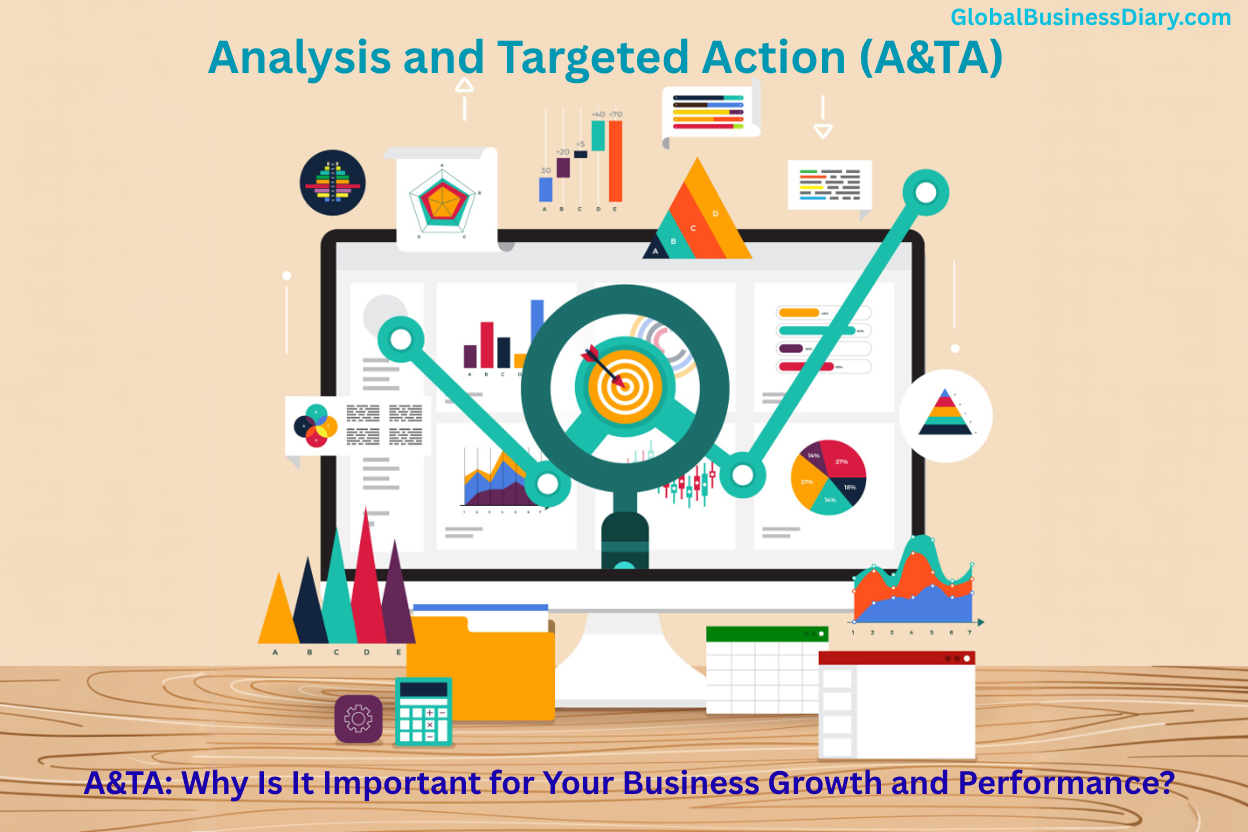
With changing times, the business world is getting faster. That is why many companies are looking for ways to improve their performance. This way, they are working toward sustainable growth. Hence, many of them are turning toward Analysis and Targeted Action (A&TA).
At the outset, A&TA is a strategic approach that includes combining data-based insights and efficient execution. So, whether you have a small startup or a large business, you will be able to make the most of A&TA. This will help you make major differences in your business outcomes.
That is why it is important to learn the basics of A&TA. Therefore, read on to get a better idea of A&TA. Also, you will learn how to implement this approach in your business for better outcomes.
What Is A&TA?
A&TA stands for Analysis and Targeted Action. The following are the two parts of A&TA:
1. Analysis
This stage includes collecting and studying your business data. The following are some examples of business data:
- Sales numbers
- Customer feedback
- Market trends
- Employee performance, and more.
Basically, the goal is to understand what is working for your business. Also, you will get a better idea of what is not working. Moreover, you will also learn about the major opportunities that your business can make the most of.
2. Targeted Action
After data analysis, you have small and focused steps to improve your business processes. However, these steps are not random. Rather, you plan and execute as per your insights. In this case, you might get through analysis that your customers have complaints regarding delivery times. Hence, you will be able to take action to streamline your logistics processes.
Therefore, A&TA is a process through which you make better decisions. Based on those decisions, you act effectively.
Ways Through Which A&TA Helps You Make Better Decisions
Primarily, a lot of businesses work with data. However, not many businesses know how to utilize data properly. This is where A&TA is important. In fact, you do not have to go through multiple spreadsheets and reports. Rather, A&TA enables you to turn your information into simple and actionable steps.
For instance, you might own a business. A situation might occur where your sales are dropping due to an unknown reason. Hence, with analysis, you find out that some products are problematic. Hence, by analyzing, you determine what action to take. Therefore, with a simple change, you will be able to improve your sales and customer satisfaction.
Actually, the best thing about this approach is that it works well across industries. That is why your job is to focus on the right data. This way, you will be able to act properly.

How A&TA Boosts Business Performance?
The following are the ways through which A&TA improves different processes of your business:
1. You Make Better Decisions
As you work with A&TA, you make decisions based on facts and not guesswork. In this case, you know about the following factors:
- What are your customers asking for?
- How is your team performing?
- Where is your money going?
Hence, with this clarity, you will be able to make better choices. This way, you will get better results for your business.
2. You Will Have More Efficiency
Targeted actions eliminate waste. Rather than trying different approaches, focus on what the data shows you. This way, you will be able to save your valuable time and money.
3. Your Customer Experience Will Be Better
You will be able to serve your customers better after you get a better idea of their pain points and demands. With A&TA, you will be able to identify what works better for your customers. This way, you will be able to tailor your services better.
4. Your Team’s Performance Will Improve
With analysis, you will get to know the performance of different departments in your organization. Hence, focus on the following targeted actions:
- Training
- Restructuring
- New tools and more.
5. You Will Have a Competitive Advantage
If you start making the most of A&TA, you will benefit from a competitive advantage. In fact, you will be able to adapt faster and respond to market changes. Moreover, you will innovate faster than competitors who do not rely on analysis.
Essential Steps to Perform A&TA
The following are the major steps you must follow if you want to start utilizing A&TA for your business:
1. Collect Essential Data
In this case, start with the data that you already have. Basically, choose data that aligns with your goals. The following are some examples:
- Sales records
- Customer reviews
- Employee feedback
- Website analytics
2. Analyze the Data
In this case, check patterns, trends, and problems. This way, you will be able to determine what is working well for your business. Moreover, you will also find out what is holding your business back from its ultimate potential. Essentially, you might start utilizing various tools available online.
3. Determine Your Targeted Actions
As per your analysis, determine what changes you want to make.. Be specific. For instance, do not say “Improve marketing!” Rather, start saying things like “Post three times a week on Instagram…”
4. Start Implementing
At the outset, you have to put your plan into action. Then, keep track of results. This way, you will find out whether your sales went up or not. Also, you will find out whether your customers are happier or not. Hence, depending on your findings, you will be able to adjust your processes.
This cycle — analyze, act, monitor — keeps your business moving forward.
Common Mistakes to Avoid with A&TA
While A&TA is powerful, it’s important to use it wisely. The following are some of the major mistakes you must avoid while working with A&TA:
- Ignoring the data: Do not forget information after collecting it. Rather, utilize them to make better decisions.
- Taking vague actions: Do not take actions like “Working harder!” Instead, focus on targeted actions. Basically, you have to be particular and measurable.
- Not following up: If you make changes, try to measure their impact. In those cases, if things do not improve, analyze and repeat the process.
- Overcomplicating the process: Always try to keep things simple. Basically, you have to focus on one issue at a time. This way, you will be able to build accordingly.
Frequently Asked Questions (FAQs)
The following are some of the most common questions you will come across regarding A&TA:
A&TA means Analysis and Targeted Action. Primarily, it is a strategy that works with data to guide particular business improvements.
A&TA helps businesses with the following aspects:
1. Make smarter decisions
2. Improve efficiency
3. Respond quickly to customer requirements.
4. Deal with market changes.
Absolutely. A&TA works for businesses of all sizes. Even basic data like customer feedback or sales trends might lead to powerful actions.
Begin by collecting relevant data, analyzing it for patterns, and then taking focused actions based on what you learn.
Avoid vague actions, ignoring data, or failing to track results. A&TA works best when it’s specific, consistent, and monitored over time.
A&TA is Important for Every Business!
In a world full of competition and constant change, businesses can’t afford to rely on guesswork. A&TA provides a clear path to growth by combining insight with action. It helps you understand your business better, serve your customers more effectively, and make decisions that lead to real results.
Whether you’re launching a new product, expanding to a new market, or just trying to improve daily operations, A&TA gives you the tools to succeed.
Read Also:
- How Does A Consumer Know Whether A Purchase May Be A Good Deal?
- Embracing Business Automation: 8 Practices For A Smooth Transition
- Business Continuity Plan – What Is It, And How Does It Work?
- Why Business Continuity Planning Is Essential For Your Company?
- What Is Risk Management? – Find Out How To Manage Risks in Business
- The Best Risk Mitigation Techniques For Your Business
Tags:

Recent
Dinmukhamet Idrisov and a Gold-Mine Dispute From Kazakhstan’s Oligarchic Past
Oct 16, 2026

Memory Chips Are Becoming More Important in the AI Era
Aug 06, 2026

Why Enterprise Web Applications Still Choose Angular for Long-Term Growth
Aug 04, 2026

Due Diligence Decoded: Why Careful Evaluation Still Wins in Business
Jul 11, 2026

Related Articles

Shipping Container Magic: Your Key To A Seamless Relocation
Are you gearing up for a big move? Relocating can be both daunting and exciting, it can either be due to a new job opportunity, a new chapter in your life is beginning, or you're just looking for a switch of pace. One of the biggest challenges in the relocation process is ensuring that your belongings reach their destination safe and sound. That's where moving shipping containers comes into play. This article will explore how these unassuming steel giants can work their magic and make your move a breeze. The Power of Shipping Containers One of the best things about a shipping container is that it comes readily applied for almost all architectures. International brands like McDonald’s, Nike, and even Starbucks have been utilizing shipping containers. But how does it make your relocation process easier? Here is a brief guide: Efficiency at Its Finest Efficiency is key when it comes to moving. Shipping These are designed to efficiently transport goods across long distances, making them a perfect choice for your relocation needs. Here's why: - Standardisation: It comes in standardized sizes, simplifying the packing process. You can easily estimate how many containers you'll need based on the volume of your belongings. - Durability: These containers are built to withstand harsh conditions at sea, so they can easily handle the rigors of a cross-country move. - Security: These are known for their security features. Once your belongings are locked inside, they're protected from theft, weather, and damage. Cost-Effective Solution When it comes to affordability, shipping containers have literally surpassed their counterparts. For an insight into the cost-effectivity of shipping containers, here are a few considerations. - No Need for Multiple Trips: You can load all your belongings in one go with a shipping container. No need to make multiple trips back and forth, which can be costly and time-consuming. - Flexibility: You can rent a container for the duration you need it. This flexibility lets you plan your move more efficiently and save on unnecessary rental fees. - DIY Option: If you're up for the challenge, you can pack and load the container, cutting labor costs. Steps to a Seamless Relocation with Shipping Containers Time and again, the relevance of shipping containers has not gone unnoticed. Since these containers are a perfect reflection of youth, creativity, and immediacy, their use is prevalent in various sectors. But, in order to make the most of them, there are a few things to consider: 1. Assess Your Needs Before you start looking for a shipping container, assess the size and quantity you'll need. Take inventory of your belongings and consider any special items that require extra care. After this, discuss your needs with the shipping partner and instruct them on further procedures. 2. Find a Reliable Container Provider Choose a reputable shipping container provider in your area. Make sure they offer containers in the size and condition you require. Working with a trusted company is essential to ensure a smooth process. After all, you are trusting with your lifetime earnings. So, never settle for a provider that has no value to offer. 3. Pack Strategically Efficient packing is crucial when using containers for office relocation. But how do you pack strategically so that all your worries are reduced? - Use Quality Packing Materials: Invest in sturdy boxes; use packing paper, bubble wrap, and other safeguards to keep your goods secure while in transportation. - Label everything: Clearly indicate the contents of each package and the room in which it will be delivered to simplify unpacking at your new home. - Load Heaviest Items First: To avoid damage, put heavier objects in the bottom of the container and lighter ones on top. 4. Secure Your Belongings Shipping containers come equipped with locking mechanisms, but you can add extra security by using padlocks or seals. This ensures that your possessions remain safe throughout the journey. - Principles of Packing: A sade container transit mainly depends on the right and immovable stow. But, apart from that, one might also have to think about even weight distribution. - Methods of Product Securing: There are various methods to secure a product when it is inside the shipping container. But the most efficient ones are done using spars, struts, and shoring bars. - What Helps In Good Securing: When it comes to securing products, there can never be a single formula applied. But, every show needs to be treated on its personal merits. That’s one thing that surely promotes a safe transit with shipping containers. Related: An Essential Guide To Setting Up Your Shipping Container Office 5. Plan the Transport Coordinate the transportation of your container to your new location. You can choose to have it delivered directly to your new address or a storage facility if needed. You might take the help of the delivery agency or the individual for strategizing your entire transport process. Since they are professionals in the field, they will let you know which option is the most convenient. Do not hesitate to talk to them about your private stuff. 6. Unload and Settle In Once your container arrives at your new home, it's time to unload and settle in. Take time to unpack and organize your belongings per your labeling system. As exciting as it sounds, unpacking can be a daunting task too. Take your time, let things settle slowly, and then start unpacking. The pro tip here is to unload a single box, place it at the right spot in your abode, and then move on to the next one. This will make your house less cluttered, and you will have peace of mind. Conclusion In the world of relocation, moving shipping containers truly work their magic. They offer efficiency, cost-effectiveness, and security that can turn a potentially stressful move into a seamless transition. By following these steps and harnessing their power, you can make your next relocation a successful and stress-free experience. So, consider the container option when planning your move – it might just be the key to your seamless relocation. Read Also: 6 Tips For Doing The Car Shipping To Georgia Process Right How to start a logistics company? an expert guide
Oct 12, 2023

What Is Legacy Academy Franchise? Everything You Should Know
Today, parents have less time for their children, and they search for a complete school where the child's overall development is possible. Legacy Academy franchise offers such an opportunity to the parents of the 21st Century to provide their children the required care and time they deserve. You can remain assured of your quality childcare once you opt for the Legacy Academy Franchise. Do not waste your time admitting your child to an ordinary school. You can get different kinds of curriculum for your child from this Legacy franchise. Types Of Curriculum Legacy Academy Franchise Provides In 2022 There is a wide variety of Curriculum available for your child in the Legacy academy franchise. However, you have to ensure that you do not make your investments in the wrong places while you invest in Legacy Academy Franchise. 1. Brain Power The development of brainpower is an essential part of a child’s life during their infancy. You can rest assured that Legacy Academy Franchise offers brain power development programs to Infants and Toddlers. You have to take care of different kinds of services to improve your child’s future in the right direction. So work out your plans which can work well in your favor. In the first six to eight months, your Child's brain functions improve rapidly. However, you have to understand these facts while seeking the assistance of reputed schools. Brain development of your child will be possible when they get the guidance of a mentor, not only an ordinary teacher. 2. Infants Depending on the current brain research, certain sensory activities are developed among infants early, like drama, sensory age, literacy, curiosity, art, and language. In the Legacy academy franchise, we create a framework to develop the mortar skills of the child’s brain to perform the task aptly. Therefore, you need to understand the importance of your child's growth, and it is possible when you seek the services of Legacy Academy Franchise. The infancy stage of a child is the most crucial stage in their life. What they will learn at this age will be remembered and registered in their minds for a lifetime. 3. Toddlers Toddlers are a particular group of children who are unique in their approach. Therefore, the optimal time and positive interaction between the teacher and students are essential. You have to understand the facts before making your choices for creating proper bonding and building high self-esteem for your child. Toddlers require positive interaction with their teachers and seniors, and Legacy Academy Franchise offers just that to their children. The primary aim of Legacy Franchise is to promote Individual development and Toddlers' growth. Therefore, all the children are given the scope to develop their gross mortar skills by properly exploring the surrounding environment. 4. Pre-Schools The Preschool program of Legacy Academy Franchise is quite exciting for the students. The reason is that it enables the students to participate in group activities and make new friends. The exciting curriculum includes math and literacy lessons. In maths class, preschoolers are trained to develop thot cognitive skill sets. The Curriculum includes number recognition, geometric shapes, Counting, and classification. In addition, reading and writing skills are nurtured for three years to improve literacy skills. The three-year-old child is exposed to a better learning environment, and teachers plan their curriculum according to it. 5. Kindergarten Brainpower and character-building activities are the primary forms of learning that are practiced daily in Legacy Academy. In this Curriculum, the learners will be challenged to learn new things every day. Children will be motivated to explore new ideas and concepts, which can challenge their thought processes every time. All the concepts taught here are based on brainpower. It focuses on the objectives of the multisensory key experiences. However, the teacher's class size is such that they can interact with the child in a one-to-one conversation. Legacy Academy Franchise focuses on developing such a curriculum for your child, which will help them improve their problem-solving ability and decision-making capabilities. 6. School Age The Legacy Academy school-agers got the chance to call their parents before and after their school day was over. After and before school, the students will get some of the quality teachings and curriculum that are necessary for their overall development. Some of the quality services are as follows:- Group and individual activities. Homework Help. Eating Healthy Snacks. Team Building & Creating opportunities. They are invigorating the Outdoor Experiences among the students. The School Agers have plenty of time for playing games, having fun, and relaxing. In addition, legacy welcomes your school ager any time school is not in session. 7. Activities, Music & Foreign Language Certain activities, music, foreign language Legacy Academy Franchise offers to its clients. Research reflects that young Children are eager to learn new concepts and a Foreign language rapidly and efficiently. In addition, you can also learn new music if you love discovering new songs. The overall development activities of the Children include Karate, Yoga, and Dance activities with proper guidance. Your Child’s overall growth is ensured when you want to develop the child's creative skills. Qualified instructors can guide the Children. In addition, it can help young children learn new concepts. After discussing with the parents and diagnosing the Children's interests, they offer foreign language courses to the students. Of course, you have to understand the facts before deciding to select a foreign language. Final Takeaway Hence, if you want to ensure your child's overall development, then Legacy Academy Franchise will offer you the scope for that. Proper development of your child will be possible when your child is exposed to a better learning environment. You just have to make the admission of your child to this school. In the 21st century, only your child's academic excellence will not work well for your child. Instead, overall development is necessary. You can feel free to share your opinions about it. But you must remember that it is the question of your child's future, and you cannot take chances. However, the proper selection of the schools is significant here. More Resources: 7 Rules To Build Personal Brand For Your Business Visa Sponsorship - Everything You Need To Know About It Youtube Sponsorship - Everything You Need To Know About It
Jan 22, 2022

The Game-Changing Impact Of A Reliable Business Registration Service
Starting a business is an exhilarating journey, but it can be overwhelming with all the paperwork and legal requirements. That's where a reliable business registration service comes in to simplify the process and make the dream of entrepreneurship more achievable. Explore how a trustworthy registration service for businesses can impact aspiring entrepreneurs, providing them with the tools and support they need to turn their vision into reality. Registering A Company Registering a company denotes that you are making your entity, which has its legal obligations. As you run your own business, you must know the required laws and regulations. That's a mark of being a responsible business entity. Prior to starting your own business, you will have to consider the structure of the business and understand how it operates. Firstly, you must decide whether your chosen business structure is right for you. Try to ensure that registering the company and registering a business name is no different. Now, you have to choose the name of your business. Note that while you select a name of your business for the registration, you can not opt for an existing company name. You can use some symbols that are defined by the Australian stakeholders overseeing business development. You can not use some terms like Royal, Trust, bank, or even Incorporated. Visit the IP Address Australia and search for an existing trademark. Before registration, you must also decide how your organization will be governed. Will it be done with the help of the replaceable laws, its self-constitution, or a merge between both? After you have a rough idea, you can move to the registration company. The Roadmap To Entrepreneurship The roadmap to entrepreneurship goes through different terrains. An entrepreneur takes the risk and works consistently towards making the business a great hit. Here, we discuss the roadmap to entrepreneurship. Laying The Foundation Embarking on a business venture requires a solid foundation. The first step is choosing the proper legal structure for the business, such as a sole proprietorship, partnership, or limited liability company (LLC). A reliable business service can guide entrepreneurs through the pros and cons, helping them make an informed decision that aligns with their goals and protects their interests. Streamlining The Registration Process Navigating the bureaucratic maze of business registration can be time-consuming and complex. A trustworthy registration service handles the paperwork and ensures all necessary documents are properly filed. This allows entrepreneurs to focus on other aspects of their business plan without getting bogged down in administrative tasks. Expert Advice And Compliance Staying compliant with local laws and regulations is crucial for any business. A reliable registration service informs entrepreneurs about the legal requirements, permits, and licenses needed to operate smoothly. By providing expert advice, the service helps businesses avoid costly mistakes and ensures they are on the right side of the law. The Human Touch: Personalized Support Personalized support helps businesses traverse the most difficult of journeys. If you are embarking on a journey to attain new growth and development, then you must try to learn about the journey from the most experienced of people. Seminars and workshops on the business can indeed be of help to you. It can help the entrepreneur explore business from diverse perspectives. Tailored Solutions For Unique Businesses Every business is unique, and a reliable registration service understands this. They offer personalized solutions, considering each entrepreneur's specific needs and goals. This human touch allows aspiring business owners to feel heard and supported, increasing their confidence in the registration process. Empowering Entrepreneurs Starting a business can be daunting, but a trustworthy registration service empowers entrepreneurs with knowledge and resources. They offer workshops, seminars, and educational materials to help entrepreneurs gain the skills they need to thrive in their industry. This support fosters community and camaraderie among like-minded individuals, making the journey less lonely and enjoyable. Overcoming Obstacles: Dealing With Challenges Registration of a new business takes quite a long time as it goes through different paperwork and other formalities. Hence, you need to have an idea of how to mitigate these challenges. Consult a legal team that can help you out. Navigating Legal Obstacles Legal obstacles can be a stumbling block for many entrepreneurs. A reliable registration service helps businesses overcome these challenges by providing legal counsel, contract assistance, and dispute resolution services. This ensures that entrepreneurs are equipped to face any legal hurdles that may come their way. Financial Guidance Finances can make or break a business, especially in the early stages. A trustworthy registration service connects entrepreneurs with financial experts who can offer valuable advice on budgeting, funding options, and tax planning. This financial guidance sets entrepreneurs on the path to sustainable growth and long-term success. Success Stories: Real-Life Testimonials Reliable registration services have indeed built the baseline of a successful business venture. Therefore, you need to be motivated by the examples and not get distracted from the initial failures. Registration of business has its own flow, but you need guidance from legal experts to help you navigate the complexities. From Idea To Reality Many successful businesses owe their existence to a reliable registration service. Entrepreneurs who have used such services share their inspiring success stories. These testimonials highlight how the service transformed their dreams into tangible businesses, proving that the proper support can make all the difference. The Journey Of Resilience Building a business is a journey full of ups and downs. Real-life success stories also share the challenges entrepreneurs faced and how they persevered. These stories of resilience and determination motivate aspiring business owners, showing them that setbacks are part of the process, but success is attainable with the proper support. Conclusion In conclusion, a reliable business registration service is a game-changer for aspiring entrepreneurs. From guiding legal matters to offering personalized support and success stories, these services equip individuals with the tools to turn their business vision into reality. By streamlining the registration process and offering expert advice, they remove barriers and pave the way for success. Read Also: top 5 successful serial entrepreneur of all time – 2021 updates how to create a powerful strategic marketing plan – step by step guide 5 most powerful marketing strategy that will change your business in 2021
Aug 03, 2023

Periodic Inventory System: What Is It, How It Works, Applications, And More
The periodic inventory system is the method through which a business does a valuation of its inventory. Here, the business updates its inventory account at the end of each accounting period and not after each sale, wholesale, or purchase. The main advantage of this system is that it helps the business track its beginning and ending inventory within an accounting period. In this article, you will learn about what a periodic inventory system is in general. Apart from that, you will also learn how a period inventory system works. In addition to that, you will also learn the difference between a periodic inventory system and a perpetual inventory system. Finally, you will learn how to use such a system in your business model. Hence, to learn more about this system, read on through to the end of the article. What Is A Periodic Inventory System? Investopedia defines – “The term periodic inventory system refers to a method of inventory valuation for financial reporting purposes in which a physical count of the inventory is performed at specific intervals. As an accounting method, periodic inventory takes inventory at the beginning of a period, adds new inventory purchases during the period, and deducts ending inventory to derive the cost of goods sold (COGS).” The best thing about a periodic inventory system is that it is easier to implement. Apart from that, it is also a cost-effective option for companies that are usually small in size. Another major advantage of a period inventory system is that it helps the business manage risks in the supply chain better. It is an accounting technique where the accountant updates the count of the physical inventory at specific intervals. One can execute a period inventory count monthly, quarterly, and annually. Here, the accountant does not update the account regularly or after each sale of products and services. However, this system of accounting is a great option for small businesses only. When it comes to larger companies, they use the perpetual inventory system. Here, the companies update their inventory lists regularly (or after each sale). How Does A Periodic Inventory System Work? The inventory of a business is nothing but the goods that the company has in its hand, and it can make them available for sale. In general cases, a business holds inventory in the normal course of business. Furthermore, the inventory is also one of the most valuable assets of the business. This is because those inventories create the primary source of revenue for the business. According to FreshBooks.com, “In a periodic inventory system, no continuous record of changes is kept. The yearly inventory purchases are recorded in the purchases account, which is a ledger listing all inventory purchases and their costs. At the end of the year, a physical inventory count is done to determine the ending inventory balance and the cost of goods sold.” In this accounting system, the business keeps a physical count of inventory at certain periods of time. With the periodic inventory system, the time is mostly monthly, quarterly, or annually. This means that the company that uses this system tracks its inventory at hand both at the beginning and the end of a specific accounting period. Here, the company does not track its inventory on a regular basis or during sales. With this inventory system, the company also finds it easier to track the costs of all the goods sold. This inventory updating system is popular among smaller companies that do not have the necessary tools and manpower to conduct regular updates of inventory. Also, these companies have smaller quantities of inventory. Periodic Inventory System Vs. Perpetual Inventory System In the periodic inventory system, the company does not have full information regarding its levels of inventory. Apart from that, it also does not know all the costs of goods sold until the completion of the physical count process. Hence, this system is the best option for businesses that have a smaller number of stock-keeping units (SKUs). Furthermore, the company also needs to operate in a market that plods. In other cases, the perpetual inventory system is a better option for all. The following are the major differences between a periodic inventory system and a perpetual inventory system: The perpetual inventory system updates the inventory asset ledger on a regular basis or after each sale. As a result, the management gets an instant view of the inventory. On the other hand, the periodic inventory system is more time-consuming and does not get updated information. With the help of the perpetual system, the company can always keep its COGS updated. On the other hand, the periodicity of the periodic system makes it less useful when it comes to staying updated. The perpetual system tracks individual items in the inventory. Hence, it is easier to locate defective items quickly. However, the periodic system does not help in this regard. When To Use A Periodic Inventory System? According to Netsuite.com, “Any business can use a periodic system since there's no need for additional equipment or coding to operate it, and therefore it costs less to implement and maintain. Further, you can train staff to provide simple inventory counts when time is limited, or you have high staff turnover.” However, the periodic system is most suitable for small companies with a low number of SKUs. This is because such a business is not concerned fully about scaling its business at the given moment. Apart from that, based on your needs and the types of products you deal with, you can use a periodic system along with a perpetual inventory system. Furthermore, if you have good control of your supply chain system and you sell only a few products, then the periodic system is the better option for you. Wrapping Up The periodic inventory system is the best option for only those companies that deal with only small quantities of goods. Apart from that, companies that are not looking for scale at the moment and have only a limited number of employees must use this inventory accounting system. Do you have more suggestions on how to use the best inventory accounting system? Consider sharing your ideas and opinions with us in the comments section below. Read More By Clicking Below!! What Is Bottleneck In Business? Everything You Should Know About It What Is Free Alongside Ship? Essential Things To Know About It Cost Insurance Freight? Everything You Should Know About It
Dec 20, 2023