





The Role Of Digital Agencies In Transforming Car Dealerships

Car dealerships, long identified by sprawling lots, vibrant banners, and the quintessential ‘sales pitch’, are undergoing a seismic shift, thanks to the rapid evolution of digital technology. As consumers’ shopping habits gravitate more towards online platforms, the automotive industry finds itself at a crossroads, demanding a profound digital transition.
Here’s where digital agencies specializing in automotive digital marketing solutions step in. They bridge the gap between traditional sales techniques and the demands of the digital consumer. So, let’s get started with this comprehensive guide, which explains the importance of digital marketing in car dealerships. It has a bunch of necessary insights for you, so keep reading.
Digital Agency’s Toolbox for Dealerships
Whether you know it or not, most digital marketing agencies promote car dealerships among national and international clients. But which agency is the best for you? How do you discover that? Here are a few toolboxes that must be present at any digital firm for car dealerships:
Building Robust Online Platforms:
Gone are the days when a customer’s first interaction with a dealership was in-person. Today, a potential buyer starts their journey online. Digital agencies assist dealerships in creating user-friendly websites, offering detailed vehicle information, virtual showrooms, and even online purchasing gateways.
Hence, the first thing you want to look at is the kind of platforms the agency is active on. There are millions out there that can and should be optimized for the best automotive deals. Why not make use of them? Creating robust online channels is the stepping stone for any digital firm.
Data-Driven Personalization:
Automotive digital marketing solutions revolve around leveraging data analytics. By understanding customer preferences, past behaviors, and browsing patterns, dealerships can offer tailored deals and promotions that resonate with individual consumers.
Digital agencies utilize advanced Customer Relationship Management (CRM) systems to help dealerships craft these personalized marketing strategies. Fluff is something produced easily, but catching it is a big challenge. Therefore, search for companies that believe in data-driven personalization for your car dealership brand.
Empowering the Shift to Electric:
As dealerships expand their inventories to accommodate the rising demand for electric and hybrid vehicles, digital agencies play a pivotal role in marketing these vehicles to the eco-conscious buyer. They employ specialized campaigns highlighting the benefits of electric mobility, ensuring dealerships don’t just stock these vehicles but sell them effectively.
Inspect what technological solutions the agency seeks. Do they use campaigns like PPC, SEO, and social media marketing to boost your car dealership strategy? If yes, then you can surely opt for them and, in fact, get more ideas on how to keep the process going.
Elevating Customer Experience:
Today’s consumer expects a seamless experience, both online and offline. Digital agencies help car dealerships integrate advanced tools, like video chat solutions, ensuring customers can engage with salespeople from the comfort of their homes.
These tools not only offer convenience but help establish a trusted relationship between the buyer and the dealership. When the consumer experience is good, people will automatically want to be a part of your dealership plan. That’s how it works!
Subscription & Mobility Solutions:
Modern consumers are exploring alternatives to traditional car ownership. Recognizing this trend, digital agencies assist dealerships in setting up subscription or car-sharing platforms, appealing to a segment of the market that values flexibility over long-term commitment. If the digital company is already providing flexible solutions, there’s nothing to worry about.
But what if they don’t? In such cases, make sure to communicate your needs well. When you partner alongside a different agency altogether, it is necessary to talk well and align both your plans strategically.
Online Reputation Management:
In an age where online reviews can make or break sales, maintaining a positive digital reputation is paramount. Digital agencies offer tools and strategies to help dealerships engage with customers, address concerns, and ensure a consistent flow of positive feedback.
Use digital tools to maintain your car dealership brand’s online reputation. This can largely help you to reach an effective clientele and diminish the risks of potential damages.
Strategic and Creative Thinking:
One of the foremost things any digital agency should be well-equipped with is the ability to think creatively. There must be a plan of targeting clients in the best way possible because you don’t just want to target them but also convert them.
Both creative and strategic thinking give a clear idea of opportunities and challenges the industry might be facing. Hence, opt for an agency that can think beyond the usual world and boost your car dealership business. Additionally, check out their portfolio and how they have managed clients in the past.
Challenges and Solutions
While the digital transformation journey promises immense opportunities, it’s not devoid of challenges. Dealership staff, accustomed to traditional sales methods, might exhibit resistance to new digital tools. Digital agencies play a role in training and familiarizing these staff members, ensuring a smooth transition.
Another significant concern is data security. With the escalating threats of cybercrimes, safeguarding customer data becomes imperative. Digital agencies equipped with expertise in cybersecurity can provide dealerships with solutions to protect sensitive information.
Lastly, the financial and skill-based investment required for digital transformation can be daunting. However, with the right digital agency partnership, dealerships can optimize costs, leveraging the agency’s expertise to deploy efficient automotive digital marketing solutions without the need to build in-house teams from scratch.
Conclusion
The car dealership landscape is undeniably changing, and the road ahead is digital. As dealerships navigate this new terrain, partnering with specialized digital agencies can offer them the tools, strategies, and expertise to not only adapt but thrive. In the age of online shopping, reviews, and instant gratification, it’s these digital partnerships that will define the dealerships of the future.
And it’s a wrap on this article. The car dealership is an emerging realm of the profession, and so is digital marketing. The amalgamation of both should have enormous benefits for you. Thank you for reading till the end. If you loved the article and have anything to share, comment below!
Read Also:
Tags:

Recent
Memory Chips Are Becoming More Important in the AI Era
Aug 06, 2026

Why Enterprise Web Applications Still Choose Angular for Long-Term Growth
Aug 04, 2026

Due Diligence Decoded: Why Careful Evaluation Still Wins in Business
Jul 11, 2026

How Hydraulic System Design Impacts Equipment Performance
Jul 01, 2026

Related Articles

The Importance Of UPS Maintenance In A Data Centre
In the contemporary digital landscape at the onset of the 21st century, data centers stand as the backbone of modern information technology infrastructure. These particular types of facilities house an intricate array of servers, networking equipment, and critical data repositories. All these play a pivotal role in enabling seamless communication, data storage, and computational capabilities across diverse sectors in Australia. Among the intricate web of technologies that comprise a data center, one particular component holds paramount importance: the Uninterruptible Power Supply or, as we popularly know, the UPS system. You should continue reading this informative article if you want to learn more about the significance of UPS maintenance within a data center context, emphasizing its role in safeguarding operations and fortifying business continuity in the future. What Are Uninterruptible Power Supplies? UPS or Uninterruptible power supplies offer backup power, which aims to safeguard equipment from damage. Especially when there is a grid power failure. A UPS is any device that can power equipment instantly whenever there is an unprecedented power failure. These differ significantly not only in their design but also in their functionality. Computer systems, data servers, and industrial settings make use of UPS systems because these protect equipment. But for the smooth functioning of UPS, one must know the right strategies to maintain it. These systems are used not only in business settings but also in laboratories and while handling medical equipment. A Few Components Found In UPS Let’s take you to a bit of technicality here. Just like a data center is nothing without its tremendous data, a USP is nothing without its components. Here are a few important components that one might find inside a UPS: Rectifier One of the first things needed is a rectifier, which transforms the AC power input into DC. Further, the DC power must be used for feeding an energy storage system. Energy Storage Next comes the energy storage equipment that stores all the converted energy from the rectifier. It can be stored in flywheels, supercapacitors, or batteries. Inverter Finally comes the inverter that seeks the rectifier and converts the DC power into needed AC power. The latter is used by the load for multiple purposes. Different Types Of UPS Available If you are thinking about which kind of UPS you must opt for, here is a small list that I have made: Offline/Standby This basically has two modes in it. When it is completely operational, the input power gets directly fed to the output load. No filtering takes place here. However, the use of a solid-state switch remains prevalent for transferring the load directly to the battery source as soon as it detects power loss. Double/Online Conversion Secondly comes the online/double conversion power electronics, which is also a significant addition. Here, the battery system always remains connected and rarely needs to switch to the backup source. Reasons For Maintaining UPS In A Data Centre In order to mitigate the risks of data loss, a UPS should continue running efficiently. It will take over exactly where the power supply went off when there is an outage or surge. This ultimately ensures that your business is still operational, along with secured data. Here are a few reasons why it is significant to maintain UPS in data centers. Ensuring Continuous Power Availability At the core of its functionality, a UPS battery system serves as a resilient shield against power interruptions and failures that can disrupt the operations of any business. In the world of data centers, where even a fraction of downtime can cause serious repercussions, maintaining continuous power availability is of the utmost importance. A UPS system acts as a bridge between the primary power supply and the critical equipment it serves, stepping in instantaneously to supply power in the event of a power failure or voltage irregularity, which can cause serious damage to computer and networking infrastructure. As a result, UPS maintenance must be carried out to ensure that this transition from grid power to UPS-generated power transpires as seamlessly as possible. Regular inspections of components, such as batteries and voltage regulators, must be carried out in order to identify potential vulnerabilities before they manifest as operational problems. By mitigating these potential issues in advance, UPS maintenance is able to bolster the capacity of data centers to weather power-related challenges and affirms uninterrupted data access at all times, reinforcing the operational reliability of the facility. Safeguarding Data Integrity In addition, the realm of data centres is synonymous with the preservation of invaluable digital assets, from confidential business data to vital customer and supplier information. Power fluctuations, surges, brownouts, and blackouts pose a considerable threat to the integrity of stored data. Moreover, unforeseen power disruptions can result in data corruption or loss, which could cause serious problems for the business, undermine the core purpose of the data center, and inflict irreparable harm to business operations as well as the reputation of the company. Mitigating Financial Losses Finally, the repercussions of data center downtime extend well beyond the problem of potentially compromised data integrity. These problems could potentially encompass substantial financial ramifications as well as legal issues if data security is breached. Businesses that are reliant on data centers stand to lose not only data but also potential revenue, customer loyalty, and brand reputation. The unpredictable nature of power disturbances further accentuates the need for robust UPS maintenance practices. Their implementation is urgent in a data center at all times. Therefore, to sum up, the importance of UPS maintenance within a data center environment is subject to importance. As far as its pivotal role in bolstering operational continuity, preserving data integrity, and shielding against financial setbacks is another concern. Conclusion Hence, it must be safe to say that without an efficient UPS system, it is nearly impossible to maintain and streamline a data center. It is the heart that ensures all computers are functioning smoothly. With this, let us bring a subtle end to this article. Thank you for reading. Share your comments below, and let us know what you think. Read Also: how to start a business in uae free zones 10 most useful foreign languages to learn in 2023 top 10 strategies for hosting a successful live streaming event
Aug 28, 2023

The Art Of Automation: Streamlining Marketing Processes With Tech
Automation is a paradigm change that has emerged in today's dynamic marketing environment, driven by the advancement of technology and strategy working together. This complex mix of strategic finesse and digital competence is reshaping the landscape of marketing tactics. Welcome to an investigation of this revolutionary force, a story that threads through the maze-like passageways where inventiveness and operational acumen meld together perfectly. On this journey, we explore a previously unexplored area where technology's deft manipulation of marketing tactics reveals a precision and efficiency tapestry. A new chapter in the always-changing marketing story will begin as the journey unveils the artistry of using technology wonders to orchestrate the symphony of simplified operations and precision-targeted campaigns. The Evolution of Automation: From Conception to Integration Automation is a story that arises as a revolutionary force in the evolution of marketing, from its early conception to its smooth assimilation into modern tactics. When automation first emerged, it was a novel idea and a bright moment when strategy and technology started working together to change how people approached marketing. This tour takes you through the stages of automation's transformation and into the halls of marketing history. From its conception as a fresh concept to its development as a pillar of contemporary marketing strategies, the evolution shows its significant influence on campaign accuracy and operational efficiency. Automation is woven into the marketing fabric like a finely woven tapestry, combining the strength of technology with strategic vision to transform marketing at its core. Harnessing Automation for Enhanced Consumer Engagement Automation is a key player in modern marketing, serving as a tool for operational efficiency and a designer of better customer interaction. By incorporating it into marketing efforts, firms can establish a closer relationship with their consumers. Brands may now establish closer ties with their consumers thanks to its incorporation into marketing methods. Automation creates individualized customer journeys by coordinating a symphony of customized interactions. It sorts through enormous amounts of data, finding trends and preferences that let marketers create custom experiences that deeply speak to people's desires. Additionally, this technology integration transforms into a channel for immediate engagements, surpassing standard marketing. Brands cultivate enduring relationships by proactively addressing demands and fostering an ongoing discussion through automated touchpoints. Automation precision increases engagement by weaving a story in which businesses synchronize with consumer needs seamlessly, resulting in a strong sense of advocacy and loyalty. Cloud Storage: A Pillar of Efficiency in Automated Marketing Strategies The combination of cloud storage and automated tactics signals a monumental shift in modern marketing. Cloud storage is like the much-lauded Backblaze B2 Cloud Storage for automated marketing operations—it's the cornerstone. It is a highly valuable asset due to its dependability, security, and scalability. This cutting-edge cloud storage solution empowers marketers, providing an expansive canvas to store and access voluminous data effortlessly. Backblaze B2 Cloud Storage reviews show its reliability, making it a linchpin in preserving, safeguarding, and optimizing marketing assets. Cloud storage is the silent orchestrator in the symbiotic link between automation and data protection, guaranteeing smooth access and strong operational continuity. Its incorporation gives automated marketing procedures an unmatched efficiency level, ensuring long-term success and flexibility in the ever-changing digital environment. Overcoming Challenges: Navigating the Terrain of Automated Marketing There are several tricky obstacles to overcome when navigating the automated marketing landscape. As brands integrate automation into their plans, they face a complex maze of obstacles. Data accuracy is one of these challenges. It's similar to navigating a maze to ensure data is accurate and relevant; it requires careful inspection and purification procedures to get useful insights without going down the wrong paths. There is also a dilemma in striking the right balance between automation and customization. It's like threading a needle through a large web of customer relationships to find the balance where automated interactions retain a human touch. An additional citadel is security. Fortifying defenses in an environment where threats are always changing is necessary to protect the data that powers automation against breaches or misuse. Brands are strengthened when they successfully overcome these obstacles and can use automated marketing while avoiding the many traps. Automation in the Future: Exploring Innovations and Uncharted Horizons The future of automated marketing holds both innovation and unexplored territory, offering a scene full of possibilities and complexity. Seeking cutting-edge developments in automated marketing is like sailing on unknown waters. Unlocking the potential of cutting-edge technology like AI, machine learning, and predictive analytics is essential to venture into unexplored areas. These uncharted territories present enormous opportunities for improving and enhancing automated tactics. However, accessing the terrain of the future requires overcoming difficulties similar to decoding cryptic texts. Innovative solutions are needed to address difficulties, including balancing automation with human touch, complying with strict data protection requirements, and adapting to changing consumer behaviors. Future automation holds both mystery and promise, pushing marketers to forge ahead, revealing previously unheard-of breakthroughs while deftly navigating the challenges inherent in this unexplored region. The Human Element in Automated Marketing: Balancing Technology and Personalization Harmonizing the human aspect with technology skills emerges as a complex orchestration in the symphony of automated marketing. Automation drives campaigns toward scale and efficiency, but including the human element in this automated ecosystem is like trying to weave delicate threads into a sturdy cloth. The foundation of customer relationships, personalization, requires a careful balancing act between empathy and algorithms. Reaching this balance is like creating a work of art. Ensure that every automated touchpoint maintains a feeling of uniqueness. It involves integrating automated procedures with the intuitive artistry of human contact. It's an art form to integrate the human aspect with computerized marketing. It takes skill to infuse algorithms with the coziness of customization, ensuring that tech-driven advertisements strike a chord with every customer. Achieving this equilibrium perfectly captures how automated marketing has developed into a seamless partnership between technology and human interaction. Related: Embracing Business Automation: 8 Practices For A Smooth Transition Conclusion: Embracing the Artistry of Automation in Modern Marketing In summary, the combination of marketing and automation is more than just a statement of technological convergence; it's an artistic expression that embodies the harmony of strategy and innovation in the digital sphere. Businesses that embrace the artistic potential of automation will be able to thrive in a future where human creativity and data-driven decision-making coexist. It's clear from seeing the world of contemporary marketing that, when applied skillfully, automation complements human creativity rather than diminishes it. It makes marketing's once-static canvas into a dynamic work of art by providing a platform for tailored interactions, strategic insights, and expedited processes. Businesses that embrace this artistry streamline processes and develop compelling stories that leave a lasting effect on viewers. The symphony of automation and human ingenuity in this expansive composition reflects a future where authenticity and innovation thrive together, influencing the ever-changing landscape of contemporary marketing. Read Also: Key Components Of An Effective Procure-To-Pay System How Payouts Work: Exploring The Basics And Beyond 8 Tips For Optimizing Your Salesforce CRM
Nov 24, 2023
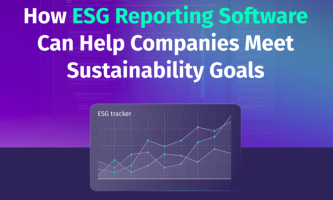
Strengthening Corporate Sustainability Through Smarter ESG Reporting
The Shifting Ground of Sustainability Climate worries are not background noise anymore. Rather, they are loud, constant, and shaping how companies move. Resources feel tighter, expectations heavier, and boards and managers cannot just talk about responsibility. They are being asked to show it, prove it, and keep proving it. That’s where ESG reporting steps in. Environmental, social, and governance metrics are not just numbers on a sheet but signals and evidence of whether a business is serious about its footprint, its people, and its ethics. The reporting process, when done right, forces visibility and accountability. Why ESG Reporting Matters? Primarily, ESG reflects how a company operates across three major pillars, which are environment, social responsibility, and governance. In fact, it includes data collection, cleaning, and transparent presentation. This shows that it is more than compliance. Basically, it is a way of saying, “Here’s how we are doing, here’s where we are falling short, and here’s what we are fixing.” Meanwhile, digital platforms make this less of a headache by pulling information from across departments. It then stitches it together and gives leaders a sensible dashboard. Tracking energy use across facilities Monitoring workforce diversity metrics Mapping supply chain risks These are not merely checkboxes, but are levers. Hence, pulling them changes how the business runs day to day. Embedding ESG into Everyday Choices The real shift happens when ESG is not treated as a side project. When metrics are baked into decisions, like procurement, hiring, and product design, the company’s sustainability efforts stop being reactive and instead align with long-term strategy. As a result, compliance gets easier, ratings improve, and investors notice, customers too. Hence, a business with strong ESG performance often shows higher integrity, stronger accountability, and sharper awareness of its impact. It’s not just about looking good in reports. It is also about running cleaner and smarter operations. Tangible Improvements, Not Just Ideals Practically, transitioning to renewable energy cuts costs over time. Also, investing in diversity builds stronger teams. Meanwhile, responsible supply chains reduce risk. These are not abstract but measurable benefits. In fact, companies that lean into ESG mostly find themselves more resilient when markets shift. As a result, they adapt faster, innovate more, and avoid the drag of outdated practices. Major Financial Outcomes Tied to ESG Money always talks, and ESG performance has started to speak the same language. In fact, investors and consumers mostly prefer companies with visible sustainability commitments. Studies across industries keep pointing to the same trend. They say that strong ESG scores mostly correlate with better financial returns. But beyond numbers, there is brand trust and the ability to form partnerships that would not exist otherwise. In crowded markets, ESG can be the differentiator that makes a company stand out. Technology As the Backbone Managing all this requires reliable data, and ESG reporting software has become the backbone. Actually, automation reduces manual errors. Meanwhile, real-time visibility means leaders do not wait for quarterly updates to act. Moreover, energy-tracking features highlight inefficiencies: Old HVAC systems Poor lighting Water waste. Hence, fixing these does not just cut bills. Rather, it pushes environmental goals forward. Older facilities especially benefit since outdated systems tend to bleed resources. From Compliance to Continuous Improvement The bigger picture is evolution. ESG reporting tools let companies move beyond compliance by helping set smarter goals, track progress with precision, and communicate achievements without spin. This alignment between sustainability and operational strategy creates a cycle of improvement. Hence, it is not static but an ongoing process. Looking Ahead Global expectations are not slowing down. Companies that invest in ESG technology now are building stability for the future. The payoff is not only environmental, but it is growth, resilience, and credibility. This is important in a world where sustainability and profitability are no longer opposites. Rather, they are intertwined, and businesses that recognize this early are the ones most likely to thrive. For more on this, check out the resource below from Donnelley Financial Solutions, a virtual data room provider. Read Also: What Is Fintech? Defining The Term And Its Core Areas Of Application A&TA: Why Is It Important for Your Business Growth and Performance?
Nov 21, 2025

Breaking Into Fintech: Skills For Fintech Essential for Aspiring Professionals
The Fintech industry has evolved at a faster pace over the last few years. Candidates are now aspiring to build their fintech careers in this field. Now, you may also be the one who is doing the same as well. In such a scenario, you need to know skills for Fintech that can help you to grow. A career in fintech can offer you a wealth of opportunities to steer your business in the right direction. It's a field that has piqued the interest of many job seekers. Particularly those with a passion for pursuing exciting roles in the Fintech Space. If you're considering a career in the Fintech Domain, it's essential to possess not only the right skills but also understand the market needs. This understanding will be instrumental in aligning your career goals with the industry's demands. Skills For Fintech Essential to Build Your Career in This Field There are certain skills for Fintech that you must know while building your career in this field. Some of the key skills that you should have to prosper and flourish in this domain are as follows: - 1. Technical Expertise Fintech is a highly tech-driven industry, so there is no doubt that your technical skills will be in high demand here. This includes the fact that you must have knowledge of certain programming languages to build your career here. Some of the key programming knowledge that you should have in this domain is Python, Java, and C++. You need to be completely familiar with API, cloud computing, and databases. Additionally, the knowledge of machine language will be of added advantage for you in this sector. Evolution Of Fintech is increasing the demand for this type of professionals. 2. Having Financial Knowledge Anyone working in Fintech should have a strong financial knowledge in the Fintech sector. This includes all the knowledge of things like payments, banking, risk management, and investing. Once you develop financial knowledge in this field, things will become easier for you. However, some companies hire chartered accountants and auditors to build a strong career in this field. You need to be well accustomed to it while meeting your career goals in this field. 3. Analytical Skills Fintech businesses generate a lot of data, so you need to be well-equipped with analytical skills. You need to identify the trends that can help you build your career in this field with complete ease. An individual must be well-versed with skills in statistics, machine learning, and data mining. Therefore, if you want to become a successful professional in Fintech industry. Then, you must sharpen your skills in these areas. 4. Problem Solving Skills The Fintech industry is evolving at a constant pace, so you need to think creatively and solve problems with ease. You need to develop your problem-solving skills to help your customers identify the best solution with innovative solutions. Global Fintech companies follow this pattern. Without the knowledge of appropriate problem-solving skills, you cannot sustain or flourish in this industry. Customers may have different types of financial issues and problems you need to hear them patiently and solve them aptly. 5. Communication Skills Strong communication and collaboration skills are vital for the Fintech industry. You must have the ability to communicate complex financial concepts to both technical and nontechnical audiences. Ensure that you possess strong communication skills. This can help your career move in the right direction, especially in the Fintech industry. It is one of the crucial skills for Fintech that you must be aware of. Fintech Careers Available In 2024 There are several types of Fintech careers available in 2024 that you must be aware of. Otherwise, things can become more complex for you in the long run. Without knowing the facts, things can turn worse for you. 1. Data Science & Analysis Transformation of the data is one of the crucial aspects of the Fintech business. A data scientist needs to have the requisite skills to analyze the data and make inferences to use it properly. Job Roles Of Data Scientist in Fintech Business Making critical decisions regarding invoices. Monitoring Data Transfer. Keeping track of buying and bookings. Making a Proper analysis of trades and subscriptions. Salary Scale of Data Scientist in Fintech Business As per Glassdoor data, a data scientist in the Fintech business earns between $118k and $200K/ year. 2. Quantitative Analyst To arrive at any financial conclusion, quantitive analysts have to make use of mathematical and statistical data. Fintech Business HR makes the recruitment of Quant experts. You need to be good at quantitative analysis to reach financial conclusions. Ant group also maintains this process of hiring. Job Eligibility Required for Quantitative Analyst In Fintech Business It is essential to have quantitive skills in statistics. You must have strong technical skills. Learn AI, machine learning, and programming skills. Salary Scale Of Quantitative Analyst In Fintech Business As per the data of Payscale, a Quantitative Analyst should a pay scale of $94,584 per year. 3. AI & ML Artificial Intelligence and Machine learning can become your industry while you seek the benefits from the data scientists. Many industries are now willing to work with machine learning professionals to perform the data mining process more easily than ever. Job Roles Of Machine Learning Expert in Fintech Business Making proper application of the AI tools. Using AI tools to grab the refined data from the market. Making accurate and fast decision-making. Salary Scale of a Machine Learning Expert In Fintech Business The salary scale of a Machine learning Expert in a Fintech Business is $97,476 per year. This is as per payscale data. 4. Governance Risk & Compliance GRC can make compliance in the process of Fintech business easier and more effective. You need to develop your skills in this segment as well. There are certain key responsibilities you need to shoulder in this sector. Some of them are as follows: - Job Responsibilities of GRC Officer in Fintech Business: - Monitoring compliance with the business using digital tools. Bringing Ci and ML in the picture. Application of Super-fast algorithms to handle any sea of transactions. Salary Scale of A GRC Officer In Fintech Business The salary scale of the GRC officer in the Fintech business is $125000 annually. You must be aware of it while attaining your requirements. Career Strategies You Can Adopt to Build Your Career in Fintech There are certain career strategies you can adopt to build your successful career in the Fintech business. You must be aware of it while reaching your requirements with complete ease. Some of the key factors that you should know here are as follows: - Explore subsectors like payment, Blockchain, Insurtech, and wealth management to build your skills in this area. Target the ideal companies who look for a strong market presence as well as innovation. Bridge up the knowledge gap by developing skills in Cybersecurity, data analysis, and Blockchain Fundamentals. Sharpen your financial literacy to build your business knowledge with complete ease. Ensure that you follow the right path to develop Fintech skills. Final Take Away Hence, if you want to grow your career in the Fintech Sector. You must be aware of the above-mentioned facts. Otherwise, things can turn worse for you in the long run. It would be better if you could share your feedback with us. Share your opinion and feedback with us in our comment box. This can boost your chances of getting more relevant information about this industry next time. For More Business Related Articles Click Below!! 5 Essential Aspects That Every Small Business Needs How To Choose The Right Stocks: Tips For New Investors How To Start A Concession Stand Business? – A Complete Guide
Mar 29, 2024