





Money View: Information, Eligibility Criteria, Interest Rates, Review & More

If you are on the search for instant personal loans, you will need to download the Money View app now. The Money View platform offers loans with very low interest rates. You can get loans for as less as 1.33% interest rates. Furthermore, Money View loan amounts range up to ₹5 lakhs, with loan tenure up to 5 years.
This article is basically a review of the Money View loan app. Furthermore, this will also be a Money View loan review. Apart from that, we will also discuss more about the types of loans offered by Money View, as well as the types of interest rates that you will get with each type of loan. Hence, if you want to get fully informed about the Money View loan app, consider reading through to the end of the article.
Money View Loans – General Information

If you are a self-employed person or a salaried employee, looking for an emergency loan, Money View is the best place for you to visit. The following are the major features of Money View personal loans:
The Loan Amounts Are Flexible
The loan amounts at Money View are not fixed, and depending on your needs and demands, you can get a variety of options when it comes to loans. From ₹5000 to ₹5 lakhs, you can get any amount between that.
You Will Get Loans Fast
The verification and loan approval at Money View is really fast. The verification process happens as fast as two minutes. Hence, in such cases, the disbursal of the loan amount is as fast as 24 hours. However, even if you do not get fast loans, you will get it within a couple of days.
Loans Are Free From Collaterals
One of the most worrying things about borrowers is the presence of collateral in loans. If you are getting loans from Money View, you will be able to get those loans free from collateral. This means, even if you are a defaulter of a loan, your collaterals will not be taken.
Low Rate Of Interest
One of the best things about Money View loan interest rates is that they are quite low. Since the Money View loan EMI payment depends upon the rate of interest, having a low interest helps loan borrowers a lot. The rate of interest starts at 1.33% per month.
Full Paperless Transactions
The loan borrowings are mostly free of any hassle with Money View. From the process of application, to the disbursement of the loan, everything is digital and paperless. This allows you to get a loan by not staying in person, and also get a loan fast. Apart from that, it contributes to the environment as well.
Flexibility In Repayment Of Loans
One of the best things about Money View personal loans is that you will enjoy flexibility with it. You can enjoy flexible repayment tenure of loans for up to 5 years with Money View. This is really helpful for individuals that have low monthly salary.
Low Credit Scores Applicability
You can borrow loans from Money View, even if you have a low credit score. Even if you have not taken a loan before, you can get once from Money View. The minimum CIBIL score that you need to have is 600, and the minimum Experian score required is 650.
Benefits Of Money View Loans
There are several benefits of the money view loans. You must go through the details of it while making your choices in the right direction. Money-view loans can be of great help for you when you are in dire need of that. You must go through the details to have a clear insight into it.
1. Quick & Convenient Application Process
Money View Loans offers a quick and hassle-free application process. You can apply for a loan online through their mobile app or website, reducing the time and effort required for loan approval. You need to understand the convenient process that can make things easier for you in attaining your requirements with complete ease. You should ensure that the chances of mistakes and errors are as low as possible.
2. You Will Receive Flexible Loan Amount
Money View Loans provides a range of loan amounts to suit different financial needs. You can choose a loan amount that aligns with your specific requirements. You need to get through the complete process that can make things easier for you in attaining your requirements with complete clarity. You should follow the right process that can make things easier and effective for your business.
3. Customized Loan Tenures
Money View Loans offers flexible repayment tenures, allowing you to select a repayment period that fits your financial situation. This can help you manage your monthly EMI payments more effectively. According to your budget, you can make the selection of your loan tenure. There are no forceful pressure on you regarding this matter.
4. No Collateral Required
Money View Loans are typically unsecured personal loans, meaning you don’t need to provide collateral or assets as security for the loan. This makes it accessible to a broader range of borrowers. You do not have to submit any kind of collateral to get the loans on time. You cannot just make things too complex from your endpoints.
5. Competitive Interest Rates
Money View Loans aims to provide competitive interest rates, making their loans more affordable compared to some other lenders. You will get the privilege to enjoy the competitive interest rates. You need to get through the process that can make things easier for you to reach your goals with complete clarity.
6. Quick Disbursements
Once your loan application is approved, Money View Loans often disburses the funds quickly, sometimes within hours, which can be beneficial in emergencies or urgent financial needs. You must tryout to seek for those kinds of loans whose process of disbursement is easier and effective for your brand. It can make things happen well in your way.
How To Download The Money View Loan App?

The following are the steps you need to follow to perform Money View app download:
Step 1: Open Play Store on your Android smartphone.
Step 2: On the search bar, type “Money View.” Tap on the “Money View: Personal Loan App” option.
Step 3: Tap the install button, and then let the download and installation process take place.
Step 4: Once the Google Money View app is installed on your smartphone, you can start the app and then do a Money View loans login, to get access to the variety of loan options.
Money View Loan Review – Loan Highlights
| Loan Aspects | Money View Offerings |
|---|---|
| Rate of Interest | 1.33% per month onwards |
| Loan Amount | INR ₹5000 to ₹5 lakhs |
| Tenure | Up to 5 years |
| Minimum Monthly Income | – Salaried Professional: ₹13,500- Self-employed individual: ₹15,000 |
| Loan processing charges | 2% – 8% of loan amount approved |
| Interest on overdue EMIs | 2% per month on overdue principal loan amount/EMI |
| Loan cancellation charges | No additional charges |
| Cheque bounce | ₹500 each time |
| Loan Eligibility Age | 21 to 57 years |
| Minimum CIBIL/ Experian Score | CIBIL: 600 and Experian: 650 |
Money View Review – Borrower Reviews Of Money View
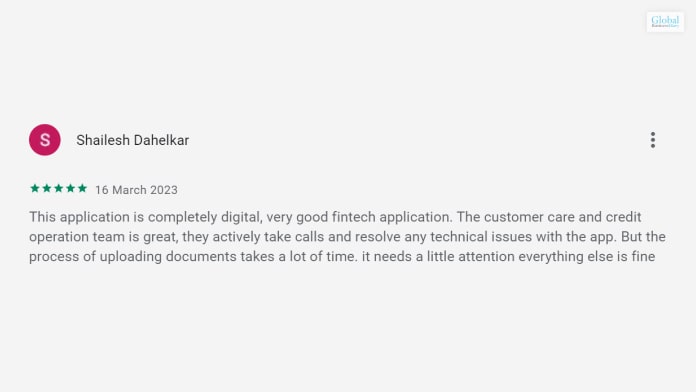
Although there have been some Money View loan consumer complaints, but mostly reviews are good. Take a look:


Summing Up
In this article, you learned about Money View, the app it provides, and the loan services it offers. Hope, now you have a better idea of the types of loan opportunities that Money View offers. If you are looking to avail yourself a loan from the Money View platform, consider visiting the official website of Money View. There you can visit the “Apply Online for Personal Loan” option, and click the “Apply Online” button.
Once you apply for a loan and your official documents get verified, you will be able to get a loan disbursal within 24 hours. If you have further questions about the Money View personal loan, consider asking it in the comments section below.
Have A Look :-
Tags:

Recent
Memory Chips Are Becoming More Important in the AI Era
Aug 06, 2026

Why Enterprise Web Applications Still Choose Angular for Long-Term Growth
Aug 04, 2026

Due Diligence Decoded: Why Careful Evaluation Still Wins in Business
Jul 11, 2026

How Hydraulic System Design Impacts Equipment Performance
Jul 01, 2026

Related Articles

How Incentive Structures Influence Business Outcomes
You don’t always notice it at first. Incentives feel like background stuff, bonuses, commissions, targets. Just HR things, right? Not really. They quietly run the show. Every decision your team makes, there’s usually a reward sitting behind it. Hit this number, get that bonus. Push this product, earn that commission. Simple. But also a bit dangerous. Because here’s the thing, people don’t just work. They optimize. And what they optimize for? That’s exactly what your incentive structure tells them to do. So yeah, incentives don’t just motivate. They shape behavior. Over time, they shape your entire business. Why Incentives Matter More Than You Think You might think incentives just push performance. But they go deeper, much deeper. They define priorities without saying a word. They even tell your sales team what actually matters. And most importantly, they signal what leadership really cares about. Let’s say you reward revenue only. Guess what happens? Your team chases deals that are big and fast ones, or you may say the risky ones. Now flip it, reward profitability instead. Suddenly, fewer discounts, smarter deals, better margins, and the same people, same company, and a different outcome. That’s the power of incentives, which is quiet, but sharp. The Psychology Behind Incentive-Driven Behavior People repeat what works. It’s basic human wiring. You reward something it gets repeated. You track something, it gets attention. You ignore something it fades away. Simple loop, but in business, this loop scales. Over time, these repeated actions become habits. Then systems. Then culture. Think about it, if your team gets praised for hitting targets, they chase targets. If they get rewarded for teamwork, collaboration improves. But if incentives are unclear? Or worse, conflicting? You get confusion. Friction. People pulling in different directions. And yeah, that’s where things start breaking. Short-Term Wins vs Long-Term Growth Here’s where most companies slip. Short-term incentives feel good. Fast results. Quick wins. Numbers go up. You launch a product? Push incentives. Entering a new market? Boost commissions. Need momentum? Throw bonuses at it. It works. No doubt. But stay there too long, and problems creep in. Teams might: Discount heavily just to close deals Ignore customer fit Burn relationships for quick revenue Now flip to long-term incentives. These focus on sustainability. Retention. Customer value. Brand strength. Things like: Performance-based bonuses over time Retention incentives Structured rebate programs They slow things down a bit. But they stabilize growth. The real trick? Balance. Short-term gets you moving. Long-term keeps you standing. Where Incentive Design Breaks Down Let’s be honest, most incentive systems aren’t broken overnight. They slowly drift. And when they do, patterns show up. 1. Rewarding Activity Instead of Results This one’s common. Lots of calls. Lots of emails. Lots of “effort.” But where’s the outcome? If you reward activity, people stay busy. Not productive, busy looks good. But it doesn’t always deliver. 2. Lack of Clarity Unclear metrics chaos. If your team doesn’t fully understand how they’re being measured, they’ll guess. And different people guess differently. Now you’ve got misalignment, frustration, and missed targets. Clarity fixes this and always. 3. Overcomplicated Structures Some systems try to track everything. Too many metrics, too many rules, and too many exceptions. Result? Nobody understands it fully. Not even leadership sometimes. And if people don’t understand how they earn rewards, motivation drops. 4. Poor Governance This one hits financially. When you lose control, you give weak validation for your business and do not keep proper tracking, then you are under poor governance. Suddenly you’re overpaying incentives. Or facing disputes. And yeah, fixing that later? Messy. Expensive. Incentives as a Strategic Tool (Not Just HR Stuff) A lot of companies treat incentives like admin work. Set it once. Forget it. Bad move. Incentives should sit right next to strategy. You want to grow a specific product line? Align incentives. You want to improve margins? Adjust rewards. You want better customer retention? Incentivize it. It’s not about motivation alone anymore. It’s about direction. Think of incentives as a steering wheel. Not just fuel. The Role of Technology in Modern Incentive Systems Manual systems? They don’t scale well anymore. Subsidiaries like spreadsheets, emails, and follow-ups are old methods and very slow to make things too messy. And when your business grows, these cracks widen. Now enter automation. Modern tools can: Track performance in real time Predict payout trends Flag anomalies early Automate reward distribution Even better, AI-driven systems can identify patterns you’d miss. Which partners delay deals? Or which segments drive higher lifetime value? This isn’t just convenience, it’s control. And control enables you to make better decisions. Building an Effective Incentive Framework So what actually works? Not perfection. But alignment, start simple, and then build. Step 1: Define Clear Goals: One of the most important things to determine an effective incentive structure is to understand what you want. Is it the revenue, the profit, or the retention? Pick one primary focus and then support it. Step 2: Choose the Right Metrics: Don’t overload with complications of frameworks. Stick to meaningful indicators. If it doesn’t drive behavior, it doesn’t belong. Step 3: Keep It Understandable: If your team needs a calculator to understand incentives, simplify. Remember one thing: clarity drives action. Step 4: Balance Short & Long-Term Rewards: You must always mix both. Always! Because considering both ensures the momentum and sustainability you need. Step 5: Monitor and Adjust: Don’t set and forget. Watch how people respond and see what behaviors emerge. Then tweak this accordingly. Because incentives evolve, just like your business. Real Impact: What Happens When It’s Done Right When incentives align with strategy, things click. You’ll notice things like teams move faster and smarter. You may see decisions feel more consistent, less confusion, which almost mitigates the friction. And performance? It becomes predictable and that’s the real win. Not just higher numbers, but controlled growth. Conclusion Incentives aren’t just about rewards. They’re about direction. Quiet signals. Daily nudges that shape how your business actually runs. Get them right, and everything starts aligning, teams, decisions, outcomes. It feels smooth. Almost obvious. But mess them up, even slightly, and the cracks spread fast. Misaligned goals. Wasted effort. Hidden inefficiencies. So here’s the takeaway. Don’t treat incentives like a side task. Treat them like strategy. Revisit them. Question them. Adjust when needed. Because in the end, your business doesn’t just grow based on effort. It grows based on what you choose to reward. For a structured visual breakdown of these concepts, refer to the accompanying resource from Channelscaler, a provider of PRM software. Read Also: Why Strategic Partnerships Matter More Than Ever Top 12 Employee Retention Strategies You Need To Learn Should You Consider Insuring Your Employees: Reasons And Tips
Apr 20, 2026
NetReputation Reviews: Is It Good For Your Business?
NetReputation is an online reputation management company. The company stands out as a reputed one and offers a wide range of services, expertise, and customer support. Whether you are an individual or a business, it is important for you to ensure your reputation online. NetReputation improves your online reputation and also helps you gain back your lost reputation on online platforms. In this article, you will learn about NetReputation, which is an online reputation management company, and how it works. Next up, we will give you details regarding NetReputation’s market presence and its legitimacy. Furthermore, you will learn about the services of this company and how it can ensure you have a good online reputation. Finally, you will learn about some of the essential pros and cons of NetReputation. What Is NetReputation? According to NetReputation’s official website, “NetReputation was founded in 2014 by Adam Petrilli, a results-driven leader dedicated to empowering individual and business success on the web. Our award-winning process and team of online reputation management specialists allow us to remove, suppress, repair, and monitor your online presence. Within our first two years, we were recognized by some of the world’s leading business publications for our company growth.” Currently, the company has offices in Florida and Missouri and also in London, United Kingdom. The goal of the company is to provide top-end online reputation management services to clients (businesses or individuals). The company uses different technology systems and processes to ensure the online reputation of clients. NetReputation makes use of a variety of processes and methods to create, improve, or restore the online reputation of clients. They work on almost all social media platforms, search engines, and other news websites to ensure a business’s reputation is well-maintained. Is NetReputation Legit? Yes, NetReputation is a legitimate and recognized company. It does not use unethical methods to monitor, manage, or improve a business’s online reputation. Hence, if you are looking to avail of their services, you do not need to worry about the company’s legitimacy. Clients of the company also reviewed it well on various reviewing and social platforms. According to QuickSprout.com, “It’s in your best interest to avoid reputation management companies that use shady or unethical techniques to improve your online reputation. Those strategies could come back to haunt you if you’re not careful and ultimately do more harm than good. For example, some companies might coerce reviews with a certain sentiment or threaten users who leave negative reviews—that’s not what you want.” NetReputation makes use of a simple and transparent reputation management system. The company basically wants to create positive content for your brand and ensure better control of the audience’s perception online regarding your brand. They do not attack other brands and do not make use of shady practices to make the most of the faults of search engines. It is always better if an online reputation management company follows this approach How Does NetReputation Help With Online Reputation? NetReputation claims on its official website - “NetReputation.com is a high-growth technology company that provides high-class online reputation management services for individuals and businesses. From Content Removal and Review Management to Brand Serp Monitoring (Reputation Monitoring) along with SEO and PPC Advertising, this team does everything they can to help your brand shine on Google.” Even websites like Newsweek.com and NeilPatel.com rated NetReputation as one of the best online management services in 2022 and 2023. The company basically monitors customer reviews, social media platforms, as well as search engine results to get an understanding of the possibility of your brand’s reputation. By understanding how much content is required and of what types, the company then generates positive content on your brand and its offerings for almost every media channel where your target audiences are present. The following are the major services that NetReputation offers: Reputation Management: This includes controlling your brand’s digital narrative and improving your online visibility. They also help your brand build trust with the use of reputation management solutions that are designed for all types of businesses. Reputation Monitoring: Here, the company finds out problems that can harm your online business. They offer this service 24/7 based on your needs. Content Removal: This includes removing harmful content that can damage your brand’s reputation and put the brand image on negative terms. Review Management: NetReputation helps your brand earn more positive reviews online so that your brand gains more trust. They also remove those unnecessary reviews that interfere with your business’ reputation. Here, they make use of unique review management solutions. Crisis Management: This includes finding and getting a full knowledge of current and emerging threats so as to remain prepared. They also help streamline communications and help your brand recover faster. Branding: Here, NetReputation helps your business to develop your brand and make it visible, influential, and authoritative. What Are The Pros And Cons Of NetReputation? The following are some of the major pros and cons of NetReputation’s services: Pros Of NetReputation Here are the major pros of NetReputation that will benefit you: They offer services mostly for small businesses and individuals. They will help you eliminate your brand’s negative search results. You will be able to protect and repair your online reputation. You will get free reputation analysis. They will send you customer brand alerts. Cons Of NetReputation Here are a few cons of NetReputation, which you must be aware of: It can take months to get your hands on results related to your brand. For small businesses, the costs can be high. How Can Netrepuation Review Help Your Business Grow? There are several ways Net reputation reviews can help your business to grow at a rapid rate. You should develop a better solution that can make things work well in your favor. Ensure that you follow the right process from your endpoints. 1. Helps In Building Trust And Credibility Positive reviews and a good online reputation build trust among potential customers. They're more likely to choose a business with a strong reputation over competitors with lesser-known or negative reputations. You should ensure that the chances of errors must be as low as possible. Ensure that you follow the correct process while attaining your goals with absolute clarity. Try out the best options that can make things easier for you in attaining your objectives. 2. Increases The Customer Engagement Positive reviews can lead to higher levels of customer engagement. People are more inclined to interact with a business that has a positive track record, leading to increased inquiries, visits, and sales. You must avoid making things too complicated from your counterpart. Ensure that you follow the correct process from your end. 3. Drives Sales & Revenue A positive net reputation encourages more conversions. Customers are more likely to make purchases or use services from businesses that others have positively reviewed. Try out the best solutions that can assist you in reaching your goals with complete ease. Ensure that you follow the correct process from your endpoints. 4. Improves The Brand Image A business with a positive online reputation is seen as more reputable and reliable. This positive perception helps in creating a strong brand image, which is crucial for sustained growth and customer loyalty. If you want to create a positive brand image for your business, then you cannot make things happen all your way. 5. Boosts SEO & Visibility Positive reviews contribute to better search engine rankings. Search engines often consider reviews as a ranking factor. Businesses with higher ratings and positive feedback tend to appear higher in search results, increasing visibility and attracting more potential customers. 6. Provides Feedback For Improvement Reviews, both positive and negative, offer valuable feedback. Positive reviews highlight what the business is doing right and can be used to reinforce those aspects. Negative reviews, on the other hand, can provide insights into areas that need improvement, allowing the business to make necessary changes. You need to get through the complete details to have a better idea of it. Ensure that you follow the correct process from your end. The more you can make things happen in your way, the better you can reach your goals with ease. Wrapping Up Hope this article was helpful for you in getting a better idea of NetReputation, and how it works. It is a popular online reputation management company that offers services for both businesses and individuals. The company offers a wide range of services like negative content removal, review management, crisis management, public relations, reputation monitoring, and more. NetReputation can help you in all cases, whether you are looking to build a positive brand reputation or repair your damaged reputation. To start working with NetReputation, go to their website and get a free quote. Do you have any more information to add regarding NetReputation? Share with us in the comments section below. Read More About Business By Clicking Below!! Pro Rata: Definition, Uses, And How To Calculate It? What Is The Leverage Ratio And How to Calculate It? Trial Balance: Definition, Working, Importance, And More
Nov 07, 2023

What Is A Sole Proprietorship? – Let’s Find Out
What is a sole proprietorship? - This is a business venture that one person owns and manages without incorporation. If you want to professionalize your business, one of the best ways to do it is to make your business a sole proprietorship. This business structure is one of the simplest, and the business and the owner are not legally separate. If the business faces a legal problem, the owner will have to bear the responsibility. In this article, you will learn what a sole proprietorship business is and how it works in general. You will also learn from this article whether a this business structure is the right option for you or not. Finally, we will discuss the major pros and cons of this type of business, which will help you decide better. Hence, to learn more about sole proprietorship, read on through to the end of the article. What Is A Sole Proprietorship? According to Investopedia, “A sole proprietorship is an unincorporated business that has just one owner who pays personal income tax on profits earned from the business. Many sole proprietors do business under their own names because creating a separate business or trade name isn’t necessary. Also referred to as a sole trader or a proprietorship, a sole proprietorship is the easiest type of business to establish or take apart due to a lack of government regulation.” If you are a business owner or an entrepreneur and want to remain that way, a sole proprietorship is the best option for you. This business structure is also popular among individual self-contractors and business consultants. Almost every small business starts as a sole proprietorship. Most of them either retain the structure or change the structure to a Limited Liability Company or a Corporation. To form a corporation, you need to incorporate your business. One of the major disadvantages of sole proprietorship is that they do not get protection from the government. This is because these businesses are not registered as corporations. This means that the liabilities and risks of the business extend to the owners of the business. Furthermore, sole proprietors also report their income as well as their expenses on the tax returns that they make personally. In addition to that, these owners also pay income and self-employment taxes on their profits. How Does A Sole Proprietorship Work? According to the Corporate Finance Institute, “The business owner, also known as a proprietor or a trader, conducts business using their legal name. They may also choose to do business using another name by registering a trade name with their local authority. This type of business is the easiest and cheapest form to start. For this reason, it is common among small businesses, freelancers, and other self-employed individuals.” Your sole proprietorship begins when you start conducting your business. You will not need to fill out federal and state forms or do not have any regulatory burdens for your business. This is one of the best options for people who are starting a business or are self-employed. To explain through an example, as a sole proprietor, you are responsible for the debts of your business. On the other hand, you will also own the profits of your business if it thrives. Is Sole Proprietorship A Good Option For You? The Forbes Advisor adds - “If you start taking on freelance contracts, for example, you are now working as a sole proprietor. And you and your business are one and the same. Because of the simple nature of sole proprietorships, they’re the most common form of business in the U.S. Sole proprietors may choose to convert their small businesses to LLCs or corporations, but they also might keep their side hustle as a sole proprietorship for as long as they work on it.” Since you do not have to pay any fees to form your business, the sole proprietorship is the easiest way to start your business. Furthermore, there is no filing process as well, which lets you start your operations immediately. You can also quickly legitimize your side hustle since it is inexpensive and easy to start your business. If entrepreneurship is your way, then this is the ideal business structure for you. You are only responsible for yourself, as well as the continued operation of your business. What Are The Pros And Cons Of Sole Proprietorship? The following are the major pros and cons of sole proprietorships: Pros Here are a few pros of sole proprietorship from which you shall benefit: There are tax advantages as there is only a single layer of income tax that you will need to pay. There are also high chances for you to get tax breaks from the government. You will also not need to fill out tremendous paperwork to register with the state. However, you will need to get licenses and permits. Since you do not need to get an Employer Identification Number (EIN), the tax process is simple. You can conduct your finances from your personal account. The fees and costs associated are also less. Cons Here are a few cons that you must be aware of: Unlike registered businesses, you will not get legal protection from the government. Due to unlimited liability in the business, you will have difficulty getting capital funding in some situations. Wrapping Up What is a sole proprietorship? - That is, there is only one owner, and the business remains unincorporated. Here, the owner needs to pay personal income tax on whatever profits are made, and the business by itself is not required to pay taxes, as in the case of a C-corporation. Most businesses start as sole proprietorship and transition later. It is easy to form, establish, and dismantle a sole proprietorship due to limited involvement from the government. This makes the business structure popular among small business owners. Do you have any more to add regarding how this works? Share your thoughts and ideas with us in the comments section below. Read Also: Micro vs Macro Economics: What’s The Difference? Vertical vs Horizontal Integration: What Are The Key Differences? What Is A Holding Company? – Importance, Operation, And Pros & Cons
Oct 13, 2023

Launching Your eCommerce Business: A Global Guide
The digital revolution has significantly lowered the barriers to entry for entrepreneurs worldwide, making the Internet a veritable ground for launching businesses. This transformation is most evident in the rise of eCommerce, a sector that has flourished and facilitated the global reach of companies, irrespective of their physical locations. The allure of eCommerce is undeniable, offering a platform for innovative ideas and entrepreneurial ventures or simply for those looking to transition from traditional employment to business ownership. Company Registration – The First Step in Opening an eCommerce Business Embarking on an eCommerce venture begins with the critical step of company registration. This process varies across countries but generally involves a deep dive into market research, meticulous planning, and a strategic approach to selecting products or services. This stage is crucial for laying a solid foundation for your business. It involves navigating the complexities of commercial legislation, internet laws, consumer protection acts, and, for companies in Europe or those dealing with European clients, the GDPR. Registration encompasses not just the legal incorporation of your business but also the acquisition of a domain name and the setup of your website, which must adhere to specific guidelines related to domain administration in your chosen country. These guidelines could include restrictions on the number of characters, sub-domain structure, and other technical requirements tailored to online businesses. Furthermore, setting up a merchant account is indispensable for any eCommerce business, facilitating the processing of online payments, which is the lifeline of the digital commerce ecosystem. The process to start your E-Commerce Company Online shoppers and their requirements for an informed purchase decision are vital considerations within the recent legal reforms targeting online companies. All organizations seeking to trade with customers locally or globally must comply with legal guidelines for establishing an e-commerce organization. Here are the steps to register your e-commerce company: Step 1: Research E-Commerce models and deciding what to sell Before you register your e-commerce company, you’ll have to research the model of e-commerce type you want to comply with and the things you want to sell. Moreover, consider drop shipping, wholesaling, or manufacturing as the appropriate e-commerce models. Further, determine what you want to sell to your target audience. Step 2: Write a Business Plan You will need to develop a business plan that will outline your target market, marketing strategies, financial projections, and operational plans. Moreover, as a result, you will make informed decisions related to your business and secure funds as required. Step 3: Choose a business name and start building a brand You have to ensure that your business’s name is memorable and catchy. It must also align with your brand identity. Moreover, you will also have to create the brand’s logo, website, and social media presence. Step 4: Register your Business You have to register your business with the appropriate state and local agencies. Along with providing the necessary licenses and permits. Step 5: Create an E-commerce website Creating a website for your e-commerce by an experienced web developer. Make sure your website is optimized for search engines and is user-friendly. Step 6: Source and Develop your products or services You will have to develop your products or services by finding reliable suppliers or manufacturers. Moreover, make sure to stand out from the competition by offering niche or unique products. Step 7: Launch and market your business Start marketing your e-commerce business through social media, email marketing, paid advertising, and other marketing channels. Moreover, maintain a continuous analysis of your marketing strategies to maximize your sales and reach. How Much Does it Cost to Start An E-commerce Business? The cost of starting an e-commerce business depends entirely on the platform you choose, your marketing strategy, and the overall costs of your business. Here are some general ideas related to the cost of opening an e-commerce business: The cost of website development can range from a few hundred dollars to thousands. This will all depend on your site’s complexity. WooCommerce, Shopify, and Wix will charge a monthly fee ranging from $15k to 20k or more. Moreover, this will depend on what you want. You will also need to determine the costs of manufacturing, shipping, and product design costs. If you plan to keep an inventory, you will have to consider the cost of purchasing and storage. You can also spend anything between a few hundred to thousands on advertising and marketing. The cost will also be incurred when you register your business to gain access to permits and licenses for operating your business in a legal manner. Preferred Countries for Starting an eCommerce Business Selecting a country for setting up your eCommerce business can significantly impact its operational dynamics and success. Here, we explore regions that are notably accommodating and supportive of eCommerce ventures: Asia Singapore: A beacon of technological advancement and a hub for eCommerce startups, Singapore's streamlined process for business incorporation is attractive to entrepreneurs. Requirements include local representation, domain name registration with a .com.sg extension for commercial activities, and setting up a limited liability company. Hong Kong: Similar to Singapore, Hong Kong favors establishing limited liability companies. Requiring local representation. The domain registration process allows for .com or .com.hk extensions, catering to business preferences. Japan: Japan offers a relatively open environment for foreign investors. Albeit with a comprehensive setup process. Essential requirements include a local director and address, with domain names typically ending in .co.jp. Thailand: Emerging as a vibrant economy, Thailand provides a fertile ground for eCommerce. A local partnership and domain registration are necessary through the Thai Network Information Center Foundation, with a preference for .co.th domains for online sales. In Singapore, Hong Kong, and across Asia, the landscape for starting an eCommerce business is promising but comes with unique challenges and legal requirements. To navigate this complex environment efficiently and ensure compliance with local laws. It is best to engage the services of a corporate secretary. Leveraging professional business corporate services streamlines the incorporation and operational processes. It provides invaluable guidance on local regulations. Helping entrepreneurs successfully establish and grow their eCommerce ventures in these dynamic markets. Europe Ireland: With its robust IT infrastructure, supported by giants like Google and Apple. Ireland is a prime location for eCommerce businesses. The process includes online registration of companies and domain names, requiring proof of Irish residency for domain registration. Cyprus: Leveraging its British legal heritage and English proficiency, Cyprus offers an attractive environment for eCommerce businesses. Especially considering its competitive taxation structure. The registration process requires a local address and the appointment of local officials. Germany: As Europe's economic powerhouse, Germany presents a straightforward path to eCommerce business setup. With minimal company and domain name registration requirements through the Network Information Centre. The Netherlands: Known for its technical prowess and hosting of IT giants. The Netherlands offers a simple online process for registering an eCommerce company. With .nl and .com domain names available for registration. Wrapping Up In conclusion, starting an eCommerce business in today's interconnected world is facilitated by the digital landscape. Offering entrepreneurs many opportunities for global expansion. While requiring careful planning and legal compliance. The process is streamlined in many countries, making the dream of owning an online business more accessible than ever. Whether in Asia or Europe, the options for setting up an eCommerce platform are diverse. Each has advantages tailored to different business needs and goals. Read Also: Supply Chain Risk Management: Effective Strategies To Reduce It What Is A Distribution Channel? Essential Things To Know About It
Mar 06, 2024