





What Is Net Operating Income? How To Calculate NOI?

Net operating Income is a valuation method. If you are a real estate professional, then you have to calculate it. It will help you in the determination of the income-producing properties For the calculation of NOI, Operating expenses need to be deducted from income a property generates.
Most of the time, people often get confused between the concepts of Net Income and Net operating income. Net Operating Income will help you to know the capacity of the property to generate revenue.
What Is Net Operating Income?

Net operating Income helps you to calculate the profitability of an asset. It can be an income from an investment as well. After subtracting the operating expenses from Income, you will get net operating income. Most of the time, this parameter is used in the real estate industry.
In order to determine the profitability of investment properties such as apartment complexes, warehouses, and buildings, this Net Operating Income is used. You can get the similar information in Investopedia.
What Is The Net Operating Income Formula?

You have to follow the simple Net Operating Formula to calculate the Net Operating Income. Let’s go through it once.

Most of the time, for making an accurate valuation of commercial real estate, the Net Operating Income Formula is taken into consideration. You cannot ignore this fact from your end.
Net Income Formula For Managerial Accounting
The Net income formula for managerial accounting involves the following calculation methods:-
Net Income = Total Revenue -Total Expenses
Net Operating Income vs Net Income
| Net Operating Income | Net Income |
|---|---|
| NOI is a metric typically used in the context of real estate and investment properties | Net Income, also known as Profit or Earnings, is a fundamental financial metric used in the context of businesses, not just limited to real estate. |
| It represents the income generated from the property’s operations before accounting for taxes, interest, depreciation, and amortization (known as EBITDA). | It represents the profit a company makes after deducting all expenses, including operating expenses, interest, taxes, depreciation, and amortization (known as EBITDA). |
| The formula for calculating NOI is: NOI = Total Revenue – Operating Expenses | The formula for calculating Net Income is: Net Income = Total Revenue – Total Expenses |
| Operating expenses include items like property management fees, maintenance costs, property taxes, insurance, and other day-to-day operational expenses. | Total expenses include operating expenses, interest payments on debt, income tax, and depreciation or amortization. |
Are Operating Income & Operating Revenue Same?
Operating revenue is not the same as operating income. Operating revenue signifies the total cash inflow from your primary income-generating activity. After subtracting the cost of doing the business, the leftover income is the operating income.
It is the primary form of difference between the two concepts. Operating income calculation is completed from the gross income depreciation, and amortization from the gross profit is deducted.
Operating expenses are the expenses that involve administrative costs, rent, and supplies. If you want to calculate the gross profit, you need to calculate the Cost Of Goods Sold from the revenue. It is almost similar to the calculation of marginal cost.
Benefits Of Calculating Net Operating Income

There are numerous benefits to calculating the net operating income for your business. Now, you may be wondering what can be the benefits of calculating the Net Operating Income. Let’s dig deep into the details to have better insights into it. Its process of calculation is almost similar to that of the current ratio formula.
1. Profitability Assessment
NOI offers you clear insight into operating profitability. When you subtract the property’s operating expenses from the gross rental income, you will get a clear idea of how much money the property is generating before the calculation of the taxes and financing.
2. Comparative Analysis
Investors can use NOI to compare the financial performance of different properties. This comparison allows them to identify which properties are more profitable and make informed investment decisions. Investors need to identify the financial performance of the property before buying it. Net Operating Income can leverage the value of your property.
3. Valuation
It is one of the primary components in determining the value of the property. You can estimate the value of the property after dividing it by its capitalization rate. It will be easier for you to make an accurate estimation of the market value of the property. Try to make things easier from your end.
4. Financial Planning
Property owners can use NOI to create budgets, assess ongoing financial performance, and plan for the future. Understanding the NOI helps in making decisions related to rent increases, cost management, and property improvements. It is one of the basic purposes of making the calculation of NOI. It can benefit you on a pro-rata basis as well.
5. Financing
Lenders often use NOI to assess the financial viability of a property and determine the amount of financing they are willing to provide. A higher NOI can lead to more favorable financing terms. You need to make the financial planning in the perfect order while attaining your requirements.
6. Income Tax Planning
NOI can have implications for income tax planning. Property owners need to understand the taxable income generated by their property. It can be different from the NOI due to factors such as depreciation. In accounting terms, Depreciation reduces the value of the assets to a considerable extent. You need to get through these facts before the NOI calculation.
7. Risk Management
When closely monitoring NOI, property owners can identify changes in the financial performance of a property. This allows them to address issues promptly, such as rising expenses or declining rental income, to mitigate financial risks. You need to identify the areas where Non-Operating Income can be of great help to you.
8. Investors Confidence
The confidence of the investors depends largely on the operating income. Most of the time, we miss out on this fact at the time of selling the property to its investors. When investors and stakeholders have access to accurate NOI figures, it builds confidence in the property’s performance. It can attract potential investors or partners.
Final Take Away
Hence, if you do not calculate the operating income, then you cannot get the correct insight into the accurate estimation of the property. You must not make your selection on the wrong end. Proper application of the NOI calculation can make things easier for your valuation. You can share your views and comments in our comment box. It will help us to know your take on this matter. You cannot make any kind of compromises in this regard while you calculate real estate property.
Read More:
Tags:

Recent
Dinmukhamet Idrisov and a Gold-Mine Dispute From Kazakhstan’s Oligarchic Past
Oct 16, 2026

Memory Chips Are Becoming More Important in the AI Era
Aug 06, 2026

Why Enterprise Web Applications Still Choose Angular for Long-Term Growth
Aug 04, 2026

Due Diligence Decoded: Why Careful Evaluation Still Wins in Business
Jul 11, 2026

Related Articles

5 Most Common Human Errors In Crypto Accounting
Crypto accounting is a complex and challenging task that requires a deep understanding of how the emerging market of cryptocurrencies works. While traditional accounting is straightforward, experienced accountants struggle to comprehend how risk interplays with crypto's market and how underlying technologies protect investors. This makes it difficult for regulators to make informed decisions and entrepreneurs to manage risk in their projects. However, most of the challenges in crypto accounting arise from simple human errors, and everyone in the crypto world could use some help to manage their accounting better. One way to minimize these errors is by using crypto accounting software, which simplifies tracking and managing crypto transactions for individuals and businesses. 5 Common Mistakes to Avoid in Crypto Accounting 1. Incorrect Cost-Basis Calculations If you've engaged in crypto transactions, it's crucial to understand the impact they may have on your taxes. One common mistake to avoid is miscalculating your cost basis and capital gains. The cost basis is the total amount paid to acquire the crypto, including transaction fees, while capital gains refer to the proceeds from the sale minus the cost basis. To calculate the cost basis and capital gains, you'll need to use specific formulas. In a simple example, if you bought crypto for $10,000 (including $35 in transaction fees) and later sold it for $50,000, your capital gains would be $40,000 since you'll have to face a $10,000 fee. However, if you traded one crypto for another, such as selling bitcoin to purchase ether, this counts as two separate transactions, and the cost basis of your ETH would be the amount paid, including fees. It's essential to keep accurate records and avoid mistakes that could result in penalties or interest on underpaid taxes. 2. Incorrect Spreadsheet Formulas Even the most intelligent individuals can make simple errors, which can result in significant consequences. For example, TransAlta lost 10% of its annual profits due to a spreadsheet mistake. Although it is challenging to identify spreadsheet errors in traditional accounting, it is even more difficult in the world of crypto accounting, where the complexity of the data can make it difficult to recognize an error until it is too late. To avoid spreadsheet mistakes, it is crucial to be extremely careful when using spreadsheets and, if possible, utilize more advanced tools. Finding a platform or service where you can reconcile your calculations and results to ensure accuracy is also recommended. Reducing reliance on human accuracy can further help to avoid spreadsheet errors. By taking these measures, individuals can significantly reduce the chances of spreadsheet mistakes and their resulting consequences. 3. Uncategorized Transactions Keeping accurate records of financial transactions is essential for any business to succeed. However, categorizing these transactions systematically can be a challenge. A proper categorization system ensures that your bookkeeping is error-free and that you can easily identify similar transactions using categories or memos. Invoices must be correctly linked to transactions, and it is crucial to ensure that all events associated with a transaction are accounted for separately. Let's take the example of a Cardano transaction, which can trigger multiple events, including a transfer of Cardano, a gas fee paid to execute the transaction, and a gain/loss associated with the transaction. By accurately categorizing and reporting any losses associated with these transactions, you may be eligible for a tax write-off, or even minimize your crypto taxes which could save you money. Therefore, it is essential to have a robust categorization system in place to keep track of your finances and to make informed decisions that can benefit your business in the long run. 4. Susceptible Security Crypto accounting is crucial for companies handling crypto assets, but it can be tricky to navigate. One of the biggest challenges is avoiding common mistakes that can compromise the security of sensitive information. Human error is one of the biggest culprits, as employees may inadvertently click on unfamiliar links or enter personal information into fake accounts. To prevent these types of mistakes, it's important to implement best practices such as ensuring employees are properly trained on security protocols and regularly reminding them to remain vigilant. Additionally, utilizing secure networks and limiting access to sensitive information can help reduce the risk of cybercrime. By avoiding these common mistakes, companies can better protect their crypto assets and ensure their accounting practices remain secure. 5. Bad Calculations Based on Inaccurate Exchange Fees Crypto accounting can be a challenging task due to the complexities of the technology and the lack of standardization across different exchanges. One common mistake is relying on information from one exchange to make calculations about another, which can quickly lead to errors and require significant effort to correct. Additionally, manually calculating exchange fees can result in mistakes, so it's recommended to use automated tools to keep track of fees and calculations. With the help of technology, such as automated software, crypto accounting can be made more efficient and accurate. It's important to exercise caution and remain vigilant to avoid making mistakes in crypto accounting and maintain accurate records. Final Thoughts Crypto accounting can be a challenging task due to the unique characteristics of crypto, such as its cryptographic and anonymized nature. Even experts in traditional accounting may make basic mistakes when dealing with crypto accounting, especially when trying to navigate the additional complexities of crypto. The lack of established crypto accounting standards adds to the challenge as well. To ensure accuracy and efficiency in crypto accounting, it's important to exercise extreme caution and use specialized crypto accounting software that can help streamline the process. With the help of accounting software, companies can avoid common mistakes and keep their books organized and accurate. Read Also: How Blockchain Infrastructure Is Revolutionizing Businesses What You Need To Know About Software Testing In Blockchain ACTC Stock – Present Price, Forecast, Statistics – Should You Invest In It In 2022?
Mar 23, 2023

The Benefits Of Using A Mortgage Broker: Why You Should Consider One
Are you looking to buy a new home, but feeling overwhelmed by the mortgage process? Using a professional mortgage broker can make all the difference in your journey to finding and securing the right loan for you. Mortgage brokers have valuable expertise and connections that can save you time, money, and headaches during this pivotal stage of your life. Ready to learn why it pays off to use one? Keep reading as we dive into the benefits of using a mortgage broker! What A Mortgage Broker Does And How They Can Help You A mortgage broker is a financial professional who helps homebuyers navigate the complex world of mortgages. They work with various lenders to find the best possible mortgage rates and terms for their clients. By having access to a wide range of mortgage products, they can also help you find a loan that fits your unique financial circumstances. This can potentially save you a significant amount of money over the life of your mortgage. Not only do they help you find the right loan, but they also assist with the application process and can even negotiate with lenders on your behalf. Overall, utilizing the services of a Mortgage Broker can be a smart financial decision for anyone looking to purchase a home. Benefits Of Using A Mortgage Broker When it comes to buying a home, finding the right mortgage can be a daunting task. You want to make sure you're getting the best deal possible, but with so many loan options and varying fees, it can be overwhelming. That's where a mortgage broker comes in. By working with a broker, you have access to a wider range of loan options and lenders, which means you may be able to find a better deal than you would on your own. Plus, many brokers charge smaller fees than traditional lenders, which can save you money in the long run. Overall, using a mortgage broker can help ease the stress of buying a home and help you secure the best loan for your needs. How To Find The Right Mortgage Broker For Your Situation Buying a home can be an exciting yet daunting task, especially when it comes to finding the right mortgage. This is where a mortgage broker comes in handy. But how do you find the right one for your specific situation? It's important to do your research and ask questions to ensure you're working with someone who truly understands your needs and can find you the best possible options. A good mortgage broker will listen to your unique situation, offer advice on the best products available, and help you navigate the often-complex world of mortgages. With the right broker by your side, you can feel confident that you'll secure the best deal possible and be on your way to owning your dream home in no time. The Importance Of Shopping Around For The Best Deal In today's fast-paced world, it's becoming increasingly important to be savvy about our spending. Shopping around for the best deal can save you a significant amount of money, whether you're looking to buy a new car or simply groceries. With the rise of online shopping, it's easier than ever to compare prices and find the best bargains. Of course, it's not just price that matters – quality and reliability are also important factors to consider. By taking a little extra time to research your options and compare prices, you'll be sure to get the most bang for your buck. So why not make your money go further by shopping around for the best deal? Tips For Negotiating With A Mortgage Broker To Get The Best Rate Possible Negotiating with a mortgage broker can be a daunting task, but it's important to remember that you are in control of the final outcome. With a little bit of preparation and some negotiation skills, you can secure the best possible rate for your mortgage. One important tip is to do your research beforehand so that you have a good understanding of what rates are available in the market. This will help you identify any discrepancies between the broker's offer and what else is available. Additionally, be sure to ask questions and clarify anything that you don't understand - this will help you make informed decisions and ensure that you're getting the best possible deal. Conclusion In conclusion, the decision to go through a mortgage broker is an important one. While it can provide access to better loan options and save you money on fees, it’s essential to consider the other factors when choosing a mortgage broker and making sure they are the best fit for your situation. With all these pointers in mind, you now have the tools necessary to start your journey toward owning your dream home and finding a mortgage broker who will help make that process as smooth as possible. Read Also: How To Start A Dropshipping Business In 2021 – A Beginners Guide Boxed Packaged Goods: The Right Guide To Uplift Your Business How To Start A Concession Stand Business? – A Complete Guide
Apr 01, 2023

What Do the 2026 SALT, Senior Bonus, and Standard Deduction Changes Mean for Your Taxes?
In high-tax states, taxpayers have waited seven years for meaningful SALT relief. As of 2026, that wait ends now. This is due to the One Big Beautiful Bill Act. This act was signed into law in July 2025. It brings in the most significant overhaul to federal deductions in nearly a decade. Also, there are updated tax brackets, IRA limits, and 401(k) contribution caps. Basically, all these changes entirely reshape the outlook for 2026 wealth management. At the outset, homeowners, retirees, and middle-income earners stand to benefit. That part is clear enough. But it only works if the changes are understood properly and the positioning follows accordingly. Your State Tax Bill Finally Gets Federal Recognition Since 2018, homeowners in places like New York, California, and New Jersey have been dealing with the fallout. In fact, that was when the Tax Cuts and Jobs Act imposed the $10,000 SALT cap, which tightened things more than expected. That effectively penalized residents of high-tax states who previously deducted far more. Meanwhile, the new legislation quadruples that limit. The SALT deduction cap rises to $40,400 for 2026. Also, there are annual 1% increases through 2029. Consider a married couple in New Jersey. State income taxes are at $25,000, and property taxes are another $15,000. That totals $40,000, now fully deductible, which wasn’t the case earlier. Back then, the cap stopped everything at $10,000, cutting off the rest without much room to adjust. There’s a catch, though. High earners start losing the benefit. In 2026, the expanded cap phases down once income crosses $500,000. Around $600,000, it drops back to $10,000, almost like a reset. The provision isn’t permanent either. It sunsets in 2030 unless extended. All of this shifts the calculation. Itemizing starts to matter again, so revisiting earlier assumptions becomes necessary. A Fresh Tax Break Lands Exclusively for the 65-and-Over Crowd Retirees get the flashiest piece here. Maybe the most talked about, too. A new deduction shows up, $6,000 for those 65 and older. Married couples where both qualify can claim $12,000, which feels substantial at first glance, almost unusually generous. It doesn’t come alone. The deduction stacks, which is where things get interesting. Seniors already receive an extra standard deduction, $2,050 for single filers and $1,650 per qualifying spouse. Add the base deduction, and the numbers climb quickly. A single senior can shield $24,150. Joint filers, both over 65, can reach $47,500. The scale shifts quietly but significantly. Data from the White House Council of Economic Advisers suggests 88% of seniors receive Social Security benefits. That’s about 51.4 million people, a wide sweep, though outcomes will still vary. Of course, there are limits to this. In fact, the full deduction phases out above $75,000 for single filers. Meanwhile, for joint fillers, it is $150,000. Moreover, it disappears entirely at $175,000 and $250,000, respectively. Basically, that cutoff matters more than it first appears. One detail stands out. The deduction applies whether itemizing or not. That flexibility changes planning decisions. Seniors with medical expenses or charitable contributions still qualify, and the provision runs through 2028, leaving a narrow window to act. Small Gains Stack Up Over Time With inflation, the standard deduction goes upward for 2026. Although the shift isn’t dramatic, it is still there. Joint filers can claim $32,200, while singles get $16,100. Meanwhile, heads of household earn $24,150. These numbers might feel routine on paper, but they still matter. Individually, the increases seem minor. Easy to overlook, honestly. But they stack over time, slowly, almost quietly. Around 90% of taxpayers take the standard deduction, per IRS data. Over decades, these small adjustments start adding up, shaping outcomes more than expected. Why These Changes Demand a Longer View The first instinct is simple. Take the deduction, lock in the savings, move on. But that approach rarely holds up over time. Durable strategies need a slower, more deliberate kind of thinking. The interaction between provisions complicates things. A senior in a high-tax state now faces multiple pathways: the expanded SALT cap, the $6,000 bonus, and a higher standard deduction. The choice between itemizing and the standard deduction isn’t straightforward anymore. It carries more weight now. Nothing here is permanent. The SALT expansion sunsets in 2030. The senior bonus fades after 2028. Flexibility matters, maybe more than precision, especially with deadlines approaching. Q&A 1. Should I switch from the standard deduction to itemizing in 2026? It comes down to totals, really. Itemizable expenses, all of them together. SALT is now capped at $40,400, not the old $10,000, which changes the math quite a bit. Taxpayers in high-tax states need to recalculate.Itemizing starts to make more sense if the following factors exceed the standard deduction:1. State taxes2. Property taxes3. Mortgage interest4. Charitable contributions. 2. Can seniors who itemize still claim the new $6,000 deduction? Yes. This part stands out a bit. The senior bonus applies either way, itemizing or not. Retirees with high medical costs or charitable giving can claim both, which shifts the calculation slightly. 3. What happens when these provisions expire? When these provisions expire, the SALT cap reverts to $10,000 in 2030. The senior bonus ends after 2028. Building strategies that account for these sunsets makes more sense than assuming Congress will extend them. 4. How do these deductions interact with retirement planning? Timing matters more than it seems. Actually, deductions shift taxable income. This then nudges contribution limits and even Social Security thresholds. When planning connects across these areas, outcomes tend to improve. Read Also: What Is A Schedule 1 Tax Form? What Is Safe Harbor 401K? Benefits And Types Which Describes A Type Of Tax That Funds City Programs? – Let’s Find Out Seven Potential Tax Credits Available To Small Businesses Need Help with Tax Debt? Check Out These Relief Options
Mar 24, 2026
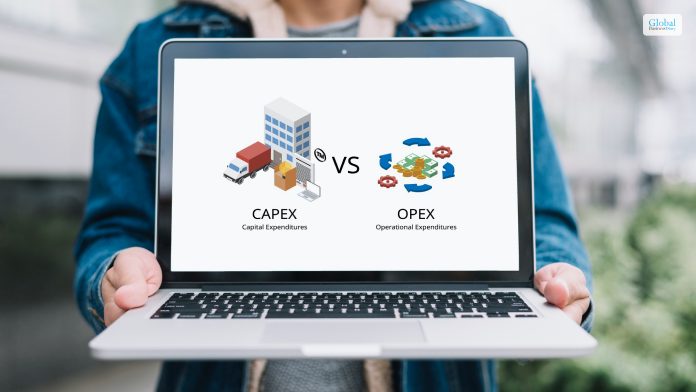
Capex Vs Opex: Essential Points Of Difference
A company has to pay off different kinds of expenses to run its business smoothly. Capex vs Opex is one of the popular expense differentiation you must know. Among them, two kinds of expenditures are quite prominent in this regard. First is the Capex, and second is the operating expenses. Most of the time, these costs can be one, and sometimes they can take the shape of recurring expenses. You must follow the correct process that can assist you in getting things done in perfect order. Micromarketing techniques can work well here. The capital expenditure of a company will occur once, while the operating expenses will keep on occurring all the time. If you are a business owner, you must know the core points of differences between the two concepts. Essential Points Of Difference Between Capex vs Opex There are several points of difference between Capex vs Opex. It will offer you the complete insight once you go through the complete article. You need to know the reality while making the differentiation between the two concepts of business./ 1. Nature Of Expenses Capex vs Opex has some core differences in the nature of their expense model. Capital expenditures or Capex are investments in assets that provide long-term benefits to a company. These expenses are typically for acquiring, improving, or maintaining assets such as property, equipment, machinery, or infrastructure. Operating expenditures are day-to-day expenses incurred in running a business. These include costs for salaries, utilities, rent, marketing, repairs, and other ongoing operational expenses. You must consider these facts from your end while making the differences between the two concepts. 2. Duration Of Benefit Capital expenditures provide benefits over an extended period, usually beyond one fiscal year. They contribute to the company's future productivity, efficiency, or revenue generation. Capex vs Opex has some significant points of differences that you must know while you make the comparison. Operating expenditures are incurred for immediate use and provide short-term benefits. They are essential for maintaining regular business operations and generating immediate revenue. It will give short-term and regular benefits to your company. 3. Treatment In Financial Statements Capital expenditures are recorded as assets on the balance sheet and depreciated or amortized over their useful life. Depreciation or amortization expense is then reported on the income statement over time. Operating expenditures are immediately shown on the income statement in the period they are incurred. They directly impact the company's net income for that period. You need to identify the perfect solution that can make things easier for you to reach your goals with ease. 4. Tax Treatment Capital expenditures might be eligible for tax benefits such as depreciation or amortization deductions over time, reducing taxable income. Capex vs Opex, you must consider things at your end while reaching your objectives. Operating expenditures are fully deductible in the year they are incurred, providing immediate tax benefits. You should get through this difference to have a better idea of it. Ensure that the scope of errors is as low as possible. 5. Impact On Profitability & Cash Flow While CapEx affects profitability indirectly through depreciation expenses. It has a significant impact on cash flow at the time of purchase or investment. You cannot afford to make things work in the wrong direction from your counterpart. On the other hand, Operating expenditures directly affect profitability by reducing net income and also impact cash flow in the period they occur. Effective planning can boost the chances of reducing the expenses of your business. 6. Decision Making & Budgeting Capital expenditures involve strategic decisions as they impact the company's long-term growth and productivity. Budgeting for CapEx requires careful planning and consideration of future benefits. You should know the core points of differences between Capex vs Opex. It will assist you in attaining your goals with complete ease. Operating expenditures are part of routine budgeting and are necessary for maintaining day-to-day operations. They are generally more predictable and recurring. Without proper application of the strategies, things can turn worse for you. Examples Of Capex Expenditure There are several examples of Capex expenditure that you should know at your end. It will help you to get a better insight into it. Let’s find out some of the core examples of the Capex Expenditure that can make things easier for you. Machinery, manufacturing plants, and equipment. Computers. Building Improvements. Trucks and vehicles. The contribution margin of the company plays a vital role here. You should pay it from your end to meet all the expenditure. Examples Of Opex Expenditure There are several examples present for Opex expenditure that you must know at your end. Some of the core examples of it are as follows:- Salaries and wages. Rent and Utilities Legal and accounting fees. Overhead costs. Business travel. Property expenses. Interest on debt. Research and development expenses. You can easily make the market segmentation with the help of the differences between capex vs opex to meet the requirements. How To Reduce Capital Expenditure? There are several techniques you can employ to reduce the capital expenditure of your company to a great extent. You must follow the correct process in this regard to have a better idea of it. 1. Evaluate The Asset Needs Conduct a thorough assessment of current assets to determine if there are underutilized or redundant assets. Selling or repurposing such assets can free up capital and reduce the need for new investments. 2. Leasing Vs Buying Consider leasing equipment or assets instead of purchasing them outright. Leasing can lower initial costs and shift maintenance and upgrade responsibilities to the lessor. 3. Prioritize Essential Investment Focus on essential investments that directly contribute to core business operations or strategic growth. Prioritize projects that offer the highest return on investment (ROI) and align with long-term business goals. 4. Implement Of Efficient Technology Invest in technology that streamlines processes, reduces manual work, and improves efficiency without significant capital outlay. Cloud-based solutions or software-as-a-service (SaaS) models often have lower upfront costs. 5. Outsource Non-Core Functions Consider purchasing refurbished or used equipment instead of new. Often, these options come at a lower cost while still providing adequate performance and reliability. Final Take Away Hence, if you are making the differences between the two concepts of capex vs opex, then the mentioned points can prove to be useful for you. Try to reduce your expenses as much as possible. It will reduce your debts to a great extent. You can share your views and opinions in our comment box. It will help us to know your take on this matter. Once you follow the correct process, things are going to be easier for you. The application of the correct strategy can make things work for you. Continue Reading For More Business-Related News!! How To Buy An LLC? – Steps To Follow How To Become A Strategy Consultant? Roles & Responsibilities What Is A Sales And Purchase Agreement For Business? – Let’s Find Out
Nov 26, 2023