





What Is An Angel Investor, And How Does Angel Investing Work?

What is an Angel Investor? An Angel investor is referred to as an individual with high net worth. These individuals provide financial backing to small startups and entrepreneurs. In return for their financial investment, they take ownership equity of the company. Although angel investing is risky, it offers potential high returns, as well as a satisfaction to the investor to make a startup strong enough to compete in the market.
Unlike venture capital firms that use their investment fund, angel investors use their own net worth to invest in startups and entrepreneurs. This increases their risk appetite a lot. In this article, you will learn some of the essential details of an angel investor and how the process of angel investing works. Then, we will share with you the best tips and ways through which you can become an angel investor.
What Is An Angel Investor?

When a new startup or business is in need of money, they turn to investors. An angel investor is one such entity or individual who offers the initial fund to a small business or startup and takes ownership equity in exchange.
According to Indeed.com,
“Angel investors are individuals who fund early-stage businesses in exchange for equity in a company. Beyond traditional bonds and stocks, angel investments provide new ways to diversify investment portfolios. Learning about angel investment can help you understand how angel investment works and what are their pros and cons.”
In most cases, an angel investor is an individual or an entity that is fully involved in funding startups and projects for fully professional purposes. In other cases, angel investors can also be wealthy family member/ friend/relative who is offering funds for a startup. The investor can make a one-time investment or an ongoing investment of cash in the business.
However, you must not consider angel investors as loan providers. They are just cashing in on an idea that they like to grow in a given industry. They are only expecting rewards in a situation where the business really takes off.
Read More: Private Equity Vs. Venture Capital: Key Differences
Angel Investing – How Does It Work?

As per the views in an article on Investopedia,
“Most angel investors are relatively wealthy individuals who are looking for a higher rate of return than can be found in more traditional investment opportunities. They search for startups with intriguing ideas and invest their own money to help develop them further.”
As already mentioned before, angel investors only invest in those ventures where they see growth opportunities. However, these ventures are by themselves very risky. As per various reports, it has been found that the success of such small ventures is only 11%. Hence, the investments of angel investors in those ventures are quite modest (an average of around $42,000). Hence, most angel investors do not spend more than 10% of their investment portfolio money on such risky ventures.
However, this factor cannot remove the importance of angel investors for businesses that have ideas and are in need of funding. An entrepreneur or a small business is always in search of angel investors who can offer some conventional financing to their businesses.
Angel investors, while funding, seek an equity stake or a seat on the board of directors of the business. These investors do not expect to get their money back if the idea does not succeed. Hence, in some cases, angel investments are more favorable for entrepreneurs.
How To Become An Angel Investor? – Steps To Follow

According to Investopedia,
“Angel investors have a genuine interest in innovation and a desire to be involved. Many have been entrepreneurs in the past. Anyone who has the money and the desire to provide funding for startups can be an angel investor. They are welcomed by cash-hungry entrepreneurs who can’t get conventional bank loans or don’t want the burden of big debt until their ideas take off.”
The following are some of the steps that you will need to follow if you want to become an angel investor:
1. Get Your Qualifications
To become an angel investor, you will need to meet the standards of an accredited investor. You must have earned at least $200,000 in the past two years (or $300,000 along with a spouse). Otherwise, your net worth must be more than $1 million in investable assets. This restriction is present due to the high risks associated with angel investments.
Since accredited investors are financially better equipped to handle a loss if there is such a situation. However, there are still non-accredited investors available, which startups can approach.
2. Start Creating An Investment Portfolio
It is important for an angel investor to build an investment portfolio and gain varied experience in investing. With experience in a variety of areas, you will be able to learn how investments in assets work in the country. You can also work for a professional angel investor to see what they do while funding a startup or a small business.
3. Start Sourcing Deals
In their industry of expertise, angel investors have an established network of startup founders, entrepreneurs, and small-business owners. As an investor, you will need to maintain rapport with those connections on a regular basis. Hence, you will often hear about new startups where you can source deals effectively.
You can also collaborate with other angel investors or a group of investors to fund a particular business after you have formed an angel syndicate.
Read More: What Is Indemnity Insurance? And Its Different Types – Let’s Discover
Wrapping Up
What is an Angel Investor? – You can see from this article that angel investors offer the primary funding source for entrepreneurs and small businesses. However, these investors need to be content with the idea and prospects of the business and must be optimistic and hopeful for its growth. In return for the funding, these investors take ownership equity of the company.
However, this is a risky job, and angel investors do not risk more than 10% of their portfolio into investing in these businesses. What do you think is the importance of angel investors for small businesses and startups? Share your views in the comments section below.
Read Also:
Tags:

Recent
Dinmukhamet Idrisov and a Gold-Mine Dispute From Kazakhstan’s Oligarchic Past
Oct 16, 2026

Memory Chips Are Becoming More Important in the AI Era
Aug 06, 2026

Why Enterprise Web Applications Still Choose Angular for Long-Term Growth
Aug 04, 2026

Due Diligence Decoded: Why Careful Evaluation Still Wins in Business
Jul 11, 2026

Related Articles

Best Artificial Intelligence (AI) Stocks to Invest in US
There has been a recent surge in investors’ interest in AI stocks. Consequently, many companies are touting roadmaps for innovating AI products suddenly. It also means that the number of AI stocks in the market will increase. But it should be easy to invest in AI stocks, then. The scenario is different. Experts say that searching for legit artificial intelligence stocks will be difficult. In other words, finding AI stocks like NVIDIA or Microsoft won’t be easy. These stocks already use generative AI to drive revenues. So, investors who deal in these stocks will be obvious winners. But the disruptive growth of generative AI has leveraged many other investing opportunities. In fact, Microsoft is one of the potent investors in OpenAI, a startup. Importance Of Investing in AI Companies By now, we know that ai stocks can give heavy returns. Hence, most investors are in a hunch for disruptive AI brands. They want to make havoc in the market by investing in these stocks, likely to achieve disruptive growth. Different Categories of AI Stocks In the stock market, 3 types of AI stocks are boldly competing. The most lucrative AI stocks are the tech giants in the US. The second most promising category is the cloud titans. The use of generative AI in cloud technology has spontaneously grown. In addition, we can divide all these types of AI stocks into two categories: Blue-chip technology companies Small and experimental companies However, the chipmakers also make a lucrative category of AI stocks. Investing in AI Stocks The equity market in the US propelled to amassing heights. However, we can give credit to the AI companies for that. The mega caps in AI outperformed most others. Certainly, it’s time you start digging into AI stocks. Importance of Large Tech Companies in AI Investments The AI stocks of large tech companies are a must-watch for earnest investors. Most tech mammoths are investing in expanding the use of AI. We may talk about Amazon. Recently, the tech giant added ChatGPT-style AI search to their website. Consequently, Amazon is trading at a share price of 180.75 USD. Moreover, Google is also digging up innovative AI extensions. Recently, the search engine giant shared their ad strategy, which uses AI as a main predicting component. They also use AI in many more ways. There’s no wonder that Google is trading at 176.33 USD. Need for Significant Data and Capital for AI Models Investing in a small artificial intelligence stock may not be the best option, considering the nature of operations in AI companies. Brenner observed that “a tremendous amount of data and a huge amount of capital” are needed to operate the enormous language models. Therefore, investing in Helix Energy Solutions Group Inc (69.4% performance growth), Symbotic Inc (38.3% performance growth), and similar others might not be the best option. But, why? Certainly, the small companies might suffer from a dearth of data mines to groom their language models. They may lack the huge stock capital needed to run AI modules as well. Benefits of Partnering with Bigger Companies for Small AI Developers Search for big companies like Microsoft investing in emerging firms like OpenAI. These partnerships can be a silver lining for investors. Small AI developers can source data pools, equipment support, and other facilities from big tech firms. So, their chance of better ROI fares higher. The trust of investors also skyrockets when big companies invest or vouch for small, disruptive AI companies. How to Invest in AI Stocks? Wait, do you have the basic knowledge of investing? And you want to start your innings with AI stocks? You’ve landed at the right place. Let me tell you how you can quickly get started. Opening a Brokerage Account You can easily open a brokerage account in just 15 minutes. Seems simple, right? Nowadays, transferring funds to brokerage accounts doesn’t need breaking a sweat. In other words, simply link your bank account with your brokerage account and get going. Don't be drawn to a margin account at first. Instead, stick to a cash account. Individual AI stocks vs. AI-focused ETFs This is one big catch that you must sort before you begin trading in AI stocks. Individual AI stocks can be highly rewarding for you. Maybe you are already fixated with investing in Nvidia or Alphabet without a doubt. They are good stocks. But just wait. Selecting the best individual stock needs heavy fundamental research, upfront costs, and incurs risks that you may not want to take on. Therefore, you might take my suggestion and invest in AI-focused exchange-trade funds. These ETFs diversify your profile. At the same time, they are less volatile too. AI ETFs The AI ETFs are a collection of funds of companies dealing in AI development and new areas of AI implementation. Overview of AI ETFs AI ETFs are trading pools that track data from the market to invest in the best pool of AI stocks. AI Stock Indexes and ETFs that Track Them The AI ETFs can track a versatile range of AI stock indices. Some of these are: Indxx Global Robotics & Artificial Intelligence Thematic Index Nasdaq CTA Artificial Intelligence & Robotics Index Caution When Selecting AI ETFs with AI in Their Name They may not be the best ETFs of AI-using companies. To diversify, some ETFs use AI-powered trading mainly. So, be cautious and learn about the AI ETF properly before you make an investment decision. Major Players in the AI Race We discussed the kind of AI stocks that can perform better. But we must also share our perspectives regarding the best tech giants that have assured returns over time. Meta Platforms, Inc. as a Leading AI Company Why do I say so? That’s because Meta is investing in expanding the range of generative AI use. We are aware of the MetaVerse. All companies in this loop use a unique AI supercomputer. At present, Meta buys AI chips from Nvidia. But they will soon produce the chips to be used in Meta's data centers. Consequently, Meta experienced exponential growth in stock value. The present share price of Meta is 478.22 USD. Meta's AI Investments and Performance We can see innovation and grit in Meta’s recent AI investments and current stock performance, too. As a result, most brokers place their bets blindly on these AI stocks. Wedgewood Partners' Perspective on Meta Platforms Wedgewood Partners released their 2023 newsletter for Q4. The newsletter features Meta Platforms Inc. According to Yahoo Finance, Meta’s stock value grew 173.99% in a period of 52 weeks (about 12 months). In line with the same, Wedgewood quoted that: “The Company has been a consistent beneficiary of artificial intelligence (AI) over the past several years, investing aggressively in deep learning recommendation systems that help power its products, which reach nearly half the population of the planet.” AI Stocks That Will Skyrocket We almost decoded the hype around AI stocks. After that, it’s time to list some stocks that will see exponential growth or may already be growing enormously. Methodology for Selecting AI Stocks You must consider some vital touchpoints to select the most suitable AI stock. These are: Current market position and the competitive benefit of the AI stock Revenue growth in recent times and current financial health Product portfolio Existing partnerships Risk diversification Market demand Popularity among the customer base Top 10 AI Stocks to Consider for Investment I used the above-stated parameters to make a list of the 10 best AI stocks: NVDA Amazon Alphabet Microsoft Palantir Meta Inc AMD (Nasdaq) GOOGL (Nasdaq) IBM ADBE (Nasdaq) Detailed Analysis of GSI Technology, Inc. And Super Micro Computer, Inc. As Potential AI Stocks These two stocks have high growth potential. Stocks like Alphabet or Meta might demand high appreciation value. But these two stocks have an assured chance of growth. It’s important you learn why you can buy GSI stock. Well, GSI witnessed a price surge of 168% in 12 months. At the same time, the price soared 104% in the last quarter. However, GSI is suitable for short-term investments only. In the long term, GSI shows much volatility. Moreover, GSI’s value plummeted 30% in the last 3 years. Upon fundamental analysis, Super Micro Computer seems to be undervalued. The company sells data center systems. So, they are the helm of the AI businesses. The current valuation of Super Micro Computer is USD 11.82 billion. The exponential growth has continued since 2022. At the same time, there has been a 2000% growth in the stock over three years. Conclusion Research shows that there are no big catches for those who are willing to invest in AI stocks. However, you must get your research right and place the right bets. For instance, you must be careful when choosing individual AI stocks over AI ETFs. In the short term, many AI stocks will fare better. But you need to do a detailed fundamental analysis to create a list of prospective AI stocks. Hence, there is a level playing field for experienced players and newcomers, too. Explore the AI stocks and invest wisely. #Disclaimer: The information provided on this blog is for educational and informational purposes only and should not be construed as financial advice. I am not a licensed financial advisor. Any investment decision you make is at your own risk, and you should consult with a qualified financial advisor before making any investment decisions. This site may contain affiliate links, and I may earn a commission at no additional cost to you. For More Business-Related Articles By Click Below!! Learning The Basics of Stock Trading: Best Sources and Options to Consider The Comparison of Stock Vs Share: Definition, Significance, and Values How Does a Share Work? Benefits, Challenges and Best Tips
Jun 05, 2024
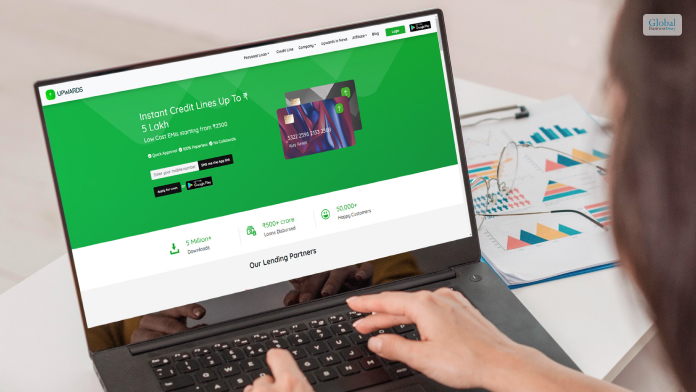
Upwards Review: Is This India’s Best Instant Loan App?
Getting instant personal loans for paying off dues, medical bills, wedding expenses, smartphone purchases, and more can be a boon to many. Therefore, salaried people in India have started applying for Upwards personal loans to get quick loans without much documentation and requirements! To learn more about this instant personal loan provider in India, read this post till the end. Here, I have explained what personal loan you can get, along with its eligibility criteria and step-by-step application process. Upwards: Company Background When it comes to getting personal loans in the quickest and simplest way in India, Upwards is the best one. This company was established in 2017 and is a registered loan provider as per the RBI (Reserve Bank of India). Its Instant Loan App became popular in India. This company got popular in the last few years for providing personal loans to salaried employees. However, the primary reason they became popular was that they provided these loans quickly - within 48 hours after applying for the loan. In some cases, people even got their loans on the same day they applied for it! Read Also: Create Invoices Online With http://www.zintego.com/. Upwards Personal Loan: Overview Providing personal loans to customers is the primary service provided by Upwards. No matter what reason you have for taking a loan, you can get a personal loan instantly using this app. This makes it similar to Fullerton India, and Dhani. But what is a personal loan? A personal loan is a type of loan that is unsecured. This means that there is no security against non-payment of loans. Therefore, there is no collateral against the loan that the bank or loan provider can claim in case of failure of payment. Typically, personal loans are short-term loans that also have a lesser amount compared to a secure loan. In regards to Upwards, they can provide you with personal loans up to INR 2,00,000 (Rs. 2 lakhs). The company also offers personal loans for a repayment period of a maximum of 60 months (5 years). Regarding the interest rates that you have to pay for your personal loans, they will be based on various factors. These factors are all stated in the Upwards loan eligibility criteria, which I will explain below. The minimum interest rate for this personal loan is 9%. Key Takeaways The main highlights of this personal loan are: The minimum amount that you can borrow is Rs. 20,000, and the maximum amount that you can borrow is Rs. 2,00,000. If you apply for this loan, you will not require any paperwork of any kind. The interest rate on this loan is pretty affordable, starting from 9% only! This personal loan is free of any collateral. No matter what purpose you have, you can use the loan money for anything and everything. The approval and disbursal system is instant, happening on the same day as you applied or the next day. Applying for this loan is hassle-free since it requires only a few documents. Also, the entire process is online. If you get this loan and repay it on time, then your credit score will increase! Upwards Personal Loan Eligibility Criteria If you wish to know whether you are eligible to apply for an Upwards personal loan, then you are in the right place. There are a few eligibility requirements that you must meet before you can apply for a loan, unlike LazyPay. These requirements are: You must be a resident of India with all legal certifications to prove your Indian citizenship. Regarding your age, you must be at least 21 years of age to apply for an Upwards personal loan. You must be under current employment and should have a base salary of INR 20,000 per month. When it comes to your credit score, it must be above 600. How To Apply For Upwards Personal Loan? If you wish to apply for an Upwards instant personal loan, there is a simple process to follow. In addition, you must also provide some basic necessary certifications. Documents Required The documents that you must show before you can apply for a personal loan are: Address Proof: Any ID card (like a Voter ID card or Aadhar Card) that can prove your current address. PAN Card: Your PAN Card is required for checking your credit score and more as per RBI (Reserved Bank of India) regulations. Bank Statement: You must present a printed or digital form of your bank statement to show whether your account is legit or not. Salary Payslips: When requested, you must showcase your salary payslip for the last three months as proof of employment. Application Process The Upwards personal loan application process is pretty simple and hassle-free. Here are the steps that you need to follow: First, you must learn how to manage upwards loans. You can do so through the Upwards app. Download it for free from the PlayStore (Android) and App Store (iPhones). Next, you must Upwards login by using your GMail account or Facebook account. After you have done so, open the app and click on Apply Now. Here, you must upload digital copies of the necessary documents, like your Aadhar Card, PAN Card, salary payslips for the last three months, and your bank statement. Now, you must fill in the application form. After you have filled out the form, click on the Submit. After you have filled out the application form and providing all necessary documents, you must wait for approval. You will get an approval mail within the same day if your application gets approved, that is. If you do get the loan approval mail, you will be contacted by an Upwards executive. You now have to agree on the loan terms online over the phone. After an agreement is reached, you will receive your personal loan money within 48 hours! If you do not receive the money, then you must contact Upwards customer care immediately. Benefits Of Upward Personal Loan There are several benefits of the Upward personal loan. It can help you in different means. You must know the facts perfectly while attaining your objectives with complete ease. Ensure that you follow the correct process in this regard. Some of its key benefits are as follows:- 1. Structured Repayment Option Upward personal loans typically come with fixed monthly payments over a set period, making it easier to budget and plan for payments. You need to get through the complete process that can make things easier for you in attaining your requirements with ease. 2. Offers Flexible Loan Amounts Borrowers can often access a range of loan amounts, allowing them to borrow what they need based on their financial requirements. The flexible loan can sort out your financial needs when you require it the most. Once you follow this process, things can become easier for you. 3. Predictable Interest Rates These loans commonly have fixed interest rates, providing predictability in monthly payments throughout the loan term, even if market rates change. You must get through the predictable interest rates that can boost your brand value to the next level. 4. Builds The Credit History Consistent, on-time payments on an upward personal loan can positively impact credit scores, contributing to an improved credit history. Once you have a trusted credit history things can become easier for you to get the loans on time. 5. Quick Access To Funds Depending on the lender, approval and funding for upward personal loans can be relatively quick, allowing borrowers to address financial needs promptly. You will get quick access to the funds to make things happen in your favor. 6. Variety Of Uses These loans can be used for various purposes, such as debt consolidation, home improvements, major purchases, or unexpected expenses, providing flexibility in how the funds are utilized. The loan amount you can use for a variety of purposes. Remember that while upward personal loans offer numerous benefits, borrowers should carefully assess their financial situation and ability to repay before taking on any loan. Understanding the terms, fees, and potential impact on credit is essential in making informed borrowing decisions. Conclusion: Is Upwards Legit? If you think Upwards is fake, then you are wrong. This company is 100% legit. However, the only difference you will find is the time taken to receive your personal loans. While the Upwards website claims that you can get your loans in the same day, it actually takes more time than that. Read Also: Navi: Information, Eligibility Criteria, Interest Rates, Review & More Fullerton India Review: Things To Know Before Taking A Loan! What Is Stockinvest? Is It Legit And Working?
Jun 01, 2023

What Is SHLL? Is SHLL Stock A Good Stock To Buy In Future?
Are you planning to buy the best SHLL stock in the Future? Selection of the best stocks will work well for you in all aspects. You just have to make sure that you do not miss out on all the essential points that can grow your stocks in all the possible ways in a short time. Before you invest in the SHLL stock, you must know the current trend to get better returns from your investments. So get the basics right before you make your investments. You have to take care of several aspects while you want to make your investments in SHLL stocks. First, try to make your investments depending on the market trend and company status on which you are making your investments. What Is SHLL Stock? The SHLL stock is the stock of the Tortoise acquisition corp class. It is currently a blank check company, and according to the stock market reports, this company has shut down its operations and has merged with Hylion’s Technology. The target niche of this business was the energy industry. Now I have made it clear to you what SHLL stock is? Before you make your investments, you have to understand the trend, market scenario, and the current market prices of this capital stock. Is Tortoise Acquisition Corp Class SHLL Stock? The overall market sentiment has been high for the corp-class shell stock. As a result, the SHLL is getting a bullish rating from the sentiment of the investor’s ratings. The Tortoise Acquisition Corp is shown for you when you are getting a bullish rating. It means the market growth rate of the shares is relatively high, and it is gaining momentum. Is SHLL A Good Stock? Experts of the stock markets believe that you can buy the stocks of SHLL now ass the price is low for two to three days, and then you can sell when the price gets the newer hike. From my article, you will get to know the SHLL stock history in detail to make the required changes. So do not make your choices in grey while you want to get better returns from your investments. What Is The Stock Sentiment Of SHLL? Whenever you make the investment decisions, the overall stock sentiments will provide you with an overview of the investors in their favor. The belief incorporates the short-term analysis and the score that does not encompass the short-term technical analysis and the score that does not analyze the fundamental research for the company’s profitability of the company. It means that the earning updates can cause significant problems in all possible aspects. How Can You Track The Stock Sentiment? Whenever you are making investment decisions, particular sentiments provide a good overview. Most of the time, sentiment incorporates short-term technical analysis in the form of scores. It does not show any fundamental analysis that reflects the profitability of the company. In most of the cases, it was found that the earning updates can provide the overall sentiments of the investors. However, the application of the price action is generally the accurate indicator of the belief in the market. The investor’s observation is one of the actual indicators that help you consider the price action in the recent trend volume. When the trend is decreasing, you must withdraw your investments as the market shows a downward trend. What Is The Future Of Shll Stock If Investors Makes An Investment In It? Experts of Trading in the US stock market NYQ are of the opinion that Shll stock can provide them a better return on their investments in the future. Shll U can be a profitable investment options whose quote is equal to 58.990USD at 24-11-2021. It is expected as per the experts that shll stocks will reflect a +227.16% growth rate. For example, if you invest $100 today it can rise up to $ 327.16 in 2026. The growth rate of the shll stocks is quite impressive in the years to come. What’s Happening With SHLL Stock Now This Week? Most of the investors on the SHLL stocks are very eager to know what will happen today on SHLL stocks. Being an investor in the same; you will also have the same question in mind, right. So follow the below-mentioned points. Then, keep yourself updated with the SHLL news to make better investment plans. Tortoise Acquisition Corp Class A SHLL was higher by 1.52% on Monday 15-11-2021. Today’s Tortoise Acquisition News market range is entirely down compared to the previous one -1.89%. On Monday, the SHLL price was higher than its previous stock range, which is 0.76. The last closing price is $49.96, depending on the volume of 2,751,683 shares. Over the past few years, the price of stocks has increased by 10.95%. The SHLL price is higher than the 413.88%. SHLL has lost -$0.02 per share over the past 12 years. It is the complete picture of the SHLL that you can go through this week before you make your investment. SHLL Stock News If you want to get accurate news of the SHLL stock news in the updated format, the table below can provide the complete picture. Do not make your choices in grey. The reason is that without knowing the current market trend, you cannot get the results in your favor. Make your investments by analyzing the current market and its fluctuations in the global business arena. The entire price range of the SHLL stocks is quite volatile in nature. So the best thing you can do is hold your stocks for the time being and allow the stock price to rise after some time. Is It A Wise Option To Invest $1000 In Tortoise Acquisition Corp? Before you make up your mind and soul to make your investments in Tortoise Acquisition Corps. You must seek the assistance of some industry experts to have their opinion as well in your kitty. An award-winning stock analyst team has inspected 10 different profitable stocks where they could make their investments and earn well. In that list, the name of the shll stocks is not there. You have to make your choices wisely, especially when you are planning to make your investments in sensitive stocks like shll stocks with the hope of earning more profits from them. More About Tortoise Acquisition Corp Class A Tortoise Corporation is primarily almost like a blank check company that was formed with the objective of merger and acquisition. It is also known as the SHLL. The primary services of this company are as follows:- It ensures the merger and acquisition. Helps in Developing the capital stock exchange market price. SHLL ensures the asset acquisition properly. It Increases the chances of the stock purchase. Re-organizes a similar business with the combination of one or more companies. It is one of the most effective means to make things happen in your favor in all the possible ways. So work out the plans that can help you to achieve your goals in the best possible ways quickly. Do not make an impulsive decision while investing your money in shares because shares are vulnerable to high volatility rates. Is SHLL A Good Stock To Invest In? The price-earning ratio of the SHLL stock is fluctuating vigorously, and it will be a better option for you to watch the current market scenario before you make your investments. Do not make investments immediately as recently; Tortoise group has made the mergers with HYLTON. It is now the time to make intelligent investment plans while you want to invest your money there. The current price of the shell stock is $44.91. What Is The SHLL New Ticker Symbol? The SHLL New ticker symbol is “HYLN” After the merger with the HYLN, its name, and symbol of stocks have been modified. In most cases, you have to make your choices after analyzing the market trend of these shares before you make your investments in them. Therefore, today you will receive the HYLTON stock in the market, not the SHLL stock, after its merger with Hyliion. Final Take Away Hence, these are some of the core factors you have to consider while making your investments in SHLL stocks. Develop your business strategy well before you make your investments in the correct direction. Try to make the right choices at the correct point of time before you make your investments in stocks. The timing of the investments plays a vital role here. FAQ(Frequently Asked Questions) 1. Will Shll Go Up? Yes, the shll stock price will go up in one year starting from 58.99USD to 85.604USD. 2. What is Shll Stock now? The current price of the shll stock is $44.91. 3. What did Shll Turn into? The shll stock will turn into Hyliion Inc. This company is worth more than $7.2 billion. 4. Why did Shll stock go up? After the merger with the electric heavy truck startup, the shll price will definitely rise up. #Disclaimer: The information provided on this blog is for educational and informational purposes only and should not be construed as financial advice. I am not a licensed financial advisor. Any investment decision you make is at your own risk, and you should consult with a qualified financial advisor before making any investment decisions. This site may contain affiliate links, and I may earn a commission at no additional cost to you. Read Also: Why Create A Powerful Business Continuity Plan? How To Start A Business In 2021 – Best Business Strategies Is Nykaa Going To Dominate The Market With Their Recent Launch?
Nov 19, 2021

What Is A Venture Capitalist, And What Are Their Functions?
What is a venture capitalist? - When an entrepreneur comes up with an idea to start a business to offer a new product or service, there is a big requirement of financial resources to create the business. To reach a high level of production, a large amount of money and business experience is required. The job of a venture capitalist is to provide capital in exchange for an ownership stake in the company. In this article, you will learn some general details about venture capitalists and their functions. Apart from that, we will also discuss the major importance of venture capitalists in business. Finally, we will share with you major tips on how to become a venture capitalist. Hence, to find out more about the job of venture capitalists, read on through to the end of the article. What Is A Venture Capitalist? According to Investopedia, “A venture capitalist (VC) is a private equity investor that provides capital to companies with high growth potential in exchange for an equity stake. A VC investment could involve funding startup ventures or supporting small companies that wish to expand but have no access to the equities markets.” Venture capitalists are investors that specialize in analyzing the risks associated with a startup business and the market, and they provide capital to startups. In exchange for capital, they take an ownership stake or equity in the business. Some of the most famous venture capitalists are Jim Breyer, Michael Moritz, Peter Thiel, and more. They provide funds for a startup business in exchange for a share in the profits the company makes. However, the reverse is true, as with the company’s loss, these venture capitalists also share a part of the loss as well. If you are starting out a business with a new idea, a venture capitalist for you shall be just another owner of the business alongside you, who is investing with capital in the business. Venture capitalists provide businesses with capital at different phases of the business - early-stage capital, expansion capital, late-stage capital, and acquisition/ buyout capital. Apart from just funding for the business, a venture capitalist can also be a mentor for the company’s owners in making decisions on daily operations, financial management, and growth. Read More: Entrepreneur : Who Coined The Term ‘Entrepreneur’? What Are The Jobs And Functions Of A Venture Capitalist? The following are the major functions of venture capitalists: 1. Investing The fund that venture capitalists offer to business helps in driving innovation and use that innovation to commercialize the products and services of the businesses. In exchange for providing funds, they take a share in the company’s profits and also get various decision-making power. 2. Expertise As the venture capitalist contributes funds to the business, they have the right to contribute to the business’ business operations too. These people work to hire the company’s management as the company grows in size. They also serve as board members to make top-end decisions for the company. 3. Financial Management Since venture capitalists provide private funds for the company, they are also accountable to the people (who are the partners to the venture capitalists) that provide the capital for the investment. Venture capitalists basically invest the funds of the partners into a new company to make it profitable. The investment partners make observe them to make the right decisions for the company. 4. Investment Closing Venture capitalists also negotiate exit strategies for businesses, which allow the business to end their investment after a particular time period. They also allow the leaders of the company to sell the business or publicize the stock of the company so that venture capital is no longer required. Indeed.com adds on venture capitalists - “They also act as fund managers and analysts whose job is to invest money into other businesses. Often, they work with partners to fund large-scale growth and are typically willing to take on more investment risks than traditional banks are.” As already discussed, venture capitalists make various financial choices since the individual has the right to do so, as he/she is investing the funds in the business, which allows the business to grow. Apart from making investment decisions, these venture capitalists are also involved in business analysis and mentorship to the business owners. How To Become A Venture Capitalist? According to TheForage.com, “Becoming a venture capitalist (VC) isn’t necessarily a linear career path, and you don’t need a specific degree or certification. When you work in venture capital, your industry experience — even in adjacent industries — is what matters most.” To become a venture capitalist, you will need to have relevant skills and experiences. Here are the steps to take if you want to be a venture capitalist: Step 1: Get a Degree in Business. Having a specialization in finance will help you in the long run, as you will have the skills to invest. The best degree to get for yourself is MBA, as you will have an advantage with the expertise and training to deal with capital and market changes. Step 2: Start working at a venture capital firm to get relevant experience. The best way to start is to get a job in a company that invests in the latest technology companies. You can also work at a startup to see how it works and what difficulties do startups face. Step 3: You should also get some experience working at a financial firm or a bank. Getting experience working at a bank that invests in business can be a great idea. Read More: What Are The Different Types Of Entrepreneurship? – Take A Look Bottom Line What is a venture capitalist? - A Venture Capitalist is an individual that offers capital to new companies and takes equity in exchange. It is quite common for startups to turn to venture capitalists to get funding to scale their businesses and commercialize their products and services. However, venture capitalists also assess the associated risks with a new business before they invest, as there is a high failure rate for venture capitalists. Do you have any tips for venture capitalists on how to avoid risks? Share some ideas with us in the comments section below. Read Also: Difference Between Entrepreneur And Entrepreneurship With Examples Risk In Entrepreneurship : What Risks Do An Entrepreneur Face? How To Become An Entrepreneur? – Steps To Follow
Aug 29, 2023