





Entrepreneurship In Economics: What Role Do Entrepreneurs Play In Economics?

What role do entrepreneurs play in economics? – Entrepreneurs play a variety of important roles in the economy to ensure economic growth. However, this growth comes as a result of entrepreneurs looking for wealth creation. Great entrepreneurs make use of market opportunities to create better solutions for the economy and profit resultantly. Take, for example, Dean Graziosi, who, through his revolutionary entrepreneurship, has changed the business realm. Check out Drip Digital to know more about him.
In this article, you will learn some of the essential details about the importance of entrepreneurship and the role of entrepreneurs in economic growth. Here, we will go through various points explaining all the ways through which entrepreneurs contribute wholly to the economy. Hence, to find out more, read on through to the end of the article.
What Is Entrepreneurship?

Entrepreneurship is a term that associates with the starting of a business. According to Investopedia,
“Entrepreneurship is often cited as a major engine of economic growth, particularly in the United States. But the actual picture is more complicated. Here’s what leading scholars have to say about the importance of entrepreneurship around the world.”
Under the right conditions, good entrepreneurs help to fuel the growth of the economy. However, it is only possible if everything goes the right way. Hence, in less developed economies, entrepreneurs struggle for growth. On the contrary, having good entrepreneurs can help an economy to grow faster too. Entrepreneurs bring in more innovation by understanding the market, seizing opportunities, by delivering better products and services.
What Role Do Entrepreneurs Play In Economics?

The following are the major ways through which entrepreneurs play an important role in the economy:
1. Ensures Formation Of Capital
Entrepreneurs make use of public savings to resolve the issues of industrial securities. As public savings are utilized productively in national resources, there is an increased capital formation.
This capital formation is important for the economic growth of the country. This is how entrepreneurs help in creating wealth for the economy.
Read More: What Are The Different Types Of Entrepreneurship? – Take A Look
2. Enhances The Living Standard
Entrepreneurs help a lot in community development by promoting economic growth and providing access to goods and services to all sections of society. By providing better job opportunities, entrepreneurs also help in poverty elimination.
They set up industries in society to remove the scarcity of resources and essential commodities. Furthermore, with better solutions, they promote new and innovative products and services. The living standard for common people improves with the mass production and manufacture of necessities.
3. Generates More Employment
With self-employment, an entrepreneur creates an independent and honourable life for the self. However, with the formation of businesses and firms, entrepreneurs offer jobs and livelihood opportunities to average citizens.
Hence, allowing entrepreneurs to operate independently in the economy is a great step to lower the rate of unemployment to minimal levels. People get more opportunities to work as the standard of living in the economy gets better.
4. Helps To Make The Economy Independent
Entrepreneurs like to work independently and create an independent path for themselves, which also makes the country’s economy more independent. Entrepreneurs help in creating such an economic environment where the needs of the economy are manufactured in the country itself.
This helps the economy by lowering imports and helps to promote a culture of self-reliance. However, in this case, help from the government is also needed, where the government promotes the growth of businesses and the creation of jobs. In some cases, the government also provides tax concessions too.
5. Builds New Businesses By Identifying Opportunities

Great entrepreneurs have the knack and the ability to identify various needs and demands of the market and develop solutions regarding the same accordingly. These entrepreneurs start new businesses and firms and hence play a major role in shaping the level of economic growth.
They strive to create a diverse and dynamic business landscape while promoting innovation and better solutions. They also help the market to become more competitive for new and improved products and services, which further helps in economic growth.
6. Helps To Remove Regional Disparities
According to Emeritus.org,
“Many entrepreneurs also make a positive impact on their communities and improve their well-being by catering to underserved areas and developing environment-friendly products. Their work can help build stronger, more vibrant communities and promote social and economic development.”
Various regional disparities exist in the economy, and ensuring their removal helps the economy to develop better. By setting up industries and firms in backward areas, entrepreneurs create job opportunities. However, in this case, too, they avail different subsidies and concessions from the state.
7. Effective Utilization Of Resources
One of the best things about entrepreneurs is that they easily identify the existing opportunities in the market and know how to allocate resources in an effective manner. With the help of these skills, entrepreneurs are able to understand market needs and are able to develop innovative products and services.
As entrepreneurs create top-end innovative products and services that cater to the needs and demands of customers, they help in creating more demand in the market. This helps in creating a continuous demand-supply chain.
8. Helps To Increase GNP And Per Capita Income
Economic growth depends a lot on the Gross National Product (GNP) and Per Capita Income of the country. Entrepreneurs, by increasing the economic output of their respective firms, increase the economic output of the country as a whole.
As the GNP of the economy increases, this leads to a higher PCI, which is nothing but the average income of every person in the economy. By contributing to GNP, entrepreneurship helps to create new businesses and industries. This further helps in job creation, as already discussed in point 3.
Read More: What Is Indemnity Insurance ? And Its Different Types – Let’s Discover
Final Thoughts
What role do entrepreneurs play in economics? – Hope you have found the answer to your question. You can see the variety of roles that entrepreneurs play in the economy, which include seizing opportunities and delivering as per needs.
Entrepreneurs help in driving the economy forward by contributing to the nation’s GNP and increasing the per capita income of the country. What else do you think entrepreneurs do to help the economy? Share your answers with us in the comments section below.
Read Also:
Tags:

Recent
Dinmukhamet Idrisov and a Gold-Mine Dispute From Kazakhstan’s Oligarchic Past
Oct 16, 2026

Memory Chips Are Becoming More Important in the AI Era
Aug 06, 2026

Why Enterprise Web Applications Still Choose Angular for Long-Term Growth
Aug 04, 2026

Due Diligence Decoded: Why Careful Evaluation Still Wins in Business
Jul 11, 2026

Related Articles

Entrepreneur : Who Coined The Term ‘Entrepreneur’?
You might have come across some “Entrepreneur” who is a hard-working person, loves to take risks, and is always optimistic about business opportunities. The word finds its roots in the French vocabulary, which means “to undertake.” It sums up such a person since an entrepreneur loves to undertake an enterprise, and the life of such an individual is nothing short of an adventure. In this article, you will learn about entrepreneurs in general and find out who coined the term ‘Entrepreneur.’ You shall also know some essentials about the person as well. Apart from that, we will also provide you with a brief history of the word entrepreneur. Hence, to find out more, read on through to the end of the article. Who Is An Entrepreneur? As per the definition of Investopedia, “An entrepreneur is an individual who creates a new business, bearing most of the risks and enjoying most of the rewards. The entrepreneur is commonly seen as an innovator, a source of new ideas, goods, services, and business/or procedures.” Entrepreneurs are really important in today’s time, as they play a key role in the economy. They make use of their skills and initiative in such a way that they find out the needs and demands of the market, which others cannot. By finding market opportunities and gaps, entrepreneurs try to offer solutions in the form of products and services. According to Entrepreneur.com, “There is, consequently, an entrepreneurial element in most or all business undertakings. Entrepreneurship is ultimately to bear the risk of the enterprise. It must be heroic and creative since the action requires that the costs of establishing and carrying out production are borne before market demand is known.” With the help of solutions, entrepreneurs bring new ideas to the market. If an entrepreneur becomes successful in taking risks in the market, the individual gets to make profits. Apart from that, the individual is able to find out better growth opportunities and fame as well. On the opposite end, the entrepreneurs that fail after taking risks suffer from losses and become less prevalent with time. Read More: What Are The Different Types Of Entrepreneurship? – Take A Look Who Coined The Term ‘Entrepreneur’? The word entrepreneur finds its origins in the late 18th century. Even after so many years, economists were unable to provide a consistent definition of the word “entrepreneur” or “entrepreneurship”. Although the concept of entrepreneurship remained in society for centuries, the 18th-century or 19th-century definition of entrepreneurship did not talk about entrepreneurs taking risks or bringing something new to the table. Only in the 20th century did economists take entrepreneurship as a serious matter for economic models and try to incorporate the same into theories. A major economist named Joseph Schumpeter was of the opinion that entrepreneurs are the ones behind the creation of new things to earn profit. Before that, economists thought companies were responsible for it. Schumpeter proved this old theory wrong. In addition to that, another economist, Frank Knight, held the opinion that entrepreneurs are the ones that bear the uncertainty of the market. He also held entrepreneurs responsible for risk premiums in the financial market. Israel Kirzner held that entrepreneurship is the process that leads to the discovery of the new. A Short History Of The Term ‘Entrepreneur’ Many people think that the famous Scottish economist Adam Smith coined the term “entrepreneur”. However, it is not true. However, Adam Smith was the first person to describe the capitalist production theory in detail and business owners’ profit motive. The entrepreneur is the type of person Adam Smith overlooks in his famous “Wealth of Nations”. However, a big admirer of Adam Smith’s book, Jean-Baptiste Say, coins the term “entrepredre” a few years later in France. The meaning of the word is simply “an undertaker”, “one who undertakes”, or “an adventurer”. Say agreed with all the points of Smith’s book, “Wealth of Nations,” and he stated that Smith’s serious flaw was the removal of the enterprising businessman from the whole subject. According to Investopedia, “Jean-Baptiste Say pointed out in his own writings that it was entrepreneurs who sought out inefficient uses of resources and capital and moved them into more productive, higher yield areas. Simply put, entrepreneurs seek opportunities for profit and, by doing so, create new markets and fresh opportunities.” Entrepreneurs are the people that constantly disrupt the balance of competition, as they prevent monopolies in the market from creating a large number and diverse range of products. Monopolies create a situation in the market that allows consumers to keep consuming and producers to keep producing. Because of taking such risks, some of the richest entrepreneurs that you see today make fortunes that are way more than the normal and small entrepreneurs in the economy. Jean-Baptiste Say put more focus on the importance of entrepreneurs. This is because he was one himself. He was a cotton manufacturer, and he knew the importance of an entrepreneur’s ability to recognize and manage market opportunities in an effective manner. Hence, Jean-Baptiste Say came up with “A Treatise on Political Economy, or the Production, Distribution, and Consumption of Wealth.” With this book, he captured the thought and imagination of a lot of economists of the time. American leaders of the time, like Thomas Jefferson, were very much inspired by Say’s outlook. Hence, Say’s theories and philosophy found a lot of mileage in the United States of America. The US combined Adam Smith’s free-market principles and Say’s entrepreneurial principles, created a major industrial revolution, and quickly became the strongest world economy within a few years. Read More: How To Become An Entrepreneur? – Steps To Follow Final Thoughts In capitalist economies like the United States, entrepreneurs play a major part in ensuring the economic growth of the country. They take on a lot of risks to bring new ideas into play and more innovation as they find new ventures in the market. The economist and philosopher Jean-Baptiste Say coined the term “Entreprendre”. This term is the root word behind the word entrepreneur. The word means a person who undertakes a new venture. What are your own opinions of the history of the word ‘Entrepreneur’? Share your views with us in the comments section below. Read More: Lead Management 101: A Comprehensive Guide to Success Is Startup Business Insurance Necessary For New Businesses? What Is Commercial Insurance? And Its Different Types – Let’s Discuss
Aug 22, 2023

Difference Between Entrepreneur And Entrepreneurship With Examples
An entrepreneur is a person that decides and works accordingly to start a new business. On the other hand, the word entrepreneurship is used to describe the process that the entrepreneur follows to start a business, manage the business, and thereby achieve success with the business. In this article, we will learn in detail about the major differences between an entrepreneur and entrepreneurship. In the first section, we will discuss the terms entrepreneur and entrepreneurship. Then you will learn about the major differences between the terms. Finally, we will share with you the major myths associated with entrepreneurs and entrepreneurship. Hence, to find out more about these interesting terms, read on through to the end of the article. Who Is An Entrepreneur? According to Investopedia, “An entrepreneur is an individual who starts and runs a business with limited resources and planning and is responsible for all the risks and rewards of their business venture. The business idea usually encompasses a new product or service rather than an existing business model.” With the help of these entrepreneurial ventures, entrepreneurs try to achieve high returns despite having high market uncertainty. One of the most notable aspects of an entrepreneur is that the individual is willing to take risks in regard to financial security and career. They spend their time and capital on something that is uncertain. These individuals know how to arrange for raw materials, investments, necessary capital, manufacturing locations, office spaces, and human resources. They also know how to make optimum use of those resources to bring out the best outcome for business. Since the entrepreneur carries most of the risks associated with the business, therefore the entrepreneur enjoys the most amount of rewards at the time of success too. Read More: What Are The Different Types Of Entrepreneurship? – Take A Look What Is Entrepreneurship? Entrepreneurship is the process that entrepreneurs take to build their businesses and achieve success while making a positive impact on society. They create and manage business ventures to get access to better finances. This process involves identifying the best opportunities in the market and bringing new ideas and innovations to provide market solutions. According to GeekForGeeks.org, “This (Entrepreneurship) requires a unique blend of skills and qualities, such as innovation, risk-taking, creativity, and resilience. Successful entrepreneurs are known for their ability to adapt to changes in the market, take calculated risks, and persevere through challenges and setbacks.” Entrepreneurship includes creating an applicable business plan, raising capital for the business, bringing new ideas to create products and services, and actually creating those products with the help of resources. Apart from that, it also includes managing the resources and overseeing the operations of the business on a day-to-day basis. According to Investopedia, “Entrepreneurial ventures generally impact economies and communities in a significant manner, which also results in a cascading effect on other sectors, like job creation. Small businesses are more limited in this perspective and remain confined to their own domain and group.” Hence, you can understand how much entrepreneurship is important for society and the economy. This is because entrepreneurs, with their skills and competencies, help in creating more wealth for the economy, provides job opportunities, and create a culture of innovation. Although entrepreneurship typically relates to small business, it can still be applied to any organization. Entrepreneur And Entrepreneurship: Major Differences The following are the major differences between an entrepreneur and entrepreneurship: 1. Meaning An entrepreneur is a person, and entrepreneurs are a group of people who come up with an innovative idea. They try to then try to convert that idea into reality while bearing various risks. On the other hand, entrepreneurship is the activity through which entrepreneurs take steps and individuals start their businesses. There, they offer products and services to a target market where there is demand, and in return, they earn profits. 2. Decisions Entrepreneur makes major decisions about their business, and the decision is for the creation and growth of the business. On the other hand, entrepreneurship is the process of making such decisions throughout a business’ lifecycle. The decision-making process never ends while the business is there. 3. Representation An entrepreneur is an innovator who has an idea and tries to give shape to it with the help of various resources available in society. On the other hand, entrepreneurship is the process of giving shape to the idea and the process through which the entrepreneur innovates. 4. Business The entrepreneur sets up the business and turns a concept or an idea into a reality by understanding the needs of the market. On the other hand, entrepreneurship is the process through which the entrepreneur makes those decisions. Myths About Entrepreneurs and Entrepreneurship The following are the major myths about entrepreneurs and entrepreneurship: Entrepreneurs Take Unnecessary Risks: This is not true. Although entrepreneurs take a lot of risks, those are calculated, and the risks involve a lot of planning and dealings. Entrepreneurs Start Businesses With A Big Invention: Not all entrepreneurs are inventors, and not all businesses are breakthroughs. Most of them identify the opportunities in the market, deliver the right solution, and earn profit in return. Entrepreneurs Get Success Only After Significant Experiences: This is not true, as most entrepreneurs are young and inexperienced individuals who work day and night to turn their idea into reality. Entrepreneurs Do A Lot Of Research Before Taking The First Step: This factor is partially true as most new businesses start on a new concept, and those entrepreneurs have little to no research capability in those cases. Entrepreneurs Need To Have Enough Capital: Capital is necessary, but some ventures do not need a significant amount of capital, especially with the advent of services that are provided through the Internet. Wrapping Up There is no proper definition of an entrepreneur, and hence it is not easy to define entrepreneurship. No theories or models can define entrepreneurship. In simple words, it is the way through which an entrepreneur identifies suitable business opportunities and works towards turning those opportunities into fruitful outcomes. Another major attribute of an entrepreneur is that the individual knows how to take risks and strategize accordingly for the success of the business. What is your own definition of an entrepreneur and entrepreneurship? Share your idea with us in the comments section below. Read Also: Entrepreneurship Skills – Types, Importance & Examples Importance Of Entrepreneurship: Types, Features & Benefits Risk In Entrepreneurship: What Risks Do An Entrepreneur Face?
Aug 24, 2023
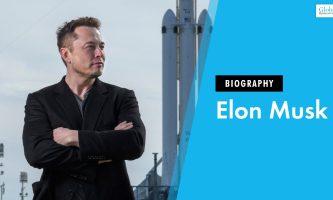
Elon Musk Biography, Business, Net Worth, Age And More
Name: Elon Reeve MuskAge: 50 yearsBusiness: Tesla, SolarCity, SpaceX, Neuralink, TwitterNet Worth: $277 billion It looks like Elon Musk's basket of businesses is never full. The founder of billion-dollar startups like SpaceX and Neuralink, Elon Musk, bagged yet another big name in his portfolio by buying Twitter for $44 billion. The business tycoon has been a disruptor in multiple industries. He is responsible for PayPal; he disrupted the electric car industry with Tesla; Musk even changed the Space technology with his startup SpaceX. He also acquired an immense amount of wealth, peaking at $340 billion in November 2021. Elon Musk has become and still reigns as the richest man in the world. But what are the business decisions that helped him reach the top? You can find that out in the following article. How Did Elon Musk Become Rich? Musk was a dropout from Stanford University. He started his business venture by co-founding x.xom; he moved on to Tesla and several other companies. Here is a brief business journey of Elon Musk that took him to the peak of his success. X.Com Musk Co-Founded X.com, an online financial service, in 1999. Users can pay online using the service provided by x.com. Later. X.com partnered with Confinity and was renamed PayPal in 2001. After PayPal became famous, Elon Musk used his 11.7% stake in PayPal to start his new business venture. Musk had 7,109,989 shares in PayPal. He is excited for PayPal to start new business ventures. SpaceX Fascinated with space, Musk started his space company, SpaceX. He started it as a nonprofit organization in 2002 and invested $100. After a few failures, Musk's spacecraft was a success. His success helped him land contracts with different organizations like ISS and NASA. Musk has a huge stake of 44% in SpaceX which has a net worth of over $100 billion. Tesla Motors One of the biggest business ventures that made Elon Musk the billionaire he is was his investment in Tesla. In 2004, Musk was financing the electric car company, Tesla. In 2008, Musk moved from being a board member of the company to being the CEO. In 2010, Tesla launched its IPO on NASDAQ, and the initial price for the shares was $17. However, as of March 2022, the Tesla share price reached a massive $800. With an aim to promote transportation using sustainable energy, Tesla made massive changes. They made electric cars for mass consumers. Tesla also made a sports electric car named Tesla Roadster. Musk does not have any salary from Tesla; he owns 20% of the Tesla stock. The Boring Company The main reason for the success of Elon Musk is that he invests in ideas. He came up with underground tunnels as a mode of transport in 2017 when stuck in traffic. After that, Elon musk founded the boring company. He plans to use the underground below roadways to make transportation easier and faster. The boring company will create tunnels giving vehicles extra paths to pass-through traffic. Elon Musk owns a 90% equity of the Boring company. The boring company intends to create underground pathways for vehicles while reducing the tunneling cost. Twitter In 2021, Elon Musk revealed that he owns a stake in Twitter, but the exact percentage was unknown. Earlier in 2022, he revealed that he owns a 9.2% stake in Twitter. All that was right until he shocked the world by announcing a total buyout of the Twitter company for the price of $44 billion. When asked, Musk replied that he wanted to endorse the right to speech and make Twitter better than it was before. Bitcoin Elon Musk is a big influencer when it comes to cryptocurrency investment. He owns a massive amount of 43,000 Bitcoin. Cryptocurrency investors religiously follow his Twitter for investment ideas. He also promoted dogecoins through his tweets. Frequently Asked Questions (FAQs) I think you got to know about all the businesses of Elon Musk from this article. If you have any further questions, you may relate to the following ones. 1. Who Are The Top Ten Richest Men In The World? The Business magazine Forbes releases a list of billionaires around the world. According to this list, we can judge who is the richest person in the world. Elon Musk currently sits at the top of that list, with some other notable richest persons following him. Here is a list of those persons –i. Elon Musk. ii. Jeff Bezos.iii. Gautam Adani.iv. Warren Buffett.v. Bill Gates.vi. Larry Page.vii. Sergey Brin.viii. Larry Ellison.ix. Steve Ballmerx. Mukesh Ambani 2. How Did Elon Musk Get Rich So Quickly? Musk was a brilliant student. But what is more interesting is his business acumen. He co-founded PayPal at the age of 27. Musk never stayed complacent with his success in PayPal. After exiting PayPal to start his own business venture and created giant companies like SpaceX, Tesla, SolarCity, and so much more. 3. Did Elon Musk Grow Up Rich? Elon Musk did not grow up rich. But he was from a family that supported him with a healthy upbringing. All rumors about Elon Musk growing up in a wealthy company are false. Musk grew up in a culturally rich and capable family. But all the wealth musk acquired was through his own hard work and business caliber. 4. Where Did Elon Musk Get His Money From Originally? The first-ever business venture of Elon Musk was his investment in Zip2 in 1995. Zip2 was an online local business directory. In 1999 it was sold to Compaq Computer Corp for $307 million. Musk earned $22 million from this sale. Later he invested in companies like PayPal, Tesla, and so on. Bottom Line Musk is a great investor and creator of innovative business ideas. His proliferation across multiple industries is the result of his adept business acumen. He has made so many good decisions with PayPal, Tesla, SpaceX, and other different businesses he is associated with. I hope that the article above helps you with the necessary information you are looking for about Elon musk. Also, If you have any further queries, You can ask us in the comment box. Read Also: What Is StockInvest? Is It Legit And Working In 2022?Adani Sets To Become The Global Wealth Giant Over smarting Bill Gates In 2022IPOE Stock – Present Price, Forecast, Statistics – Should You Invest In It In 2022?
Jun 16, 2022

How To Become An Entrepreneur? – Steps To Follow
If you want to become an entrepreneur, there is no direct road for you to follow. There are some people that come with the required skills and personality traits that are essential to start and run a new business. However, there are some people that need to cultivate their skills and personality. This article will be mainly about how to become an entrepreneur. In this article, you will mainly learn about the best ways to follow to become an entrepreneur. However, before that, you will need to understand what makes a successful entrepreneur. Hence, we will discuss who is an entrepreneur and what is the importance of an entrepreneur currently. Therefore, to learn more, read on through to the end of the article. Who Is An Entrepreneur? According to Indeed.com, “For most new projects, an entrepreneur creates a business plan that lays out the resources required for hiring, financing and the leadership of a new business. Capital funding can be hard to come by for new entrepreneurs and their projects, so they often start small and invest their own resources into the project.” An entrepreneur is a particular individual that creates and manages any business. The entrepreneur willingly takes calculated risks than what an average businessman takes. However, since the entrepreneur takes more risks, he reaps more rewards as a result when the risky project turns out successful. Even at the socio-economic level, economists understand that entrepreneurship is one of the most important resources that enable production in the economy. Entrepreneurs use resources like land, capital, and labor to give back to the economy, as the business offers goods and services. Read More: What Are The Different Types Of Entrepreneurship? – Take A Look The Importance Of An Entrepreneurial Mindset As you have decided to become an entrepreneur, it is crucial to develop an entrepreneurial mindset. The first thing you need to have is risk-taking ability. An entrepreneur does not fear risks and takes them whenever required. According to the University of San Diego, “The reason developing a mindset is so important is because, to really be an entrepreneur, to truly embody that creative drive and determination, you need to develop a fundamental nature in how you think of a problem or approach an issue.” Furthermore, an entrepreneur is a person that does not fear risks and knows that change is required with time. The following are some of the major characteristics of an entrepreneur that you will need to ensure: Passionate about the future and the work of your venture Flexible enough to accommodate changes Must have a clear vision for the future and must be able to intercept tactics Persistent with your efforts Always motivated with your work Curious enough to learn new ideas Willing to learn new things and develop a learning culture Always try to solve problems with new ideas. The Best Steps To Take Before You Become An Entrepreneur Regarding the characteristics of an entrepreneur, Indeed.com says, “Entrepreneurs make difficult decisions, often taking risks to achieve their goals. It's because they're willing to take these risks that entrepreneurs make a significant impact on their local economies.” The following are some of the major steps that you need to take as an entrepreneur: 1. Focus On Building A Particular Skillset One of the best things that an entrepreneur can have is the ability to stay learn more and stay curious about an idea. You have to become a lifetime learner and develop a mindset. Start researching the market needs, and focus on working on a skill. As you work on it, you can master the skill and put it to work. 2. Start Building Your Network Every successful entrepreneur knows how to build a network. They have full access to partners, mentors, employees, and investors. You can also connect with professional advisors and lawyers, and at times to needs, you can request help from your network. To do that, you will also need to maintain connections with all the individuals on your network. 3. Claim A Niche And Start With An Idea According to HubSpot.com, “Great ideas can come from anywhere, and unmet needs often make the best business ideas. Here, we’ll share tips for brainstorming. Once you have an idea, you can start your entrepreneurship journey.” Once you have researched the market, you will have a good idea of where the market needs solutions. This will help you to choose your niche and focus on solving the problem at hand. As you solve the problem and offer your product/ service, you can make a profit. 4. Do A Market Research This is a continuation of the previous idea. If you do not do market research, you will never know what is required of you and which service you must offer. Having a good idea of the market will also enable you to test your ideas at the right time in the right manner. 5. Start Building On Your Ideas After you have decided on what business to take forward, then you will need to outline your business structure based on that idea in front of you. You will need to plan for developing a product or service that is viable and will stay in the market for a certain amount of time. 6. Get Funding For Your Venture Once you have the product as well as the plan, it is time for you to secure the funding that you will need to start your business. You will have to show your plan and convince investors to fund your business. To do that, you will need to talk with a financial advisor to structure your business’ finances rightly. Read More: Business Entrepreneurship – What Should You Know Before You Start A Business In 2023? Summing Up Hope this article was helpful for you in getting an idea of how to become an entrepreneur. You can see from the article that becoming an entrepreneur requires an entrepreneurial mentality. Furthermore, you will need to become a problem solver and be flexible enough to adapt to new changes. If you want to become an entrepreneur, follow the steps above, work on them, and start your business venture and grow. Do you have any more recommendations? Share your views in the comments section below. Read Also: What Is A Hold Harmless Agreement? – Let’s Take A Look What Is Indemnity Insurance ? And Its Different Types – Let’s Discover What Is Commercial Insurance? And Its Different Types – Let’s Discuss
Aug 11, 2023