




Celebrate Mother’s Day with a Special Brunch at HMD Bar & Grill, Chicago

Mother’s Day is the perfect occasion to show appreciation for the incredible women in our lives. Therefore, what better way to celebrate Mother’s Day than with a special brunch at HMD Bar & Grill in Chicago? Renowned for its exceptional dining experience and warm, inviting atmosphere, HMD Bar & Grill is the ideal destination for a memorable Mother’s Day celebration.
When looking for the best places to go for Mothers Day in Chicago, HMD Bar & Grill should be at the top of your list. And when you visit the place for the first time, you will know what we are going on about. A perfectly quaint spot where you could go and have a meal in peace and quiet.
Let us dive right in and see what the HMD Bar & Grill, Chicago, offers.
A Warm and Inviting Atmosphere
One of the best features of the bar is the atmosphere. Regulars define this place as having a sense of quietness and serenity. The warm and inviting space brings together people of all kinds. Therefore making it the perfect place to celebrate Mother’s Day.
The chic yet comfortable decor, combined with soft lighting and elegant furnishings, sets the tone for a special celebration. Whether you are planning a small family gathering or a larger event, the versatile seating arrangements can accommodate your needs, ensuring that everyone feels at home.
The attentive and friendly staff add to the welcoming ambiance, making sure that every guest has a wonderful experience.
Delectable Brunch Menu
HMD Bar & Grill offers a delectable brunch menu that is sure to impress even the most discerning palates. The culinary team takes pride in using fresh, high-quality ingredients to create dishes that are both delicious and beautifully presented.
Guests can enjoy a variety of brunch classics, such as fluffy pancakes, eggs Benedict, and avocado toast, as well as unique creations that add a special touch to the menu.
For those with a sweet tooth, the dessert selection includes mouthwatering options like crème brûlée, chocolate mousse, and seasonal fruit tarts. The extensive menu ensures that there is something for everyone to enjoy.
Specialty Cocktails and Refreshing Beverages
A Mother’s Day brunch at HMD Bar & Grill would not be complete without a selection of specialty cocktails and refreshing beverages.
The bar offers a whole corpus of fun drinks that are just perfect for the occasion. It is famous for its mimosas, bellinis, and other signature drinks crafted from exotic fruits and herbs. If your mum hates drinking, she can have the non-alcoholic versions as well. Therefore, they have something for everyone.
The expertly mixed drinks and thoughtfully curated beverage menu add an extra layer of enjoyment to the brunch, allowing guests to relax and celebrate in style.
Personalized Touches and Customization
What sets HMD Bar & Grill apart as a top Mother’s Day brunch destination is the ability to personalize and customize your dining experience.
The staff is amazingly dedicated to their job and will try their best to make the celebration as joyful as possible. The staff is open to specialized requests and decoration preferences. Therefore, the HMD Bar & Grill will help you to create a curated experience. An experience riddled with a sense of personalization. Something that your mother needs.
This commitment to customization ensures that your Mother’s Day brunch is truly unique and memorable.
Convenient Location and Accessibility
HMD Bar & Grill is located in the Heart Of Chicago and can be easily accessed from anywhere in the city. Therefore, you do not have to worry about the best way to reach the Bar & Grill.
The central location means that you can easily combine your brunch with other activities, such as a leisurely stroll through a nearby park or a visit to local attractions. Ample parking and public transportation options make it easy for everyone to join the celebration without any hassle.
This convenience, coupled with the exceptional dining experience, makes HMD Bar & Grill the perfect choice for a Mother’s Day brunch.
Bonus: Some More Places To Celebrate Mother’s Day In Chicago

HMD Bar and Grill is simply amazing, to say the least. It has some of the best atmospheres for a gastronomic experience out there. The warm and inviting ambiance, delectable brunch menu, specialty cocktails, and convenient location add to the overall appeal of the place.
However, HMD Bar & Grill is not the only place in town. Chicago is riddled with phenomenal eateries that quill boggle your mind and leave you craving for more.
Here are some of those ‘other’ eateries that you could consider for having a Mother’s Day Celebration.
Rose Mary
The very name Rose Mary has a sense of motherly warmth to it. Thankfully, the place also exudes this charm. This humble eatery is run by a sweet man named Joe Flamm, who is known for his ethnic Croatian and Italian dishes. Take your mother to have dishes like burek, Benedict Pampanella, and other such dishes.
Cherry Circle Room
Cherry Circle Room has a sense of regality that most other restaurants on this list lack. The restaurant is known for its high standards and excellent dishes by executive chef Mari Katsumura. The best part of the whole deal is the bottomless mimosas for just $35. Therefore, you and your mum can have a good time.
Miru
Get to St. Regis Chicago for an opulent and satiating gastronomic experience. The Miru is located on the 11th floor of this building and is known for its amazing Japanese food. The restaurant is known for its luxurious touch and authentic culinary delights.
However, this is one of the most expensive restaurants on the list. Therefore, you might want to keep an eye on the bill. Then again, your mother is priceless, so you should not be worrying about the bill.
Conclusion
Celebrate Mother’s Day in style with a special brunch at HMD Bar & Grill in Chicago. The combination of a warm and inviting atmosphere, a delectable brunch menu, specialty cocktails, personalized touches, and a convenient location makes it an ideal venue for this special occasion.
Inviting people to host their events at HMD Bar & Grill ensures a memorable and enjoyable experience for all. If you are looking for the best places to go for Mother’s Day in Chicago, HMD Bar & Grill should be your top choice for creating lasting memories and celebrating the amazing mothers in your life.
Finally, If HMD Bar & Grill is too restrictive, then we have some new restaurants that you can check out in order to celebrate Mother’s Day. Take care, and have a great Mother’s Day Brunch.
Read More:

Recent
Dinmukhamet Idrisov and a Gold-Mine Dispute From Kazakhstan’s Oligarchic Past
Oct 16, 2026

Memory Chips Are Becoming More Important in the AI Era
Aug 06, 2026

Why Enterprise Web Applications Still Choose Angular for Long-Term Growth
Aug 04, 2026

Due Diligence Decoded: Why Careful Evaluation Still Wins in Business
Jul 11, 2026

Related Articles

Upcoming Business Challenges In USA For Small Businesses To Note (2024 And Beyond)
It is important for businesses to anticipate the future correctly so as to deal with it. This holds especially true for small businesses. However, with major innovations and changes in the last few years, there are certain small business challenges in USA. There has been momentous shifts in the workplace. Despite various changes and challenges, businesses need to adapt accordingly to stay relevant in the marketplace. Let's understand about Upcoming Business Challenges In USA. In this article, you will learn about some major aspects that pose significant challenges for small businesses in the USA soon. However, before informing about upcoming challenges, this article discusses business challenges in general. Furthermore, you will learn about how business challenges affect small businesses. Finally, the article consists of things small businesses can do to cope with upcoming challenges. Business Challenges In USA: A Brief Overview In 2023, businesses had to come across many challenges. Some of the major challenges include the rise in interest rates, situations of a potential recession, the rise in inflation, and other factors. Furthermore, many small businesses, as well as big businesses, have had to lay off workers due to changing times. In addition to that, the introduction of AI platforms also threatened many job roles and businesses. Despite various changes, many businesses are optimistic about 2024 and the upcoming years. Although businesses had to deal with high inflation and long-lasting economic downturns, they are still looking forward to better times in 2024 and beyond. Some of the major findings and trends among small business owners are quite interesting. As compared to five years ago, most business owners think it is harder to own a small business now. According to the YouGov survey, “Out of the surveyed small business owners, nearly two-thirds (65%) stated it’s somewhat harder or much harder to be a small business owner in 2023. One in 10 (10%) say that it is easier to own a small business compared to a half-decade before, while 22% say there has been no change.” Roughly every two out of five businesses reported revenue growth in 2023. The rest did not report any revenue growth. On the other hand, there are many businesses that think things will look better by the end of 2024. Almost half of small business owners expect that their profits will grow in the coming years. However, one in every five businesses is pessimistic and does not expect business growth. How Do Business Challenges In USA Affect Small Businesses? The following are some of the major challenges that businesses faced in the last few years: Cashflow problems. Working for free Problems in finding a lender Problems in paying employees Dealing with layoffs, and many more. Furthermore, almost one in every ten business owners think that there will be layoffs in 2024. This number is a huge increase from last year when one in every twenty business owners talked about layoffs. Some of the other areas where business owners are prioritizing include: remodeling or expansion of the business higher investments in new technologies more investment in marketing and digital media expansion of the number of employees more focus on the welfare of employees integration of AI tools or capabilities in business operations One of the top concerns for most small businesses is inflation. According to the US Chamber, “A majority (54%) of small business owners cite inflation as a top concern. In fact, inflation is the top concern for small businesses regardless of region, number of employees, or sector. This is also the sixth consecutive quarter that inflation has topped the list of challenges small businesses see, and consistent with findings in Q1 2023 (54%). No other concern comes close.” Another major aspect that affected businesses in the last few years is rising interest rates. Higher interest rates have led small businesses to seek more finances. More than 75% of businesses have complained that rising interest rates have limited their ability to finance or raise capital. Apart from that, the spike in interest rates also affected their growth. Furthermore, many businesses said that they had to delay their plans for growth due to this. What Are The Upcoming Business Challenges In USA? With economic concerns, rising interest rates, and changes in technology, companies, especially small businesses, are facing challenges. The following are some of the greatest challenges that every small business owner should prepare for in 2024 (as well as in coming years): 1. High Inflation And Economic Slowdown You must have already come across several headlines about higher inflation. Furthermore, that trend will likely continue in 2024, too. According to Forbes.com, “Even though inflation has come down, consumers are still feeling the pinch of higher prices. This is because the prices are up significantly compared to pre-pandemic. If we compare prices in December 2023 to January 2020, overall prices are up 19%, food prices are up 25%, energy prices are up 26%, and the prices of shelter services are up by 21%.” However, recent reports showed that the rate of inflation is slowly getting back to normal. Despite that, prices will still be high. Because of this, many economies will shrink or come under stagnation. Hence, businesses need to prepare for the inflationary reality this year. 2. Disruptions In Supply Chain Supply chain security has become a key issue due to the rise of conflicts in other parts of the world. Apart from that, the backlogs of COVID-19 also added to the issue. Later on, the Ukraine-Russia conflict made things worse. Additionally, due to the Great Resignation, there have been labor shortages. Hence, it has become difficult to access parts and products. Also, the prices of items went up because of this. Furthermore, in the Eurozone, there have been many losses in 2023. 3. Higher Needs Of Customers With changing technology, customers also started demanding better experiences from companies in the metaverse and real world. Furthermore, nowadays, customers are also looking for in-store experiences, even in brick-and-mortar stores. Hence, if you own physical shops, you will need to consider adding more immersive experiences for customers. Paychex.com adds here - “To ensure success, small business owners should have a mobile-friendly, easy-to-navigate website with e-commerce options that allow consumers to quickly find what they want and purchase products or services from their mobile devices. The same attention to detail should be applied to traditional shopping methods.” Hence, companies need to ask themselves and find new ways to add more value to customers. Therefore, making experiences better for customers will help in acquiring and retaining customers. This way, companies will be able to engage customers both online and offline. 4. Faster Transformations In The Digital World The rise of artificial intelligence in the digital world has started to transform all aspects of businesses. This trend will obviously continue in the next few years because, with time, AI will only develop. Apart from that, there has been the introduction of other technologies as well. Some of them include blockchain, 5G, the cloud, and Internet of Things (IoT). These technologies are helping in the speeding up of AI, while developing each other as well. In addition to that, rapidly developing technological processes have also led to the creation of a fast-changing world. Hence, a time will come soon when all businesses need to act as tech businesses and need to invest heavily in technology. 5. Employees Facing Skill Gaps Another big challenge that companies will face is talent shock. Even now, companies are facing massive skill gaps for vital future skills. Hence, small businesses are left with employees with outdated skills. Hence, they need to invest heavily in upskilling and training their employees sometimes. According to Paychex.com, “New performance management techniques are transforming the way businesses prioritize their retention efforts. For instance, investing in learning management can help employees further develop key skill areas and better immerse themselves in the company culture. ” Hence, it is extremely important for companies to upskill, reskill, and train employees to deal with AI systems and new technology. 6. Security Issues In Data And Devices As the use of the internet increases with time, security issues are keeping up as well. With rising digitization, businesses are accumulating more data. These data are highly attractive to cybercriminals. This is evident from the number of cyberattacks individuals and businesses face sometimes. Furthermore, phishing scams and ransomware attacks are also on the rise. Hence, it has become hard for businesses to keep up. Mobile and IoT devices are facing cybersecurity threats as well. Furthermore, with the rise of quantum computing, existing security systems are also becoming obsolete. Hence, there is a high need for the inclusion of AI and proactive measures from businesses. 7. Slowing Down Of Sustainability Practices With rising environmental and sustainability concerns, consumers are also looking for companies that are transparent with their sustainability practices. Companies that produce more environment-friendly products and services seem to have a better future. Consumers want their companies to respond by being transparent about their business practices. To do this, companies also need to continuously perform audits of their supply chains. Also, companies must switch to renewable energy, move to sustainable packaging, and allow employees to work remotely. How Do You Deal With Upcoming Business Challenges In USA? The following are some of the major steps small businesses can take to deal with challenges in 2024: 1. To deal with inflation, companies need to ensure that there is end-to-end visibility of business functions, operations, units, and cost categories. This will lead to better accountability and reduced spending. 2. If companies want to deal with supply chain disruptions and security issues, they must resist the urge to order more than what is required. Companies do that to compensate for their backlogs. However, over-ordering can worsen the situation for companies. In such cases, companies need to focus on long-term recovery. Furthermore, restructuring the needs will help prevent shortages in the future. 3. To deal with customer experience and demand, online retailers can add extended reality (EX) features to their websites. This way, customers can try out clothing and makeup without even leaving their homes. 4. Fast technological developments require companies to redesign their processes. Furthermore, companies also need to ensure that they have skilled employees in their companies. This is because these employees need to work alongside intelligent AI systems. 5. To deal with talent shock, companies must start upskilling, reskilling, and training employees. Furthermore, companies must also offer a good working environment for employees that is also appropriate for the new world of work. 6. To ensure better cybersecurity systems, companies must take proactive measures for the same. To do the same, they must evaluate their data backup and recovery processes. Other measures include penetration testing, vulnerability scanning, and more. 7. Companies also need to demonstrate their sustainable practices to consumers. This will help satisfy consumers' needs and ensure they are indirectly contributing to sustainable practices. Small Businesses And Upcoming Business Challenges In USA No matter what the obstacle is, it is important for small businesses to focus on creativity and find new ways to solve the problem at hand. This will ensure that the company is on the verge of growth even in tumultuous times. Forbes.com adds - “A key finding from one of our recent small business owner surveys found that half of the companies surveyed agreed that cash flow management tool consolidation positively impacts profitability, and 71% said it positively impacts efficiency. Small business owners are now prioritizing their digital financial toolkits to improve their businesses.” Hence, whatever the challenge is, it is essential for small businesses to focus more on cash flow management. This will ensure that the business is running effectively. Wrapping Up Hope this article was helpful for you in forming about the upcoming business challenges in USA. The problems will be of paramount importance in 2024 and the next few years. However, as a small business owner, you will also need to update yourself with current problems and prepare for change. Do you have further solutions to add? Consider sharing your ideas and opinions in the comments section below. For More Business Related Article: ERTC Qualification Step-By-Step Guide What Is Safe Harbor 401K? Benefits And Types Sabbatical Leave: What Is It, And How Does It Work?
Feb 20, 2024
Stakeholder Theory: What Is It, Working, Benefits, Challenges, And More
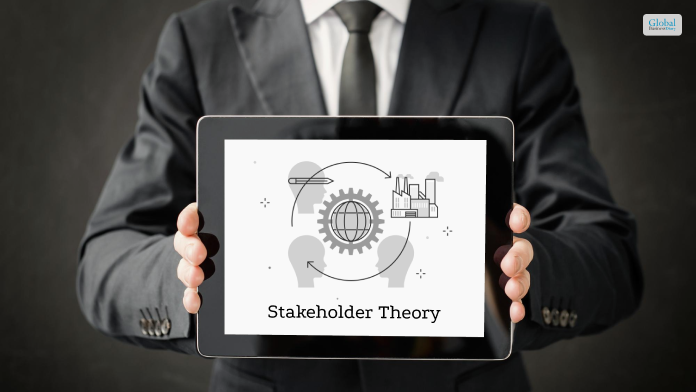
Stakeholder theory is an ethical concept that stakeholders of a business need to follow to address outcomes of business, profits, trends, and more. The concept also includes the collective impact of the factors above on all stakeholders of the business. The stakeholders of a business include its shareholders, employees, customers, suppliers, financers, government, as well as other individuals and groups. In this article, you will learn about the general details of stakeholder theory. Apart from that, you will also learn about how this theory works for businesses and their stakeholders. Furthermore, you will also learn about the major benefits and challenges of the stakeholder theory. We will describe each of the benefits and challenges for your better understanding. Hence, to learn more, read on through to the end of the article. What Is Stakeholder Theory? According to Investopedia, “Stakeholder theory describes the composition of organizations as a collection of various individual groups with different interests. These interests, taken together, represent the will of the organization. As much as possible, business decisions should consider the interests of this collective group and advance overall cooperation.” The stakeholder theory shows the importance of relationships between various stakeholders of a business entity. It also shows how the management of a business must view and manage stakeholders. It describes how the business must treat its stakeholders to make the most economic and social impact to achieving the best results. The target is to maximize the profit of the business and make a strong overall impact. A business needs to consider the various differences in the priorities of stakeholders. This applies to stakeholders – both internal and external. Internal stakeholders include investors, employees, and owners. On the other hand, external stakeholders include the individuals and groups that are affected by the decisions of the company. These include creditors and suppliers. An Example Let’s take the help of an example to explain stakeholder theory. Consider a company where the management and shareholders are in a conflict. Here, the management might make a decision that might not necessarily enhance the value of a shareholder. This can create conflict with the interests of the shareholders. In this case, the organization can choose performance-based compensation. This helps the organization to tie management incentives to the value of the shareholder. This is one way of addressing stakeholder theory. However, there are various other issues that the company might face. In this case, performance-based compensation will help in boosting short-term performance. This will lead to a negative effect in the company’s long-term growth. How Does Stakeholder Theory Work? R. Edward Freeman came up with the stakeholder theory in the year 1984. As per the theory, a business firm must create value for all stakeholders of the organization. Only thinking about the shareholders will not help a business in its growth. According to Nerdwallet.com, “When the concept matured, more people understood people’s relationships beyond, within, and outside the entity. The stakeholder theory of the firm brings together the concepts of market and resource utilization and its socio-political impact of it. It defines how managers should understand and treat the stakeholders so that stakeholders’ interests come above all other interests.” Principles of Stakeholder Theory There are mainly six main principles of the stakeholder theory: Principle of Entry & Exit: Principle of Externalities Principle of Agency Principle of Governance Principle of Contract Cost Principle of Limited Immortality What Are The Major Benefits And Challenges Of Stakeholder Theory? This theory works since it considers all the interests of the (business, project, and/or organization). According to Indeed.com, “This theory understands that motivated and invested stakeholders may produce better results for the business and help the organization achieve more ambitious goals. Occasionally, you can apply the theory to ethical concepts, such as responsibility to society, nature, and the future, besides profit maximization and shareholder value creation.” The following are the major benefits and challenges of stakeholder theory: Benefits Here are the major benefits of stakeholder theory that will be advantageous for you: All the employees of your organization will benefit from it. As a result, you will see an increase in productivity, lower employee turnover, employee satisfaction, and improved mental health of employees. These factors will help the business in further talents for the company. You will have happier customers, which is essential for a business. If the business gets positive feedback from regular customers, they will become unpaid marketers for the products of the company. This helps in increasing the overall sales of the company. As the business’s cash flow grows, the finance providers of the company are assured of the company’s repaying capacity. Often, governments provide help to businesses that expand their operations to new areas of the country. Apart from that, it also helps the business to manage its cash flows in a better manner. Challenges Here are a few challenges of stakeholder theory that you need to be aware of: If a business follows stakeholder theory, it needs to care about all people who are affected by the business’s decisions. Often, a business puts less focus on the company’s shareholders. Since the shareholders have invested their money to maximize returns, the management has an obligation to keep the former’s interests as the main focus. It is hard (impossible) to fulfill the interests of everyone associated with the organization. Bottom Line Hope this article was helpful for you in getting a better understanding of stakeholder theory. This is an ethical concept where the business considers the interests of all its stakeholders. The business addresses the outcome, trends, profits, etc., associated with a business decision. The collective impact falls on the employees, shareholders, and all other stakeholders. The stakeholder theory works as per its six principles. R. Edward Freeman was the first person to coin the term stakeholder theory and conceptualize it in his 1983 article. Do you have more information to add regarding this ethical theory in business management? Share your thoughts and opinions with us in the comments section below. Continue Reading For More Business-Related Articles!! What Is a Franchise, And How Does It Work? – Examples, Benefits & More What Is An Angel Investor, And How Does Angel Investing Work? What Is A Venture Capitalist, And What Are Their Functions?
Nov 27, 2023

Resilience And Growth: The Story Of The Philippine BPO Industry
The Business Process Outsourcing (BPO) industry has made tremendous strides over the past two decades. From a small sector, it has grown into a global powerhouse, making significant contributions to the country's economy and employment. Call centers in the Philippines have been at the heart of this remarkable journey. The industry's success can be attributed to the country's talented workforce. Filipino professionals are highly skilled, proficient in English, and have a strong customer-centric approach. Their cultural compatibility with Western societies and their understanding of global business practices make them valuable assets to businesses worldwide. An Overview Of The Philippine Outsourcing Industry The Philipine outsourcing industry offers a broad range of services, from customer service and technical support to specialized areas such as finance and accounting, healthcare, and legal services. This breadth of services allows businesses to consolidate their operations, reduce costs, and maintain high service standards. The country's lower cost of living and competitive service rates make it a cost-effective outsourcing destination. This, coupled with the country's commitment to quality and technological advancement, ensures businesses get value for their money. Role Of Government Institutions The role of the government in promoting the outsourcing industry cannot be overstated. Through initiatives like tax incentives, the development of IT parks, and protective laws for BPO employees, the government has made contact center outsourcing to the Philippines an attractive proposition for businesses. Its country’s resilience in the face of global market shifts and its adaptability to changing business needs make it a reliable partner for businesses. As the sector continues to evolve, it strengthens the country's status as a top-tier outsourcing hub. The outsourcing industry is a testament to the nation's resilience and dedication to excellence. It showcases the immense potential of the Filipino workforce and the country's dedication to fostering growth and innovation. As the sector continues to grow and adapt to changing market dynamics, it only further cements the Philippines' position as a leading outsourcing destination. The Success Story Of Philippine’s BPO As the world becomes more interconnected, the role of outsourcing in global business operations is becoming even more significant. In this changing landscape, the BPO industry has not just survived; it has thrived. The sector's success serves as a testament to the country's ability to adapt and grow in the face of new challenges and opportunities. Robust IT Infrastructure One critical area of growth lies in the digital transformation of businesses. The Asian nation, with its robust IT infrastructure and tech-savvy workforce, is well-positioned to support businesses in their digital journey. The industry is increasingly moving beyond traditional call center services to offering more advanced digital services, including AI-powered customer support, data analytics, and cybersecurity. This shift towards higher-value services is a promising development that can potentially attract more investments into the country. Major Socio-Economic Growth Driver The sector is also playing a pivotal role in driving socio-economic growth within the country. The jobs created by the industry are not only helping to reduce unemployment but also contributing to the development of other sectors such as real estate, retail, and hospitality. A Resilient Industry The resilience and growth of the industry have been nothing short of remarkable. As it continues to adapt to the changing needs of the global market, the industry is poised to achieve even greater heights. The story of the outsourcing industry in the Philippines is a compelling narrative of a nation's commitment to excellence, innovation, and growth. As the sector continues to evolve, it is set to redefine the landscape of global outsourcing in the years to come. Key Factors Contributing To The Growth Of Philippines’ BPO Industries There are various reasons why the BPO sector of the Philippines is witnessing major growth. Here are some of the most common ones: When the industry was in its initial years, Bill Gates, the CEO of Microsoft, donated Microsoft Apps Licenses for free to the PCPS programs. This ensured that the government could avoid enormous capital expenditures. Secondly, the Philippine BPO investors are provided a sizeable quantity of incentives. This includes tax holidays, simplified procedures of import, tax exemptions, etc. The workers might are not very fluent in the Western English accent in comparison to their Indian counterparts. However, the close affinity to the culture of the West has set them apart from other workforce in the industries. The Philippines government remains a quick player when it comes to passing key legislative transformations. It further favors the global industries that are willing to outsource their business to the country. Finally, the country focuses more on growing its vicinity in both non-voice and voice sectors. For example, global in-house centers, animation, healthcare information management, etc. Future Prospects For The Industry The BPO companies in the Philippines continue to face new opportunities as well as challenges. The adaptability, along with the resilience of the industry, is depicted through its steady development. However, there are various concerns, like global shifts and unpredicted threats to the sector. The goal is to offer a robust foundation that leads to continued expansion. Exposure to the latest technologies and shifting business trends have paved the way for specialized services. Moreover, it promises a dynamic and vibrant future for this industry. In the constantly changing business landscape, the nation is well-positioned to capitalize on the chances it gets hold of. The commitment to harnessing emerging technologies has made the nation’s BPO sector all set to provide more advanced solutions. The steady focus of the BPO brands on delivering cost-effective yet high-quality solutions ensures that the nation continues to be a focal business point. Consistent support from the government creates a conducive business atmosphere which ultimately promotes foreign investment. What’s better than getting an underscore of the country’s readiness to other outsourcing industries? Wrapping It Up This was a brief introduction to the BPO sectors of the Philippines and how the nation has emerged in times of crisis. With its state-of-the-art technology and on-time delivery of client needs, the industry has surely set a successful footprint. Read More: StashFin Personal Loan Review – Interest Rates, Loan Amount, Eligibility, And More SmartCoin: Information, Eligibility Criteria, Interest Rates, Review & More LoanTap: Information, Eligibility Criteria, Interest Rates, Review & More
Jun 13, 2023

What Is Consignment? – Importance, Working, Examples, And More
Consignment is a business model which has become popular in recent years. In a consignment, there are two parties: the consignor and the consignee. Here, the consignee sells goods on behalf of the consignor. This way, they offer a unique approach to retail with the help of which there are huge benefits for individuals and businesses. In this article, you will learn about the consignment business model along with an example of such a business. Apart from that, you will also have a brief idea of how this business model works in general. Finally, you will also learn some of the major pros and cons of a consignment business so that you have a better idea of what to expect. Hence, to learn more, read on through to the end of the article. What Is Consignment? According to Investopedia, “Consignment is an arrangement in which goods are left in the possession of an authorized third party to sell. Goods sold in this way are said to be "consigned" to a third party for sale. Items sold on consignment are typically sold by consignment shops, which receive a percentage of the revenue from the sale (sometimes a very large percentage) in the form of commission.” You can make a particular consignment deal on a variety of products. The products might include artwork, accessories, clothing, books, etc. On the other hand, some types of retail sales also fall under consignment. In this case, producers or manufacturers have to rely on retail stores to sell their products to the target customers. Nevertheless, in general cases, thrift stores and secondhand stores practice consignment more often. However, big retailers and supermarkets do not come under the consignment business model. This is because such retailers and markets purchase goods and products through wholesale and sell those items at the markup price. In a consignment, the party that sells the goods receives a portion of the profits, either as a commission or a flat fee. The consignor, on the other hand, focuses more on the marketing aspects of the business. What Is The Example Of A Consignment Business? In a consignment model, the consignor of the goods provides goods to a consignee. The latter is responsible for handling storage, inventory management, as well as other functions related to the sales of the products. Furthermore, in return for those functions, the consignee receives a percentage of the sales or a fee at a flat rate. According to an article on Shopify.com, “Consignment shops accept various products, with item demand and quality influencing how desirable an item is to consignees. Product supply and seasonality also play a role, as many consignment stores have limited storage capacity and prefer items that can sell quickly. A store specializing in a niche with fluctuating consumer demand may only accept certain items at specific times.” One of the major examples of a consignment business is auction houses. Other examples include companies dealing with the transfer of goods and import companies. Thrift shops and secondhand stores also fall under the consignment business model. However, in recent times, many retail businesses are also using this business model in addition to their traditional business model. A popular example of this kind of business is Zara. Apart from its retail stores and online stores, it also has a consignment business through which it sells vintage or secondhand items. How Does A Consignment Work? An article on Indeed.com states – “Consignment sales are popular in the retail industry, especially for niche products. Many consignment stores also sell second-hand goods on behalf of individuals. For example, a consignment store might sell previously owned prom dresses by offering to pay a 20% revenue fee to anyone who wants to sell a dress through their store.” In a consignment arrangement, the consignor asks the consignee about their ability to sell within a certain time. Then, both parties agree on how much the consignor can pay to the consignee on the sale of each unit. In this case, most agreements end up with 40/60, 60/40, or 50/50 splits of profit. After the agreement of keeping profits, the consignor offers a deadline within which the consignee needs to return the unsold goods. Once the consignee returns unsold goods within this date, they will not have to pay for those goods. Hence, the consignor delivers the agreed-upon goods to the consignee. The consignee pays the consignor after the sale of the goods and after updating the inventory and balance sheet. What Are The Pros And Cons Of Consignment? The following are the major pros and cons of this business model that you must know: Pros Here are the major pros of consignment that you will benefit from: It is a great option for those businesses who do not have a shop (or any brick-and-mortar presence). Also, these works great for cyberspace. Many online companies (like eBay) work as consignment shops. They offer a marketplace to people by taking a percentage of the profits. A consignment removes the need for an individual or business to create a website, attract customers, and set up payment processes. Sellers who do not have the time to advertise their products can choose consignment. In most cases, the price related to consignment is much less as compared to creating a sales department. Here, you will not have to put the responsibility in someone else’s hands. Cons Here are a few cons of consignment that you need to be aware of: Often, these shops and services charge a high level of commission or want a big portion of the profits. Hence, it can reduce the profits for the producer of the product. Producers also do not have control over how the products are sold and marketed by the consignee. Here, these shops generally takes control of marketing and presentation. Wrapping Up Hope this article was helpful for you in learning more about how consignment works for business. As a consignor, you will have to leave your goods to a third-party seller (consignee) to sell the goods. However, before you choose a service for doing business, consider doing deep research. Consider sharing your views with us in the comments section below. Need More Business Related Articles Click Below!! Equity Theory: A Balancing Act for Modern Workplaces Supply Chain Risk Management: Effective Strategies To Reduce It What Is A Distribution Channel? Essential Things To Know About It
Dec 20, 2023