





Freshworks – Best Features, Pricing, Pros, And Cons: Let’s Discuss

Freshworks offers you a CRM that helps to streamline your sales and customer service management. The best part is that you will not need to break the bank to do so. The CRM system comes with a variety of useful features as well as other software systems from the brand, which can be integrated easily with the system. Furthermore, it is one of the such CRM options that come with a variety of customization options as well.
In this article, you will learn about the major products of Freshworks, along with a brief overview of Freshworks’ services. Then we will provide you with the pricing of the Freshworks CRM. Next, we will discuss the major features of the CRM system from which you can benefit.
Finally, you will learn why the Freshworks CRM is a great option for your business, followed by some pros and cons of the software system. Hence, to learn more about this software system, read on through to the end of the article.
Freshworks Products – A Brief Overview
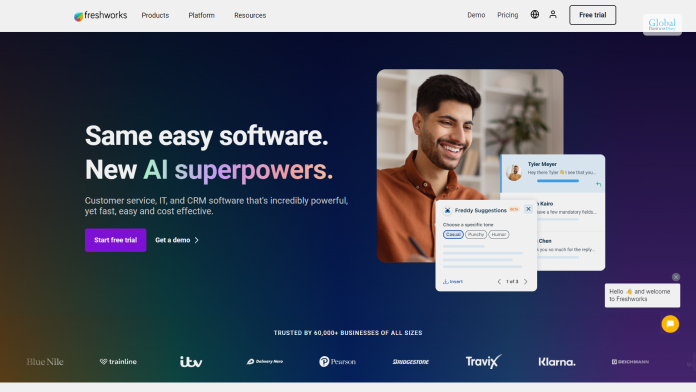
Freshworks is a brand that comes with three different categories of products – Customer Service Products, IT Service Products, and CRM Products. The major CRM software from Freshworks is Freshsales.
According to Forbes.com,
“Freshsales is an all-in-one solution providing unified sales, marketing, chat and telephone capabilities. The Freshsales CRM works on a browser or mobile app, making it easy to reference or add to your contacts wherever you are. It’s also a fully customizable app, so you can change your dashboards to suit how you view your contacts or data.”
Customer Service Products include Freshchat, Freshdesk Support Desk, Freshdesk Omnichannel, Freshdesk Contact Center, and Freshdesk Customer Success.
IT Services Products include Freshservice for IT and service management, and Freshservice for Business Teams, for better-streamlining business processes.
CRM Services include Freshsales and Freshsales Suite for the management of sales services and Freshmarketer for marketing and lead management. All the customer services products and the IT services products are included with the CRM services.
Freshworks – What Is The Pricing?
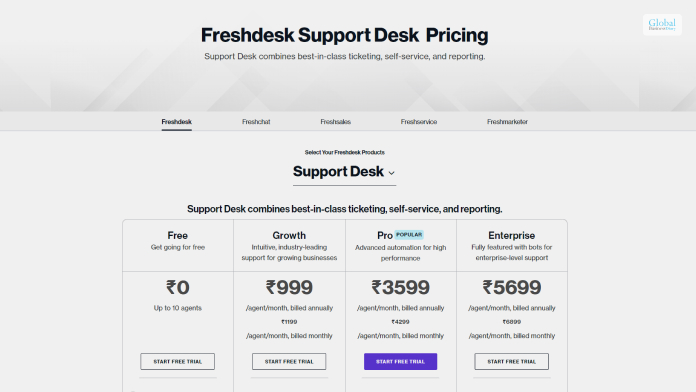
One of the best things about the Freshworks CRM (Freshsales) is that there are three different plans based on the type of user that needs to work on the CRM. Here are the plans and their respective pricing:
| Plans | Pricing |
|---|---|
| Free Plan | No payment (for up to three users only) |
| Growth | $15 per user per month (annual billing) |
| Pro | $39 per user per month (annual billing) |
Furthermore, there is an ‘Enterprise’ plan that is designed for larger businesses, having complex sales processes and lead management needs. This plan is for businesses that deal with higher volumes of sales. The features, customization options, control, and governance are many. There are other controls as well, which are extremely helpful for businesses. Moreover, you can also include many add-ons with Enterprise as well.
Freshworks CRM – What Are The Major Features Of Freshsales?
According to the official website,
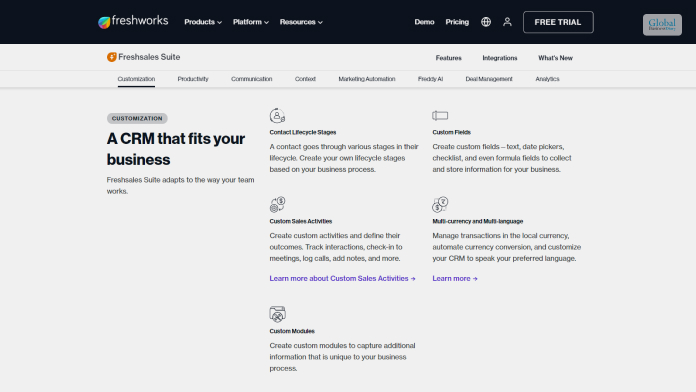
“Freshsales leverages customer data in ways that help you personalize engagement, shorten the sales cycle, and focus on the leads most likely to sign on the dotted line. All automated, and powered by brilliant AI-driven insights.”
Once you do Freshworks login into Freshsales, you will be greeted with an extremely useful and customizable dashboard. However, one of the best features about it is the fact that it is easy to use and simple at the same time. Here are the major features of Freshsales that you need to know about:
- There are an ample number of customization features that helps the Freshsales CRM fit your business in the right manner.
- The automation system can help in enhancing the productivity of the organization.
- With its multichannel communication systems, Freshsales can help better manage your customer relationships.
- With various sections that give you the view of customers, you can bring all the internal teams of your business along a single and shared view of the data associated with customers.
- With automated workflows, end-to-end personalization, behavioral segmentation, and more, you will be able to automate your marketing processes.
- The introduction of AI also makes things easier for you by providing you with helpful reports and insights.
Why Can Freshworks Be A Great Addition To Your Business?
Being one of the best lead management software options, Freshsales is a great option for growing your business.
Forbes.com, in its review of Freshsales, rightly puts it,
“Freshsales is an easy-to-use CRM tool that’s priced low enough for small startups that need to budget wisely. The free plan is a great entry-level tool and as your business grows, you can upgrade to one of the paid plans for more usability.”
Apart from that, if you want to do more collaboration, you can also integrate Freshsales with all the other software systems present in Freshworks.
What Are The Pros And Cons Of Freshworks CRM Freshsales?
The following are some of the most essential pros and cons about Freshsales that you need to know before you make a purchase:
Pros Of Freshsales
Here are the major pros of Freshsales:
- There is a free plan which you can use perpetually.
- The paid plans of Freshsales are affordable as well.
- You will get to use the chat, email, and phone features on all the plans.
- All the paid plans contain an AI-powered lead-scoring feature.
- There are many automation options available with Freshsales as well.
- There are customization options in the dashboards and reports as well.
Cons Of Freshsales
The following are the Freshsales cons that you must consider before you make a purchase:
- Customer support is lacking and needs to be upgraded.
- In some cases, Freshsales customer support only works on weekdays.
- The free plan does not contain any reports.
Final Thoughts
Hope this article was helpful for you in getting a better idea of Freshsales CRM, which is one of the major software systems produced by Freshworks. The best thing about this software system is the fact that many features are available for free. However, if you are looking for advanced features, you must consider subscribing to the paid plans. What do you think about Freshsales? Share your reviews about the software in the comments section below.
Read More:
Tags:

Recent
Dinmukhamet Idrisov and a Gold-Mine Dispute From Kazakhstan’s Oligarchic Past
Oct 16, 2026

Memory Chips Are Becoming More Important in the AI Era
Aug 06, 2026

Why Enterprise Web Applications Still Choose Angular for Long-Term Growth
Aug 04, 2026

Due Diligence Decoded: Why Careful Evaluation Still Wins in Business
Jul 11, 2026

Related Articles

How Does The Procurement Process Work? Essential Things To Know About It
The procurement process has been an essential part of the business since its existence. The process of buying the products and services for running the business smoothly forms an essential part of the organization. You need to get the supplies at the lowest cost procurement while maintaining the bottom line in the business. The procurement team works in coordination with the other departments of the organization. To get the necessary pieces of equipment essential for day-to-day work. If you want to grow your business smoothly, you cannot ignore the importance of the procurement process. It forms an integral part of the business that can help your organization to grow. Seek the help of a strategy consultant if you face any difficulty in the process. What Is A Procurement Process? The procurement process refers to the series of steps an organization follows to acquire goods, services, resources from external sources. It involves everything from identifying the need for a product or service to the final payment. You need to be well aware of your organization's needs. How Does The Procurement Process Work? There are several ways the procurement process works in an organization. You need to be well aware of it while meeting your organizational goals with ease. Some of the key processes which you can employ are as follows:- 1. Identifying The Needs With Procurement Process Departments or individuals within an organization identify the goods or services required. This might involve assessing inventory levels, forecasting future needs, or responding to specific project requirements. Here the seller's concessions also form an important part. It can reduce your cost significantly. 2. Specification Development Clear specifications or requirements and draft the details of quality, quantity, timelines, and any other specific criteria. It will help you to keep accurate records of the products that you are purchasing from the market. Furthermore, it will guide you in times of crisis if you face any legal complications. 3. Supplier Identification Potential suppliers or vendors you need to identify through databases, market research, or by issuing requests for information (RFI). It is the third most important step in the procurement process that you cannot ignore from your end. Once you follow this step, things are going to be easier for you. 4. Request For Proposal Or Quotation A formal document is sent to potential suppliers outlining the requirements and soliciting their proposals or quotes. This document includes information about the organization, its specific needs, evaluation criteria, timelines, and terms and conditions. It is one of the vital steps in the procurement process that you cannot ignore from your end. Follow the correct process that can make things easier for you. 5. Proposal Evaluation Received proposals reviewed and evaluated based on various criteria such as cost, quality, delivery time, supplier reputation, and compliance. You need to be well aware of this step at the time of proposal evaluation of the procurement process. Even a single small aspect is not left out in this process. Try to know the complete process to have a better insight into it. Consider the capital expenditure in this regard seriously. 6. Negotiation With Procurement Process Discussions take place with selected suppliers to finalize terms, prices, delivery schedules, and other conditions. This stage aims to reach a mutually beneficial agreement. The process of negotiation in the procurement process aims to offer a win-win solution to both parties. Working with experienced procurement specialists, such as ProcureAbility, can help streamline negotiations and ensure the best possible terms for your organization. 7. Contract Creation With Procurement Process A formal contract is drafted detailing the agreed-upon terms, responsibilities, timelines, and any other pertinent information. Both parties review and sign the contract. The agreement signifies the fact that both parties agree on the terms and conditions of the procurement process. Once you follow the correct method, things are going to be easier for you in the long run. 8. Purchase Order After the contract is signed, a purchase order is issued to the chosen supplier. The PO specifies the details of the purchase, including quantities, prices, delivery dates, and any other relevant terms. The PO is proof that both parties agree with the terms of the contract and that they can proceed with the procurement process. You need to know the complete process to make the process feasible for your business. 9. Goods & Service Receipts Upon delivery, the organization receives the goods or services and checks them against the agreed specifications. Any discrepancies or issues are addressed with the supplier. Once you get the receipts of the goods and services, it will become easier for you to complete the process of procurement. Types Of Procurement Process There are several types of procurement processes that you must be well aware of. You must not make your choices in grey. However, when you follow the correct process, things will become easier for you at the time of procurement. Some of the key types of procurement process are as follows:- 1. Direct Procurement This involves the acquisition of goods or services directly used in the production of a company's offerings. For example, raw materials, machinery, or components for manufacturing. 2. Indirect Procurement Indirect procurement involves acquiring goods or services that are directly not involve in the production process but are essential for business operations. This might include office supplies, IT services, marketing services, etc. 3. Service Procurement This focuses specifically on acquiring various types of services rather than physical goods. It could involve hiring contractors or consultants or outsourcing specific tasks like cleaning, security, or legal services. 4. Strategic Procurement This approach involves a more long-term and strategic view of procurement. It considers factors beyond immediate cost savings, such as supplier relationships, risk management, innovation, and overall value creation. 5. Sustainable Procurement Also known as green procurement or responsible procurement, this type emphasizes the environmental, social, and ethical impacts of procurement decisions. Final Take Away Hence, if you want to develop the perfect procurement process in your organization, then you cannot ignore the facts mentioned. You should follow the right process in this matter. It will help you to make a perfect deal for your business. Share your experiences with us in our comment box. It will help us to know your feedback in this matter. Your feedback forms a valuable part of our content strategy. So, you must not ignore this fact from your end. Read More Business Related News By Clicking Below!! What Is A Distribution Channel? Essential Things To Know About It Supply Chain Risk Management: Effective Strategies To Reduce It Equity Theory: A Balancing Act for Modern Workplaces
Dec 20, 2023

What Are Articles Of Organization? – Let’s Find Out
If you want to establish your business as an LLC< you will need to file articles of organization with the Office of the Secretary of State in the state that you are located. These articles are just public documents that are necessary to create the LLC and register it in the state. They contain the basic information of your business, including name, address, etc. In this article, you will learn about what articles of organization are and how they work for businesses. Apart from that, you will also learn how to file articles of organization in the state you are in and what information to add to the documents. Finally, we will explain to you what you need to do after filing the articles of organization of your LLC. What Are Articles Of Organization? According to Investopedia, “Articles of organization are part of a formal legal document used to establish a limited liability company (LLC) at the state level. The materials are also used to create the rights, powers, duties, liabilities, and other obligations between each member of an LLC and also between the LLC and its members. The state also requires businesses to pay a fee when they file articles of organization.” However, the constituent of articles of organization can change based on the state you are operating your business in. But, in most cases, you will need to fill out a form. The name of the form might change. For example, in the state of Texas, the document to form an LLC is called a “Certificate of Formation.” Read More: What Are Articles Of Incorporation? – Importance, Working, And More Articles Of Organization - How Do They Work? According to the Forbes Advisor, “LLCs also enjoy tax flexibility that’s not available to other types of businesses. However, an LLC does not legally exist until you file articles of organization and have them approved by the state. The articles provide a public record of the LLC’s existence, its name, and its contact information. They also provide information about where to send lawsuits and legal notices involving the company.” After the business files articles of organization in the state, the state government checks whether the business that wants to become an LLC is actually meeting the legal requirements. In some industries, like child care and food service, the legal requirements and regulations are heavier. Filing Articles Of Organization - What Information To Add? Regarding the documents, an article on Shopify.com adds - “Without articles of organization, your limited liability company doesn’t legally exist. The document helps to create a public record of your business information and existence, including the business name, your name and contact information, and other information about where to send lawsuits and legal notices.” Here are the essential pieces of information to add to the articles of organization: Name and address of the LLC. The LLC’s nature of business. Name and address of the registered agent of the LLC. This person is only authorized to receive legal documents on behalf of the LLC. The names of the members of the LLC, like managers, directors, stakeholders, etc. In general, the Office of the Secretary of State checks and reviews the articles of organization of the business that wants to establish itself as an LLC in the state. Basically, these articles of organization act as a charter for the business. How To File Articles Of Organization? The following are the steps you need to follow to file articles of organization: Step 1: Visit the Secretary of the State’s website. There, you will get the online form (or PDF), along with instructions on how to file the form. Step 2: You must gather all your information and documents related to the filing of the form. Take the help of tools if you are merging more than two pdfs. However, you can also take the help of an attorney who will tell you exactly how to do it. Step 3: You will need to answer various general questions based on the state where you are located. Make sure that you are fully prepared before answering. Step 4: Submit the form (online or through mail). What Do Do After Filing Articles Of Organization? After you file articles of organization with the Office of the Secretary of State, you will still be able to remain active in the business creation process. The following are the steps you can take after your file articles of organization: 1. Get Your EIN Getting the EIN for your company is the most important thing since the number is required while filing taxes to the IRS. You will have to retrieve this nine-digit number from the IRS itself. The number is also required at the time of opening a business bank account and getting a business license. 2. Make An Operating Agreement Having an operating agreement for your business is not always compulsory. However, many experts recommend an operating agreement since it ensures that your business is running in an efficient manner. Basically, an operating agreement contains most of the important information, including the responsibilities of the members of the business, titles of the members, succession plans, contribution requirements, and many more. 3. Business Bank Account It is important to have a separate bank account for your business, as you will need to ensure that your personal finances and your business finances do not get mixed up. This prudent move will make your reporting and budgeting much easier. Apart from that, this action will allow you to track easily and make expense reporting and filing taxes easier. 4. Business License Once you get your business license, it will ensure that you are compliant with all the laws of the state in which your business is located. Hence, make sure you apply for a license with your state. Read More: How To Deal With Facebook Marketplace Scams? Steps To Follow Wrapping Up Hope this article was helpful for you in getting a better idea of what articles of organization are and how they work. Basically, to register your business with the state as an LLC, you will need to gather the necessary documents and file them with the Office of the Secretary of State. The documents consist of the business name, the type of business, the members, and the purpose of the business. Articles of organization are also used to create the bylaws of the company. Do you have any more suggestions to add regarding how to file articles of organization? Share your answers with us in the comments section below. Read Also: Marketing Campaigns: How To Do It? - Steps To Follow Market Orientation - What is It, And How Does It Work? Market Cannibalization - Definition, How Does It Work, Example, And More
Sep 29, 2023
Pipedrive Review 2023: Features, Pros & Cons, And Alternatives
The Pipedrive CRM is one of the best customer relationship management and lead management software available for small businesses. When it comes to general features and ease of usage, the customer reviews on Pipedrive seem to be among the best. So, after looking at customer reviews and checking out the software system by ourselves, we have decided to review Pipedrive. In this article, you will learn in general about Pipedrive, which is one of the best CRMs for small businesses. Furthermore, we will also discuss the pricing plans of Pipedrive, along with the features that it brings to the table. Next up, you will also find out whether this CRM software is a good option for your business or not. Finally, we have discussed some of the major pros and cons of Pipedrive. Hence, to learn more about this CRM software, read through to the end of the article. Pipedrive CRM – A General Review Of The Software Once you do a Pipedrive Login, you will feel that the CRM is simple and easy to use. There is no need for a learning curve before you start using the app. According to PCMag.com, “Pipedrive's straightforward user interface (UI) is simple to pick up quickly, which is worth a lot compared to the time and expense some tools require for training and onboarding. Smaller SMBs and entrepreneurs charged with CRM tasks will welcome its ease of use.” The primary function of the CRM is to make the sales pipeline more visual. However, you will need to customize the software beforehand based on the needs and demands of your business. The customization options are many, as you will be able to customize the API as well. What Are The Pricing Plans Of Pipedrive? As per the views in an article on Forbes.com, "Standout features that Pipedrive offers include an intuitive layout designed for productivity, optional field completion so you can expedite new leads. The platform is fully customizable, so you can adapt it to your team’s unique processes. There is a 14-day free trial available for those who want to test it out, and no credit card is required.” The following are the plans available on Pipedrive that you need to check out: PlansPriceEssential$9.90 per user per month (annual billing)Advanced$19.90 per user per month (annual billing)Professional$39.90 per user per month (annual billing)Power$49.90 per user per month (annual billing)Enterprise$59.90 per user per month (annual billing) What Are The Major Features Of Pipedrive? One of the major aspects of Pipedrive is that, along with CRM tools, it comes with lead management options as well. The following are the major features that Pipedrive CRM offers you: The minimalistic interface helps you with ease of usage. There are plenty of customization options that allow you to use the platform based on your needs. You can also customize the chatbots, which you can place on the website, to capture new leads automatically. The number of automation features helps in ensuring no leads fall through the cracks. The software easily integrates with third-party software applications, as you can enhance your productivity. Why Pipedrive Is A Good Software Option For Your Business? As the name suggests, the focus of the software is the streamline the process of the sales pipeline. According to Forbers.com, “Pipedrive is a cloud-based customer relationship management (CRM) tool designed by and for sales teams. The focus of this CRM is, as the name suggests, sales pipelines. Although there’s no free plan available, Pipedrive is affordable and easy to use, which is why it’s a solid choice for small businesses.” The CRM guides your sales teams through the sales process. In addition to that, there are many options for you to record key contacts and offer feedback to teams as well. The CRM acts as a centralized platform for various sales and lead management processes. There are many integration options available on Pipedrive as well. You can not only connect with the other software tools of Pipedrive but can also connect with other third-party software systems as well. This can help you to make the most of your productivity. Furthermore, if you get problems with the software, the Pipedrive Support is also great, which can help you deal with complicacies on the software better. The Major Pros And Cons Of Pipedrive The following are some of the essential pros and cons of Pipedrive that you need to know before you make a purchase: Pros Of Pipedrive Here are the major pros of Pipedrive, which are sure to help your business: The paid plans are quite affordable, and they start at only $9.90 per month. The sales pipeline on lead management is unlimited. Furthermore, there are many customization options as well. The sales assistant is powered by AI and machine learning. This one is available on all plans. To customize the software based on your business needs, you will have access to API as well. Most of the plans come with workflow automation. This helps you automate mundane jobs. Synchronization of calls and emails. For plans in the higher tier, contact info has the autofill feature as well. Most of the plans have built-in telephony features. The interface is extremely intuitive, and the workflow is based on the data. Comes with a mobile app for remote access. Cons Of Pipedrive The following are the cons that we have found with Pipedrive, and you need to be aware of them, too, before you buy a subscription: There are no free plans associated with Pipedrive. You cannot separate your contacts and new leads, which is important for lead management. The custom fields and reports on the software are limited in number on the lower-tier plans. You will get phone support only on the highest tier. Summing Up Hope this article was helpful for you in getting a better idea of the Pipedrive CRM software. If you are looking for software with a simple interface, high customization features, and enhanced automation functions, then Pipedrive is the best option for you. What are your reviews of the software system? Share your reviews of the same in the comments section below. Read Also: Pipeliner CRM Costs, Features, Applicability, And More 2023 – Let’s Discuss Less Annoying CRM – Pricing, Features, Pros And Cons, And More Pardot – Best Features, Pricing, Pros, And Cons: Let’s Discuss
Jul 10, 2023

Closing the Gaps: How B2B Enterprises Can Stop Revenue Leakage
Large organizations like fintech, SaaS, communications, and high tech are always chasing scale. Yet there is this quiet bleed. Revenue leakage. Although it does not meet the eye, it is just steady erosion. These include complex billing systems, shifting pricing models, and endless transactions. It is also about small cracks that compound over months and years. As a result, profits slip, innovation slows, and growth feels heavier, which is harder to sustain. Where Does Revenue Leakage Start? When it comes to contracts, thousands of them are stacked and scattered. Each with terms, renewals, and add-ons. Hence, they are easy to miss. A renewal date slips through, an add-on was never billed, or billing cycles are misaligned. These lead to quiet losses that are invisible at first. Then the numbers don’t match projections. Pricing mismanagement is another trap. Markets move fast with software updates, new features, and shifting models. Teams are scrambling to keep up. Also, without automation, mistakes creep in, old rates are applied, discounts are handed out without approval, and fees are misquoted. Each slip cuts into margins, sometimes unnoticed until quarter-end reviews. Apart from that, billing errors pile on top. Invoices are missing services. Wrong schedules. Manual delays. Payments postponed. Cash flow disrupted. Customers lose confidence. Internal teams are stretched thin. Hence, it is not just numbers but the drainage of trust, reputation, and energy. Tech as the Fix CFOs and Finance leaders know the pain. They are leaning on automation and platforms that stitch the cycle together. In fact, visibility, precision, and automated contract management keep terms tight, renewals tracked, and errors reduced. Dynamic pricing tools adjust in real time. These include market shifts, contract tweaks, rates updated instantly, etc. Hence, there is no lag or guesswork. Meanwhile, advanced billing software ties it all together as invoices are generated correctly on time. Other benefits include the following: Services reflected. Terms honored. Faster billing. Fewer disputes. Less risk of missed income. Then, IT teams step in. That is why infrastructure matters, as real-time analytics surface discrepancies early. Also, leakage points are flagged before they balloon. Product and ops teams keep databases clean. This way, configurations are aligned with pricing accuracy and the syncing of departments. Sustaining Growth Leakage prevention isn’t a one-off fix. It is ongoing and a discipline. In this case, finance, tech, and operations are working together. This leads to automation plus accountability and reviews that catch gaps before they widen. For industries where the stakes are high, it is more than dollars. It is resilience. Also, intelligent systems mean smoother scaling. Moreover, it ensures faster adaptation to market shifts and profitability that lasts. Companies that nail this don’t just retain revenue. Rather, they build trust and innovate without the drag of hidden losses. This way, they lead. Closing Thought Revenue leakage is sneaky, but not unstoppable. With connected systems, disciplined processes, and collaboration across teams, organizations can plug the gaps. The payoff isn’t just financial but cultural. Hence, confidence is restored and growth unlocked. However, preventing leakage isn’t just about saving money. It is also about freeing up energy. Teams spend less time fixing errors, more time building. Moreover, customers see reliability, not excuses. Also, markets reward agility. In the end, it is not just about plugging holes. Rather, it is about building a foundation strong enough to carry the weight of future growth. Read Also: Breaking Barriers: How to Eliminate Bottlenecks in B2B Sales Top 7 Best Startups Revenue Model That Will Grow Your Business
Oct 23, 2025