





Zoho CRM – Best Features, Pricing, Pros, Cons, And Alternatives
Zoho CRM is a customer relationship management and lead management software that is popular among small businesses that are in their phase of growth. As clients and customer starts growing for a company, the Zoho CRM provides the extra features and quantity that the company needs. The free plan of Zoho also comes with numerous useful features.
In this article, you will mainly learn about one of the popular CRM software systems, the Zoho CRM. Furthermore, we will discuss the plans available if you want to purchase the software. Furthermore, you will learn what are the major features that Zoho CRM has that your business can benefit from.
Finally, we will discuss why this software system is a great option for your business, along with a few pros and cons regarding the same. Hence, to learn more about Zoho CRM, read on through to the end of the article.
Zoho CRM – A General Overview Of The Platform
A review article on Forbes.com puts it rightly –
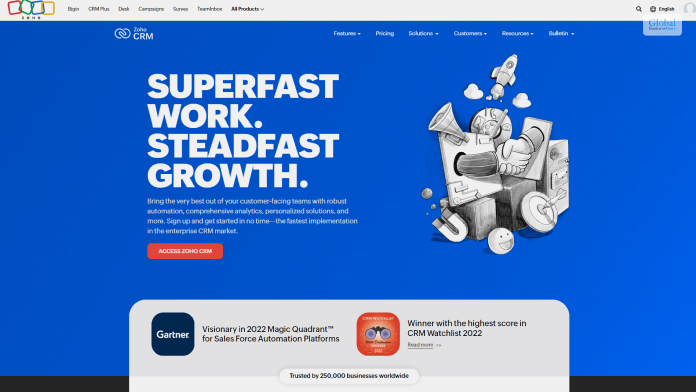
“Zoho CRM makes it easy for newcomers to get started with a CRM, especially if they’re not familiar with the software. The free plan includes just enough of the basic features to be helpful for an individual or an ultrasmall company. And the interface is intuitive and clean, which makes it even easier to learn to use.”
This is one of the major factors that the Zoho CRM API is very popular among small businesses. Furthermore, the software system comes with a lot of features that are not only helpful for small businesses only, but for growing businesses as well.
Zoho CRM Pricing

In the following table, you will get the entire pricing and plans of the Zoho CRM:
| Plans | Monthly Pricing | Annual Pricing |
|---|---|---|
| Zoho CRM Free | Free | Free |
| Zoho CRM Standard | $20 per user per month (annual billing) | $14 per user per month (annual billing) |
| Zoho CRM Professional | $35 per user per month (annual billing) | $23 per user per month (annual billing) |
| Zoho CRM Enterprise | $50 per user per month (annual billing) | $40 per user per month (annual billing) |
| Zoho CRM Ultimate | $65 per user per month (annual billing) | $52 per user per month (annual billing) |
| Zoho CRM Plus | $65 per user per month (annual billing) | $52 per user per month (annual billing) |
| Zoho One | $105 per user per month (annual billing) | $90 per user per month (annual billing) |
What Are The Major Zoho CRM Features?
Once you do a Zoho CRM login, you will find the Zoho interface being very user-friendly. Once in the software, you will also come across a variety of customization features. You can also create personalized layouts, which you can save, clone, and share. With a many automation features, you can simplify your complicated tasks.
Furthermore, Zoho also comes with an AI assistant. According to the official website of Zoho CRM Plus,
“Zoho’s AI assistant, Zia, guides your teams by predicting business trends, suggesting the best times to contact customers, identifying sentiments in emails and tickets, and providing intelligent business dashboards.”
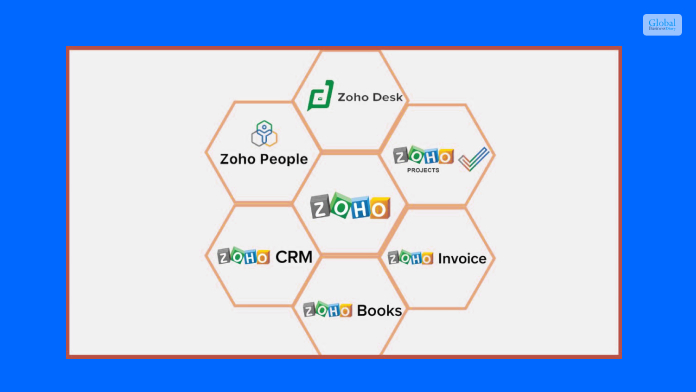
Another great feature of Zoho is that it can be integrated with all the different Zoho software systems. Furthermore, the Zoho CRM supports other systems too.
Why Is Zoho CRM A Great Option For Your Business?

Being one of the best software options for lead management, Zoho CRM helps in unifying your business and marketing processes.
According to the official website of Zoho CRM,
“Zoho CRM Plus unifies your sales, marketing, customer service, and every other customer-facing team on one platform so you can deliver exceptional customer experiences to every customer. Unify business data, customer engagements, ROI, and more—all while keeping your customer at the center of everything you do.”
With this CRM, you will be able to provide your customers with the needed convenience of omnichannel engagement. With Zoho, you can engage with your customers at every level of the customer lifecycle. You can always have full access and full information about your customers through different channels, as you will get real-time notifications on the software system.
Zoho CRM – The Major Pros And Cons

The following are some of the essential pros and cons that you must be aware of before you make a purchase of Zoho CRM:
Pros Of Zoho CRM
Here are the major pros of Zoho CRM:
- Zoho CRM comes with a free plan but with limited features.
- The pricing plans are affordable and friendly for small businesses.
- All the pricing plans contain the automation feature.
- You can integrate the CRM with various other Zoho software systems as well as other software systems.
- The CRM is simple and easy to customize.
- There is a mobile app as well, which allows remote access.
- If you do not like the software, you will get the money back in 30 to 45 days.
Cons Of Zoho CRM
Here are the cons of Zoho CRM that will allow you to make a decision while purchasing:
- The AI features come only the top-tier plans.
- There are only a limited number of custom fields.
- There are no integrations available for free plans.
Zoho CRM Alternatives

We think that Zoho CRM can be an excellent choice for a small business. However, it is not the best option for large businesses. According to Forbes.com,
“While Zoho CRM is an excellent entry-level CRM, it may not be the best choice for every business. You can find plenty of Zoho CRM alternatives that could fit your CRM strategy better.”
The following are the six top alternatives of Zoho CRM that you will find easily:
1. ActiveCampaign
2. Monday.com
4. Salesforce Pardot
5. LeadSquared
6. Hatchbuck
Summing Up
If you are running a startup, then there cannot be any better CRM solutions available than Zoho CRM. Furthermore, you can surely choose the alternatives, as per your needs and likings. However, when it comes to a combination of features and pricing, Zoho CRM is the best option of all. What is your review of this software system? Share your reviews regarding Zoho CRM in the comments section below.
Read Also:

Recent
Memory Chips Are Becoming More Important in the AI Era
Aug 06, 2026

Why Enterprise Web Applications Still Choose Angular for Long-Term Growth
Aug 04, 2026

Due Diligence Decoded: Why Careful Evaluation Still Wins in Business
Jul 11, 2026

How Hydraulic System Design Impacts Equipment Performance
Jul 01, 2026

Related Articles
Apptivo CRM Review: The Most Versatile All-In-One CRM Tool
Apptivo is cloud-based software consisting of a series of apps designed to help businesses thrive, including a customer relationship management (CRM) platform. This is a solid choice for small- to medium-sized organizations wanting to expand because to its user-friendly design and scalable capabilities. It also has enough complex features to entice bigger corporations. In this Apptivo review, I will assess how this CRM stacks up against some of the top CRM solutions available. Apptivo CRM Key Features Some of the main Apptivo features are: 1. Contact Management CRM is also known by the name "contact management." With the help of Apptivo, you can maintain your contacts and add new ones by capturing leads from emails or website forms. A customer-facing app may be customized in a number of ways to arrange your contact list based on your chosen information. Additionally, you receive contact conversion when they are prepared to become leads or customers who pay and redundancy rules to clean up your data. 2. Campaign Management Apptivo is fantastic for advertising efforts and makes it simple for you to quickly generate stunning advertisements. Campaigns may be built using templates and themes that provide great visuals. Additionally, target lists assist you in determining the ideal demographic for marketing. 3. Email Marketing Campaign management includes email marketing. Once your campaigns have been created using Apptivo email templates. You may set up the auto-scheduling feature to send them out at the appropriate time. Campaign trackers are also available to view statistics on click-through rates, email open rates, bounces, along with various other metrics. This is a fantastic tool to utilize in conjunction with the bulk emailing capability to ensure that you don't go over your allotted limitations is the email quota tracker. 4. Project Management Individual task management kicks off a project, which may then be aggregated and categorized by the project or task assignee. You receive task-specific timesheet tracking, which also helps with invoice conversions. While most projects are shown as Gantt charts, certain project templates additionally include rapid automation actions that may be customized. The tools for project billing and reporting are the last two. 5. Lead management Before they are opportunities, leads are contacts. This indicates that these leads have not yet fully started the sales process. A smart workflow planner will ensure that you communicate with leads at the appropriate times. Lead scoring by Apptivo provides information on the likelihood that a lead will become a transaction and enter the sales funnel. You may even create as many personalized fields as you like to keep organized. 6. Opportunities & Deals To effectively remain on top of every single deal in the process, Apptivo enables you to integrate deal management with opportunity management. Directly from emails, you may gather information and develop new prospects. Sales force automation that follows leads along the sales funnel and automatically initiates actions like follow-ups helps simplify opportunities. Opportunities are frequently displayed in Kanban dashboard views, and along with that, pipeline reports are provided. 7. Invoicing Several applications on Apptivo are classified as invoicing apps. These comprise ledgers, credit notes, estimation calculators, expenditure reports, tools for managing licenses and insurance, sales receipts, property management, and more. One of Apptivo's key selling factors is this feature set. 8. Supply Chains & Shipment Management Apptivo's distribution management offers reliable supply chain solutions. Direct customer-distributor connections are possible. The processes connected to sales orders may start with these. Additionally, payment functions work with POS systems and cargo transaction management. 9. Competitor Management A tool to help you manage and keep up with all your rivals sets Apptivo apart from other CRMs. Maintain track of lost sales, which competitors won, and why. You may create extensive lists with unique data. 10. Products, Goods & Services There are approval processes for talking about fresh concepts for new items. You may monitor the progress of ideas as they materialize. Users may utilize Apptivo to pawn new patents for innovative ideas. Even the geographical range for patents is provided. 11. Knowledge Databases Users may create knowledge, how-to, and other FAQ-related databases with the Apptivo Answers app. Natural language may be used to enter queries and answers; tags and categories can be used to keep things organized; and SEO phrases can be incorporated into the database of knowledge. Every time a new question is submitted, immediate alerts may be set up. 12. API Integrations A vast collection of Apptivo login integrations is available for browsing. These may be broken into subcategories and sorted for API/Webhook usage, or they can stay in broad categories such as billing or productivity. According to investigated sources, the most well-known and significant connections are G Suite and Office 365, which both include Outlook. 13. Mobile apps The Google Play and Apple App Store provide specialized mobile Apptivo applications for iPhones and iPads. You may manage contacts, financial matters, assignments, initiatives, and even customer service via mobile applications, all from a straightforward yet intuitive user interface. Work orders, projections, timesheets, and expenditure reports are all included. The mobile applications sync data automatically and in real-time. Apptivo CRM Pricing Regarding Apptivo pricing plans, this CRM currently has three different subscription plans to choose from. They are as follows: 1. Apptivo Free This is the free, basic plan of Apptivo. The only use this plan will provide you with is its access to lead and contact management features. 2. Apptivo Lite Price: $10 (per month) / $96 (annual) Along with the Apptivo basic plan, this plan provides you with two other features: Opportunity Management Custom Dashboards 3. Apptivo Premium Price: $15 (per month) / $144 (annual) Along with all the features of Apptivo Lite, this plan gives you access to the Mass emailing feature. Apptivo CRM Customer Service Apptivo provides live chat, email, and 24/7 customer service on all paid plans in addition to a comprehensive knowledge library. On weekdays, it furthermore provides live phone help. I used the live chat feature of Apptivo and posed a few straightforward inquiries on the user interface to gauge the customer service team's responsiveness. I received prompt responses from a helpful and competent support representative, who provided clear responses and pointed us toward additional assets on the information hub. Apptivo CRM Alternatives Value-wise, Apptivo's premium plans are difficult to match. Insightly, a rival has excellent project management capabilities and a wide variety of third-party connectors, but it is expensive and has fewer CRM functions on the base subscription. Having said that, Apptivo is renowned for its great reporting and offers better opportunity and pipeline management. This makes it ideal for bigger pipelines, where insights from sophisticated analytics might be useful. Zoho CRM is another strong rival that may compete with Apptivo in terms of customization. However, it costs more than Apptivo and has fewer project management options than both Insightly and Apptivo. The beginning plan of Zoho distinguishes it from Apptivo. While Zoho includes deal management, reporting, workflow management, and more, Apptivo's free solution is restricted to lead and contact management. Final Verdict: Should Your Business Use Apptivo CRM? Ultimately, Apptivo is a formidable competitor in the SMB and enterprise CRM markets. Bulk emailing, workflow automation, numerous sales funnels, and customized dashboards are just a few of the powerful features it offers for a wide range of affordable prices when compared to its rivals. While starting out may be difficult owing to the variety of customization choices, it also delivers an excellent user experience through an easy and flexible interface. The platform is scalable and configurable for larger enterprises thanks to Apptivo's distinctive app structure, which lets you create a CRM that precisely meets your company's requirements. An Apptivo app may be used to provide project management tools, billing facilities, and marketing capabilities. Despite the fact that it would be wonderful to see Apptivo provide additional third-party connectors, it appears that the firm is quite proactive about upgrades, so they are probably in the works. Finally, when contrasted with many of its rivals, Apptivo provides some of the greatest customer care we've come across, including a live chat feature that lets you communicate with a support agent around the clock. For each of these factors, I suggest Apptivo as a flexible all-in-one CRM system that will expand your company and encourage teamwork to close transactions more successfully. Read Also: 7 Business Opportunities That Can Change Your Life Is Startup Business Insurance Necessary For New Businesses? What Is Commercial Insurance? And Its Different Types – Let’s Discuss
Jul 03, 2023

Freshworks – Best Features, Pricing, Pros, And Cons: Let’s Discuss
Freshworks offers you a CRM that helps to streamline your sales and customer service management. The best part is that you will not need to break the bank to do so. The CRM system comes with a variety of useful features as well as other software systems from the brand, which can be integrated easily with the system. Furthermore, it is one of the such CRM options that come with a variety of customization options as well. In this article, you will learn about the major products of Freshworks, along with a brief overview of Freshworks’ services. Then we will provide you with the pricing of the Freshworks CRM. Next, we will discuss the major features of the CRM system from which you can benefit. Finally, you will learn why the Freshworks CRM is a great option for your business, followed by some pros and cons of the software system. Hence, to learn more about this software system, read on through to the end of the article. Freshworks Products – A Brief Overview Freshworks is a brand that comes with three different categories of products – Customer Service Products, IT Service Products, and CRM Products. The major CRM software from Freshworks is Freshsales. According to Forbes.com, “Freshsales is an all-in-one solution providing unified sales, marketing, chat and telephone capabilities. The Freshsales CRM works on a browser or mobile app, making it easy to reference or add to your contacts wherever you are. It’s also a fully customizable app, so you can change your dashboards to suit how you view your contacts or data.” Customer Service Products include Freshchat, Freshdesk Support Desk, Freshdesk Omnichannel, Freshdesk Contact Center, and Freshdesk Customer Success. IT Services Products include Freshservice for IT and service management, and Freshservice for Business Teams, for better-streamlining business processes. CRM Services include Freshsales and Freshsales Suite for the management of sales services and Freshmarketer for marketing and lead management. All the customer services products and the IT services products are included with the CRM services. Freshworks – What Is The Pricing? One of the best things about the Freshworks CRM (Freshsales) is that there are three different plans based on the type of user that needs to work on the CRM. Here are the plans and their respective pricing: PlansPricingFree PlanNo payment (for up to three users only)Growth$15 per user per month (annual billing)Pro$39 per user per month (annual billing) Furthermore, there is an 'Enterprise' plan that is designed for larger businesses, having complex sales processes and lead management needs. This plan is for businesses that deal with higher volumes of sales. The features, customization options, control, and governance are many. There are other controls as well, which are extremely helpful for businesses. Moreover, you can also include many add-ons with Enterprise as well. Freshworks CRM – What Are The Major Features Of Freshsales? According to the official website, “Freshsales leverages customer data in ways that help you personalize engagement, shorten the sales cycle, and focus on the leads most likely to sign on the dotted line. All automated, and powered by brilliant AI-driven insights.” Once you do Freshworks login into Freshsales, you will be greeted with an extremely useful and customizable dashboard. However, one of the best features about it is the fact that it is easy to use and simple at the same time. Here are the major features of Freshsales that you need to know about: There are an ample number of customization features that helps the Freshsales CRM fit your business in the right manner. The automation system can help in enhancing the productivity of the organization. With its multichannel communication systems, Freshsales can help better manage your customer relationships. With various sections that give you the view of customers, you can bring all the internal teams of your business along a single and shared view of the data associated with customers. With automated workflows, end-to-end personalization, behavioral segmentation, and more, you will be able to automate your marketing processes. The introduction of AI also makes things easier for you by providing you with helpful reports and insights. Why Can Freshworks Be A Great Addition To Your Business? Being one of the best lead management software options, Freshsales is a great option for growing your business. Forbes.com, in its review of Freshsales, rightly puts it, "Freshsales is an easy-to-use CRM tool that’s priced low enough for small startups that need to budget wisely. The free plan is a great entry-level tool and as your business grows, you can upgrade to one of the paid plans for more usability.” Apart from that, if you want to do more collaboration, you can also integrate Freshsales with all the other software systems present in Freshworks. What Are The Pros And Cons Of Freshworks CRM Freshsales? The following are some of the most essential pros and cons about Freshsales that you need to know before you make a purchase: Pros Of Freshsales Here are the major pros of Freshsales: There is a free plan which you can use perpetually. The paid plans of Freshsales are affordable as well. You will get to use the chat, email, and phone features on all the plans. All the paid plans contain an AI-powered lead-scoring feature. There are many automation options available with Freshsales as well. There are customization options in the dashboards and reports as well. Cons Of Freshsales The following are the Freshsales cons that you must consider before you make a purchase: Customer support is lacking and needs to be upgraded. In some cases, Freshsales customer support only works on weekdays. The free plan does not contain any reports. Final Thoughts Hope this article was helpful for you in getting a better idea of Freshsales CRM, which is one of the major software systems produced by Freshworks. The best thing about this software system is the fact that many features are available for free. However, if you are looking for advanced features, you must consider subscribing to the paid plans. What do you think about Freshsales? Share your reviews about the software in the comments section below. Read More: Malpractice Vs Negligence – Let’s Find Out The Difference Is Startup Business Insurance Necessary For New Businesses? What Is Commercial Insurance? And Its Different Types – Let’s Discuss
Jul 04, 2023

Intrapreneurship – Definition, Importance, Duties, And Responsibilities
The word Intrapreneur consists of two words - Intra (within) and Entrepreneur. Intrapreneurship refers to a situation where employees within a company use their entrepreneurial skills to complete projects and tasks. These employees use their creativity, leadership, intuition and also take risks in their job roles to complete projects. The concept is relatively recent and is changing the way organizations manage business and innovation. In this article, you will learn in general what Intrapreneurship means and what its importance is in businesses of now. We will discuss here some of the major impacts of intrapreneurship on business. Next up, we will provide you with the major characteristics, as well as the duties and responsibilities of an intrapreneur. Hence, to learn more about intrapreneurship read on through to the end of the article. What Is Intrapreneurship? According to Investopedia, “The term intrapreneurship refers to a system that allows an employee to act like an entrepreneur within a company or other organization. Intrapreneurs are self-motivated, proactive, and action-oriented people who take the initiative to pursue an innovative product or service.” Although a new concept in the world of business, intrapreneurship is on the verge of changing the ways in which companies manage business and innovation. With time, intrapreneurs are becoming the top innovators within organizations. Hence, companies are tasking their intrapreneurs to develop new ideas, products, systems, and services within the existing organization framework. The good thing about intrapreneurship is that intrapreneurs know that they do not need to bear personal costs when they fail. In most cases, the organization absorbs the losses (if any) that come from failure. On the contrary, if there is a success, the company is the one that gets the most gains in the end. Read More: Importance Of Entrepreneurship: Types, Features & Benefits What Is The Importance Of Intrapreneurship? An intrapreneurship is a situation when a business allows its employees to own up and become entrepreneurs within the organization. This, in turn, benefits the company as well as the employee. Furthermore, the employee also gets the chance and the freedom to experiment with their work. 1. Employees Get The Autonomy According to Indeed.com, “Intrapreneurship is usually an unofficial title. Though intrapreneurs have autonomy over the projects for which they're responsible, they typically have other duties they need to perform under their official role in the company.” Furthermore, there are many other companies that encourage their employees to engage in some form of intrapreneurship in any way. Companies allow their employees to devote a part of their time to work on projects in an entrepreneurial way which can benefit the organization. Apart from that, once there is a culture of intrapreneurship in an organization, it can help to foster autonomy and independence. In most cases, the best resolution can be achieved easily. For example, in an intrapreneurship, the company might require an employee to perform research and recommend a better solution to workflow to the brand of the company. 2. More Innovation And Growth For The Company With intrapreneurship, the company has more entrepreneurs within the organization. However, employers can recognize their employees that are capable of becoming intrapreneurs for the company. They can also find those employees that show their intrapreneurial spirit, which can be detrimental to the company. Employers can benefit from intrapreneurship since a win can lead to the success of the department and the company as a whole. If employers encourage these employees to work more on innovation, growth, and research, they can benefit a lot. If employers do not promote their employees, they might lose these potential intrapreneurs to other companies. A Few Characteristics Of An Intrapreneur It is important to learn some of the major characteristics of an intrapreneur. According to Investopedia, “Identifying intrapreneurs can sometimes be difficult. These employees are generally self-starters who are both ambitious and goal-oriented. They are often able to solve problems on their own and come up with ideas that lead to process improvements.” The following are some of the major characteristics of intrapreneurs that you need to learn: They are not afraid of risks and are ready to risk time or finances themselves. They love to share the reward of successful intrapreneurial projects with the corporation and other intrapreneurs equitably and in a defined manner. They are innovative and always have the capability and drive to build new akin to capital. With their work and efforts, they earn independence and autonomy from their company/ employers. Within the corporation they work for, intrapreneurs become their own “venture capitalist.” One of the major things about intrapreneurs is that they are not afraid of taking risks, as they can take responsibility for multiple tasks. To look for new challenges, some intrapreneurs can even take on some projects that they are not comfortable with in general. What Are The Major Duties And Responsibilities Of The Intrapreneur? The role, duties, and responsibilities of intrapreneurs can vary a lot based on the company they are working for and the industry they are in. However, there are a few things that are found common among intrapreneurs. The following are some of the common duties and responsibilities of an intrapreneur: Intrapreneurs know how to bring new ideas and generate new ones based on the situation of the company. They also have a good knowledge of the services, products, and services of the company. They innovate and manage innovation by overseeing its lifecycle, from its conception to implementation. Intrapreneurs with management capability often lead cross-functional teams and manage projects by ensuring their successful completion. They are problem solvers and identify and bring varied solutions to the complex problems of the business. They are risk-friendly and are not afraid to take calculated risks with proper assessment of the situation. Read More: Risk In Entrepreneurship : What Risks Do An Entrepreneur Face? Wrapping Up Hence, you can see from this article that intrapreneurship is nothing but a way in which a business allows its employees to act like entrepreneurs within the organization. Hence, just like entrepreneurs, intrapreneurs need to be action-oriented, proactive, self-motivated, risk-friendly, innovative, and more. Many experts consider intrapreneurship as a step towards entrepreneurship. Intrapreneurs can develop their own business by using what they have learned within the organization. How do you think employees benefit from intrapreneurship? Share your thoughts about it in the comments section below. Read Also: What Is a Franchise, And How Does It Work? – Examples, Benefits & More What Is A Venture Capitalist, And What Are Their Functions? Private Equity Vs. Venture Capital: Key Differences
Aug 31, 2023
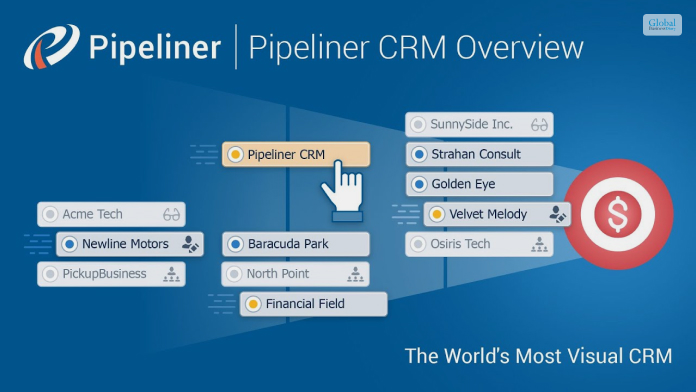
Pipeliner CRM Costs, Features, Applicability, And More 2023 – Let’s Discuss
In the current business environment, your business needs a CRM, which can help you accomplish a lot of jobs like lead management, contact management, email, marketing, pipeline management, and providing reports and analytics on various aspects of your marketing processes. If you are hoping to work with a CRM and implement it in your business, then Pipeliner CRM can be a good option for you. In this article, we will provide you with a brief overview of Pipeliner CRM. We will also show you why it is a great addition to your business and marketing processes. Apart from that, you will come across the major features of this software system. Finally, we will share the essential pros and cons of Pipeliner CRM. Hence, to learn more about the software, read on through to the end of the article. Pipeliner CRM – A Brief Overview Of The Software Platform According to the official website of Pipeliner CRM, “Pipeliner allows salespeople to take control of their opportunities, remain consistent through every stage of the sales process, and always stay focused on important priorities. It's the CRM that salespeople actually enjoy using.” However, we feel that as compared to popular CRMs like Less Annoying CRM, and others, Pipeliner CRM seems more visual and appealing at first look. You will also get a graphical overview of the various pipelines of your business organization. This will, in turn, help to provide your marketing and sales teams with an updated and detailed view of current activities, and that too, in a visual manner. With the Pipeliner CRM revenue option, you can check the graphical representation of your revenue numbers as well. If you are better with graphs, charts, and visuals, as compared to data on tables, then Pipeliner CRM is probably the one you must go for. Apart from that, the pricing plans associated with Pipeliner CRM are also great and are not complicated at all. As you pay more, the features and the tools that you get grow in number. Read More: Hatchbuck – Pricing, Features, Pros And Cons, And More Pipeliner CRM Pricing The following table shows the plans and pricing of the Pipeliner CRM software platform: PlansPricingStarter$65 per user per month (yearly billing)Business$85 per user per month (yearly billing)Enterprise$115 per user per month (yearly billing)Unlimited$150 per user per month (yearly billing) On all these plans, there is a 30-day free trial available, which you can use, to find out whether you want to implement the app in your business processes or not. Why Can Pipeliner CRM Be A Great Option For Your Small Business? According to PCMag.com, “Pipeliner CRM is designed for businesses of up to 200 users, so it plays in a different market than our Editors' Choice for CRM Salesforce.com, which is best suited for larger organizations. It has a lot in common with our other CRM Editors' Choice, Zoho CRM, as it offers some customizations and integration with third-party tools.” Once you do a Pipeliner CRM login, you will be able to download a website application on your computer. The software platform is based on the cloud, where all the data is stored. However, you will have to access all the data using a local client. This helps you to have offline access, even when you do not have an internet connection with you. Hence, if you are looking for a low-priced option with the capability to visually represent data to you and your team, then Pipeliner CRM is the one you must choose. However, there are some security issues, which you must check by yourself while you are in the trial period. The Essential Pipeliner CRM Features You Need To Know The official website of Pipeliner claims - “Pipeliner was well aware that CRM was not assisting salespeople. As a result, they decided to approach CRM from the bottom up rather than the top down. To put it another way, Pipeliner designed an app that would empower salespeople while also making CRM completely worthwhile for them.” The following are the major features of Pipeliner CRM: Contact management and lead management. Visual reporting of data and essential information. Integration to third-party apps and software platforms. Ability to connect multiple payment systems. Top-grade sales forecasting. Ability to track commissions with the help of an automation feature. Unlimited storage space for files due to connection with the cloud. Pipeliner CRM – Major Pros And Cons Of The Software The following are the major pros and cons of Pipeliner CRM that might help you to decide whether you will implement the software in your business processes or not: Pros Of Pipeliner CRM Here are the major pros of Pipeliner CRM: The platform lets you work offline. Apart from letting you save your data, this software also allows you to work in emergency situations. You will be able to integrate social media platforms with this software system too. The visuals and graphics of this software system are really appealing. The pricing is low and quite simple. There are not many complicacies with the pricing system. You get a thirty-day trial before you decide whether to make a purchase or not. Cons Of Pipeliner CRM Here are the major cons of Pipeliner CRM: There are issues and lags related to security. The custom reports available through the software are limited, and hence the software is not a great option for growing businesses. The Android app seems outdated and needs to be updated regularly. Lack of advanced features on the applications. Read More: What Is LeadSquared? Features, Pricing, Pros, And Cons Summing Up One of the best things about Pipeliner CRM is that it has an attractive interface, which makes your customer relationship management processes more visual and appealing. Apart from that, the app is also priced quite reasonably, which can be helpful for small businesses or solopreneurs. However, there are some issues related to security, which can create problems for growing businesses. Hope this article was helpful for you in getting a better idea of whether the Pipeliner CRM software system is applicable to your business processes or not. What do you think of this software system? Share your reviews with us in the comments section below. Read Also: Pardot – Best Features, Pricing, Pros, And Cons: Let’s Discuss Fullerton India Review: Things To Know Before Taking A Loan! LoanTap: Information, Eligibility Criteria, Interest Rates, Review & More
Jun 15, 2023